Russia
‘Logistical error’ prevented Brittney Griner from speaking with wife on anniversary
Calls to embassy phone in Moscow went unanswered on Saturday
A State Department spokesperson on Tuesday admitted a “logistical error” prevented detained WNBA star Brittney Griner from speaking with her wife over the weekend.
Cherelle Griner told the Associated Press that her wife’s lawyers said she tried to call her 11 times “over a period of several hours” on Saturday, which was the couple’s fourth anniversary.
The AP reported the Russian government approved the call.
The U.S. Embassy in Moscow, according to the AP, had given Brittney Griner a number that was to have allowed her to connect to her wife in Phoenix once an embassy staffer received the call. The AP reported each of the calls that Brittney Griner made went unanswered because nobody was at the desk where the phone was located.
“I was distraught. I was hurt. I was done, fed up,” Cherelle Griner told the AP. “I’m pretty sure I texted BG’s agent and was like: ‘I don’t want to talk to anybody. It’s going to take me a minute to get my emotions together, and just tell everybody I’m unavailable right now.’ Because it just knocked me out. I wasn’t well, I’m still not well.”
Cherelle Griner said the call had been on her schedule for two weeks. She told the AP that she is “very pissed” about what happened.
“We deeply regret that Brittney Griner was unable to speak with her wife because of a logistical error,” the State Department spokesperson told the Washington Blade on Tuesday in a statement.
Officials at Moscow’s Sheremetyevo Airport in February detained Brittney Griner — a center for the Phoenix Mercury — after customs inspectors allegedly found hashish oil in her luggage. The State Department has determined that Russia “wrongfully detained” her.
“We cannot call her a hostage,” Kremlin spokesperson Dmitry Peskov told NBC News’ Keir Simmons on Monday. “She violated Russian law and now she is being prosecuted.”
Secretary of State Antony Blinken on May 14 spoke with Cherelle Griner.
Officials with the State Department’s Office of the Special Presidential Envoy for Hostage Affairs and Bureau of Educational and Cultural Affairs on June 13 met with Brittney Griner’s teammates to discuss her detention and efforts to secure her release. A Russian court the following day extended Brittney Griner’s detention through at least July 2.
“We are determined to bring her home along with Paul (Whelan, an American citizen who is serving a 16-year prison sentence in Russia after a court convicted him of spying) and for that matter, any and every American who is being unjustly detained anywhere in the world,” said Blinken on June 15 during a roundtable with this reporter and five other LGBTQ and intersex journalists. ” “It’s something that I am personally focused on, and I want to leave it at that because it is obviously an ongoing issue. But just know that this is a matter of intense focus for us.”
The State Department spokesperson reiterated this point.
“We have no higher priority than the safety and security of U.S. citizens overseas,” said the spokesperson. “We remain in regular contact with the families of those held hostage or wrongfully detained; we are grateful for their partnership and feedback; and we continue to work to ensure we are communicating and sharing information in a way useful to our families.”
Cherelle Griner told the AP that she no longer trusts the U.S. government.
“I find it unacceptable and I have zero trust in our government right now,” she said. “If I can’t trust you to catch a Saturday call outside of business hours, how can I trust you to actually be negotiating on my wife’s behalf to come home? Because that’s a much bigger ask than to catch a Saturday call.”




Russia
Russian LGBTQ rights group to shut down
Russian LGBT Network in April declared ‘extremist’ organization
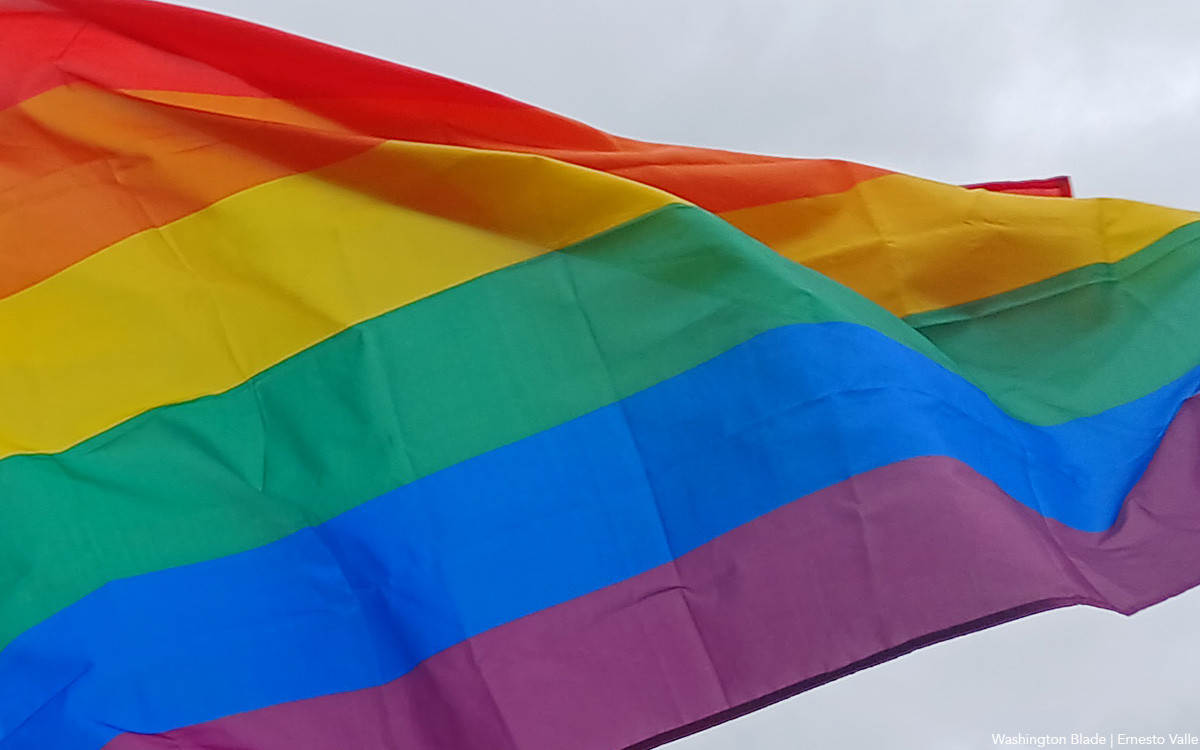
A Russian LGBTQ advocacy group on Monday announced it will shut down after a court declared it an “extremist” organization.
A St. Petersburg court in April in response to a Russian Justice Ministry lawsuit made the declaration against the Russian LGBT Network.
“For many years, Russian LGBT Network brought together initiatives and activists and supported queer people across the country,” said the advocacy group on its Facebook page. ” However, its ‘extremist’ status has made the previous public format of its work impossible: any connection to the organization may create additional risks for the people we seek to support and protect.”
The Russian LGBT Network formed in 2006.
The group on its Facebook page said it “made this decision” to close “after a thorough assessment of the risks.”
“Continuing our public activities could have put at risk those who took part in the organization’s work, supported it, or received assistance,” said the Russian LGBT Network. “We cannot control the repressive environment, but we can do everything possible to avoid creating additional risks for people. People’s safety comes first.”
The Kremlin over the last decade has faced global criticism over its crackdown on LGBTQ rights.
The Russian Supreme Court in 2023 ruled the “international LGBT movement” is an extremist organization and banned it.
Russia in January designated ILGA World, a global LGBTQ and intersex rights group, as an “undesirable” organization. ILGA World in response to the designation noted Russians who are found guilty of engaging with “undesirable” groups face up to six years in prison.
Human Rights Watch in May noted the Russian LGBT Network is one of nine LGBTQ groups that Russia this year has banned after authorities deemed them “extremist.”
“Russian LGBT Network may close; but dignity, solidarity, and people’s right to be themselves cannot be destroyed,” said the Russian LGBT Network in its statement. “Take care of yourselves.”
Russia
Nine Russian LGBTQ groups deemed ‘extremist’ banned
Human Rights Watch: authorities ‘intensifying their criminalization’ of queer people
Nine LGBTQ groups in Russia have been banned so far this year after authorities deemed them as “extremist.”
Human Rights Watch on Thursday noted courts in seven regions between March and May banned Coming Out, the LGBT Resource Center, Parni Plus, the Moscow Community Center for LGBT+ Initiatives, Irida, the Russian LGBT Network, the Kallisto movement, T9 NSK, and Center T. Human Rights Watch also pointed out a lawsuit has been filed against the Alliance of Straights and LGBT for Equality.
Parni Plus is an LGBTQ media outlet.
“Russian authorities are intensifying their criminalization of those who provide critical support to the very LGBT people they have systematically persecuted,” said Human Rights Watch Europe and Central Asia Director Hugh Williamson in a press release. “Authorities should vacate all court decisions and criminal convictions based on these spurious ‘extremism’ charges.”
The Kremlin over the last decade has faced global criticism over its crackdown on LGBTQ rights.
The Russian Supreme Court in 2023 ruled the “international LGBT movement” is an extremist organization and banned it.
The country in January designated ILGA World, a global LGBTQ and intersex rights group, as an “undesirable” organization. ILGA World in response to the designation noted Russians who are found guilty of engaging with “undesirable” groups face up to six years in prison.
Russia
Under new extremism laws, LGBTQ Russians must fight to survive
Designation of ‘international LGBT movement’ as extremist is blueprint for other countries
Uncloseted Media published this article on May 2.
By HOPE PISONI | Natalia Soloviova always knew she was putting herself at risk. As the chair of the Russian LGBT Network, the largest queer advocacy group in the country, she had spent years preparing detailed security protocols for what she would do if the government came after her.
But it was still a nasty shock when she had to use them. In November 2023, almost two weeks before Russia’s supreme court would designate the “international LGBT movement” as an extremist organization, Soloviova’s heart sank when she watched Channel One, a state-funded TV network, air a report about her organization. They flashed her and her colleagues’ names on screen while accusing the organization of “extremist” activities, including spreading propaganda to minors and trying to destroy “traditional family values.”
“It was so disturbing, and it made me physically sick,” Soloviova told Uncloseted Media.
She knew she had to get out. The following days blurred together as she checked off the steps in her security protocol: she called her lawyers, told her mom and wife she was leaving, and boarded a plane to another country. Over the next few years, she would move between several countries before settling in New York City.
It all happened so fast that she didn’t process her emotions until a month later, when she was scrolling Instagram and saw a video of her hometown, Novosibirsk.
“I start just crying … because my previous life was lost,” she says. “I started to feel anger for the government, for the situation itself, because it was absolutely horrific and absolutely unfair.”
While U.S. intelligence agencies under the Trump administration have indicated an interest in targeting trans people, Russia’s extremism designation has allowed for a whole other level of persecution. Because the designation targets the entire LGBTQ movement, the court’s ruling allows the government to impose broad crackdowns on the community.
As of June 2025, Human Rights Watch had identified 101 people convicted on LGBTQ extremism charges, with punishments ranging from fines to 12-year prison sentences. Since late last year, the government has also taken eight Russian LGBTQ advocacy organizations to court, aiming to label them as extremist groups.
These cases are ongoing — Soloviova’s organization was just declared as extremist on April 27.
“I woke up at home with my wife, and the first thing I saw were messages from our lawyers,” Soloviova says about the news. “Honestly, I was furious. But as usual, there was no time to be angry. My first thought was my colleagues still in Russia. I spent the entire morning in bed, messaging back and forth about emergency evacuations, security measures and our next steps.”
People have been jailed for posting photos of pride flags in an 11-person Telegram chat and for wearing rainbow-colored earrings. In response, LGBTQ advocates have gone underground, finding new ways to support a terrified community. Despite everything, Soloviova says that “most organizations” have continued to do their work.
“They can ban us on paper, but they cannot erase us,” Soloviova says. “We will not abandon our values, because human life, safety and dignity matter more than any repressive labels.”
How did Russia get here?
The Russian government began targeting the LGBTQ community in 2013, when they passed a law banning the spread of “propaganda” of “non-traditional sexual orientation” to minors. The next year, Russia’s military occupied Crimea, leading to condemnation from the U.S. and other world powers.
Sasha Kazantseva, queer sex educator and author of “The Conservative Web: Russia’s Worldwide War on LGBTQ+ Rights,” says that in order to combat the backlash, Russian President Vladimir Putin leaned into “traditional values ideology” to build support among more conservative countries.
“[Putin says] ‘Western ideology is about making your kids trans and gay, and we can save your kids and your traditional families,’” Kazantseva told Uncloseted Media. “LGBTQ people are very important for this traditional values conservative ideology as an image of some internal enemy.”
After invading Ukraine in 2022, Putin’s government escalated their attacks on Russia’s LGBTQ community. They expanded their anti-propaganda law to include adults, and in 2023 they banned trans people of all ages from medically transitioning or changing their legal gender. On Nov. 30, 2023, they issued the extremism ruling.
“[In] 2022, they see again that people are not happy with the war, and they start to play the same game as 10 years ago,” Kazantseva says. “Nobody cared [about trans people], and out of nowhere, Putin starts to mention trans people in every speech.”
Since then, things have escalated. Last November, the Justice Ministry began a court case to declare Irida, a small LGBTQ advocacy group, as an extremist organization. Eight advocacy groups, including ComingOut and the Russian LGBT Network, both of which provide services including psychological support and legal consultation to LGBTQ Russians, have had similar cases against them.
Crackdowns under the extremism ruling
Maks Olenichev, a European Union-based lawyer who supports Russian LGBTQ defendants in court, says there are two types of charges for violating extremism laws.
First, displaying the symbols of an extremist group — often the rainbow pride flag in this case — is considered an administrative offense. Of the 101 individuals HRW identified, 81 were convicted for displaying symbols. First-time offenders face fines or short jail sentences, while repeat offenders can receive up to four years in prison.
Second, participation in the international LGBT movement is a criminal offense punishable by up to 12 years in prison. HRW identified at least 20 people facing these charges.
Participation in the movement can seemingly include any public activities related to the LGBTQ community. Authorities arrested several employees at Eksmo, Russia’s largest publishing house, for extremism because some of their books contained LGBTQ themes. And last year, a Moscow court posthumously found Andrey Kotov, the leader of a Russian gay travel agency, guilty of extremism after he died in a pretrial detention center.
“If [Kotov] had asked me whether he could do it, I would say, ‘Yes you could do it, it’s legal.’ And then he goes to jail and dies there,” says Ksenia, who works outside of Russia as legal assistance program coordinator for ComingOut. “I have 20 years’ experience in law. What can we expect from people who are not experienced lawyers?”
Olenichev agrees: “There’s no 100 percent foolproof way to not being charged with anything.”
Alise Sever learned this the hard way in 2024, when her Halloween weekend celebrations were interrupted by masked police officers banging down the doors. Sever was partying at Black Clover, an LGBTQ-friendly club she had opened just over a year earlier in Kirov, Russia.
At 2 a.m., militarized special forces burst in to raid the club and immediately hauled Sever off to the precinct while they pinned several patrons against the wall, arrested them and confiscated what came out to be roughly 1 million rubles, or $10,000, worth of music equipment, alcohol, and other club property a price so steep that the business would need to shut down.
“I knew that something [like this] could happen,” Sever, 28, told Uncloseted Media. “But I was sad. I was grieving a loss of money, a loss of the time and work that I have put into this.”
Sever and five other people who were arrested that night — including the club’s co-founder and multiple queer artists — were charged with extremism. As part of the court proceedings, Russian police revealed that they had been monitoring Sever and her girlfriend for almost a year and had amassed thousands of pages of documents containing information about her and her business as well as transcripts of intercepted messages and phone calls.
“They apply these laws very randomly, and they do it not to show that this person is the most brutal criminal you can imagine, they do it to show that anyone can be targeted by this law,” Kazantseva says. “So you live in permanent tension, in permanent self-censorship. And that’s how they control people.”
Kazantseva, who has published zines, blogs, and books about LGBTQ issues, has also experienced this firsthand. Despite having fled the country for Lithuania in 2023 due to crackdowns on anti-war advocacy, Russia’s financial monitoring system added her to their list of “terrorists and extremists” last October. This bans her from accessing Russian bank accounts, essentially locking her out of any financial activities in the country. The federal government has also placed her on their “wanted” list, and a court has ordered “arrest in absentia” of Kazantseva, meaning that she will be detained if she enters Russia or one of its allied countries.
Russian authorities have also threatened charges to pressure LGBTQ people into enlisting to fight in the war. In 2024, the government issued a new policy allowing defendants to be exempted from criminal liability if they join the army.
Ksenia, who requested that Uncloseted Media omit her surname for fear of not being allowed to return to the country, says she knew a boy who was part of a group chat for LGBTQ teenagers. When federal authorities discovered the chat, they threatened him with criminal convictions, and after significant pressure, he abandoned his plans to go to university and signed up to fight in Ukraine shortly after his 18th birthday.
“I know I should feel outrage at how defenseless he is facing the state machine,” Ksenia says. “But at this point, [I’m] just numb.”
These legal crackdowns have caused many LGBTQ people to withdraw from public life. In a 2025 study of 1,683 queer women by Olenichev and other Russian scholars, more than half of the respondents said extremism laws had made them afraid to contact law enforcement, 36.5 percent had gone back into the closet, and many have “severely restricted their circle of friends.”
Sometimes, taking these precautions isn’t enough. Sever’s club, which hosted drag performances, only allowed people who had not publicly come out as queer online to perform, and had to issue rules that performers could not touch or interact with the audience or mention the terms “LGBTQ” or “Ukraine.” They also had to remove wall paintings of humanoid cats wearing shibari rope and lingerie after getting fined by police in early 2024 under the propaganda law. None of that, though, was enough to save them from being raided.
How are advocates responding?
Zhenya, a Russian trans emigrant to Canada who asked to use a pseudonym because they still visit their home country, got hands-on experience with the new normal for queer activism when they signed up to volunteer for ComingOut.
Ksenia says the organization now relies almost entirely on workers outside of Russia like Zhenya. In order to start volunteering for the group, Zhenya had to go through a round of interviews designed to weed out infiltrators. And once they joined, they learned that all their coworkers’ identities would be hidden.
“Partially why they do interviews is because it’s known sometimes that police agents will try to insert themselves in the group to get names,” Zhenya told Uncloseted Media. “They never ask you for your passport info, they don’t ask you for your real name.”
Ksenia says ComingOut now has its security measures down to a science and “almost nothing” needed to change when they were declared an extremist organization. Because of that, they now offer security consultation to other organizations.
Another initiative that has needed to adapt to this new reality is Centre T, a trans and nonbinary support organization that will likely be declared an extremist group at a trial set for May 4. Sasha, the group’s media coordinator, says volunteers must use a VPN and communicate through encrypted messaging apps. Initially, this would often be Telegram, but with the Russian legislature weighing a ban on the app, they’re considering moving to other platforms like Matrix.
Even with these precautions, Centre T had to cut some programs: They no longer host online chats or dating programs, and they’ve mostly had to stop sharing personal stories in order to protect people’s identities. Still, their most crucial programs, which include assisting trans people in leaving the country and connecting them to medical specialists that aid them with transition under the table, are still operating.
Fleeing the country
Like with ComingOut, most of Centre T’s workers and volunteers have left Russia. Olenichev says this is generally the safest option. In many extremism cases, he says lawyers focus less on actually winning and more on fighting for lighter sentences and using stall tactics, like requesting extra documentation, to buy time for defendants to flee.
“It’s impossible to win those cases since [they] usually are political and not legal,” Olenichev says.
Sever is a success story for this strategy. After her arrest, she spent two months alone in a jail cell, isolated from her friends and family as they were scared that sending her letters would lead the government to target them. After she was released, she spent 11 months on house arrest, trapped at home with her “very religious” mother who tried to convince her to accept the charges and abandon her pansexuality.
“There were moments when my friends were visiting me while I was on house arrest, and they were later on [interrogated], so that led for them to stop. … It took a toll on me.”
As Olenichev and other advocates fought to prolong her case, she concocted a scheme to flee the country despite being under house arrest. When she came down with a disease, she was allowed to call an ambulance to the hospital, where her friends were waiting to help smuggle her over the border.
“I ended up in a safe place where I’m awaiting a visa to go to Europe, now,” says Sever, who did not reveal her location due to concerns about violence from local anti-LGBTQ groups.
Centre T is currently operating a temporary shelter in Armenia for trans people leaving Russia, providing food, housing and psychological and medical support. While they say they’ve recently lost U.S. grants and the ability to fundraise in Russia, the shelter remains open because of crowdfunding through Patreon and Buy Me a Coffee.
“We are funded by our community,” Sasha says. “It’s been really amazing, honestly … because it’s very difficult to find funding for direct service projects like a shelter.”
How do queer people continue to live in Russia?
Zhenya visited St. Petersburg for the first time since the extremism designation in the summer of 2024. Surprisingly, they still managed to find communities of queer people.
“I don’t think there’s anything official, it’s all where gay people just go, and you just know,” they say. “I went to one [such] place and that went just fine. I know a couple trans people who still live in St. Petersburg, and there’s still events and things happening, but it’s just way more lowkey.”
Zhenya says it’s easier to do this in bigger cities where they say people are relatively accepting and less likely to report LGBTQ people to the police.
Sasha believes that the community’s future lies in whisper networks like those Zhenya describes.
“It’s time for some decentralized, horizontal activities and initiatives,” she says. “Because it’s more safe right now to make a group only for friends, for people that you know.”
Sasha says it’s critical that queer Russians take precautions and strongly recommends ensuring no LGBTQ content is saved on your phone in case it gets hacked or confiscated.
In such dangerous conditions, Natalia Soloviova says every step is important. Seemingly simple actions, like opening up about your queer identity to trusted loved ones, covertly spreading information among other queer people, or simply allowing yourself to rest and recover are necessary to make it through.
“You’re keeping community alive,” she says. “If you’re supporting your friends, even with drinking mimosas on a Sunday after a really hard week, it’s keeping community safe, it’s spreading the words of community. Better to do something than not to do something.”
For herself, life goes on in New York. While she still misses Novosibirsk, she says she will continue to fight from abroad and is grateful that there are still so many queer Russians fighting to live safely.
“This urge of people who want to improve the life of our community can be unstoppable.”

Bar Betsie, inviting and intimate, marks one-year anniversary

Trump, Netanyahu, and Putin are all war criminals

Center Arts Gallery celebrates 10 years with reception, auction

U.S. int’l trade negotiator, consultant James Bedore dies at 82

Campaign urges Virginia High School League to reverse stance on trans athletes

Eliot Glazer’s new book an engaging collection of essays

Equality Chamber hosts Pride in Business Expo and Profits & Pours

Learn more about Virginia’s queer history

Lula, Flávio Bolsonaro to face off in second round of Brazilian presidential election

‘Merrily’ is for Sondheim super fans, the uninitiated, and anyone in between
-

 Books4 days ago
Eliot Glazer’s new book an engaging collection of essays
-
Out & About4 days ago
Equality Chamber hosts Pride in Business Expo and Profits & Pours
-
Out & About4 days ago
Learn more about Virginia’s queer history
-
Brazil4 days ago
Lula, Flávio Bolsonaro to face off in second round of Brazilian presidential election