Maryland
FreeState Justice files lawsuit against former executive director
Jeremy LaMaster allegedly launched ‘coordinated attack’ on organization’s operations
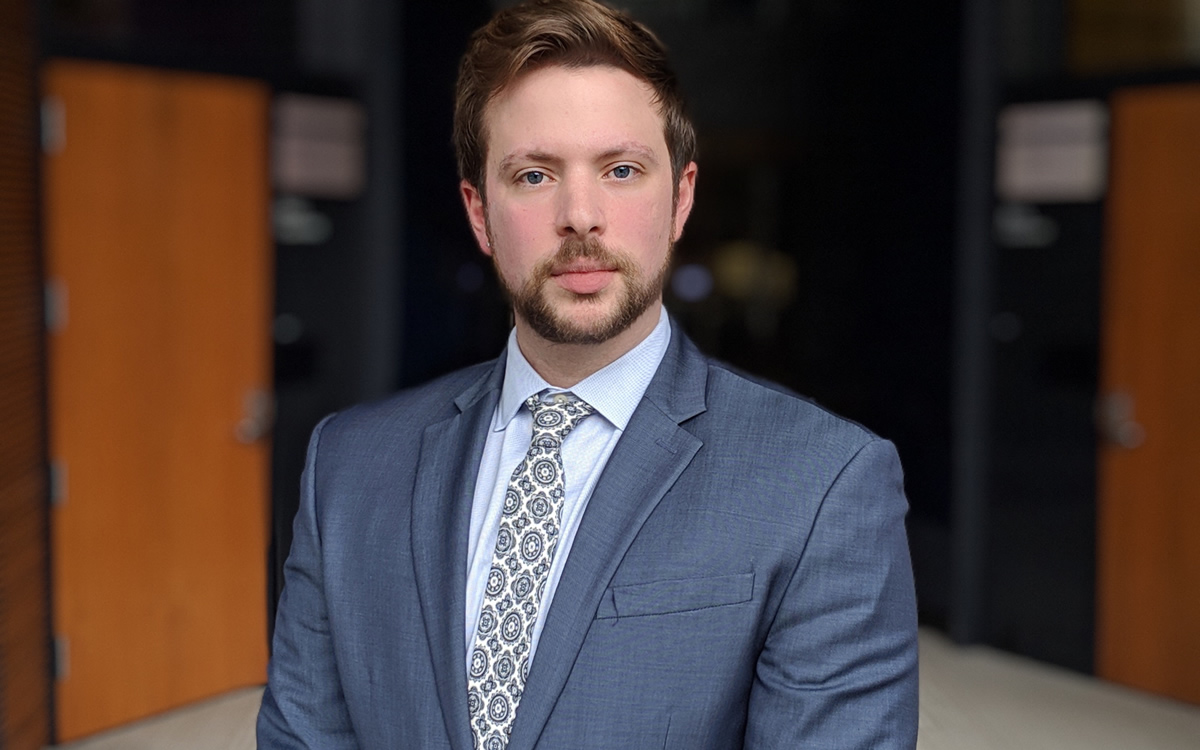
FreeState Justice on Wednesday filed a federal lawsuit against its former executive director who has accused its board of directors of having a “white supremacist culture.”
The lawsuit, which FreeState Justice filed in U.S. District Court for the District of Maryland, notes the board on Sept. 16 informed Jeremy LaMaster that “they were relieved of their duties, and the final two weeks of their employment were to be spent cooperating in the transition of FreeState’s operations.”
“LaMaster abruptly left the meeting early and immediately began a coordinated attack on FreeState’s operations; in particular, its IT assets,” reads the lawsuit. “When FreeState discovered LaMaster’s improper interference, it terminated their employment effective immediately, ordered them to cease and desist and to rectify their actions. LaMaster did not abide and continued to hijack and misappropriate FreeState’s IT infrastructure and documents.”
The lawsuit alleges that LaMaster “unilaterally and without authorization changed user permissions and shared login information so only they had access to numerous systems and accounts.”
“They also removed employees’ administrative access to numerous systems and accounts, leaving such access to only themself,” reads the lawsuit. “In doing so, LaMaster has left FreeState’s employees with little to no access to client files, case files, dashboard reports,and case notes. LaMaster also changed the password to FreeState’s WordPress account, leaving LaMaster in sole control of FreeState’s website.”
LaMaster, who uses nonbinary and binary pronouns, in a message they sent from his FreeState Justice email account on Monday announced their resignation after they said the board declined to step down.
“This morning, I requested the FreeState Justice board of directors to submit their immediate resignations due to persistent violations of our board handbook, consistent failures in their fiduciary responsibilities, and using positions of power to engage in partisan lobbying within FreeState Justice and their repeated refusal to add new members and leadership to the board,” wrote LaMaster.
LaMaster in their email noted they “exhausted every avenue over the past two years to get our board fully staffed and running, and I made good faith efforts to work with the board to ensure that our clients and low-income LGBTQ Marylanders remained at our center.”
“Instead, the board has refused to accept any new board members since 2021 and refused to staff and run core board activities as per our handbook,” wrote LaMaster. “Instead, they have worked to consolidate power and amend the board handbook in secret to lower the minimum number of board members required and ensure that our policy positions prioritize relationships with legislators, not the best interests of our clients and community. I have provided clear warnings and consistent concerns over these issues that were repeatedly ignored.”
“These are the hallmarks of white supremacist culture: The concentration of power, power hoarding, defensiveness, right to comfort, fear of open conflict, hyper-individualism, and a false sense of urgency,” added LaMaster.
FreeState Justice in response to LaMaster’s allegations said it fired them on Sept. 16 “after prolonged and thoughtful deliberation” and further noted their statement “does not reflect the views or ideals of FreeState Justice’s board and staff.” FreeState Justice has named Phillip Westry as LaMaster’s successor.
The lawsuit alleges LaMaster “has commandeered” Westry’s Google account, “rendering him unable to access his emails, internal work calendars, and collaborative documents shared and worked on via Google Drive.”
“LaMaster also now has unfettered and improper access to employee lists, donor lists, volunteer lists, mailing lists, client lists, and pro bono attorney lists,” reads the lawsuit.
“Despite FreeState’s insistence that they cease their unlawful activities and restore operations immediately, LaMaster proceeded to upload a defamatory post to FreeState’s website and disseminated it to approximately 43,000 recipients on FreeState’s mailing list, which they accessed without authorization,” it notes. “The post, titled, ‘Whistleblowing: Public Call for the Resignation of the FreeState Board of Directors’ falsely depicts the circumstances surrounding their departure from FreeState by stating that they resigned, without basis alleged that the Board engaged in ethical violations, and likened FreeState’s Board to White Supremacists, claiming they supported white supremacist culture and practices, and were not ‘anti-racist.’ This is false, defamatory, and denigrating of FreeState and its board members, and extraordinarily damaging for a social justice organization.”
The lawsuit further notes that because “LaMaster did not comply with FreeState’s cease and desist letter, because LaMaster continues to infiltrate FreeState’s systems and accounts, and because LaMaster, after receiving FreeState’s cease and desist letter published a post defaming FreeState, and without authorization, posted it to FreeState’s website, and disseminated it to its mailing list of approximately 43,000 people with his FreeState email address, FreeState has no choice but to seek judicial intervention to prevent further unlawful conduct, and irreparable harm to FreeState.”
“FreeState requests an immediate hearing on this matter,” reads the lawsuit. “It can be reasonably presumed that LaMaster will continue to use FreeState’s proprietary information to interfere with FreeState’s business relations and continue to interfere with FreeState’s possessory interests in its systems and accounts, depriving FreeState personnel of access to the accounts, documents, and files they need to perform their work.”
The Washington Blade has reached out to LaMaster for comment on the lawsuit.




Maryland
Supreme Court ruling against conversion therapy bans could affect Md. law
Then-Gov. Larry Hogan signed statute in 2018
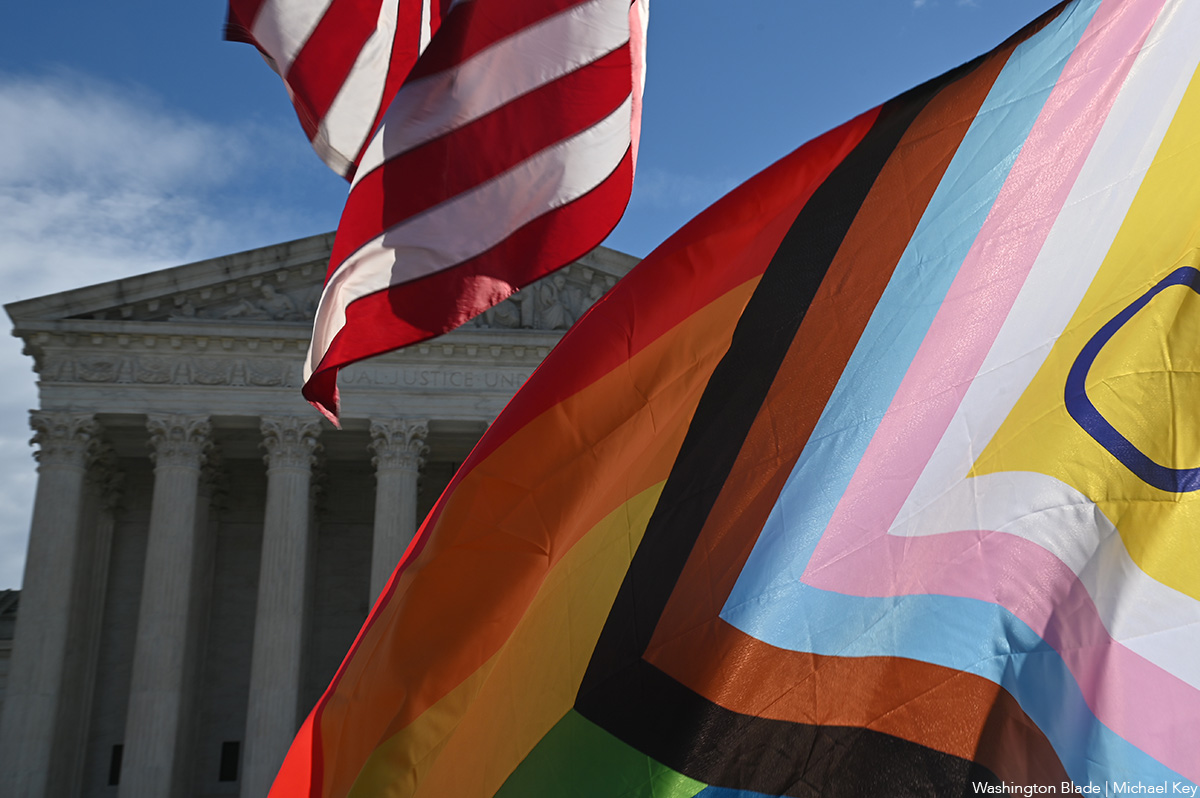
By PAMELA WOOD, JOHN-JOHN WILLIAMS IV, and MADELEINE O’NEILL | The U.S. Supreme Court on Tuesday ruled against a law banning “conversion therapy” for LGBTQ kids in Colorado, a ruling that also could apply to Maryland’s ban on the discredited practice.
An 8-1 high court majority sided with a Christian counselor who argues the law banning talk therapy violates the First Amendment. The justices agreed that the law raises free speech concerns and sent it back to a lower court to decide whether it meets a legal standard that few laws pass.
Justice Neil Gorsuch, writing for the court’s majority, said the law “censors speech based on viewpoint.” The First Amendment, he wrote, “stands as a shield against any effort to enforce orthodoxy in thought or speech in this country.”
The rest of this article can be read on the Baltimore Banner’s website.

Maryland’s legislative caucuses outlined their legislative priorities heading into the final weeks of the 2026 General Assembly during a joint press conference on March 24.
The press conference was titled “We are Maryland,” where a representative for each of the legislative caucuses outlined priorities.
State Del. Kris Fair (D-Frederick County) of the LGBTQ+ Caucus opened the press conference with a statement on the unity of Maryland’s caucus.
“Together we can show our state and our community a different world, one where we mutually support one another and through that support uplift every Marylander,” he said.
In a press conference on March 5, the LGBTQ+ Caucus outlined its top legislative priorities. Fair highlighted two of those bills again during the “We are Maryland” press conference.
The first of the two highlighted pieces of legislation was Senate Bill 626 and House Bill 1589.
The bills would simplify the process of updating an individual’s birth certificate and align the Department of Health and DMV systems to reflect those changes. The bill is being led by state Sen. Clarence Lam (D-Anne Arundel and Howard Counties) and state Del. Ashanti Martinez (D-Prince George’s County).
The second piece of legislation is Senate Bill 950 and House Bill 1209, which would update and modernize laws and regulations around so-called conversion therapy. The bills have failed to pass either chamber thus far. They are being led by state Sen. Cheryl Kagan (D-Montgomery County) and state Del. Bonnie Cullison (D-Montgomery County).
(The U.S. Supreme Court on Tuesday ruled against a Colorado law that bans so-called conversion therapy for minors. Maryland is among the U.S. jurisdictions that prohibit the widely discredited practice for anyone under 18.)
Martinez and Lam have introduced bills in their respective chambers that would expand PrEP access in Maryland. Martinez did not attend the press conference, and Fair did not mention it when he spoke.
State Del. N. Scott Phillips (D-Baltimore County) represented the Black Caucus during the press conference. State Del. Dana Jones (D-Anne Arundel County) spoke on behalf of the Women’s Caucus, State Del. Teresa Woorman (D-Montgomery County) represented the Latino Caucus, and State Del. Lily Qi (D-Montgomery County) represented the Asian-American and Pacific Islander Caucus. State Del. Jared Solomon (D-Montgomery County) represented the Jewish Caucus, and state Del. Sean Stinnett (D-Baltimore County) represented the Muslim Caucus during the press conference.
Solomon ended the press conference by explaining the importance of all the caucuses coming out together.
“We are stronger when we’re together, and many of these issues that we have talked about, again, impact all of us,” said Solomon.
Cameroon
Gay Cameroonian immigrant will be freed from ICE detention — for now
Ludovic Mbock’s homeland criminalizes homosexuality
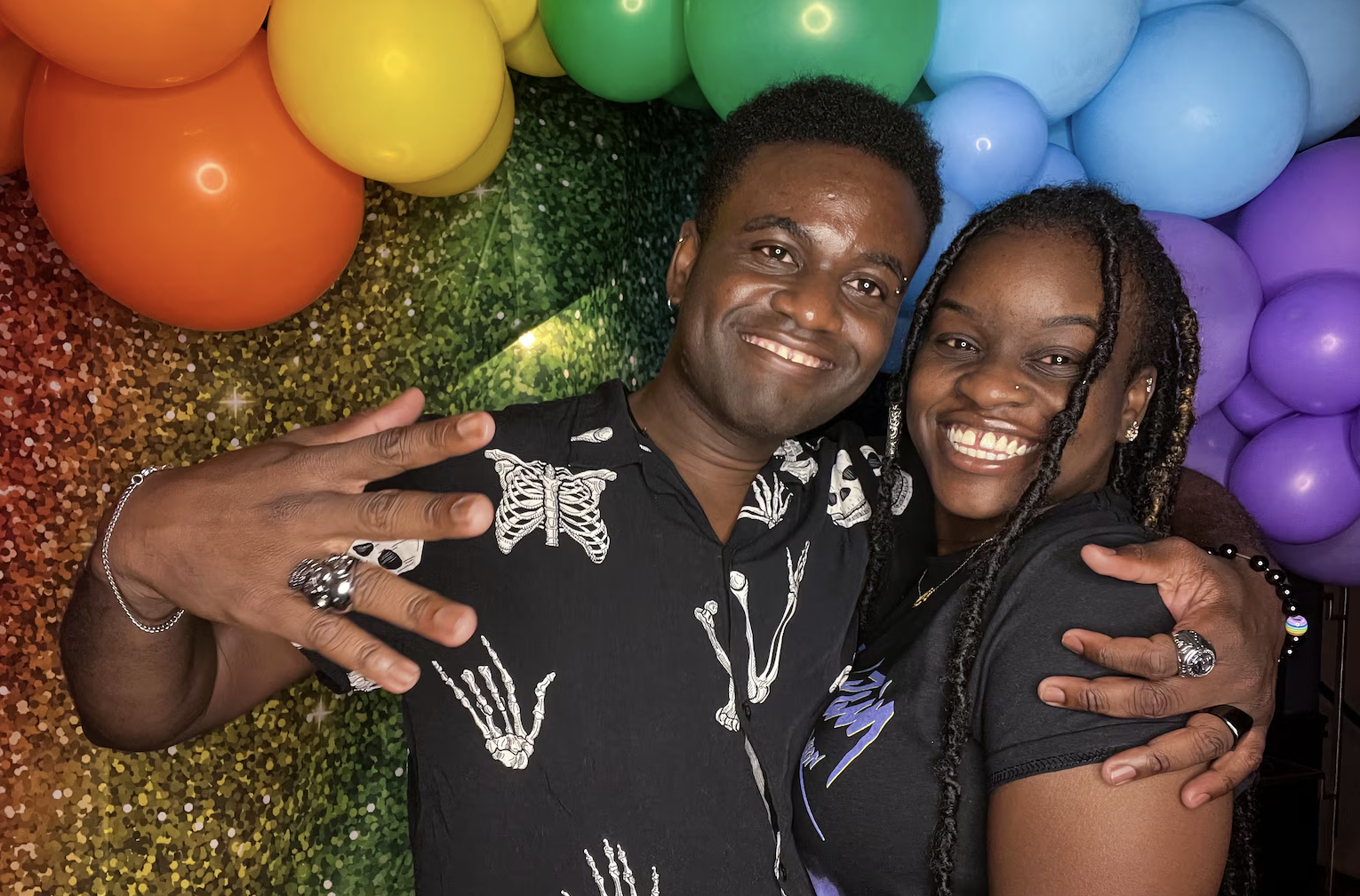
By ANTONIO PLANAS | An immigration judge on Friday issued a $4,000 bond for a Cameroonian immigrant and regional gaming champion held in federal immigration detention for the past three weeks.
The ruling will allow Ludovic Mbock, of Oxon Hill, to return to Maryland from a Georgia facility this weekend, his family and attorney said.
“Realistically, by tomorrow. Hopefully, by today,” said Mbock’s attorney, Edward Neufville. “We are one step closer to getting Ludovic justice.”
The rest of this article can be found on the Baltimore Banner’s website.

How to navigate shifting tenant expectations

Viktor Orbán ousted in Hungarian elections

Minimal version of ‘Streetcar Named Desire’ heading to Dupont Underground

Comings & Goings

An effort to increase the number of psychiatrists of color
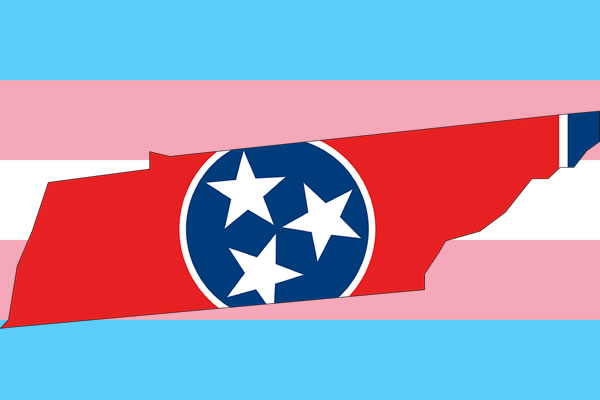
Tenn. lawmakers pass transgender “watch list” bill

LGBTQ groups condemn Trump’s threat to destroy Iranian civilization

Report: Grenell wants Russian ambassadorship

D.C. Council member honored by LGBTQ homeless youth group

Glisten’s 30th annual Day of Silence to take place April 10
-

 Tennessee5 days ago
Tenn. lawmakers pass transgender “watch list” bill
-

 Iran5 days ago
LGBTQ groups condemn Trump’s threat to destroy Iranian civilization
-
The White House5 days ago
Report: Grenell wants Russian ambassadorship
-
District of Columbia5 days ago
D.C. Council member honored by LGBTQ homeless youth group