Florida
Fla. advocacy groups issue travel warning
Equality Florida and the Florida Immigrant Coalition issued advisory on Wednesday
Two of the state of Florida’s largest civil and human rights groups took an unusual extraordinary step of issuing a warning to travelers to avoid traveling to the “Sunshine State” as a result of the policies of Republican Gov. Ron DeSantis.
Equality Florida, the largest statewide LGBTQ civil rights advocacy group, and the Florida Immigrant Coalition warned the passage of laws that are hostile to the LGBTQ community, restrict access to reproductive health care, repeal gun safety laws, foment racial prejudice, and attack public education by banning books and censoring curriculum, has made Florida a risk to the health, safety and civil liberties of those considering short or long term travel, or relocation to the state.
BREAKING: Today, we took the extraordinary step of issuing a travel advisory, warning of the risks posed to the health, safety, and freedom of those considering short or long term travel, or relocation to the state. pic.twitter.com/Wt8I5r90w9
— Equality Florida (@equalityfl) April 12, 2023
DeSantis’ press secretary Bryan Griffin told Fox News: “As the governor noted previously, this type of thing is a political stunt. We aren’t going to waste time worrying about political stunts but will continue doing what is right for Floridians.”
“As an organization that has spent decades working to improve Florida’s reputation as a welcoming and inclusive place to live work and visit, it is with great sadness that we must respond to those asking if it is safe to travel to Florida or remain in the state as the laws strip away basic rights and freedoms,” said Equality Florida Executive Director Nadine Smith. “While losing conferences, and top students who have written off Florida threatens lasting damage to our state, it is most heartbreaking to hear from parents who are selling their homes and moving because school censorship, book bans and health care restrictions have made their home state less safe for their children. We understand everyone must weigh the risks and decide what is best for their safety, but whether you stay away, leave or remain we ask that you join us in countering these relentless attacks. Help reimagine and build a Florida that is truly safe for and open to all, and where freedom is a reality, not a hollow campaign slogan.”
DeSantis, who has made the extremist policies the centerpiece of his presidential campaign strategy, has weaponized state agencies to silence critics and impose sanctions on large and small companies that dissent with his culture war agenda or disagree with his attacks on diversity, equity and inclusion.
Already, the adopted and proposed policies detailed in the travel advisory have led Florida parents to consider relocating, prospective students to cross Florida colleges and universities off their lists, events and conferences to cancel future gatherings, and the United States military to offer redeployment for service members whose families are now unsafe in the state. Businesses have spoken out against the governor’s abuse of state power to punish dissent, with Disney CEO Bob Iger calling DeSantis “anti-business and anti-Florida.” The worsening attacks, especially those targeting transgender youth, have also led to the proposal of policies around the country to provide refuge for those fleeing states like Florida.
The Florida Immigrant Coalition, a statewide immigrant rights coalition of 65 member organizations and over 100 allies, also issued a travel advisory Wednesday, urging reconsideration of travel to Florida and providing critical information about where immigrant travelers can learn more about their constitutional rights. And just weeks ago, Florida chapters of the NAACP voted unanimously to request similar warnings to the Black community about the risk of traveling or relocating to the state.
Members of the NAACP Florida Chapter gathered in Orlando in March for a conference voted to ask the group’s national board to issue the travel advisory, according to the Tampa Bay Times. Such advisories have been issued in the past for states with policies the NAACP deemed discriminatory.
“We’re just not going to take it anymore, we’ve been taking it long enough,” Isaiah Rumlin, president of the NAACP’s branch in Jacksonville, told the paper, which is supporting the push for a travel advisory.
DeSantis responded to the Florida NAACP dismissively:
“What a joke,” the governor said. “What a joke. Yeah, we’ll see how we’ll see how effective that is.”
“Our country, you know, it goes through all these — we get involved in these stupid fights,” DeSantis added. “This is a stunt to try to do that. It’s a pure stunt, and fine if you want to waste your time on a stunt, that’s fine. Look, I mean, I’m not wasting my time on your stunts. Okay. I’m gonna make sure that we’re getting good things done here. And we’re gonna continue to make this state a great state.”
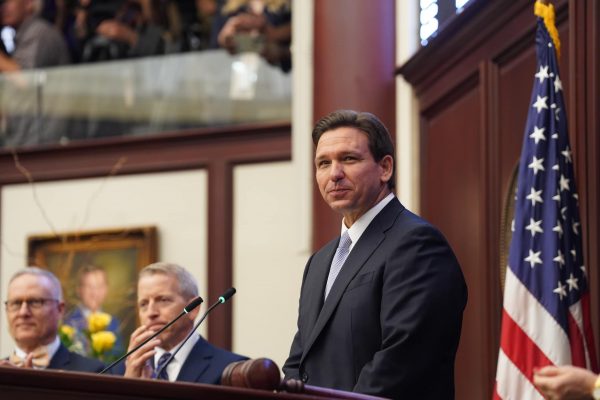
“It is with great sadness that we must respond to those asking if it is safe to travel to Florida or remain in the state as the laws strip away basic rights and freedoms.” –@1NadineSmith, @equalityflhttps://t.co/hXCPBt3lts pic.twitter.com/X1BgTDClw6
— Carlos Guillermo Smith (@CarlosGSmith) April 13, 2023
Full text of the travel warning:
MEMORANDUM
To: Interested Parties
From: Equality Florida
Subj.: TRAVEL ADVISORY: FLORIDA MAY NOT BE A SAFE PLACE TO MOVE OR VISIT
Date: April 12, 2023
Today, Equality Florida took the unprecedented step of issuing a travel advisory to individuals, families, entrepreneurs, and students warning that Florida may not be a safe place to visit or take up residence. The advisory comes after passage of laws that are hostile to the LGBTQ+ community, restrict access to reproductive health care, repeal gun safety laws and allow untrained, unpermitted carry, and foment racial prejudice. The governor has also weaponized state agencies to impose sanctions against businesses large and small that disagree with his attacks on diversity, equity and inclusion.
Florida has recently adopted a slate of hateful laws, and is fast-tracking additional measures that directly target the rights of LGBTQ+ individuals and basic freedoms broadly. Already, those policies have led Florida parents to consider relocating, prospective students to cross Florida colleges and universities off their lists, events and conferences to cancel future gatherings, and the United States military to offer redeployment for service members whose families are now unsafe in the state. These laws and policies are detailed below.
Assaults on Medical Freedom
- Florida’s Boards of Medicine and Osteopathy have adopted policies banning access to lifesaving medical care for transgender youth and the Agency For Health Care Administration has eliminated Medicaid coverage for transgender adults accessing that care
- Florida is poised to pass laws creating criminal penalties for medical providers who provide medically necessary care for transgender youth, weaponizing the courts to shred existing child custody agreements and reassign transgender youth to an unsupportive parent, and severely restricting access to prescribed medical care for transgender adults
- Florida has passed or is poised to pass bills that restrict access to reproductive health care, including a near-total abortion ban, which threatens to force people to travel out of state or seek unsafe, illegal abortions.
These policies disproportionately harm marginalized communities, including the direct impacts on the transgender community and communities of color and could lead to serious health consequences. Transgender people in Florida are facing the immediate threat of loss of lifesaving, medically necessary care and families risk interference in child custody arrangements at the hands of an unsupportive parent and a weaponized state court system. These attacks pose an imminent threat to the health and safety of all in Florida and potential travelers should be aware of the risks.
Assaults on Academic Freedom
- The Florida legislature has sought to strip Diversity, Equity, and Inclusion (DEI) programs from colleges and universities, that help LGBTQ and minority students thrive. The governor has initiated a hostile, right-wing takeover of higher education, and installed partisan allies to implement a conservative overhaul of public universities
- His administration has taken aim at AP African American studies, threatening to sever ties with the College Board over the inclusion of queer history and intersectionality in the course, and college majors, including gender studies
These actions by the Governor pose a serious threat to academic freedom, free speech, and the pursuit of knowledge. DEI departments play a crucial role in promoting diversity and inclusion on campus, and their removal undermines the ability of students and faculty to engage in critical discussions about issues of race, gender, and identity.
Furthermore, the replacement of university presidents with political appointees threatens the independence of higher education institutions, and undermines the ability of these institutions to make decisions that are in the best interest of their students, faculty, and staff. These attacks on public education are deeply concerning, and further reinforce the message that Florida is not a welcoming state for people from all backgrounds. We urge individuals, families, entrepreneurs, and students to consider the implications of traveling to or residing in Florida, and to support efforts to defend public education and academic freedom in the state.
Censorship and Erasure of the LGBTQ+ Community
- Florida has passed a prohibition on classroom instruction on sexual orientation and gender identity in public schools
- This law has already precipitated a raft of damaging impacts in school districts across the state, including
- Hundreds of book challenges and bans targeting titles written by LGBTQ authors and/or including LGBTQ characters
- The refusal of districts like Miami-Dade to recognize LGBTQ History Month
- The removal of rainbow Safe Space stickers
- The censorship of graduation speech content to remove references to LGBTQ identities
- Warnings to educators and administrators to hide family photos
- Lawmakers are currently considering a bill to extend that prohibition through 8th grade, while the Department of Education is set to decide on a policy proposal that would expand it to all grades and revoke teacher licenses over violations
- Florida is poised to pass a bill that would ban transgender people from updating their birth certificates to reflect their gender identity
The infamous Don’t Say LGBTQ law has made Florida synonymous with the anti-LGBTQ movement to empower government censorship and book banning across the nation. That law, along with additional proposals being considered, has turned the state’s classrooms into political battlefields and is telegraphing to LGBTQ families and students that they are not welcome in Florida.
Assaults on Arts, Entertainment, and Sports Participation
- Florida has passed a ban on transgender women and girls from participating in school sports consistent with their gender identity
- Lawmakers are poised to pass restrictions on certain live drag performances, stage shows, and local pride celebrations, limiting parents’ ability to determine what content may be suitable for their families
The far-right’s obsession with drag queens has put LGBTQ people in physical danger across the country, but especially in Florida. In 2022 alone, the LGBTQ media organization GLAAD found 141 incidents of anti-LGBTQ protests and threats targeting drag events. Right-wing media like Fox News and Libs Of TikTok have misrepresented what occurs at drag events and taken examples out of context to create fear and misunderstanding. This has had real world consequences, with protests and threats of violence against venues hosting drag shows.
In Florida, Orlando organizers were forced to cancel Drag Queen story hour due to threats from Neo-Nazis. This last December in Lakeland, masked individuals in Nazi gear, waving Nazi flags ambushed a charity event hosted by drag queens while projecting hateful messages onto local buildings.
Assaults on Business
- DeSantis has recently signed a bill that restricts businesses from providing diversity and inclusion training to their employees, a blatant attempt to dictate to businesses what they can and cannot do, and to prevent them from training their employees to be better prepared for a diverse workforce and customer base
- The Florida legislature is expected to pass SB 1438, which weaponizes state agencies with more power to politically target LGBTQ-friendly businesses who open their doors to live drag performances, with threats of fines, license revocation, and jail time. Individuals that admit minors with an accompanying parent would be charged with first degree misdemeanor crimes.
- The governor has weaponized the state legislature against businesses that stand with their LGBTQ employees and clients and against his agenda, most notably wielding two special sessions of the legislature to punish Disney, the state’s largest single-site employer
The Miami Herald recently reported that DeSantis-controlled agencies sought to punish and revoke the liquor license of an Orlando establishment that hosted a live drag performance even after the state’s own investigators reported that they saw nothing “lewd.” The discriminatory targeting of LGBTQ-friendly businesses by the state will have a broader chilling effect over drag performances, an intended consequence of this type of censorship.
Disney has also recently denounced the governor’s actions against them, with CEO Bob Iger calling the state’s policies “anti-business and anti-Florida.”
These laws and actions are harmful to businesses and heir employees, as they undermine efforts to create inclusive workplaces and hinder the ability to effectively engage with diverse customers and clients. It also sends a message that Florida is not a welcoming state for people from all backgrounds and that discrimination is acceptable.
Efforts to Foment Racial Prejudice
- Florida has passed a bill that would limit the honest teaching of history and systemic racism in schools
- The state passed another that restricts voting access for people of color and is currently considering additional voting restrictions
- DeSantis’ new elections police have abused their power to aggressively target and prosecute returning citizens, mostly Black Floridians, for voting after official government entities told them they were eligible to vote
These laws create an unsafe and unwelcoming environment for LGBTQ+ individuals, women, people of color and other marginalized communities. They send a message that discrimination and prejudice are acceptable in Florida, and we cannot in good conscience encourage people to visit or move to a state that is openly hostile to their basic human rights.
As a result of these dangerous and discriminatory laws, we urge individuals, families, entrepreneurs and students to reconsider travel plans to Florida and to consider the impact that their travel and economic choices can have on promoting equality and justice for all.
Repealing of Gun Safety Laws
The passage of deadly permitless carry makes Floridians less safe and signals the reversal of the progress made after Pulse and Parkland. Coupled with the state’s infamous Stand Your Ground law, Permitless Carry threatens to exacerbate Florida’s violent crime rate at a time when the state’s homicide rate ranks 20th in the nation, exceeding both California and New York.
LGBTQ Floridians know all too well that the gun lobby’s obsession with easy access to deadly weapons can make hatred and bigotry lethal. Gun violence is not abstract or hypothetical — it is stealing our loved ones. Those considering travel to Florida should weigh the potentially deadly consequences of the DeSantis administration’s decision to eliminate basic training and permitting requirements in order to concealed carry a firearm.
Attacks on Immigrant Communities
Florida has passed and is poised to pass legislation targeting immigrant communities, with consequences that could include arrest for operating a vehicle, no matter the state you are from, reduced access to health care services, and compromised safety. A bill currently being considered by the Florida legislature could impose criminal penalties on any who shelter, support, or provide transportation to undocumented immigrants. And these moves come just months after Gov. DeSantis trafficked migrants from Texas to Massachusetts in a cruel scheme to use their suffering as campaign marketing material.
The threats posed to immigrants in Florida led the Florida Immigrant Coalition to issue its own advisory urging reconsideration of any travel to the state. That advisory can be found here.
Conclusion
Taken in their totality, Florida’s slate of laws and policies targeting basic freedoms and rights pose a serious risk to the health and safety of those traveling to the state. We regret that these attacks have already led many to flee the state and are driving others to consider relocation. And, in a state whose economy is fueled by visitors from around the world, it is with great sadness that Equality Florida has had to take the extraordinary step of responding to inquiries by issuing an official advisory warning about the risks of travel to the state.
Equality Florida will continue providing information and resources to those impacted by these laws and policies. Visit our Open Doors Florida directory to find businesses with nondiscrimination policies and procedures. And if you experience discrimination, report it to our team here or call our Main Office at 813-870-3735.
It is our hope that those Floridians who can, will stay and engage more deeply in the fight against the state’s all-out assaults on democracy and freedom. This moment calls for a grassroots movement in defense of justice and equality for all — so that we can turn back the tide of right wing authoritarianism, recommit to building a state that is safe and open to all, and once again celebrate Florida as a free state.




Florida
For LGBTQ youth starting with nothing, Pride House in Florida offers help
Many residents aged out of foster care or were kicked out by parents
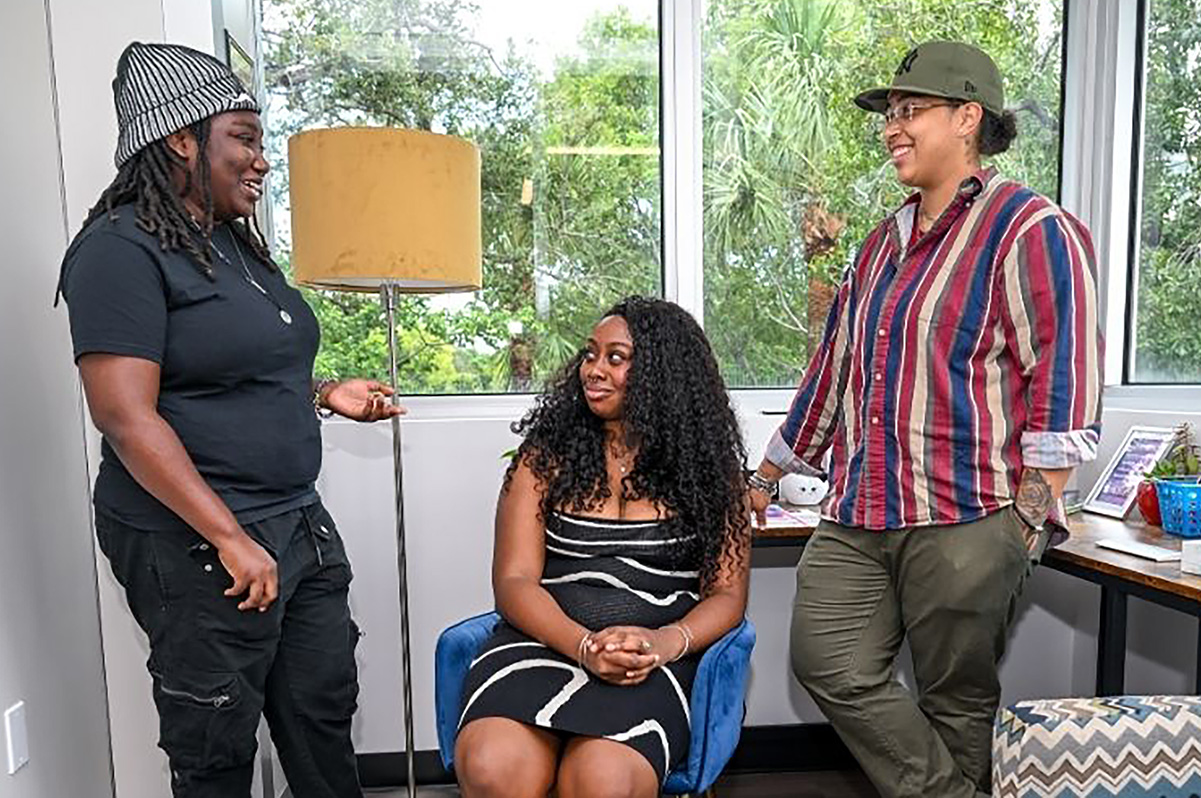
Economic mobility usually assumes a starting line: a bedroom to return to, a parent to call, a place to regroup after things go wrong. For many LGBTQ young adults in South Florida, that starting line never existed.
That’s why Our Fund Foundation, SunServe, and Sunshine Cathedral partnered to build Sunshine Pride House, a 12-bed transitional home helping LGBTQ young adults stabilize, find work, and prepare for independence.
For the residents who live there, that support shows up in small, ordinary ways.
In the evenings, the house settles into a rhythm: dinner prep, shared chores, quiet conversations at the kitchen counter. As house mother, Martha Acevedo anchors the day-to-day life of Sunshine Pride House, creating a sense of consistency many residents have never known. A few nights a week, she cooks home-prepared meals, often inviting residents to join her in the kitchen — chopping, stirring, learning by doing.
For some, the meal itself is the moment that lands hardest.
“Some of them tell me they haven’t had a cooked meal in such a long time,” Acevedo said. “When I serve the food and they say ‘thank you,’ you can see it. They’re kids. They just needed a home.”
Acevedo says the reactions still catch her off guard. What feels routine to her — cooking, setting plates, sitting down together — can feel extraordinary to young people who have spent months or years without a consistent place to eat.
“When I cook, I do it proudly,” she said. “I give a lot of love.”
According to research from The Trevor Project, 28% of LGBTQ youth have experienced homelessness or housing instability at some point in their lives. Data from True Colors United underscores the scale of the disparity — LGBTQ youth are 2.2 times more likely to experience homelessness than non-LGBTQ youth.
“So these kids are coming to the house because they’ve either aged out of foster care or they’ve been kicked out of their homes because they’re LGBTQ,” said Tony Lima, CEO of SunServe. “You kind of have to start from zero. That’s the common theme of all of these youth.”
Those experiences carry lasting consequences: LGBTQ youth who have been unhoused report significantly higher rates of depression, anxiety, and other mental health challenges than their housed peers.
“In order to have proper mental health, that’s conducive to living a full life, you need to have a home,” Lima said. “You need to have a place to be able to rest your head.”
That reality isn’t unique to LGBTQ youth, though queer young people are far more likely to experience it — and far less likely to have family support to fall back on.
Elijah Manley’s experience with homelessness began during the 2008 financial crisis, when he was about 9 years old. After his single mother lost her job, his family was evicted and spent years cycling through instability — living in their car, rotating between friends’ homes, staying in an overcrowded apartment with relatives, and at one point sleeping in a storage unit in Lauderhill. Each morning, Manley and his siblings woke before dawn to shower at beach facilities before heading to school, trying to maintain a sense of normalcy without a permanent home.
Manley, who is now 27, was not yet out as queer during this period, and his homelessness was driven by economic collapse rather than family rejection. Still, he says the experience shows how early housing instability — regardless of cause — can derail childhood, education, and long-term opportunity. His family’s situation improved only gradually, and he credits a mix of early work, community connections, and “a little luck” for eventually finding stability — a path he notes many others never get.
Today, Manley points to LGBTQ nonprofits like SunServe as essential lifelines — especially for young people who face both economic instability and identity-based rejection.
“They’re very vital and lifesaving. Without them, a lot of people would be in a much worse situation,” he said. “They keep our communities housed and fed and connected to the social services and healthcare they need. They’re filling a void the government hasn’t filled.”
Manley, who has run for public office several times and is currently running for Congress to represent Florida’s 20th district in West Broward, argues that relying on private charity to fill that void leaves too many people behind.
“These are services the government should be providing or supporting,” he said. “Charity should not be public policy. It should be provided to everybody, regardless of their income, and not dependent on somebody else’s charity.”
Housing is Just The Starting Point
For now, Sunshine Pride House exists largely because private donors stepped in where public dollars did not. While public agencies can and do fund programs that reach LGBTQ people, government funding is often constrained by nondiscrimination and open-access requirements that make it difficult to support services explicitly limited to a single identity group.
The home is owned by Sunshine Cathedral, while SunServe runs the day-to-day programming and services inside. With no state or federal grants tied to the house itself, its roughly $250,000 annual operating budget is raised through individual donors and philanthropic partners, coordinated in large part through Our Fund Foundation.
“There’s no way to do this work without being clear about the population we’re serving — and that cuts off a lot of funding possibilities,” said David Jobin, CEO of Our Fund.
The funding covers housing, staffing, life coaching, and wraparound support — allowing the program to exist in a policy environment where targeting services to LGBTQ youth often disqualifies programs from public dollars altogether.
The idea for Sunshine Pride House began not as a programmatic expansion, but as a personal intervention. More than five years ago, philanthropist Michael Kalb approached Our Fund Foundation with a simple question: what would it take to create a safe, stable home for LGBTQ young people who had nowhere else to go?
Kalb had been deeply affected after witnessing unhoused youth being mocked in public spaces, and he believed housing could change the entire trajectory of a young person’s life. Working closely with Jobin, that initial conversation grew into a multi-year effort to design a model tailored specifically to South Florida’s LGBTQ youth.
“People hear ‘housing’ and think that’s the solution, but housing is just the starting point,” Jobin said.
Kalb ultimately invested more than $600,000 into the project, joined by fellow donor Terry Merlin, while Our Fund helped assemble the partnerships needed to make it work. Sunshine Cathedral agreed to purchase and own the property, drawing on its decades of experience managing community housing, while SunServe took on day-to-day operations and services inside the home. What opened first as a pilot in a rented house evolved into the current 12-bed facility — now fully owned, privately funded, and operating as one of the only LGBTQ-specific transitional housing programs in the region.
“If we want to continue to bring these services to life, that requires funding — and we’re really going to need help to do that,” said John Marler, Communications Director of SunServe. “Government funding has been harder and harder to come by, and foundation funding and corporate sponsorships are becoming more competitive.”
Kalb, who died unexpectedly in December, often said a safe place allows young people to “finally exhale,” and Sunshine Pride House stands as a direct reflection of that belief.
The structure of Sunshine Pride House reflects that focus on stability first, mobility second. The home is designed as short-term transitional housing rather than a permanent shelter.
They Have Nowhere Elsewhere to Go
For Mario DePedro, who helps oversee the program, the work often means stepping into roles most parents fill by default.
“We have youth who are just leaving home for the first time and their parents don’t support them. They have nowhere else to go. Now it’s up to us to take the place of what the parent should be,” he said.
Inside the house, residents share bedrooms and follow a structured daily routine. They are required to work or attend school, participate in therapy, and meet regularly with life coaches who help them set goals.
“We call it a future plan. We’re helping them with the goals they want to reach, so they can be successful in their life,” he said.
That plan can include finishing high school, enrolling in college, securing steady employment, learning financial literacy, or preparing for independent housing.
Many residents arrive carrying layers of trauma that extend far beyond the moment they lost housing.
“They’re coming from a lot of trauma,” DePedro said. “Being kicked out at 18 usually isn’t the first trauma — there’s often a cycle of abuse that leads up to that moment.”
For residents who began adulthood without savings, family support, or stable housing, that planning process can be the difference between cycling back into crisis and building a path toward long-term economic stability.
“They need jobs. They need mental health care. And they need community — they want to feel like they’re not alone in it,” he said.
The needs are immediate and interconnected. That’s why the house is built around flexibility rather than rigid benchmarks.
“This is absolutely not one-size-fits-all. Everything we do is client-centered and client-led,” DePedro said. “The reality is that we’re saving kids’ lives in this house. These are people who have nowhere else to go.”
Because of safety concerns, the location of Sunshine Pride House is not publicly disclosed, and residents are not identified.
“We’re really putting young people on a path for success that they might not otherwise achieve in their life without this lift,” said Jobin. “You hear the words ‘Pride House’ and you think it’s just a roof. But it’s the wraparound services that put young people on trajectories for successful lives.”
Instead of starting a new nonprofit, Jobin said the foundation focused on partnering with organizations already doing the work — bringing together SunServe, Sunshine Cathedral, and others to build a model that could move quickly and last.
Sunshine Pride House doesn’t promise transformation or guarantee success. What it offers is something far more basic — time, safety, and a place to rest their head. For young people who started adulthood with nothing, that pause can be enough to change what comes next.
(Editor’s note: This article is part of a national initiative exploring how geography, policy, and local conditions influence access to opportunity. Find more stories at economicopportunitylab.com.)
Florida
Gay Fla. Democrat Elijah Manley sees opportunity in Trump’s second term
State’s 20th Congressional District’s includes Broward, Palm Beach Counties
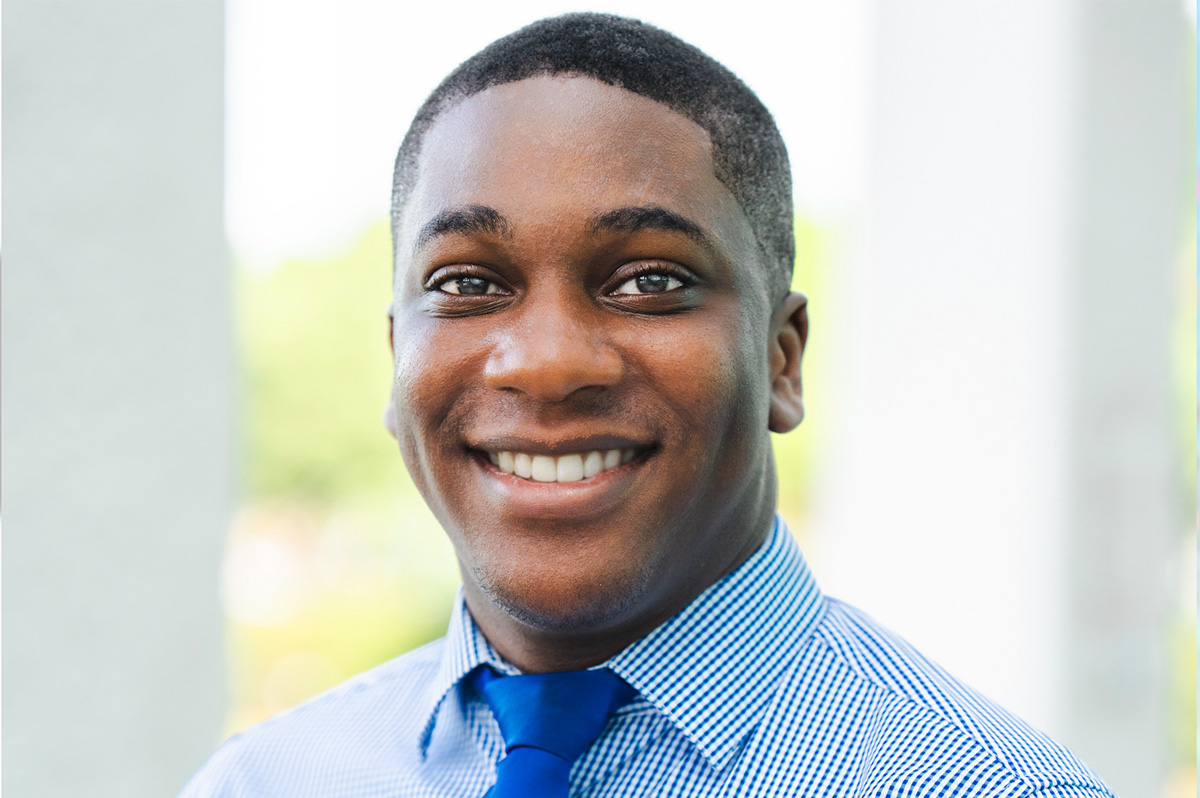
Just over two and a half miles from President Donald Trump’s primary residence lies one of Florida’s most reliably Democratic congressional districts. There, a 27-year-old progressive is mounting a campaign centered on resisting what he calls the Trump-Vance administration’s attacks on civil rights, immigrants, and LGBTQ Americans.
Elijah Manley, an openly gay Democrat, sat down with the Washington Blade to discuss why he is running for Florida’s 20th Congressional District, why he believes this moment calls for a new generation of leadership, and what he hopes to accomplish if elected to Congress.
Born and raised in Fort Lauderdale’s historic Sistrunk neighborhood — the city’s oldest African American community — Manley was raised by a single mother who struggled to make ends meet. His family experienced housing insecurity and, at one point, homelessness, experiences he says continue to shape both his politics and his policy priorities.
For Manley, those experiences are precisely what he believes Congress is missing.
“I think now the country is in need of somebody like me, with my story, my lived experience, the struggles I’ve been through in my life. We’re going through a really dark time in the country with the Trump administration coming for our civil rights and an economy that is not working for everybody. In a time where we have MAGA fascism, we need progressive leadership, and we need people who are really going to do the work of fighting back and resisting and obstructing Donald Trump and MAGA Republicans’ agenda in Congress.”
Manley said his campaign is also about ensuring people from marginalized communities — those without wealth, political connections, or institutional backing — have a voice in Congress.
“I think my story sets me aside from everyone else. I’m the only one in this race who has a story to tell voters that lines up with their lived experiences and their struggles. Growing up in poverty and experiencing homelessness was instrumental in developing my worldview and how I fight for people, and I think that’s something that’s absent on Capitol Hill.”
He argues that lived experience offers a perspective often missing on Capitol Hill.
“There are too many lawyers and people coming from professional and political backgrounds. Then you have somebody like me who is rooted in the story of this district. That’s what sets me apart from everyone else in this race.”
According to his campaign website, Manley’s interest in public service dates back to childhood. He cites the election of President Barack Obama as a defining moment that inspired him to pursue politics.
“He was inspired by Barack Obama’s historic election, igniting his passion for public service. He began writing to elected officials, speaking at school board and city council meetings, and advocating for issues affecting his community,” the website states. It goes on to describe his involvement in criminal justice and law magnet programs, Navy JROTC, and hundreds of hours of volunteer service while in high school.
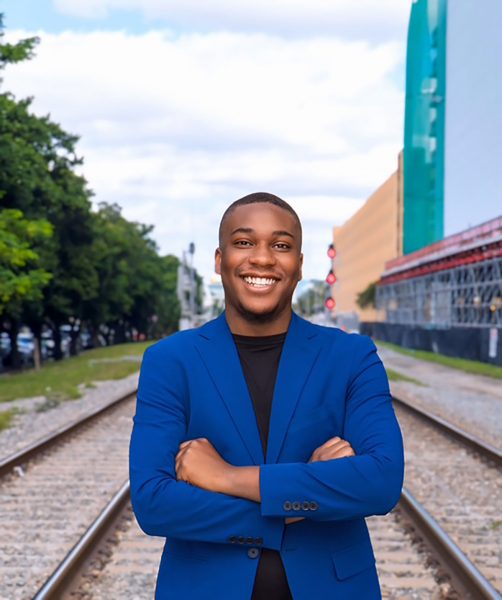
As an openly gay candidate running during Trump’s second administration, Manley said Congress must take a far more aggressive approach to protecting LGBTQ Americans, particularly as Republican-led states continue passing restrictions targeting transgender people.
“I think we need to bring the hammer down on some of these states. I’m not one of these states’ rights people — Congress has the power to preempt laws that states pass through the Supremacy Clause. There’s never been a more important time in our history when we’re seeing fascism, we’re seeing an administration out of control, and we need Congress to act.”
His campaign has also drawn criticism from both Republicans and establishment Democrats for his positions on Gaza, immigration, and his call to abolish U.S. Immigration and Customs Enforcement.
Manley said abolishing ICE does not mean eliminating immigration enforcement altogether.
“I’m not saying there should be no immigration laws. We want laws around immigration, but we want dignity. We don’t need a hypermilitarized, paramilitary group chasing people through the streets, terrorizing communities, churches, schools, and families.”
His personal experiences also inform his healthcare agenda.
“When we talk about healthcare, my experience growing up on Medicaid is seeing the failure of the government to expand Medicaid here in Florida, and now we’re seeing cuts from the Trump administration. I’m not just looking at statistics or numbers on paper — this is based on lived experience. I know how the people in this district are going to be hurt by these policies because I’ve lived it.”
California Democratic Congressman Ro Khanna, who has generated early buzz as a potential 2028 presidential contender for his “progressive capitalist” approach to governing, has endorsed Manley’s campaign, giving the first-time congressional candidate one of his highest-profile endorsements.
Manley faces six other Democrats in the primary, including U.S. Rep. Debbie Wasserman Schultz and former U.S. Rep. Sheila Cherfilus-McCormick, along with four Republican candidates in the general election field. Cherfilus-McCormick resigned from Congress ahead of a potential expulsion and is running again while facing federal criminal charges.
Despite running as the youngest candidate in the field, Manley said he hopes voters leave the race remembering one thing above all else.
“I want people to remember bold and authentic leadership. I want them to know I’m running because I’ve been through what people are going through right now — and it’s not that I’ve been through it, I’m actually still going through it. We need bold people who are going to fight for everybody and stand up for what’s right, and that’s what I hope voters see when they go to the polls.”
Florida
Former Fla. gubernatorial candidate Andrew Gillum arrested on drug charges
Democrat narrowly lost to DeSantis in 2018, later came out as bisexual
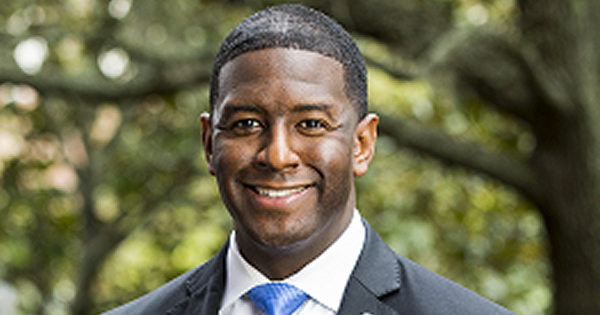
Andrew Gillum, the former Democratic nominee for governor of Florida and former mayor of Tallahassee, was arrested on drug possession charges in Alabama last week.
Police in Daphne, Ala., said they pulled Gillum over for erratic driving and found marijuana and methamphetamine in his vehicle. He was charged with possession of marijuana and unlawful possession of a controlled substance, according to the Daphne Police Department. Jail records show he was arrested on July 2 and released on July 3, the Associated Press reports.
Gillum, the first Black nominee of a major political party for governor in Florida, lost the 2018 election to current Republican Gov. Ron DeSantis in a highly contentious race.
Once considered a rising star in national politics, Gillum served in Tallahassee’s local government, first as a city commissioner and then as mayor of Florida’s capital from 2014- 2018.
The Daphne Police Department said officers stopped Gillum’s vehicle around 10:45 p.m. and initiated a probable cause search after one officer noticed a glass pipe on the center console.
During the search, officers found several rolled marijuana cigarettes and three packages containing a substance that tested positive for methamphetamine, police said.
The day after his arrest he was charged with possession of dangerous drugs, use or possession of drug paraphernalia, and possession of marijuana.
In 2020, Gillum was involved in a similar incident when he was found in a Miami Beach, Fla., hotel room with a man identified as an escort who had apparently overdosed on drugs. Police also found three bags of suspected crystal methamphetamine in the room. The man survived, and no one was ever charged with a crime.
Later that year, Gillum came out as bisexual during an appearance on “The Tamron Hall Show,” where he discussed his struggles with drug and alcohol addiction and his decision to seek treatment following the 2020 incident.
In the same interview he shed light onto this, saying his substance use was a byproduct of the emotional struggles he experienced after losing the 2018 gubernatorial race to DeSantis.
This is not the first time Gillum has faced legal scrutiny.
During his 2014 mayoral campaign, he faced allegations of misconduct after hiring private equity investor Adam Corey as his campaign treasurer, raising questions about a potential conflict of interest. However, the FBI ultimately concluded there was no conflict of interest.

Vote now! Best Of LGBTQ DC readers’ choice awards

Meet the LGBTQ candidates running for U.S. House, Senate

Ana Brnabić becomes world’s first openly lesbian head of state

529 openly LGBTQ candidates running in Brazilian election