The White House
White House debuts new actions to protect the LGBTQ community
The administration is coordinating efforts across different federal agencies
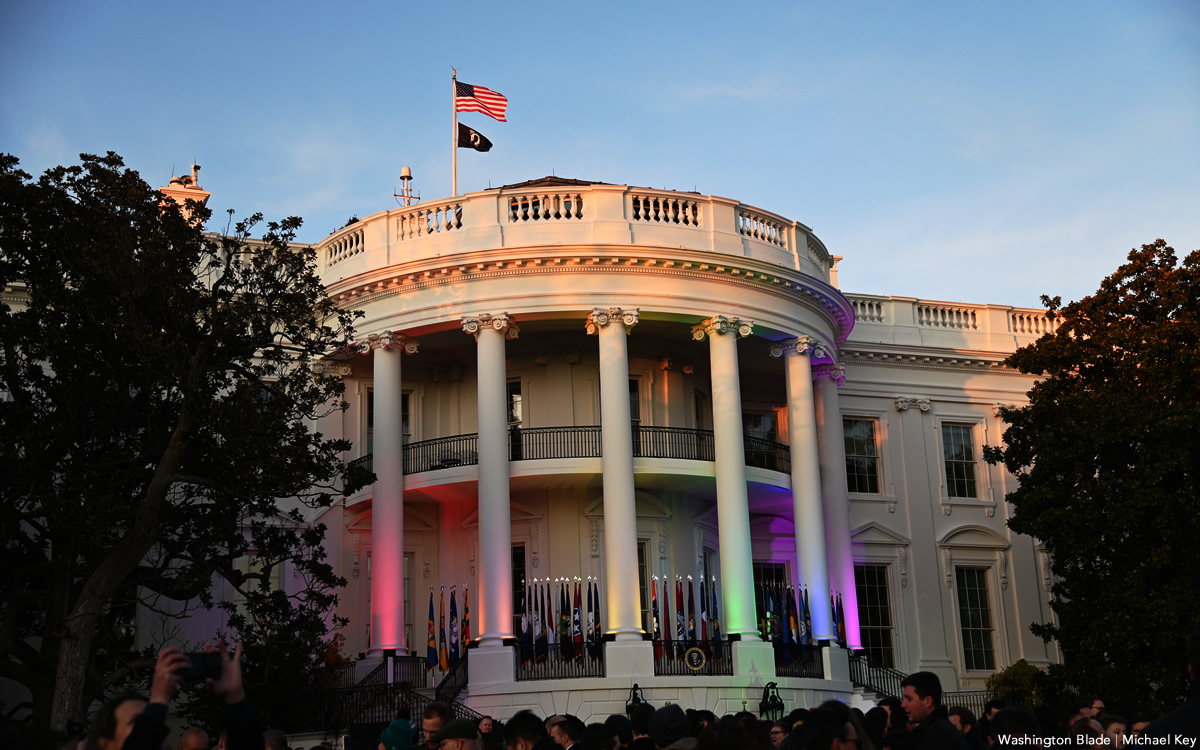
White House Domestic Policy Advisor Neera Tanden, during a call with reporters on Wednesday, announced a slate of new actions the administration will undertake to better protect the LGBTQ community.
These will focus on three major areas, she said: safety and security, issues for LGBTQ youth like mental health and housing insecurity, and combatting book bans.
President Joe Biden has “already developed a historic record of supporting the LGBTQ community,” Tanden said, noting that he and First Lady Dr. Jill Biden are also prepared to “host the largest Pride celebration in White House history” on Thursday evening.
At the same time, she said, LGBTQ Americans are now experiencing “a whole range of attacks” from “hateful, un-American legislation” to “a disturbing surge in violent threats.”
Administered by the U.S. Department of Homeland Security in partnership with the U.S. Department of Justice and U.S. Department of Health and Human Services, the administration’s “community safety partnership” will “work hand in hand with LGBTQ community organizations” to provide safety training and resources, Tanden said.
For example, she said, “and it’s so unfortunate to have to say this,” but the partnership will help LGBTQ community centers “prepare for the worst” – including “bomb threats, active shooters, and cybersecurity threats – while also protecting “healthcare providers who serve the community by working with doctors and medical associations.”
Actions for LGBTQ kids that Tanden previewed on Wednesday include HHS’s development of a behavioral health care advisory for transgender and gender diverse youth, to help ensure young people are given the best evidence-based care.
On Thursday, she said, the U.S. Department of Housing and Urban Development will launch federal initiatives to combat LGBTQ youth homelessness and new regulations to “protect LGBTQ kids in foster care.”
Finally, Tanden said, the U.S. Department of Education’s Office for Civil Rights “will appoint a new coordinator” to combat book bans, which disproportionately target, for exclusion, materials with LGBTQ characters or themes, or communities of color.
DoE’s coordinator will “offer trainings and resources to schools to help them understand that students have a right to learn free from discrimination, and that book bands may violate federal civil rights laws if they create a hostile environment for students,” Tanden said.
A senior administration official, responding to a question from the Washington Blade following Tanden’s remarks, elaborated on the scope of the community safety partnership.
Community organizations, they said, will include “health clinics, community centers, and organizations that are planning Pride celebrations, but it also includes small businesses like restaurants and bars that have been targeted because they’re run by LGBTQI+ Americans or because they host events that support that community.”
“We’ll be encouraging and reaching out directly to organizations that have been impacted by these violent threats to help make sure that they have the training and the resources they need to stay safe,” the official said.
They added that DHS and DoJ, in anticipation of the possibility that threats will increase in June, “have both been working proactively over many months leading up to Pride to communicate with state and local law enforcement about the threats that the community may face and to help local pride organizers get access to any federal safety resources they may need to help keep the community safe.”
Asked to explain how HHS’s healthcare focused initiatives will be reconciled with restrictions targeting medical interventions for trans youth in conservative states, the official noted ongoing efforts to fight back – including by federal rulemaking and litigated challenges of policies that violate Americans’ rights.
When it comes to the actions previewed by Tanden, the official said, “Almost half of LGBTQI+ youth say they seriously considered committing suicide in the past year, and that attacks on their rights have made their mental health worse. That’s a serious crisis that we want to take on and this advisory will help.”
Additionally, they said, “HHS is announcing that they’re going to release new guidance to states to help them use federal funds to offer dedicated mental health services to the LGBTQI+ community,” while “the Substance Abuse and Mental Health Services Administration, or SAMSA, is releasing $1.7 million in new federal funding for programs that support the health and mental health of LGBTQI+ youth by investing in programs that are focused on family affirmation.”
Responding to other questions about anti-LGBTQ legislation and the rising transphobic and anti-LGBTQ sentiment in America, the official offered some insight into the Biden-Harris administration’s positions on these matters more broadly.
“Part of our role here is to lift up the stories of transgender kids and their families to help the American people understand what is happening to families who, as the President says aren’t hurting anyone but are being hurt by these laws,” said the official.
“These aren’t just attacks on the rights of LGBTQI+{ Americans, they are part and parcel of a coordinated attack on our democracy,” they said. “We’re not just talking about laws that target transgender kids. These are really laws that get at the heart of our basic freedoms and values: the right to free expression, the right to make decisions about your own body, the right to parent and raise your children.”
The official added, “Opponents of LGBTQI+ Americans are leading a pretty significant campaign of disinformation,” which have included “the same types of hateful lies and stereotypes that have been used against our community really for decades and for generations.”
“President Biden’s new executive actions today, protecting LGBTQI+ communities from attacks on their rights and safety, are an important step in the right direction, and to me, they’re personal,” said AmeriCorps CEO Michael D. Smith in a statement Thursday.
“When I was appointed by President Biden to lead AmeriCorps, defending and advancing the rights of LGBTQI+ communities was one of my top priorities, because we work and serve in communities like the one I grew up in,” Smith said.
“As a Black gay man, I’m truly honored – especially on days like today – to serve with President Biden and Vice President Harris, who have continuously fought for underserved communities across our great country.”





Hungary
Vance speaks at Orbán rally in Hungary
Anti-LGBTQ prime minister trailing ahead of April 12 vote
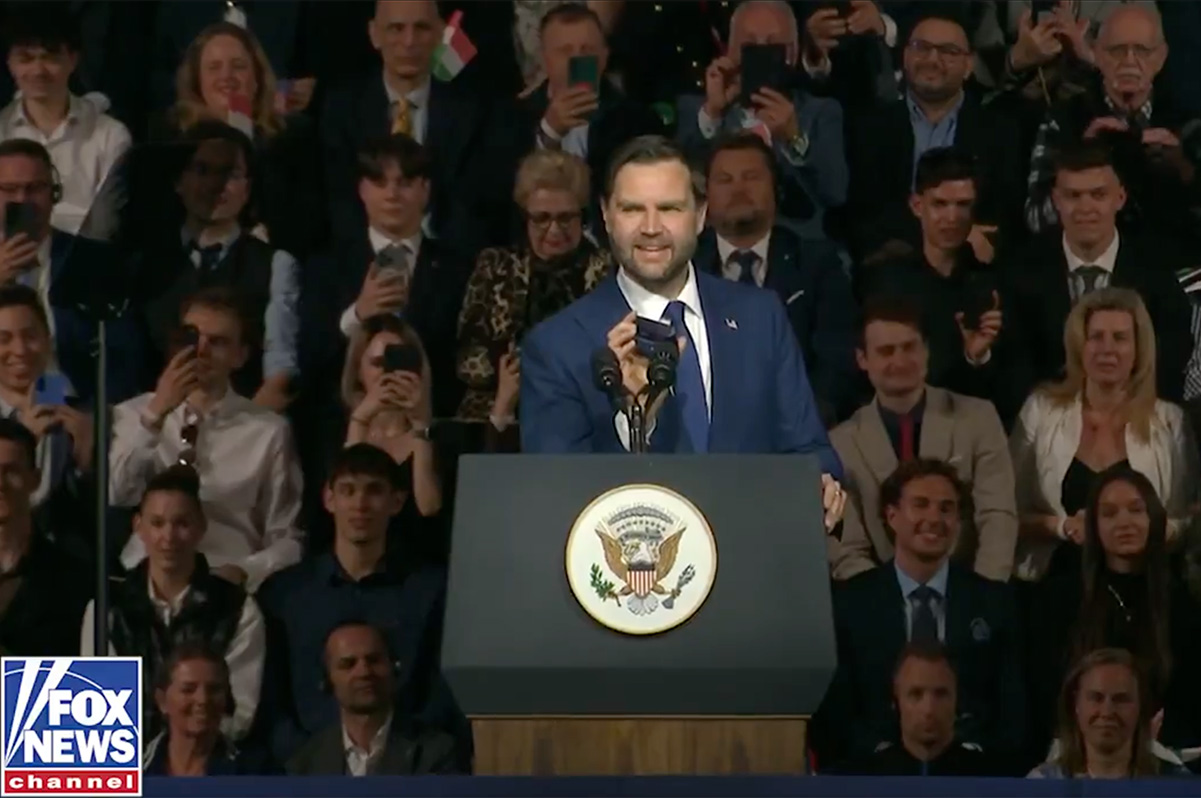
Vice President JD Vance on Tuesday urged Hungarians to support Prime Minister Viktor Orbán in the country’s April 12 elections.
“We have got to get Viktor Orbán re-elected as prime minister of Hungary,” Vance told Orbán supporters who gathered at Budapest’s MTK Sportpark.
Vance and Orbán on Tuesday met before they held a press conference in Budapest. Orbán also spoke at the rally.

The U.S. vice president after he took to the stage called President Donald Trump, who told the crowd he is “a big fan of Viktor” and is “with him all the way.” Vance, as he did during Tuesday’s press conference with Orbán, criticized the European Union.
“We want you to make a decision about your future with no outside forces pressuring you or telling you what to do. I’m not telling you exactly who to vote for, but what I am telling you is that the bureaucrats in Brussels, those people should not be listened to,” said Vance. “Listen to your hearts, listen to your souls, and listen to the sovereignty of the Hungarian people.”
Vance in his speech noted “across the West, we’ve got a small band of radicals” who, among other things, “condemn children to mutilization and sterilization in the name of gender care.” Vance also criticized a “far-left ideology given quarter in university circles, in the media, and in our entertainment industry, and increasingly among bureaucrats on both sides of the Atlantic.”
Vice President JD Vance speaks at MTK Sportpark in Budapest, Hungary, on April 7, 2026
Orbán has been in office since 2010. He and his Fidesz-KDNP coalition government have faced widespread criticism over its anti-LGBTQ crackdown.
A Hungarian activist with whom the Washington Blade previously spoke said it is “impossible to change your gender legally in Hungary” because of a 2020 law that “banned legal gender recognition of transgender and intersex people.” Hungarian MPs the same year effectively prohibited same-sex couples from adopting children and defined marriage in the country’s constitution as between a man and a woman.
The European Commission in 2022 sued Hungary, which is a member of the EU, over the country’s anti-LGBTQ propaganda law.
Hungarian lawmakers in March 2025 passed a bill that banned Pride events and allowed authorities to use facial recognition technology to identify those who participate in them. MPs later amended the Hungarian constitution to ban public LGBTQ events.
Upwards of 100,000 people last June defied the ban and marched in Budapest’s annual Pride parade.
Polls indicate Orbán is trailing Péter Magyar and his center-right Tisza party ahead of the April 12 election. Vance at Tuesday’s rally told Orbán supporters that he and Trump “want you to make a decision about your future with no outside forces pressuring you or telling you what to do.”
“I’m not telling you exactly who to vote for, but what I am telling you is that the bureaucrats in Brussels, those people should not be listened to,” said Vance. “Listen to your hearts, listen to your souls, and listen to the sovereignty of the Hungarian people.”
“Unlike some of the leadership of Brussels, I’m not threatening you or telling you that we’re going to withhold funds to which you’re legally entitled,” he added. “You will make the decision about Hungary’s future.”
The White House
White House ends protections for trans students in multiple school districts
Cape Henlopen School District in Delaware among administration’s targets

The Department of Education has terminated agreements with five school districts and a college aimed at protecting the rights of transgender students, backtracking requirements made in prior administrations, according to the Associated Press.
Allowing the reversal of these federal obligations removes formerly mandatory measures, including faculty training on responding to a student’s preferred name and pronouns, and policies allowing trans children to use bathrooms that align with their gender identity.
This policy change is a major shift from past democratic-led administrations, and will impact Delaware Valley School District in Pennsylvania, Sacramento City Unified School District in California, Cape Henlopen School District in Delaware, Fife School District in Washington, and La Mesa-Spring Valley School District, as well as Taft College in California.
Delaware Valley School District received notice from the Trump-Vance administration in February and has since voted to roll back anti-discrimination protections. Other schools, like Sacramento City Unified School District, said the change in minimum protections a district must offer will not affect their policies because it “remains committed to the support of our LGBTQ+ students and staff.”
This is part of a wider wave of anti-trans actions taken by the Trump-Vance administration. This White House has penalized schools attempting to accommodate students’ gender identity, filed lawsuits in California and Minnesota over state policies allowing trans students to participate in interscholastic sports, and opened civil rights investigations into multiple schools and universities over their policies on trans students.
Kimberly Richey, the Department of Education’s Assistant Secretary for Civil Rights, said the action underscored the administration’s efforts to prevent trans students from participating in girls’ and women’s sports teams and accessing shared locker rooms.
“Today, the Trump administration is removing the unnecessary and unlawful burdens that prior administrations imposed on schools in its relentless pursuit of a radical transgender agenda,” she said in a written statement.
According to the AP, this is just one instance of the administration rescinding civil rights protections in education. Last year, the Department of Education terminated two agreements: one involving the removal of books from a school library in Georgia, and another addressing harsh discipline and unequal education opportunities for Native students in the Rapid City Area School District in South Dakota.
Shiwali Patel, the senior director of education justice at the National Women’s Law Center, issued a statement in response to the removal of protections for trans students, saying the rollback will negatively impact all students — not just trans ones.
“There is absolutely no basis for what the Department of Education is doing, and it is unimaginably cruel. Title IX exists to ensure that students are protected from discrimination and treated with dignity so that they can learn and thrive in our schools,” Patel said. “It’s what students, families, lawmakers, and advocates fought for when Title IX was passed decades ago. But the Trump administration’s Department of Education has spent its limited resources to strip Title IX of that very purpose.”
She continued, highlighting the issues that will arise from the agreement removals in schools.
“Real complaints of discrimination and sexual assault are going unanswered by the Department of Education while conservative lawmakers continue to escalate their attacks on a small minority of students,” the nationally recognized Title IX expert and advocacy leader for gender-based harassment added. “Parents, teachers, and students need the Department to focus on addressing real harms on campuses instead of rolling back policies that keep all students safe.”
The schools that had their agreements terminated vary, but stem from the same issue: treating trans students with the same protections from harassment as their cisgender peers.
In 2023, Taft College, a community college in California’s Central Valley, became one of the few schools to settle a case with the Department of Education’s Civil Rights Office after a student accused faculty of discrimination, including refusing to use the student’s preferred pronouns. The college agreed to faculty training on Title IX protections and revised its policies to clarify that refusing to use a person’s preferred name and pronoun can constitute harassment.
The now-canceled agreement with Sacramento City Unified School District stemmed from a 2022 complaint brought by a student after a teacher refused to use the student’s preferred pronouns and/or refused to allow the male-identifying student to work in a boys’ group for a class activity. The 2024 resolution agreement had mandated training for employees on civil rights law, sexual harassment, and how to handle formal complaints.
Under a settlement the Delaware Valley School District reached with the Obama-Biden administration, the district was required to permit students to use bathrooms aligned with their gender identity. In February, the Trump-Vance administration sent the district a letter rescinding the settlement and requiring the rollback of antidiscrimination protections for trans students. The school board voted in late March to change its policies accordingly.
This move is part of a broader pattern of anti-trans actions from the White House since Trump returned to office.
In addition to restricting protections in federally funded education spaces, the administration has attempted to end trans girls’ and women’s participation in sports competitions and has sued states that have not complied. It has also blocked trans and nonbinary people from choosing sex markers on passports and attempted to stop those under 19 from receiving gender-affirming medical care.
The White House
Trump budget would codify expanded global gag rule
Funding for LGBTQ health programs around the world would also be cut

The Trump-Vance administration’s fiscal year 2027 budget would codify the expanded global gag rule and eliminate funding for LGBTQ-specific programs in global health initiatives.
“The budget would ensure no funding supports abortion, unfettered access to birth control, and also eliminates funding for circumcision and lesbian, gay, bisexual, transgender, and queer services to better focus funds on life-saving assistance,” reads the proposed budget the White House released on April 3. “The United States should not pay for the world’s birth control and therapy.”
The proposed budget includes four examples of “eliminated activities.”
- In the last administration, PEPFAR funded health workers who performed over 21 abortions in Mozambique
- Promoting reproductive health education and access to birth control and other harmful programs couched under ‘family planning’ in Ghana
- A supply chain “control tower” to provide a “holistic commercial of the shelf solution” on the Office of Population and Reproductive Health (PRH)
- Promoting health equity and providing condoms and contraception in Kenya.
President Ronald Reagan in 1985 implemented the global gag rule, also known as the “Mexico City” policy, which bans U.S. foreign aid for groups that support abortion and/or offer abortion-related services.
Trump reinstated the rule during his first administration. The Biden-Harris administration shortly after it took office in January 2021 rescinded it.
The Trump-Vance White House earlier this year expanded the global gag rule to ban U.S. foreign aid for groups that promote “gender ideology.” The expansion took effect on Feb. 26.
US funding cuts have devastated global LGBTQ rights movement
The Trump-Vance administration after it took office in January 2025 moved to dismantle the U.S. Agency for International Development, which funded LGBTQ and intersex rights groups around the world. USAID officially shut down on July 1, 2025.
Secretary of State Marco Rubio in March 2025 announced the State Department would administer the 17 percent of USAID contracts that had not been cancelled. Rubio issued a waiver that allowed PEPFAR and other “life-saving humanitarian assistance” programs to continue to operate during the U.S. foreign aid freeze the White House announced shortly after it took office.
The global LGBTQ and intersex rights movement has lost more than an estimated $50 million in funding because of these cuts. The Washington Blade has previously reported PEPFAR-funded programs in Kenya and other African countries have been forced to suspend services and even shut down.
The Trump-Vance administration has signed healthcare-specific agreements with Kenya, Uganda, and other African countries through its American First Global Health Strategy. Advocacy groups with whom the Blade has spoken have expressed concern these partnerships will result in further exclusion and government-sanctioned discrimination based on sexual orientation or gender identity.
The proposed fiscal year 2027 budget includes $5.1 billion for “global health to end the previous administration’s abuse of these programs and to execute (the State Department’s) newly released America First Global Health Strategy.” This figure represents a $4.3 billion cut from the previous year.
“The president’s new vision of bilateral health assistance eliminates bloated Beltway Bandit contracts, does more with fewer dollars, and transitions recipient countries to self-reliance,” reads the proposed budget. “The budget would also eliminate disease-specific accounts and provide the department crucial agility to address the actual needs of each recipient country — across HIV/AIDS and other infectious diseases such as malaria, tuberculosis, and polio — to strengthen global health security and protect Americans from disease.”
“The budget would focus on new compacts that unify funding, achieving economies of scale in both implementation and oversight,” it adds. “Under the prior administration, only about 40 percent of PEPFAR funds supported actual service delivery, including medications, testing, commodities, and health workers, with the remaining 60 percent wasted on duplicative administrative costs, unwieldy supply chains, and layers of endless bureaucracy. The new AFGHS (America First Global Health Strategy) compacts would improve efficiency, cut red tape, and dismantle the bloated ecosystem of foreign assistance profiteers.”
The Council for Global Equality on April 3 reiterated its criticism of the expanded global gag rule, and urged Congress to reject the proposed budget.
“We won’t mince words: people are dying because of this policy,” said the Council for Global Equality in a statement. “Making this policy permanent will only ensure that U.S. foreign assistance discriminates against those who need services the most, all while forcing people around the world to adhere to the Trump administration’s extremist, ideological agenda that denies the very existence of transgender, nonbinary, and intersex persons.”
“We will not be silent as Trump threatens to upend decades of bipartisan foreign assistance programs to appease his extremist base,” added the group. “We call on Congress to immediately reject this budget and block implementation of the expanded global gag rules.”

Vance speaks at Orbán rally in Hungary

White House ends protections for trans students in multiple school districts

Amendments to India’s transgender rights law criticized

Cuba under pressure and without answers

Police mental health struggles gain growing attention

Belarusian lawmakers approve bill to crackdown on LGBTQ rights

How new barriers to health care coverage are hitting D.C.

Kenyan advocacy groups launch LGBTQ voter mobilization campaign

Calendar: April 3-9