United Nations
Global anti-LGBTQ rights backlash overshadows UN General Assembly
Uganda’s Anti-Homosexuality Act signed into law in May
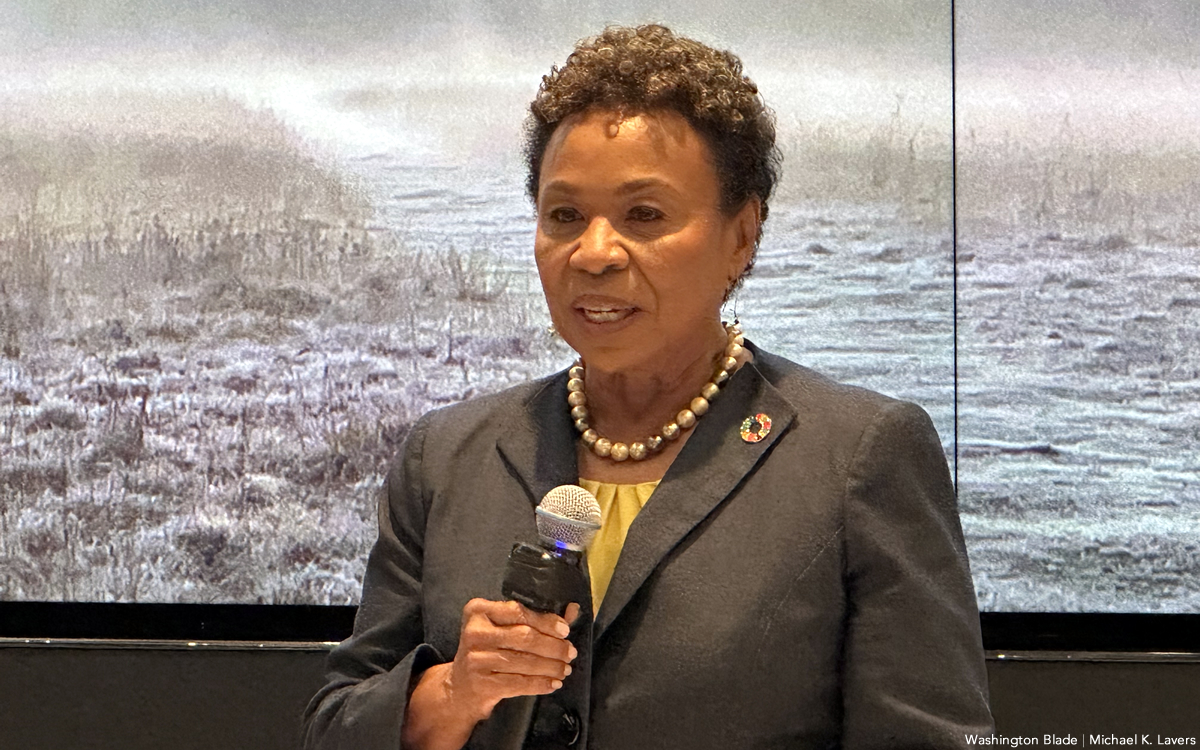
NEW YORK — Government officials, politicians and activists who traveled to New York for the U.N. General Assembly expressed their growing concern over the global backlash against LGBTQ and intersex rights.
“The emergence of this new wave of anti-LGBTQ+ laws first of all is scary, but secondly is deadly,” said U.S. Rep. Barbara Lee (D-Calif.) on Monday during an event the African Services Committee hosted in Manhattan. “We have to really understand what’s at stake with these laws.”
Jessica Stern, the special U.S. envoy for the promotion of LGBTQ and intersex rights abroad, and Dr. Rebecca Bunnell, acting principal deputy coordinator for the President’s Emergency Plan for AIDS Relief, are among those who also spoke at the event. Outright International Executive Director Maria Sjödin, Rainbow Railroad Executive Director Kimahli Powell, activists from Uganda, Kenya, Tanzania and Ghana and journalist Anne-Christine d’Adesky also participated.
Ugandan President Yoweri Museveni on May 29 signed his country’s Anti-Homosexuality Act, which contains a death penalty provision for “aggravated homosexuality.” Lawmakers in Kenya and Tanzania over the last year have proposed similar measures.
A bill that would criminalize LGBTQ and intersex identity and allyship in Ghana is currently before the country’s lawmakers. Police in Nigeria’s Delta state last month arrested more than 200 people at a same-sex wedding.
Lee noted African leaders who champion these bills and laws have alliances with U.S.-based groups that oppose LGBTQ and intersex rights.
“Hate is everywhere and it’s really important that our government do a better job of tracking — of course U.S. persons and organizations and what their role has been advancing these laws,” said the California Democrat.
D’Adesky noted Congress has yet to reauthorize PEPFAR and there is “an enormous fight.”
“The anti-LGBTQ forces, which are the family values (supporters) in the GOP and the extreme right, have been using this issue of HIV funding and HIV programs as a kind of proxy … to go after democratic societies, not just here in the United States, but everywhere,” said D’Adesky. “It’s a very deliberate strategy to link the issue of LGBTQ rights and homosexuality with HIV service provision.”
President Joe Biden on Tuesday in his U.N. General Assembly speech noted PEPFAR has saved “more than 25 million lives” in more than 55 countries around the world.
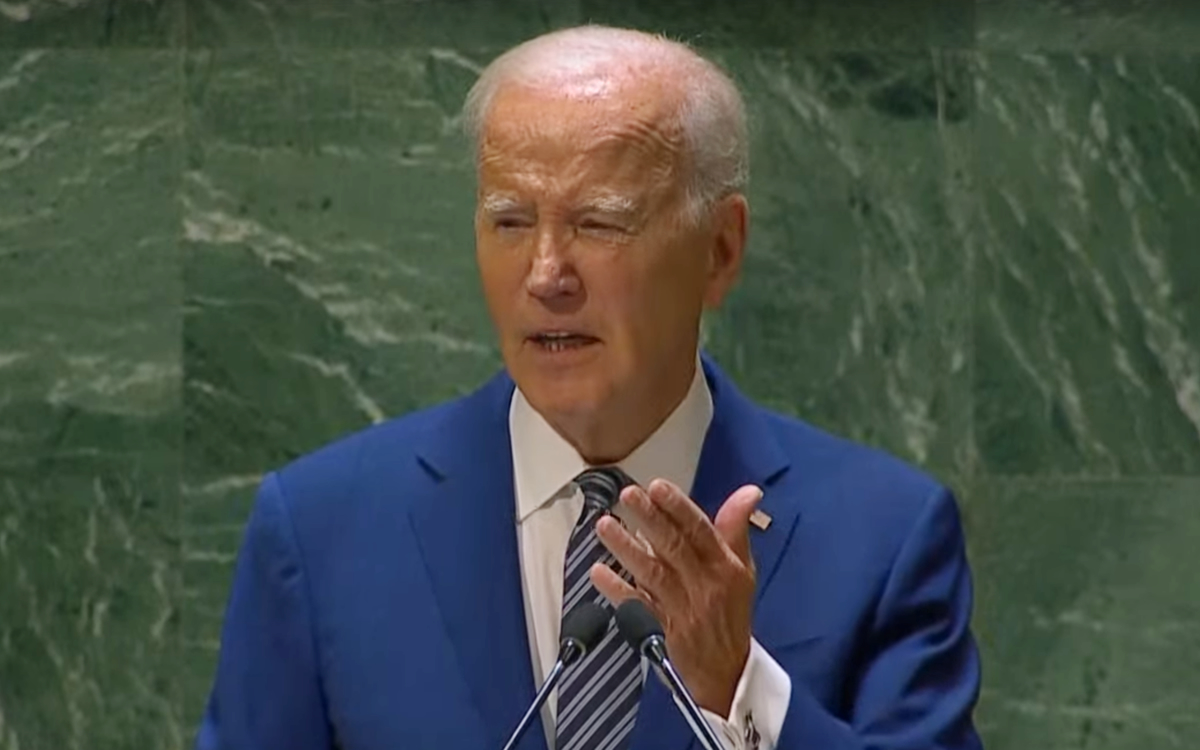
American officials earlier this year postponed a meeting on PEPFAR’s work in Uganda in order to assess the Anti-Homosexuality Act’s potential impact on it.
UNAIDS in a report it released in July raised concerns over a spike in HIV among gay and transgender people in eastern and southern Africa due to anti-homosexuality laws. The U.N. body noted laws that criminalize consensual same-sex sexual relations remain a significant obstacle in preventing and treating HIV among LGBTQ and intersex people.
“We have been trying to find communities and groups that can ensure that everybody has access to life saving services for HIV testing, prevention, PrEP, treatment, etc.,” said Bunnell during the African Services Committee event.
Bunnell, who previously lived and worked in Uganda, described the country’s Anti-Homosexuality Act as “horrific.” Bunnell nevertheless added the law has made LGBTQ, intersex and HIV-specific issues more visible.
“At some level it’s really heartening to see that we are at least able to talk openly and have a conversation where we are now addressing issues that were completely hidden at that time,” she said. “We’re in a very challenging, but better place in that sense.”
Bunnell said she and her colleagues are in “active communication” with Stern and other Biden-Harris administration officials to see “what we can do, where could we restrict funding, where could we make statements, where can we protest against the absolutely horrific legislation in Uganda, where can we more proactively look at other countries that we’ve heard from today.”
The U.S. in June imposed visa restrictions on Ugandan officials.
The World Bank Group on Aug. 8 announced the suspension of new loans to Uganda. The European Union last week said it would continue to provide funding to the country.
Sjödin after the African Services Committee event noted to the Washington Blade that the World Bank has human rights safeguards in place. Sjödin stressed, however, the issue of cutting aid to countries with anti-LGBTQ and anti-intersex rights records is “extremely nuanced.”
“I don’t think that cutting aide is a general remedy for any of this,” said Sjödin. “I don’t think that in general you can say, oh stop all foreign aid to any country where discrimination occurs because as we know this is not isolated to a few countries in Africa. We do know that LGBTIQ people are actively persecuted in many more.”
Openly gay Irish prime minister speaks at UN LGBTQ, intersex rights event
Biden in his General Assembly speech referenced violence and persecution based on sexual orientation and gender identity.
U.S. Ambassador to the U.N. Linda Thomas-Greenfield during an interview with MSNBC’s Rachel Maddow on Monday described Uganda’s Anti-Homosexuality Act as “horrific” and said the U.S. “is doing everything in our power to support the LGBTQ community in Uganda, to ensure their safety and to ensure they are not damaged by this law.”
“We are looking at … how we can continue to provide the good support that PEPFAR provides directly to individuals, to help save their lives without putting that funding through the Ugandan government or through individuals in the Ugandan government who are responsible for implementing this law,” said Thomas-Greenfield. “It’s a huge dilemma, but we have to find a way to do that and we have to find a way to hold those accountable who are basically violating the human rights of the LGBTQ community in Uganda.”
Lee reiterated her criticisms of the Anti-Homosexuality Act when she spoke at an event at the U.N. on Monday that marked the U.N. LGBTI Core Group’s 15th anniversary.
“The United States is deeply troubled by Uganda’s passage of the Anti-Homosexuality Act,” said Lee. “The legislation has already led to arrest, violence and evictions of LGBTQI+ Ugandans and undermine the safety of human rights defenders and healthcare providers serving this population.”
“The United States and Uganda have enjoyed long standing cooperation that have benefited our bilateral relationship and made the region healthier, more prosperous and more secure,” she added. “However, our partnership and Uganda’s standing on the world stage is at risk due to the worsening trends of a closing political and civic space and increasing violations and abuses of human rights, the threat of privacy and the safety of everyone in Uganda, including through the enactment and enforcement of the Anti-Homosexuality Act. These actions ferment hate, support violence, and are no threat to the principle of human rights, development and good governance enshrined in the (Universal) Declaration (of Human Rights.)”
The U.S. is among the dozens of countries that are members of the U.N. LGBTI Core Group, a group of U.N. countries that have pledged to support LGBTQ and intersex rights.
Lee noted Singapore, the Cook Islands, Antigua and Barbuda and St. Kitts and Nevis over the last year have decriminalized consensual same-sex sexual relations. The California Democrat also highlighted Switzerland and Slovenia in 2022 extended marriage rights to same-sex couples; while Iceland, Spain and Cyprus banned so-called conversion therapy.
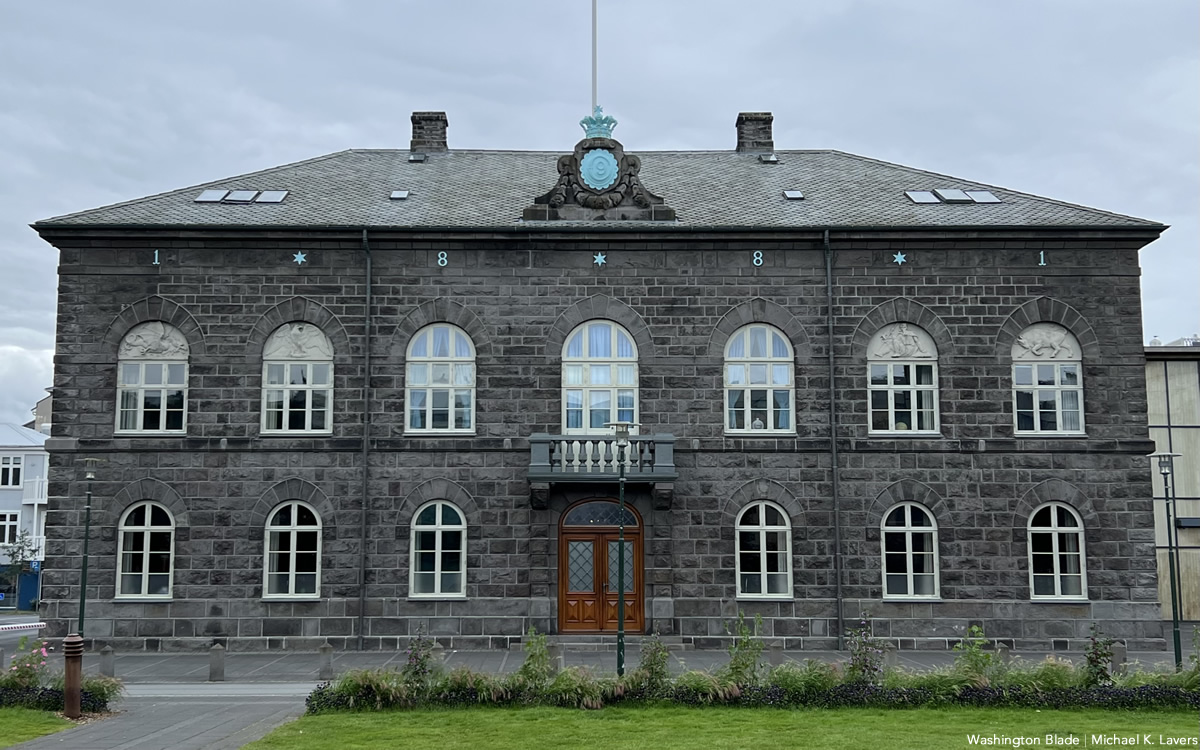
Edgars Rinkēvičs in June became Latvia’s first openly gay president. Spanish lawmakers in February approveda landmark transgender rights law that allows anyone who is over 16-years-old to legally change their gender without medical intervention.
“Despite these gains, LGBTQI+ persons worldwide continue to experience alarming levels of violence, discrimination and isolation,” said Lee. “We are seeing increasingly coordinated efforts to undermine progress on human rights of LGBTQI+ persons worldwide, while seemingly targeted at a small slice of the population.”
Lee in her remarks specifically referenced the U.S. as one of the countries in which “we are seeing hateful shameful attacks on and against the LGBTQI+ persons, especially against LGBTQI children.”
Openly gay Irish Prime Minister Leo Varadkar, Chilean Foreign Minister Alberto Van Klaveren, Norwegian Foreign Affairs Minister Anniken Huitfeldt, Danish Development Cooperation and Global Climate Policy Minister Dan Jørgensen, Belgian Foreign Affairs Minister Hadja Lahbib, French Europe and Foreign Affairs Minister Catherine Colonna, Colombian Multilateral Affairs Vice Minister Elizabeth Taylor Jay, Brazilian Multilaterial Political Affairs Vice Minister Carlos Marcio Bicalho Cozendey and South African Department of International Relations and Cooperation Director General Zane Dangor are among those who also spoke at the event that Victor Madrigal-Borloz, the outgoing independent U.N. expert on LGBTQ and intersex issues, chaired.
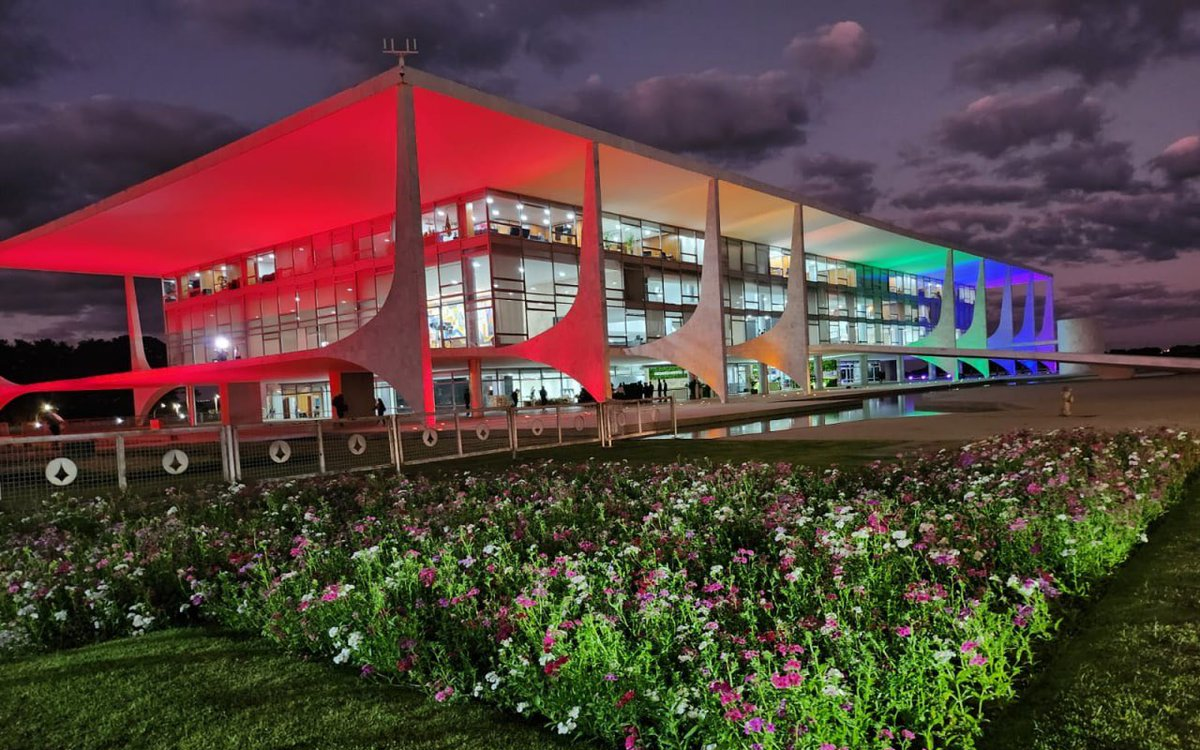
Human Rights Watch Executive Director Tirana Hassan and Chitsanupong Best Nithiwana, a transgender rights activist from Thailand, also participated. Openly gay Luxembourgish Prime Minister Xavier Bettel spoke virtually.
“My country, Ireland, has come a long way in recent years, particularly when we think about its LGBTI+ inclusion,” said Varadkar.
Varadkar said he was in high school when Ireland decriminalized consensual same-sex sexual relations in 1993.
Ireland in 2015 became the first country to extend marriage rights to same-sex couples through a popular vote. Ireland’s Gender Recognition Act took effect the same year. Varadkar noted his government is currently working to expunge convictions under the country’s sodomy law and plans to ban conversion therapy in the country.
“These are major legislative changes, but I think the real effect runs much deeper,” he said. “Our culture and our society has changed and there’s a better understanding of family and inclusion. The Ireland of today is a more understanding or accepting more inclusive and more equal country than it was in the past and more willing to respect fluidity, diversity and personal freedom.”
Varadkar, like Lee and others who spoke at the LGBTI Core Group event, expressed concern “about the alarming pushback against LGBT rights in some parts of the world, particularly criminalization, and the rise of violence, hatred towards members of our community at home and abroad.”
“We see in some countries, the reintroduction of draconian laws, including threat of the death penalty, openness, discrimination, as an increasing backlash against very vulnerable transgender people, and heightened political polarization, including here in the U.N,” he said. “I deeply regret the escalating attempts made by some states to undermine existing international commitments and standards.”


United Nations
UN human rights chief sounds alarm over ‘comprehensive onslaught’ against LGBTQ rights
Volker Türk on Monday spoke at UN LGBTI Core Group event
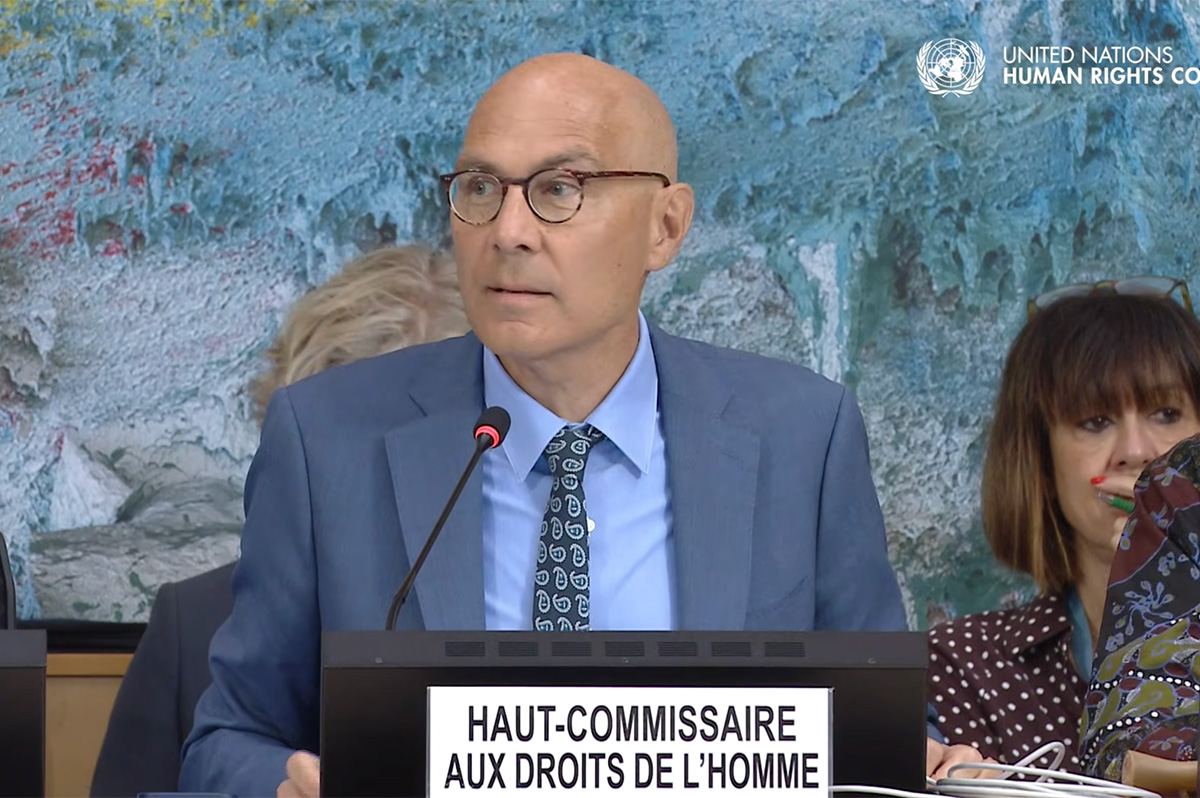
UNITED NATIONS — U.N. High Commissioner for Human Rights Volker Türk on Monday said there is a “comprehensive onslaught” against LGBTQ and intersex rights around the world.
“We know that progress for human rights has never been linear … but today’s backlash is deep and it is coordinated and the persecution of LGBTIQ+ people around the world is escalating at an alarming rate,” he said during an U.N. LGBTI Core Group event that took place on the sidelines of the U.N. General Assembly.
The Core Group is a group of U.N. member states that have pledged to support LGBTQ and intersex rights.
Mexico and Norway are the current co-chairs. The U.S. withdrew from the Core Group shortly after the Trump-Vance administration took office in 2025.
“We know that across every region, LGBTIQ+ people continue to live and to love in the face of hostility and exclusion,” said Türk. “Their rights, safety, well-being are under attack … it’s a comprehensive onslaught.”
The event took place days after Turkish authorities carried out raids in Istanbul and in other cities across the country that targeted the country’s LGBTQ community.
Türk in his remarks specifically referenced Turkey and Senegal, which further criminalized consensual same-sex sexual relations earlier this year. He also noted some countries have deemed LGBTQ and intersex rights groups as “terrorists, extremists, or national security threats.”
The Trump-Vance administration’s anti-terrorism strategy that it released in May specifically references “radically pro-transgender” groups.
Türk noted “more and more candidates and political parties … use bigotry in order to promote anti-LGBTIQ+ sentiments” during election campaigns. He pointed out trans people and women are often targeted.
“These attacks are designed to confuse and to distract,” said Türk. “They cloak bigotry in the language of decency and morality. They evoke the protection of children against manufactured threats, while real and growing dangers to children’s lives and futures, including those linked to technology, to inequality and to the climate disaster remain unaddressed.”
“More broadly those who seek to erase difference and independent thought, expression, and voices from our societies often begin this by erasing LGBTIQ+ people from books and classrooms, from film and culture and from our streets,” he added. “So, this is always the beginning. It’s a wedge issue that unfortunately is used politically to erase other portions of society eventually.”
90 percent of LGBTQ, intersex groups have lost funding since 2025
The event took place less than two weeks after Outright International released a report that found 90 percent of LGBTQ and intersex rights groups around the world have lost funding since January 2025.
The Trump-Vance administration froze nearly all U.S. foreign aid shortly after it took office.
Secretary of State Marco Rubio in March 2025 announced 83 percent of U.S. Agency for International Development contacts had been cancelled, and the State Department would administer the remaining programs. USAID officially shut down on July 1, 2025.
Rubio issued a waiver that allowed PEPFAR and other “life-saving humanitarian assistance” programs to continue to operate during the funding freeze. The Washington Blade has previously reported PEPFAR-funded programs in Kenya and other African countries have been forced to suspend services and even shut down because of gaps in U.S. funding.
Dutch Foreign Trade and Development Cooperation Minister Sjoerd Sjoerdsma in his remarks at the Core Group event noted his government — openly gay Prime Minister Rob Jetten took office in February — will pledge €50 million ($57.29 million) to support LGBTQ groups around the world. British Under Secretary of State Chris Elmore pointed out his government has pledged £21 million ($28.05) from 2026-2029 to bolster LGBTQ and intersex rights around the world.
“Equality benefits everyone,” said Elmore.
Mexican Foreign Affairs Secretary Roberto Velasco Álvarez, Norwegian International Development Minister Åsmund Aukrust, Icelandic Foreign Affairs Minister Þorgerður Katrín Gunnarsdóttir, Maltese Foreign and European Affairs Minister Chris Fearne, Brazil’s National Secretary for the Promotion and Defense of the Rights of LGBTQIA+ People Symmy Larrat, Irish State Minister for International Development and Diaspora Neale Richmond, South African Department of International Relations and Cooperation Director-General Zane Dangor, Uruguayan Multilateral Affairs Director María Noel Beretta, French Ambassador-at-Large for Human Rights Isabelle Rome, Cabo Verdean Permanent U.N. Representative Tania Romualdo, Estonian Department of International Organizations and Human Rights Director General Käthlin Saluveer, and Swedish International Development Cooperation Director-General Camilla Nevstad Bruzelius also spoke at the event that Outright International Executive Director Maria Sjödin moderated.
Other speakers included Jon Tilli of Deutsche Bank, UN Women Civil Society Division Director Lopa Banerjee and two activists: Gloria Quaye of Ghana and Nhuun Wannapong Yodmuang of Thailand.
Quaye was among the 21 people who Ghanaian authorities arrested in 2021 during a human rights workshop for LGBTQ activists. She was detained for three weeks until a court dropped the charges.
“In times of adversity, countries can often be tempted to turn inward at precisely the moment when international cooperation is needed the most,” said Sjödin. “The United Nations, of course, brings together sovereign states, but sovereignty cannot be used to decide whose rights count.”
Then-first lady Jill Biden in 2024 spoke at a Core Group event that took place on the sidelines of that year’s U.N. General Assembly. Then-Vice President Joe Biden in 2016 headlined the Core Group event that coincided with that year’s U.N. General Assembly.
The U.S. did not send any representatives to this year’s event.
Jessica Stern, the former special U.S. envoy for the promotion of LGBTQ and intersex rights under the Biden-Harris administration, and former U.S. Ambassador to Bosnia and Herzegovina Eric Nelson were among those from the U.S. who attended.
“The movement for the equal rights of LGBTIQ+ people has much to teach the world, particularly at this moment, but some seek to erase or reject those lessons,” said Türk. “The history of the movement for the equal rights is full of courage, dignity, and solidarity and it is an integral part of the human rights movement.”
“It’s not something separate; it’s an integral part of the full human rights movement,” he added. “In claiming their freedom, the LGBTIQ+ communities helped free our societies. We need to see it as a broader strive for freedom.”
Congress
Mike Waltz confirmed as next UN ambassador
Trump nominated former national security advisor in May
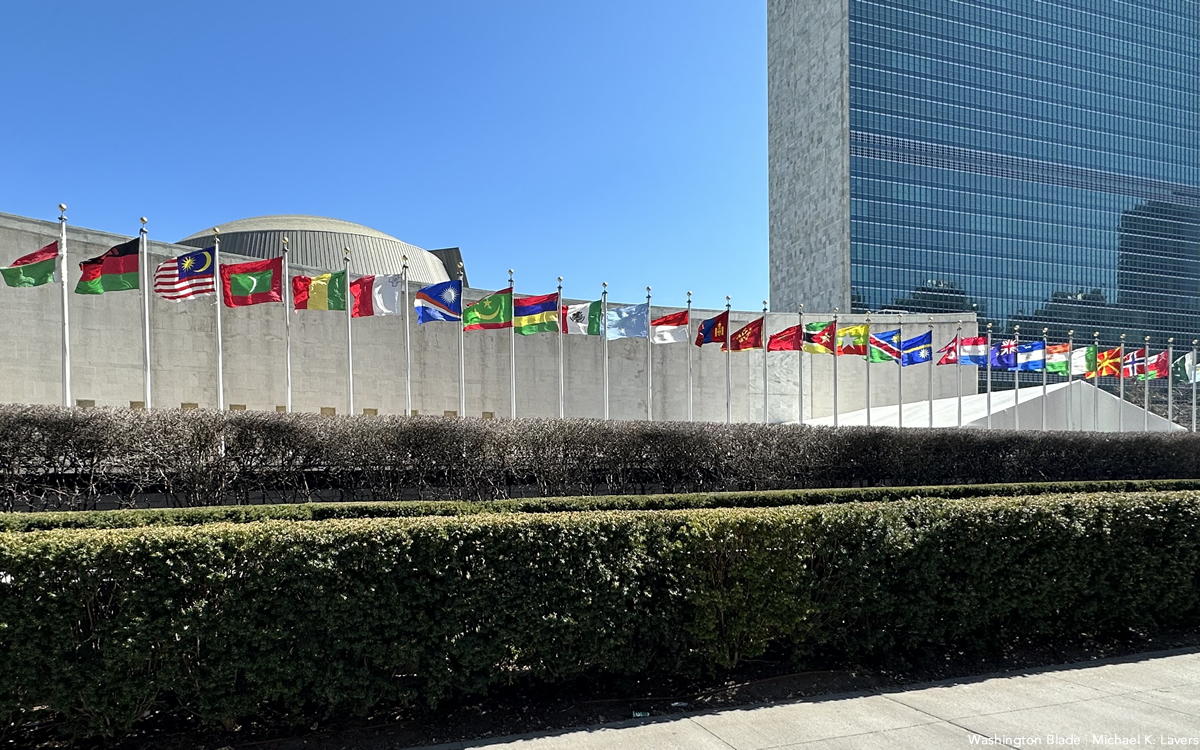
The U.S. Senate on Sept. 19 confirmed former U.S. Rep. Mike Waltz (R-Fla.) as the next U.S. ambassador to the U.N.
The Florida Republican had been the national security advisor until President Donald Trump in May tapped him after U.S. Rep. Elise Stefanik (R-N.Y.) withdrew her nomination in order to ensure Republicans maintained their narrow majority in the U.S. House of Representatives.
Senators approved Waltz’s nomination by a 47-43 vote margin.
“Thank you President Trump and the U.S. Senate for your trust and confidence to Make the UN Great Again,” said Waltz on X.
The U.N. General Assembly is taking place this week in New York. Trump is scheduled to speak on Tuesday.
United Nations
UN Human Rights Council extends LGBTQ rights expert’s mandate
29 countries voted for resolution
The U.N. Human Rights Council on Monday extended the mandate of the United Nations’ independent LGBTQ rights expert for another three years.
The resolution passed with 29 countries (Albania, Belgium, Bolivia, Brazil, Bulgaria, Chile, Colombia, Costa Rica, Cuba, Cyprus, the Czech Republic, the Dominican Republic, France, Georgia, Germany, Iceland, Japan, Kenya, the Marshall Islands, Mexico, the Netherlands, North Macedonia, South Korea, Romania, South Africa, Spain, Switzerland, Thailand, and Vietnam) voting for it and 15 countries (Algeria, Bangladesh, Burundi, China, Cote d’Ivoire, Democratic Republic of Congo, Ethiopia, Gambia, Indonesia, Kuwait, Malawi, Maldives, Morocco, Qatar, and Sudan) voted against it.
Benin, Ghana, and Kyrgyzstan abstained.
The U.S. in February withdrew from the Human Rights Council. The Trump-Pence administration in 2018 pulled the U.S. from it. The U.S. in 2021 regained a seat on the Human Rights Council.
Graeme Reid has been the UN’s independent LGBTQ rights expert since 2023. The South African activist, among other things, previously ran Human Rights Watch’s LGBT Rights Program.

In ‘The Lost Brontë,’ a complicated lie can lead to danger

CAMP Rehoboth Block Party returns Oct. 18

Essential queer horror classics for Halloween

Solidarity beyond the parade: the actual cost of Pride

Physician: addiction doesn’t always look the way you think it does

Bessent says Trump chose him for his qualifications, not his sexuality

10 years later, we still can’t shake Barry Jenkins’s ‘Moonlight’

‘Some Like It Hot’ a wild ride at renovated Bernard Family Theatre

D.C.’s LGBTQ homeless facilities face possible hit from Trump funding cuts

Trump uses anti-trans slur against Democratic Senate candidate
-

 Federal Government5 days ago
Bessent says Trump chose him for his qualifications, not his sexuality
-
Movies4 days ago
10 years later, we still can’t shake Barry Jenkins’s ‘Moonlight’
-
Theater4 days ago
‘Some Like It Hot’ a wild ride at renovated Bernard Family Theatre
-
District of Columbia4 days ago
D.C.’s LGBTQ homeless facilities face possible hit from Trump funding cuts