India
Indian activists, allies urge lawmakers to back marriage equality legislation
Supreme Court’s Oct. 17 ruling sparked widespread criticism

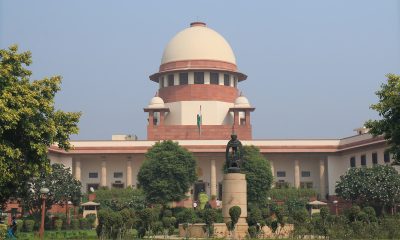
The Indian Supreme Court’s ruling against marriage equality on Oct. 17 sparked disappointment and shock among the LGBTQ community and its allies in the country and around the world.
Celina Jaitly, an Indian actress and former Miss India who champions LGBTQ rights as a U.N. Equality Champion, in an interview with the Washington Blade said the decision was overwhelming and disappointing. She nevertheless said she was hopeful the Supreme Court could challenge opposition or at least mandate lawmakers update India’s Special Marriage Act.
“Tremendous work went into these petitions, and many hopes and dreams of the queer community were attached to them,” said Jaitly. “Every human being dreams of finding love, and starting a family, it is a basic need for a human being to feel loved and needed.”
Jaitly noted more than 10 percent of India’s population identifies as LGBTQ.
“They are also taxpayers and important pillars of society,” she said. “By not recognizing such unions, they are depriving same-sex couples of their right to equality enshrined in the constitution and rights enjoyed by married heterosexual couples, from adoption and medical insurance to pensions and inheritance.”
Jaitly said the ruling seemed to try to please both parties based on technicalities of legal jargon with no clear mandate, directive or timeline for Parliament to act. She further said there is no pressure on Parliament to enact any legislation without these mandates, and this makes the process tedious and not a priority.
“In a massive multi-cultural subcontinent like ours, the court needs to push society to acknowledge same-sex marriage,” said Jaitly.
She noted the “one thing that I have consistently and continuously said as an LGBT rights activist (over) the last two decades is the term ‘LGBT rights’ is convenient but can be misleading.”
“There is no subset of rights or new category of rights called ‘LGBT rights,'” said Jaitly. “LGBT people are entitled to the same rights as everyone else — among them the right to life, the right to be free from discrimination, rights to privacy and freedom of expression, association and assembly and of course marriage/civil union and the right to the institution of family.”
“The reality is that these rights, which are universally recognized and agreed upon, are routinely being denied to people just because they happen to be — or are assumed to be — gay, lesbian, bisexual, transgender or intersex,” she added. “That is something we have to acknowledge and address in a concerted way. Not giving a human being the very basic requirement of marriage and the right to the institution of family merely because of their orientation is indeed against the principle of the core values of a democracy.”
Souvik Saha, an activist and prominent member of Jamshedpur Queer Circle, told the Blade the organization remains committed to advocating for LGBTQ rights and equality.
Jamshedpur Queer Circle remains deeply disappointed over the Supreme Court’s decision. Saha said the justices’ decision to place the onus on Parliament to amend laws to extend marriage equality to same-sex couples is a missed opportunity to uphold fundamental human rights and promote social inclusion.
“This decision fails to recognize the urgency of the matter, given that LGBTQ individuals continue to face discrimination and prejudice in various aspects of their lives, including access to legal recognition of their relationships,” said Saha. “Denying same-sex couples the right to marry not only perpetuates inequality but also has real-world consequences.”
Saha further noted there are “real-life case studies from around the world have consistently shown the positive impact of legalizing same-sex marriage.”
“It leads to improved mental health outcomes for LGBTQ individuals, as they no longer have to navigate a world that marginalizes their relationships. It also strengthens the social fabric by promoting love, commitment, and family stability,” he said. “Moreover, countries that have embraced marriage equality have seen economic benefits, including increased tourism and a boost to the wedding industry.”
Saha and other activists have called upon Parliament to quickly amend laws to grant LGBTQ people the same rights and privileges their heterosexual counterparts enjoy. Saha also urged civil society and allies to continue to raise awareness about the importance of marriage equality in India.
Negha Shahin, a transgender actress who is the first trans woman to win a debut actor award at the 52nd Kerala State Film Awards that took place in May, noted to the Blade that India is sending rockets to the moon, but not addressing injustices the country’s LGBTQ community continues to face and has failed to meet people’s basic needs. Shahin said marriage is a basic right for everyone.
“If I am a queer or a trans person, the society and the law, the medical or the education everything, it feels like injustice to us,” said Shahin. “We should wait, and let’s fight for this another time, because we do not know about other things. What if the Supreme Court refuses our human rights in India? Many people from the queer community do not know what to do.”
Ankush Kumar is a reporter who has covered many stories for Washington and Los Angeles Blades from Iran, India and Singapore. He recently reported for the Daily Beast. He can be reached at [email protected]. He is on Twitter at @mohitkopinion.




India’s Income Tax Department has opposed a same-sex couple’s petition that challenges Section 56(2)(x) of the Income Tax Act.
The provision exempts gifts between spouses from tax. The couple seeks the same benefit for their relationship.
At the center of the challenge is the explanation to the fifth provision of Section 56(2)(x). According to the petition, the provision excludes same-sex partners from the definition of “spouse.” The petition describes that exclusion as unconstitutional.
The provision defines “relative” to include an individual’s spouse, siblings, the spouse’s siblings, parents’ siblings, and other blood relatives.
Paiyo Ashiho and another petitioner, Vivek Divan, asked the Bombay High Court to recognize same-sex couples presumed to be in a marriage as “spouses” under the fifth provision to Section 56(2)(x).
A similar challenge is pending before the Karnataka High Court.
Bengaluru-based engineers Anurag Kalia and Akhilesh Godi have sought similar relief. Kalia said he wanted to give Godi a gold bracelet worth more than ₹115,500 ($1213.44.). The case remains pending.
The Prime Minister Narendra Modi-led government rejected the petition in an affidavit filed last year. It argued the plea was not legally tenable because it challenged no action or order of the Income Tax Department. Calling the petition an “abuse of process of law,” the government said the relief sought fell outside the scope of the Income Tax Act, 1961.
The government also argued the petitioners sought the benefits available to a “spouse” without legal recognition of their relationship. According to the affidavit, they had not placed on record any law recognizing their relationship as a marriage. It urged the court to dismiss the petition with costs.
The case returned to the spotlight on July 6, when the Bombay High Court heard the petition.
Justices B.P. Colabawalla and Firdosh P. Pooniwalla adjourned the matter after Solicitor General Tushar Mehta said he would appear on behalf of Modi’s government.
The petition comes nearly two years after the Indian Supreme Court’s marriage equality ruling.
In 2023, a five-judge Constitution Bench, in a 3-2 verdict, declined to recognize the constitutional validity of same-sex marriage in India. The country’s top court said MPs must decide whether to extend marriage rights to same-sex couples.
During the 2023 marriage equality hearings, lawyer Abhishek Manu Singhvi told the Supreme Court that marriage is a source of social validation, dignity, self-respect, fulfillment, and security. He argued that it also carries legal and civil benefits, including those related to taxation, inheritance, and adoption. Lawyer Anand Grover, who also appeared for the petitioners, told the court that marriage remains fundamental to the functioning of society and is necessary to access several state benefits, including joint tax benefits and surrogacy rights.
Chief Justice Dhananjaya Y. Chandrachud, in his minority opinion, said the Income Tax Act provides numerous tax benefits for payments made on behalf of a spouse, including deductions for life and health insurance premiums. He also noted that marriage confers several financial benefits on a spouse, including eligibility for gratuity, funeral expenses, medical benefits, and provident fund claims as the dependent of a deceased spouse.
In the marriage equality ruling, the Supreme Court recognized queer people cannot be discriminated against. The court said denying queer couples the material benefits and services available to heterosexual couples violates their fundamental rights.
While issuing directions to the federal, state, and territory governments; Chandrachud said the government should ensure there was no discrimination in access to goods and services. He also directed governments to sensitize the public about queer rights, establish a hotline for the queer community, create safe houses for queer couples, and ensure intersex children were not forced to undergo medical operations.
The petition is awaiting its next hearing before the Bombay High Court.
India’s tax system relies on both direct and indirect taxes, although its direct tax base remains relatively narrow. Individuals pay income tax at progressive rates of up to 30 percent, while consumers pay taxes on most goods and services through the Goods and Services Tax. The Income Tax Act also provides exemptions, deductions, and other tax benefits for eligible taxpayers, including those linked to family relationships and legal marital status.
India’s LGBTQ community is estimated to comprise between 135 million and 140 million people, or nearly 10 percent of the country’s population. Collectively, it is estimated to have a purchasing power exceeding $168 billion. The World Bank estimated that exclusion based on sexual orientation and gender identity cost India between $1.9 billion and $30.8 billion in lost economic output annually, or up to 1.7 percent of its gross domestic product.
India imposed a separate Gift Tax Act in 1958 to tax certain transfers of property made without consideration. Parliament repealed the law in 1998 to simplify the tax system and encourage genuine gifting. However, concerns over tax avoidance later prompted the government to bring gifts back within the Income Tax Act. Today, specified gifts exceeding prescribed limits may be taxed under Section 56(2)(x), subject to exemptions that include gifts received from relatives.
Under the Income Tax Act, gifts received from non-relatives exceeding ₹50,000 ($525.30) in a financial year are generally treated as taxable income, unless they qualify for a statutory exemption. Gifts received from specified relatives, including a spouse, are exempt from tax regardless of their value.
Tarun Khaitan — a research director and professor of public law at the London School of Economics Law School, honorary professorial fellow at Melbourne Law School, and associate fellow of the Bonavero Institute of Human Rights at the University of Oxford — told the Washington Blade the guarantee of equality and non-discrimination under India’s constitution was deliberately framed in broad terms because its framers envisaged that the understanding of those principles would evolve over time. They did not intend to freeze their meaning in 1950, he said. Instead, older and newer statutes alike must be interpreted in light of the constitution’s contemporary understanding.
“Constitutional values must inform the interpretation of all laws in India. It is well established in Indian jurisprudence that if a term can carry two meanings, the court will give it the meaning that complies with constitutional demands,” Khaitan said. “The term ‘spouse’ is not defined in the Income Tax Act, and unlike ‘husband’ or ‘wife’ is not a legal term of art in Indian family law. Its use by the Income Tax Act therefore is apt for judicial interpretation, which must be guided by the constitutional guarantees of equality and liberty.”
Asked how courts should balance respect for legislative choices with their constitutional responsibility to safeguard equality and dignity, Khaitan said he was not convinced that the legislature had made a clear choice in this case. He noted that the Income Tax Act uses the term “spouse” without defining it, adding that no other Indian law, to his knowledge, defines the term either. Its meaning has evolved over time, he said, pointing to the Oxford English Dictionary, which now defines a spouse as “a husband or wife, or a person joined to another in a comparable legally recognized union.”
Khaitan said the decision to restrict the meaning of “spouse” to different-sex married couples appeared to be the government’s interpretation rather than one expressly adopted by MPs. Even so, he said, courts have a duty to safeguard constitutional rights, although those rights are not absolute. The state, he said, must justify any restriction by demonstrating that it serves a sufficiently important public interest and that the limitation is proportionate to that objective.
“The extension of marriage would be a symbolic expression of equal acceptance of same-sex relations by law as well as a the extension of the bundle of material incidents that typically attach to it. Whether or not such extension happens, concerns such as inheritance, hospital visitation rights, decisions regarding end of life care, pensions etc affect the lives of same-sex couples as well as unmarried different-sex couples in a real, material sense,” Khaitan said. “There is no conceptual reason why the expressive salience of ‘marriage’ and the material incidents of a domestic partnership cannot be unbundled.”
Khaitan has had his scholarship cited by the Supreme Court in several constitutional cases, including Navtej Singh Johar v. Union of India, which decriminalized consensual same-sex relations, and Lt. Col. Nitisha v. Union of India, a landmark judgment on indirect discrimination.
India
Expected India Supreme Court ruling could shape future LGBTQ rights cases
Decision to determine whether courts can use constitutional morality doctrine
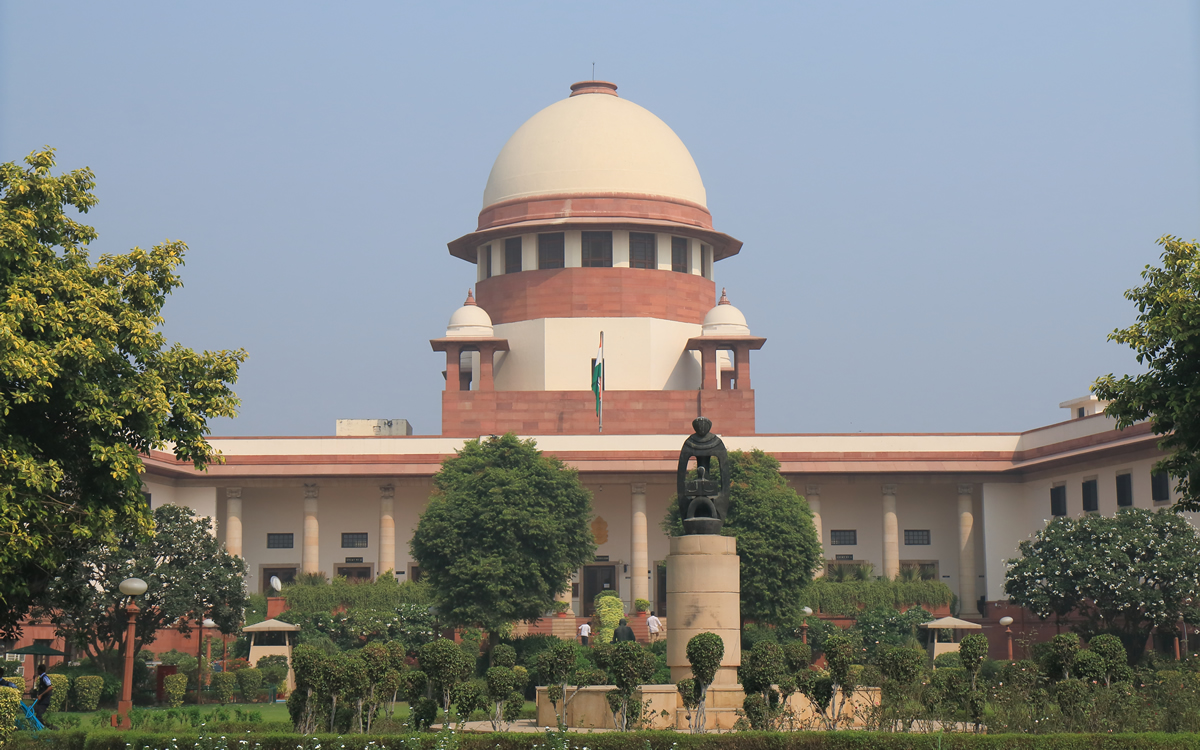
India’s Supreme Court is expected to issue a closely watched constitutional ruling that could shape the future of LGBTQ rights litigation.
The decision will determine whether courts can continue to rely on the doctrine of constitutional morality, a principle that has underpinned several landmark rights decisions. During hearings in April, the Indian government urged the Supreme Court to reject the doctrine, arguing that it has no basis in the Constitution and should not guide judicial decision-making.
For years, the Supreme Court has relied on the constitutional morality doctrine to treat the Constitution as a living document: one whose enduring promises of justice, liberty, equality, and fraternity must be applied to the realities of a changing society rather than remain frozen in the era in which it was written.
The Indian government in April asked the Supreme Court to revisit the constitutional reasoning behind two landmark judgments: one that struck down the country’s adultery law and another that decriminalized consensual same-sex relations, arguing that both relied on a subjective invocation of constitutional morality and should no longer be treated as good law.
Arguing before a 9-judge bench considering constitutional questions referred from the Supreme Court’s 2018 Sabarimala temple case, which allowed women of menstruating age to enter one of Hinduism’s holiest shrines after a centuries-old ban, Solicitor General Tushar Mehta, India’s second-highest law officer, argued that “constitutional morality” has no textual basis in the Constitution and is instead a judicially evolved concept that is vague and indeterminate.
Mehta said the government did not oppose the Supreme Court’s decision to strike down Section 497 of the Indian penal code, which criminalized adultery, if it was based on Article 14 of the Constitution, which guarantees equality before the law and equal protection of the laws. Instead, he argued that the court should not have relied on what he described as the “vague and subjective” doctrine of constitutional morality to reach its conclusion.
Mehta told the Supreme Court that its 2018 Navtej Singh Johar v. Union of India ruling that decriminalized consensual same-sex relations wrongly equated “morality” with majoritarian or mob morality while relying on constitutional morality as the basis for its reasoning.
To support his argument against relying on constitutional morality, Mehta quoted extensively from then-Justice Antonin Scalia’s dissent in the U.S. Supreme Court’s 2003 decision in Lawrence v. Texas.
Scalia argued that courts should not import foreign legal trends or allow evolving social values to drive constitutional interpretation, contending that judges must remain neutral arbiters rather than participants in broader cultural debates.
Referring to the Supreme Court’s landmark decisions in Navtej Singh Johar and Joseph Shine, Mehta questioned whether the judgments reflected the constitutional vision of India’s founding generation.
“If these judgments, Navtej Johar, Joseph Shine, etc., were to be read by Dr. Ambedkar or Kanhaiyalal Munshi or Alladi Krishnaswamy Iyer, I do not know whether they would be surprised, shocked or they would say that this is what we wanted. I believe, they did not want this to happen,” he told the bench.
“A new trend starts, which is Naz Foundation v. Government of NCT of Delhi,” Mehta said. “This is the judgment of Delhi High Court which was ultimately affirmed in Navtej Johar, sodomy … ‘In our scheme of things, constitutional morality must outweigh the argument of public morality, even if it be the majoritarian view.’ In case of a country governed by democratic principles, the view which is always majoritarian will prevail. When it is question of testing a law, it is always the majority which passes the law. How can you define morality based on this?”
The Naz Foundation case marked the beginning of a landmark constitutional challenge to Section 377 of the Indian penal code, a colonial-era provision that criminalized consensual same-sex relations between adults as “against the order of nature.” The public interest litigation, filed in 2001 by the Naz Foundation, an NGO working on HIV/AIDS and sexual health, argued that the law violated fundamental rights guaranteed under the Constitution.
In 2009, the Delhi High Court ruled in the organization’s favor, holding that Section 377 violated the rights to equality under Article 14, protection against discrimination under Article 15, and life and personal liberty under Article 21 of the Constitution.
The Delhi High Court’s ruling was short-lived.
In 2013, the Supreme Court, in Suresh Kumar Koushal v. Naz Foundation overturned the decision, recriminalizing homosexuality under Section 377.
The court held that the law affected only a “minuscule fraction” of the population and said it was for Parliament — not the judiciary — to decide whether the provision should remain on the statute books. Five years later, the Supreme Court’s Constitutional Bench in Navtej Singh Johar, unanimously overruled its 2013 judgment, holding that Section 377 was unconstitutional. The decision marked the culmination of the Naz Foundation’s long legal challenge to the colonial-era provision.
Anish Gawande, the first openly gay person to serve as a national spokesperson for a major political party in India, the Nationalist Congress Party (Sharadchandra Pawar), told the Washington Blade that the doctrine of constitutional morality, which he said underpinned not only Navtej Singh Johar but also forms one of the foundational principles of India’s constitutional jurisprudence, is “an incredibly important concept.”
“It provides a moral backbone to the document in a way that prevents any amendments to the Constitution from being out into place that would violate the very ethos upon which the Constitution was framed,” Gawande said. “Constitutional morality is an incredibly important antidote to societal morality. It’s been what has allowed us to clamp down on things like dowry. It’s been something that has allowed us to bar even regressive religious practices that might go against human dignity. It’s also been an incredibly important framework that has allowed for the advancement of LGBTQ rights in opposition to arguments made by practitioners and leaders of various religious denominations about the societal immorality of queerness.”
“The most critical part of constitutional morality, which is a doctrine that has been put in place by the courts, is that it is a very effective bulwark against majoritarianism and the unilateral diktat of the executive over the judiciary and, in some ways, also the legislature,” he added.
Gawande said those factors make constitutional morality “an incredibly important concept” in Indian constitutional jurisprudence.
If the Supreme Court were ultimately to narrow or reject the doctrine, he said, judgments that have relied on constitutional morality, including the landmark Navtej Singh Johar ruling could come under renewed scrutiny. He added, however, that he did not believe the Supreme Court would take that step because it would run contrary to its own institutional interests.
Gawande said the government has advanced several reasons for challenging the doctrine of constitutional morality. One of them, he said, is that the solicitor general has opposed the doctrine in cases involving religious issues, arguing that courts should not rely on it in constitutional adjudication.
“The downward repercussions of this, however, could extend to LGBTQ rights and to the rights of all sorts of persecuted minorities in the future,” he said.
“The second thing is that, in principle, the section 377 judgment, of course, rests upon constitutional morality, but it is also resting upon so many other fundamental rights, including the right to privacy that Puttuswamy upheld before the Navtej Singh Johar verdict,” Gawande added. “In Navtej, the right to privacy was also cited as an incredibly important condition upon which the decriminalization of ‘carnal intercourse against the order of nature’ could be permitted. In many ways, the fact that Section 377 does not exist on the statute books at all in the present updated penal codes, Bharatiya Nyaya Sanhita and Bharatiya Nagarik Suraksha Sanhita, provides some respite. The entry of Section 377, at least immediately after a reading down of constitutional morality, is not imminent yet. However, it opens the door for a new Section 377 to be introduced and the judicial mechanism available to counter that new section 377, if it were to be introduced, to be reduced significantly.”
Ankit Bhupatani, an LGBTQ activist, said he does not believe the Supreme Court’s reconsideration of constitutional morality would lead to the recriminalization of consensual same-sex sexual relations.
He argued the 2018 Navtej Singh Johar decision rests on multiple constitutional principles beyond constitutional morality, but warned that weakening the doctrine could make it more difficult to secure future LGBTQ rights through the courts.
“If we have to take an informed guess on why the government does not like the concept of constitutional morality, it is because it wants a narrower field of judicial review and an elected legislature restored as the primary author of social policy,” Bhupatani said. “But we have already seen parliament’s ability to make laws related to LGBT rights, and it does not give optimism.”
“The only practical way forward for LGBT rights in India is the judiciary,” he added. “But if the government’s argument is accepted by the Supreme Court, it means the next gay Indian who walks into a court for marriage, for adoption, for inheritance, or for a job they were fired from, finds it more difficult to secure these rights from the only institution from which we could hope for a positive outcome.”
Bhupatani said the decriminalization of consensual same-sex sexual relations would probably survive because the Navtej Singh Johar judgment also rests on the constitutional principles of privacy and equality. However, he warned that weakening the doctrine of constitutional morality could stall broader progress for LGBTQ rights.
“The community keeps the floor and loses the staircase,” he said. “Nobody is criminalized, but nobody moves up.”
“The clever thing about this is that it lets the government have it both ways. To its so-called base, who think that making the law, especially on social issues, is the work of elected parliamentarians and not judges,” said Bhupatani. “It signals that the 2018 verdict was a judicial overreach that ought never to have happened. To everyone else, truthfully, that it never asked to recriminalize anyone. Both messages, one filing.”
Bhupatani said the implications of the government’s position extend beyond LGBTQ rights, arguing that asking the Supreme Court to treat the reasoning in Navtej Singh Johar as “not good law” raises broader questions about India’s commitment to constitutional rights. He said such a move could also affect how India’s constitutional democracy is perceived internationally.
India
Iran war causes condom shortage in India
Trade disruptions have strained petrochemicals, lubricant supplies

About 80 days into the U.S.-Iran war, while much of the world struggles with oil supplies, India is confronting a different crisis: a widening condom shortage. Health activists warn the supply disruption could worsen HIV/AIDS risks in the world’s most populous country.
Disruptions in maritime trade through the Strait of Hormuz have strained supplies of petrochemicals and industrial lubricants used in condom manufacturing. The crisis has increased production costs across the sector and pushed retail prices sharply higher.
India’s condom manufacturing industry is valued at nearly $1 billion.
Production depends heavily on silicone oil and ammonia. Silicone oil, a key lubricant used in manufacturing, is in short supply. Ammonia, which stabilizes raw latex, is expected to see price increases of 40-50 percent. Rising packaging costs have added further pressure. Some manufacturers and retailers have reported condom prices increasing by as much as 50 percent.
India is home to an estimated 2.5 million people living with HIV, the world’s second-largest population of HIV-positive people, according to a 2024 report. The Health Ministry’s India HIV Estimation 2025 technical report said 5.4 percent of HIV cases in 2024-2025 were linked to transmission between men who have sex with men.
In 2024, India recorded an estimated 64,470 new HIV infections and 32,160 AIDS-related deaths nationwide. The figures marked declines of 48.69 percent and 81.42 percent, respectively, compared with 2010.
Ankit Bhuptani, an LGBTQ activist in India, told the Washington Blade that the country has made significant progress in reducing HIV infections over the past two decades. But, he said, that progress depended heavily on affordable condoms, targeted outreach programs and on-the-ground work by NGOs serving MSM and transgender people.
“Pull one thread and the whole thing loosens. What worries me about this particular shortage is that it arrives at exactly the moment when India’s LGBTQ community was beginning to access healthcare more openly after the Section 377 reading down,” said Bhuptani. “Young queer Indians in tier-two cities were just starting to trust government health systems enough to engage with them. A price spike that prices them out, or a shortage that sends them to substandard alternatives, could set that trust back by years.”
The Indian Supreme Court in 2018 struck down Section 377, a colonial-era law that criminalized consensual same-sex sexual relations.
In March, the Commerce and Industry Ministry acknowledged the difficulties faced by Indian exporters due to disruptions caused by the war in West Asia and launched a roughly $51.5 million Resilience and Logistics Intervention for Export Facilitation, or RELIEF, program. It provides credit insurance support for exporters whose shipments have been stranded because of the conflict.
“Price elasticity in sexual health products is brutal. When a condom pack goes from 20 rupees to 40, usage drops. It’s that simple,” said Bhuptani. “And when usage drops in populations with higher baseline HIV exposure, you don’t see the consequences for two or three years. Then the numbers arrive and everyone acts surprised.”
The situation has been further aggravated by the structure of India’s condom market, which operates on a high-volume, low-margin model designed to keep products affordable for a population of more than 1.4 billion people. Industry analysts say that model is now under growing pressure from rising raw material and shipping costs.
Reports in Indian media said supply constraints and price volatility involving PVC foil, aluminium foil, and packaging materials have disrupted production and complicated order fulfilment across parts of the condom manufacturing sector.
“Supply chain vulnerability assessments almost never include sexual health commodities. They should. India imports roughly 86 percent of its anhydrous ammonia from West Asian countries including Saudi Arabia, Qatar, and Oman, with that ammonia being essential for stabilizing the natural rubber latex used in domestic condom production,” said Bhuptani. “That is a documented strategic dependency that was never flagged as a risk. The Iran war converted it from a latent vulnerability into an active supply shock in a matter of weeks.”
The National AIDS Control Organization, or NACO, which oversees India’s HIV/AIDS programs, during the 2026-2027 fiscal year received an allocation of about $249 million, up from roughly $238 million the previous year. By comparison, the U.S. approved a $6 billion funding package in 2026 for global HIV/AIDS programs, according to the United Nations.
“The gay and trans community in India report high perceived HIV risk and adopted PrEP through non-profit and private channels, with cost and access remaining consistent concerns,” said Bhuptani. “The community organizations managing that risk perception are now operating in a tighter supply environment while simultaneously absorbing the downstream effects of USAID funding cuts. Health workers seeing increased anxiety among community members are observing the predictable consequence of removing redundancy from a system that had very little to begin with.”
The Washington Blade reached out to Indian condom manufacturer Manforce several times, but the company declined to comment.
Harish Iyer, an LGBTQ and equal rights activist in India, told the Blade that this is the time when the government needs to step in. Condoms, Iyer said, are not about pleasure, but about life.
“Not just in terms of HIV, it is also a source of contraception in a nation which is heavily populated. So, if there is a crisis in the condom industry, it has an adverse effect on the LGBTQ community,” said Iyer. “And eventually it has a compounding effect on the economy as well. Because if the cases of HIV wrecks to rise, if the population was to explode, it is going to have a straining effect on the economy as well. So, I think it is time that the government steps in, and condoms should be recorded as a necessity commodity rather than making it feel like any kind of commodity that some (privileged people) can afford.”
Iyer told the Blade that the government should provide condoms free of cost.
He pointed to the Nirodh Scheme, India’s long-running family planning and safe sex program launched by the government in 1968. Condoms, Iyer said, are a necessity, not a luxury product. He urged the government to classify them as essential items and either remove the Goods and Services Tax or reduce it to a minimum.
The Nirodh Scheme was launched by the Health and Family Welfare Ministry to promote contraception and prevent the spread of sexually transmitted infections, including HIV, through the nationwide distribution of subsidized and free condoms.

Gay ANC commissioner sues D.C. over police ‘failure’ to pay reward money

New LGBTQ visitor center slated for Wilmington, Del.

Jason DePuy on coping with homophobia in ‘Big Brother’ house

2 former NBA players launch cheap anti-trans stunt to exploit WNBA rules

Same-sex couples challenges India income tax law

HRC files class action over federal ban on gender-affirming care coverage

HRC condemns DoE removal of LGBTQ bullying data from federal survey

Dutch PM: More needs to be done to defend trans rights

New book chronicles gay man’s life in hippie commune

PHOTOS: Daddy Issues at Kiki
-

 The White House5 days ago
HRC files class action over federal ban on gender-affirming care coverage
-
National5 days ago
HRC condemns DoE removal of LGBTQ bullying data from federal survey
-
Netherlands5 days ago
Dutch PM: More needs to be done to defend trans rights
-
Books4 days ago
New book chronicles gay man’s life in hippie commune