European Union
Gay Polish government minister represents change of course
Deputy Justice Minister Krzysztof Śmiszek took office in December
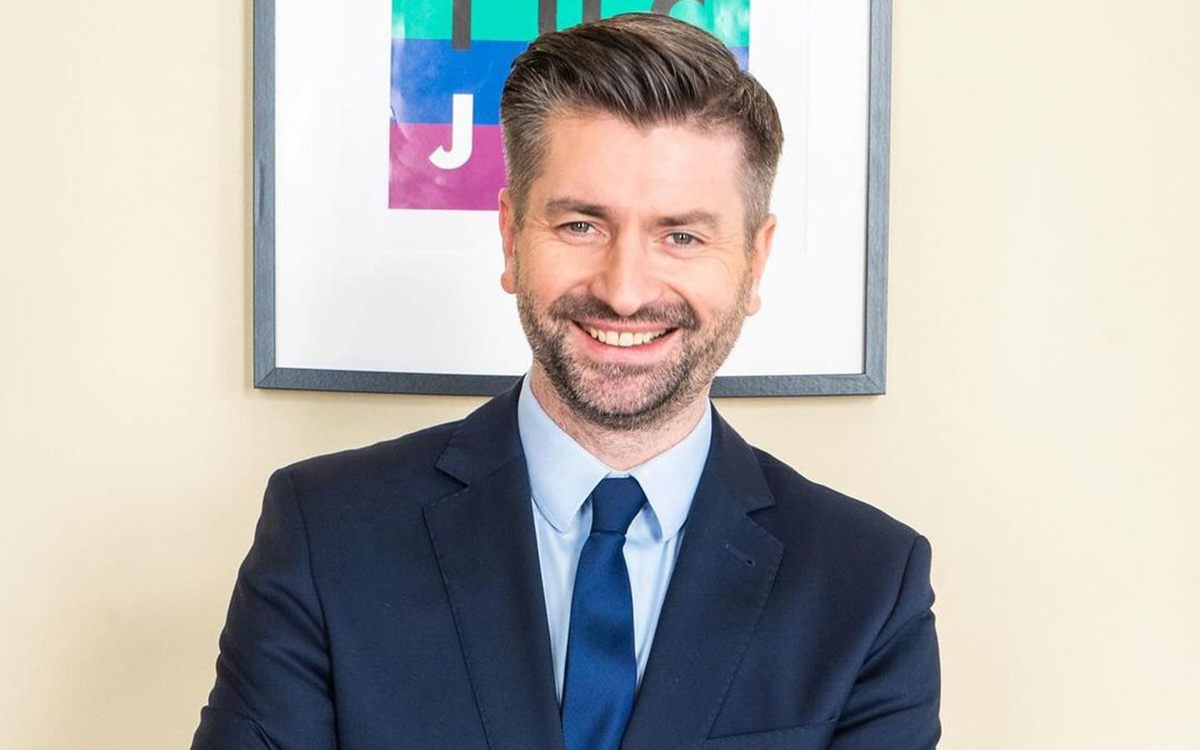
WARSAW, Poland — Poland’s only openly gay Cabinet minister on Tuesday spoke with the Washington Blade about the fight for LGBTQ rights in his country, Ukraine and U.S. politics.
Deputy Justice Minister Krzysztof Śmiszek assumed his post last Dec. 13 after Donald Tusk became prime minister.
The Civil Coalition, a group of opposition parties that Tusk leads, two months earlier won a majority of seats in the Sejm, the lower house of Poland’s parliament. President Andrzej Duda, an ally of the conservative Law and Justice party who opposes LGBTQ rights, remains in office as part of the governing coalition.
Śmiszek, a member of the New Left party, has been a member of the Sejm since 2019.
He was born Stalową Wola, a city in southeastern Poland that is close to the country’s borders with Ukraine and Slovakia. Śmiszek now represents Wrocław, the country’s third largest city that is located in southwestern Poland.
He is a lawyer who worked for the Campaign Against Homophobia, a Polish LGBTQ rights group, for several years before he entered politics. Śmiszek’s partner is former MP Robert Biedroń, who is now a member of the European Parliament.

Śmiszek noted to the Blade during an interview in his office that the Justice Ministry has introduced a bill that would add sexual orientation and gender identity to Poland’s hate speech and hate crimes laws.
The Council of Ministers, which includes members of Tusk’s Cabinet, is expected to approve the proposal in the coming weeks. Śmiszek said MPs will support the measure, even though critics say it would limit free speech.
“It was quite natural for us, I would say, to agree on that,” he told the Blade. “We all witnessed all these statements and horrible actions towards LGBT (people during the previous government.)”
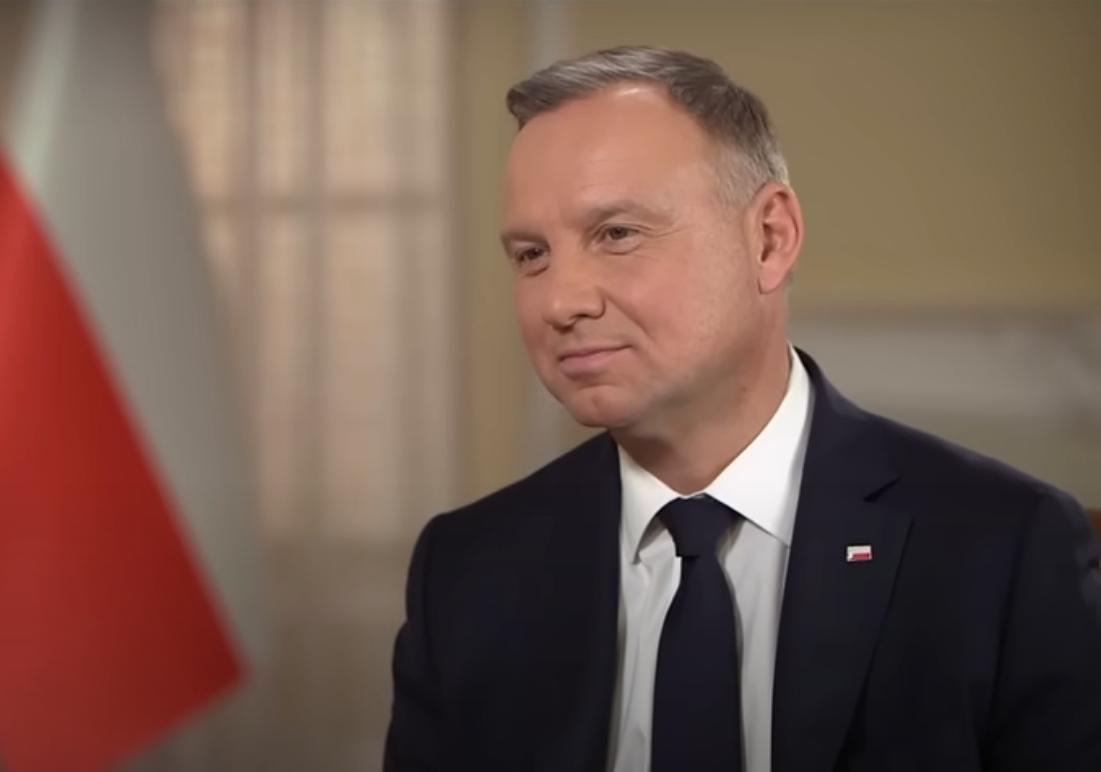
Duda became Poland’s president in 2015.
He said before he defeated Warsaw Mayor Rafał Trzaskowski in the country’s 2020 presidential election that LGBTQ “ideology” is more dangerous than communism. Duda has also claimed LGBTQ Poles are “a threat to the family” and “want to sexualize children.”
More than 100 municipalities across Poland ahead of the election adopted resolutions that declared themselves “LGBT-free zones.”
The Law and Justice Party and Poland’s influential Roman Catholic Church supported them, while the European Union cut funding to municipalities that adopted them. The Warsaw Voivodship Administrative Court on Feb. 6 struck down the country’s final “LGBT-free zone” resolution that Mordy, a town in Siedlce County in eastern Poland that is roughly half way between Warsaw and the Belarusian border, adopted in 2019.
Tusk has indicated his support of a civil partnership bill, but Śmiszek conceded it will be a “huge” challenge to secure passage in parliament because it is not an official part of the coalition government’s manifesto.
Śmiszek noted Poland has dropped its opposition to the case of a transgender man who filed a lawsuit in the European Union Court of Justice in Luxembourg after Romania refused to recognize his legal name and gender change that he received in the U.K.
“We are trying not only to change the legal situation of LGBTI folks here in this country, but also we are taking a completely new approach, also of Poland, as a member of the European Union,” he said.
The Justice Ministry last month for the first time with LGBTQ activists.
Śmiszek said former Justice Minister Zbigniew Ziobro, a member of the right-wing Sovereign Poland party, wrote many of the previous government’s proposals that targeted LGBTQ people and women. Śmiszek further described the ministry before the current government took office as a “governmental center of anti-LGBTI actions.”
“That was a very moving meeting that after eight years of hatred that was produced here in this ministry,” he said.
Śmiszek pointed out Duda’s first presidential veto was a bill that would have made the process through which transgender Poles could undergo gender-affirming surgery easier. Śmiszek said the new government wants “to make the lives of trans people a bit better and bearable in terms of relations with the state and with relations with the administration,” but conceded it “is difficult.” He also said Duda, the Constitutional Tribunal and the Catholic Church remain barriers to the advancement of LGBTQ rights.
“We are not starting from scratch in terms of new initiatives,” Śmiszek told the Blade. “We are getting back to the good solutions.”
“However, we are fully aware that there are plenty of conservative anchors and blockages in the institutional architecture,” he added.
Śmiszek also said his sexual orientation is not an issue to Tusk, to his fellow ministers and MPs.
“I haven’t heard any discussion or hesitation about should we have this guy in the ministry or not,” he said. “My sexual orientation is not an issue at all.”

Poland knows Russia ‘very well’
Russia on Feb. 24, 2022, launched its war against Ukraine.
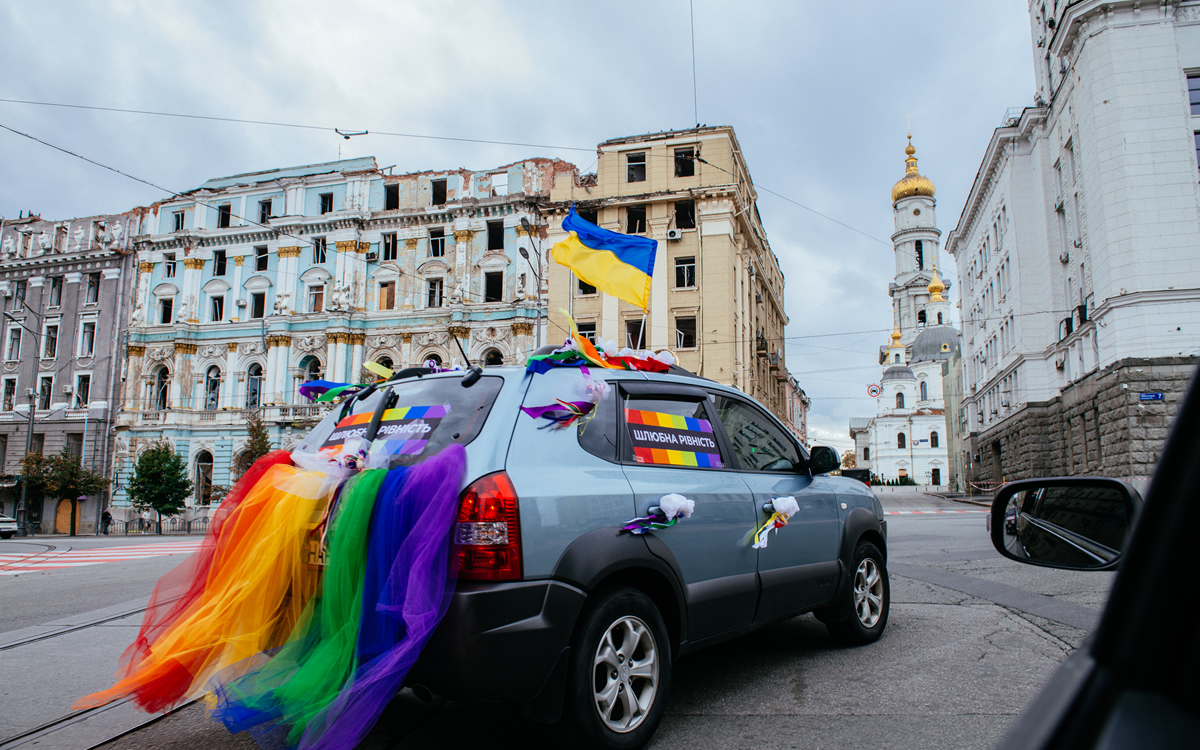
Śmiszek noted upwards of 2 million Ukrainians sought refuge in Poland, and many of them have remained in the country.
“Polish society passed its exam in terms of humanitarian aid and compassion for those who are victims of this aggressive war of Russia,” said Śmiszek.
A Russian missile on Nov. 15, 2022, killed two people in Przewodów, a village Hrubieszów County that is on the Ukrainian border. Another Russian missile on March 24 briefly entered Polish airspace near Oserdów, a village that is less than five miles away from Przewodów.
Śmiszek told the Blade he is increasingly concerned the war will spread to the Baltic countries — Lithuania, which borders Poland, and Latvia and Estonia — and to Poland itself.
The Russian exclave of Kaliningrad on the Baltic Sea also borders Poland.
“We are observing now, especially during the last few months, that something is going to happen,” he said.
Śmiszek acknowledged Ukraine in recent months has suffered setbacks on the battlefield, and the U.S. “is not very open to providing any help.”
“You can see Trump, what he is saying. You can also see some Western countries that are still hesitating,” he said. “This is a growing, unspoken emotion within Polish society that something is going to happen, the war will knock on our doors soon, in the next couple of years, and we are the second or third target of Putin if he’s not stopped by the united West.”
Śmiszek added Poland knows the Russians “very well.”
“That is why this is not something unusual when a Pole thinks about Russians invading our country,” he said. “It’s happened before.”
Tusk and Duda last month met with President Joe Biden at the White House in the hopes that Congress would pass a Ukraine funding bill. Śmiszek while speaking to the Blade criticized the delay.
“I know that they are trying to build their popularity, saying we should not spend billions of dollars for the wars that do not concern us and Russia will never attack us, blah, blah, blah,” he said. “In a way I do understand this rhetoric, but I don’t understand … it’s really a short-sighted approach.”
“I really count on changing the approach of the U.S. because this is really a huge threat to world democracy, to human rights and we always perceive the U.S. as a kind of element of guarantees for democracy around the world,” added Śmiszek. “This time the U.S. is not passing its exam, especially the conservative part of American politics.”
Śmiszek said Poland will continue to work with the U.S., regardless of who wins this year’s presidential election. He did, however, express concerns over former President Trump based on his positions on LGBTQ and reproductive rights, his U.S. Supreme Court nominees and Ukraine.
“This is kind of worrying,” said Śmiszek. “This kind of approach to fundamental issues very relevant to the stability of the world is now in the hands of the guy who you cannot predict what his decisions will be when the time comes and it will be a need for taking very serious decisions concerning the stability of the world.”
“He portrays himself as quite unstable I would say in terms of values he wants to defend,” he added.





European Union
Poland’s top court rejects recognition of same-sex marriages from other EU countries
Ruling sets up potential clash with bloc

Poland’s top court this week rejected the recognition of same-sex marriages legally performed in other EU countries.
The EU Court of Justice in Luxembourg last November ruled in favor of a same-sex couple who challenged Poland’s refusal to recognize their German marriage. Poland’s Supreme Administrative Court in March reaffirmed the decision.
The couple, who lives in Poland, brought their case to Polish courts in 2019. The Supreme Administrative Court referred it to the EU Court of Justice.
The Polish government in May announced it will recognize same-sex marriages legally performed in other EU countries. Polish President Karol Nawrocki on July 17 vetoed bills that would have extended rights to same-sex couples.
The Constitutional Tribunal ruling, which it issued on July 28, was unanimous and final. It also sets up a potential clash between it and the EU Court of Justice.
European Union
European Commission says all EU countries should ban conversion therapy
Recommendation ‘an important step forward for LGBTI rights across Europe’
The European Commission on Wednesday said all European Union countries should ban so-called conversion therapy.
The recommendation comes weeks after the European Parliament voted in favor of prohibiting the widely discredited practice across the EU. More than 1.2 million people signed a campaign in support of the ban that ACT (Against Conversion Therapy) LGBT launched in 2024 through the EU’s European Citizens Initiative framework.
“We warmly welcome today’s commitment from the European Commission to a recommendation on ending conversion practices, an important step forward for LGBTI rights across Europe,” said ILGA Europe in a statement.
Seven EU countries — Belgium, Cyprus, France, Malta, Norway, Portugal, and Spain — have banned conversion therapy outright.
Greece in 2022 banned the practice for minors. German lawmakers in 2020 passed a law that prohibits conversion therapy for minors and for adults who have not consented to undergoing the widely discredited practice.
ILGA Europe said the European Commission’s recommendation “highlights how much work remains to be done.”
“Ending conversion practices cannot stop at symbolic commitments or fragmented national approaches,” stressed the advocacy group. “We need coordinated EU action, proper training for professionals, and survivor-centered support systems that recognize the serious harm these practices cause.”
“More than one million people supported the European Citizens’ Initiative calling for change,” added ILGA Europe. “The message is clear: conversion practices are not therapy or belief, they are a form of violence that Europe can and should end.”
European Union
European Parliament backs EU-wide conversion therapy ban
More than 1.2 million people backed campaign
The European Parliament on Wednesday voted in favor of banning so-called conversion therapy across the European Union.
ACT (Against Conversion Therapy) LGBT in 2024 launched a campaign in support of the ban through the EU’s European Citizens Initiative framework. More than 1.2 million people ultimately signed it.
The proposed ban had the support of 405 MEPs. The European Commission is expected to formally respond to it by May 18.
Seven EU countries — Belgium, Cyprus, France, Malta, Norway, Portugal, and Spain — have banned conversion therapy outright.
Greece in 2022 banned the practice for minors. German lawmakers in 2020 passed a law that prohibits conversion therapy for minors and for adults who have not consented to undergoing the widely discredited practice.

Physician: addiction doesn’t always look the way you think it does

Calendar: October 9-15

ICC unseals arrest warrants for Taliban officials accused of persecuting LGBTQ people, women

Bet Mishpachah participates in D.C. Oct. 7 commemoration ceremony

Man charged in Mall of America shooting plot inspired by Pulse massacre: report

PHOTOS: Winchester Pride

Evan Low is not the leader the Victory Fund needs at this moment

Transgender woman elected to Brazilian Chamber of Deputies

Bowser, Office of LGBTQ Affairs announce LGBTQ+ History Month events

Alianza para la Inclusión fortalece la defensa de derechos LGBTQ en Centroamérica
-

 Photos5 days ago
PHOTOS: Winchester Pride
-
Opinions5 days ago
Evan Low is not the leader the Victory Fund needs at this moment
-
Brazil5 days ago
Transgender woman elected to Brazilian Chamber of Deputies
-
District of Columbia5 days ago
Bowser, Office of LGBTQ Affairs announce LGBTQ+ History Month events