Virginia
An inclusive romance bookstore blossoms in Old Town after fire
Friends to Lovers celebrates diverse storytelling
Last fall, something revolutionary started in Old Town Alexandria.
It has nothing to do with the cobblestone streets that date to the 1790s, nor the tavern where George Washington raised a birthday pint.
Instead, this revolution arrived with sapphic love stories, Black historical magic fiction, and a declaration founded on providing a space for all things romance novels. Friends to Lovers bookstore (301 Cameron St., Alexandria, Va.) the first bookstore of its kind in the DMV area, opened its doors less than a year ago. But based on the number of people flocking to the store—combined with its more than 30,000 social media followers—it is clear founding fathers are not the only noteworthy thing to come from Old Town.
Jamie Fortin, the store’s owner and founder, sat down with the Washington Blade just in time for National Book Lovers Day (Aug. 9) to discuss how an idea for her “niche” interest and passion for more diverse storytelling became a social media sensation and a newly welcome fixture in Alexandria’s sapphic and literary scenes.
“I realized if I wanted to open a business in this area—there are so many beautiful and unique businesses around here—that I wanted something that I was really invested in personally, and also something that I didn’t really see anywhere else,” Fortin said. “And once I thought of a romance bookstore, I was like, ‘OK, this is it.’”
Once she decided on a romance bookstore, Fortin said that she could hear the judgment from folks who ‘didn’t get’ the importance of creating such a space.
“We could have 100 sports bars in D.C. and no one bats an eye—but not everyone likes sports… Yet the second you create a space for women or queer people, suddenly it’s ‘too niche.’ Why is that? A lot of people had no idea that they would never actually be the intended customers, and it’s been interesting to watch those same people be like, ‘Oh, wow, what a good idea,’ now that it’s actually successful.”
And so Fortin and her team got to work. They found the perfect spot to open her dream bookstore—on the second story of a building surrounded by other small local businesses in the heart of Old Town. She consulted with a branding company to make sure the theme and feeling of the store were cohesive. She researched what romance books were doing online and started to stock her shelves.
“I think a lot of romance bookstores in the U.S. that have been popping up are really focused on uplifting marginalized communities,” Fortin explained, describing some of the inspiration to open the genre-specific bookstore. “I’m a woman, I’m also a queer person—these are the kinds of spaces that I’m really looking to create for folks. Not really seeing something like this, that is specifically intended to celebrate women’s joy and queer joy, is something I wanted to create.”
And create that space she did. After months of planning, strategic social media posts, and collaborating with other LGBTQ and women artists, it was finally time to open the bookstore’s doors in November of 2024.
Three days after its grand opening, a fire broke out, damaging the store and its books.
So Fortin utilized the same social media sites she had days and months earlier used to find which books she would sell in her store—Instagram and TikTok—but this time to post pictures of the damage the fire had caused and to ask for any financial help anyone could spare.
Her posts about the store made their way onto “#BookTok,” a subcommunity on TikTok with more than 100 billion videos about books, literature, and all things bibliophile.
“We posted on TikTok, and got 300,000 views,” she said. “And then raised $46,000 in a week just from the reach [of the social media videos]. A lot of it was local, but most of it was people who had never been in the store, or heard of it, but they just loved the concept and thought that this was something that our community needed.”
With such a clear sign from people all over the country—and the world—supporting her store’s mission to foster a safe, joyful space to discover romance novels, Fortin forged ahead.
“It really gave me a lot of hope that people are just nice and kind as part of it, but also made me feel a lot more connected to our mission—because people didn’t know me; they’re not giving money to Jamie, the girl who lives in Alexandria. They’re giving money to Jamie the girl, creating this safe space for these communities and creating a real community zone to celebrate these things.”
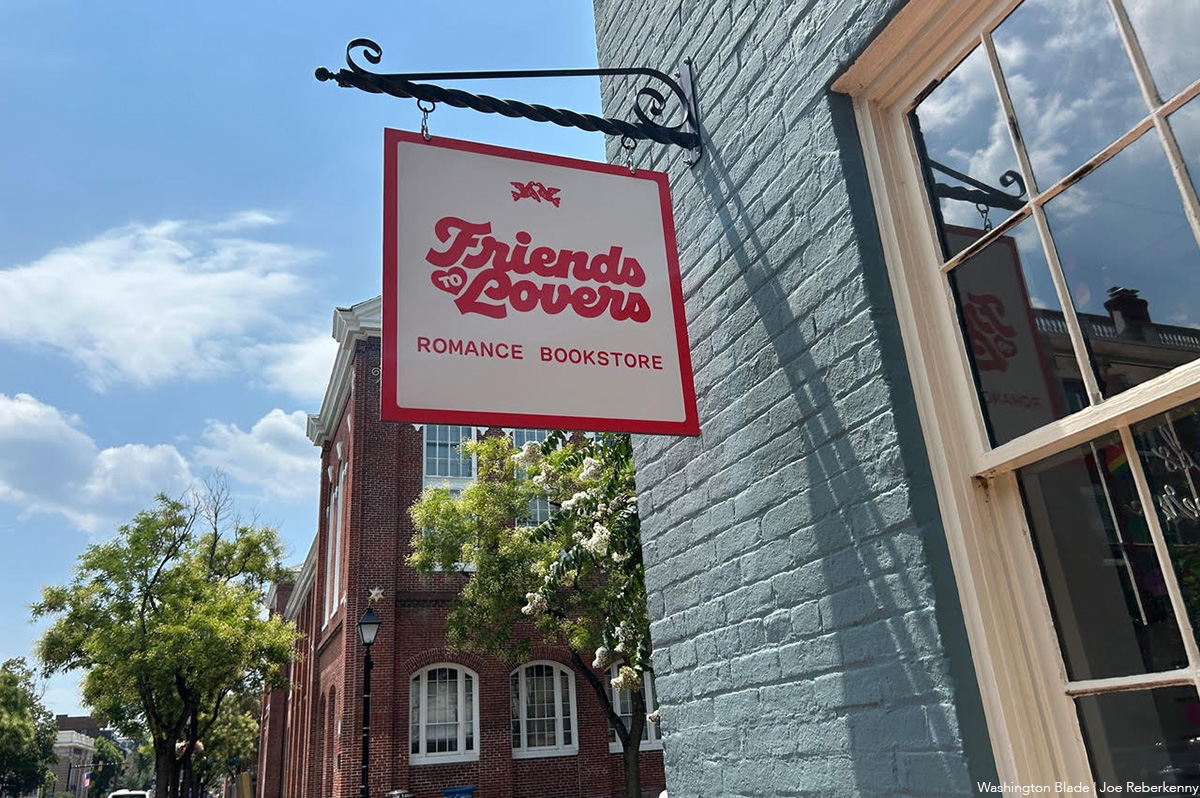
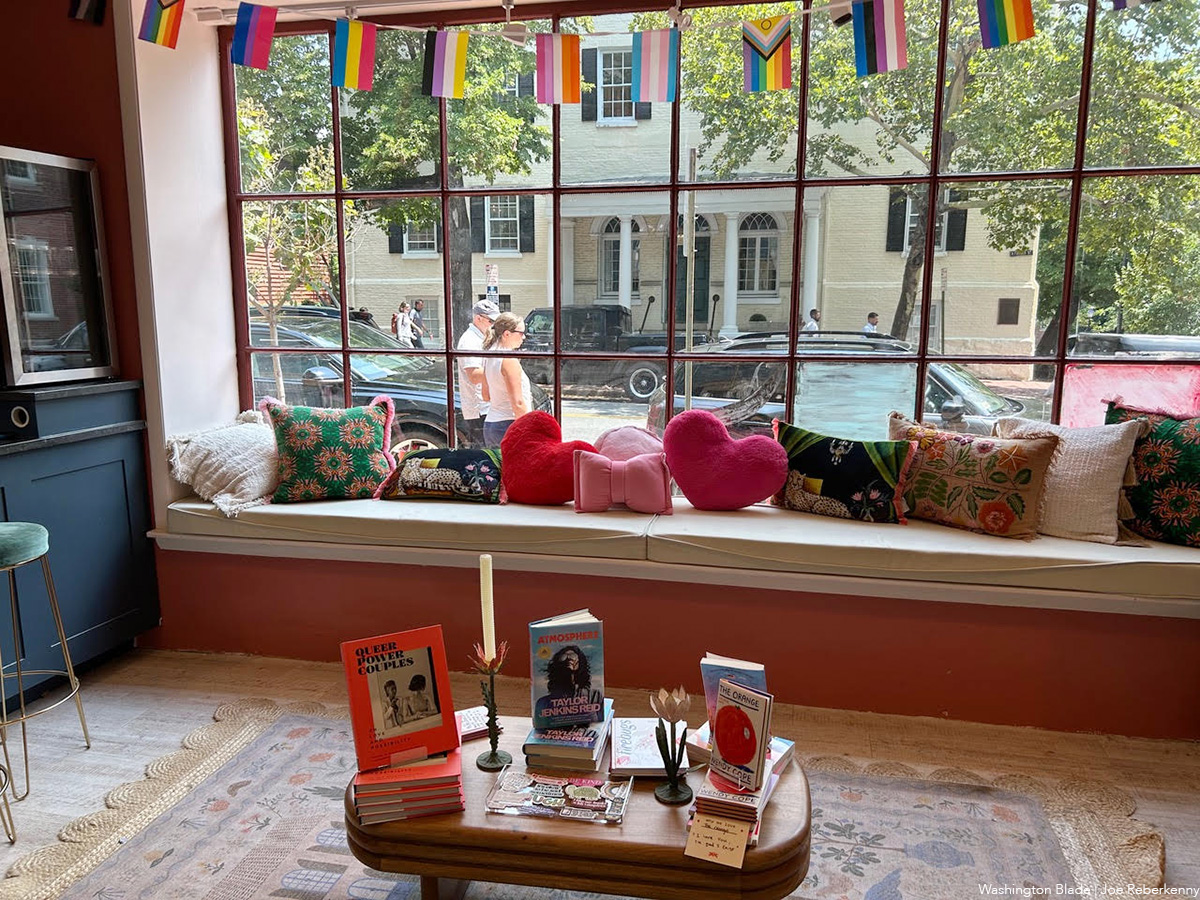
She got back to work, finding the perfect location one block away from the famous King Street in Old Town (complete with tremendous foot traffic). Fortin emphasized that the kindness from other LGBTQ people and women when recovering from the fire was a source of inspiration for her while finding her footing. She met with local women-owned businesses to select perfect pieces of furniture for the new space and hired a local artist to paint a new sign to hang outside the store.
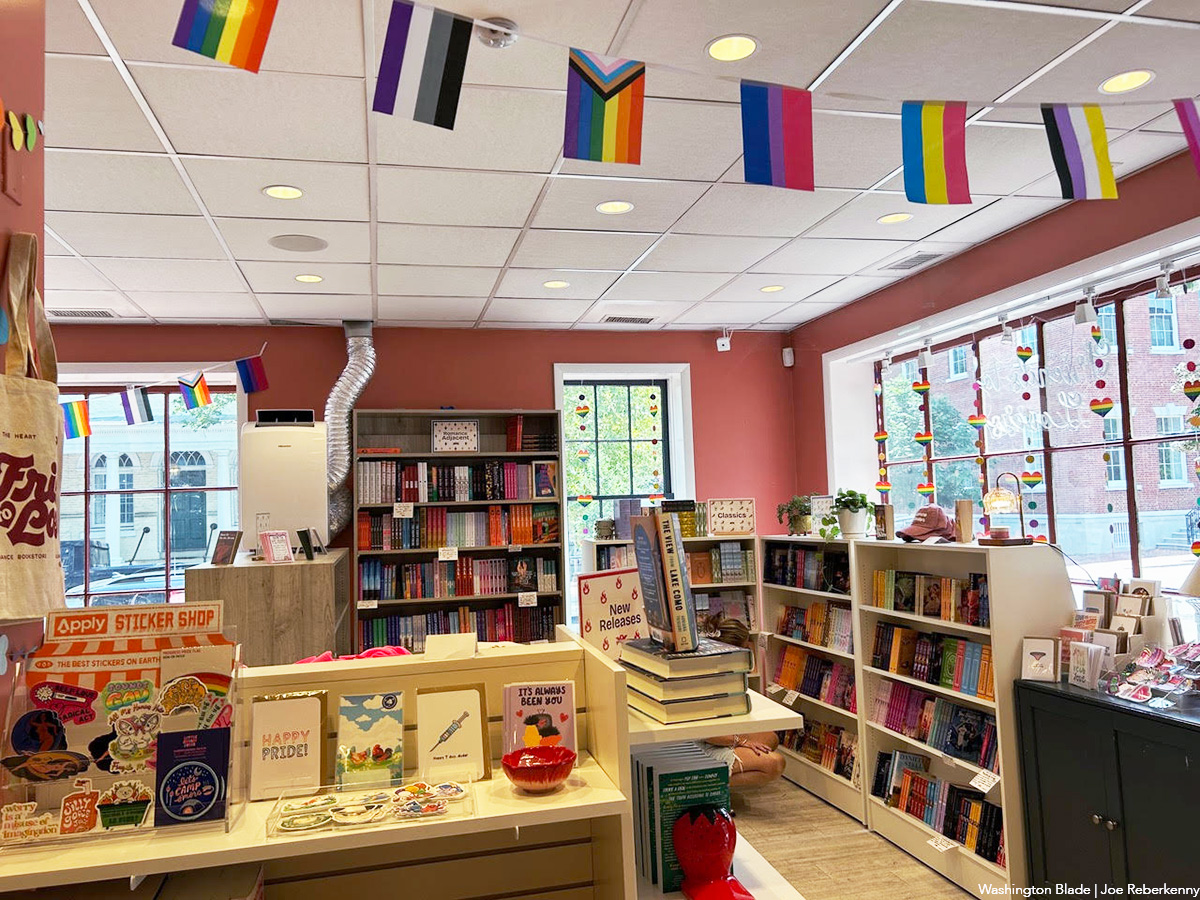
With the new space decorated with pink walls, Pride flags, and art by women and LGBTQ artists, Friends to Lovers reopened once again.
This August, Fortin and her team are gearing up for a weekend-long celebration in honor of National Book Lovers Day and the broader Romance Bookstore Weekend — just in time for Alexandria’s annual Sidewalk Sale.
“We have Jenna Voris coming in on the ninth,” said Fortin. “We’re kind of celebrating it through the whole weekend… We’ll also have three or four authors in on Saturday and Sunday—different authors both days—to sign their books and talk about what they’re selling. A few vendors are coming in too, some of our favorites we’ve worked with before—selling cute little goodies, maybe ceramics… I honestly don’t know which ones yet, but lots of vendors.”
“I think we have always stayed true to our mission, but I think it makes us feel a lot more empowered to act out that mission, because we know that there are so many people that want it,” she said. “I really learned from that whole experience. The business community is beautiful here, and it really intends to uplift and support each other.”
That appreciation for social media’s role in keeping the bookstore alive at a time when nearly everything can be accessed online was not lost on her.
“I feel really grateful that through TikTok and Instagram, we have found our audience,” Fortin said. “So the people who come in 90% of the time know what they’re looking for, know what to expect. And they’re like, ‘Yeah, we’re coming here for this.’”
When asked what’s something about romance novels that some people might not understand, Fortin was ready with an answer: that there are diverse voices if you look.
“Even now, the default you’re going to be fed—books, media, everything—is straight and white,” she said. “You have to go out of your way to find diverse stories, but they’re out there. Desi women write incredible romance. Queer white readers can read outside their experience—it’s not that hard, I promise.”
Recently, one of Friends to Lovers’ staff witnessed firsthand what these dedicated “niche” spaces can do.
“One of our booksellers tells this story of a group of Midwestern kids that came in. And it makes all of us cry every time we share this, because they came in and they were like, ‘I’ve never seen a space like this!’ They could see it was Pride month—we have all the flags up—and they’re like, ‘We’ve never had a space where we can feel welcome and seen.’ And ‘if we talk to the staff here, I can say I want to read ‘XYZ book’ and they won’t judge me. Or I can show that I’m attracted to this person!’ It was such a powerful space for them. And I think, having them be able to leave their homes and now know these places exist, and that people who support them are around.”
“I think it’s really powerful finding people who are going to be safe for you and that are going to love and support you no matter what,” Fortin said.
Virginia
Va. lawmakers consider partial restoration of Ryan White funds
State Department of Health in 2025 cut $20 million from Part B program
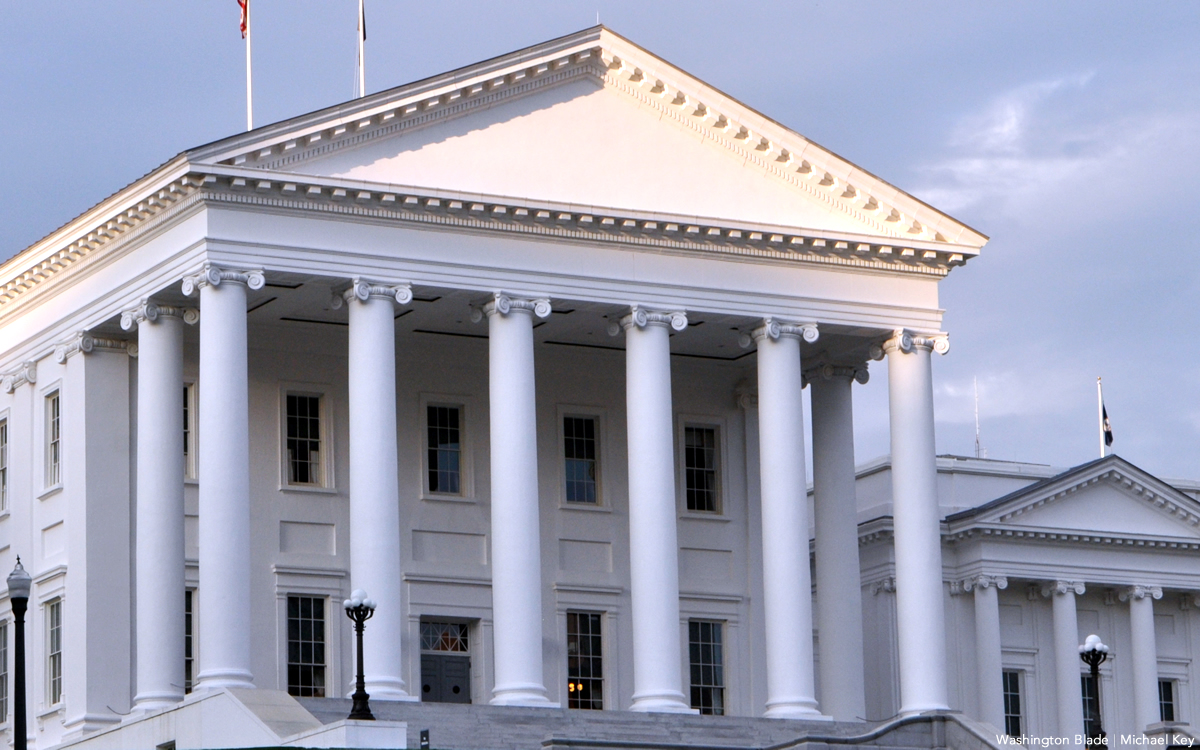
The Virginia General Assembly is considering the partial restoration of HIV funding that the state’s Department of Health cut last year.
The Department of Health in 2025 cut $20 million — or 67 percent of total funding — from the Ryan White Part B program.
The funding cuts started with the Trump-Vance administration passing budget cuts to federal HIV screening and protection programs. Rebate issues between the Virginia Department of Health and the company that provides HIV medications began.
Advocates say the funding cuts have disproportionately impacted lower-income people.
The Ryan White HIV/AIDS Program, a federal program started in 1990, provides medical services, public education, and essential services. Part B offers 21 services, seven of which remained funded after the budget cuts.
Equality Virginia notes “in 2025, a 67 percent reduction severely destabilized HIV services across the commonwealth.”
Virginia lawmakers have approved two bills — House Bill 30 and Senate Bill 30 — that would partially restore the funding. The Ryan White cuts remain a concern among community members.
Both chambers of the General Assembly must review their proposed changes before lawmakers can adopt the bills.
“While these amendments aren’t a full restoration of what community-based organizations lost, this marks a critical step toward stabilizing care for thousands of Virginians living with HIV,” said Equality Virginia Executive Director Narissa Rahaman. “Equality Virginia plans to continue their contact with lawmakers and delegates through the conference and up until the passing of the budget.”
“We appreciate lawmakers from both sides of the aisle who recognized the urgency of this moment and will work to ensure funding remains in the final version signed by the governor,” added Rahaman.
Virginia
Arlington LGBTQ bar Freddie’s celebrates 25th anniversary
Owner asks public to support D.C.-area gay bars
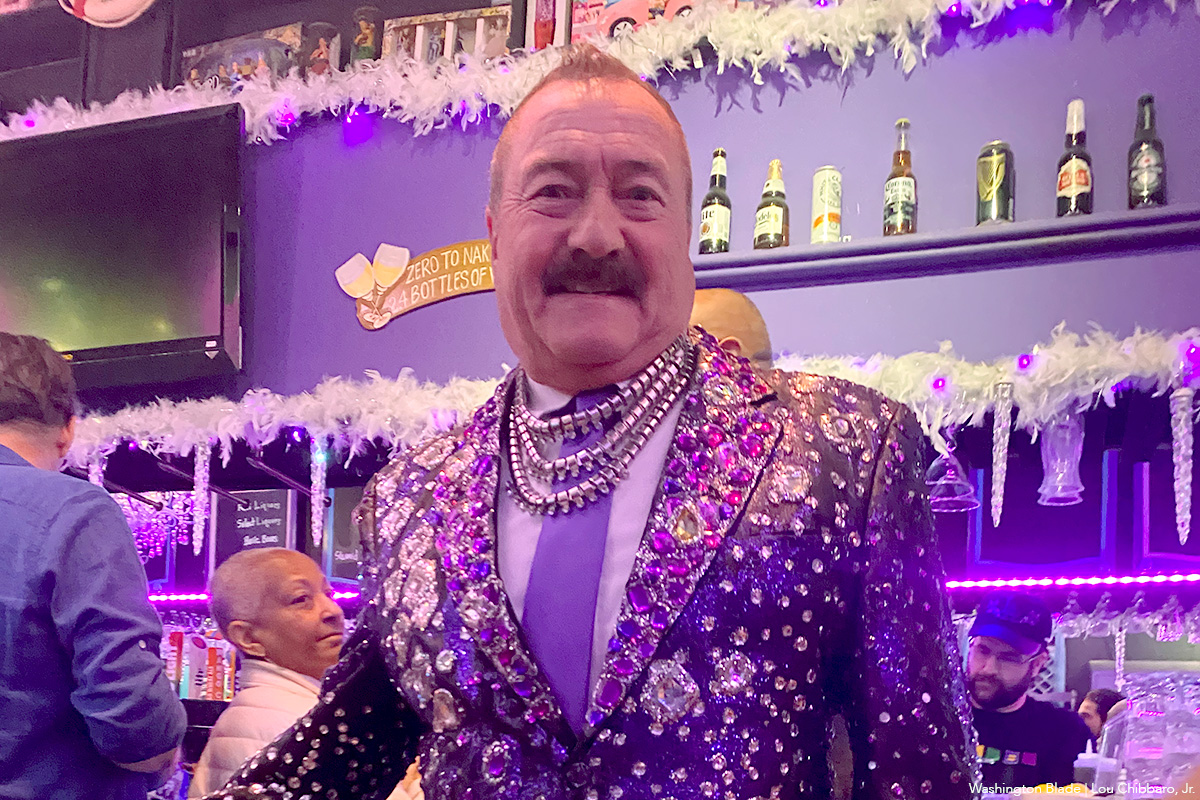
An overflowing crowd turned out Sunday night, March 1, for the 25th anniversary celebration of Freddie’s Beach Bar, the LGBTQ bar and restaurant located in the Crystal City section of Arlington, Va.
The celebration began as longtime patrons sitting at tables and at the bar ordered drinks, snacks, and full meals as several of Freddie’s well-known drag queens performed on a decorated stage.
Roland Watkins, an official with Equality NoVa, an LGBTQ advocacy organization based in the Northern Virginia areas of Arlington, Alexandria, and Fairfax County, next told the gathering about the history of Freddie’s Beach Bar and the role he said that owner Freddie Lutz has played in broadening the bar’s role into a community gathering place.
“Twenty-five years ago, opening a gay bar in Arlington was not a given,” Watkins told the crowd from the stage. “It took courage, convincing, and a deep belief that our community belongs openly, visibly, and proudly,” he said. “And that belief came from Freddie.”
Watkins and others familiar with Freddie’s noted that under Lutz’s leadership and support from his staff, Freddie’s provided support and a gathering place for LGBTQ organizations and a place where Virginia elected officials, and candidates running for public office, came to express their support for the LGBTQ community.
“Over the past 25 years, Freddie’s has become more than a bar,” Watkins said. “It has become a community maker.”
Lutz, who spoke next, said he was moved by the outpouring of support from long-time customers. “Thank you all so much for coming tonight and thank you all so much for your support over the past 25 years,” he said. “I can’t tell you how much that means to me and how much it’s kept me going.”
But Lutz then said Freddie’s, like many other D.C. area gay bars, continues to face economic hard times that he said began during the COVID pandemic. He noted that fewer customers are coming to Freddie’s in recent years, with a significant drop in patronage for his once lucrative weekend buffet brunches.
“So, I don’t want to be the daddy downer on my 25-year anniversary,” he said. “But this was actually the worst year we’ve ever had,” he added. “And I guess what I’m asking is please help us out. Not just me, but all the gay bars in the area.” He added, “I’m reaching out and I’m appealing to you not to forget the gay bars.”
Lutz received loud, prolonged applause, with many customers hugging him as he walked off the stage.
Virginia
Va. activists preparing campaign in support of repealing marriage amendment
Referendum about ‘dignity and equal protection under the law’
Virginia voters in November will vote on whether to repeal their state’s constitutional amendment that defines marriage as between a man and a woman.
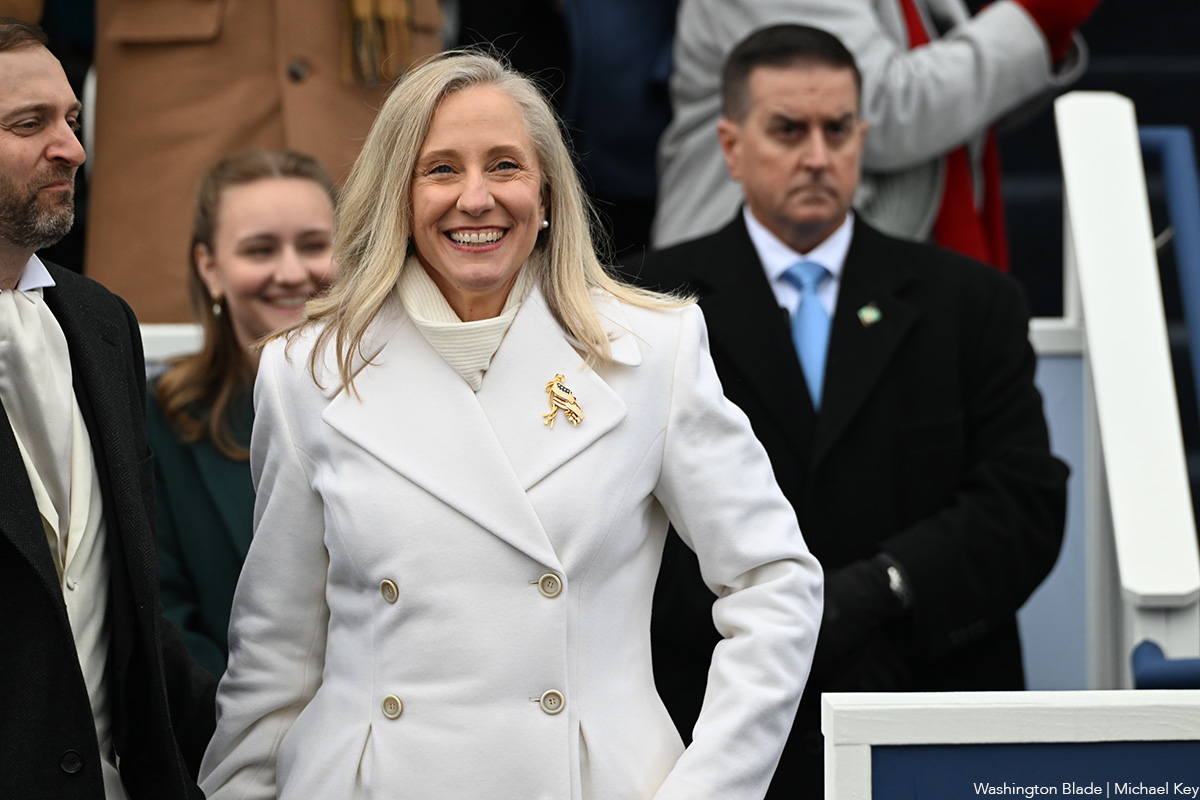
Democratic Gov. Abigail Spanberger on Feb. 6 signed House Bill 612 into law. It facilitates a referendum for voters to approve the repeal of the 2006 Marshall-Newman Amendment. Although the U.S. Supreme Court’s Obergefell ruling extended marriage rights to same-sex couples across the country in 2014, codifying marriage equality in Virginia’s constitution would protect it in the state in case the decision is overturned.
Maryland voters in 2012 approved Question 6, which upheld the state’s marriage equality law, by a 52-48 percent margin. Same-sex marriage became legal in Maryland on Jan. 1, 2013.
LGBTQ advocacy groups and organizations that oppose marriage equality mounted political campaigns ahead of the referendum.
Equality Virginia has been involved in advancing LGBTQ rights in Virginia since 1989.
Equality Virginia is working under its 501c3 designation in conjunction with Equality Virginia Advocates, which operates under a 501c4 designation, to plan campaigns in support of repealing the Marshall-Newman Amendment.
The two main campaigns on which Equality Virginia will be focused are education and voter mobilization. Reed Williams, the group’s director of digital engagement and narrative, spoke with the Washington Blade about Equality Virginia’s plans ahead of the referendum.
Williams said an organization for a “statewide public education campaign” is currently underway. Williams told the Blade its goal will be “to ensure voters understand what this amendment does and why updating Virginia’s constitution matters for families across the commonwealth.”
The organization is also working on a “robust media and voter mobilization campaign to identify and turn out voters” to repeal Marshall-Newman Amendment. Equality Virginia plans to work with the community members to guarantee voters are getting clear and accurate information regarding the meaning of this vote and its effect on the Virginia LGBTQ community.
“We believe Virginia voters are ready to bring our constitution in line with both the law and the values of fairness and freedom that define our commonwealth,” said Equality Virginia Executive Director Narissa Rahaman. “This referendum is about ensuring loving, committed couples and their families are treated with dignity and equal protection under the law.”
The Human Rights Campaign has also worked closely with Equality Virginia.
“It’s time to get rid of outdated, unconstitutional language and ensure that same sex couples are protected in Virginia,” HRC President Kelley Robinson told the Blade in a statement.

Queer American in Israel discusses Iran war’s impact

Housewives take Capitol Hill by storm

Protesters say SAVE Act targets voters, transgender youth

‘It’s Dorothy’ traces lasting influence of a cultural icon
SAVE Act could silence millions of trans voters

PHOTOS: Awesome Con

A season of renewal for D.C. theater

Kennedy Center leadership changes as Trump ally Grenell departs

Russian neocolonial politics promote anti-LGBTQ imperialistic values