Arts & Entertainment
John Waters dishes on upcoming Unleashed LGBTQ+ appearance
Baltimore-native connecting with new generations on the road
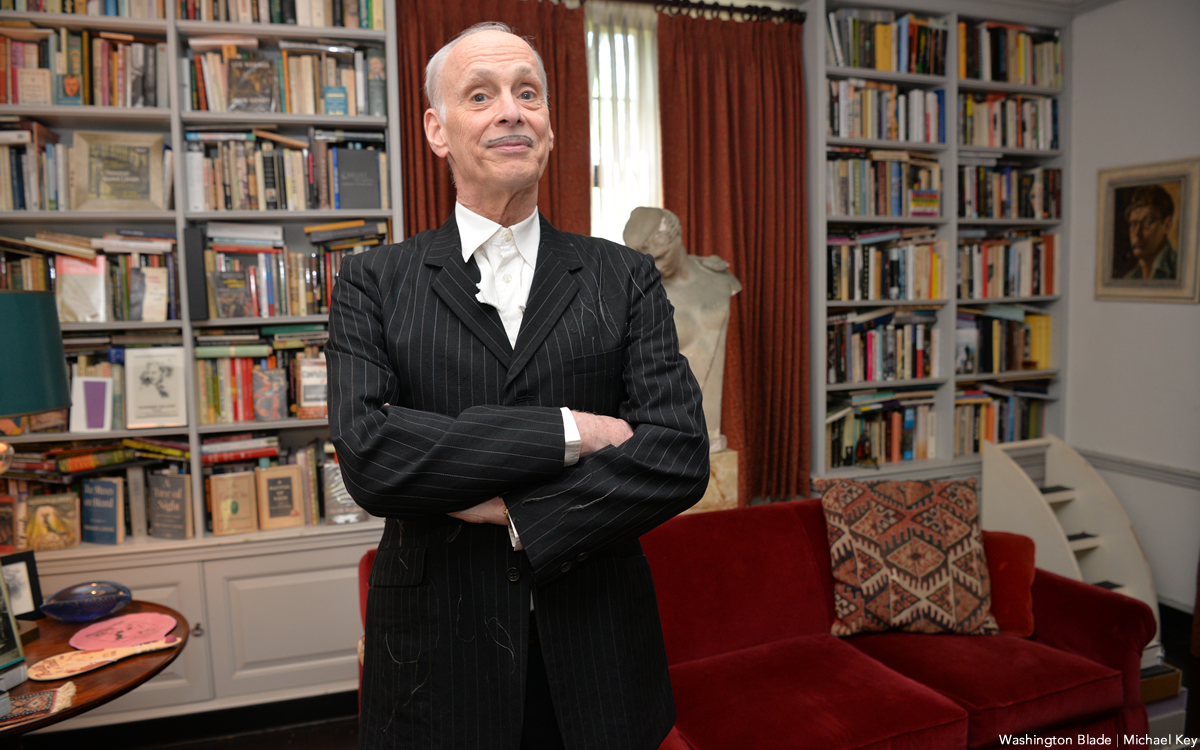
John Waters lives on the road for most of the year, and he likes it that way.
The iconic GLAAD-award winning filmmaker behind cult classics like “Serial Mom and Female Trouble” (just to name a few!) has already done 51 live shows this year, and next he is appearing at the Unleashed LGBTQ festival in Dallas on Sept. 19 for a conversation with Brad Pritchett at the Warwick Melrose, which will allow for audience participation. Waters will also be receiving the Unleashed LGBTQ+ Lifetime Achievement Award.
“I like the attitude of that title, and I think we need to be more unleashed today,” Waters tells the Los Angeles Blade. “I’m excited that I continue to be in touch with my audience. It seems to get younger and younger, which is just amazing to me. It’s like being a politician. You know, you always tour, you always meet your audience, and that always gives me the reason to keep going and making new stuff.”
While Waters has long been recognized as an unfiltered legend within the LGBTQ community, he admires that labels have fallen away: “The new generation — they’re not even queer, they’re all new everything. They’re not that limiting. They’re gay, or straight or just everything … It’s a new world out there. But I survived the first sexual revolution. Now I’m going through a new one, which is even more surprising.”
Waters’s first feature film starring Divine, “Mondo Trasho,” released back in 1969, so he’s seen “half a century” of different audiences connect with his work. “I think the key was I was never mean spirited, that I made fun of the rules that liberals live by, not our parents,” he reflects. “I made fun of hippie rules and then punk rules and politically correct rules. And now there’s more rules in that world that my parents had that I rebelled from. So I’ve always made fun of things I love, and I think that has been the key to my longevity.”
Just last year, the Academy Museum dedicated an entire exhibit to Waters’s filmography, appropriately titled “Pope of Trash.” “That gives hope to anybody that anything can happen,” Waters says. “For those movies that were universally hated when they first came out by critics — not by audiences — and to end up at the Academy Awards, giving me nine rooms, it’s just amazing. [And] a gift shop that sold T-shirts that said, ‘He’ll make you sick.’ You know, how did that ever happen? I don’t know.”
Outrageous humor and political satire are key to Waters’s filmography, and it’s that same sense of humor he sees as key to winning today’s many fights.
“Let’s pick our battles and win them and use humor,” Waters says. “Don’t preach to people. Don’t tell people they’re stupid, even if they are. You got to make them think that they’re smart and listen to you … You have to use politics. Humor is politics. Freud even wrote a book about the psychoanalysis of jokes. Humor is how we win, and we have to pick our battles. And I don’t think we did last time.”
The Los Angeles Blade will be on site for Unleashed LGBTQ SEPT. 19-21, 2025 | DALLAS, Get your tickets here




Theater
‘Inherit the Wind’ isn’t about science vs. religion, but the right to think
Holly Twyford on new role and importance of listening to different opinions

‘Inherit the Wind’
Through April 5
Arena Stage
1101 Sixth St., S.W.
Tickets start at $73
Arenastage.org
When “Inherit the Wind” premiered on Broadway in 1955 with a cast of 50, its fictional setting of Hillsboro, an obscure country town described as the buckle on the Bible Belt, was filled with townspeople. And now at Arena Stage, director Ryan Guzzo Purcell has somehow crowded Arena’s large Fichandler space with just 10 actors, five principals and a delightful ensemble of five playing multiple roles.
Inspired by the real-life Scopes Monkey Trial of 1925, Jerome Lawrence and Robert E. Lee’s fictionalized work pits intellectual freedom against McCarthyism via the imagined trial of Bertram Cates (Noah Plomgren), a Tennessee educator charged with teaching evolution. Drawn into the fracas are big shot lawyers, defense attorney Henry Drummond (Billy Eugene Jones), and conservative prosecutor, Matthew Harrison Brady (Dakin Matthew). On hand to cover the closely watched story is wisecracking city slicker and Baltimore reporter E.K. Horneck (played by nonbinary actor Alyssa Keegan).
Out actor Holly Twyford, a four-time Helen Hayes Award winner who has appeared in more than 80 Washington area plays, is part of the ensemble. In jeans and boots, she memorably plays Meeker, the bailiff at the Hillsboro courthouse and the jailer responsible for holding Cates in the days leading to his trial.
Twyford also plays Sillers, a slack jawed earnest employee at the local feed store who’s called to serve on the jury. And more importantly she plays Brady’s quietly strong wife Sarah whom he affectionately calls “Mother.”
When Twyford makes her memorable first entrance as Meeker, she’s wiping shaving cream from her face with a hand towel. With shades of Mayberry R.F.D., the jail is run casually. Meeker says Cates isn’t the criminal type, and he’s not.
“There’s a joke among actors,” says Twyford. “When an actor gets his shoes, they know who their character is. And it’s sort of true. When you put on boots, heels, or flip flops, there’s a different feeling, and you walk differently.”
Similarly, shares Twyford, it goes for clothes too: “When Mother slips a pink coat dress over her cowboy boots, dons a little hat and ties her scarf, or Meeker puts on his work shirt, I know where I am. And all of that is thanks to a remarkable wardrobe crew.
“Additionally, some of the ensemble characters are played broadly which is helpful to the actors and super identifying for the audience too.”
During intermission, an audience member loudly described the production as “a proper play” filled with beautifully written passages. And it’s true. Twyford agrees, adding “That’s all true, and it’s also been was fun for us to be a part of the Arena legacy as well. Arena took ‘Inherit the Wind’ to the Soviet Union in the early ‘70s when the respective governments did a cultural exchange. At the time, the iron curtain was very much in place, and they traveled with a play about a man with his own thoughts.”
When the ensemble was cast, actors didn’t know which tracts exactly they were going to play. “What came together was a cast, diverse in different ways. Some directors, including myself when I direct, are interested in assembling a cast that’s a good group. No time for egos. It’s more about who will make the best group to help me tell this story.”
At one point during rehearsal, ensemble members began to help one another with minor onstage costume changes, like jackets and hats: “We just started doing it and Ryan [Guzzo Purcell] picked up on it, saying things really began to come alive when we helped each other, so we went with that.”
“For me, it was reminiscent of ‘The Laramie Project’ [Ford’s Theatre in 2013] when we played five different parts and we’d help each other with a vest or jacket in a similar way. It worked so well then too,” says Twyford.
“Inherit the Wind” isn’t about science versus religion. It’s about the right to think, playwright Jerome Lawrrence has been quoted as saying. And it’s a quote that makes the play that much more relevant today.
Twford remembers a chat in a hair salon: “I was getting my hair cut and the woman next to me shared that she was tired of message plays. Understandably there are theater makers who believe that message plays are the point, while others think it’s all about entertainment. I feel like ‘Inherit the Wind’ sits in a nice place in the middle.”
She adds “the work is a creative way of showing different opinions and that, I think, is what we should be paying attention to right now. Clearly, it’s not right or wrong to express what you think.”
Out & About
‘How We Survived’ panel set for March 25
‘Living History’ discussion to be held at Spark Social
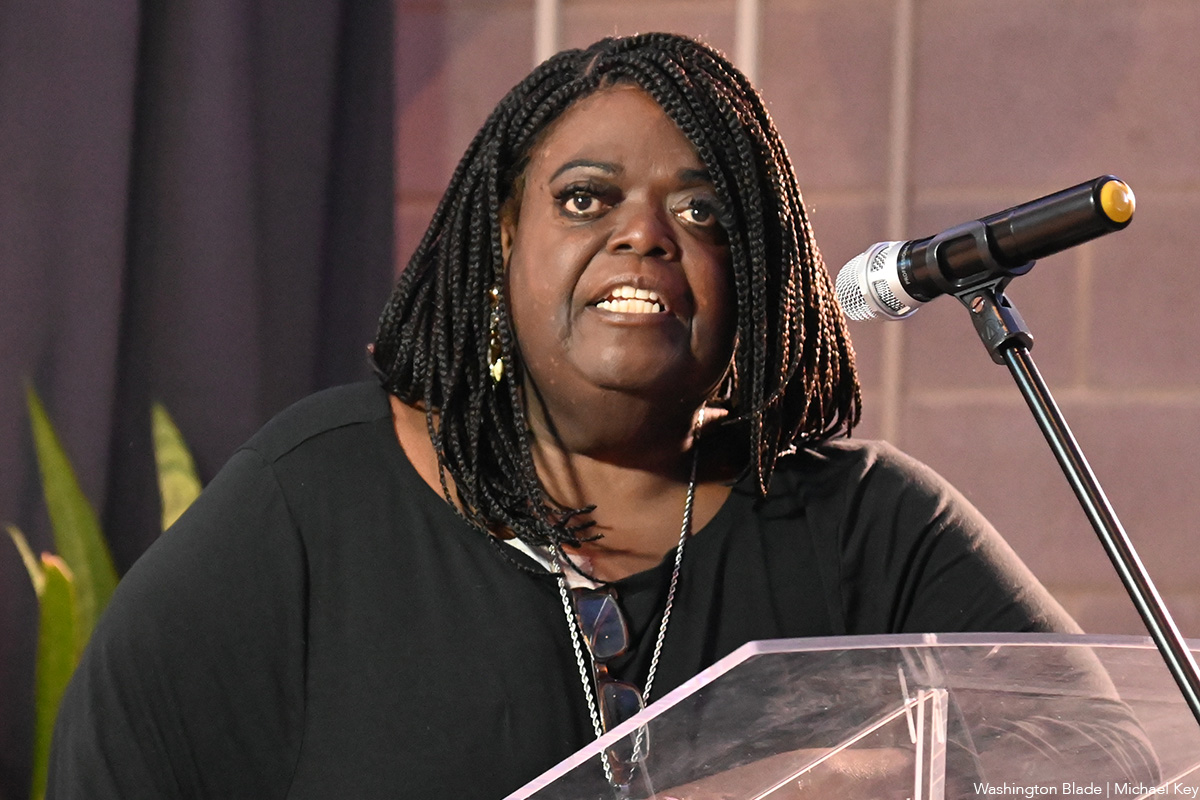
Friends of Dorothy Cafe will host “Part One, Living History: How We Survived,” will take place on Wednesday, March 25 at 7:30 p.m. at Spark Social House.
This event will be moderated by Abby Stuckrath, host of the “Queering the District” podcast. Panelists include: Earline Budd, activist, trans rights advocate; TJ Flavell of Go Gay DC; DC LGBTQ+ Center Board Member David Bissette; and Alexa Rodriguez, founder and executive director, Trans-Latinx DMV.
This event is part of a four-part storytelling series called “Living History,” which centers LGBTQ elders, activists, artists, and icons sharing their lived experiences and reflections with younger generations. The conversations explore themes like resilience, community organizing, chosen family, and the lessons earlier generations hope today’s LGBTQ+ and ally communities will carry forward.

Saturday, March 21
Go Gay DC will host “LGBTQ+ Community Brunch” at 11 a.m. at Freddie’s Beach Bar & Restaurant. This fun weekly event brings the DMV area LGBTQ+ community, including allies, together for delicious food and conversation. Attendance is free and more details are available on Eventbrite.
The DC Center for the LGBT Community will host “Sunday Supper on Saturday” at 2 p.m. It’s more than just an event; it’s an opportunity to step away from the busyness of life and invest in something meaningful, and enjoy delicious food, genuine laughter, and conversations that spark connection and inspiration. For more details, visit the Center’s website.
Sunday, March 22
LGBTQ+ Community Coffee and Conversation will be at 12 p.m. at As You Are. This event is for people looking to make more friends and meaningful connections in the LGBTQ community. Attendance is free and more details are available on Eventbrite.
Monday, March 23
Center Aging: Monday Coffee Klatch” will be at 10 a.m. on Zoom. This is a social hour for older LGBTQ+ adults. Guests are encouraged to bring a beverage of choice. For more information, contact Adam ([email protected]).
Queer Book Club will be at 7 p.m. on Zoom. The Queer Book Club meets on the fourth Monday of the month to discuss queer books by queer authors. For more details, visit the DC Center’s website.
Tuesday, March 24
Coming Out Discussion Group will be at 7 p.m. on Zoom. This is a safe space to share experiences about coming out and discuss topics as it relates to doing so — by sharing struggles and victories the group allows those newly coming out and who have been out for a while to learn from others. For more details, visit the group’s Facebook.
Genderqueer DC will be at 7 p.m. on Zoom. This is a support group for people who identify outside of the gender binary, whether you’re bigender, agender, genderfluid, or just know that you’re not 100% cis. For more details, visit www.genderqueerdc.org or Facebook.
Wednesday, March 25
Job Club will be at 6 p.m. on Zoom upon request. This is a weekly job support program to help job entrants and seekers, including the long-term unemployed, improve self-confidence, motivation, resilience and productivity for effective job searches and networking — allowing participants to move away from being merely “applicants” toward being “candidates.” For more information, email [email protected] or visit www.thedccenter.org/careers.
Thursday, March 26
The DC Center’s Fresh Produce Program will be held all day at the DC Center for the LGBT Community. People will be informed on Wednesday at 5 p.m. if they are picked to receive a produce box. No proof of residency or income is required. For more information, email [email protected] or call 202-682-2245.
Virtual Yoga Class will be at 7 p.m. on Zoom. This free weekly class is a combination of yoga, breath work and meditation that allows LGBTQ+ community members to continue their healing journey with somatic and mindfulness practices. For more details, visit the DC Center’s website.

Small is beautiful: subcompact SUVs

‘Inherit the Wind’ isn’t about science vs. religion, but the right to think

‘How We Survived’ panel set for March 25

Calendar: March 21-26

Queer American in Israel discusses Iran war’s impact

Idaho advances bill to restrict bathroom access for transgender residents

Gay candidate running for D.C. congressional delegate seat

SAVE Act could silence millions of trans voters

Thomas A. Decker of Arlington dies at 73

The frightening rise of antisemitism, Islamophobia
-

 Idaho5 days ago
Idaho advances bill to restrict bathroom access for transgender residents
-
District of Columbia5 days ago
Gay candidate running for D.C. congressional delegate seat
-
Opinions4 days ago
SAVE Act could silence millions of trans voters
-
Obituary5 days ago
Thomas A. Decker of Arlington dies at 73