Virginia
Va. election to determine future of LGBTQ rights in state
Democrat Abigail Spanberger ahead in race to succeed Republican Gov. Glenn Youngkin
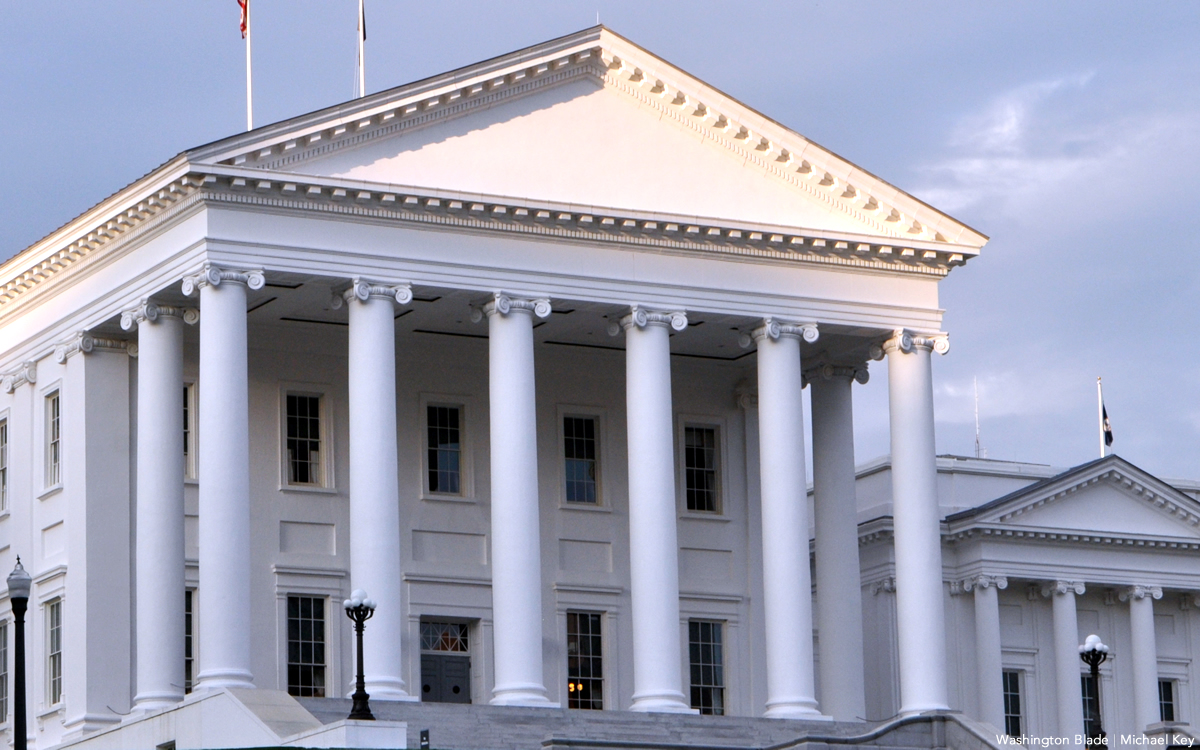
Virginia will hold elections on Nov. 4 for governor, lieutenant governor, attorney general, and the House of Delegates. A “moral opposition” to marriage equality and anti-transgender advertisements, among other things, have shaped current polling numbers and the election’s relevance to LGBTQ voters.
With one week before election day, Democrats may face a split ticket result, considering former state Del. Jay Jones’s text message scandal that shook up the attorney general race.
Governor: Abigail Spanberger v. Winsome Earle-Sears
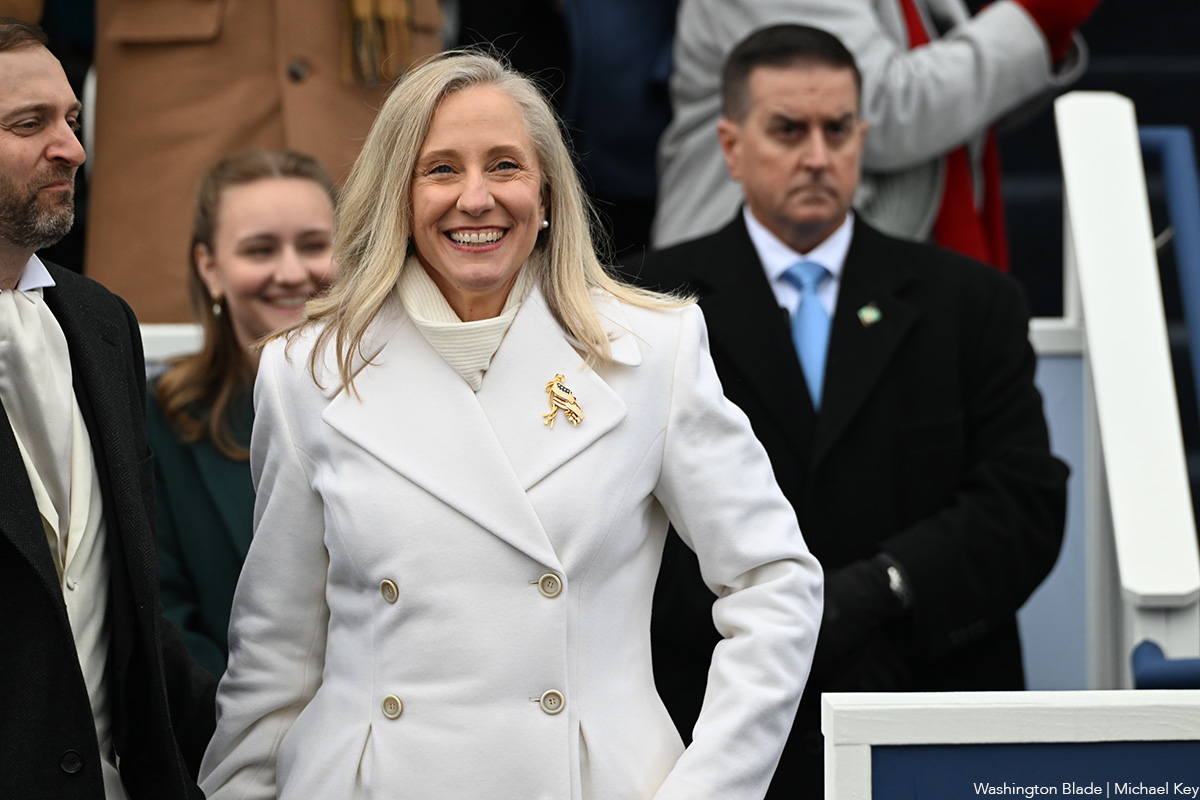
Democratic former Congresswoman Abigail Spanberger and Republican Lt. Gov. Winsome Earle-Sears are competing for the governor’s office. Spanberger leads Earle-Sears by seven points among Virginia’s likely voters, according to an Oct. 27 poll by Christian Newsport University.
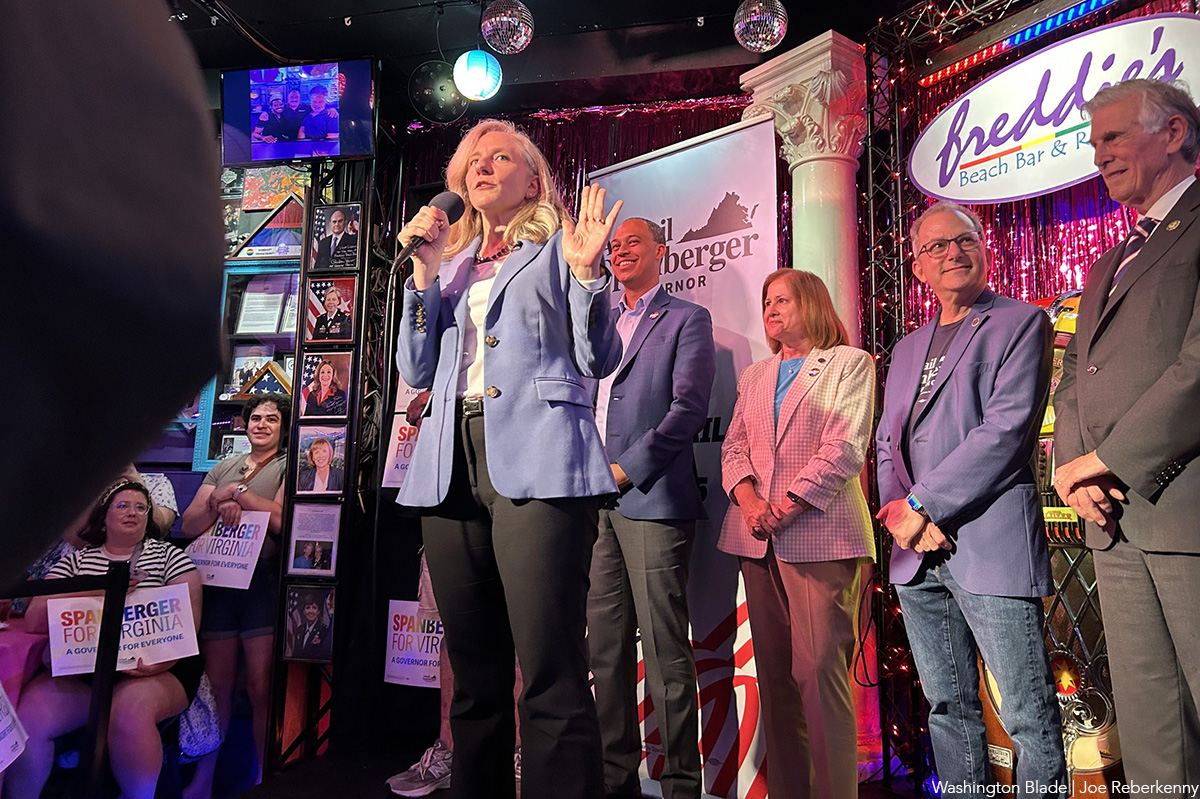
Earle-Sears declared during the gubernatorial debate that opposing marriage equality and employment protections for the LGBTQ community is “not discrimination.” The candidate also holds a “moral opposition” to marriage equality.
Spanberger, supported by former President Barack Obama and former Transportation Secretary Pete Buttigieg, holds a record of supporting LGBTQ rights, specifically in co-sponsoring the Equality Act, which would enshrine non-discrimination protections for LGBTQ people in federal law.
An ad from Restoration of America PAC, a collection of conservative groups, describes Spanberger “as extreme as it gets” because of her stance on trans rights.
Lieutenant governor: Ghazala Hashmi v. John Reid
State Sen. Ghazala Hashmi holds a two point lead against Republican John Reid, according to the CNU poll. The Democrat’s advantage narrowed from a previous 48-39 percent lead.
Reid, a conservative talk show host, is the first openly gay person nominated for a Virginian statewide office. The candidate, however, denies the existence of trans people on his campaign website and has pledged to vote against a constitutional amendment that would protect marriage equality in Virginia.
Reid earlier in the campaign faced calls from Republican Gov. Glenn Youngkin, who Virginia law prevents from running for a consecutive term, and others to drop out after pornographic images he allegedly posted on social media emerged.
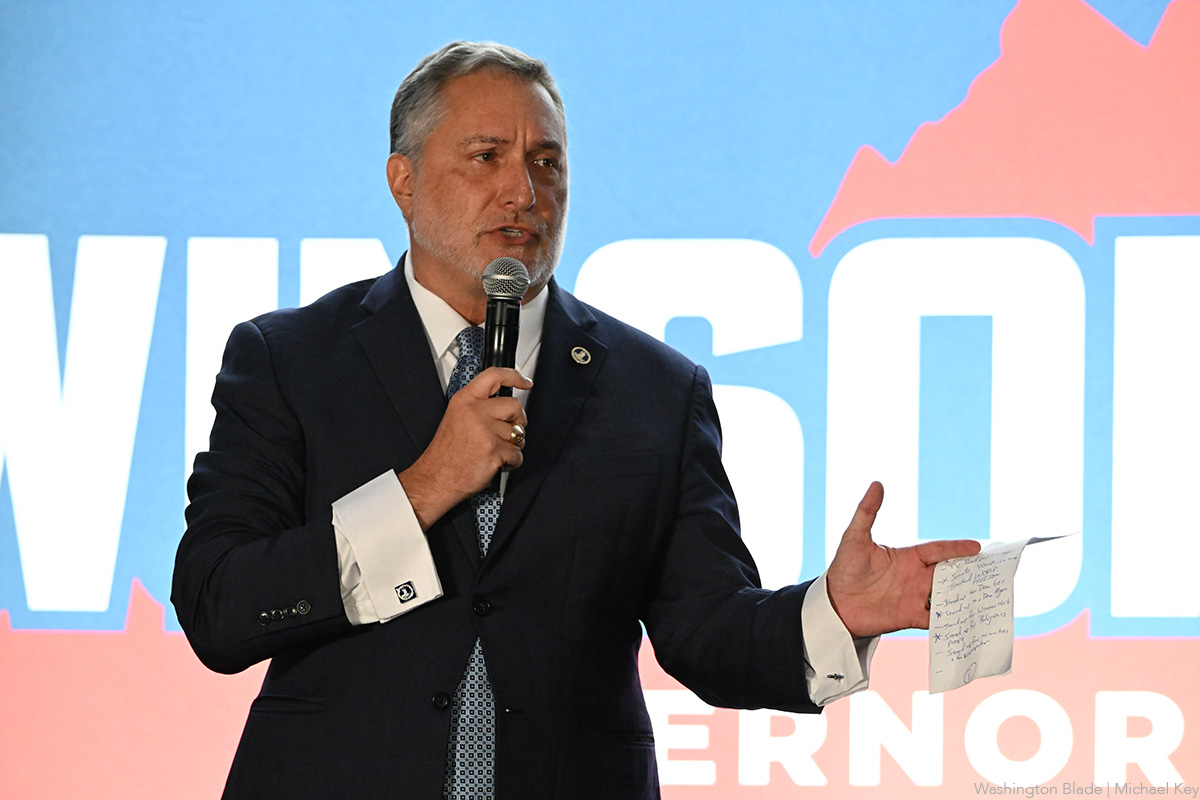
Hashmi’s record includes supporting marriage equality protections and sponsoring a bill to protect doctors who provide gender-affirming healthcare to patients who don’t live in Virginia.
Attorney general: Jay Jones v. Jason Miyares
Incumbent Republican Jason Miyares holds a one point lead against Jones, according to the CNU poll conducted after the text message scandal. The National Review earlier this month published screenshots of Jones texting a colleague about a scenario in which he shot former Virginia House Speaker Todd Gilbert, a Republican.
The publication of the August 2022 conversation led to President Donald Trump demanding Jones to drop out of the race, Spanberger expressing “disgust” toward him, and Earle-Sears encouraging voters to “reject the insanity.”
Jones still holds 91 percent support among Democrats, although the number is a drop from a previous CNU poll that found 96 percent of Democrats backed him.
House of Delegates
All 100 Virginia House of Delegates seats are on the ballot. The CNU poll finds that, upon asking likely voters the party for which they intend to vote, Democrats hold an eight point lead over Republican candidates.
The LGBTQ+ Victory Fund, a political action committee seeking to increase LGBTQ political power, has endorsed eight House candidates: State Dels. Rozia Henson (D-Prince William County), Laura Jane Cohen (D-Fairfax County), Joshua Cole (D-Fredericksburg), Marcia Price (D-Newport News), Adele McClure (D-Arlington County), and Mark Sickles (D-Fairfax County) and Lindsey Dougherty and Risë Hayes.
Dougherty and Hayes are both challenging Republican incumbents in District 75 and 52, respectively.
Victory Fund President Evan Low said LGBTQ representation is “about improving lives and sharing critical lived experiences.”
“In this time when LGBTQ+ identity is under attack, we are proud to have a strong, powerful coalition of delegates on the ballot this November,” Low said.
Daniel Hernández, the organization’s vice president of political programs, added state legislatures offer a more “direct and tangible” pathway to change.
“To know that LGBTQ+ Victory Fund is working alongside this amazing slate of candidates working to grow our LGBTQ+ caucus in the Virginia House of Delegates, with several incumbents up for reelection, shows the power and impact of LGBTQ+ representation and how it’s working for Virginians,” Hernández said.
Narissa Rahaman is the executive director of Equality Virginia Advocates, the advocacy branch of Equality Virginia, a statewide LGBTQ advocacy group.
Rahaman said the candidates elected on Nov. 4 will dictate the progress of LGBTQ rights and amending the state constitution to protect marriage equality, reproductive freedom, and voting rights.
“As national guards are mobilized into neighboring states and cities, as communities are disrupted by increasingly militant ICE raids, as federal funding is used to threaten public education and healthcare institutions into submission, Virginia’s greatest hope of fighting back in the coming years will be ensuring we elect pro-equality candidates to the House of Delegates and statewide offices,” Rahaman said.




Virginia
Va. lawmakers consider partial restoration of Ryan White funds
State Department of Health in 2025 cut $20 million from Part B program
The Virginia General Assembly is considering the partial restoration of HIV funding that the state’s Department of Health cut last year.
The Department of Health in 2025 cut $20 million — or 67 percent of total funding — from the Ryan White Part B program.
The funding cuts started with the Trump-Vance administration passing budget cuts to federal HIV screening and protection programs. Rebate issues between the Virginia Department of Health and the company that provides HIV medications began.
Advocates say the funding cuts have disproportionately impacted lower-income people.
The Ryan White HIV/AIDS Program, a federal program started in 1990, provides medical services, public education, and essential services. Part B offers 21 services, seven of which remained funded after the budget cuts.
Equality Virginia notes “in 2025, a 67 percent reduction severely destabilized HIV services across the commonwealth.”
Virginia lawmakers have approved two bills — House Bill 30 and Senate Bill 30 — that would partially restore the funding. The Ryan White cuts remain a concern among community members.
Both chambers of the General Assembly must review their proposed changes before lawmakers can adopt the bills.
“While these amendments aren’t a full restoration of what community-based organizations lost, this marks a critical step toward stabilizing care for thousands of Virginians living with HIV,” said Equality Virginia Executive Director Narissa Rahaman. “Equality Virginia plans to continue their contact with lawmakers and delegates through the conference and up until the passing of the budget.”
“We appreciate lawmakers from both sides of the aisle who recognized the urgency of this moment and will work to ensure funding remains in the final version signed by the governor,” added Rahaman.
Virginia
Arlington LGBTQ bar Freddie’s celebrates 25th anniversary
Owner asks public to support D.C.-area gay bars
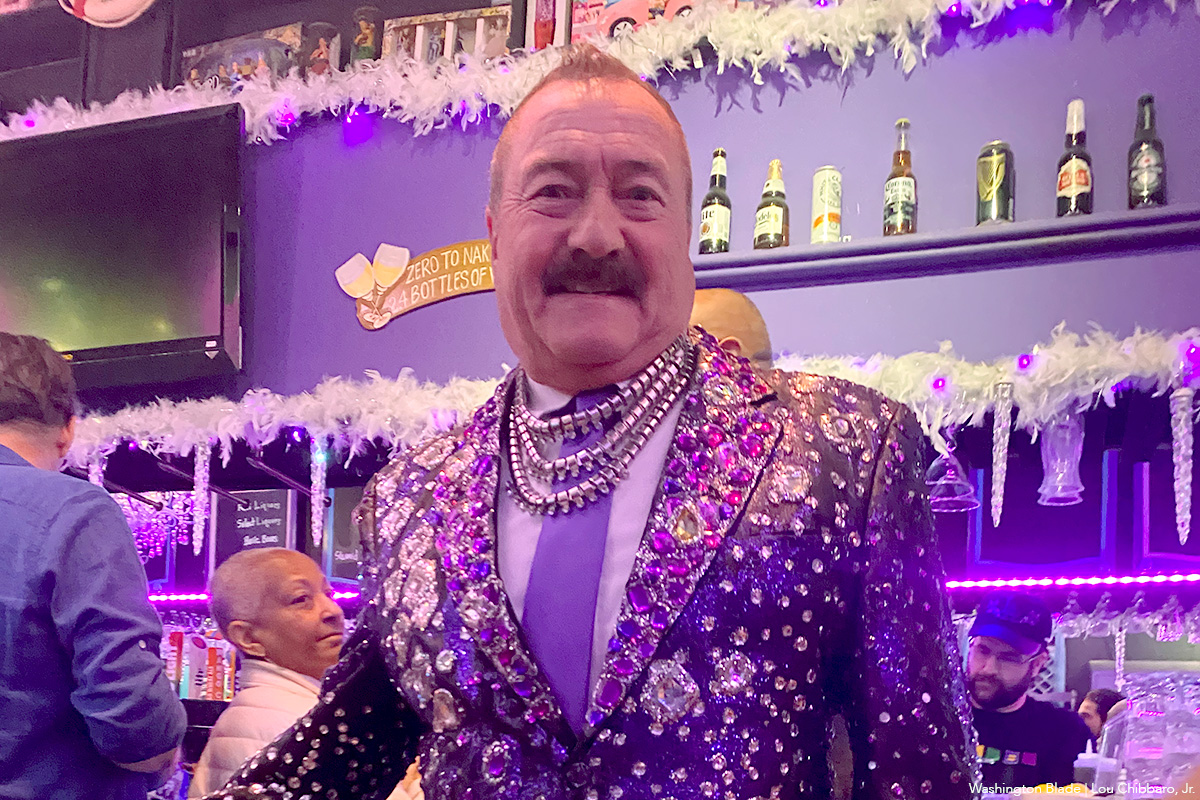
An overflowing crowd turned out Sunday night, March 1, for the 25th anniversary celebration of Freddie’s Beach Bar, the LGBTQ bar and restaurant located in the Crystal City section of Arlington, Va.
The celebration began as longtime patrons sitting at tables and at the bar ordered drinks, snacks, and full meals as several of Freddie’s well-known drag queens performed on a decorated stage.
Roland Watkins, an official with Equality NoVa, an LGBTQ advocacy organization based in the Northern Virginia areas of Arlington, Alexandria, and Fairfax County, next told the gathering about the history of Freddie’s Beach Bar and the role he said that owner Freddie Lutz has played in broadening the bar’s role into a community gathering place.
“Twenty-five years ago, opening a gay bar in Arlington was not a given,” Watkins told the crowd from the stage. “It took courage, convincing, and a deep belief that our community belongs openly, visibly, and proudly,” he said. “And that belief came from Freddie.”
Watkins and others familiar with Freddie’s noted that under Lutz’s leadership and support from his staff, Freddie’s provided support and a gathering place for LGBTQ organizations and a place where Virginia elected officials, and candidates running for public office, came to express their support for the LGBTQ community.
“Over the past 25 years, Freddie’s has become more than a bar,” Watkins said. “It has become a community maker.”
Lutz, who spoke next, said he was moved by the outpouring of support from long-time customers. “Thank you all so much for coming tonight and thank you all so much for your support over the past 25 years,” he said. “I can’t tell you how much that means to me and how much it’s kept me going.”
But Lutz then said Freddie’s, like many other D.C. area gay bars, continues to face economic hard times that he said began during the COVID pandemic. He noted that fewer customers are coming to Freddie’s in recent years, with a significant drop in patronage for his once lucrative weekend buffet brunches.
“So, I don’t want to be the daddy downer on my 25-year anniversary,” he said. “But this was actually the worst year we’ve ever had,” he added. “And I guess what I’m asking is please help us out. Not just me, but all the gay bars in the area.” He added, “I’m reaching out and I’m appealing to you not to forget the gay bars.”
Lutz received loud, prolonged applause, with many customers hugging him as he walked off the stage.
Virginia
Va. activists preparing campaign in support of repealing marriage amendment
Referendum about ‘dignity and equal protection under the law’

Virginia voters in November will vote on whether to repeal their state’s constitutional amendment that defines marriage as between a man and a woman.
Democratic Gov. Abigail Spanberger on Feb. 6 signed House Bill 612 into law. It facilitates a referendum for voters to approve the repeal of the 2006 Marshall-Newman Amendment. Although the U.S. Supreme Court’s Obergefell ruling extended marriage rights to same-sex couples across the country in 2014, codifying marriage equality in Virginia’s constitution would protect it in the state in case the decision is overturned.
Maryland voters in 2012 approved Question 6, which upheld the state’s marriage equality law, by a 52-48 percent margin. Same-sex marriage became legal in Maryland on Jan. 1, 2013.
LGBTQ advocacy groups and organizations that oppose marriage equality mounted political campaigns ahead of the referendum.
Equality Virginia has been involved in advancing LGBTQ rights in Virginia since 1989.
Equality Virginia is working under its 501c3 designation in conjunction with Equality Virginia Advocates, which operates under a 501c4 designation, to plan campaigns in support of repealing the Marshall-Newman Amendment.
The two main campaigns on which Equality Virginia will be focused are education and voter mobilization. Reed Williams, the group’s director of digital engagement and narrative, spoke with the Washington Blade about Equality Virginia’s plans ahead of the referendum.
Williams said an organization for a “statewide public education campaign” is currently underway. Williams told the Blade its goal will be “to ensure voters understand what this amendment does and why updating Virginia’s constitution matters for families across the commonwealth.”
The organization is also working on a “robust media and voter mobilization campaign to identify and turn out voters” to repeal Marshall-Newman Amendment. Equality Virginia plans to work with the community members to guarantee voters are getting clear and accurate information regarding the meaning of this vote and its effect on the Virginia LGBTQ community.
“We believe Virginia voters are ready to bring our constitution in line with both the law and the values of fairness and freedom that define our commonwealth,” said Equality Virginia Executive Director Narissa Rahaman. “This referendum is about ensuring loving, committed couples and their families are treated with dignity and equal protection under the law.”
The Human Rights Campaign has also worked closely with Equality Virginia.
“It’s time to get rid of outdated, unconstitutional language and ensure that same sex couples are protected in Virginia,” HRC President Kelley Robinson told the Blade in a statement.

Housewives take Capitol Hill by storm

Protesters say SAVE Act targets voters, transgender youth

‘It’s Dorothy’ traces lasting influence of a cultural icon
SAVE Act could silence millions of trans voters

The frightening rise of antisemitism, Islamophobia

Ensuring safer drinking water

A season of renewal for D.C. theater

PHOTOS: Awesome Con

Kennedy Center leadership changes as Trump ally Grenell departs