Research/Study
HRC study reveals GOP efforts to undermine LGBTQ rights and services in 2026
House Republicans are pushing numerous anti-LGBTQ measures in FY26 bills, that could threaten healthcare, nondiscrimination protections, and LGBTQ rights.
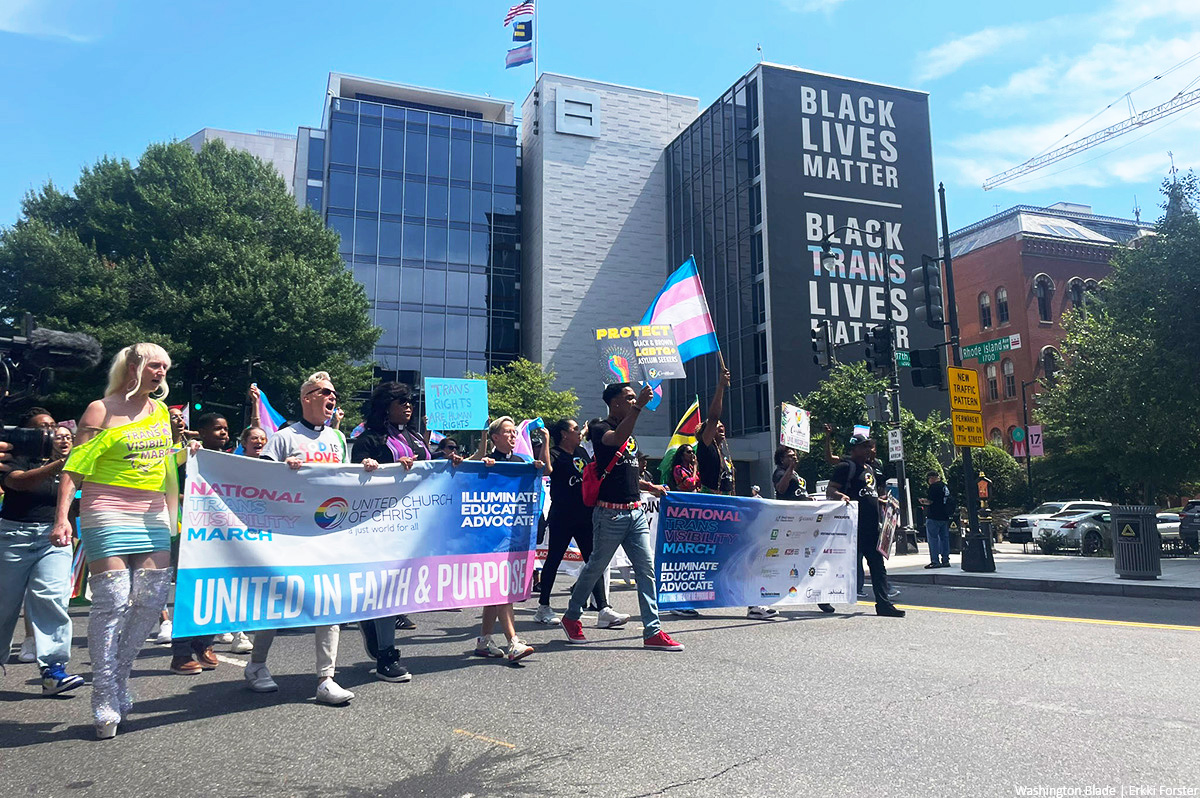
A new study by the Human Rights Campaign shows House Republicans continue to push anti-LGBTQ legislation, despite overwhelming nationwide support for nondiscrimination protections for LGBTQ people.
The study found that Trump-supporting Republicans are attempting to pass 52 anti-LGBTQ riders—unofficial amendments to legislation with little chance of passing on their own—across 12 of the must-pass FY26 federal appropriations bills.
If enacted, these riders would become a significant vehicle for undermining LGBTQ+ equality.
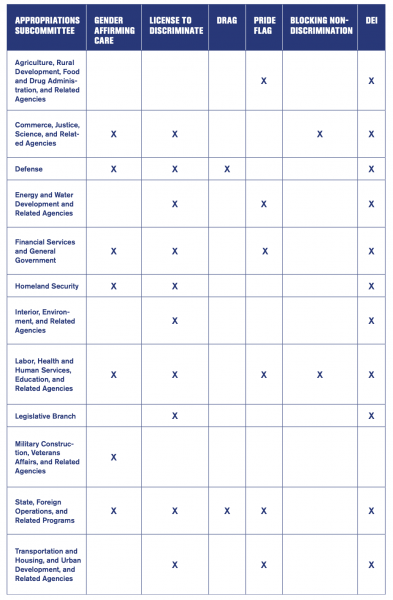
The riders impose broad anti-LGBTQ measures, including blocking gender-affirming care, erasing sexual orientation and gender identity data, restricting nondiscrimination protections, limiting support for LGBTQ+ communities, targeting global LGBTQ+ rights and public health, interfering in medical decisions, and curtailing LGBTQ+ participation in sports, education, and civic life.
In addition to the riders, congressional Republicans have used the rescissions process—where the government takes back money already approved for programs deemed no longer necessary—to remove funding from Biden-era programs that have served as major lifelines for the most vulnerable members of the LGBTQ community, particularly low-income individuals, transgender youth, and people living with or at high risk for HIV.
Together, these efforts, combined with an already hostile White House eager to remove funding from anything deemed too “woke” or “wasteful,” have created a sizable gap in federal funding for programs once seen as foundational. Funding for nondiscrimination, public health, housing, and civil rights is now at risk, as Republicans follow Trump’s lead.
The HRC report shows that these proposed bills would drastically affect many aspects of LGBTQ existence, highlighting actions that will harm LGBTQ Americans.
These include establishing a “First Amendment Defense Act,” which allows individuals, businesses, universities, and federally funded agencies to refuse services to LGBTQ+ people in the name of personal belief; pushing drag bans on military bases and in U.S. foreign aid programming; minimizing gender-affirming care by reducing funding and punishing medical providers; and even applying a global gag rule to gender-affirming care in U.S.-supported foreign assistance programs.
The study also highlights attempts to block Medicaid and Medicare reimbursement for gender-affirming care and efforts to restrict PrEP, HIV testing, and sexual health services—policies that will particularly harm transgender people. It details extensive Republican efforts to redefine “sex” as strictly biological in standalone bills, appearing in riders that would gut Section 1557 protections and affect access to HIV prevention, Ryan White services, Title X reproductive health, and HOPWA housing programs.
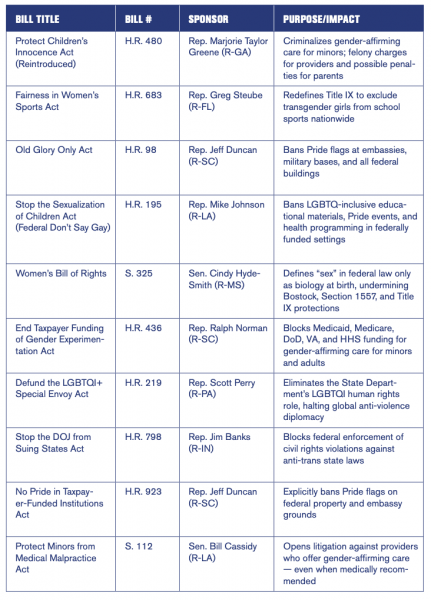
Additional bills listed criminalize or stigmatize LGBTQ identity and are informing restrictions on community health education, HIV prevention campaigns, school-based health centers, and public health research funding at the CDC and NIH.
“This country deserves leadership that uses its power to help meet the needs of the people. Instead, MAGA Republicans make everything about attacking transgender people,” said David Stacy, Human Rights Campaign Vice President of Government Affairs.
“They have now spent three years attempting to poison these must-pass bills with anti-LGBTQ+ riders that polarize the House appropriations process and weaponize the federal government against our community, while doing nothing to address the urgent needs of their constituents. The American people have been clear: anti-equality politicians should stop shirking responsibility and actually serve all of their constituents. Pro-equality members of Congress must defeat the latest wave of anti-LGBTQ+ provisions and hold the line against hate.”
On election night, HRC released a memo showing anti-trans ad campaigns are failing and Americans overwhelmingly support equality. Nearly two-thirds of Americans back federal nondiscrimination protections for LGBTQ+ people, including 58% of independents and 42% of Republicans.
Almost 7 in 10 say politicians are too uninformed about transgender youth healthcare to make fair policies, and nearly half think lawmakers shouldn’t focus on transgender issues at all. And 70% percent worry politicians are targeting LGBTQ youth to divide the country and score political points.



Research/Study
Glisten report details hostile climate for LGBTQ students
Survey details persistent harassment, feeling unsafe in classroom

The Gay, Lesbian, and Straight Education Network (now referred to as Glisten rather than GLSEN following a February rebrand) released its 13th National School Climate Survey on Tuesday, offering an often under-evaluated and under-addressed look at the realities LGBTQ students are dealing with within America’s K-12 schools.
The revised report provides new data points that could indicate the future of the current LGBTQ youth population, highlighting rising issues within school structures that often disproportionately impact LGBTQ students, while also offering a more “nuanced portrait” of how they are maneuvering these challenges.
The most alarming piece of data shows that “two in three students” reported feeling unsafe in school during the 2023–2024 school year due to their sexual orientation, gender identity, or gender expression. That high number becomes clearer as other findings in the research corroborate the points made — especially for those who haven’t stepped into a modern American classroom recently — which seems to be the best way to get a sense of what it is like to learn in one.
An additional data point showing LGBTQ students’ heightened sense of insecurity is reinforced by the widespread and constant harassment students face for their sexuality or gender identity.
The survey found that 62 percent of students experienced verbal, physical, or online harassment based on sexual orientation, while 68 percent reported the same due to their gender identity or expression.
Fifty-three percent — slightly more than half of all respondents — said they faced LGBTQ-related discrimination, including being barred from using facilities aligned with their gender identity in schools.
The survey also highlights disparities within the community — particularly within the 2023–2024 data, which emphasizes the unique struggles faced by transgender and non-white students. Trans students reported that 86 percent of them avoided certain school spaces out of fear for their safety. Non-white LGBTQ students (including Black, Indigenous, and people of color, referred to in the data as BIPOC) face a particularly difficult time within schools, with 48 percent reporting harassment based on their race or ethnicity.
In addition to these high levels of harassment, survey respondents also noted that the broader political climate shaping Washington is impacting their daily experiences in negative ways. Many reported that school environments felt more hostile during the 2024–2025 school year amid escalating anti-LGBTQ rhetoric across the country, in the news, and within the White House as policy debates continue.
Despite these conditions — which attempt to generalize and adequately compare the discrimination, harassment, and bullying faced by LGBTQ students in K-12 schools — the report underscores that LGBTQ students are not easily categorized.
“Young people actually defy the static labels of victim or hero,” said Glisten CEO Melanie Willingham-Jaggers, speaking to the Washington Blade at a reception for the data’s release. “They are neither all downtrodden nor all resilient — they are complicated and multifaceted. What we are finding through our research is that they are actually creating solutions with and for each other. They understand they can’t rely on these systems, so they are doing something themselves.”
That dual reality — that LGBTQ students appear hyper-resilient amid systemic failure in school systems that make their experiences more difficult — is a defining theme of this year’s findings.
“There’s a resilience and a power and a clarity in young people that says there is no use in trying to change who I am because I am who I am,” Willingham-Jaggers said at the event held in the NEA building. “What is also true is that a super hostile political environment is really terrible for everyone’s mental health, including children. It ought not be on a 13-year-old or a 16-year-old to keep themselves safe. That’s what parents are for, that’s what adults in schools are for, and that’s what education is supposed to do.”
She added that the data reflects broader institutional shortcomings, especially as many attempts to fix these systemic issues continue to fall short or worsen conditions for the most marginalized. Trans people of color often face the worst instances of discrimination, harassment, and bullying, and the structures in place to alleviate these issues can sometimes make them worse.
“Unfortunately, our leaders and our institutions are failing our children,” she said, pointing out that education should serve as a pathway out of adversity and into a better future. “Education is supposed to be helping our young people connect with each other, and allow for them to envision a world so they can leave school, and come out into the world, and be leaders … I think you can take the moral temperature of a country by how they treat their children. And we are — the collective ‘we,’ personified by our leaders — failing our children.”
Despite the troubling data highlighting how difficult it is to be an LGBTQ K-12 student today, the survey points to clear pathways for improvement.
These include being upfront and inclusive with LGBTQ students in a variety of ways. When schools provide comprehensive anti-bullying policies, LGBTQ students reported they were more likely to look forward to school and feel like they belonged. This also extends to expanding sex education to include often-overlooked sexual and gender minorities. Increased instances of positive LGBTQ inclusion were linked to better academic performance, attendance, and overall belonging, while negative depictions and exclusionary practices were linked to worse outcomes.
A major positive finding of the study is that when LGBTQ students reported having access to supportive educators, inclusive curricula, explicit anti-bullying policies, and Gender and Sexuality Alliances (GSAs), they also reported higher GPAs and a stronger sense of belonging — suggesting that even small, targeted policy shifts can meaningfully improve outcomes.
In a statement accompanying the report, Willingham-Jaggers emphasized the importance of listening to students’ experiences in full, which they acknowledged can be difficult to capture.
“LGBTQ+ youth, including intersex, asexual, and two-spirit students, are whole people with complex lives that defy the tired boxes of ‘victim’ or ‘leader’ into which they are so often placed,” she said. “Safety is not just the absence of harm; it is active affirmation. At a moment when young people’s identities are being debated and restricted, this study speaks truth to a menacing power.”
Researchers behind the survey also noted a shift in methodology this year, incorporating more qualitative data through student focus groups. By broadening beyond strictly quantitative measures, the data offers a deeper understanding of students’ lived experiences and strengthens the overall findings.
“Similar to previous findings, we continue to find that schools continue to be hostile sites for LGBTQ+ students and in particular for trans and gender-expanding students and BIPOC students,” said Yu-Chi Wang and Shweta Moorthy. “Students provided us with more context and emotion behind our findings … helping us better understand what was happening in our schools and brainstorm ways we can improve it.”
For Willingham-Jaggers, the stakes extend beyond education alone and into the kind of adults these students will become — and, for some, the leaders who will shape the future. By instilling the values of understanding, equality, and democracy early, young people are better equipped to navigate future challenges and reshape the systems they inherit.
“Education is the cornerstone of democracy,” she said. “Education provides an immune system for autocracy. Democracy is born anew every generation, and education is its midwife. We need young people to be ready to build a future that is bigger than the tiny, weak vision of those currently in power.”
Even in a moment she described as “dark and frightening,” Willingham-Jaggers framed the report as both a warning and a call to action. “I feel really privileged to be leading this organization at this moment, because this moment is really critical,” she said. “I’m glad it’s me building the team and envisioning with our young people the future that we’re trying to build.”
The report concludes by recognizing the many organizations that contributed to the development of its findings. Focus group partners included Able South Carolina, Advocates for Youth, Freedom Oklahoma, interACT: Advocates for Intersex Youth, Louisville Youth Group, the Montrose Center, National Queer Asian Pacific Islander Alliance, National Black Justice Collective, Trans Mentor Project, and Youth Celebrate Diversity. Additional organizations — including GenderCool, Immigration Equality, interACT, SIECUS, and UnidosUS — also helped review and update the survey.
The methodology and data collection instruments used in Glisten’s 2025 National School Climate Survey were reviewed and approved by an independent Institutional Review Board, ensuring the study met established ethical standards and best practices for research involving human subjects.
The full report can be accessed at Glisten’s website at glisten.org.
Research/Study
27 trans people murdered over last year
Thursday is the annual Transgender Day of Remembrance.

New data on violence against transgender people in the U.S. shows there have been at least 399 cases of fatal violence against trans people since 2013, including 27 murders in the past year alone, with no indication the trend is slowing.
In recognition of Transgender Day of Remembrance, several organizations, including the Human Rights Campaign and Advocates for Trans Equality, released updated reports documenting the disproportionate levels of violence targeting trans people, often because of their gender identity.
A4TE’s Remembrance Report, released Nov. 13, identifies at least 27 trans people known to have died by violence since November 2024.
TDoR, established on Nov. 20, 1999, by trans rights activists, honors the lives lost to anti-trans violence and brings attention to the ongoing crisis disproportionately affecting trans people who are also members of other marginalized communities.
The newly released data shows that 82.3 percent of all known fatal attacks targeted trans women; seven in 10 victims since 2013 were Black, and 71.2 percent of deaths involved firearms.
Fatal violence is not confined to any one region.
The states with the highest numbers of cases include Texas (9.8 percent), Florida (8.3 percent), California (7.1 percent), Georgia (6.1 percent), Louisiana (5.8 percent), Ohio (5.5 percent), Pennsylvania (5 percent), Illinois (4.8 percent), Maryland (4.5 percent), and North Carolina (4 percent).
The report also highlights the pervasive non-fatal discrimination trans people face.
Four in 10 trans and gender-expansive adults experienced discrimination in the past year based on sex, gender, sexual orientation, or gender identity/expression.
This data comes as the Trump-Vance administration escalates its anti-trans policies within the military, as the Washington Blade reported last week. The report calls for an end to anti-trans rhetoric, misinformation, and discriminatory policies at every level of government — from federal agencies to local school boards — noting that only then will trans people achieve the safety routinely afforded to other Americans.
HRC Director for Strategic Outreach and Training Tori Cooper stressed that the issue is about real people, not statistics.
“Our transgender and gender nonconforming siblings deserve to live safe, fulfilling, joyful lives, just like every other member of our society,” Cooper said. “But this plague of violence is robbing us of so much; so many dear friends and loved ones gone too soon, especially Black trans women who continue to bear the worst of this epidemic. Our entire trans community bears the scars of these horrible losses, and it is time for our leaders to ensure that trans people, and all people, are protected by the same policies and procedures. Our lives are as valuable as everyone else.”
HRC President Kelley Robinson also spoke to the rise in violence.
“Every person deserves to feel safe, to be treated with dignity, and to live their truth without fear,” Robinson said. “The annual release of this crucial report, which honors the beloved members of the transgender and gender nonconforming community who have been taken from us in the past year, is a somber and devastating reminder of why our fight for that dream continues.”
Robinson criticized how the current political climate has worsened conditions for trans Americans.
“This year, these deaths are punctuated by a political movement and powerful politicians who have fanned the flames of hate and are driving our trans siblings even further to the margins of society, all as part of a misguided, cynical attempt to divide and conquer the country. Every anti-equality politician, from Donald Trump and his Cabinet, to those in Congress and state legislatures, needs to see these numbers, see these names and faces, and see the cost of the cruelty they have greenlit,” she said.
Robinson concluded by reaffirming HRC’s commitment to defending trans people regardless of who occupies the White House.
“HRC will continue to do everything in our power to fight for our trans siblings, hold hateful politicians to account, and build a world where reports like this are no longer needed,” she said.
Research/Study
HRC finds more than half of American trans youth will soon face barriers to healthcare
‘LGBTQ+ people are living in a state of emergency.’
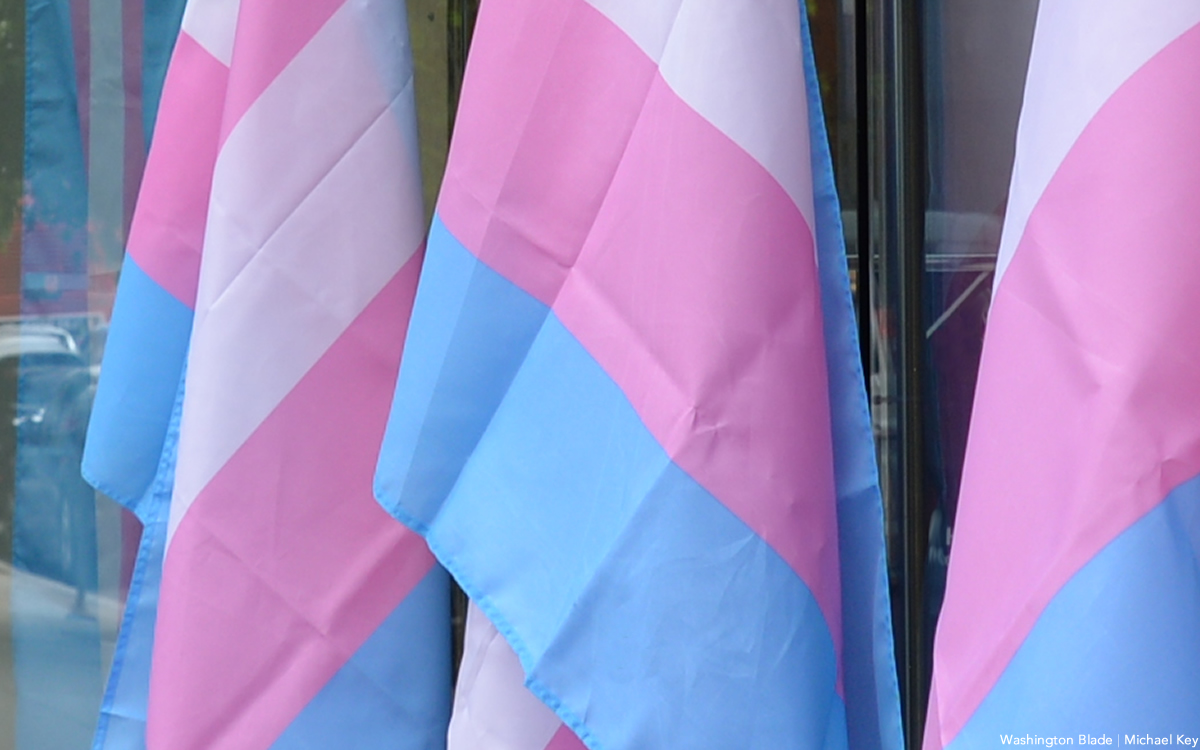
The Human Rights Campaign reported Wednesday that more than half of America’s transgender youth are facing or will soon face barriers to access guideline-directed gender affirming healthcare.
The organization’s finding comes as more than 10 states are on the verge of enacting healthcare bans for youth diagnosed with gender dysphoria, in some cases criminalizing physicians and parents for facilitating access to these healthcare interventions for young patients.
HRC’s press release announcing the data noted gender affirming care is supported by medical organizations with relevant scientific and clinical expertise, groups with a combined 1.3 million member physicians and whose guidelines on treatment for minors are backed by decades of research.
Eight states have now enacted laws banning gender affirming care (Ala., Ariz., Ark., Iowa, Miss., S.D., Tenn., and Utah), while three have passed bans (Ga., Ky., and W.Va.) and six have advanced bans through one of the two chambers of their respective legislatures (Idaho, Ind., Kan., Mont., N.D., and Okla.), according to HRC.
The organization noted that Florida effectuated a ban through its Board of Medicine while Texas passed a law last year that deputizes the state’s Department of Family and Protective Services “to investigate the provision or support of gender affirming care by parents, doctors, or others, as child abuse.”
“LGBTQ+ people are living in a state of emergency,” HRC Senior Vice President Jay Brown said in the press release. “Today’s findings illustrate how the ongoing assault against transgender people is taking hold across the country and underscore how dire the situation is growing for our community by the day. “
“Now more than ever, we must fight back against extremism and hold anti-LGBTQ+ politicians accountable for bullying children and terrorizing our families,” Brown said.
In states where bans have taken effect, for some minors who are currently receiving gender affirming care, such as those for whom traveling out of state to retain access to that care is prohibitively expensive or difficult, the law will effectively and forcibly de-transition them.
Because it significantly reduces the likelihood of self harm behaviors and suicide, gender affirming care is in many cases life saving. A study last year by the National Institutes of Health found a link between anti-trans legislation and “suicide- and depression-related Internet searches.”
HRC reports more than 180 bills targeting the trans and nonbinary community have been introduced so far in 2023, of which more than 100 are healthcare bans for trans youth.
The White House has repeatedly spoken out against many of these bills and laws. During a press briefing Wednesday, White House Press Secretary Karine Jean-Pierre condemned Florida Gov. Ron DeSantis’s proposal to expand the state’s controversial “Don’t Say Gay” law such that it would prohibit any discussion or classroom instruction of sexual orientation or gender identity in public school classrooms from kindergarten through grade 12.
During a briefing on March 10, Jean-Pierre discussed another Florida bill that proposes to “give the state the right to remove kids from their parents just because that kid is transgender.
“And just think about that. Just think about a kid who is sitting at home in this community who is listening and hearing elected officials talking about how they want to take away their rights or how they want to even threaten their parents with felony charges for seeking healthcare for their children,” said Jean-Pierre.

Trump’s war threats trigger rare 25th Amendment discussion

A Sondheim masterpiece ‘Merrily’ rolls onto Netflix

ROSENSTEIN: Vote McDuffie for mayor of D.C.

New book celebrates 1970s dance music icons

Report: Grenell wants Russian ambassadorship

Risking it all for love during World War II

PHOTOS: The Bonnet Ball

D.C. is the place for the Democratic Socialists of America

Key lifestyle changes can help patients cope with diabetes