LGBTQ Non-Profit Organizations
National LGBTQ Task Force brings Creating Change conference back to D.C.
38th annual conference comes amid growing attacks on trans Americans
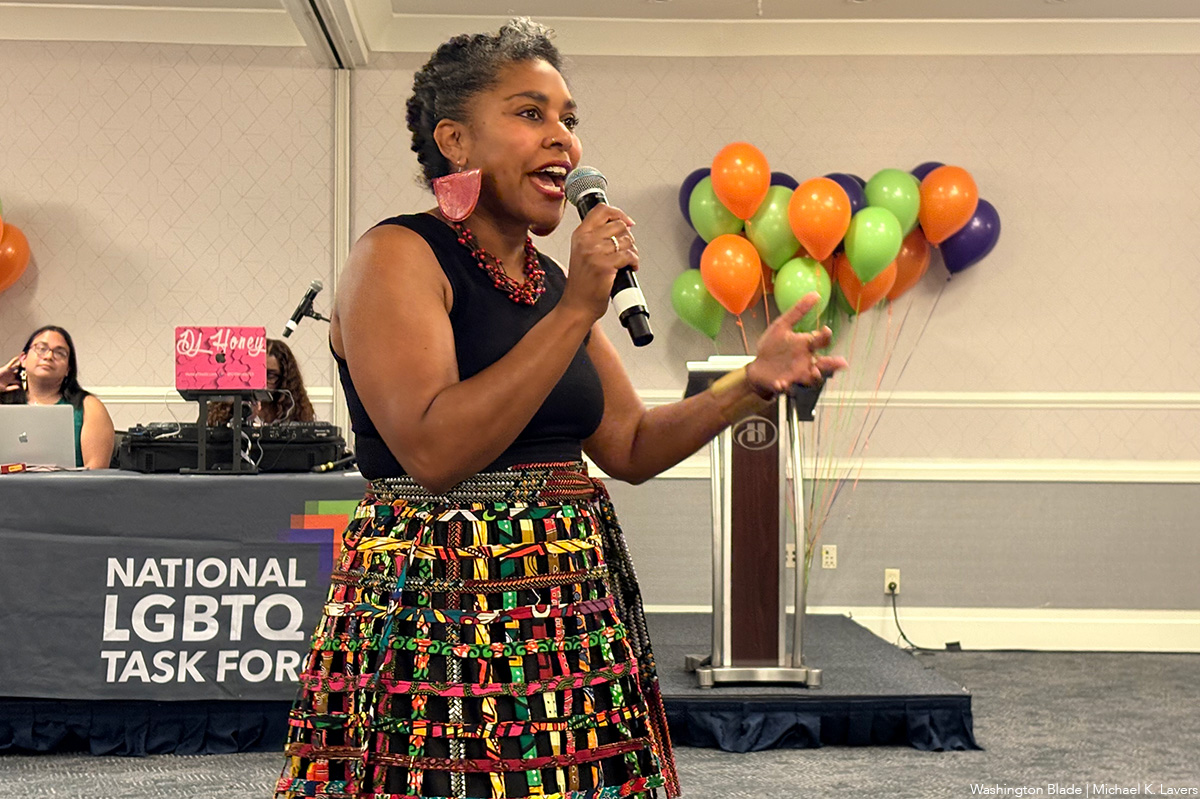
The National LGBTQ Task Force, the oldest LGBTQ grassroots social justice advocacy nonprofit, will hold its annual Creating Change conference in Washington, D.C., next week.
From Tuesday, Jan. 20, to Sunday, Jan. 25, thousands of LGBTQ activists and allies will descend on the nation’s capital to “hone their skills, celebrate victories, build community, and be inspired by visionaries of our LGBTQ+ movement.”
First held in D.C. in 1988, the conference has long been one of the leading organizing and training conferences for LGBTQ activists and allies.
Ahead of Creating Change, the Washington Blade sat down with Cathy Renna, director of communications, to discuss why the event is just as important today as it was when it began 38 years ago.
“There is nothing like it,” Renna told the Blade. “It brings together the most diverse set of queer advocates and allies in every way imaginable. There’s an energy around it that you really don’t find anywhere else.”
The nearly week-long conference touches on a wide variety of issues critical to both national and local LGBTQ political organizing. Renna explained that this is not a typical D.C. conference.
“We don’t even really call it a conference anymore, because it is more than that,” she said.
With events like “Kink for Geniuses,” which offers a one-of-a-kind look at how kink culture has changed over the past 15 years; social events like the new “House Ball” (with special guests); specialized spiritual programming for every belief; and workshops like “Queer Leadership on the Job,” which can help LGBTQ people with mentoring and leadership development, the conference expands far beyond the expected breakfast keynote and endless PowerPoints. Instead, it offers a wide range of programming for every LGBTQ person.
The theme of this year’s conference is simple: Unstoppable.
Creating Change has five major “tracks” this year: Building Capacity for the Movement; Democracy and Civic Engagement; Health and Wellness; Practice Spirit + Do Justice; and Sexual Healing and Liberation.
“It’s an opportunity for movement leaders to be together in a space to not just plan and scenario-plan for what we’re dealing with now and what we can potentially be dealing with, but also just to be together in community, which is so important right now,” Renna said. “There’s such a wide variety of the queer experience right now — people feeling anxious, feeling afraid, also feeling emboldened — and I think being in that kind of space together is really vital.”
She also offered insight into the State of the Movement address from National LGBTQ Task Force President Kierra Johnson.
“Kierra sometimes keeps it a little close to the vest, but in the last couple years, she’s talked a lot about principled struggle and the challenges we face in an increasingly hostile climate,” Renna said. “It really sets the tone for the entire conference.”
That tone includes emphatic support for the transgender community.
“We’ve always led in uplifting trans voices, which is one of the reasons I actually work here,” she said. “From the general session stage, there’s a tremendous amount of trans representation — whether it’s the speakers or the entertainment. Bringing Alok is going to be incredibly powerful. They are one of the most high-profile nonbinary voices in the world right now.”
Those general sessions are not just available for conference attendees this year’s— Creating Change will livestream them for all on their website.
“Dominique Jackson is coming — talk about a revered Black trans advocate and actress,” Renna added, listing just some of the trans advocates who will be in attendance.
When asked about the history of the event, Renna pointed to Washington’s role in helping the National LGBTQ Task Force create a space for the community to grow and learn.
“The first Creating Change was held in Washington right after the 1987 March on Washington, because hundreds of thousands of people came, went home energized, and were told to get to work — but they needed the tools, the training, and the infrastructure to do that.”
Given the current national LGBTQ political landscape — from transgender rights being debated at the Supreme Court to the widespread purge of federal workers that some have called a “Lavender Scare 2.0” — Renna acknowledged that the nation’s capital may not be the first place LGBTQ people want to visit. Still, she emphasized that speaking up loudly for LGBTQ rights is part of the community’s history.
“Having us convene several thousand LGBTQ and allied advocates in Washington as we begin the second year of the Trump administration — and plan for what is going to be another challenging, potentially even more challenging year than last — is critical for the movement,” she said.
There is no official National LGBTQ Task Force protest planned in response to the Trump-Vance administration’s recent actions — many of which have stripped LGBTQ people of their rights — but Renna offered a witty response when asked about the possibility.
“The thing that we always say a little bit tongue-in-cheek is, when you train people to organize, sometimes they do it right in front of you,” said the former GLAAD national news media director. “But in terms of an actual organized protest, something might happen spontaneously, but for us, the focus is having folks in the space to do the work.”
While fostering community is a major part of the conference, Renna emphasized that attendee safety is a top priority.
“For security reasons, we’re being a little bit more withholding about some of the more public information, because we don’t want to be targeted.”
One way the conference is doing that is by only providing locations and detailed schedules to people who have officially registered, via the PheedLoop Go app.
The event — and the opportunities it provides to build community — is not just a political necessity, Renna said, but a matter of queer survival.
“We’re living in a political and cultural climate that is increasingly less affirming — and even dangerous. When our community is under great challenge, being together in this kind of space is so affirming.”
In hoping to make the event affirming to more local residents— and for fans of the more social events, this year there is a “Weekend Party Pass” that provides access to Friday and Saturday evening events. This ticket does not include the entire conference events though.
“Creating Change has always been a beloved space, but during moments of crisis, it becomes essential.”
For more information on Creating Change and the other work that the Task Force does, you can visit their website at www.thetaskforce.org.
LGBTQ Non-Profit Organizations
Task Force urges renewed organizing amid growing political threats
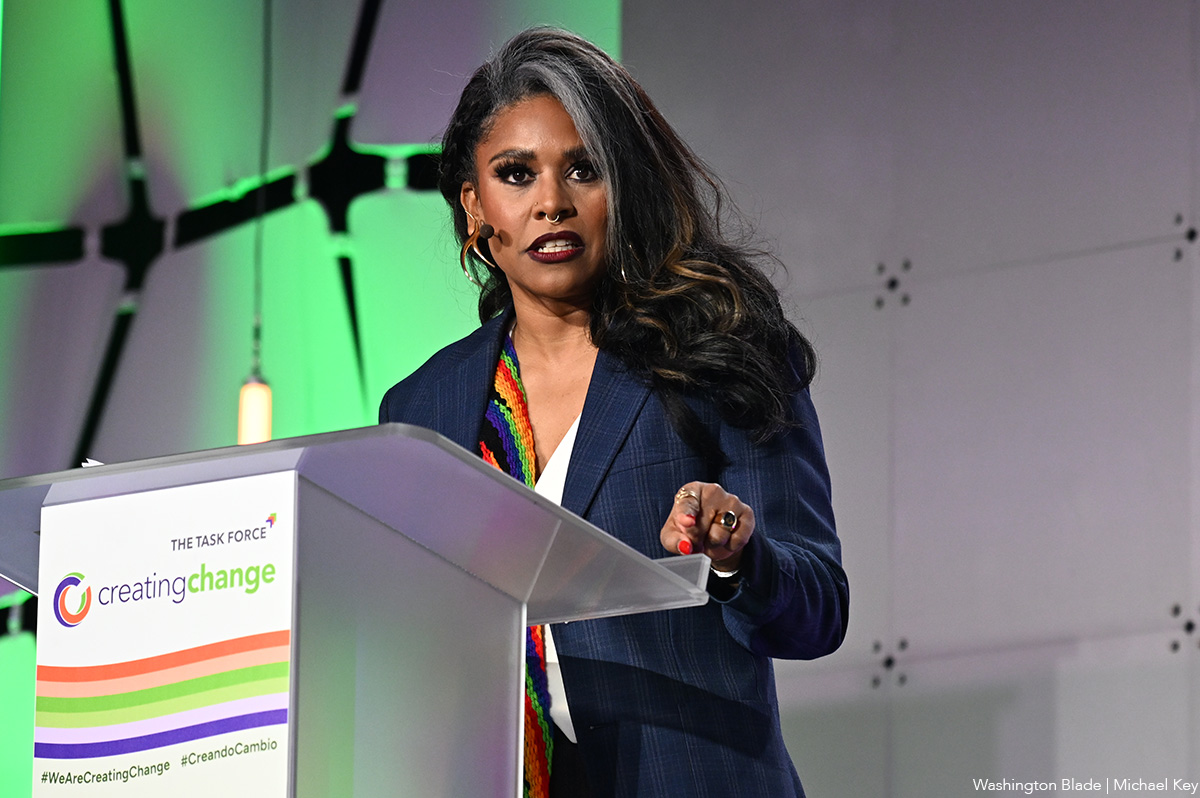
Kierra Johnson, group’s president, gave State of the Movement speech on Jan. 22
The National LGBTQ Task Force, the nation’s oldest LGBTQ advocacy organization, wrapped up nearly a week of programming as snow began to fall across the nation’s capital — a fitting backdrop for a moment defined by urgency, reflection, and resolve.
For six days, LGBTQ activists from across the country gathered at the Washington Hilton for the Task Force’s annual Creating Change conference, filling ballrooms and meeting rooms with educational sessions, workshops, and an expansive exhibit hall designed to sharpen strategies for mobilizing LGBTQ political power while building community.
The week featured everything from local leadership training to high-energy ballroom parties, but its emotional and political centerpiece was the annual State of the Movement address delivered by Task Force President Kierra Johnson.
Speaking on Jan. 22 to a packed ballroom, Johnson reflected on the movement’s accomplishments while confronting the challenges facing LGBTQ communities under President Donald Trump’s second term.
Founded in 1973 in New York, theTask Force set out to create a “powerful, unified, and organized voice” for the emerging gay rights movement. One of the organization’s most enduring contributions came years later with the launch of the Creating Change conference in November 1988, following the energy of the 1987 March on Washington. Since then, the conference has served as a cornerstone of grassroots LGBTQ organizing, offering activists a space to share knowledge, build community, and gain training aimed at advancing the movement nationwide.
That same sense of momentum — born from crisis and resistance — permeated this year’s gathering. But instead of drawing energy from a singular national march, as it did in 1988, Johnson framed the conference as a response to protests unfolding across the country against U.S. Immigration and Customs Enforcement and aggressive immigration policies advanced by the Trump-Vance administration.
“It feels like the sky is falling, like the house is on fire, and like the time of the world is just after midnight in December during a new moon,” Johnson told the 2,000 attendees. “And you still chose to be here. For that, I am so grateful.”
Throughout the address, Johnson returned repeatedly to the idea of community as the movement’s greatest asset, thanking activists for their commitment and sacrifice.
“Each of you, in your own way, has decided that your calling is to give back to community,” she said. “You give your time, you give your money, you give your love, you give your attention, you give skill and talent to ensure that the health, dignity, and well-being of LGBTQ people is secured.”
At the same time, Johnson offered a sharp critique of past movement strategy, warning that success itself can create new vulnerabilities — particularly following major federal wins such as the U.S. Supreme Court’s Obergefell decision guaranteeing same-sex marriage and workplace protections for transgender people under Bostock v. Clayton County. Those victories, she said, risk lulling parts of the movement into a false sense of security.
“What we didn’t pay close enough attention to are the unintended consequences of winning,” Johnson said. “Winning invigorates the opposition. Winning can create insider identities that have no tolerance for those who do not already agree. Winning can produce a dangerous sense of safety and permanence.”
She cautioned against mistaking access for influence, arguing that proximity to power brokers — which many LGBTQ organizations have gained over the past decade — is not the same as wielding real power.
“We begin, when we win, to confuse proximity to power brokers with power itself,” Johnson said. “And instead of protecting our communities, we start protecting that access point of power at all costs.”
Johnson also emphasized that the true opposition is not simple disagreement, but organized, well-funded efforts deliberately aimed at dismantling LGBTQ lives. While tactics like boycotts can play a role, she stressed that lasting change requires a sustained and collective movement.
“I’m talking about money. I’m talking about influence. I’m talking about platforms deliberately, intentionally mobilized and leveraged to disintegrate our communities and eradicate our lives,” she said. “I am talking about organized opposition.”
While the far right spent years building infrastructure, Johnson argued, LGBTQ movements often turned inward, creating barriers for those not already inside the movement’s core.
“They weren’t winning, but they were building infrastructure,” she said. “And what did we do? We closed ranks in, sifted people out, and upheld purity tests instead of organizing.”
That inward turn, she said, created a vacuum — building walls where bridges should have been — leaving some LGBTQ people, particularly those with complex experiences navigating the U.S. political environment, feeling as though they no longer belonged.
“You cannot organize when belonging feels conditional,” Johnson warned. “Because people do not step in — they step back.”
Despite those challenges, Johnson pointed to ongoing attacks on voting rights as proof of the movement’s continued power.
“You don’t spend billions of dollars to make people not vote if their vote doesn’t matter,” she said. “If we didn’t still have power, they wouldn’t work this hard to take it.”
Ultimately, Johnson framed power not as visibility, but as sustained organizing rooted in real communities.
“Community is power,” she said. “Once you’re in, we don’t let you go. We embed, we stay, we invest.”
Real change, Johnson added, requires organizing where people actually live and work — not just in major coastal cities. “We go where our people are,” she said.
She closed with a reminder that survival itself is collective work — and that belonging does not require perfection.
“Perfection is not a prerequisite to belonging,” Johnson said. “Otherwise, we’re gonna be out here by ourselves.”
LGBTQ Non-Profit Organizations
HRC warns LGBTQ progress faltering as Trump enters second year
New polling from HRC shows increasing struggles under the Trump-Vance administration.
As President Donald Trump begins the second year of his second term, LGBTQ advocacy organizations say they are shifting into a more aggressive posture — armed with new data that shows how quickly hard-won progress is eroding under the Trump-Vance administration.
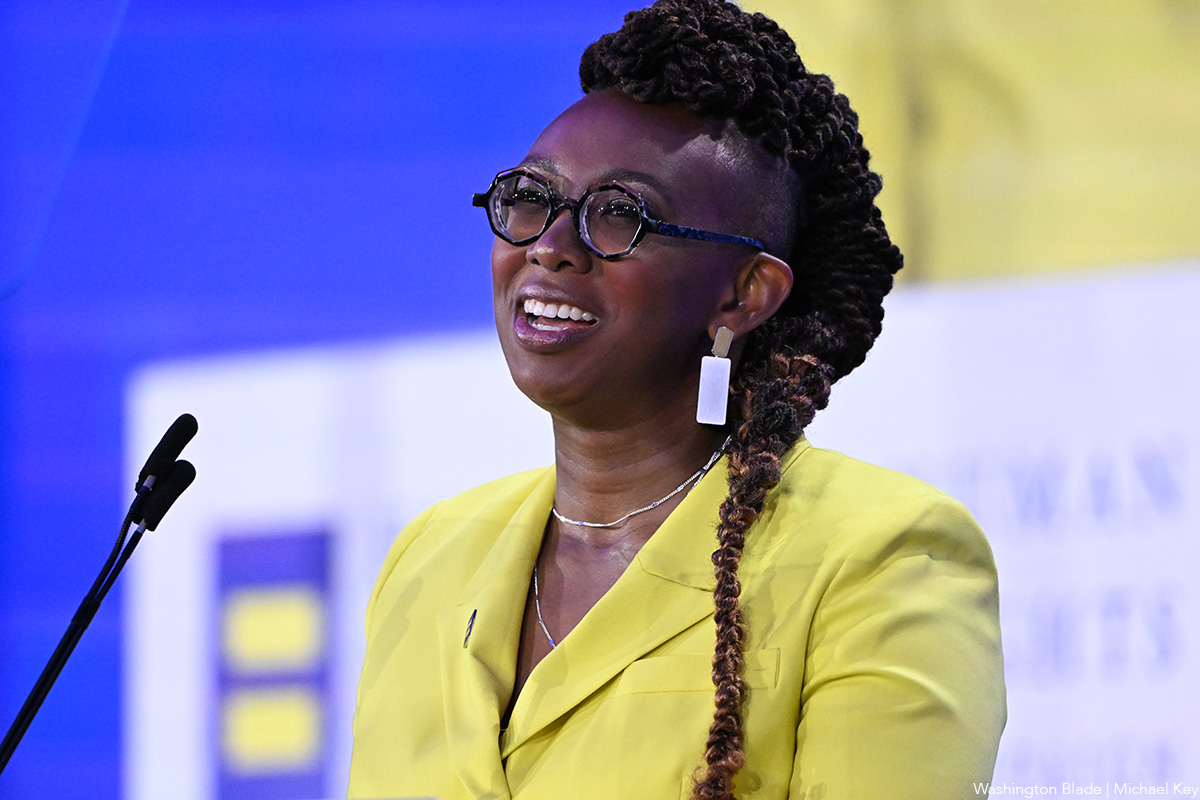
The Human Rights Campaign hosted its 2026 Election Strategy Kick-Off meeting last week at the National Press Club in Washington, where leaders shared fresh polling data detailing how Trump’s first year back in office has affected LGBTQ Americans — and how pro-equality candidates can respond heading into the midterms.
HRC President Kelley Robinson hosted the event, joined by MSNBC’s Jonathan Capehart, Reproductive Freedom For All President Mini Timmaraju, and Joey Teitelbaum of Global Strategy Group. Together, they laid out what they described as a dire political and cultural moment for LGBTQ people — and the concrete steps campaigns must take to counter a surge of anti-LGBTQ rhetoric and policy coming from the GOP.
“The emergency that we warned about is no longer a warning — it is the reality that we are living inside,” Robinson said. “Donald Trump may not have started this fire, but he surely poured gasoline on it.”
New data collected by HRC and Democratic pollsters at Global Strategy Group (GSG) paints a grim picture of life for LGBTQ Americans in Trump-era America — particularly when it comes to visibility, safety, and economic security.
Acceptance and visibility declining
One of the clearest trends from the survey is a decline in perceived acceptance. The data found that 21.6% of all U.S. adults say acceptance of LGBTQ+ people has declined in the past year. Among LGBTQ+ adults themselves, that number jumps to 29.7%.
That erosion of acceptance is translating into tangible changes in behavior. Nearly half of LGBTQ+ adults surveyed — 47.5% — reported being less out in at least one area of their lives over the past 12 months, at least in part due to cultural shifts or executive actions taken by the Trump-Vance administration.
The survey found that 26.5% of LGBTQ+ people are less out at work than they used to be, 25.4% are less out in healthcare settings, and 28.3% feel less out in public spaces. While the choice to be out varies by person and circumstance, researchers note that higher levels of being openly LGBTQ — particularly when safety is assured — have historically been linked to greater societal acceptance.
Visibility is slipping even more broadly. More than half of LGBTQ+ adults — 51.1% — say they are less visible than they were a year ago. Among LGBTQ+ parents with school-aged children, 40.1% reported being less visible at their children’s schools — the highest rate of retreat in any measured environment.
“Nearly half of LGBTQ+ people say they are less out than they were just a year ago,” Robinson said. “Visibility — something we fought generations to build — is slipping before our very eyes.”
Capehart emphasized that these numbers have real-world consequences beyond personal identity.
“Half the community retreating back into the closet is distressing, but understandable in these times,” Capehart said. “The danger is when people disappear from public life, because it becomes easier to ignore their suffering.”
Decades of research from organizations such as Gallup and PRRI have consistently shown that increased visibility correlates with greater public support for LGBTQ+ rights. When people personally know someone who is LGBTQ+, they are significantly more likely to support equality — creating what advocates describe as a positive feedback loop. The new data suggests that loop is now reversing.
Voters are ahead of politicians
Despite the cultural retrenchment reflected in the data, GSG’s findings also offer a clear political opening for candidates who run unapologetically on equality — particularly in competitive districts.
According to the polling, voters in battleground and purple districts “overwhelmingly support” nondiscrimination protections and LGBTQ equality. These voters, the data show, are deeply wary of politicians inserting themselves into people’s personal lives while failing to address urgent issues like the cost of living, healthcare, and public safety — especially when those intrusions target transgender people.
Teitelbaum, GSG’s senior vice president for research, said the polling makes clear that Republican messaging on transgender issues is far out of step with the electorate.
“In no state have we ever seen more than 18% of voters say being transgender should be illegal,” Teitelbaum said. “That means more than 80% of Americans are not where Republicans are — and that gives us room to go on offense.”
HRC leaders pointed to the recent Virginia gubernatorial race as a case study in how candidates can successfully navigate anti-trans attacks. Democratic Gov.-elect Abigail Spanberger faced a barrage of anti-trans messaging from her opponent, yet refused to cede ground on equality — instead redirecting her campaign toward economic concerns and quality-of-life issues.
“Look at Virginia and the good governor that’s about to be inaugurated, Abigail Spanberger,” Robinson said. “She faced a flood of anti-trans attacks. More than half of her opponent’s ad budget was spent trying to divide and mislead voters, but she didn’t flinch. She stood her ground, and voters rewarded her by a win of over 15 points in Virginia.”
Economic, healthcare impacts deepen
Beyond cultural shifts, the survey shows that the administration’s policies are having measurable economic and health impacts on LGBTQ Americans.
LGBTQ+ adults are twice as likely as non-LGBTQ+ adults to say their financial situation has worsened over the past year. Advocates pointed specifically to the administration’s hardline rollback of diversity, equity, and inclusion initiatives as a key driver of workplace hostility. Among LGBTQ+ workers whose employers ended or scaled back DEI programs, 57.4% reported experiencing stigma or bias at work.
Healthcare access is also deteriorating — not only due to Trump’s aggressive push against gender-affirming care, but across other critical areas as well. Access to HIV prevention and treatment has become significantly more difficult. LGBTQ+ adults on Medicare or Medicaid are more than twice as likely to report barriers to HIV care compared to those with other forms of insurance. Among LGBTQ+ adults earning less than $75,000 per year, 41.5% reported difficulty accessing HIV prevention or treatment.
“Since Donald Trump returned to office, LGBTQ+ Americans are worse off in every area this survey measures than we were one year ago,” Robinson said. “We are less visible, less safe, and less economically secure.”
A playbook for going on offense
In response, HRC is urging more pro-equality candidates to run — and to do so strategically. The organization outlined a campaign playbook designed to help candidates define themselves early, counter anti-trans attacks, and proactively promote their values rather than playing defense.
The framework centers on five core pillars:
- Share your story before attacks come
- Lead with your values
- Address concerns directly
- Turn the tables and gain voters
- Go big
U.S. Rep. Julie Johnson of Texas joined the meeting virtually, echoing the call for more openly pro-LGBTQ leadership in Congress.
“They’re banking that the politics of hate and division can distract voters from their failure to address soaring health care costs, high grocery bills, and the scourge of gun violence — and we cannot let them win,” Johnson said. “The answer is not to hide or stay silent. The answer is to be prepared.”
Johnson, the first out LGBTQ member of Congress from the South, said real change in Washington begins with elections.
“We need to flip the House to a pro-equality majority that will focus on the needs of all Americans, without exception,” she said. “With HRC’s help, candidates like me can go on offense and lean into our values, because the American people want real leadership, full equality, and a commitment to freedom.”
Robinson closed the event with a blunt assessment of the moment ahead.
“This is a different United States of America than it was just months ago,” she said. “Preserving democracy and protecting LGBTQ lives both require the same thing: winning power and refusing to back down.”
LGBTQ Non-Profit Organizations
Victory Institute honors President Biden
Former president celebrated for LGBTQ rights record
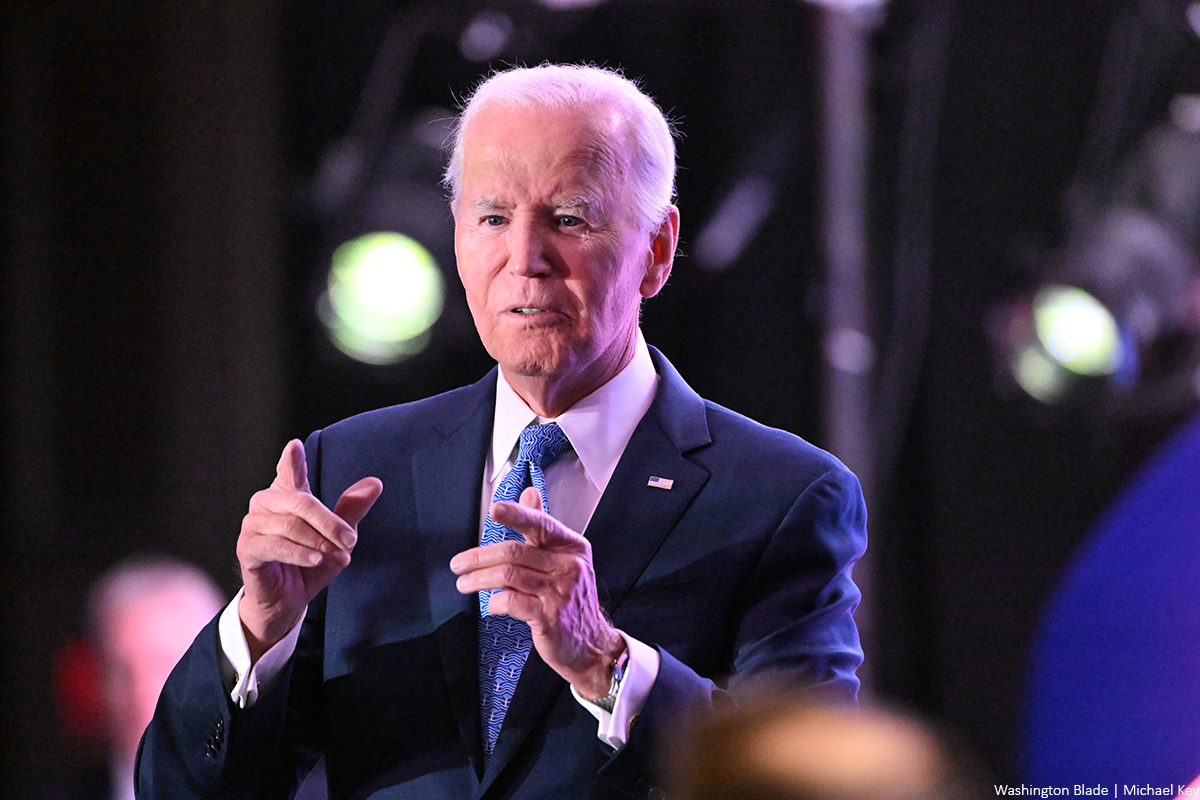
Former President Joe Biden received the Chris Abele Impact Award on Friday at the JW Marriott in downtown Washington, honored by the LGBTQ+ Victory Institute for his decades-long commitment to advancing LGBTQ rights, workers, and policies.
The ceremony was held during the Victory Institute’s 41st annual International LGBTQ+ Leaders Conference, which brought together LGBTQ elected and appointed officials, staff, media, and supporters from across the world.
Biden — often described as the most pro-equality president in American history — used the moment to trace his own evolution on LGBTQ equality, acknowledging both early missteps and later milestones. As a young senator, he said, his understanding was limited. He voted for the Defense of Marriage Act in 1996, which federally defined marriage as between a man and a woman, and once publicly echoed beliefs he now rejects.
“My gut reaction is that they [homosexuals] are security risks,” Biden said in 1973, according to the Morning News, a Delaware newspaper. “But I must admit I haven’t given this much thought.”
After serving 36 years in the U.S. Senate and becoming Delaware’s longest-serving senator, Biden joined Barack Obama’s presidential ticket. It was during those years, he said, that he began reevaluating LGBTQ issues more deeply — culminating in a defining moment that altered the national conversation.
In 2012, Biden stunned the political world when he endorsed same-sex marriage during an appearance on Meet the Press, publicly staking out a position ahead of Obama.
“Back in 2012 I went on Meet the Press and got myself in a bit of trouble, but good trouble,” Biden joked. “I told the truth. I expressed my support for gay marriage.” His comments are now widely seen as a watershed moment in the national movement toward marriage equality.
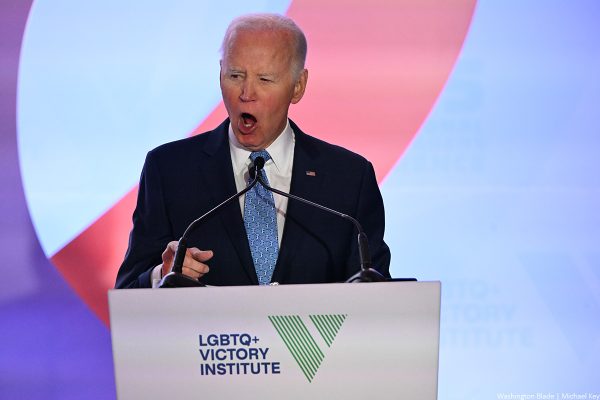
That shift, Biden said, emerged from countless small interactions with LGBTQ Americans — many of them deeply personal. He described one in particular that stayed with him.
“I was speaking a few weeks earlier to a group of LGBTQ leaders in a private home,” he said. “During the Q and A period a gentleman stood up and said, ‘Mr. Vice President … How do you feel about us?’ I turned to the gay couple who owned the house. I looked at both of them. I said, ‘What did I do first, when I walked in the door to your home?’ They both said, ‘You walked right up to our two children.’”
It was in that moment, he said, that he understood at a visceral level what equality meant. “I wish every American could have seen the loving eyes of these two young boys for their dads. If they did see that, they’d never have any doubt what this is all about.”
With marriage equality legalized nationwide in 2015, Biden continued to speak forcefully for LGBTQ rights — even amid criticism from conservatives. That commitment only deepened, he said, as he encountered more LGBTQ people and gained a better understanding of their lives.
When he entered the White House in 2020, Biden said his goal was clear: build an administration that reflected the nation it served.
“When I took office, I promised to have an administration that looked like America … You all worked on issues that went far beyond equality for the LGBTQ community,” he said. “With your help, we accomplished much — not just for this community, but across the board to create opportunity for everybody.”
He highlighted the Respect for Marriage Act — signed in December 2022 — as one of the most meaningful achievements of his presidency.
“Next week marks three years since many of us stood on a crisp day on the South Lawn of the White House where I signed Respect for Marriage,” he said. “The moment had an air of celebration, but also, quite frankly, for me and many of you, an air of relief … the momentous battle was finally won. Finally, finally, finally.”
But Biden warned that much of this progress is now under threat under the Trump-Vance administration, which he accused of targeting LGBTQ communities by slashing funding for organizations, healthcare, and HIV/AIDS programs.
“Today, though, we know much more work to do, and the challenges ahead can feel daunting, particularly in the face of everything we’re seeing coming out of this reactionary White House.”
He placed responsibility squarely on President Donald Trump and Republican leaders.
“Donald Trump and many Republicans distort and derail our fight for equality,” he said. “They’re trying to turn it into something scary, something sinister. But at its core, it’s about making every American be treated with basic decency, dignity, and respect.”
“This administration is trying to use those issues as a wedge to further divide the country,” he continued. “But there’s nothing more American than the notion of equality. Nothing, nothing, nothing.”
Biden said the consequences of such attacks are especially harmful to LGBTQ youth. “Right now, no small number of young people are sitting alone at home, scrolling through social media, staring at the ceiling, wondering whether they’ll ever be loved … My message to young people is this: just be you. You are loved. You belong.”
He connected LGBTQ equality to a broader national ideal, one that has pushed America forward.
“We are an idea stronger and more powerful than any dictator or army — that in America, we hold these truths to be self-evident, that all are created equal and all deserve to be treated with dignity. We’ve never lived up to that idea, but we’ve never walked away from it.”
Biden’s record — through both the Obama and Biden administrations — on LGBTQ issues is extensive. He played a key role in the repeal of “Don’t Ask, Don’t Tell,” allowing gay and lesbian service members to serve openly. As president, he signed sweeping executive orders banning discrimination based on gender identity or sexual orientation across federal agencies, healthcare, housing, and education. He reversed the ban on transgender military service and, in 2024, issued categorical pardons for service members previously convicted under the military’s historic ban on consensual gay sex.
He oversaw passage of the Respect for Marriage Act, appointed a historic number of LGBTQ federal officials — including Pete Buttigieg and Dr. Rachel Levine — and pushed for expanded nondiscrimination protections in healthcare and education. Abroad, he directed U.S. agencies to prioritize LGBTQ rights in foreign policy. He also hosted the largest Pride celebration in White House history and became the first president to issue a proclamation for Transgender Day of Visibility. And he continues to urge Congress to pass the Equality Act.
In “Promise Me, Dad,” his memoir published shortly after his son Beau’s death, Biden reflected on his own evolution and the country’s. It took time, he wrote, for many Americans to understand “the simple and obvious truth” about gay men and women: that they are “overwhelmingly good, decent, honorable people who want and deserve the same rights as anyone else.”
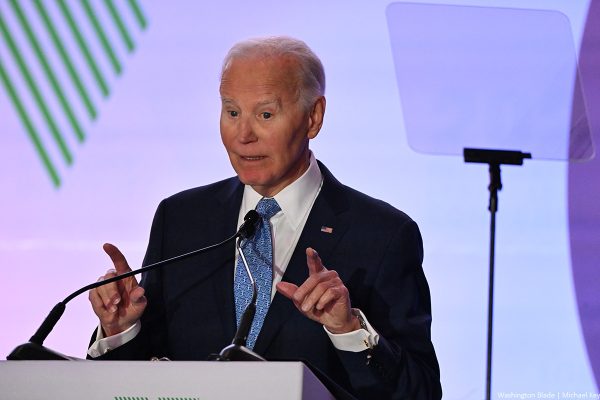
He closed his remarks Friday with a call to persist despite political headwinds.
“Friends, we are one of the only countries in the world that time and again has come out of every crisis stronger than we entered it. I still believe we can emerge from the many crises caused by this administration stronger, wiser, and more resilient than before. We just have to get up … and remember who we are.”

Kristi Noem ‘devastated’ as husband’s alleged fetish spending surfaces

Colo. activists condemn SCOTUS conversion therapy ruling

Is Ghana’s selective justice a human rights contradiction?

Supreme Court ruling against conversion therapy bans could affect Md. law

Glisten report details hostile climate for LGBTQ students

‘Out for McDuffie’ event held at D.C. gay bar

The Oscar-losing performance that’s too good to miss

‘Jonah’ an undeniably compelling but unusual memory play

PHOTOS: ‘No Kings’ rally and march