Opinions
Dacha punished for its success?
Shaw critics of planned expansion are misguided

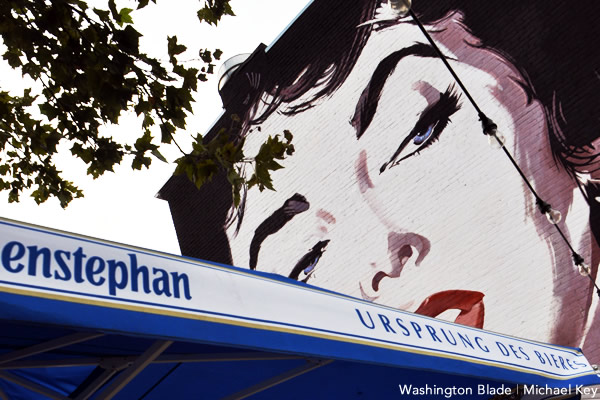
Dacha Beer Garden (Washington Blade photo by Michael Key)
ANC 6E’s 3-2 vote last week to protest Dacha Beer Garden’s expansion of its liquor license and capacity from 126 to 600 before the Alcoholic Beverage Regulation Administration was unfortunate. On Tuesday evening, the ANC chair, Alex Padro, took off his hat as director of Shaw Main Streets, which had done much to foster gay and minority businesses in the neighborhood, and donned both his ANC and new Central Shaw Neighborhood Association (CNSA) hats.
The CNSA leaders consists of a half-dozen or so well-organized households, including gay, straight, African American and even a Russian American family living near Dacha. Its ostensible mission is to check economic development, and specifically Dacha, on Seventh Street. They resort to hyperbolic, hostile and disingenuous concerns about noise, disruption of their children’s sleep, patrons’ public urination, parking congestion and Dacha’s supposed cold shoulder toward them.
The vehement mistrust of those who challenge Dacha’s expansion and, for some, its very existence, is both misdirected and incomprehensible. It seems a vindictive response to that business’s astounding success as a popular, safe, friendly and inclusive venue. Dacha is a founding pillar of rejuvenation in a once vibrant entertainment and commercial corridor.
By contrast, Dacha has collected more than 1,000 Change.com supporters, devoted patrons and neighbors within and outside the CSNA’s four blocks, and broad support from Blade readers.
Dacha’s owners may have tried too hard to cooperate with and solicit support from its neighbors of every hue, age and orientation as the city erected bureaucratic obstacles before them. Unlike other nearby entertainment venues, Dacha’s owners voluntarily agreed to the association to limit hours of operation, not play wall-permeating music, address noise issues, invite dialogue, and assure inclusive hiring.
When Alter and Chekaldin launched plans to build on their success by expanding their venue capacity to include a build back of the adjacent historic building as an indoor sit-down dining venue with dining veranda over the current canopy, the CSNA, with apparent city complicity, turned on them. They cite allegations of over-capacity infractions, complain about noise and rats, and nixed the design of the new building. Dacha asked the city for a 200-person capacity, but received a 126-person capacity intended originally only for seated patrons. Dacha takes nightly noise readings on both sides of the sound walls and in the alley – and decibel levels come in lower than D.C. standards. They are working currently with sound engineers to build soundproofing into the expansion plans.
Rats remain a neighborhood-wide plague. Dacha has closed dumpsters and engaged an exterminator.
Because of CSNA’s intransigence, concerned neighbors have quietly met with the Dacha team to negotiate an end to the cold war. Endorse President Reagan’s “Doveryai, no proveryai” (“Trust, but verify”).
Ray Milefsky has been a Shaw resident since 1986.






Germany
We must not scapegoat refugees after Berlin Pride terrorist attack
‘LGBTI people must not be instrumentalized to spread hatred against others.’
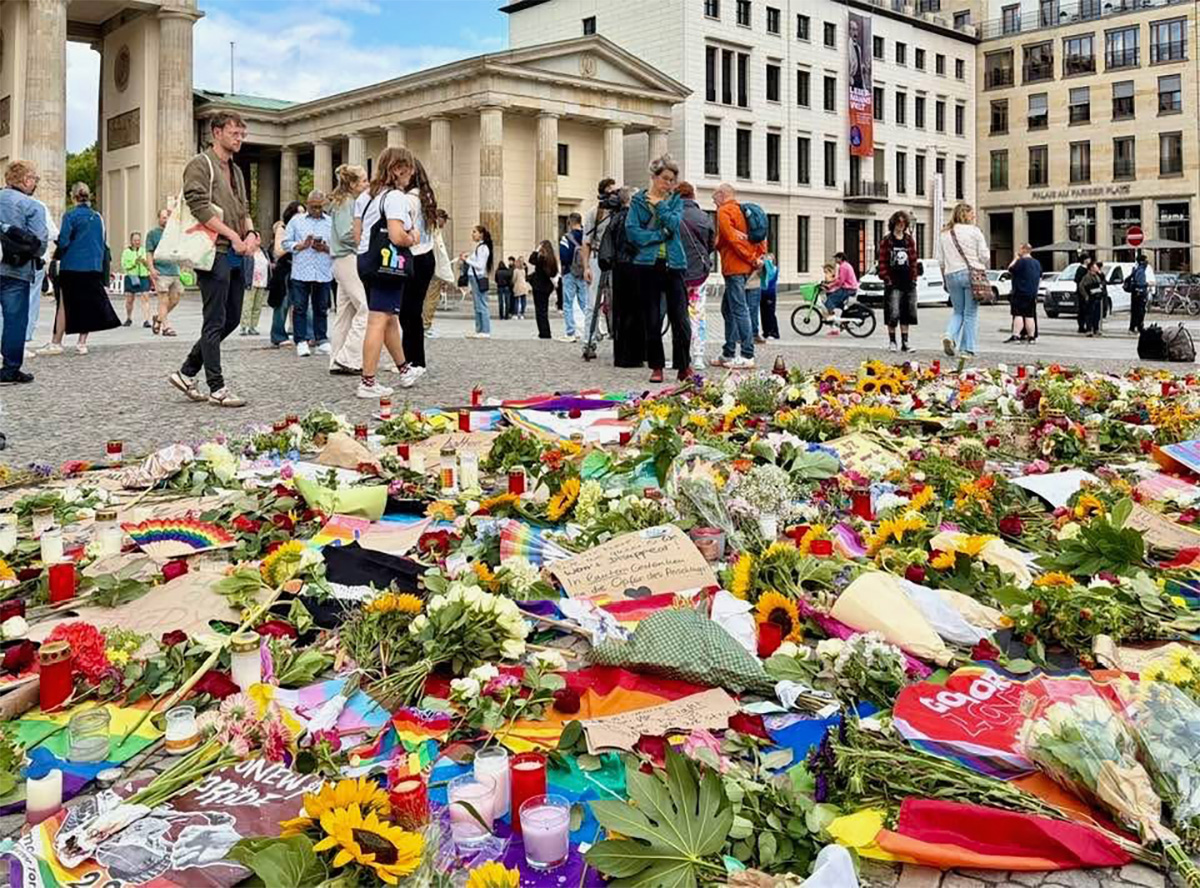
On Saturday, during Berlin’s Christopher Street Day, one of Europe’s biggest LGBTQ Pride events, a 21-year-old religious extremist drove a van into the crowd and then used a knife to stab multiple people. One person died and 29 others were injured.
When I saw this news on social media, I sincerely felt scared, and not because one more bigot used his religion to justify violence against people like me. It has, unfortunately, happened too often. Despite being happy to see the overwhelming support for the queer community and the condemnation of terrorism, I was terrified by the wave of Islamophobic and anti-immigrant statements that came even from “left” and “progressive” people who should know better, who generally support refugees, who know that all people are equal, and that you shouldn’t treat others as less human because of their religion.
In 2020, a Russian MP threatened to start a criminal case against me after I interviewed Muslim women about why they called themselves feminists and wrote about my own relationship with feminism and Islam, mentioning that I was following events in Syria and had read some academic books on the Islamic State. Surprisingly, the MP claimed that I was recruiting women to ISIS by using feminist ideas, which, of course, was absolutely ridiculous for many reasons, including the fact that I was an openly nonbinary transgender person. But some media outlets and queer people online, including those who called themselves progressive, refused to support me or believed the lie. This is what an anti-extremist witchhunt looks like. If I had been in Russia, and not in the UK, I probably would have been in prison.
It is extremely important to oppose extremism by knowing the actual facts about terrorist groups and not starting a moral panic.
Here are four examples of what media coverage and queer people online often misunderstand about the events in Berlin, and why it’s important.
1. Islam is not the problem
Despite a common misunderstanding, this terrorist act wasn’t even about Islam.
Islam, just like Christianity and Judaism, has a variety of views on LGBTQ rights, from affirmative to condemning. I think everyone in the American Bible Belt has met Christian fundamentalists who praised violence against LGBTQ people or used violence against their own queer children, so it is a universal problem. But the thing is Abdul Ballout was not an ordinary conservative Muslim. He was known for wanting to join ISIS. It is an apocalyptic cult that teaches that we are living in the last era, so they are trying to re-create the caliphate that they believe should be restored before Doomsday.
Most of the Muslim people I know, including conservative Salafi Muslims, see the group as dangerous criminals, or don’t see the group as a Muslim group at all. The vast majority of ISIS victims are not Western people or queer people, but cisgender heterosexual Muslims in the Middle East and Africa who the group considers to be infidels. ISIS is widely condemned by Muslim communities and scholars, and blaming Islam for the actions of cult members is like blaming Christianity and all Christians — or even all Christian fundamentalists — for the actions of Branch Davidians members or for the mass murder-suicide committed by members of the People’s Temple.
2. Refugees are not the problem — and Germany is not a safe haven for refugees
First, the attacker was a German citizen. But the media continue to blame migration. Germany is seen as a safe haven for refugees and asylum seekers in the U.S., the UK and beyond. But the time when Germany was safe is long gone. For refugees from Russia between 2022 and 2025 alone, around 90 percent of refugee claims have been refused by Germany, including the claims of political prisoners. The situation for non-White Muslim refugees is even worse, especially in regions such as Bavaria.
I have personal experience working with some refugees in Germany who are also Muslim. The way the migration service mistreated them is beyond anything I saw while working with refugees and being a refugee in the UK. I saw cases in Germany where an asylum seeker’s family was threatened back home because of social media posts the asylum seeker had made, or where a person was detained and sent back to their homeland despite having a history of persecution and torture by the government. Very often, when a person is taken by the immigration service, their loved ones don’t know where they are. Queer refugees also report homophobic and transphobic attitudes in the system.
The narrative that Germany is too generous to refugees was created by the far right and has little to do with reality, and it harms actual refugees, including queer refugees, by silencing their voices.
3. There is no collective responsibility
It is an extremely old and dangerous idea.
Just as all gay men shouldn’t be blamed for what the American serial killer Jeffrey Dahmer did just because he was gay; we shouldn’t blame all Muslims, all people of Middle Eastern origin, or any other large demographic group for the crime of one terrorist. Even if the terrorist had been a refugee and a Muslim, it shouldn’t actually matter, because under the law in any modern non-authoritarian country, an individual shouldn’t be held responsible for the actions of their social group.
After all, when a white, Christian, cisgender, heterosexual, neurotypical person commits a crime, it is almost always seen as an individual’s fault. Why is it different for marginalized groups? The idea of collective responsibility harmed the gay community for decades and is harming the trans community right now, for example after Charlie Kirk’s murder. The best thing we can do is stop this narrative, because it will be used against us.
The only reason I explained about ISIS and the refugee experience in Germany is to show how far from reality the popular accusations are.
4. Witch-hunts and scapegoating serve the far-right agenda and are extremely anti-queer
From my own experience, as an openly trans person speaking against Islamophobia, sexism and queerphobia who was accused of supporting the cult that kills queer people, promotes the sexual exploitation of women and sees the majority of Muslims as legitimate targets, I can say for sure that moral panic can go wild.
People who remember the Satanic Panic of the 1980s, or even the attacks on Muslim communities after Sept. 11, should know this.
Now even queer people are attacking refugees and Muslim communities online while the German government is introducing more draconian measures against those groups.
ILGA-Europe, the biggest LGBTQ organization in Europe, made a statement warning against any attempt to weaponize the attack.
“This tragedy must not be used to fuel hatred against migrants, foreigners or Muslim communities. We reject any attempt by anti-democratic actors to exploit what happened to divide communities, scapegoat minorities or turn one group against another,” Chaber, the group’s executive director, said. “LGBTI people must not be instrumentalized to spread hatred against others, nor should the existence of racism, Islamophobia or anti-migrant hatred be used to minimize the threats faced by LGBTI people. The rights, safety, and dignity of all people must be defended.”
People who live at the intersection of multiple marginalized identities — LGBTQ Muslims, LGBTQ people of color and LGBTQ refugees — will probably suffer the most from this moral panic. Moreover, these are the same political groups that target refugees, Muslim communities and queer people. If this hatred isn’t stopped now, everyone is potentially at risk.
Condemning terrorism is important, but it is no less important to stop creating more victims.
Opinions
Pentagon says hormones make trans troops unfit but gives them to men
A man who needs a screening program to feel like a warrior is telling on himself
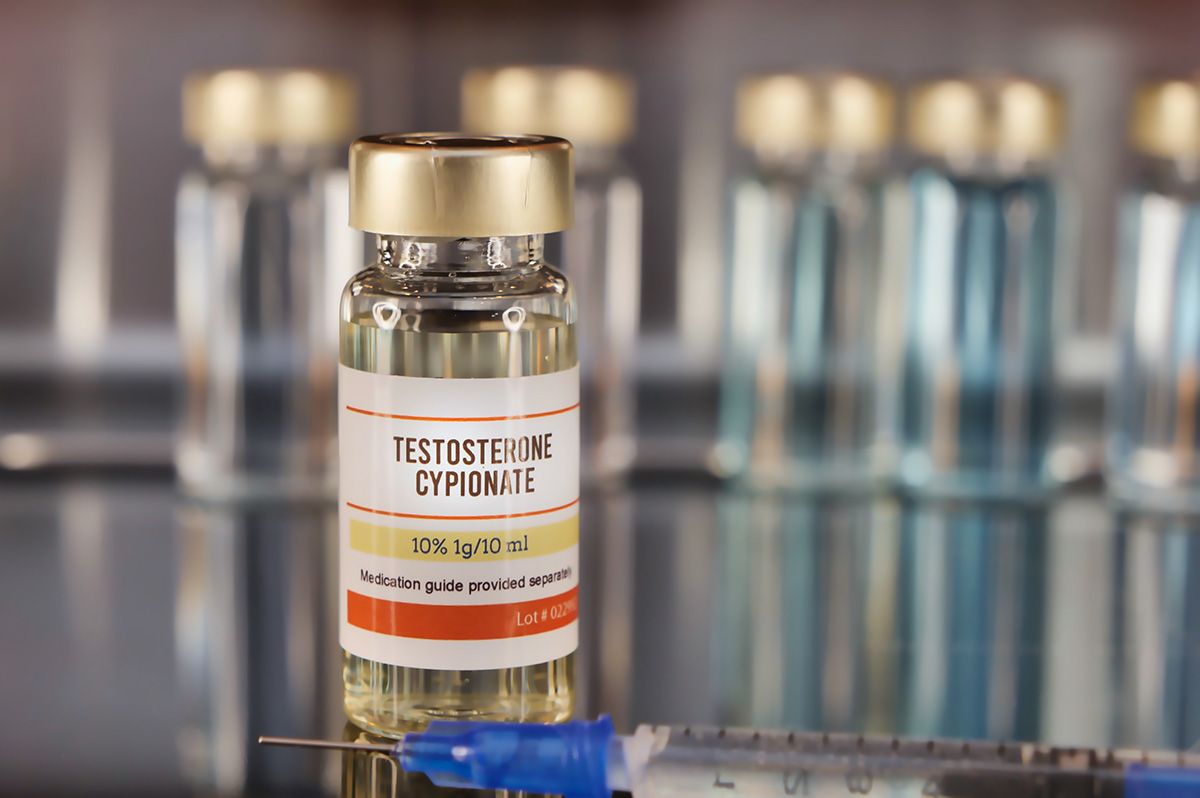
Last week, the Secretary of Defense posted a video to announce what he called the “High-T Department of War.” In it, Pete Hegseth ordered annual testosterone screening for every service member over 30 and offered testosterone therapy to those who want it, all in the name of keeping American warriors, in his words, on the “leading edge of lethality.” A hormone, he explained, is part of “the biological foundation required to sustain the fight.”
I have spent years writing about masculinity, so I know a performance when I see one. But this one is different, because at the exact moment Hegseth is prescribing testosterone to the men, his department is throwing other Americans out of uniform for taking it.
Here is the contradiction, and I promise I am not the one straining to find it. Since early 2025, the administration has worked to remove transgender troops from the military. One of its stated reasons, laid out in the executive order and in the government’s own court filings, is that these service members require ongoing medical treatment the military cannot easily sustain. Hormone therapy, the argument goes, means cost, monitoring, lab work, and stretches of non-deployability. A soldier who needs a standing prescription, the logic runs, is a burden the force cannot carry.
Then the same department launched a program to put a standing hormone prescription in the pocket of any man over 30 who wants one.
You do not have to take my word for the hypocrisy. A federal judge has already put it on the record. Last Wednesday, in the case challenging the transgender ban, Judge Ana Reyes took formal notice of the new testosterone program and ordered the government to explain how the very same class of treatment can be readiness-enhancing for one group of troops and disqualifying for another. It is the question at the center of the case now. Reyes has been skeptical of the medical argument from the start. Last year she pointed out that the military spent roughly $41 million on Viagra in a single year, and called transgender care, by comparison, “not even a rounding error.”
That is the tell. It was never really about the medicine. Testosterone is testosterone. The prescriptions, the monitoring, the lab work, the deployability questions are identical whether the person filling the vial is a trans man or a cisgender colonel chasing his youth. The only thing that changes is who is holding it. When the man taking the hormone fits the picture of a warrior, the treatment becomes “lethality.” When the man taking it is transgender, the identical treatment becomes a fatal risk to readiness. The medicine did not change. The identity did.
I want to be fair, because the argument only works if it is honest. The government has other claims in the case that a court has not yet resolved, about surgeries, about facilities, about unit cohesion, and it insists that cisgender men on testosterone and transgender men are simply “not similarly situated.” Those arguments can be debated on their merits. But the medical one, the claim that hormone therapy itself is too much for the military to manage, is the one Hegseth’s own policy just detonated. You cannot brand testosterone a warrior’s birthright on Monday and a disqualifying liability on Tuesday and expect a judge, or the rest of us, not to notice.
And notice what the whole spectacle is actually selling. A “Department of War” rebrand. A hormone reframed as a weapon. A Secretary who mocks “dudes in dresses” while rolling out mandatory bloodwork so the men can optimize their manhood by the milligram. This is not a medical policy. It is a theory of masculinity, the same tired one, that a man is a number on a lab report and a posture for the camera. It arrives, not coincidentally, as the administration moves to loosen testosterone prescribing across the country, turning manhood into a supplement you can top off.
I have known a lot of strong men. My father crossed an ocean as a laborer to build a life; the strongest men I was raised by never once measured themselves in a vial. Real strength was never a hormone level, and the men who most need to announce their lethality are, with remarkable consistency, the ones least sure of it.
The House declined last week to write the transgender ban into law, so it still rests on nothing sturdier than executive will and a medical excuse. That excuse just ran out of testosterone. A man who needs a screening program and a war-department rebrand to feel like a warrior is telling on himself. The rest of us should say so out loud.
Dimitrios Aletras is a queer, first-generation Greek-American writer and survivor-advocate, with work published in Salon, The Advocate, and the Reading Eagle.
Opinions
Trump tries to scare Americans into not voting
Will he deploy military to the polls in November?
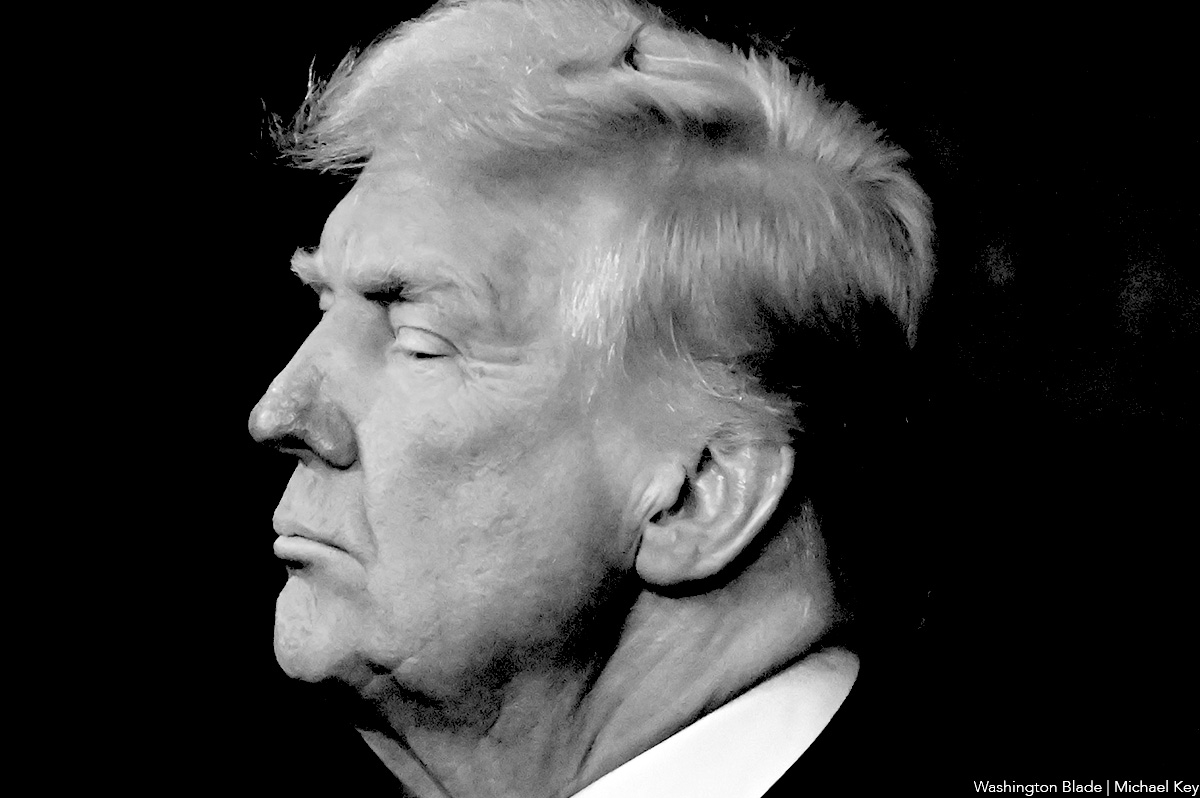
By saying we cannot trust our elections, the sick, old, demented, felon, in the White House is trying to scare Americans into not voting. He, and his faithful fascist appointees, dragged out old documents, already proven to be false, to scare people. He revisited claims that threats, and interference from China and Venezuela, impacted our elections in 2020, all of which have already been shown were not implemented effectively in any way.
Even a few Republicans are saying this is nonsense, reminding people the felon is making claims the only elections we can’t trust, are the ones that he lost. Those Republicans who dare to speak up, and are running for office, have said he is making it harder for them by focusing on this BS, and doing nothing about the future. We must remember the only election he lost, was when he was president during the election. He won when Democrats were in office in 2016 under Obama, and in 2024 when Biden was president.
We can only hope if he moves further with this, which some think he will, the courts will tell him no. There are some who believe he will try to call a ‘national emergency’ and deploy the military to the polls.
The only effective response to his lies is very clear. Democrats and independents must come out in huge numbers in November, and vote for Democrats, up and down the ballot. By doing this they say to the felon, we believe our elections are fair, we trust the process, and we will win big enough so there is no question about the results.
All anyone has to do to hear the felon lie, is to watch his mouth move. Every time he opens it, another lie comes out. He promised the nation, among other things, he would lower gas prices, lower grocery prices, lower rent prices, lower inflation, and even more important to the world, he promised the United States would not go to war. So, what we got instead, from him and his fascist cohorts, and sycophants in Congress, are higher gas prices, higher grocery prices, higher rents, higher inflation, and an expensive, in terms of both money, and human life and suffering, an illegal war with no end in sight. Even his own Secretary of State recently said, “the initial U.S. operation in Iran, Epic Fury, is over. The U.S. was now focused on Project Freedom. This is the name of the operation to get ships moving through the Strait of Hormuz again.” Something that was the case before Trump began this absurd and illegal war.
I applaud those media outlets that didn’t give Trump free air time to lie to the American people, despite the threats he made to have the FCC punish them for it. Kudos to those who had the guts to say we will not be a party to this, and went further, debunking the lies he told in the speech. The felon can continue to threaten those who call him out, but I believe they will win in the end, because the American people will not let him silence all the ‘free’ press. His fellow billionaires might take over some of it, like has been done with CBS, but the truth will come out.
In his continuing efforts to control elections, Trump has ousted members of a bipartisan federal election commission, the Election Assistance Commission, that resisted his efforts to require would-be voters to have extra documentation of their U.S. citizenship before registering. The commission distributes federal grants to states, oversees the testing of voting systems, and maintains the national voter registration form. He did this to get the Congress to pass his ‘Save Act’ which would make it harder for legal voters to vote. But congress once again voted against this after his speech, and there aren’t the votes to pass it. But the felon has shown fairness is not in his quiver when he plays any game. He cheats, and screws, as many people as possible in his business dealings, as long as he can make money. He is now doing the same to the American people.
Again, it is my belief in the end, the American people will win. Trump will be shown to be the loser he is, and our democracy will survive.
Peter Rosenstein is a longtime LGBTQ rights and Democratic Party activist.

US official protested at 2026 International AIDS Conference

Advocates for trans students urge Md. to fight White House threats

‘Heated Rivalry’ star takes it off in new ads for Under Armour

Trump ends direct HIV prevention funding to community groups

We must not scapegoat refugees after Berlin Pride terrorist attack

Pentagon says hormones make trans troops unfit but gives them to men

At Alliance Defending Freedom’s summit, church and state are one

Winsome Earle-Sears launches campaign against Va. marriage equality amendment

Calendar: July 24-30

1 dead, 29 injured in Berlin Pride attack
-

 Opinions4 days ago
Pentagon says hormones make trans troops unfit but gives them to men
-
National4 days ago
At Alliance Defending Freedom’s summit, church and state are one
-
Virginia4 days ago
Winsome Earle-Sears launches campaign against Va. marriage equality amendment
-
Calendar4 days ago
Calendar: July 24-30