National
Gay congressional candidates excel in 2Q fundraising
Baldwin rakes in $2.2 million; Tisei bests Dem incumbent
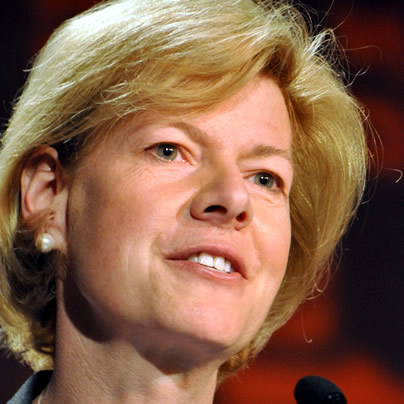
Gay and lesbian candidates running for Congress posted strong fundraising numbers in the second quarter in a year when more out contenders than ever are making bids for high office.
The Washington Blade examined the second quarter campaign finance reports for the eight candidates seeking office in the U.S. House and U.S. Senate that were endorsed by the Gay & Lesbian Victory Fund. The second quarter numbers represent fundraising for the candidates starting in April through June and were posted recently to the Federal Election Commission website.
The eight endorsed candidates are among 13 identified openly LGBT candidates pursuing seats in the House and Senate throughout the country — an unprecedented number for any election cycle.
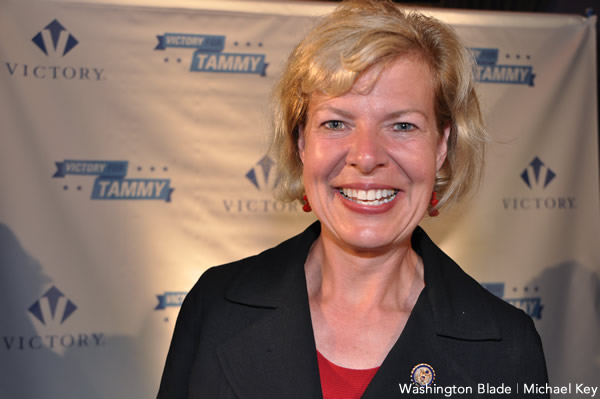
U.S. Senate candidate Tammy Baldwin (Blade file photo by Michael Key)
In the most high-profile race, lesbian U.S. Senate candidate Tammy Baldwin has been doing well in fundraising in her bid to become the first openly gay U.S. senator. Baldwin took in $2.2 million during the second quarter. That means she has raised $6.7 million this cycle while spending $3.96 million and having $3.5 million in cash on hand.
Technically, she didn’t come out on top in comparison to one of her Republican opponents. Eric Hovde, a hedge fund manager who recently entered the race, posted $2,494,211 for the second quarter. But Hovde, whose net worth has been estimated at $58 million, has spent millions on his own campaign and spent $3.5 million to make his name more well known. Others in the race came out behind: former Wisconsin Gov. Tommy Thompson raised $834,000, former congressman and gubernatorial candidate Mark Neumann raised $733,450 and State Assembly Speaker Jeff Fitzgerald raised $41,033.
The race between Baldwin and her potential Republican opponents appears tight. According to data published last month from Public Policy Polling, she’s in a dead heat with Novde, who leads her 45-44, and Thompson, whom she ties 45-45. Baldwin leads Neumann by 45-41 and Fitzgerald 46-42.
Perhaps the most surprising numbers come from Richard Tisei, a gay Republican former state legislator in Massachusetts, who raised $571,371 in the second quarter in his bid to represent Massachusetts’ 6th congressional district. That means he outraised Rep. John Tierney (D-Mass.), who raised $421,944 — even though he’s an incumbent Democrat running in a heavily “blue” state.
In a statement, Tisei, who outraised Tierney in the first quarter of 2012, thanked donors.
“I am consistently impressed with the strong support I am receiving from individual donors in support of my candidacy,” Tisei said. “In my wildest dreams, I wouldn’t have imagined that so many people would be supporting our message of change with their pocketbooks — particularly in these very tough economic times.”
The fundraising numbers for the second quarter mean Tisei has raised $1,237,000 thus far this cycle, has spent $435,410 and has $802,000 in cash on hand. Comparatively, Tierney has raised $1,325,650 this cycle, has spent $820,875 and has $693,000 in cash on hand.
On Wednesday, the D.C. newspaper Roll Call shifted the status of the race from “leans Democrat” to “toss-up.” The race is becoming competitive, in part, because Tierney, an eight-term U.S House member, has been under scrutiny because of controversy involving his family. Tierney’s brother-in-law, Daniel Eremian, was convicted of federal racketeering charges related to his operation of an illegal offshore casino, and Tierney’s wife was sent to jail for tax fraud related to this operation.
Tierney has a strong pro-LGBT record in the U.S. House: he voted in favor of “Don’t Ask, Don’t Tell” repeal, hate crimes protections legislation and a version of the Employment Non-Discrimination Act in addition to voting against the Federal Marriage Amendment.
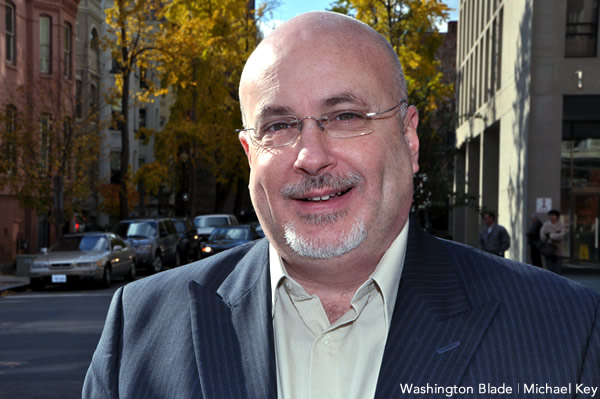
U.S. House candidate Mark Pocan (Blade file photo by Michael Key)
Similarly strong numbers were posted in the second quarter by Mark Pocan, a gay Wisconsin Assembly member who’s seeking to represent Wisconsin’s 2nd congressional district. Baldwin is vacating the seat to run for Senate.
But Pocan is in a different situation because he still needs to win the Democratic primary, which is set for Aug. 14, and other Democrats are seeking the nomination to represent the party in the general election. Pocan raised $250,000 in the second quarter, besting his most serious competitor, Kelda Helen Roys, another state legislator in Wisconsin, who raised $130,833.
In a statement, Pocan said he accepted contributions from more than 3,300 donors over the course of his campaign, and 80 percent of donations came in increments of $100 or less.
“I am truly grateful for the outpouring of support from the District 2 community,” Pocan said. “I’ve met and talked to voters from Beloit to Baraboo, and it’s clear my message of progressive values with real results resonates with people.”
The second quarter numbers mean Pocan has raised $734,550 over the course of his campaign, has spent $280,635 and has $454,000 in cash on hand. Meanwhile, Roys has raised $392,393, spent $130,833 and has $190,120 in cash on hand.
Not all gay candidates are faring as well. Sean Patrick Maloney, didn’t raise as much as incumbent Rep. Nan Hayworth (R-N.Y.) in his bid to represent New York’s 18th congressional district. Maloney, who in June won the Democratic primary, raised $319,000 in the second quarter, while Hayworth took in $459,000.
Tim Persico, campaign manager for Maloney, said special interests were the reason his boss didn’t raise as much as the incumbent Republican in the past few months, but said he’s still in good position to win.
“Sean Patrick Maloney doesn’t have the same profitable relationship with PACs and corporate lobbyists that brought Congresswoman Hayworth over a million dollars, but the outpouring of support from friends, family and even complete strangers has put him in a position to win,” Persico said.
Support from the LGBT community is coming from both sides in this race. Hayworth, who has a gay son, Will Hayworth, has been seen as a friend to the LGBT community since she took office at the start of last year. For example, she was among five Republicans to vote against a recent measure to reaffirm the Defense of Marriage Act when it came to the floor last month.
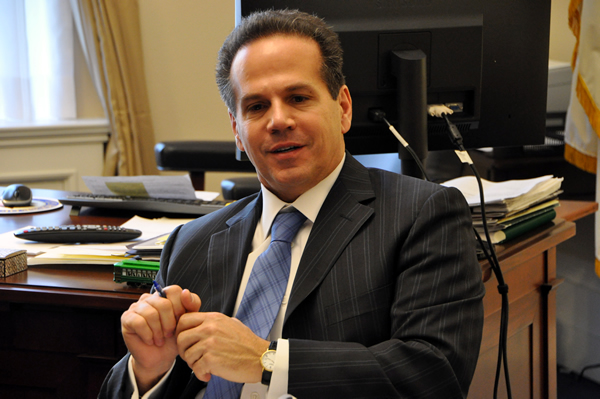
U.S. Rep. David Cicilline (Blade file photo by Michael Key)
One of the gay U.S. House members seeking re-election — and who’s also facing a serious challenge in the primary and general election — also came out on top in fundraising last quarter. Rep. David Cicilline (D-R.I.), who last year became the newest openly gay member of Congress, raised $302,000 in the second quarter.
But his opponents aren’t too far behind. Anthony Gemma, a businessman, is Cicilline’s main challenger in the Democratic primary, which is set for Sept. 11, and raised $243,000 in the second quarter. The Republican in the race, Brendan Doherty, the Rhode Island State Police’s former superintendent, raised $221,711.
Cicilline is facing a complicated road to re-election because the city that he governed as mayor prior to winning election to the U.S. House, Providence, R.I., is facing financial problems. A report commissioned by the City Council last year blamed his administration for a lack of transparency and for making a series of moves – like tapping into Providence’s rainy-day fund – without councilors’ approval. The lawmaker apologized in April, saying he should have been more forthright about the financial condition of the city.
Polls are showing Cicilline could be in danger of losing the Democratic nomination. A poll from local TV affiliate WPRI published in May of 302 likely Democratic primary voters had Cicilline leading with 40 percent and Gemma following close behind at 36 percent — and 20 percent still undecided.
So far this cycle, Cicilline has raised $1,570,486, spent $771,723 and has $836,325 in cash on hand. At the same time, Doherty has raised $990,882, spent $321,532 and has $669,350 in cash on hand, while Gemma has raised $990,882, spent $87,071 and has $343,040 in cash on hand.
The bisexual lawmaker seeking to represent Arizona’s 9th congressional district is also coming out on top of a crowded field of a half dozen candidates seeking to win this newly created seat. Kyrsten Sinema, who’s bisexual and a state legislator, raised $367,554 in the second quarter. That’s above her most serious competitor in the primary set for Aug. 28, Andrei Cherny, who’s a former state party chair endorsed by former President Clinton. Cherny took in $301,895 during the same period.
In total this cycle, Sinema has raised $626,288, spent $267,492 and has $358,796 in cash in hand. In comparison, Cherny has raised $732,973, spent $263,913 and has $469,060 in cash on hand.
But the gay candidate didn’t come out on top in California’s 41st congressional district. Mark Takano, a school teacher and member of the Riverside Community College District’s Board of Trustees, raised $256,965, while his opponent, Riverside County Supervisor John Tavaglione, raised $337,667. Takano is seeking to become the first openly gay person of color to serve in the U.S. House in this newly created Democratic-leaning district.
So far this cycle, Takano has raised $758,156, spent $517,138 and has $241,093 in cash on hand. Meanwhile, Tavaglione has raised $790,027, spent $338,186 and has $451,991 in cash on hand.
Rep. Jared Polis (D-Colo.), who if re-elected would become the most senior openly gay member of the U.S. House, raised $59,503 in the second quarter. Those numbers put him at $848,000 in total for fundraising this cycle and leave him with $347,000 in cash on hand. An incumbent running in a safe Democratic seat, he’s not expected to face serious competition in his bid for re-election.
CORRECTION: An earlier version of this article incorrectly referred to Rep. Nan Hayworth as Nan Hunter. The name of Tim Persico was also misspelled. The Blade regrets the error.




Arizona
Shooting outside gay bar in Ariz. leaves three dead
Tucson police investigating double murder-suicide as a hate crime

Three people were fatally shot outside a gay bar in Tucson, Ariz., early Monday morning, about a mile from the city’s nightlife district.
Police have said the shooting, which took place in the parking lot of Venture-N bar at 1239 N. 6th Ave., was likely a hate crime and a double murder-suicide following a verbal altercation.
The suspect, Ousman Ceesay, allegedly shot Vincent Anthony Siqueiros and Cameron Davis Capara while they were outside the club around 12:30 a.m. Monday.
Reports show Capara and Siqueiros were pronounced dead at the scene. Ceesay died after being taken to a local hospital with gunshot wounds.
Police have also said that Ceesay was carrying a list of LGBTQ businesses at the time of the shooting.
Arizona Public Media has said police are investigating the case as a hate crime because the suspect was carrying a note containing the names of multiple LGBTQ-associated businesses.
“I am deeply saddened that another senseless loss of life has happened in our community,” Tucson Police Chief Monica Prieto said in a statement. “Bias-based crimes are especially heinous and have no place in our community.”
According to Prieto, there is no imminent threat to the community, and the Tucson Police Department is working to provide extra protection to various LGBTQ businesses across town.
Congresswoman Adelita Grijalva, who represents the area, issued a statement condemning the act of violence, which appears to have been at least in part motivated by homophobia.
“I am disgusted and deeply saddened to learn of a targeted act of hate and the cold-blooded murder of two members of our LGBTQIA+ community, Vincent Siqueiros and Cameron Capara, at the Venture-N bar in Tucson last night. This horrific attack is a painful reminder that even in welcoming communities like Tucson, hate and violence against the LGBTQIA+ community still exist.”
“When that hate is combined with easy access to firearms, the consequences can be deadly. I am sick and tired of Congress refusing to lift a finger to protect our communities while, every day, dozens of people are shot and killed across the country. It does not have to be this way. The House of Representatives is returning to session this week, and our first action should be passing common-sense gun safety reforms that we know can save lives.”
Other federal lawmakers also condemned the shooting.
The Congressional Equality Caucus, which is made up of federal legislators advancing LGBTQ interests, issued a statement after news broke.
“Our hearts are with the friends and loved ones of the victims of this devastating attack outside a Tucson gay bar and with the Tucson LGBTQI+ community,” it said on X. “No one should fear violence because of who they are — and we’re going to continue fighting to build a world where no one does.”
The Human Rights Campaign, the largest LGBTQ organization in the country, released a statement following the shooting.
“We are heartbroken by the loss of Vincent Anthony Siqueiros and Cameron Davis Capara and our hearts are with their families, loved ones, and the entire Tucson LGBTQ+ community. Once again, we are reminded that gun violence robs people of their lives, destroys families, and devastates communities.”
A candlelight vigil honoring the victims is planned for Sept. 2 at 6:30 p.m. at Catalina Park in North Tucson.
Congress
HRC president campaigns for Chris Pappas in NH
Gay congressman running to succeed retiring U.S. Sen. Jeanne Shaheen

Human Rights Campaign President Kelley Robinson on Sunday campaigned for U.S. Rep. Chris Pappas (D-N.H.) in New Hampshire.
Robinson traveled to Manchester, the state’s largest city, nine days before the Sept. 8 primary that will determine who will vie for retiring U.S. Sen. Jeanne Shaheen (D-N.H.)’s seat.
We’re hitting the pavement across New Hampshire to fight for a freer, fairer future for everyone.
Glad to have Human Rights Campaign President @KelleyJRobinson join us for a canvass launch in Manchester today. pic.twitter.com/XWCEaQxy4o
— Chris Pappas (@ChrisPappasNH) August 30, 2026
Former U.S. Sen. John E. Sununu, who represented New Hampshire in the U.S. Senate from 2003-2009, will face off against former U.S. Sen. Scott Brown, who represented Massachusetts in the U.S. Senate from 2010-2013, in the Republican primary.
Karishma Manzur is among the Democrats challenging Pappas.
A poll the University of New Hampshire Survey Center released on Aug. 26 shows Sununu is ahead of Brown. The same survey shows Pappas ahead of Manzur and his other Democratic challengers.
The UNH Survey Center poll shows Sununu ahead of Pappas by a 45-43 percent margin if they were to face off in the general election. The margin of error is +/-2.1 percent.
Pappas would become the first openly gay man elected to the U.S. Senate if he were to win in November.
National
Milo Yiannopoulos deported to UK
ICE arrested far-right provocateur in New Orleans on Thursday

Editor’s note: The Department of Homeland Security on Saturday said Milo Yiannopoulos has been deported to the U.K.
U.S. Immigration and Customs Enforcement on Thursday arrested far-right provocateur Milo Yiannopoulos.
A DHS spokesperson in a statement sent to the Washington Blade said ICE arrested Yiannopoulos, who they described as “an illegal alien from the United Kingdom,” at Louis Armstrong New Orleans International Airport.
The DHS spokesperson said Yiannopoulos “legally entered the country” in New York on May 14, 2019.
“He chose to overstay his welcome in violation of our nation’s laws,” said the spokesperson.
The DHS spokesperson said an immigration judge on July 22 “issued a final order of removal” for Yiannopoulos “after failing to show up for his immigration hearing.” The Times-Picayune newspaper in New Orleans on Friday reported Yiannopoulos is being held at an ICE detention center in Alexandria, La., which is about 200 miles northwest of the Crescent City.
“He will remain in ICE custody pending removal,” said the DHS spokesperson.
Yiannopoulos has, among other things, repeatedly targeted transgender people and Muslims.
The American Conservative Union, which organizes the annual Conversative Political Action Conference, in 2017 disinvited Yiannopoulos from speaking at that year’s CPAC after a video in which he appeared to condone sex between adults and underage boys emerged. Yiannopoulos subsequently resigned from Breitbart News, a far-right news website, where he had been a senior editor.
Yiannopoulos later that year married his boyfriend in Hawaii. The far-right provocateur in 2021 claimed he was an “ex-gay.”
The Australian government in 2019 banned Yiannopoulos from entering the country “on character grounds.” Yiannopoulos was also banned from Facebook, Twitter (now X), and other social media platforms.
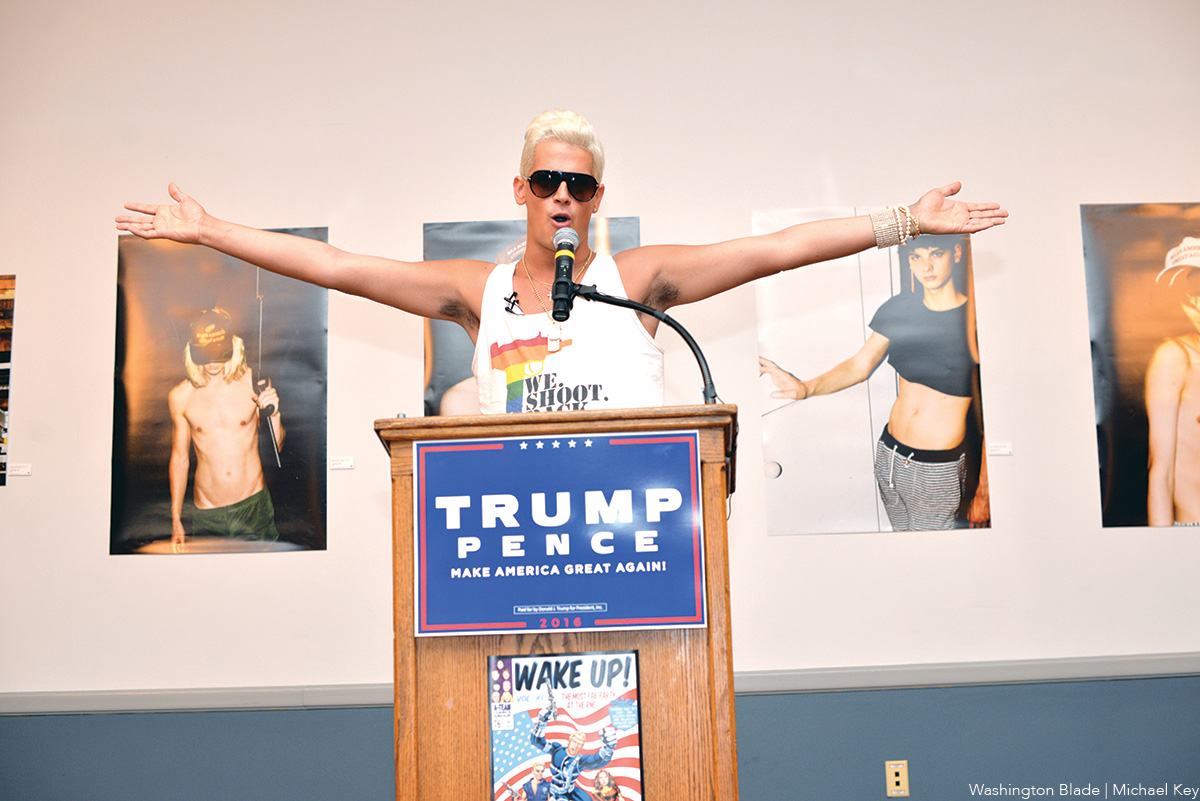
The Times-Picayune reported Yiannopoulos “most recently worked for” Ye, formerly known as Kanye West.
The controversial rapper is scheduled to perform in New Orleans on Friday.
Laura Loomer, a far-right conspiracy theorist who is close to President Donald Trump, has called for Yiannopoulos’s deportation. Loomer on Friday wrote on X that she “reported him to ICE and the FBI” after he “called for me to be assassinated.”

PHOTOS: Miss Gay Old Bay

SUNFESTIVAL takes center stage as Rehoboth Beach closes out summer

Anne Arundel schools now need parent permission to call trans students by preferred names
Shooting outside gay bar in Ariz. leaves three dead

‘People don’t see me. They see a trend’

San Francisco, long a queer safe haven, remains competitive for homebuyers

Trans, nonbinary Americans find refuge in the Netherlands

Calendar: August 28-September 3

‘Teenage Sex and Death’ has never been more entertaining

Actor Tim Curry dies at 80
-

 California4 days ago
San Francisco, long a queer safe haven, remains competitive for homebuyers
-
Netherlands5 days ago
Trans, nonbinary Americans find refuge in the Netherlands
-
Calendar4 days ago
Calendar: August 28-September 3
-
Movies4 days ago
‘Teenage Sex and Death’ has never been more entertaining