National
Obama nominates Chinese-American lesbian to federal bench
Chen would be one of a few openly LGBT federal judges

President Obama nominated on Thursday an out lesbian to a New York district court who, upon confirmation, could become one of a handful of openly LGBT people to sit on the federal bench.
Obama named Pamela Ki Mai Chen, an assistant U.S. attorney who has experience as a trial attorney, to serve on the U.S. District Court for the Eastern District of New York. In addition to being one the few openly LGBT people to serve on the federal bench upon confirmation, she would be the second female Chinese-American judge in history.
In a statement, Obama said, “I am proud to nominate this outstanding candidate to serve on the United States District Court bench. Pamela Chen has a long and distinguished record of service, and I am confident she will serve on the federal bench with distinction.”
According to biographical information, Chen has been an assistant U.S. attorney in the Eastern District of New York for 14 years — with the exception of a four-month period in 2008 when she served as New York State Division of Human Rights’s Deputy Commissioner for Enforcement.
As a U.S. attorney, Chen served has held different supervisory positions, including chief of the civil rights section and deputy chief of the public integrity section. She’s specialized in criminal civil rights matters, such as human trafficking, and has provided training to law enforcement on the issue.
Prior to being a U.S. attorney, Chen was a trial attorney in the Special Litigation Section of the Civil Rights Division at the U.S. Justice Department. She began her legal career in D.C., at the criminal defense firm of Asbill, Junkin, Myers & Buffone and at the law firm of Arnold & Porter after receiving her law degree in 1986 from the Georgetown University.
A first-generation American, Chen’s parents came to the United States as immigrants from China and met in the United States at the University of Chicago during World War II.
The Senate must confirm Chen before the end of this year or else her nomination will expire, which gives the chamber a limited amount of time to take action. The Senate is about to enter into August recess for five weeks, and no hearings have yet been scheduled in September before the Senate Judiciary Committee, which would hold the hearing on her nomination.
Obama nominates Chen just one day after Sen. Chuck Schumer (D-N.Y.) announced that he had recommendation her nomination to the White House. In a statement, Schumer commended her for her stellar legal background and even-handedness.
“Pamela Chen will be an excellent federal judge,” Schumer said. “She is an experienced attorney with a long record of public service who possesses the legal excellence, intellect and temperament to be a first-rate judge. Ms. Chen is a trailblazer in every sense of the word. Her leadership skills, her commitment to justice, and her extensive experience make her an fantastic choice for a position on the Eastern District Court.”
Chen’s nomination makes her the fifth openly LGBT person that the Obama administration has nominated to the federal bench. Alison Nathan, another lesbian, was confirmed to the U.S. District Court for the Southern District of New York, as were two gay men: J. Paul Oetken, who was confirmed to the same court, and Michael Fitzgerald, who was confirmed to the U.S. District Court for the Central District of California. Edmund Dumont, was nominated to serve on the U S. Court of Appeals for the Federal Circuit, but his nomination was withdrawn after the Senate took action on his nomination over the course of 18 months.
Deborah Batts, a lesbian, was appointed to the U.S. District Court of the Southern District of New York during the Clinton administration. Retired U.S. District Judge Vaughn Walker, who ruled in 2010 that California’s Proposition 8 was unconstitutional, is gay, but didn’t come out publicly until after he retired.



California
West Hollywood creates registry for polyamorous relationships
New legal rights for those with multiple partners
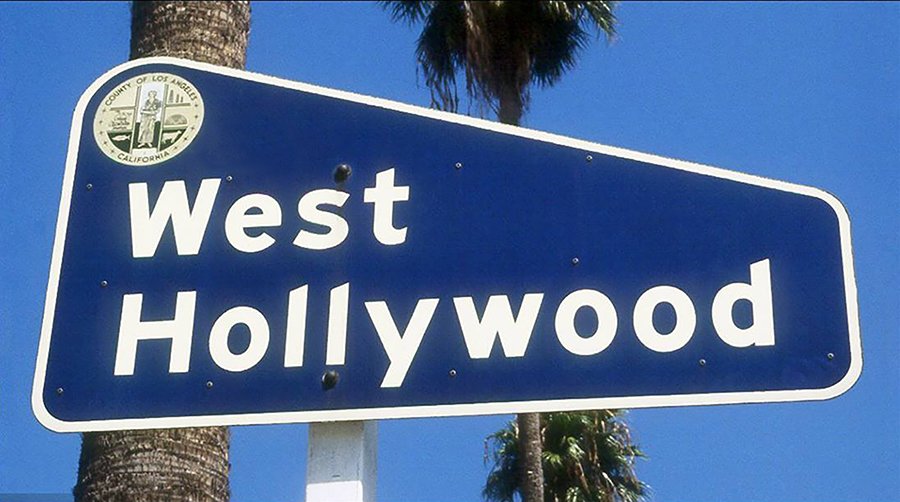
The West Hollywood City Council voted unanimously on Nov. 2 to create a registry for those in “multi-partner domestic relationships.”
The measure gives those in polyamorous relationships the same legal rights afforded to monogamous couples. Those include visitation rights in hospitals and jails in West Hollywood and certain tenant protections.
In 1985, West Hollywood became the first city in the nation to recognize domestic partnerships between same-sex couples. Within a few decades, legal recognition of same-sex couples extended to many cities and states and in 2015 marriage equality was legalized nationally. Now, advocates for polyamory say that WeHo is starting another trend toward recognizing other non-nuclear family structures.
“The new law not only gives polyamorous unions legal recognition, I think it also gives people permission to imagine a future together and to plan their lives openly,” said Christina Fialho, president of Rewrite the BiLine, a non-profit organization that works to expand queer media representation that advocated for the measure. She hopes that as time passes, more cities and states will pass legislation that legally recognizes those outside of traditional monogamous relationships. “This is the first of many more wins to come, and we hope to see more cities adopt similar ordinances,” Fialho said. A few cities in Massachusetts also currently recognize multi-partner relationships.
Fialho said the growing prevalence of non-monogamous relationships will help create demand for more legal recognition. “In the United States, consensual non-monogamy is actually as common as owning a cat,” Fialho said, which amounts to around 5 percent of the population. They are particularly prevalent among LGBTQ people, with around “50 percent of LGBTQ+ people” having been in “consensually non-monogamous relationships,” according to Fialho.
Megan Katz, a West Hollywood resident and librarian is part of that 50 percent. Katz has practiced polyamory for years and is currently in a committed marriage while also dating outside of it. She views the ordinance as a major victory. “It is one more step toward legitimizing nontraditional relationships and specifically polyamorous relationships,” Katz said.
Katz does not plan on immediately using the registry, as one of her relationships “is not established enough,” but she “very much appreciates that the city is taking these steps.”
Katz considers herself lucky that she has not experienced much personal discomfort or discrimination due to her polyamorous relationship. “With my personal, private communities, and even just my personal circles, I really have not had any problems,” she said. But she thinks the ordinance will help curb larger cultural stigmas around polyamory and non-monogamy.
“I am polyamorous and I am very comfortable with that, but it’s not a concept that’s very well known culturally and is sort of vilified or looked down upon,” she said. “There’s nothing wrong with it when you’re engaged in it ethically.”
2026 Midterm Elections
Quinnie Pérez becomes first openly transgender person elected in Fla.
Candidate won seat on Orange County Soil and Water Conservation District
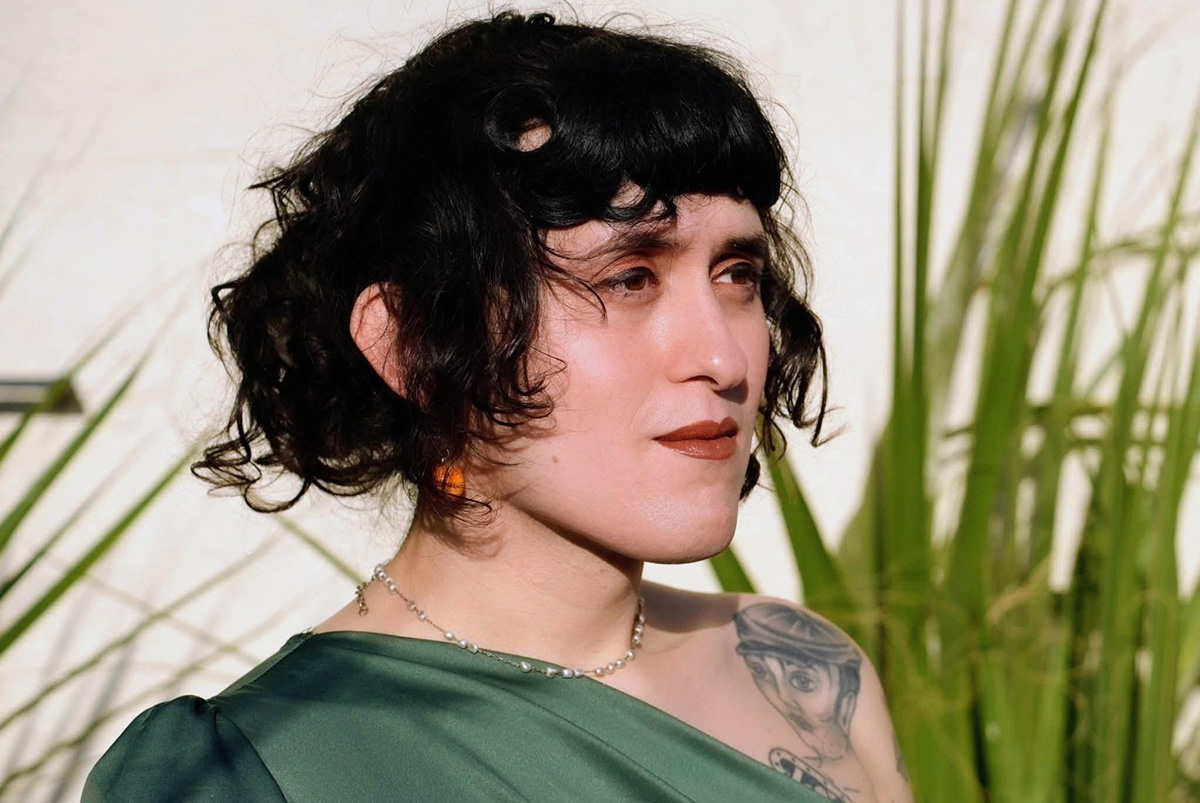
Quinnie Pérez on Nov. 3 made history when she became the first openly transgender woman elected to public office in Florida.
Pérez, 32, won a seat on the Orange County Soil and Water Conservation District. She previously worked for Equality Florida, a statewide LGBTQ rights group, as a paid intern.
Pérez on Tuesday during a virtual post-election briefing that Equality Florida organized noted anti-trans forces in the state ran $200 million worth of transphobic ads during this campaign cycle. Pérez raised around $6,000 for her campaign, but noted “we still defeated that rhetoric.”
“Money doesn’t win, hate doesn’t win,” she said. “We’re just going to keep winning.”
Pérez also said she ran for working people who are struggling in Florida.
“They don’t want to hear any full-blown rhetoric about trans people, LGBTQ+ people,” she said. “People just want to be able to afford their food, be able to afford their housing, and just be able to live another day while managing inflation and other issues around the state and our country.”
The LGBTQ+ Victory Fund also endorsed Pérez.
She will take office in January.
New Hampshire
Chris Pappas’s election to the Senate is a proud moment for N.H., the country
This reporter grew up in Manchester, N.H.

I interviewed now-U.S. Sen.-elect Chris Pappas (D-N.H.) on Oct. 26, eight days before he became the first openly gay man elected to the U.S. Senate.
His husband, Vann Bentley, appeared at his campaign events and in his ads.
Pappas said he “campaigned authentically as myself” during his ultimately successful bid to succeed retiring U.S. Sen. Jeanne Shaheen (D-N.H.). Pappas also talked with me about the importance of New Hampshire voters electing an openly gay man to represent them in the U.S. Senate.
“I’m really proud of who I am, but [I am] more proud of the fact that New Hampshire embraces people from different walks of life,” he said. “This is a state that fundamentally believes that everyone should be able to be themselves, and we’re stronger when everyone has the same rights and responsibilities.”
Pappas added he is “leading a life today that I didn’t think was possible when I was growing up here just a few decades ago.”
“This is a sign of how far we’ve come,” he said.
Pappas and I both grew up in Manchester, the state’s largest city, and are roughly the same age. I graduated from Manchester Memorial High School — Pappas attended Manchester Central High School, which was my high school’s crosstown rival in sports. His family owns the Puritan Backroom, a Manchester restaurant that claims to have invented chicken tenders. (Spoiler alert: they are delicious!)
I came out in 2001 after I finished my freshman year at the University of New Hampshire. My family and friends in New Hampshire and elsewhere thankfully accepted me for who I am. I still, however, wanted to move away from a place that I found too conservative and too provincial. I moved to Brooklyn, N.Y., shortly after I graduated from UNH in 2004. I met my now husband in D.C. in 2010, and I moved here the following year.
I do not regret the decision to move away from New Hampshire, but I must confess my home state has made me proud over the last 25 years.
• Now-retired New Hampshire Bishop V. Gene Robinson in 2003 became the first openly gay bishop in the Episcopal Church
• New Hampshire in 2009 became the first state in the country to extend marriage rights to same-sex couples legislatively
• The state’s nondiscrimination law includes gender identity
“That’s an important sign that here in the Live Free or Die State we take freedom very seriously and we need to be taking it seriously all across the country,” Pappas told me, referring to New Hampshire’s marriage equality and trans rights law. “That’s why we need federal representations who will take on that fight as well.”
Pete Buttigieg finished second in the 2020 New Hampshire Democratic presidential primary, losing to U.S. Sen. Bernie Sanders (I-Vt.) by a 1.32 percent margin. Pappas on Nov. 3, 2026, made history when he defeated former U.S. Sen. John E. Sununu (R-N.H.) in one of the most important races in this year’s midterm elections.
New Hampshire on Election Day made this native Granite Stater proud.

‘Jellicle Ball’ projection designer’s next project is in D.C.

Comings & Goings

West Hollywood creates registry for polyamorous relationships

LGBTQ community responds with support after shooting at gay-owned VIDA Fitness

LGBTQ+ Victory Institute to honor Dutch prime minister at D.C. conference

Queerness in Islam: a history the media often ignores

Sabrina Bruce becomes first trans person elected in Fairfax County

Anti-trans ballot measures pass in four states, setting up new legal battles

At least 29 known LGBTQ ANC candidates win election

Gay congressman attends D.C. LGBTQ election celebration
-

 Religion5 days ago
Queerness in Islam: a history the media often ignores
-
Virginia5 days ago
Sabrina Bruce becomes first trans person elected in Fairfax County
-
2026 Midterm Elections4 days ago
Anti-trans ballot measures pass in four states, setting up new legal battles
-
District of Columbia5 days ago
At least 29 known LGBTQ ANC candidates win election