News
Trump hails deal with Gilead for PrEP donation as ‘great news’
President says agreement will help end HIV epidemic
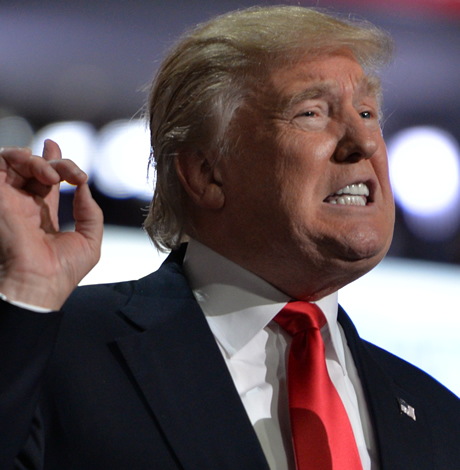
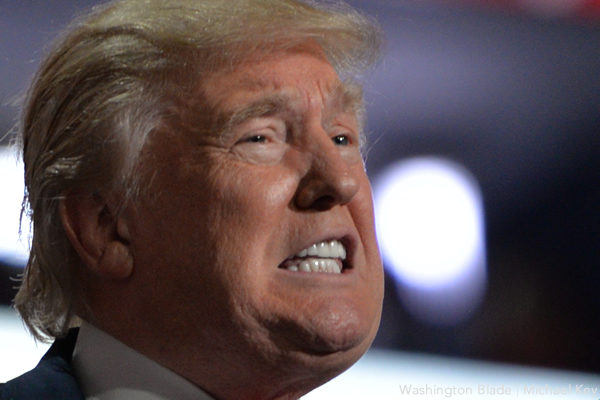
President Trump hailed on Thursday a deal with Gilead for the donation of PrEP for HIV prevention for the uninsured as “great news.”
Trump, who announced during his State of the Union address a plan to beat the HIV epidemic by 2030, took to Twitter to declare his pleasure the agreement with the drug manufacturer.
“Great news today: My Administration just secured a historic donation of HIV prevention drugs from Gilead to help expand access to PrEP for the uninsured and those at risk,” Trump tweeted. “Will help us achieve our goal of ending the HIV epidemic in America!”
Trump quotes other tweets from Secretary of Health & Human Services Alex Azar, who outlined the general contours of the deal with Gilead and said it consists of a ”historic donation of #HIV prevention medication for up to 200,000 individuals each year for up to 11 years.”
“The agreement will provide pre-exposure prophylaxis (PrEP) to treat individuals who are at risk for HIV and who are uninsured, including in the states and counties identified as priority areas in @POTUS’s plan to #EndHIVEpidemic in America.,” Azar added.
Drawing on statistics showing only small portion of individuals vulnerable to HIV infection, including gay men, are on PrEP, Azar adds the majority of Americans “who are at risk and who could protect themselves with PrEP are still not receiving the medication.”
Gilead confirmed the donation to the U.S. Centers for Disease Control & Prevention in a statement, calling the agreement among the largest ever in the United States.
“We are proud to partner with CDC to dramatically expand access to medication that can help prevent new HIV infections,” Gregg Alton, Chief Patient Officer for Gilead Sciences said. “We believe today’s donation, combined with efforts to address the root causes of the epidemic, such as racism, violence against women, stigma, homophobia and transphobia, can play an important role in ending the HIV epidemic in the United States, particularly in parts of the country with the highest burden of disease.”
The Trump administration plan seeks to reduce new HIV diagnoses by 75 percent within five years, and by 90 percent within 10 years by targeting 48 counties in the United States, D.C., and San Juan, Puerto Rico, as well as seven states where the epidemic is mostly in rural areas.
Carl Schmid, deputy director for the AIDS Institute, hailed the deal with Gilead in a statement as “a very significant development” in the effort to achieve that goal.
“It will free up the federal government from having to spend potentially billions of dollars over the next 11 years for the purchase of PrEP for the uninsured,” Schmid said. “Now, we have to focus on making sure people who need PrEP are aware of it and adhere to it.”
The deal was announced one day after Gilead announced a generic version of PrEP would be available beginning in September 2020, one year earlier than anticipated.
Further, the deal comes on the same day the Democratic-controlled House Appropriations Committee approved an increase of $490 million for domestic HIV programs. The allocation surpasses the $300 million the Trump administration sought to combat HIV as part of its annual budget request in addition to rejecting the proposed $424 million cut to AIDS research at the National Institutes for Health.
“After the House Appropriations Committee approval yesterday of an increase of nearly $500 million for domestic HIV programs, today, with this announcement, the administration’s Ending the HIV Epidemic initiative just received another boost and is now closer to reality,” Schmid added.




The DMV’s own furry group was on full display on the Metro on Sept. 12.
Shutterpaws is a volunteer-led 501(c)(3) non-profit organization located in Maryland.
The furry group has been doing the FurRide event since 2024 and has blown up in popularity for furries around DMV. They showcased themselves on the Silver and Blue Lines near the Smithsonian on Sept. 12.
“A lot of careful planning goes into running these events, with the goal being a seamless and enjoyable experience for everyone who attends,” says Zayre, a Shutterpaws staff member. “There’s a lot that you learn just by trial and error, and as Shutterpaws hosts more and more events, our team of event organizers continues to learn and refine our approach to keep things running smoothly and finding new ways to engage with our community.”
With a larger growth of participation in the community comes many challenges with the group, especially when it comes to the Metro rides and organizing.
“The biggest challenge that we face as organizers is keeping things fresh and finding new and engaging venues to host events,” says Zayre. “Recently we saw a lot of success hosting a meet at On Target Battlezone, an indoor NERF gun battle arena where our crew was welcome to show up and play both with and without a fur suit.”
Nevertheless, Shutterpaws receive overwhelming support from the community and partners.
“Across the DMV there are so many amazing places to host a Shutterpaws event so we can pursue our mission of helping connect fur suiters and photographers, and we’re blown away with the amount of support we’ve received from our community partners,” says Zayre.
Shutterpaws plans to do more events for anyone in the DMV who is interested.
Their next event in collaboration with DC Fur Meet will take place at Pitchers (2317 18th St., N.W.) on Saturday. Visit Shutterpaws’ website for more information.
Turkey
Activists protest outside Turkish Embassy in D.C.
Dozens detained during anti-LGBTQ ‘My Family Is Safe’ campaign raids
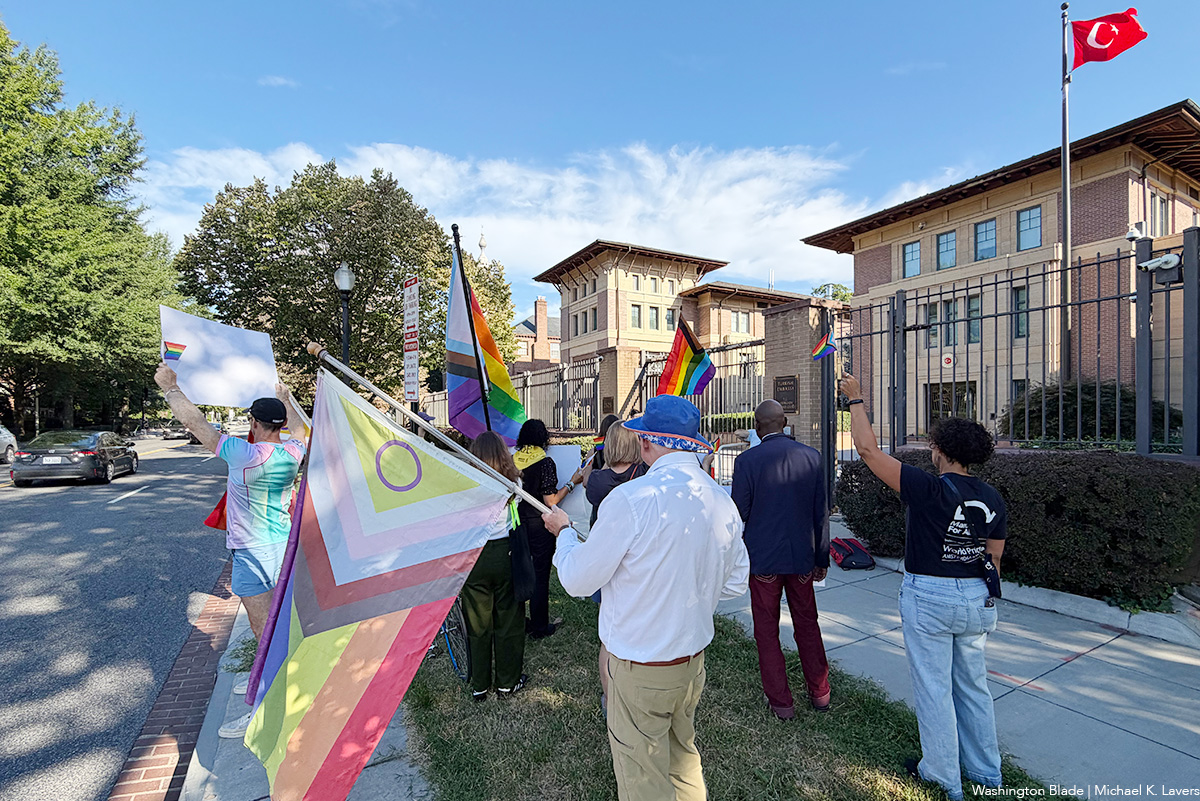
A group of activists on Friday gathered in front of the Turkish Embassy in D.C. to protest the country’s anti-LGBTQ crackdown.
The protest — which the Council for Global Equality, Amnesty International USA, Outright International, and Health GAP organized — took place less than a week after Turkish authorities detained dozens of people during raids that targeted the country’s LGBTQ community and advocacy groups and HIV/AIDS service organizations.
Authorities in Istanbul on Sept. 15 detained more than 150 people who gathered outside a courthouse to protest the raids that are part of the government’s “My Family Is Safe” campaign. Journalists are among those who were taken into custody.
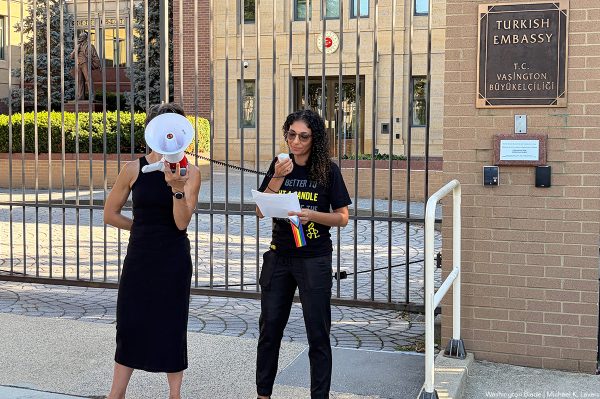
“This crackdown is not making families safer,” said Amnesty International USA Executive Director Nadia Daar, speaking in front of the Turkish Embassy.
Council for Global Equality Managing Director Keifer Buckingham stressed that “homosexuality is not a crime in Turkey.” Health GAP Executive Director Asia Russell and Outright International Senior Director of Law, Policy, and Research Neela Ghoshal also spoke.
View on Threads
Activists in Madrid and in other cities around the world held similar protests on Friday.
Delaware
Republican challenger misgenders McBride during forum, forced to leave
Jewish Federation of Delaware hosted event on Thursday
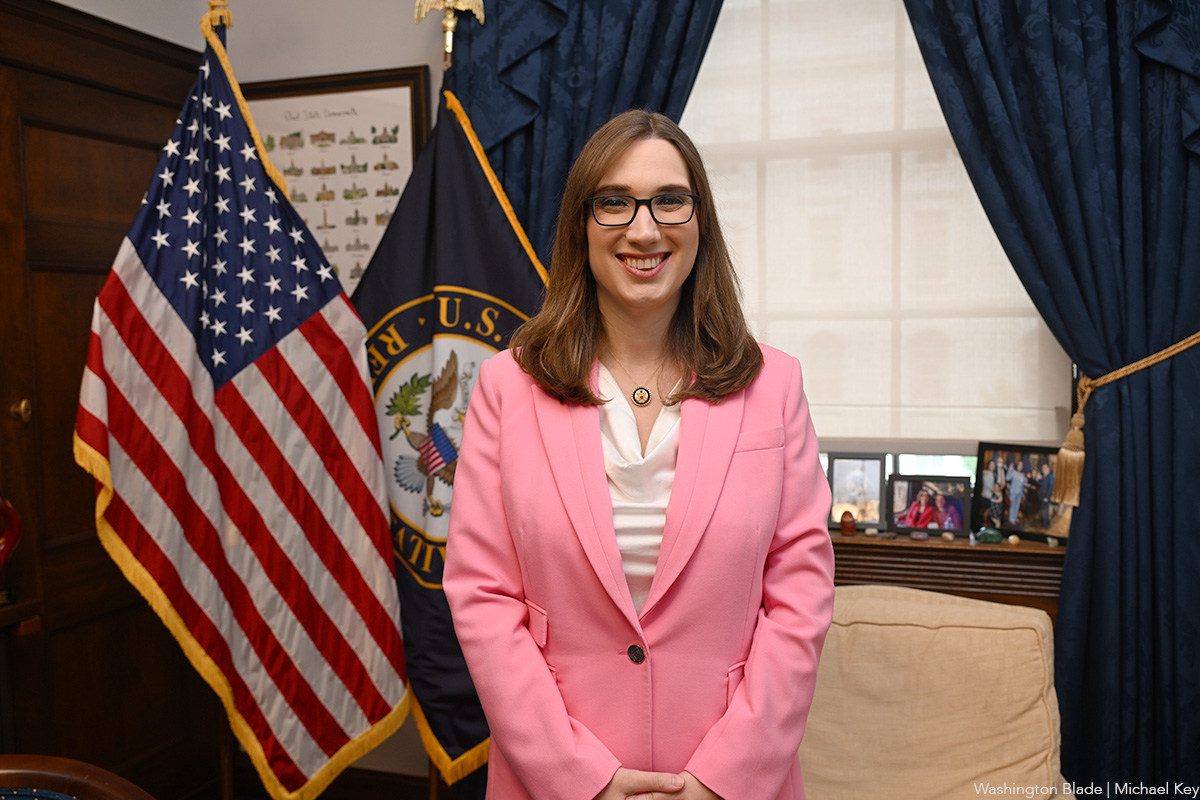
Republican “Dr. Joe” Arminio, the Republican nominee for the First State’s at-large U.S. House of Representatives seat, attempted to misgender the the country’s first and only transgender member of Congress while at a forum on Thursday.
This story was first broken by WDEL out of Wilmington, Del.
Arminio used the terms “his” and later “gentleman” when referring to U.S. Rep. Sarah McBride (D-Del.) during his time on the mic before he was asked to leave the forum, hosted by the Jewish Federation of Delaware at the Siegel Jewish Community Center in Talleyville on Thursday night.
At that point, the crowd of about 100 people largely started booing Arminio, who then finished, “I would like to show respect to the speaker, that would be nice.”
The first time Republican US House candidate “Dr. Joe” Arminio referred to Rep. Sarah McBride (D) as a man during Thursday’s debate at the Siegel Jewish Community Center in Talleyville. He was warned for his comment. #netde https://t.co/j4EaMOL84W
— Sean Greene (@SeanGreeneWDEL) September 18, 2026
Moderator Ken Grant waited until Arminio was finished, then said, “this is your final warning, if you fail to show respect to anyone else on this stage, you’ll be asked to leave.”
During the answer to his next question at the forum, Arminio responded to what he called an “error.”
“I committed an error before, and I do acknowledge it,” Arminio said. “It’s not the first error I’ve made in this campaign, or at any point in my future life.”
Despite the apology and acknowledgement that he had committed what was, at the very least, a social taboo, he did it again 12 minutes later.
While talking about rising healthcare costs being a “catastrophe,” Arminio pointed to U.S. Sen. Chris Coons (D-Del.) and McBride.
“The reason it is is because gentlemen like the two up here with me in the Democratic Party, and the Republican Party … ” Arminio said.
Despite his direct attacks on McBride’s gender identity, she responded to the situation with grace, attempting to intervene to allow Arminio to still have a chance to speak despite not heeding the moderator’s warnings.
“I don’t want this gentleman to not have the ability … ,” McBride began.
However, Republican Senate candidate Michael Katz interrupted her shortly before Arminio was removed from the forum, which was meant to inform the Delaware electorate on the candidates’ issues.
Katz had his opening statement next and directly condemned Arminio’s comments.
“I would like to apologize to everybody here and everybody else on this stage. As a physician, I believe in our common humanity and respect for each other. I feel that pain over those comments, and my apologies.”
Following the forum, Katz called for Arminio to exit the race via social media.
“Those who seek to represent Delaware must demonstrate integrity, judgment, decency, and respect — even toward people with whom they profoundly disagree,” Katz’s post read on Facebook. “For these reasons, I am calling on Joseph Arminio to withdraw his candidacy for the United States House of Representatives.”
This is not the first time McBride has been the victim of misgendering.
In 2025, House Foreign Affairs Committee Chair Rep. Keith Self (R-Texas) introduced the sole representative from Delaware as “Mr. McBride” during a meeting.
This is also not the first time McBride has faced vitriol from the other side of the aisle — both in terms of personal and legislative attacks on her trans identity.
In 2025, the House voted to ban trans girls and women from playing school sports with other girls, while U.S. Rep. Nancy Mace (R-S.C.) pushed for legislation barring trans women from using women’s bathrooms.
House Speaker Mike Johnson (R-La.) instituted a similar rule barring McBride — and all other trans women — from women’s restrooms on Capitol Hill.
McBride has also been a vocal opponent of Executive Order 14168, “Defending Women from Gender Ideology Extremism and Restoring Biological Truth to the Federal Government,” signed by President Donald Trump on his first day in office. The directive prohibits the federal government from recognizing the gender identity of trans people.
She has criticized Executive Order 14183, “Prioritizing Military Excellence and Readiness,” which would ban trans service members from serving in the Armed Forces. The directive is still being challenged in the courts to determine its constitutional legitimacy, but it has been allowed to remain in effect as the judicial system considers its legality.
The Washington Blade sat down with McBride in May to reflect on a tense year for LGBTQ politics, where she, in typical McBride fashion, answered questions about the hate she has received.
“Our politics are too often defined by hate,” McBride told the Blade. “I’m glad Delaware and Delawareans are showing that a different kind of politics is possible.”

Furries take over the Metro

A roundup of fall events not to be missed

Activists protest outside Turkish Embassy in D.C.

Republican challenger misgenders McBride during forum, forced to leave

Queer mega stars coming to D.C. this fall

PHOTOS: SMYAL Fall Brunch

Fashion icon Bob Mackie dead at 87

Dozens detained after Turkish authorities raid LGBTQ groups, businesses

New Hungarian government to scrap anti-LGBTQ adoption law