News
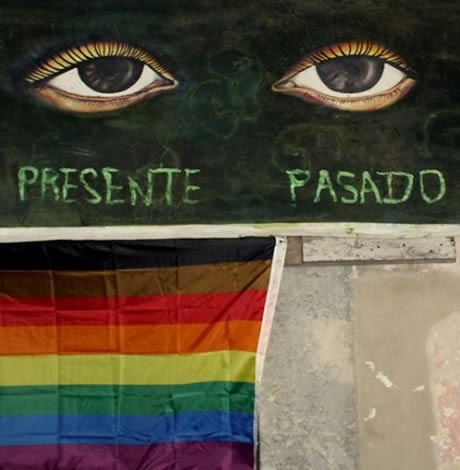
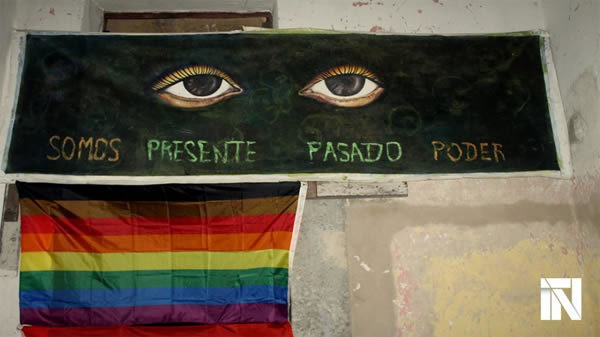
Casa Tomada Mirarte es la casa de todes en La Habana
Una pareja de lesbianas abrieron el espacio hace cuatro años
Nota del editor: Tremenda Nota es el medio socio del Washington Blade en Cuba. Esta nota salió en su sitio web el 14 de enero.
LA HABANA — Cocosolo es un pequeño barrio en la periferia del municipio Marianao. Un barrio marginal, dicen muchos. Aunque Cocosolo no debería llamarse así, porque en ese barrio no se está solo. Y si alguien lo duda, que visite Casa Tomada Mirarte, la casa de todes.
Myrna Rosa Padrón Dickson es de esas personas que primero sonríe y después habla. Dijo que me conocía, aunque aún no sé de dónde. Ella, junto a su mujer, Siria, lideran el proyecto de Casa Tomada Mirarte desde hace cuatro años.
Para los ojos de algunos la casa está en ruinas, se podría decir que inhabitable, pero los que saben mirar encuentran el arte en cada rincón.
“Es la casa de mi familia —allí donde Myrna cuidó a su padre hasta sus últimos días y ahora se ocupa del alzhéimer de su madre—. Por mucho tiempo estuvo cerrada y por cuestiones del clima atmosférico y económico también se ha deteriorado mucho. Nosotros hemos salido y entrado y la casa se ha quedado un poco sola. No es secreto ver cómo está constructivamente, pero tiene mucha espiritualidad”.
Pero así mismo, con paredes desconchadas y pedazos de techos que ya no están, es la casa de todes, como dice Siria a cada uno que llega: “Mi casa es tu casa”.
Entonces recordamos que ese también es el eslogan de la prestigiosa institución Casa de las Américas. Brindar la casa es lo que realmente sucede en Cocosolo, donde Myrna comparte con el público su propio espacio y lo convierte en la Casa Mirarte.
“Voy a poner el café. El que quiera que pase a servirse, porque no se lo voy a dar” —así me recibió.
A los pocos minutos de estar en la sala de Myrna, sale una persona con la cafetera en la mano, se para justo en la puerta que divide la cocina de la sala, mira a todos con cara de poder y manda que pasen a tomar café. Esa misma acción la repitió una y otra vez, y luego otra. Yo, que ya me sentía parte del lugar, fui por mi taza, pero solo en la tercera colada pude tomar.
Había allí más de una centena de personas abrazándose, riéndose, halagándose unas a las otras. ¿Se conocían? No creo que toda esa gente fueran amigos desde antes, pero lograron entenderse, dialogar, bailar, y tomar café.
“Hemos abierto las puertas para el intercambio del arte pero también para el intercambio de saberes en los que se encuentra la cultura queer y el feminismo en diferentes variantes” —dijo Myrna, micrófono en mano, mientras formaba parte de un panel que habló sin tapujos, con deseos de contar sus historias y de escuchar la de los demás.
Para Myrna es fácil hablar frente a muchos. Ella es educadora popular, algo de lo que siente orgullo porque le permitió adquirir las herramientas para entender todo sobre política, cultura y saberes hegemónicos. Desde la religión hasta su identidad sexual, desde la manera de hablar y cómo dirigirse a los demás, hasta la propia manera de brindar amor.
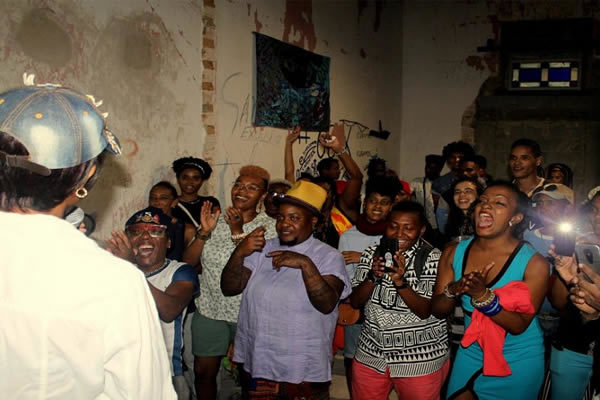
“Culturalmente somos un país machista y ese machismo, sexismo, homofobia, solo dividen. Para fortalecer la unidad, que no es esa unidad de la que se hablaba hace cincuenta años, sino esa otra unidad del nuevo pensamiento a la transformación social, a valorar lo diferente y lo diverso, para eso son estos espacios, y para eso estamos acá, en Casa Tomada Mirarte”.
Nosotres también existe
Habían pasado algunas horas desde que tomé la primera taza de café. Yo estaba allí desde las cinco de la tarde y no fue hasta pasadas las ocho de la noche que comenzó la actividad. Ya me había hecho a la ida de que no iba a comer nada en ese momento. Para comer habría tiempo…
Más de diez panelistas hablaban de sus proyectos, reían, se pasaban el micrófono unos a otros sin pena ni nervios, sin pudor. Hablaban y reían. Hablaban y hacían reír a los demás. A ratos mi estómago se entusiasmaba, hacía un ruido raro, como si riera también.
Entre las voces que se disputaban el micrófono estaba Nancy Cepero, una artista visual, grabadora específicamente. Pero también una de las mejores cocinando comida vegana.
Ya me habían hablado de ella. Había leído sobre ella, pero no la conocía. Y ahí estaba, justo en frente, sentada en el suelo, apretada entre sus colegas. No parecía importarle que la Real Academia de la Lengua Española no haya aceptado incluir todes. Porque Nancy seguía hablando con la e para sustituir la a y la o. Ella seguirá liderando Nosotres, un proyecto que funciona desde 2018.
Nancy se define a sí misma como activista. Usa el arte como pretexto evolutivo. Dice que antes veía las cosas de otra forma, incluso el propio tema de la racialidad lo entendía de un modo diferente, a la ligera. Sabe que desde pequeños usamos, tal vez de forma consciente (otras no tanto), un lenguaje racista, sexista, discriminatorio, que divide. Pero ella quiere despojarse de esos males, quiere que todes juntes luchen contra las desigualdades.
“Las discriminaciones nos tienen segmentados, pero lo importante es ver la necesidad de avanzar y crecer juntes como comunidad pero entendiendo las necesidades específicas de todes. Esa es una de las esencias de nuestro proyecto: aprender del afrofeminismo y crear espacios donde podemos ser nosotres mismes, con las libertades que uno merece”.
Para ella es fundamental que todes se sientan como una familia, que tengan la sensación de pertenecer a un hogar, aunque no tengan un espacio físico. Nosotres es un proyecto itinerante, diverso y divertido. Han empezado con un concierto, pero terminaron desayunando en la mañana.
“Porque la gente tenía muchas cosas que echar para afuera, mucho que compartir. Más allá del debate público hay una necesidad de conexión con gente común, que entiende la historia que estás contando, porque también vive como tú. En ese sentido lo logramos. Todes estamos en función de crecer juntes”.
Lideresas colombianas sanan desde el arte
El diálogo continuaba, como mismo continuaba creciendo mi hambre. Las opciones de comida estaban cada vez más lejos. La única persona que tenía fama de hacer comida para este tipo de actividades estaba sentada muy a gusto escuchando el debate, debatiendo.
Pero mi olfato no falló. Justo cuando las colombianas comenzaron a hablar sentí olor a comida. Un olor diferente al que siento en mi cocina o en la cocina de mi madre. Tal vez mi cerebro me estaba traicionando y el aroma que sentía era producto de mi imaginación, de mis deseos de comer…
Pero Jess Castaño y Vero Naki sí eran reales. Viajaron desde Colombia para participar de este encuentro, que no solo incluía un conversatorio, también prometía cerrar con un concierto.
“Nosotres vivimos en Bogotá, una capital blanquísima, donde además existe división dentro de la propia comunidad discriminada —aclaró Jess—. Si eres negra y te relacionas con gente de tu color no puedes ser marica, porque eres mal vista. Si decides participar en actividades donde haya mayor inclusión y diversidad, entonces vas a ser la única pareja de negras”.
A raíz de esa situación surge la necesidad de crear un proyecto como Posa Suto.
Jess hablaba rápido pero claro. Quería decir muchas cosas y el tiempo era poco. En cada intervención antes de la suya, asentía con la cabeza, se reía, como si entendiera qué pasa en Cuba.
“Optamos por tener nuestro propio espacio: Posa Suto. Porque llegábamos a muchos sitios y no nos dejaban entrar. Nunca nos dijeron que por ser negras pero eso estaba clarísimo”.
Vero es más calmada. Empezó a hablar sin estar preparada porque, en un arrebato, Jess le puso el micrófono enfrente y la dejó sin opciones. Entonces se escuchó su voz por primera vez.
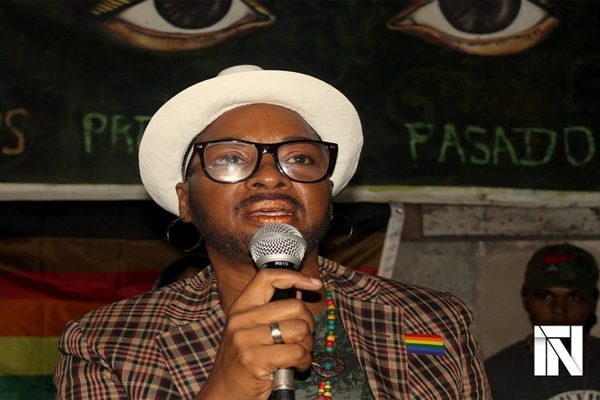
“El proyecto fue posible gracias a que ganamos una beca de la Open Society Fundations, una organización gringa dirigida a jóvenes feministas de Latinoamérica. Gracias a esa ayuda logramos tener la casa. Queríamos lograr un espacio tolerante, respetuoso, donde nadie se meta con nadie, donde cada uno tenga la libertad de ser como quiera ser.
“Muchas veces nos sumergimos en la cotidianidad. Entonces el tiempo de compartir en espacios inclusivos, diversos, es poco. Sin embargo, necesitamos compartir con personas como nosotres, que tengan las mismas dudas, los mismos problemas”.
Jess sabe que el camino seguirá siendo escabroso, que pocas veces disfrutará de sus derechos fácilmente. Porque, aunque exista Posa Suto, aún hay mucha discriminación en Colombia, como también la hay en Cuba. Para ellas lo importante es sanar desde el arte.
“Estamos convencides de que la cosa es por ahí. Nos sentimos a gusto en Casa Tomada Mirarte y estamos felices de poder reunirnos con tanta gente negra, tanta gente marica, tanta gente hermosa dispuesta a escuchar y a compartir”.
Otra vez las Krudas Cubensi
Si algo no me falla es el olfato. A veces quisiera tapar mi nariz, porque delata todos los olores que hay a mi alrededor, y son agradables, me traen recuerdos que solo se activan en mi mente gracias a que pasaron por el filtro de mi nariz. Y esta vez yo quería seguir oliendo, quería pensar que no me equivocaba, que podía comer…
Justo cuando acabó el conversatorio habló de nuevo. Lo había hecho desde el principio porque era moderadora de la actividad. Su sentido del humor era más grande que su cuerpo, y su volumen corporal no es nada despreciable. Entonces retomó el mando de la situación, ahora para anunciar que había comida. Santas palabras mágicas que salieron de su boca: “Apúrense, que hay que comer”.
En la mesa se sirvió comida vegana colorida, diversa como todas las personas que estaban en la Casa Tomada Mirarte. No hubo mejor elección. Una comida sana, diferente, con combinaciones raras pero posibles, con sabores nuevos, y poco degustada en los hogares cubanos.
Y todos comimos, y volvimos a tomar café. Y reímos. Y entramos otra vez en la zona caliente, donde antes se dialogó y ahora se escuchaba música, donde sería el concierto de las Krudas Cubensi.
Odaymara y Olivia Prendes son las Krudas Cubensi, una de las agrupaciones más importantes de la diáspora cubana. Están radicadas en Estados Unidos. Se fueron cuando aún la ley de pies secos, pies mojados invitaba a tantos cubanos a probar suerte en el país más temible del mundo.
Salieron de Cuba en el 2006 y cada año regresan. Volver las llena de energía para seguir creando. Recordaré a Odaymara Cuesta durante muchos días, quizás cada vez que tenga hambre mi mente traiga su recuerdo. Se parecía a mi madre, que primero anuncia que hay comida y después ella misma es quien te sirve el plato. Pero Odaymara es rapera, de las primeras mujeres que subió a escena para batirse en un ambiente feroz, donde el machismo estaba, y sigue estando, a la orden del día.
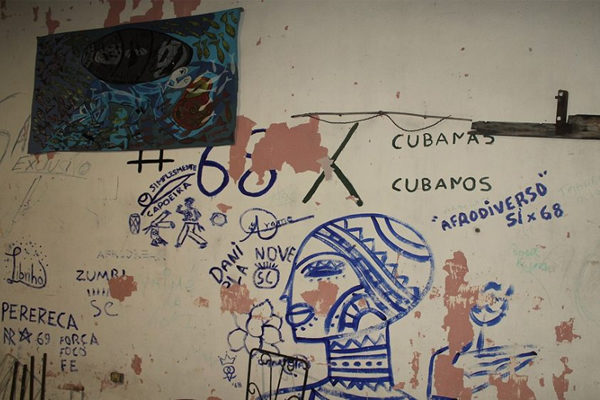
“Al final creo que estamos recogiendo el fruto de lo que Krudas fundó en el año 1999. Siempre fuimos un grupo muy futurista, muy adelantado a nuestra época. Y ahora estamos viendo que de alguna manera muchas personas están recogiendo nuestro trabajo de 20 años.
“Cuba y sus gobernantes son parte del circuito de la hegemonía blanca mestiza de toda América Latina. Y aunque hay que reconocer que se han hecho algunas cosas positivas, también hay que decir que la gente por su cuenta ha encontrado la manera de seguir adelante. Hay que emprender, porque no se puede esperar a que el gobierno dé nada”.
Según la visión de esta rapera negra y queer, Cuba sigue resistiendo.
“Antes era casi imposible pensar que existiera un espacio como Casa Tomada Mirarte. Ni la Alianza Afrocubana, ni Afrodiverso, ni Nosotres, ni ningún otro proyecto con características similares hubiera sido posible”.
No es un secreto las adversidades que sufren las personas queer. Muchos fueron los testimonios que contaron los valientes y las valientes en la casa de Myrna, de todes. Algunos felices, otros más desgarradores, porque conocer que los agentes de Policía Nacional Revolucionaria, cuya misión es proteger a la población, son de los principales agresores, es realmente triste.
Hay que multiplicar estos escenarios, trabajar en nuevas apuestas desde la perspectiva de género para combatir posturas sexistas equivocadas, la violencia de género. Es necesario que la sociedad cubana adopte un lenguaje inclusivo y tolerante, que se encamine hacia una libertad completa e igualitaria. Casa Tomada Mirarte es, casi seguro, un comienzo.



Brazil
Lula, Flávio Bolsonaro to face off in second round of Brazilian presidential election
Neither man received at least 50 percent of the vote on Sunday
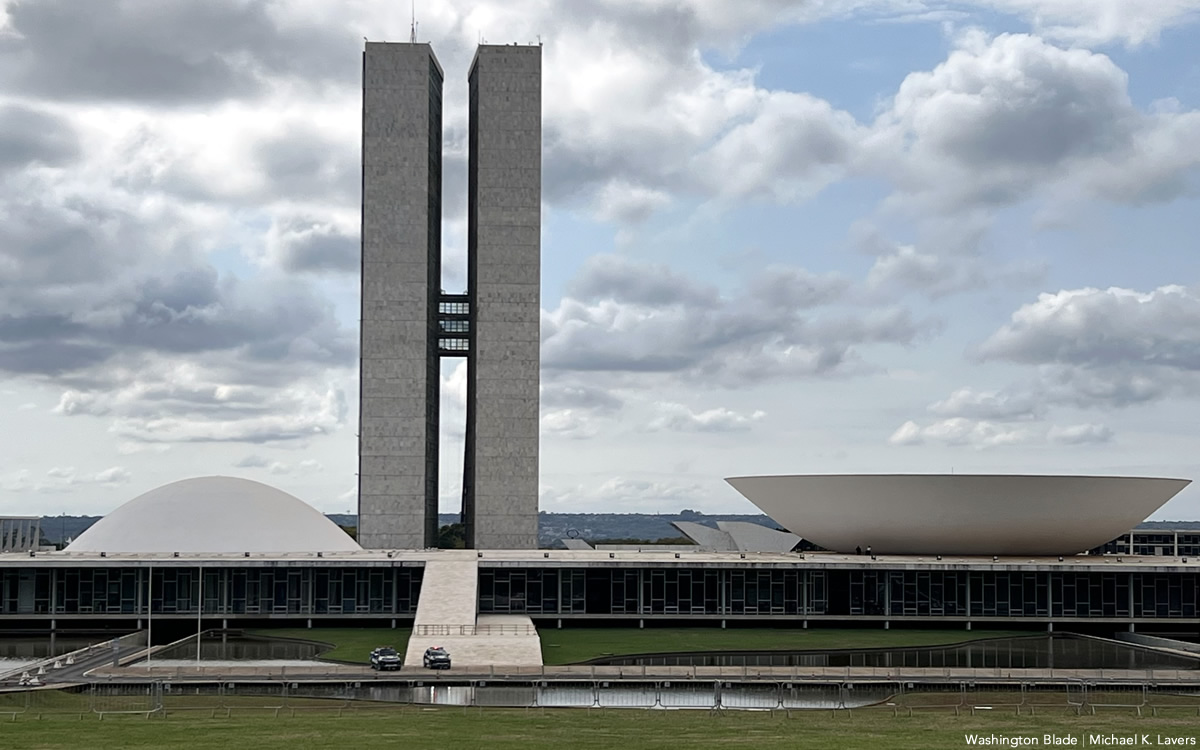
SÃO PAULO — President Luiz Inácio Lula da Silva will face off against Sen. Flávio Bolsonaro in the second round of Brazil’s presidential election on Oct. 25 after neither man received more than 50 percent of the vote in the first round that took place on Sunday.
Bolsonaro was ahead of Lula by a 47.26-44.89 percent margin with 98.65 percent of the vote counted.
Lula in 2022 defeated Bolsonaro’s father, then-President Jair Bolsonaro, in that year’s presidential election.
The Brazilian Supreme Court last year sentenced Bolsonaro — who repeatedly targeted LGBTQ Brazilians and other groups while in office — to more than 27 years in prison for his role in an attempted coup that saw thousands of his supporters storm the Congress, presidential palace, and the Supreme Court itself on Jan. 8, 2023. Bolsonaro is currently serving his sentence at his home in Brasília, the country’s capital, because of his poor health. His son has pledged to pardon him if he becomes the country’s next president.
Lula, who leads Brazil’s leftist Workers’ Party, was Brazil’s president from 2003-2010.
Sergio Moro, a judge who Jair Bolsonaro later tapped as his government’s Justice and Public Security Minister, in 2017 sentenced Lula to 9 1/2 years in prison after his conviction on money laundering and corruption charges that stemmed from Operation Car Wash.
The Supreme Court in November 2019 ordered Lula’s release.
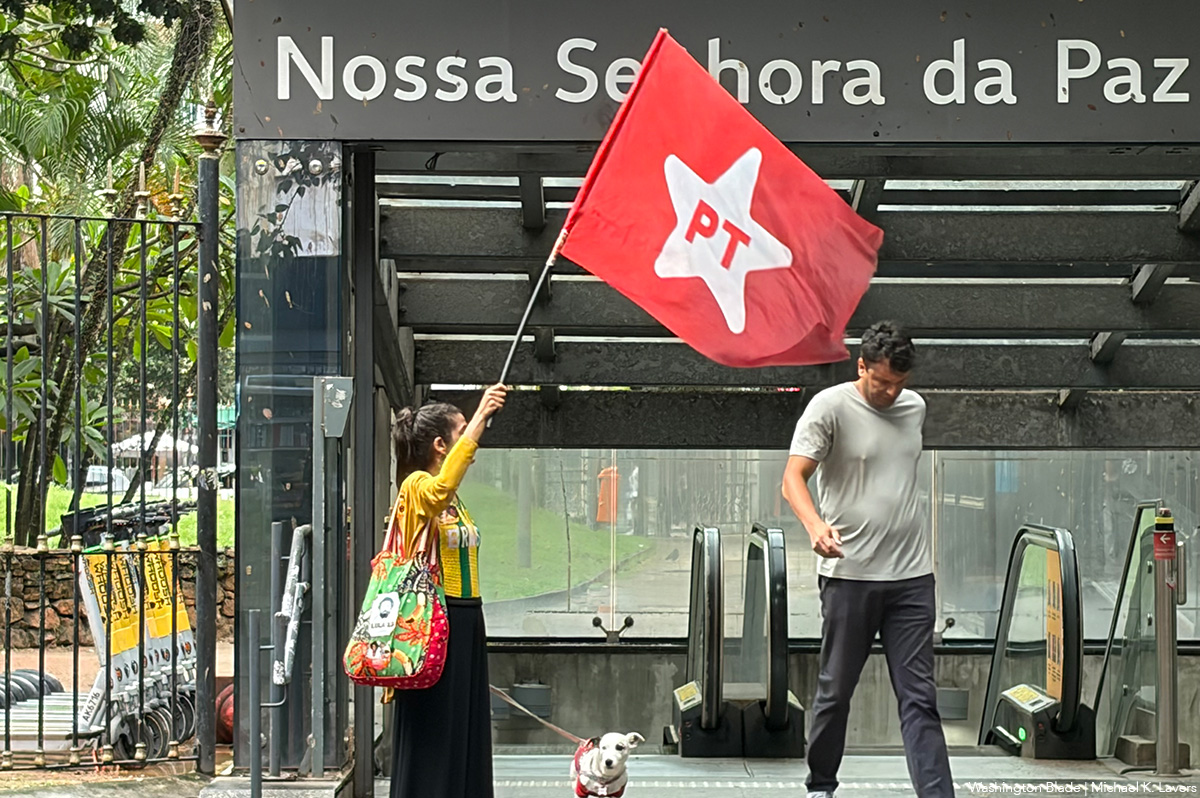
VoteLGBT, an organization that seeks to increase LGBTQ representation in Brazilian politics, noted 529 openly LGBTQ candidates ran in this year’s election. More than 100 of them are either transgender or travesti.
The Washington Blade will cover the results of these races when they become available.
U.S. Federal Courts
Renee Good’s family files two federal lawsuits
ICE officer killed lesbian mother of three in Minneapolis in January

The family of lesbian woman who a U.S. Immigration and Customs Enforcement killed in Minneapolis in January have filed two federal lawsuits.
The Associated Press notes Renee Good’s partner, Becca Good, and her brother, Brent Ganger, in the lawsuits accuse the Trump-Vance administration and ICE officer Jonathan Ross of “unjustified and excessive use of force.”
Renee Good was a 37-year-old mother of three.
Ross on Jan. 7 shot and killed her in Minneapolis.
The shooting took place during the Trump-Vance administration’s so-called Operation Metro Surge that targeted Somalis and other immigrant groups in Minneapolis. U.S. Customs and Border Protection agents on Jan. 24 shot and killed Alex Pretti, a 37-year-old nurse who worked for the U.S. Department of Veterans Affairs, in Minneapolis.
Both shooting sparked outrage across the U.S. and around the world.
“Every morning, she is my first thought. I think about how the kids are growing up without their mama, and how I will grow old without the love of my life. I think about how we should have had 40 more years together. But I also think about what she would have wanted after all of this,” said Becca Good in a statement the Human Rights Campaign released after she and her partner’s family announced the lawsuits.
“As we have tried to navigate our own massive loss, I am also devastated by how many other lives have been destroyed in this darkest of times. So many other families are dealing with the loss of their loved ones; to everyone who has had to witness it — the pain of this moment extends far beyond our family,” added Becca Good. “What happened to us should never happen to any family. No child should grow up without a parent because of it. No one should lose their sister or their daughter. No one should have to live without their soulmate. Accountability — real accountability — is the only way to make sure that no other family has to go through what we have.”
HRC President Kelley Robinson in her own statement said the Good family “is one of our own — and today, the Human Rights Campaign joins them in demanding justice.”
“It has been eight months and 24 days since Renee was shot and killed by an ICE agent, and the United States government has failed to take responsibility for its actions,” said Robinson. “Her partner, Becca, and brother Brent, have made the brave and bold decision to hold the government accountable, and we stand with them. Like every person murdered by ICE, Renee should be alive today. The Goods were robbed of what every American family deserves: to be together.”
Turkey
House Democrats urge White House to confront Turkish government over anti-LGBTQ crackdown
More than 60 lawmakers signed letter to Secretary of State Marco Rubio

More than 60 House Democrats on Thursday called upon the Trump-Vance administration to confront the Turkish government over its anti-LGBTQ crackdown.
Turkish authorities last month detained dozens of people during raids that targeted the country’s LGBTQ community, advocacy groups, and HIV/AIDS service organizations. Journalists were among those taken into custody outside an Istanbul courthouse on Sept. 15 during a protest against the raids that are part of the government’s “My Family Is Safe” campaign.
Council for Global Equality is among the groups that organized a protest outside the Turkish Embassy in D.C. on Sept. 18.
View on Threads
U.N. High Commissioner for Human Rights Volker Türk on Sept. 21 during a U.N. LGBTI Core Group event that took place on the sidelines of the U.N. General Assembly specifically referenced Turkey.
The Core Group is a group of U.N. member states that have pledged to support LGBTQ and intersex rights.
The U.S. withdrew from the Core Group after the Trump-Vance administration took office. The White House has not publicly commented on Turkey’s anti-LGBTQ crackdown.
“These developments warrant an urgent diplomatic response from the United States to protect the rights of freedom of expression, association, and assembly for all Turkish citizens, regardless of their sexual orientation or gender identity,” reads the letter the lawmakers sent to Secretary of State Marco Rubio. “We therefore urge you to use all available channels to raise these concerns directly with the Turkish government; press for the immediate release of those arrested and detained for their legitimate human rights activities; and ensure that the U.S. Embassy in Ankara closely monitors related judicial proceedings.”
“We further urge the Department to press Turkish authorities to cease efforts to criminalize LGBTQI+ organizations and advocacy and to affirm the right of all people to peacefully assemble,” it adds.
Arizona Congresswoman Yassamin Ansari and U.S. Rep. Dina Titus (D-Nev.) spearheaded the letter. House Speaker Emerita Nancy Pelosi (D-Calif.); House Foreign Affairs Ranking Member Gregory Meeks (D-N.Y.); Del. Eleanor Holmes Norton (D-D.C.); Delaware Congresswoman Sarah McBride, and U.S. Rep. Mark Takano (D-Calif.), who chairs the Congressional Equality Caucus, are among the 65 House Democrats who signed the letter.
“The United States must be a leader in defending human rights and what is happening in Turkey demands an urgent diplomatic response. It’s absolutely appalling to see LGBTQI+ people and the organizations that stand up for their rights be targeted by the (President Recep Tayyip) Erdogan regime,” said Ansari in a press release. “I stand proudly with the LGBTQI+ community here and abroad and will continue to fight for their right to live openly, freely, and without fear, anywhere and everywhere.”
The press release notes the Human Rights Campaign, the Council for Global Equality, and the Planned Parenthood Federation of America support the letter.
“Turkey’s attacks on its LGBTQI+ community are a disturbing reminder that the fight for equality and human rights does not stop at our borders. No one should be silenced or detained for simply being who they are or peacefully demanding dignity and freedom,” said HRC Government Affairs Senior Director Jennifer Pike Bailey. “We are grateful to Representatives Ansari and Titus for recognizing that the fight for LGBTQI+ equality is global and that, even amid the many challenges facing our community here at home, we cannot turn our backs on LGBTQI+ people facing persecution abroad.”
A State Department spokesperson on Friday told the Washington Blade that “as a matter of policy, we do not comment on congressional correspondence.”

Lula, Flávio Bolsonaro to face off in second round of Brazilian presidential election

The financial realities facing LGBTQ+ first-time buyers

‘Merrily’ is for Sondheim super fans, the uninitiated, and anyone in between

Engrossing ‘Tip Toe’ delivers tension and an ominous warning

Eliot Glazer’s new book an engaging collection of essays

Meet the LGBTQ candidates running for U.S. House, Senate

Ana Brnabić becomes world’s first openly lesbian head of state

Vote now! Best Of LGBTQ DC readers’ choice awards

Gay Va. couple hopeful voters will enshrine marriage equality in state constitution

Victory Fund board investigates former staffers’ allegations against CEO Evan Low
-

 2026 Midterm Elections5 days ago
Meet the LGBTQ candidates running for U.S. House, Senate
-
Serbia5 days ago
Ana Brnabić becomes world’s first openly lesbian head of state
-
Arts & Entertainment5 days ago
Vote now! Best Of LGBTQ DC readers’ choice awards
-
Virginia4 days ago
Gay Va. couple hopeful voters will enshrine marriage equality in state constitution