Sports
U.S. professional sports called the ‘last closet’
40 years after Stonewall, no ‘out’ player in major league baseball, football, hockey

Brittney Griner, seen here accepting the Wade Trophy, came out as a lesbian but didn’t receive a lot of media attention, even though she is recognized as the best woman basketball player to enter the WNBA draft in 2013. (Photo by Sphilbrick; courtesy Wikimedia Commons)
LGBT sports enthusiasts were thrilled earlier this year when professional basketball player Jason Collins and pro soccer player Robbie Rogers came out as gay, becoming the first two out gay men to emerge as current players in the professional leagues for the two sports.
Around the same time, Brittney Griner, the top-rated 2013 college basketball player in the Women’s National Basketball Association (WNBA) draft, came out as a lesbian. Her coming out made no difference to the Phoenix Mercury WNBA team, which quickly signed her on as a player.
The decision by Collins, Rogers, and Griner to disclose their sexual orientation followed coming out stories last year of another women’s pro basketball player, Seimone Augustus, and a women’s pro soccer player, Megan Rapinoe.
FIND MORE OF THE WASHINGTON BLADE SPORTS ISSUE HERE.
While these developments are viewed as encouraging signs by LGBT sports fans and activists, they come at a time when no open gays have ever emerged as players in three of the nation’s most popular professional sports — baseball, football and ice hockey. And though the NBA’s Collins came out four months ago, he remains a free agent.
No male professional golfer has ever come out as gay anywhere in the world and just one pro tennis player who is male has ever come out, according to Cyd Zeigler, editor and publisher of OutSports, a widely read online publication covering LGBT people in sports.
“People call it the last closet. And I think that’s what it is,” Zeigler told the Blade in discussing the lack of LGBT people in professional sports. “I think homophobia for decades has been more entrenched in sports than it has in most other areas in our culture,” he said.
“It starts when these kids are young. And they’re five years old and 10 years old and playing sports and the coach calls them a faggot and tells them not to be a sissy and this idea that being a faggot is less than being a man,” he said. “It starts there.”
Zeigler and other experts in the field of gays in sports say they are optimistic that cultural and political changes that opened the way for LGBT rights advances in recent years, including the approval of same-sex marriage in a growing number of states, will soon spill over into the realm of professional sports.
Forty-three years after the Stonewall riots in New York sparked the modern LGBT rights movement, LGBT activists say they are hopeful that baseball, football and hockey along with other professional sports will soon join the ranks of other professions in becoming more welcoming for LGBT people.
Zeigler said nearly all professional sports leagues have policies that ban discrimination based on sexual orientation along with other categories such as race, religion and ethnicity.
Earlier this year, at the request of New York State Attorney General Eric Schneiderman, the National Football League and Major League Baseball agreed to strengthen their non-discrimination policies pertaining to sexual orientation.
In a statement released in April, Schneiderman said he pushed for the strengthened policies after his office learned of complaints by at least three prospective NFL players that they were asked questions about their sexual orientation at the league’s recruitment scouting meeting held in February in Indianapolis.
“According to one prospective player, representatives of NFL teams asked prospects if they had a girlfriend, were married, or liked girls,” a statement released in April by Schneiderman’s office says.

The NFL and Major League Baseball adopted non-discrimination policies on sexual orientation in 2011 as part of collective bargaining agreements with the NFL and MLB and their respective player’s associations. (Washington Blade photo by Michael Key)
The statement and a follow-up statement released in July says both the NFL and Major League Baseball adopted their initial non-discrimination policies on sexual orientation in 2011 as part of collective bargaining agreements with the NFL and MLB and their respective player’s associations, which act as player unions.
The statements say that in response to Schneiderman’s request, the NFL and MLB agreed to adopt a workplace code of conduct specifically addressing sexual orientation discrimination and to post the policy document in all team locker rooms among other places.
“Both on the field and away from it, Major League Baseball has a zero-tolerance policy for harassment and discrimination based on sexual orientation,” MLB Commissioner Bud Selig said in a statement related to the code of conduct document.
It couldn’t immediately be determined whether the new non-discrimination policies would encourage gay baseball or football players to come out. But experts familiar with LGBT people in sports say factors other than homophobia and anti-LGBT bias may be playing a role in discouraging LGBT people from coming out in professional sports.
“I think the athletes themselves are ready to have an openly gay teammate,” said Patricia Griffin, Professor Emerita in Social Justice Education at the University of Massachusetts in Amherst.
Griffin, a former swimming coach and author of the book “Strong Women, Deep Closets: Lesbians and Homophobia in Sports,” told the Blade that concern over media attention may be keeping some LGBT athletes from coming out.
“I think one of the things that keeps athletes in the closet is not necessarily that they’re afraid of the homophobia of their teammates, but that it’s still such a news story, especially for the men,” Griffin said. “You have to be prepared to deal with all of the media attention. And I think there are a lot of gay athletes and that’s not what they want to do,” she said.
“They would like to be out. They want to be out. But they don’t want to have to deal with the attending media crush as well as probably requests from every gay organization in the world to be a spokesperson and so on,” she said.
Zeigler said he, too, believes reasons other than anti-LGBT bias have prompted many LGBT athletes in professional sports to stay in the closet. He noted that in the NFL, the average career often ends after three and a half years. The average baseball and hockey career is likely to be longer, but most players are ready for retirement by their late 30s, he said
“These guys from high school are working essentially full-time jobs and going to school,” he said. “And a lot of them say they don’t have time to explore their sexual orientation. Their idea of coming out in the middle of the pressure of trying to make a college squad, trying to get playing time, trying to make an NFL squad, trying to get a good contract” is not something that appeals to them, he said.
“So coming out is a complication, an unnecessary complication for some of them,” said Zeigler.
Robert McGarry, senior director of education and youth programs for the Gay, Lesbian & Straight Education Network (GLSEN), said his organization is working with public schools and teachers, including physical education teachers, to curtail anti-LGBT bias among youth.
“What you see at the pro level really starts in kindergarten and on the playground on recess time,” McGarry said. “The kind of exclusion of kids who step outside of what society expects of their gender fuels that. What fuels it also is educators not addressing anti-LGBT language and bias.”
He said GLSEN retained Patricia Griffin to develop a GLSEN sports project called Changing the Game, which is designed to address homophobia and trans phobia in school sports programs from kindergarten to the 12th grade.
“We’ve been doing training across the country with mostly high school coaches and physical education teachers who seem very receptive and anxious to have this kind of training because it’s not something that they get in their preparation and they don’t really know what to do,” he said. “So we’re trying to fill that gap.”
Griffin said educational programs like GLSEN’s sports project and the changing attitudes throughout the country on LGBT equality will soon lead to more openly LGBT professional sports players, including players in the NFL and MLB.
“I think one of these days there’s going to be a quarterback from some college football team, Division 1, who gets recruited up high in the draft and he’s going to come in to the NFL as an out gay man,” Griffin said. “I actually think that’s more likely to happen than having an established star come out after he’s been playing for a while.”
Added Griffin, “They never knew what it was like to be ‘in,’” she said of the up and coming young athletes. “They are out and that’s how they live their lives. That alone is going to change the face of sports in the next few years.”
McGarry of GLSEN cautioned that although it will help the cause of LGBT people in sports if more big name stars come out, that alone won’t address the underlying cause of homophobia in sports.
“It’s a shame that everybody is sort of waiting for the first NFL player to come out,” he said. “There are many people who think that’s going to be the great solution – to have a football player come out of the closet. I think there’s a lot more work to be done.”
D.C. Police Sgt. Brett Parson, the gay former head of the department’s Gay & Lesbian Liaison Unit, is a longtime amateur ice hockey player and former referee with the National Hockey League who says he witnessed firsthand the culture of professional hockey players.
“While we’ve come a long way, football, basketball, baseball, ice hockey – those sports still have the machismo that inhibits people from coming out and disclosing they’re gay for fear of being ostracized,” Parson said.
“I think we’re maybe not a generation away but we’re still a few years away before more people feel comfortable doing that,” he said.
Griffin said more women’s professional athletes have already come out than male professional athletes, but this often goes unnoticed because historically the public and the sports media pay more attention to men in sports.
She noted that Brittney Griner didn’t receive a lot of media attention when she came out this year, even though she is recognized as the best woman basketball player to enter the WNBA draft in 2013.
“Part of that is because it’s sort of like a weird kind of sexism, where we always think men’s sports are more important and we pay more attention to men’s sports,” she said. “So it makes sense that if a gay man comes out in men’s sports we pay more attention.”
According to Griffin, the less-noticed coming out by Griner may be the better path for all LGBT athletes going forward.
“With women it’s not such a surprise because people assume that there are lesbians in sports,” she said. “But when she came out it wasn’t like a giant announcement. She was just very matter of fact. It’s who I am. I’m proud of who I am and, you know, let’s move on,” said Griffin.
“And I think that’s going to be the future of more athletes who come out rather than having this be this giant, traumatic announcement that they make and feel like they’re risking their career by coming out,” she said.


Sports
2 former NBA players launch cheap anti-trans stunt to exploit WNBA rules
Enes Kanter Freedom and Royce White are attempting to extend their finished sports careers through vague gender eligibility policy in the WNBA.

As transgender sports policy continues to make headlines, two former NBA players are attempting to use vague WNBA wording on players’ gender identity to extend their finished professional sports careers.
Enes Kanter Freedom and Royce White, two male former professional basketball players who have aligned themselves with the ‘far-right’ political spectrum, have announced that they plan to self-identify as transgender in order to meet the requirements to declare themselves eligible for the WNBA draft.
Freedom last played for the NBA in 2022, while White played his last professional game in 2018.
Both players have explicitly stated that this choice is an attempt to exploit the policy currently in place in the WNBA — one that assumes those who say they identify as transgender women are women — unlike what these two have done.
The WNBA’s collective bargaining agreement states that “only players who are women are eligible to play in the WNBA,” but it does not include more specific language about gender identity or sex assigned at birth, according to The Athletic, The New York Times’s sports publication.
Neither Freedom nor White has previously made any statements about being trans.
“If simply declaring who you are is all that’s required, then I meet every single requirement necessary to compete in the WNBA,” Freedom wrote on X. “Based on the current guidelines, I can and am officially declaring my eligibility for the upcoming WNBA draft in April 2027.”
Hours later, White made a similar statement to Fox News, emphasizing that this was solely an attempt to exploit the policy — an attempt at inclusion — and use it as a loophole to stay relevant in the sport he left in 2018.
“I’m transgender. I’m a woman. I identify as sometimes identifying as a woman for purpose of basketball, professional basketball, so I’ll be declaring for the WNBA draft in 2027 as well,“ White told Fox News. “I think I’d be unstoppable. But I’m a team-first guy. I’m a pass-first kind of player. I do the little things. I led my team in all five major stat categories at Iowa State University, so I do a little bit of everything. I’ll do whatever the coach needs me to do. I’ll do whatever the girls need me to do.”
White also said that he would be open to suing the WNBA if he were not allowed to be a part of the draft, while making transphobic comments about genitalia in the same breath.
“I think the WNBA could come out and make a definitive statement about guys with a pair of balls playing in the Women’s Association,“ White said, saying he doesn’t “want to be discriminated against.”
“I want fair treatment,” White continued while also using the opportunity to promote his run for the U.S. Senate seat in Minnesota. “I’m a young Black, hopefully United States Senator that would like a fair chance to participate as a sometimes-identifying-as-a-transgender-woman athlete.”
“We’re gonna have to have a huge legal battle about discrimination if I can’t play,” he added.
White has made multiple failed attempts to run for office as a Republican since leaving the NBA, with statements surrounding conspiracy theories and his support for Trump coming under fire.
He has faced court actions after falling behind on court-mandated child support payments and has faced family repercussions for his political activities.
White’s grandfather has distanced himself from White, stating: “There’s no way I can support my grandson supporting the GOP, and in essence, Trump.”
In response to Freedom’s X post and White’s announcement, the Women’s National Basketball Players’ Association, the players’ union for the WNBA, released a statement doubling down on its commitment to inclusivity in the sport.
“We embrace justice, equity, diversity, and inclusion. Those are the values that unite this Union and allow it to protect women’s sports while creating transformational change,” the statement said in a post on Instagram.
“Hate, abuse, and demonization of any person or group of people, including transgender people, only fuel fear, division, and harm. We will continue to have hard conversations,” the post continued. “But we will not be used as political pawns.”
The statement comes just days after WNBA Commissioner Cathy Engelbert sent a memo to teams attempting to address ongoing discussions around transgender athletes in women’s basketball.
“I know many of you have received questions in recent weeks regarding transgender athlete participation in women’s basketball, and I expect this topic will continue to receive significant attention,” Engelbert wrote in the memo, which was sent Friday afternoon and published in the Associated Press. “I wanted to reach out to share how we are approaching these conversations at the league office and to thank those of you who have responded to questions from the media with thoughtfulness and professionalism.”
“We recognize that this is a complex and nuanced topic, and we will continue to have important conversations with all of you and the Players Association in the weeks and months ahead,” Engelbert said. “We also plan to convene additional discussions and offer listening sessions for any team leaders who would like to participate. Your perspectives and feedback are invaluable, and I appreciate those who have already reached out to share their thoughts.”
The memo, which does not clarify whether the league’s stance on gender eligibility will change or what the ongoing conversations have looked like, comes as political figures — particularly those on the right — continue to fuel debates over transgender participation in women’s sports across the country and across sports.
Republican Florida Gov. Ron DeSantis also commented on the ongoing eligibility meetings the WNBA is holding, using the issue to criticize transgender participation in women’s sports.
“WNBA meeting to decide whether 2+2=4 or 2+2=5,” Desantis wrote on X on Saturday.
Indiana Fever player Sophie Cunningham voiced support for barring transgender girls and women from girls’ and women’s sports. Cunningham’s comments sparked small rallies and protests in Seattle and Portland when the Fever were on the road last week.
Despite the loudest voices — and those being covered by non-LGBTQ outlets — highlighting negative takes on transgender inclusion on female sports teams, multiple WNBA members have voiced their support for transgender women participating in sports.
Seattle Storm center Stefanie Dolson and Minnesota Lynx coach Cheryl Reeve have used their platforms to continue their vocal support for transgender women participating in sports.
“We need to protect trans kids,” Reeve said on Aug. 1. “To me, it’s a human rights issue. Every kid has a right to sports.”
A source familiar with the league told the Blade that the WNBA is not taking Freedom and White’s announcements seriously and is not entertaining what the source characterized as bad-faith efforts to demonize the transgender community. The source emphasized that there are no serious or immediate eligibility issues involving the two men and said their attempts to enter women’s sports do not represent an effort to protect women’s sports.
“The WNBA will not allow bad-faith publicity stunts designed to mock or demean others to dictate serious conversations about league policy,” the source told the Blade on Tuesday. “There are no immediate eligibility issues affecting the WNBA.”

Iran and Egypt on Friday faced off during the World Cup’s “Pride Match” in Seattle.
Iran is among the handful of countries in which consensual same-sex sexual relations remain punishable by death. Discrimination and persecution based on sexual orientation and gender identity is commonplace in Egypt.
Friday’s match coincided with Pride weekend in Seattle. The Egyptian Football Association and the Football Federation Islamic Republic of Iran both objected to playing in the “Pride Match.”
Egypt and Iran tied 1-1.
FIFA, for its part, allowed Pride flags inside the stadium during the match.
“The FIFA World Cup 2026 is an inclusive event that welcomes people from all backgrounds,” a FIFA spokesperson told the Washington Blade in a statement. “Fans of all sexual orientations and gender identities are welcome at matches and events. General statements of human rights, including rainbow flags and other flags representing sexual orientation and gender identity, are permitted under the FIFA World Cup 2026™ Stadium Code of Conduct and may be displayed inside stadiums provided they are used in a manner consistent with the code.”
Human Rights Watch welcomed FIFA’s decision to allow Pride flags inside the stadium. Outright International, a global LGBTQ and intersex rights group, distributed Pride flags in Seattle on Friday, which was Pride Match Day.
“Visibility matters,” said Outright International Executive Director Maria Sjödin. “Pride is now being celebrated in more than 100 countries, including this weekend in Seattle. For many LGBTIQ people, seeing a Pride flag in public is a reminder that they are not alone, and that their rights and dignity are recognized.”
FIFA President Gianni Infantino earlier this year told Die Weltwoche, a Swiss magazine, that “there will be no ‘Pride Match’ at the (FIFA) World Cup.”
“There will be a FIFA World Cup match in Seattle, and on the same day, events organized by external organizations will be taking place in the city,” said Infantino. “But that has nothing to do with the match itself.”
Peter Tatchell, a long-time LGBTQ activist from the U.K. who is director of the Peter Tatchell Foundation, was among those who traveled to Seattle for Friday’s match. Tatchell accused FIFA of not vetting World Cup teams — specifically Iran, Egypt, Saudi Arabia, Ghana, Senegal, Qatar, Tunisia, Morocco, Iraq, Uzbekistan, and Algeria — over whether they would allow gay players.
“FIFA is protecting LGBT+ visibility in the stands while failing to protect LGBT+ players on the pitch,” said Tatchell.
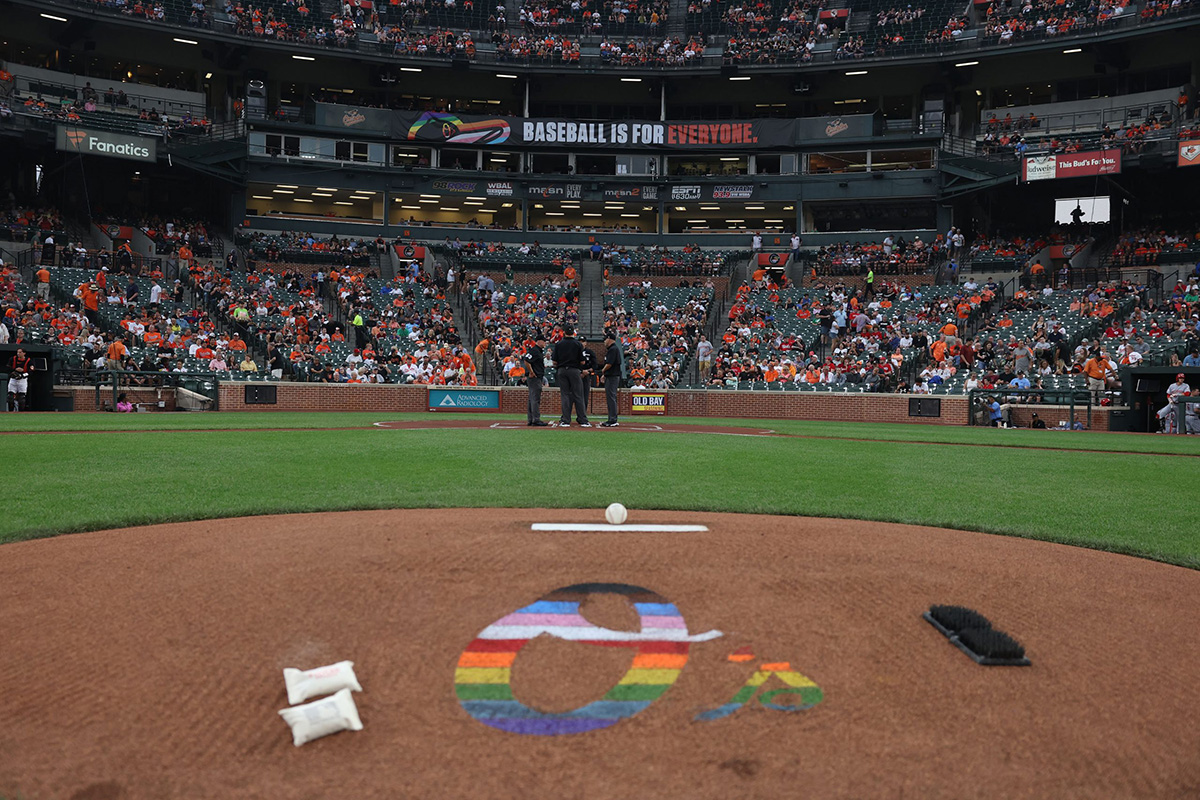
The Baltimore Orioles will take on the Washington Nationals on Friday, June 26 at 7 p.m. for Pride Night at Oriole Park.
The first 15,000 fans will receive an exclusive Pride Night Orioles jersey. The Washington Blade is a media sponsor of this event.
To purchase tickets, visit Orioles.com/Tickets.

Markey’s primary win deemed success for LGBTQ activists

Top Bulgarian court rules government must legally recognize trans people

Lou Chibbaro Jr. documentary wins award from NLGJA

Beloved D.C. ‘Old Catholic’ Bishop Charles Braun dies at 86

Blade welcomes fall intern

E-INFOSOL leaders encourage youth to pursue tech careers

New book examines Trump cuts to LGBTQ healthcare

Immersive ‘Nation-State’ imagines a society free of authoritarianism

Poland begins to legally recognize same-sex marriages from other countries

HRC president campaigns for Chris Pappas in NH
-

 Technology5 days ago
E-INFOSOL leaders encourage youth to pursue tech careers
-
Books5 days ago
New book examines Trump cuts to LGBTQ healthcare
-
Theater4 days ago
Immersive ‘Nation-State’ imagines a society free of authoritarianism
-
Poland3 days ago
Poland begins to legally recognize same-sex marriages from other countries