News
Lesbian EEOC commissioner confirmed for 2nd term
Feldblum credited with decision granting non-discrimination protections for trans workers

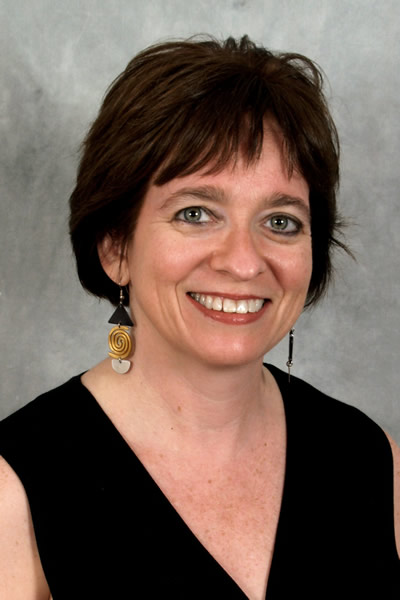
Chai Feldblum was confirmed for a 2nd term on the EEOC (Photo courtesy of Feldblum)
The U.S. Senate confirmed on Thursday a lesbian with a history of civil rights activism to another term on the U.S. Equal Employment Opportunity Commission.
By a largely party-line vote of 54-41, the Senate confirmed Chai Feldblum for a five-year term on the bipartisan panel, which enforces federal laws against workplace discrimination.
Sen. Susan Collins (R-Maine) and Lisa Murkowski (R-Alaska), who are known for their support for LGBT rights, were the only Republicans to break from the GOP caucus to vote in favor of Feldblum’s confirmation.
President Obama nominated Feldblum for another term on the EEOC in May.
The Senate invoked cloture to the proceed to the nomination on Tuesday by a 57-39 vote. Under this vote, the Feldblum nomination wouldn’t have been able to proceed if Senate Majority Leader Harry Reid (D-Nev.) hadn’t exercised the nuclear option to lower the vote threshold necessary for proceeding to presidential appointments.
Feldblum, the first openly LGBT person to serve on the EEOC, is credited with coordinating a unanimous decision last year in the case of Macy v. Holder that interpreted Title VII of the Civil Rights Act to protect transgender people. The commission reasoned the existing prohibition against gender bias in the workplace applies to transgender people.
Tico Almeida, president of Freedom of Work, commended the Senate for confirming Feldblum to the EEOC, where he said she “has worked tirelessly to build bi-partisan consensus on improvements to America’s laws that give all workers a fair shot at the American Dream.”
“Feldblum deserves our praise not only for her leading role in the unanimous EEOC decision in Macy v. Holder, but also for her leadership in drafting the EEOC’s Strategic Enforcement Plan, which explicitly lists workplace protections for LGBT Americans among the commission’s national priorities,” Feldblum said.
Prior to serving on the EEOC, Feldblum was a nationally recognized gay rights attorney. She’s credited with the drafting the Americans with Disabilities Act, which was signed into law in 1990. She also wrote the base version of the Employment Non-Discrimination Act, which was recently passed by the Senate, but remains blocked in the House.
She’s also had experience in LGBT activism. Feldblum was the legal director for the Campaign for Military Service, a group that unsuccessfully fought in the early 1990′s against the enactment of “Don’t Ask, Don’t Tell.”
Feldblum is the partner of Nan Hunter, a Georgetown University law professor with experience in LGBT cases.
Her initial nomination to the EEOC faced difficulties in the Senate. One or more unidentified senators placed a secret hold on her and four other EEOC nominees. In March 2010, Obama cleared the way for her to serve by making a recess appointment. The Senate later confirmed her in December 2010.






Congress
HRC president campaigns for Chris Pappas in NH
Gay congressman running to succeed retiring U.S. Sen. Jeanne Shaheen

Human Rights Campaign President Kelley Robinson on Sunday campaigned for U.S. Rep. Chris Pappas (D-N.H.) in New Hampshire.
Robinson traveled to Manchester, the state’s largest city, nine days before the Sept. 8 primary that will determine who will vie for retiring U.S. Sen. Jeanne Shaheen (D-N.H.)’s seat.
We’re hitting the pavement across New Hampshire to fight for a freer, fairer future for everyone.
Glad to have Human Rights Campaign President @KelleyJRobinson join us for a canvass launch in Manchester today. pic.twitter.com/XWCEaQxy4o
— Chris Pappas (@ChrisPappasNH) August 30, 2026
Former U.S. Sen. John E. Sununu, who represented New Hampshire in the U.S. Senate from 2003-2009, will face off against former U.S. Sen. Scott Brown, who represented Massachusetts in the U.S. Senate from 2010-2013, in the Republican primary.
Karishma Manzur is among the Democrats challenging Pappas.
A poll the University of New Hampshire Survey Center released on Aug. 26 shows Sununu is ahead of Brown. The same survey shows Pappas ahead of Manzur and his other Democratic challengers.
The UNH Survey Center poll shows Sununu ahead of Pappas by a 45-43 percent margin if they were to face off in the general election. The margin of error is +/-2.1 percent.
Pappas would become the first openly gay man elected to the U.S. Senate if he were to win in November.
Delaware
Michael Smith could make history as Delaware’s first LGBTQ treasurer
Promises to defend state from Trump administration

With experience as an economist, legislative staffer, and nonprofit director, Michael Smith is looking to protect Delaware from the Trump administration and become Delaware’s first openly LGBTQ treasurer.
With a master’s degree in economics from the University of Alabama, Smith has worked as an economist at the Progressive Policy Institute, Secretariat Economist, and Cornerstone Research.
“I think my work in economic and financial analysis has given me a lot of experience and know-how about what the treasurer role can and should be,” said Smith.
Smith also worked in the Delaware House Democratic Caucus in Dover, working with state representatives to improve the quality of life of Delawareans.
“I got to see where the rubber meets the road and how we can have policies that positively affect everyday working Delawareans.” said Smith.
In 2024, Smith narrowly lost a race to represent District 21 by 30 votes. He said that this loss gave him the itch to make a positive impact on the community.
Smith also founded and directed Powering Our Future, a nonprofit that promoted clean energy infrastructure throughout New Castle County.
“We helped people across Delaware reduce their energy bills and specifically try to encourage energy efficiency and electrification,” said Smith.
According to Smith, affordability is the biggest issue to voters, especially with the rising cost of utility bills.
“Everyone is worried about the affordability crisis. The cost of living is just incredibly high.”
“I’ve been knocking on doors for months now, and every time I hear people say: ‘My utility bill has gone up 75 percent. My property taxes are going through the roof. I can’t afford health care. I can’t afford to save for my children’s college or my own retirement.’”
“The treasurer cannot solve all those problems. But what we can do is we can help people save for them and their family’s future,” said Smith.
Smith talked about his goal to increase awareness around Delaware EARNS, a state sponsored Roth IRA geared toward people who don’t have access to a traditional employer-sponsored retirement plan.
“There’s roughly 150,000 Delawareans who could take advantage of it,” said Smith. “These are people who are the backbone of Delaware’s economy, whether they are working for small businesses, certain nonprofits, or working the gig economy,” said Smith.
Smith said that many people working for companies such as Doordash and Lyft are not saving for the future but that they could be doing so in a tax-advantaged way through Delaware EARNS.
“I think there’s some work that needs to be done to make a clear on-ramp for the self-employed and for those gig workers to get enrolled,” said Smith.
“Right now, we just passed our 10,000th account, which is fantastic, but there’s a lot of room left to grow.”
Smith also spoke of his plans to build on the Aspire 529 College Savings Plan, a project that helps traditionally underserved students finance their college education in ways that traditional 529 plans don’t.
Smith said that Delaware needs a treasurer who will work to protect the first state from the Trump administration, and he says is ready to step up to the plate.
“I think we need someone who’s willing to speak out and try to work with state treasurers, comptrollers, and other elected officials across the country to push back over the next two years.”
“We have a president in Washington, D.C., who is working with his Republican cronies in Congress to attack blue states like ours and threaten our federal funding.”
“I think that the best form of resistance is resilience,” said Smith.

Smith identifies as pansexual, having come out 10 years ago in college. He said that he is proud of the representation Delaware already has, from Rep. Sarah McBride to Travis McDermott, the mayor of Newark.
“I would love to partner with our attorney general, our governor, and our General Assembly to defend our LGBTQ+ citizens and residents as much as possible,” said Smith.
“I’d be honored to be Delaware’s first openly LGBTQ+ treasurer,” said Smith.
Mike Ramone, the Republican nominee for treasurer, has described Delaware as being in a ‘financial crisis.’The Blade asked Smith to respond to Ramone’s statement.
“I would disagree with Mike Ramone. I think Delaware is in a very strong financial shape, with the caveat of our state employee health benefits, which needs to be more well funded.”
Michael Smith will face Ted Lauzen and Mike Miller on the ballot for the Sept. 15 primary.
Poland
Poland begins to legally recognize same-sex marriages from other countries
‘This is an important milestone, but it should not be the final destination’

Poland has begun to recognize same-sex marriages legally performed outside the country.
TVP World, the country’s public broadcaster, reported civil registry offices began to “transcribe same-sex marriages legally” conducted outside of Poland on Aug. 22.
The EU Court of Justice in Luxembourg last November ruled in favor of a same-sex couple who challenged Poland’s refusal to recognize their German marriage. Poland’s Supreme Administrative Court in March reaffirmed the decision.
The couple, who lives in Poland, brought their case to Polish courts in 2019. The Supreme Administrative Court referred it to the EU Court of Justice.
The Polish government in May announced it will recognize same-sex marriages legally performed in other EU countries. Polish President Karol Nawrocki on July 17 vetoed bills that would have extended rights to same-sex couples.
Poland’s Constitutional Tribunal a few days later rejected the recognition of same-sex marriages legally performed in other EU countries. The Love Does Not Exclude Association, a Polish marriage equality advocacy group, in an Aug. 26 press release notes the ruling “does not prevent implementation of these new regulations” because the Constitutional Tribunal is “largely discredited” and the government considers it “to be improperly constituted.”
“This is an important milestone, but it should not be the final destination,” said Maja Heban of the Love Does Not Exclude Association. “No couple should have to cross a border to marry. Our goal is allowing loving, committed couples to marry in Poland in the first place. The law now increasingly recognizes these marriages once couples return to Poland in areas such as healthcare and social security, but significant gaps remain, mainly lack of recognition of same-sex parents which directly impacts security of their children.”
Germany, Belgium, France, Ireland, Spain, and Portugal are among the EU countries in which same-sex couples can legally marry. Andorra, whose prime minister, Xaviet Espot Zamora, is openly gay, and Switzerland are among the other European nations that have extended marriage rights to same-sex couples.

The Netherlands in 2001 became the first country in the world to extend marriage rights to same-sex couples. Activists who participated in this year’s World Pride that took place in Amsterdam earlier this summer marked this milestone.


HRC president campaigns for Chris Pappas in NH

We’re getting married but our parents object

Michael Smith could make history as Delaware’s first LGBTQ treasurer

Poland begins to legally recognize same-sex marriages from other countries

Immersive ‘Nation-State’ imagines a society free of authoritarianism

Please join me in supporting the Washington Blade Foundation

American democracy on the brink

Girlfriends charged with Silver Spring murder to go on trial in 2027

Rehoboth mayor calls for commissioner’s resignation after investigation into improper behavior

San Francisco, long a queer safe haven, remains competitive for homebuyers
-

 Commentary5 days ago
Please join me in supporting the Washington Blade Foundation
-
Opinions5 days ago
American democracy on the brink
-
Maryland5 days ago
Girlfriends charged with Silver Spring murder to go on trial in 2027
-
Rehoboth Beach5 days ago
Rehoboth mayor calls for commissioner’s resignation after investigation into improper behavior