Local
In reversal, Kameny heir says no ashes for public memorial
Dramatic shift leaves fate of cemetery plot unclear
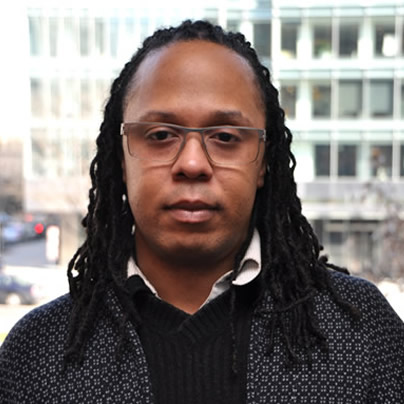
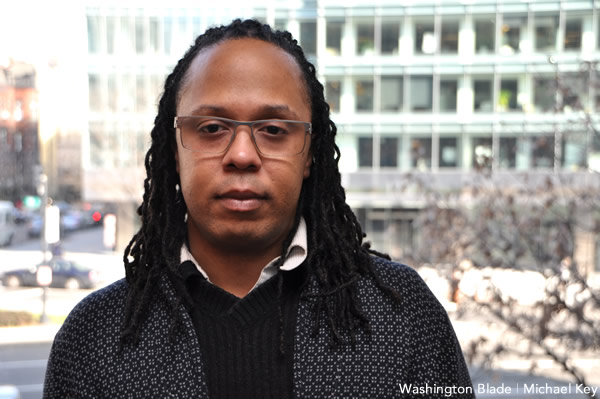
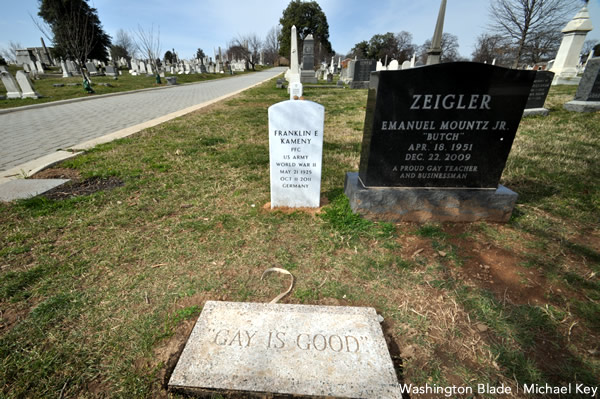
Timothy Clark, who earlier said he would release half of Frank Kameny’s ashes to be interred at Congressional Cemetery, changed his mind and now plans to inter the ashes at an undisclosed location. (Washington Blade photo by Michael Key)
Timothy Clark, the man D.C. gay rights pioneer Frank Kameny named in his will as heir to his estate, has released a statement through his lawyers saying he has decided to inter Kameny’s ashes at an undisclosed location.
The statement released Feb. 20 by the D.C. law firm Ackerman Brown represents a dramatic change from Clark’s earlier statements, including comments in an interview with the Blade in 2012, that he would release half of the ashes for burial at a memorial site in the city’s historic Congressional Cemetery. He reiterated his intent to inter ashes in D.C. in another Blade interview in July 2013.
“We reached an agreement on that so I’m going to keep the burial plot,” Clark said at that time. “I just have to decide on when I want to have something,” he said in referring to a burial ceremony at Congressional Cemetery.
Clark, 37, Kameny’s housemate and longtime friend, had said in the months following Kameny’s death on Oct. 11, 2011, that he planned to keep some but not all of the ashes for his personal reflection and possible interment elsewhere. Kameny died in his Washington home of natural causes at the age of 86.
“The decision regarding interment of Frank Kameny’s ashes rests solely with Timothy Clark, the Personal Representative of the Estate of Franklin E. Kameny,” the Ackerman Brown statement says.
“Mr. Clark has decided to inter the ashes at an undisclosed location. Mr. Clark asks the community to respect his wishes and his privacy,” the statement says.
Clark’s announcement through his attorneys comes more than two years after the local LGBT charitable group Helping Our Brothers and Sisters (HOBS) purchased a burial plot for Kameny’s ashes at Congressional Cemetery.
HOBS and some of Kameny’s gay activist friends and supporters who worked with the group to choose the location of the cemetery site said it would become a monument to Kameny’s legacy and a place where people could go to pay their respects to a nationally known figure considered a hero to the LGBT rights cause.
The site they selected is located just behind the gravesite of the late gay rights leader and U.S. Air Force Sgt. Leonard Matlovich, who, with Kameny’s assistance in 1975, became the first active duty military service member to come out of the closet and challenge the military’s ban on gay service members. Matlovich died in 1987.
A planned ceremony and burial of Kameny’s ashes scheduled for March 2012 was abruptly cancelled at the request of the estate, according to Patrick Crowley, who worked as senior manager of Congressional Cemetery at that time. Lawyers for the Kameny estate wanted HOBS to transfer ownership of the cemetery plot to the estate, Crowley said.
Although HOBS agreed to the transfer, a dispute arose over the terms of an agreement proposed by lawyers for both parties, and negotiations dragged on for nearly two years.
Last July, both sides said a tentative agreement had been reached, raising hopes among Kameny’s friends and admirers that a burial ceremony and the official opening of a Kameny memorial site at Congressional Cemetery would soon take place.
“The estate has always been, and remains willing to work with gay community representatives who knew Frank Kameny in organizing a burial service and appropriate gravesite at which members of the community could pay tribute to Kameny,” said attorney Christopher Brown of Ackerman Brown at that time.
However, no announcement of an agreement emerged since that time. When Ackerman Brown released its statement last week saying Clark decided to inter the ashes at an undisclosed location, neither Ackerman Brown nor HOBS would disclose where things stood with the cemetery plot.
“The estate has no further comment,” said Glen Ackerman, principal partner of Ackerman Brown, in a Feb. 23 email to the Blade.
Matthew Cook, an attorney with the national law firm Fried Frank, which is representing HOBS, sent the Blade a separate statement from HOBS that made no mention of whether ownership of the cemetery plot had been transferred to the estate or whether HOBS would seek to set up another memorial site for Kameny at Congressional Cemetery.
“Dr. Kameny was a true gay rights pioneer and local legend,” the HOBS statement says. “HOBS was proud to work with and for Dr. Kameny during the last years of his life. Of course, as the executor of the Kameny Estate, it is Mr. Clark’s decision where to inter Dr. Kameny’s ashes.”
Veteran D.C. gay activist Paul Kuntzler, who worked with Kameny on gay rights activities beginning in 1962, and San Francisco gay activist Michael Bedwell, a friend of Kameny’s, each told the Blade that the LGBT community should now take immediate steps to arrange for another memorial site for Kameny at Congressional Cemetery, even though the ashes won’t be interred there.
The four local activists and Kameny friends who initiated plans to inter Kameny’s ashes at Congressional Cemetery in early 2012 – Marvin Carter, CEO of HOBS and LGBT rights advocates Charles Francis, Bob Witeck and Rick Rosendall – have declined to comment on Clark’s decision to inter the ashes at another location.
They also declined to comment on what, if anything, they may do to set up a Kameny memorial site at the cemetery now that the ashes are out of the picture.
“Frank Kameny’s monumental legacy may be best remembered by laws he helped overturn, the hateful policies he defeated and the causes of equal rights he unselfishly advanced for the LGBT community,” said Witeck in an email statement on Sunday.
The relationship between the four men and the Kameny estate became strained in 2012 shortly after they announced plans for a Congressional Cemetery memorial site and burial when Clark stated through his attorneys that Clark was never given the courtesy of being consulted about those plans.
Carter, however, has said Clark was informed about the plans and invited to participate in the planned ceremony.
The relationship between the four men and the estate became further strained when the estate filed individual lawsuits against each of them, charging that they took without permission items from Kameny’s house that belonged to the estate shortly after Kameny’s death. The men disputed the allegations, saying Clark along with Clark’s lawyer at the time, Michele Zavos, gave them permission to enter the house and take an inventory of Kameny’s papers and other possessions to arrange for their safe keeping.
The lawsuits, which were filed by Ackerman Brown on Clark’s behalf, were later dropped after undisclosed settlements were reached in three of the cases. The court dismissed the case against Rosendall on grounds that no cause was shown to justify the complaint, according to Rosendall’s attorney, Mindy Daniels.
Upon learning of Clark’s decision to inter the ashes in an undisclosed location, Bedwell expressed concern that Clark, who among other things, inherited Kameny’s house that the estate sold in 2012 for $725,000, was not doing his part to promote Kameny’s legacy.
“Frank’s trust and affection made Mr. Clark a wealthy man,” Bedwell said. “His sacrifices helped make him, like all LGBTs, a freer man,” Bedwell said.
“Now that Mr. Clark has disappeared with Frank’s ashes along with any hopes of his repaying Frank’s extraordinary generous friendship by sharing them for a memorial, I trust that others will create one without them,” he said.
Clark didn’t respond to a phone message from the Blade this week.
In a 2012 interview with the Blade, Clark described himself as a private person who shunned the spotlight, saying he intentionally remained in the background during the 19 years he lived in Kameny’s house.
(Washington Blade file photo by Michael Key)
Also remaining unclear this week is what will become of a headstone and separate grave marker that HOBS and the activists working with the group installed at the cemetery site before the dispute with the estate surfaced.
Francis, the founder of the Kameny Papers Project, which arranged several years before Kameny’s death to have Kameny’s voluminous collection of letters and gay rights documents donated to the Library of Congress, obtained the headstone from the U.S. Department of Veterans Affairs.
Francis and others working on the memorial site said the military headstone would recognize Kameny’s role as a World War II combat veteran. The stone is identical to gravestones used for soldiers and veterans buried at Arlington National Cemetery, and is issued free of charge to all deceased military veterans.
HOBS purchased a separate footstone inscribed with the slogan Kameny coined in the 1960s, “Gay is Good.” Carter said HOBS paid for the footstone along with the cemetery plot through funds donated by members of the LGBT community.
HOBS had both stones installed at the gravesite in March 2012 in anticipation that plans for burial of the ashes would move forward as planned.
Cemetery officials later removed the headstone and the “Gay is Good” marker and placed them in storage, saying it was inappropriate for them to remain in place while the ownership of the gravesite was in dispute.
Bedwell, who has played a role in managing the Matlovich gravesite, said he owns a separate plot next to the Matlovich site that he offered to donate for the Kameny burial shortly after Kameny died. HOBS instead chose to buy a plot a short distance away. Now, Bedwell said he is open to donating the plot he owns for a new Kameny memorial site at the cemetery.
“Neither [Clark’s] permission or Frank’s ashes are required for anyone to create a memorial to Frank anywhere,” Bedwell said in a comment to the Blade in October. “Millions more visit Lincoln’s Memorial in Washington every year than his actual gravesite in Springfield, Ill.,” he said.
“I’m confident many would be eager to contribute to the purchase of another marker bearing Frank’s name,” Bedwell said, in the event that the Veterans Administration stone or the “Gay is Good” stone won’t be released by the estate.
Ackerman, while repeating his firm’s written statement that the Kameny estate would have no further comment on Clark’s decision to inter the ashes in a private location, said the estate would welcome inquiries “by anyone” interested in establishing a public memorial for Kameny.
“All they have to do is call us,” he said.


District of Columbia
Former Capital Pride board member reiterates sexual harassment allegation
Trans activist says resignation of board chair won’t change org’s culture
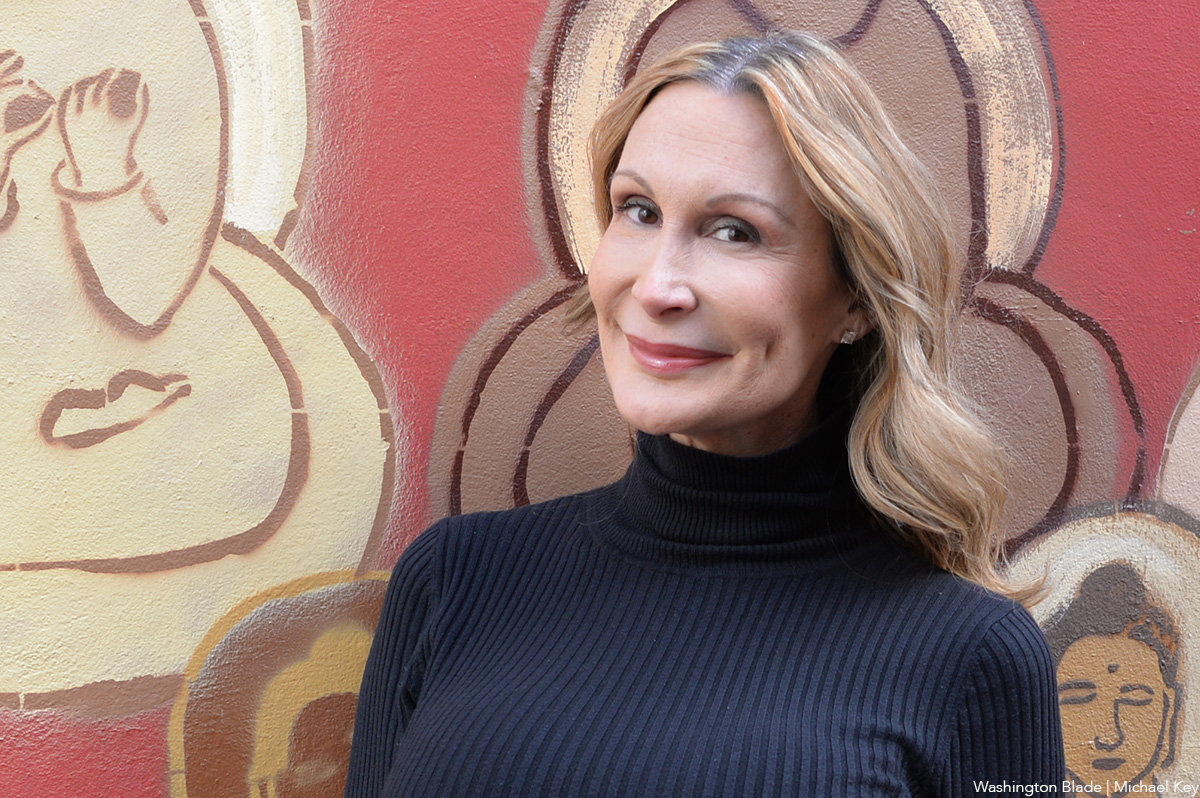
Taylor Lianne Chandler, who earlier this year resigned from the Capital Pride Alliance Board of Directors after expressing concern that the board failed to address instances of “sexual misconduct” within the Capital Pride organization, said this week she doesn’t believe her concerns will be addressed following the resignation of the board’s current chairperson.
Capital Pride Alliance serves as the lead organizer of D.C.’s annual LGBTQ Pride events.
Anna Jinkerson, who has served as chair of the Capital Pride board for only 10 months and has served on the board for the past four years, confirmed she is resigning from the board effective Sept. 30.
In a statement to the Washington Blade commenting on the possible impact of Jinkerson’s resignation, Chandler said Capital Pride board member Natalie Thompson would be replacing Jinkerson as board chair, and she didn’t expect that change to impact what she called Capital Pride’s problematic “culture.”
But Ryan Bos, the Capital Pride president and CEO, told the Blade that Thompson had not been selected as the new board chair and that a new chair would not be selected until the board holds an election scheduled for October.
Chandler, who identifies as transgender, said it was a Capital Pride board member who told her that Natalie Thompson had been or would be selected as the new Capital Pride board chair. She didn’t identify the board member.
“My concerns about how Capital Pride has handled serious allegations of sexual misconduct have not disappeared with a change in leadership,” she told the Blade in her statement. “When leadership continues to socialize, smile for photographs, and share spaces with someone facing serious allegations, what message does that send to the people who say they were harmed,” she said.
Chandler has told the Blade a Capital Pride investigation identified an individual implicated in a “pattern” of sexual harassment-related behavior but said she was bound by a Non-Disclosure Agreement that applied to all board members and she could not provide further details.
When asked by the Blade to comment on Chandler’s allegations at the time she resigned from the board in February of this year, board chair Jinkerson said Capital Pride acts “quickly and appropriately” to address concerns such as those raised by Chandler. But she and other Capital Pride officials did not at that time or since then specifically acknowledge whether someone associated with the organization engaged in sexual harassment.
“The community deserves transparency, accountability, and leadership willing to make difficult decisions,” Chandler said in her statement to the Blade this week. “Changing the chair doesn’t change the culture,” she added. “Actions do.”
In response to a request from the Blade for an update on its response to Chandler’s allegations about alleged sexual misconduct within the Capital Pride organization, Bos sent the Blade a statement on behalf of Capital Pride.
“The Capital Pride Alliance takes allegations of harassment, misconduct, and unsafe behavior seriously,” the statement says. “The organization follows standard procedures and engages appropriate resources to support a thorough, confidential, and impartial review, when information is reported.”
The statement adds, ”Because these matters require maintaining confidentiality and protecting the privacy of personnel, volunteers, and governance processes, we will not comment on specific individuals, allegations, investigative findings or communications involving law enforcement.”
It concludes by stating, “We remain committed to fostering a safe, respectful, and inclusive environment, appropriately addressing concerns raised, and continuing to strengthen our policies, governance practices, and organizational culture.”
Although the statement refers to “communications involving law enforcement,” Capital Pride has not disclosed whether instances of alleged sexual harassment or, as stated by Chandler, a possible instance of sexual assault, have been reported to D.C. police.
A D.C. police spokesperson, in response to a Blade inquiry, said they have no record of a sexual harassment or sexual assault complaint surfacing from the Capital Pride office, which is located in the D.C. LGBTQ+ Community Center building at 1827 Wiltberger Street, N.W.
Officials at Capital Pride recently exchanged testy public Facebook posts with Chandler. June Crenshaw, COO of Capital Pride Alliance, criticized Chandler for her social media posts on the matter.
“It is remarkable to watch people publicly accuse others of failing to create safe spaces when, during the time they themselves held positions of leadership and significant volunteer responsibility, they claim to have witnessed deeply troubling behavior, yet never reported what they allegedly witnessed to fellow leaders, law enforcement, the Office of the Attorney General, legal counsel, or staff responsible for addressing such concerns,” Crenshaw wrote. “When I became aware of allegations or personally witnessed conduct that required intervention, I reported what I knew through the appropriate channels, including to law enforcement and other relevant authorities. Investigations were conducted. Those processes created records, documentation, correspondence, timelines, and conclusions.”
Chandler responded, “I was NOT in organizational leadership or fully informed about the scope of these allegations when much of what you reference occurred. I was read into the situation after becoming an executive officer. By that point, the investigation had already concluded, and we were awaiting the final report. … Once that report became available to me, and once I understood the seriousness and scope of what was being alleged, my position was anything but ambiguous: I did not believe this individual should be welcomed at, participate in, or have access to official Pride events.”
Capital Pride’s attorney Nick Harrison then joined the exchange, accusing Chandler of violating confidentiality rules.
“You served on the Board for years. You cannot now present yourself as an outsider with no responsibility for what occurred during your tenure,” Harrison wrote. “When the situation became difficult, you resigned, provided your resignation letter to the media, disclosed confidential organizational matters, and recast yourself as the victim.”
Again, no one has publicly identified the person Chandler references as being welcome at Pride events and photographed with Capital Pride leadership.
District of Columbia
Center for Black Equity’s annual gala to take place Oct. 3
Advocacy group to honor Black LGBTQ community champions
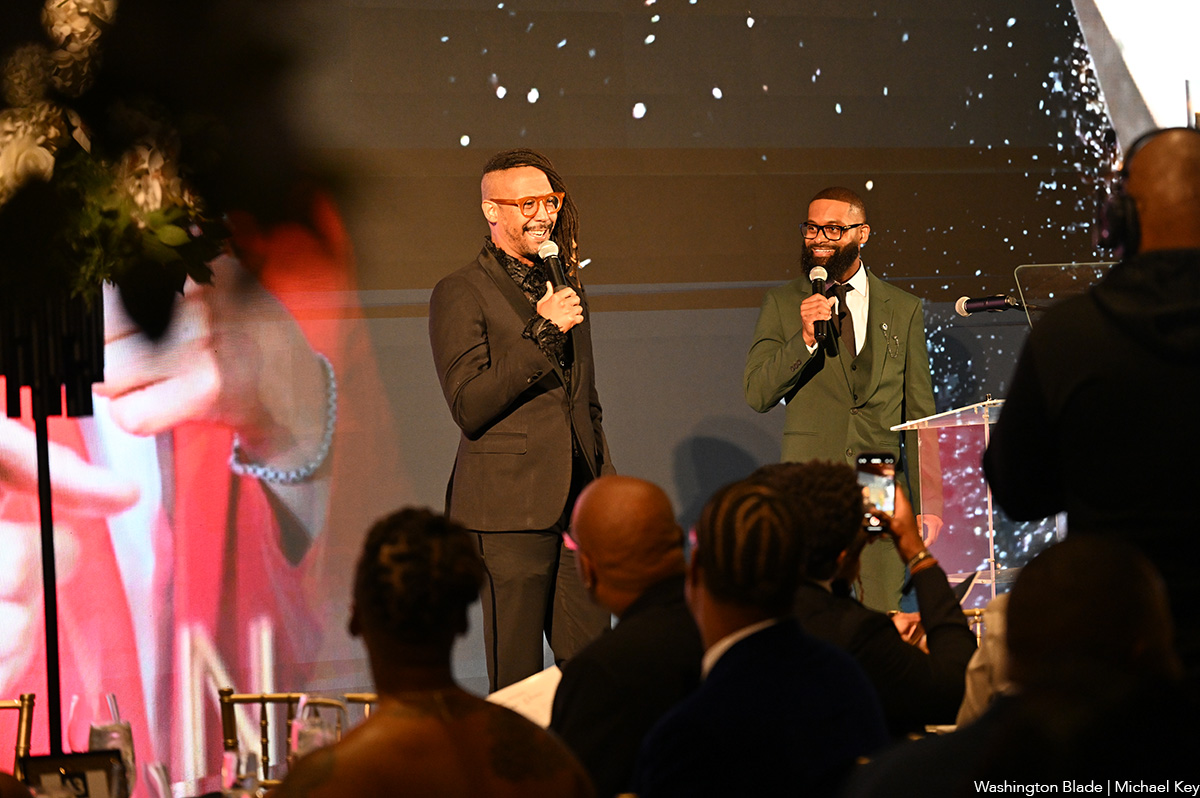
The Center for Black Equity, the D.C.-based international network of LGBTQ activists and organizations that advocate for Black LGBTQ communities and organize Black Pride events worldwide, will hold its annual 2026 BE Gala in D.C. on Oct. 3.
The event, to be held at the Conrad Washington Hotel at 950 New York Ave., N.W., among other things, will honor at least a dozen “distinguished Black individuals” and organizations that champion Black LGBTQ communities, according to a statement released by the Center for Black Equity.
“The honorees will receive awards recognizing extraordinary leadership, advocacy, and service across civil rights, public health, the arts, media, entrepreneurship, and community life,” the statement says.
“With an elegant atmosphere and a bold mission, this unforgettable evening brings together advocates, allies, and change makers committed to equity and joy,” the statement says in referring to the Oct. 3 BE Gala.
The statement notes that tickets for the event, which serves as a fundraiser for the Center of Black Equity, begin at $250 for individuals and include dinner and two drinks. It says reserved tables for eight were being offered for $2,000, and “Premier” tables for eight were selling for $2,500 and include seating near the stage.
“The BE Gala is more than an evening of celebration,” according to the statement. “It is an opportunity to honor Black LGBTQ+ leadership while investing in the work of the Center for Black Equity.”
Kenya Hutton, the Center for Black Equity’s CEO, told the Washington Blade the name “BE” for the gala is not an acronym. “The name is rooted in the idea of being: being seen, being celebrated and being fully and authentically yourself,” he said.
“BE Gala creates a space to celebrate Black LGGTQ+ people for who they are, the lives they lead and the impact they make,” he added.
The Center for Black Equity until 2012 was called the International Federation of Black Prides and was founded by organizers of D.C.’s Black Pride celebration.
Its current website includes a statement saying it’s mission is to “promote a multinational LGBTQ+ network dedicated to improving health and wellness opportunities, economic empowerment, and equal rights while promoting individua and collective work, responsibilities, and self-empowerment.”
The 2026 Center for Black Equity award honorees as announced in its statement released this week are:
Courtney Snowden: Welmore Cook Advocacy & Service Award
Clover Barnes: Ernest Hopkins Public Health Leadership Award
Nikki Alexander: Unsung Hero Award
Darryl G. Moore: Center for Black Equity Leadership Award
The Freelux Project: Center for Black Equity Small Business Award
Tori Cooper: Earline Budd Transgender Leadership Award
Bishop Steven R. Sawyer: Bishop Kwabena Rainey Cheeks Spiritual & Community Leadership Award
Rev. Carmarion D. Anderson-Harvey: Bishop Kwabena Rainey Cheeks Spiritual & Community Leadership Award
Monroe Alise: Trans Power in Media Award
Justin N. Stewart: National Black Pride Image Award
Marlene McNeese: Curtis L. Etherly Jr. Ally Award
Venton Jones: Eleanor Holmes Norton Civil Rights & Justice Award
In Our Own Voices, Inc.: Ruth Ellis Community Impact Award
Baltimore
Charles Bowers, former owner of Baltimore gay bar the Hippo, dies
Prominent activist died at his Mount Vernon home
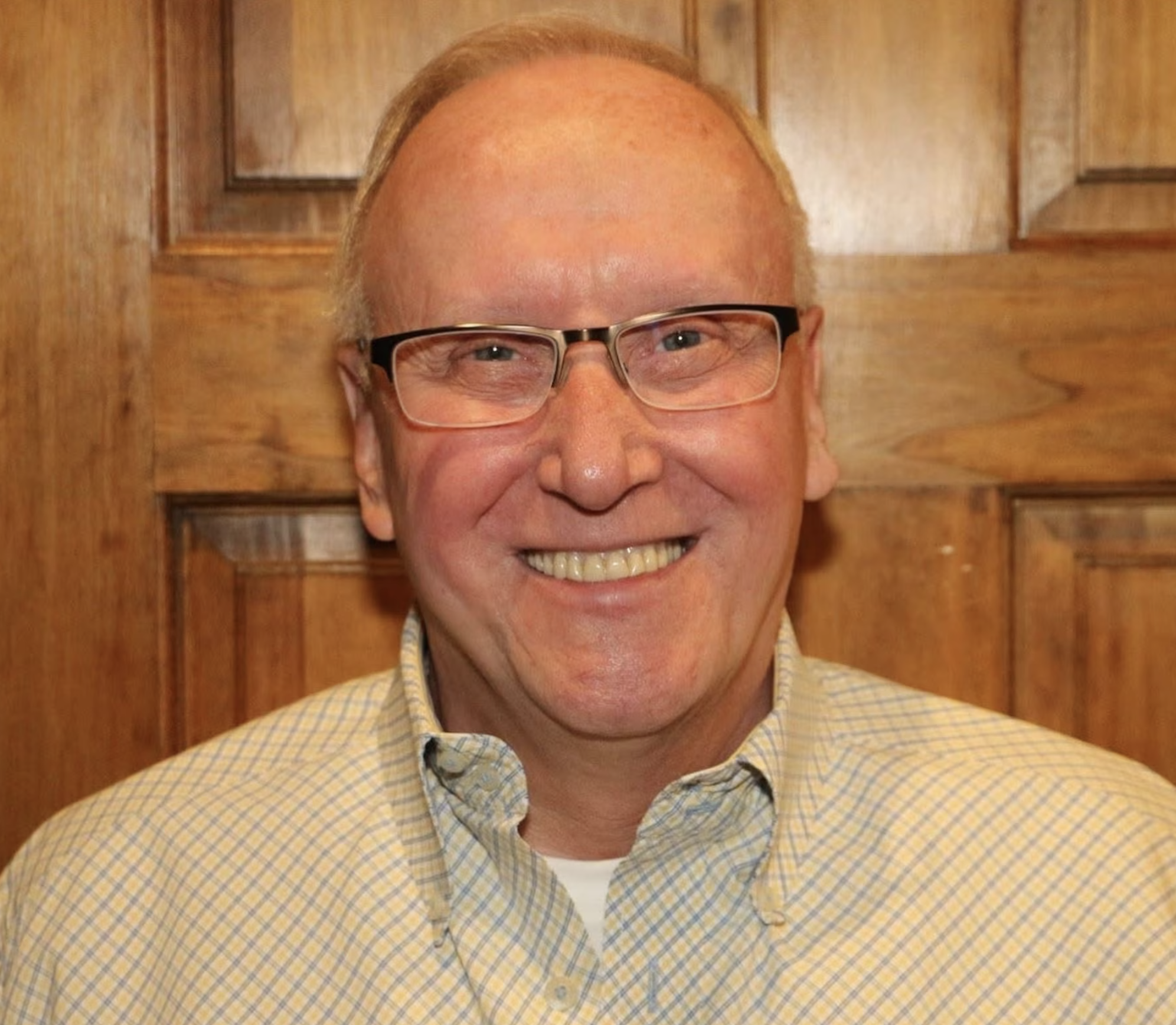
By WESLEY CASE | Charles “Chuck” Bowers, former owner of the storied Baltimore gay club the Hippo and a prominent advocate for Maryland’s LGBTQ community, died Tuesday. He was 81.
Bowers turned the Mount Vernon club — located at the corner of North Charles and West Eager streets — into a judgment-free refuge for queer and straight locals looking to find and express their authentic selves on a packed dance floor.
“He truly tried to make the Hippo a place for everybody — a safe space,” said an emotional Rik Newton-Treadway, who befriended his “mentor” Bowers at the club in 1979.
Bowers, of Mount Vernon, died Tuesday evening in Baltimore of natural causes, said his niece, Cathy Bowers.
The rest of this article can be read on the Baltimore Banner’s website.

Tyler Clementi Foundation to host fundraiser in Rehoboth

Calendar: September 25-October 1

Former Capital Pride board member reiterates sexual harassment allegation

Grace Meng sharply criticizes DOJ over hospital settlements

‘Star Trek: Strange New Worlds’ star Celia Rose Gooding breaks down that finale time travel twist

PHOTOS: Shenandoah Valley Pride

White House press pool pushes back after Trump bars three outlets

For lesbian victims of domestic violence, competent care is scare

United States Conference on HIV/AIDS grapples with federal budget cuts

UN human rights chief sounds alarm over ‘comprehensive onslaught’ against LGBTQ rights
-

 Photos5 days ago
PHOTOS: Shenandoah Valley Pride
-
White House5 days ago
White House press pool pushes back after Trump bars three outlets
-
National4 days ago
For lesbian victims of domestic violence, competent care is scare
-
Health4 days ago
United States Conference on HIV/AIDS grapples with federal budget cuts