World
USAID seeks to bolster LGBTQ rights efforts in Colombia
LGBTQ-inclusive peace agreement took effect in 2016
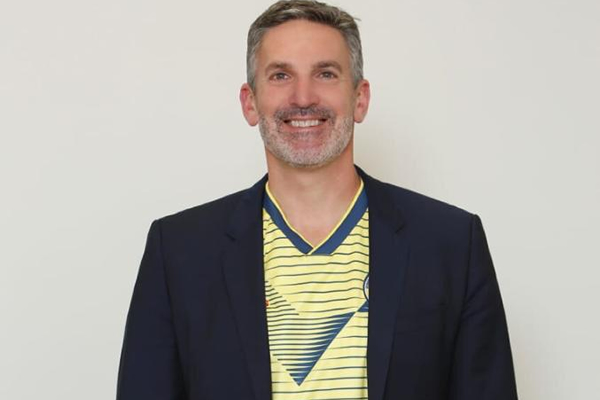
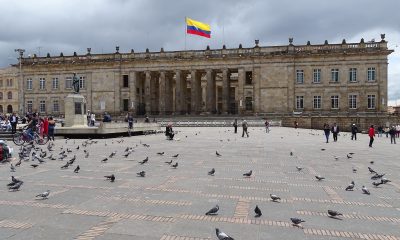
BOGOTÁ, Colombia — The director of the U.S. Agency for International Development’s Colombia mission says he and his colleagues remain committed to the implementation of the country’s LGBTQ-inclusive peace agreement.
“The entire portfolio that we have and all of our work here in Colombia is really to support a durable and an inclusive piece,” Larry Sacks told the Washington Blade on Sept. 21 during an interview in Bogotá, the Colombian capital. “The core principles of what we do are based on equality, inclusion, rights and justice.”
The agreement then-President Juan Manuel Santos and the Revolutionary Armed Forces of Colombia Commander Rodrigo “Timochenko” Londoño signed in Cartagena on Sept. 26, 2016, specifically acknowledged LGBTQ Colombians as victims of the decades-long conflict that killed more than 200,000 people. The accord also called for their participation in the country’s political process.
Wilson Castañeda, director of Caribe Afirmativo, an LGBTQ group in northern Colombia with which USAID works, is one of three activists who participated in the peace talks that took place in Havana.
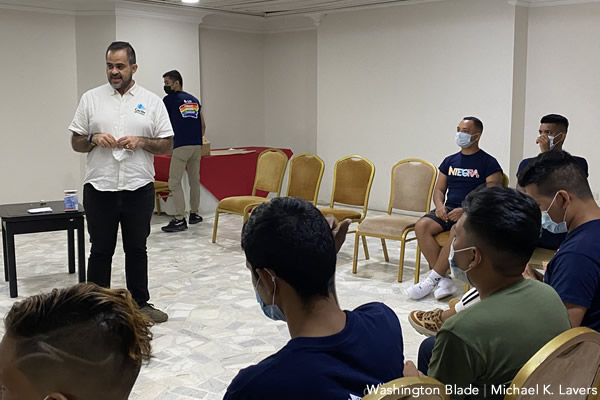
Colombian voters on Oct. 2, 2016, narrowly rejected the agreement in a referendum that took place against the backdrop of anti-LGBTQ rhetoric from religious and conservative groups. Santos and Londoño less than two months later signed a second peace agreement — which also contains LGBTQ-specific references — in Bogotá.
“That was a very progressive move,” said Sacks in describing the inclusion of LGBTQ Colombians in the agreement.
President Iván Duque, who campaigned against the agreement ahead of his 2018 election, spoke to the U.N. General Assembly hours before the Blade interviewed Sacks. Duque described it as “fragile.”
“Peace accords worldwide tend to be made or broken within the first five years of implementation, and Colombia is right at that point,” Sacks told the Blade when asked about Duque’s comments. “There are certain people deep in the territories and others and high governments who are really helping and making sure that it’s successful, and that there’s continuity, and that the gains that have been made are irreversible. And there’s others who may question, but at the end of the day, I think that from our analysis, it’s on pace with what we’ve seen of the implementation of other peace accords worldwide.”
“At least from USAID’s perspective, we’re doing everything that we can to help support the implementation on multiple chapters of the peace accord,” he added.
USAID specifically supports the implementation of rural development programs through the agreement, efforts to reintegrate former child soldiers into Colombian society and expand the government’s presence into “violence-affected areas.” USAID also works with the Truth Commission, the Unit for the Search of Disappeared Persons, the Special Jurisdiction for Peace, the government’s Victims’ Unit and NGOs that support the conflict’s victims.
USAID’s fiscal year 2021 budget for Colombia is $212.9 million. Upwards of $50 million of this money is earmarked for human rights work that specifically focuses on indigenous Colombians and Colombians of African descent, security, access to the country’s justice system and victims of the conflict.
More than 200 LGBTQ Colombians reported murdered in 2020
Sacks said USAID’s LGBTQ-specific work in Colombia focuses on four specific areas.
“The first is really to kind of shine a light on, raise the visibility, raise the profile on issues of discrimination and violence and stigma and all the issues that this population is facing,” he said.
Colombia Diversa, a Colombian LGBTQ rights group, on Sept. 15 issued a report that notes 226 LGBTQ people were reported murdered in the country in 2020. This figure is more than twice the number of LGBTQ Colombians — 107 — who Colombia Diversa said were known to have been killed in 2019.
Sacks acknowledged anti-LGBTQ violence is increasing in Colombia.
He said the mission works with Ombudsman’s Office of Colombia, an independent agency within the Colombian government that oversees human rights protections in the country, to provide additional support to LGBTQ rights groups. Sacks noted USAID also works with the Interior Ministry to “support the development of their LGBTQI-plus policies” and the country’s attorney general “to hold those accountable.”
Sacks told the Blade that USAID also works to provide “technical and legal support to help” LGBTQ Colombians and other vulnerable groups “access public goods, services and justice.”
USAID-supported groups assist Venezuelan migrants
The Colombian government earlier this year said there were more than 1.7 million Venezuelan migrants in the country, although activists and HIV/AIDS service providers with whom the Blade has spoken say this figure is likely much higher. Duque in February announced it would legally recognize Venezuelan migrants who are registered with the country’s government.
The Coordination Platform for Migrants and Refugees from Venezuela notes upwards of 5.4 million Venezuelans have left the country as of November 2020 as its economic and political crisis grows worse. The majority of them have sought refuge in Colombia, Brazil, Ecuador, Peru and Chile.
Venezuelan migrants are among the upwards of 570,000 people who have benefitted from a USAID program that provides direct cash assistance — between $49-$95 per family — for six months in order to purchase food and other basic needs. USAID also supports Americares, a Connecticut-based NGO that operates several clinics along the Colombia-Venezuelan border and in northern Colombia that specifically serve Venezuelan migrants with the support of the Colombian Health Ministry.
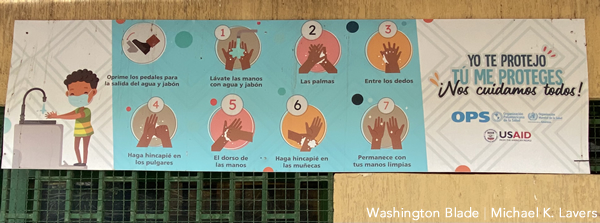
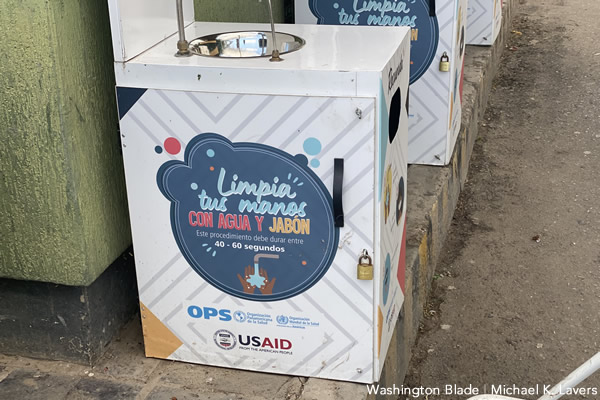
Sacks noted USAID has an “agreement with” Aid for AIDS International, a New York-based group that serves Venezuelans with HIV/AIDS. Aid for AIDS International has used this support to conduct a survey of 300 sex workers in Maicao, Medellín and Cali.
USAID is also working with the Health Ministry to provide health care to Venezuelan migrants with HIV/AIDS, among others, who are now legally recognized in Colombia.
Caribe Afirmativo has opened three “Casas Afirmativos” in Maicao, Barranquilla and Medellín that provide access to health care and other services to Venezuelan migrants who are LGBTQ and/or living with HIV/AIDS. Medellín officials have also invited Caribe Afirmativo staffers to speak with LGBTQ migrants in the city’s public schools.
“Colombia has shown a generosity that you don’t see in many other countries with regard to migrant populations,” Sacks told the Blade. “They really open their borders, their homes, their hearts, to migrants, including the LGBTI community.”
Biden global LGBTQ rights memo is ‘tremendous benefit’
The White House earlier this year released a memorandum that committed the U.S. to promoting LGBTQ rights abroad. State Department spokesperson Ned Price in May told the Blade the protection of LGBTQ migrants and asylum seekers is one of the Biden administration’s priorities on this front.
Sacks said the memo “gives us the political framework with which to operate and obviously sends a message from the highest levels of the U.S. government about LGBTQI-plus rights and equality and inclusion.”
“So for us, it’s a tremendous benefit,” he told the Blade.
USAID Administrator Samantha Power — a vocal champion of LGBTQ rights — has yet to visit Colombia, but Sacks said she has spoken with Vice President Marta Lucía Ramírez.
“We hope to get her down,” said Sacks.
Editor’s note: Michael K. Lavers was on assignment in Colombia from Sept. 11-22.



Brazil
Lula, Flávio Bolsonaro to face off in second round of Brazilian presidential election
Neither man received at least 50 percent of the vote on Sunday
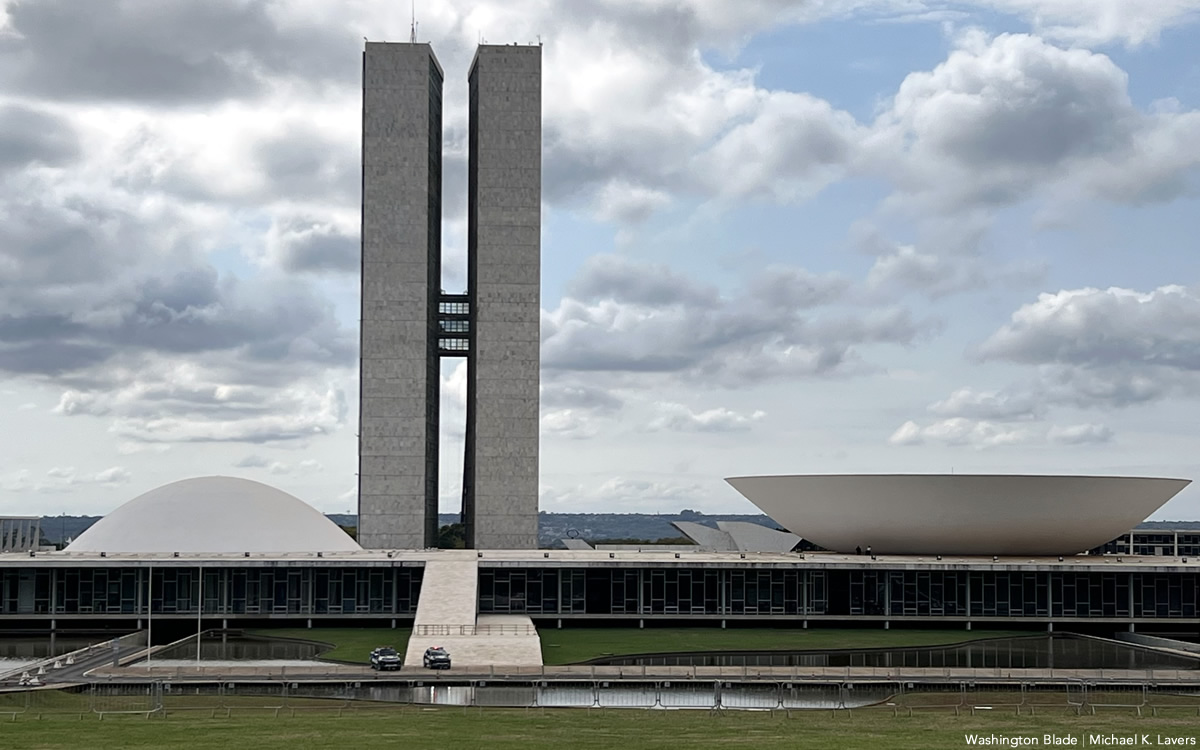
SÃO PAULO — President Luiz Inácio Lula da Silva will face off against Sen. Flávio Bolsonaro in the second round of Brazil’s presidential election on Oct. 25 after neither man received more than 50 percent of the vote in the first round that took place on Sunday.
Bolsonaro was ahead of Lula by a 47.26-44.89 percent margin with 98.65 percent of the vote counted.
Lula in 2022 defeated Bolsonaro’s father, then-President Jair Bolsonaro, in that year’s presidential election.
The Brazilian Supreme Court last year sentenced Bolsonaro — who repeatedly targeted LGBTQ Brazilians and other groups while in office — to more than 27 years in prison for his role in an attempted coup that saw thousands of his supporters storm the Congress, presidential palace, and the Supreme Court itself on Jan. 8, 2023. Bolsonaro is currently serving his sentence at his home in Brasília, the country’s capital, because of his poor health. His son has pledged to pardon him if he becomes the country’s next president.
Lula, who leads Brazil’s leftist Workers’ Party, was Brazil’s president from 2003-2010.
Sergio Moro, a judge who Jair Bolsonaro later tapped as his government’s Justice and Public Security Minister, in 2017 sentenced Lula to 9 1/2 years in prison after his conviction on money laundering and corruption charges that stemmed from Operation Car Wash.
The Supreme Court in November 2019 ordered Lula’s release.
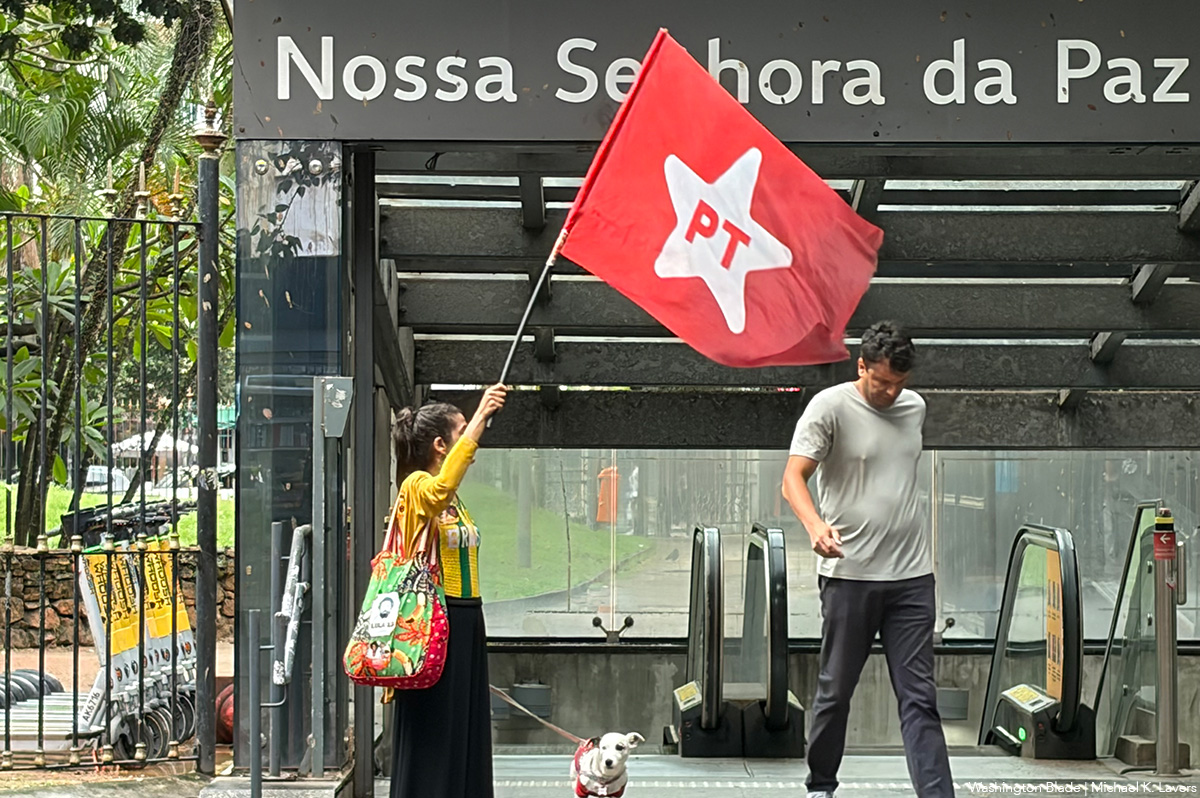
VoteLGBT, an organization that seeks to increase LGBTQ representation in Brazilian politics, noted 529 openly LGBTQ candidates ran in this year’s election. More than 100 of them are either transgender or travesti.
The Washington Blade will cover the results of these races when they become available.
Turkey
House Democrats urge White House to confront Turkish government over anti-LGBTQ crackdown
More than 60 lawmakers signed letter to Secretary of State Marco Rubio
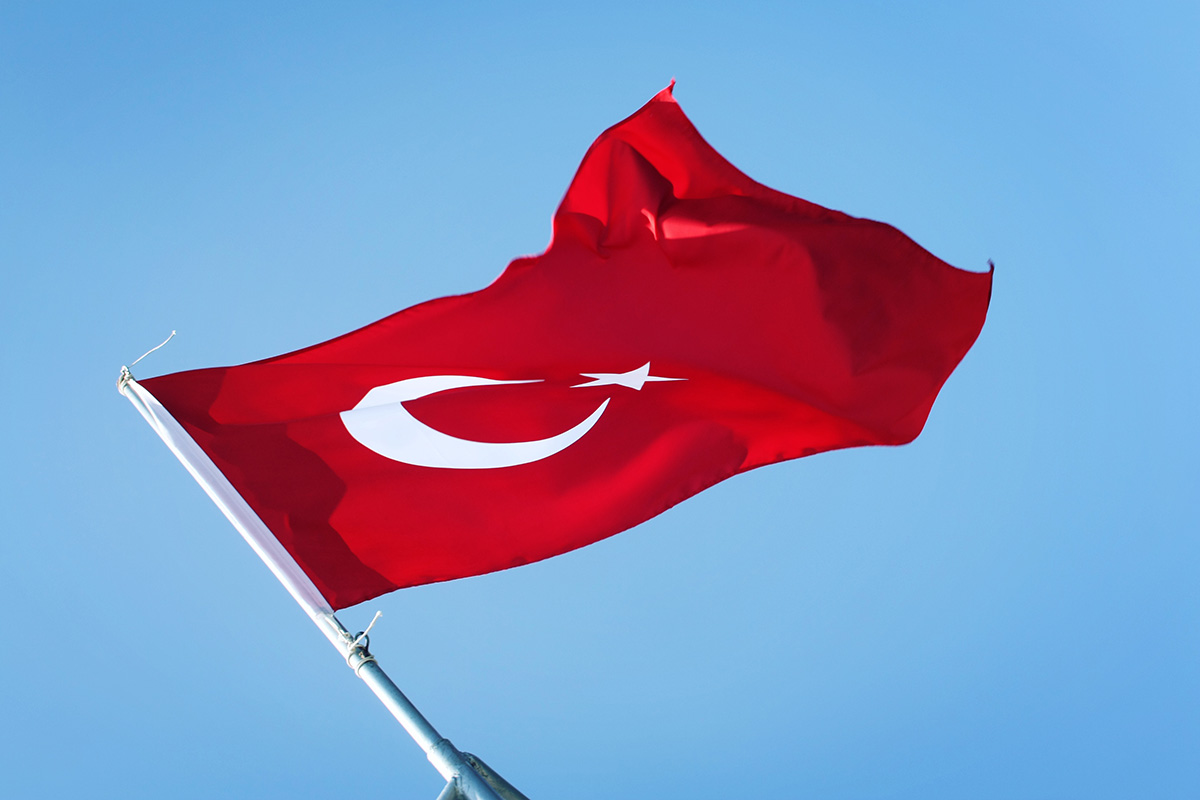
More than 60 House Democrats on Thursday called upon the Trump-Vance administration to confront the Turkish government over its anti-LGBTQ crackdown.
Turkish authorities last month detained dozens of people during raids that targeted the country’s LGBTQ community, advocacy groups, and HIV/AIDS service organizations. Journalists were among those taken into custody outside an Istanbul courthouse on Sept. 15 during a protest against the raids that are part of the government’s “My Family Is Safe” campaign.
Council for Global Equality is among the groups that organized a protest outside the Turkish Embassy in D.C. on Sept. 18.
View on Threads
U.N. High Commissioner for Human Rights Volker Türk on Sept. 21 during a U.N. LGBTI Core Group event that took place on the sidelines of the U.N. General Assembly specifically referenced Turkey.
The Core Group is a group of U.N. member states that have pledged to support LGBTQ and intersex rights.
The U.S. withdrew from the Core Group after the Trump-Vance administration took office. The White House has not publicly commented on Turkey’s anti-LGBTQ crackdown.
“These developments warrant an urgent diplomatic response from the United States to protect the rights of freedom of expression, association, and assembly for all Turkish citizens, regardless of their sexual orientation or gender identity,” reads the letter the lawmakers sent to Secretary of State Marco Rubio. “We therefore urge you to use all available channels to raise these concerns directly with the Turkish government; press for the immediate release of those arrested and detained for their legitimate human rights activities; and ensure that the U.S. Embassy in Ankara closely monitors related judicial proceedings.”
“We further urge the Department to press Turkish authorities to cease efforts to criminalize LGBTQI+ organizations and advocacy and to affirm the right of all people to peacefully assemble,” it adds.
Arizona Congresswoman Yassamin Ansari and U.S. Rep. Dina Titus (D-Nev.) spearheaded the letter. House Speaker Emerita Nancy Pelosi (D-Calif.); House Foreign Affairs Ranking Member Gregory Meeks (D-N.Y.); Del. Eleanor Holmes Norton (D-D.C.); Delaware Congresswoman Sarah McBride, and U.S. Rep. Mark Takano (D-Calif.), who chairs the Congressional Equality Caucus, are among the 65 House Democrats who signed the letter.
“The United States must be a leader in defending human rights and what is happening in Turkey demands an urgent diplomatic response. It’s absolutely appalling to see LGBTQI+ people and the organizations that stand up for their rights be targeted by the (President Recep Tayyip) Erdogan regime,” said Ansari in a press release. “I stand proudly with the LGBTQI+ community here and abroad and will continue to fight for their right to live openly, freely, and without fear, anywhere and everywhere.”
The press release notes the Human Rights Campaign, the Council for Global Equality, and the Planned Parenthood Federation of America support the letter.
“Turkey’s attacks on its LGBTQI+ community are a disturbing reminder that the fight for equality and human rights does not stop at our borders. No one should be silenced or detained for simply being who they are or peacefully demanding dignity and freedom,” said HRC Government Affairs Senior Director Jennifer Pike Bailey. “We are grateful to Representatives Ansari and Titus for recognizing that the fight for LGBTQI+ equality is global and that, even amid the many challenges facing our community here at home, we cannot turn our backs on LGBTQI+ people facing persecution abroad.”
A State Department spokesperson on Friday told the Washington Blade that “as a matter of policy, we do not comment on congressional correspondence.”
Serbia
Ana Brnabić becomes world’s first openly lesbian head of state
Former Serbian prime minister succeeded President Aleksandar Vučić on Monday
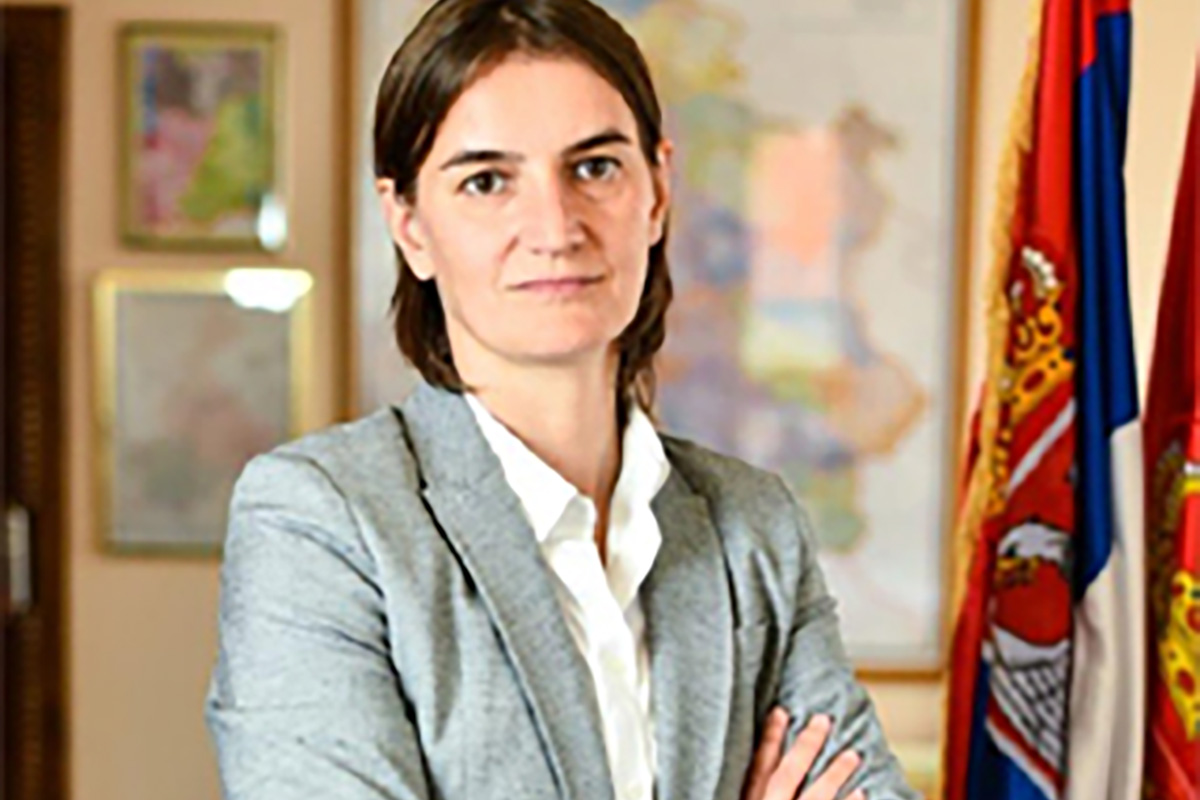
Ana Brnabić on Monday became the world’s first openly lesbian head of state after Serbian President Aleksandar Vučić resigned.
Brnabić was the country’s prime minister from 2017-2024. She was most recently the president of the Serbian National Assembly.
Vučić resigned ahead of parliamentary elections that will take place on Oct. 25. Media reports indicate Vučić could become Serbia’s next prime minister if his Serbian Progressive Party can successfully form a new government. Brnabić until then will be the country’s acting president.
Former Irish Prime Minister Leo Varadkar, who became his country’s first openly gay head of government in 2017, praised Brnabić.
“Congratulations to Ana Brnabić on becoming the world’s first lesbian head of state (president of Serbia),” said Varadkar on social media. “She visited while in her previous office and is a friend of Ireland.”
Congratulations to Ana Brnabic on becoming the world's first lesbian head of state (President of Serbia). She visited while in her previous office and is a friend of Ireland. 12 countries have now had gay or lesbian head of state/government. So far, all in Europe – the… https://t.co/TBpmeeEs9I
— Leo Varadkar (@LeoVaradkar) September 29, 2026
Former Icelandic Prime Minister Jóhanna Sigurðardóttir in 2009 became the world’s first openly lesbian head of government. Former San Marino Captain Regent Paolo Rondelli in 2022 became the world’s first openly gay head of state.
Andorran Prime Minister Xavier Espot Zamora, Dutch Prime Minister Rob Jetten, and Latvian President Edgars Rinkēvičs are openly gay. Former Luxembourgish Prime Minister Xavier Bettel, former French Prime Minister Gabriel Attal, and former Belgian Prime Minister Elio Di Rupo are also gay.
Varadkar was Ireland’s prime minister from 2017-2020 and again from 2022-2024.

Lula, Flávio Bolsonaro to face off in second round of Brazilian presidential election

The financial realities facing LGBTQ+ first-time buyers

‘Merrily’ is for Sondheim super fans, the uninitiated, and anyone in between

Engrossing ‘Tip Toe’ delivers tension and an ominous warning

Eliot Glazer’s new book an engaging collection of essays

Meet the LGBTQ candidates running for U.S. House, Senate

Ana Brnabić becomes world’s first openly lesbian head of state

Vote now! Best Of LGBTQ DC readers’ choice awards

Gay Va. couple hopeful voters will enshrine marriage equality in state constitution

Victory Fund board investigates former staffers’ allegations against CEO Evan Low
-

 2026 Midterm Elections4 days ago
Meet the LGBTQ candidates running for U.S. House, Senate
-
Serbia4 days ago
Ana Brnabić becomes world’s first openly lesbian head of state
-
Arts & Entertainment4 days ago
Vote now! Best Of LGBTQ DC readers’ choice awards
-
Virginia3 days ago
Gay Va. couple hopeful voters will enshrine marriage equality in state constitution