World
Israel Health Ministry announces conversion therapy ban
Lawmakers must codify prohibition
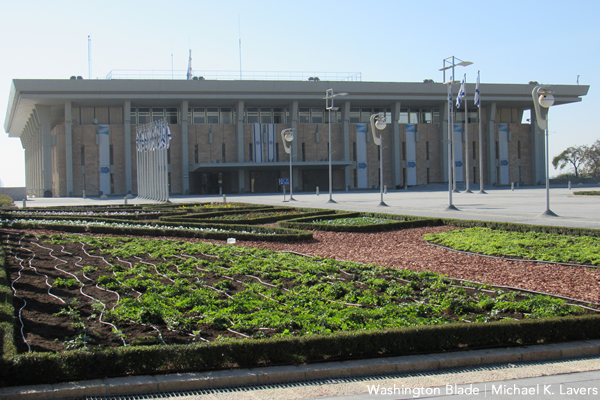
Israel’s openly gay health minister on Monday announced health care professionals can no longer practice so-called conversion therapy in the country.
“No one needs conversion,” said Nitzan Horowitz after the Israeli Health Ministry published the prohibition. “Lesbians, gay, trans and straight, you are just as good and beautiful as you are.”
A Wider Bridge, a U.S.-based organization that describes itself as “building a movement of LGBTQ people and allies with a strong interest in and commitment to supporting Israel and its LGBTQ communities,” in a statement notes “health professionals who engage in these abusive practices or refer patients for them will be subject to disciplinary proceedings that could result in their licenses being revoked.”
“Conversion therapies can cause lasting emotion harm to vulnerable LGBTQ individuals, sometimes with deadly results, said A Wider Bridge. “This is why many countries have imposed severe sanctions on those who commit this dangerous practice.”
A law that bans conversion therapy in Canada took effect last month. Brazil and Malta are among the handful of other countries that have prohibited the practice.
A Wider Bridge in its statement notes the Israeli Knesset still needs to codify the Health Ministry directive into law.
“We thank the Ministry of Health and applaud our friends in Israel who relentlessly fight against these horrible practices,” said A Wider Bridge.



Turkey
Dozens detained after Turkish authorities raid LGBTQ groups, businesses
Raids targeted gay bars, activists’ homes
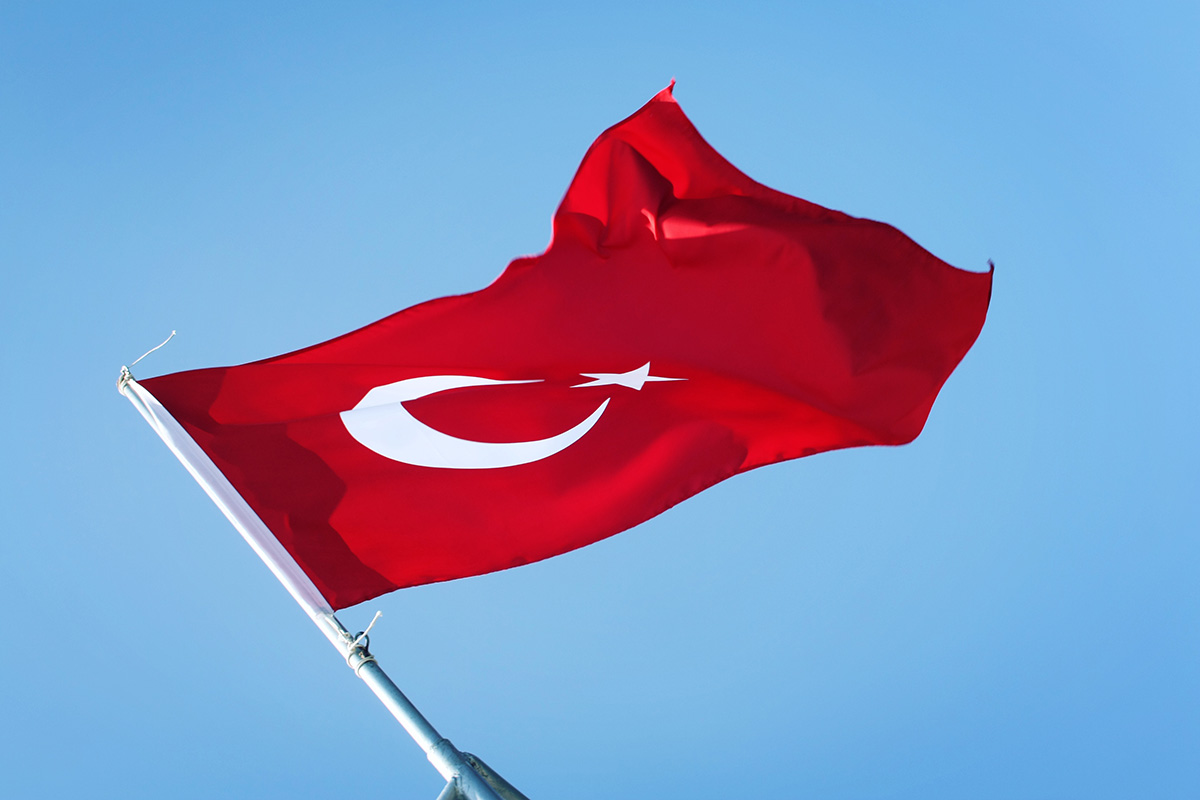
Authorities in Turkey over the weekend detained dozens of people during raids they carried out against gay bars and LGBTQ activists’ homes across the country.
The BBC reported the raids were part of the government’s “My Family is Safe” campaign.
A statement from a group of Turkish advocacy groups the Washington Blade received on Sunday noted Justice Minister Akın Gürlek said the operation included “162 individuals, nine associations, and 13 businesses across 15 provinces.” Prosecutors in Istanbul, Ankara, Izmir, Aydın, and Mersin are coordinating the campaign.
Kaos GL, one of the country’s largest advocacy groups, was among the targets.
“The authorities have referred to allegations including ‘obscenity,’ ‘facilitating prostitution or providing premises for prostitution,’ exposure of children to allegedly obscene content, drug-related offenses, and other morality-related offenses,” reads the press release the Blade received. “Information from the field indicates that additional allegations, including forming a criminal organization, may appear in some investigation files.”
“The reported inclusion of the offense of “establishing an organization for the purpose of committing crimes” under Article 220 of the Turkish Criminal Code is particularly alarming and, if confirmed, would mark a significant escalation in the criminalization of LGBTI+ human rights activism,” it added. “While LGBTI+ activists and organizations have recently faced and continue to face investigations and prosecutions on grounds such as ‘obscenity’ and alleged violations of the Law on Associations, the use of an organized-crime allegation represents a qualitatively more serious threshold, both in terms of the gravity of the accusation and the potential penalties involved.”
Turkish authorities under President Recep Tayyip Erdoğan’s government over the last decade have cracked down on LGBTQ and intersex activists in the country.
Police in 2015 used tear gas and water cannons against people who were about to participate in an Istanbul Pride march. Authorities in 2017 arrested nearly two dozen people who defied a ban on Pride events in the city.
Police in Ankara, the Turkish capital, in 2019, arrested 18 students and an academic who participated in a Pride march at the Middle East Technical University. They faced up to three years in prison, but a court in 2021 acquitted them. Police in 2022 violently broke up a Pride parade at the same Ankara university.
Turkish authorities in July refused to allow a gay cruise ship — the Scarlet Lady, a Virgin Voyage vessel that Atlantis Events chartered — to dock in Kusadasi, a resort town on the Aegean Sea.
Kusadasi is in Aydın Province, one of the provinces in which authorities conducted the raids. Turkish officials also refused to allow the Scarlet Lady to dock in Istanbul.
A Turkish source on Sunday told the Blade the “My Family is Safe” operation began on the 46th anniversary of a military coup that toppled the country’s government in 1980.
“The fact that this operation began on the night of Sept. 12 — the 46th anniversary of the 1980 coup — is highly significant in terms of the foundations of the prohibitive and repressive mindset directed at the LGBTI+ community,” they said. “Moreover, many LGBTI+ organizations had been subject to official inspections last week.”
“Conducting this operation on a Saturday night shortly thereafter also serves the purpose of heightening fear and anxiety within the community,” added the source.
The source asked the Blade not to reveal their identity.
ILGA-Europe in a statement described the raids as “the systematic dismantling of LGBTI civil society.” Paris Mayor Emmanuel Grégoire is among the European officials who have publicly condemned them.
The Blade will update this story with additional details as they become available.
World
Report: 90 percent of LGBTQ groups around the world have lost funding since 2025
Trump-Vance administration cut US support after it took office

A new report that Outright International released on Thursday notes 90 percent of LGBTQ and intersex rights groups around the world have lost funding since January 2025.
The New York-based global advocacy group surveyed 229 LGBTQ and intersex rights groups in 94 countries.
Forty-nine percent of the organizations that responded said they have lost more than half of their total budget since January 2025 — 75 percent of the groups said they lost more than a quarter of their total funding.
“For nearly half of the respondents, the cuts removed most of the resources that sustained the organization,” reads the report.
When asked which funders “had reduced, suspended, or withdrawn support,” more than half of the responding groups “pointed to a source tied to the United States government, including USAID (U.S. Agency for International Development), the President’s Emergency Plan for AIDS Relief (PEPFAR), and the Department of State.”
“No other funder came close,” notes the report.
‘What was initially framed as a temporary freeze has become a structural disruption’
The Trump-Vance administration froze nearly all U.S. foreign aid shortly after it took office on Jan. 20, 2025.
Secretary of State Marco Rubio in March 2025 announced 83 percent of USAID contacts had been cancelled, and the State Department would administer the remaining programs. USAID officially shut down on July 1, 2025.
Rubio issued a waiver that allowed PEPFAR and other “life-saving humanitarian assistance” programs to continue to operate during the funding freeze. The Washington Blade has previously reported PEPFAR-funded programs in Kenya and other African countries have been forced to suspend services and even shut down because of gaps in U.S. funding.
(Washington Blade video by Michael K. Lavers)
The Outright International report notes the State Department under the Trump-Vance administration “terminated the programs of the Global Equality Fund, the public-private partnership it launched in 2011 with allied governments, companies, and foundations, which distributed more than $100 million in its first decade to LGBTIQ organizations and human rights defenders in over 100 countries.” The Trump-Vance administration, among other things, has withdrawn the U.S. from the U.N. LGBTI Core Group, a group of U.N. member states that have pledged to support LGBTQ and intersex rights.
Outright International Executive Director Maria Sjödin in an op-ed the Blade published on Jan. 28, 2026, wrote the global LGBTQ and intersex rights movement since January 2025 lost more than $125 million — or 30 percent of its total annual funding.
“What was initially framed as a temporary freeze has become a structural disruption,” notes the Outright International report. “The effects have cascaded far beyond U.S. government funding: corporate, institutional, and philanthropic donors have also shifted, stalled, or quietly withdrawn, often without public scrutiny.”
“The broader environment in which LGBTIQ movements operate has continued to deteriorate — with democratic backsliding, anti-NGO legislation, rising violence, coordinated legislative attacks on trans and intersex people’s rights, and emboldened anti-rights actors filling the space left by the retreat of U.S. global leadership.”
The report contains specific examples that include:
• Iraqi lawmakers in 2024 passed a law that criminalized consensual same-sex sexual relations and transgender people. Funding cuts forced IraQueer, an Iraqi advocacy group, to stop offering safety and security trainings and workshops to activists and LGBTQ rights organizations in the country.
• An intersex-led organization in West Africa can no longer maintain office space or pay its staff.
• An Ecuadorian group that operated a community center for a decade was “forced to close” it on Feb. 1, 2026. “It has been a true loss for the LGBTIQ+ communities in our city and the country as a whole, as we were a model of self-management and resistance in one of Ecuador’s most conservative cities,” said the group in the report.
• An “LGBTIQ-led refugee organization” in Uganda “has lost the emergency relocation support that once moved people facing immediate violence to safer locations.”
• An advocacy group in Ukraine that lost funding said it was “forced to stop paying some of our specialists and reduce our hours for handling inquiries … We used to be able to respond promptly to requests and support people throughout the entire process of resolving their issues, whereas now we are forced to limit ourselves to one-time consultations or refuse assistance altogether due to a lack of resources.”
• The Tonga Leitis Association in the report said a lack of funding has forced it to reduce “the number of activities the organization can run and erodes the prevention infrastructure behind” the country’s low HIV rate.
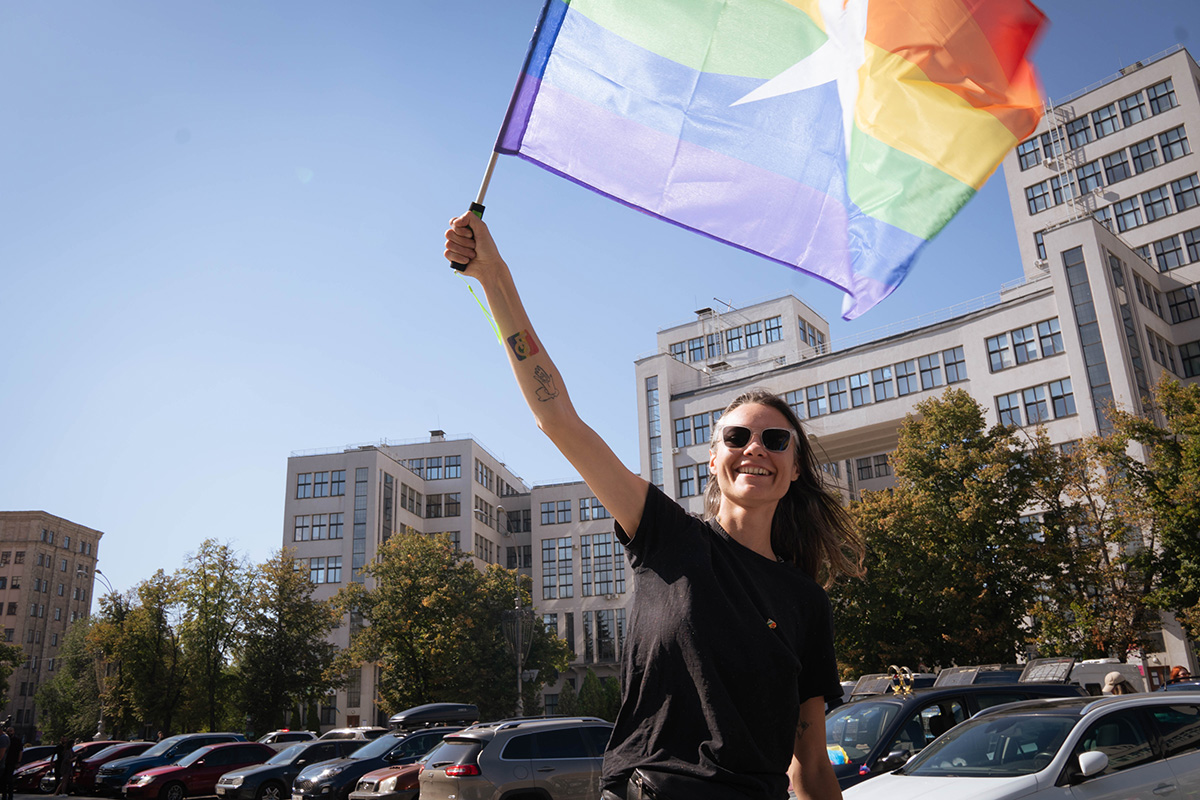
The Outright International report notes “global LGBTIQ funding had begun to fall even before the current U.S. administration took office.”
It further cites statistics from the Human Rights Funders Network that project “rights-focused development assistance will fall by between” $1.4-$1.9 billion a year by 2026, “with movements for LGBTIQ people’s rights and gender equality among the hardest it.”
“At the same time, LGBTIQ organizations have not stood still,” reads the Outright International report. “They have continued to resist, adapt, and serve their communities under extraordinary pressure, often absorbing the costs of these funding shocks in ways that remain largely invisible.”
“This report is an effort to make those costs — and that resilience — visible,” it adds.
United Kingdom
Grindr settles UK lawsuit over claims it shared users’ personal information
Plaintiffs allege gay hookup company disclosed HIV status to third parties
Grindr has agreed to pay £26 million ($35.24 million) to settle a lawsuit in the UK over allegations it shared users’ HIV status and other personal information with third parties.
The BBC on Monday reported a lawsuit was filed in the High Court of England and Wales in 2024. A class action lawsuit with more than 11,000 plaintiffs was later filed in the U.S.
Grindr in a U.S. Security and Exchange Commission filing notes the California-headquartered company as part of the settlement it reached on Sept. 2 will pay £13.0 million ($17.62 million) “to the counterparties” by Dec. 31, 2026, and another £13.0 million ($17.62 million) by March 31, 2027.
“As previously disclosed, in April 2025, Grindr Inc. and Grindr LLC, its indirect and wholly-owned operating subsidiary (collectively, ‘Grindr’), were served with proceedings in the High Court of England and Wales, which proceedings were originally issued in April 2024, brought on behalf of UK Grindr users from a period up to early 2020 alleging violations of UK privacy laws,” reads the U.S. Security and Exchange Commission filing.
“On Sept. 2, 2026, Grindr resolved the above-described UK group action related to historical data practices before 2020, when Grindr was owned and controlled by the Chinese conglomerate Kunlun,” it continues. “The settlement includes no findings or admission of liability. While Grindr disputes the allegations, it recognizes and acknowledges the distress and loss of trust expressed by some of its UK users regarding that pre-2020 period.”
The filing further notes Grindr in 2020 “was sold to new owners and appointed new management” and in 2022 became a publicly listed company on the New York Stock Exchange.
“Since 2020 Grindr has overhauled its privacy program with a keen focus on the unique needs of its community,” reads the filing. “Grindr is and remains a safe space for users, committed to transparency, user control, and responsible data practices.”
A Grindr spokesperson in the UK on Tuesday referred the Washington Blade to the filing for comment on the settlement.

Dozens detained after Turkish authorities raid LGBTQ groups, businesses

PHOTOS: SMYAL Fall Brunch

Dolly Parton biography puts her hardships into context

‘Thelma and Louise’ remains landmark of unspoken queer rebellion

Comings & Goings

PHOTOS: SUNFESTIVAL

Gloria Steinem’s life of substance and consequence

How Dolly became a folk saint for Appalachian queers

Remembering the LGBTQ heroes of 9/11 terrorist attacks