News
Foster parents need more vetting, training for LGBTQ children
30,000 queer kids age out of system each year
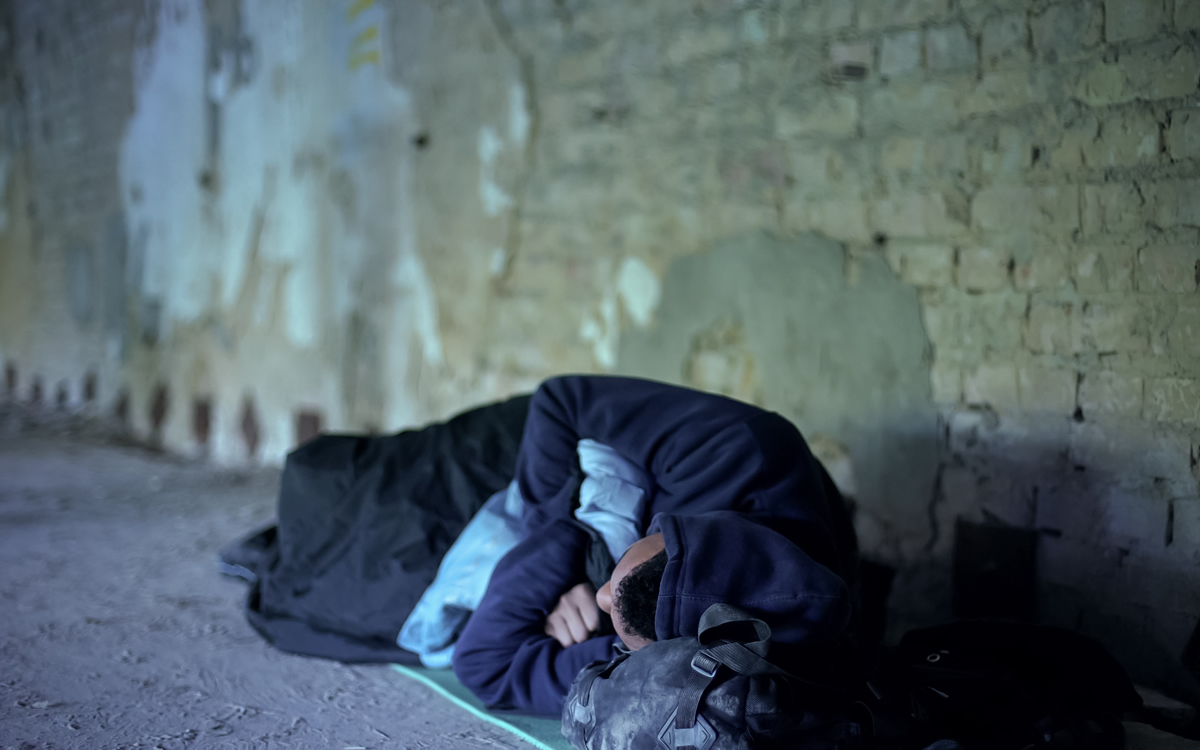
About 30,000 children age out of foster care each year and 70 percent of those children wind up homeless. The majority of the homeless population under the age of 18 are LGBTQ youth, often who can’t find an inclusive home and enter group homes where more prevalent mental, sexual, and psychological abuse turns them to the streets.
When an LGBTQ child enters the foster care system, the pot of eligible homes becomes smaller, said Rob Scheer, the founder of Comfort Cases, a non-profit that supplies personal care items to youth entering the foster care system.
“The first thing we think of as kids in our system when we realize that we are part of the LGBTQ+ family, is why am I damaged?” said Scheer, a gay man who experienced the foster care system as a child. “Why am I not given that open space to be free and be who I am?”
The average child in foster care moves from three to four homes before finding a long-term placement. This is often due to foster care agencies’ neglect to inform foster parents that a child is a part of the LGBTQ community. However, when foster parents are informed of the child’s identity, less movement occurs.
Even when children come out as being LGBTQ and the foster parents allow them to stay, some homes do so in order to receive a monthly stipend from the government or private foster agency, Scheer said. This puts children at risk of both direct and indirect mental abuse.
Indirect heterosexism that sends micro-messages of shame is extremely harmful to kids, according to Chloe Perez, the CEO of Hearts and Homes for Youth, a non-profit working with children with higher levels of need, such as therapy appointments for a mental health diagnosis.
“We have had parents who have talked about, ‘Oh, you know, his frilly, girly, feminine ways,” said Perez. “Maybe they’re not saying I hate gay people…but it’s that subliminal messaging all the time that is equally detrimental.”
It’s common for LGBTQ children to either stay quiet about their sexuality or identity or act out to disrupt a placement before they risk rejection from the family.
By age five or six, many children already experience rejection and the resulting trauma from multiple placements, Perez added. However, when foster parents know how to manage disruptive behaviors, there’s less risk of additional placement disruption.
But this requires specific vetting and training procedures for potential foster parents.
Once potential foster parents complete all of the state’s criteria, Hearts and Homes for Youth provide an additional, extensive training program. Since some kids come into the non-profit’s care after 14 or 15 placements, this process includes trauma-response training that informs parents of a child’s possible emotional reactions.
If any foster parent says they don’t want to foster LGBTQ or BIPOC kids, Perez said they try to understand where the parents’ concern stems from to resolve the issue.
“[Whether it’s] cultural, age or based around religion…we have seen that sometimes just really having that in-depth conversation can help them shift,” said Perez. “If they’re not willing to do that, then that’s a no-go.”
Parents are often more direct when it comes to saying they won’t take an LGBTQ child as opposed to a child of color, Perez added, because people are more comfortable openly expressing their opinions about sexual orientation or identity than race, which is more commonly condemned.
If problems arise once a child is in a foster home, an agent conducts an at-home check-in to assess whether the foster parent needs to redo training. However, most issues after the placement are centered around parents’ discipline practices, such as smacking a child, rather than discrimination.
In the case that a foster home isn’t suitable, Hearts and Homes for Youth also offers five group homes and an independent living program for pregnant and parenting teen moms.
However, the high rate of suicide among LGBTQ children in foster care continues to reflect the conditions for most LGBTQ kids beyond their care.
“What we need to do in society is step up our social responsibility and make sure that we are giving these kids everything that I give to my five children,” said Scheer. “Guidance, unconditional support, and unconditional love.”
For information on how to become a foster parent in D.C., visit Child and Family Services Agency.




District of Columbia
Over 2,000 turn out for Hands Around the Kennedy Center protest
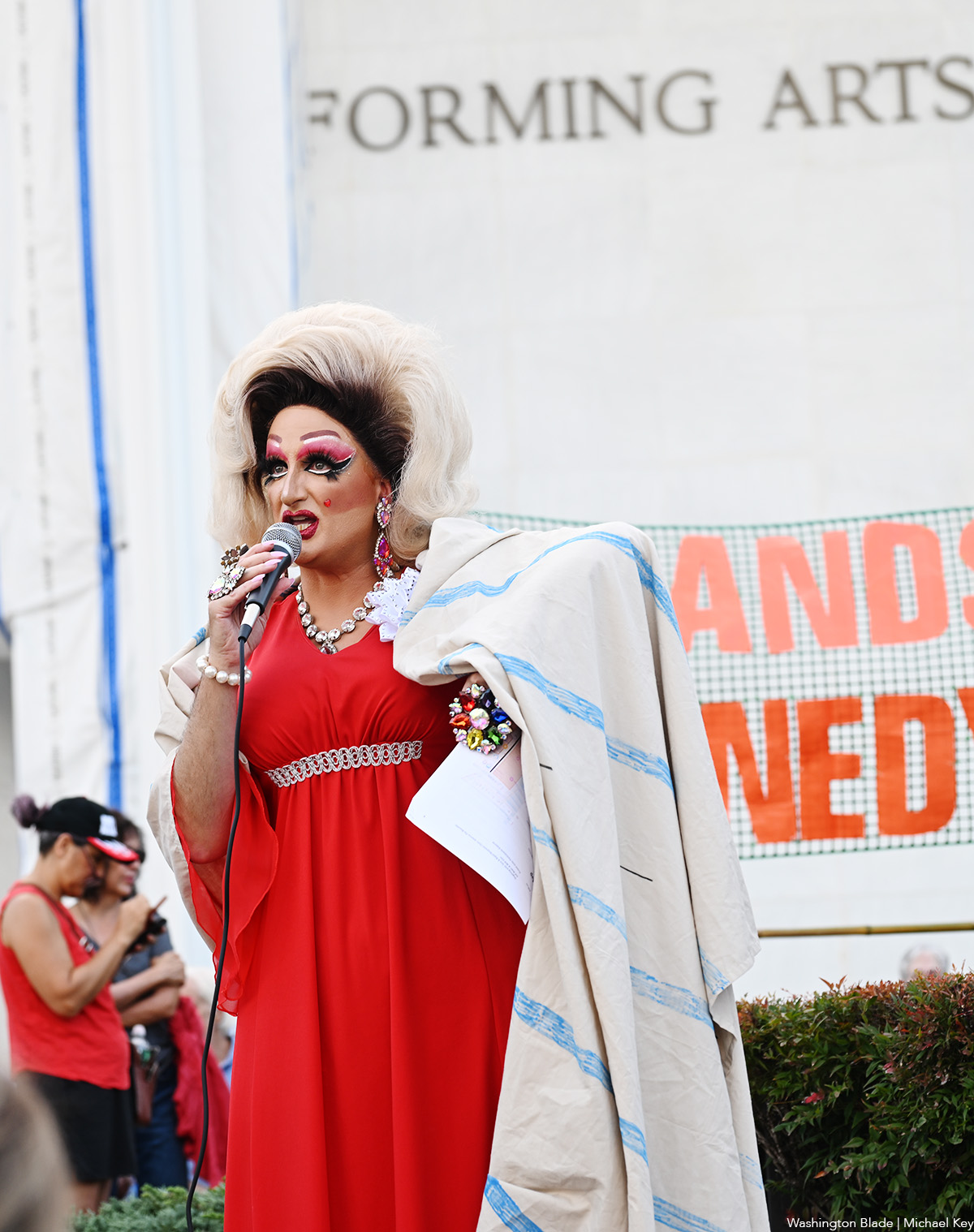
Drag performer Tara Hoot serves as MC, Gay Men’s Chorus of DC performs, attendees shout for Trump to keep ‘hands off’ Kennedy Center
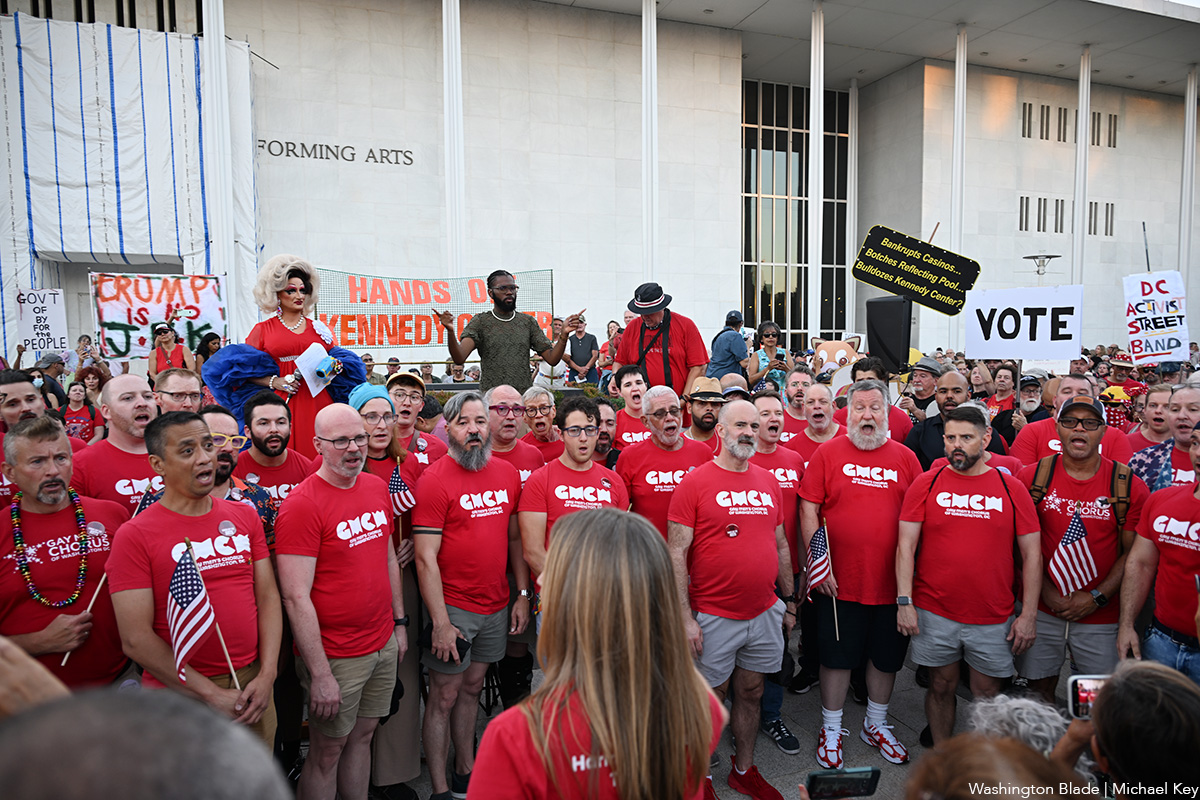
More than 2,000 supporters of the John F. Kennedy Center for the Performing Arts turned out on Sept. 18, for a rally in support of the performing arts center and a vocal protest against President Donald Trump’s threats to permanently close the center and possibly demolish it.
The event was organized by a group called Hands Off the Arts, which initially called for participants to form a “human chain” around the Kennedy Center’s main building following a rally on the plaza in front of the building.
However, due to a decision by the Trump-controlled Kennedy Center’s board of trustees to close the center earlier in the week and install fencing around part of the building, participants could only form the chain around part of the building, according to organizers.
Drag performer Tara Hoot, who co-organized the event and served as master of ceremonies for the rally preceding the “human chain,” said the large turnout could have fully surrounded the building at least twice had the fencing not prevented a full encirclement.
Among the musicians and singing groups that performed at the rally was the Gay Men’s Chorus of Washington, which, like other rally performers, had performed at the Kennedy Center in past years. They drew loud applause after singing one of their favorite songs from the Broadway musical show Ragtime, which includes the lyrics, “Will justice be demanded by 10 million men? Make them hear you. When they hear you, I’ll be near you again.”
View on Threads
Prior to their performance, Gay Men’s Chorus of Washington’s artistic director, Thea Kano, spoke at the rally, reminding participants that shortly after the Trump takeover of the center last year, Kennedy Center officials cancelled a concert the chorus was scheduled to perform there for World Pride 2025.
A Kennedy Center spokesperson said the cancellation was due to a scheduling conflict, but chorus members and LGBTQ activists believe it resulted from policies put in place by Trump and his leadership team at the Kennedy Center following Trump’s statements that he would end controversial “woke” performances that he claimed the majority of Americans disapprove of.
“Now this building sits empty in silence,” Kano told the crowd at the rally. “Let us raise our voices together and bring back the Kennedy Center as it was intended, a place where American culture could be celebrated and elevated, embracing the vibrancy with the spectrum of identify without censure and without politics,” she said.
Among the others who spoke at the rally were U.S. Rep. Don Beyer (D-Va.), U.S. Rep. Jonathan Jackson (D-Ill.), and D.C. Councilmember Robert White (D-At-Large).
Most speakers, along with LGBTQ participants in the hands-around-the-building event expressed strong opposition to Trump’s demand that the Kennedy Center name be changed from the John F. Kennedy Center for the Performing Arts to the Donald J. Trump and the John F. Kennedy Center for the Performing Arts.
At Trump’s request, his appointed board initially made that name change and placed Trump’s name on the front wall of the building along with the Kennedy name. But following legal action taken by opponents who pointed out that Congress must approve such a name change, a judge ordered the removal of Trump’s name from the building. Trump has said he will take steps to reverse that order and has said he will stop plans to renovate the Kennedy Center building and possibly demolish it if his name is not restored in the Kennedy’s Center’s official name.
Throughout the Sept. 18 rally, LGBTQ participants repeatedly responded to the Trump threats by shouting, “Hands Off!”
Chris Raleigh, one of the founders of Hands Off the Arts and a lead organizer of the Sept. 18 event at the Kennedy Center who spoke at the event told the Washington Blade that more similar events are being planned and he welcomes the support the event has received from the LGBTQ community.
“The LGBTQ community was here first, and we’re following them,” he said. “They’ve been the spearhead; they’ve been the vanguard. And I’m so thankful for heroes like Tara Hoot,” he said, adding, “It’s because they know what it means and how this is a safe place – the theater – for many LGBTQ people.”
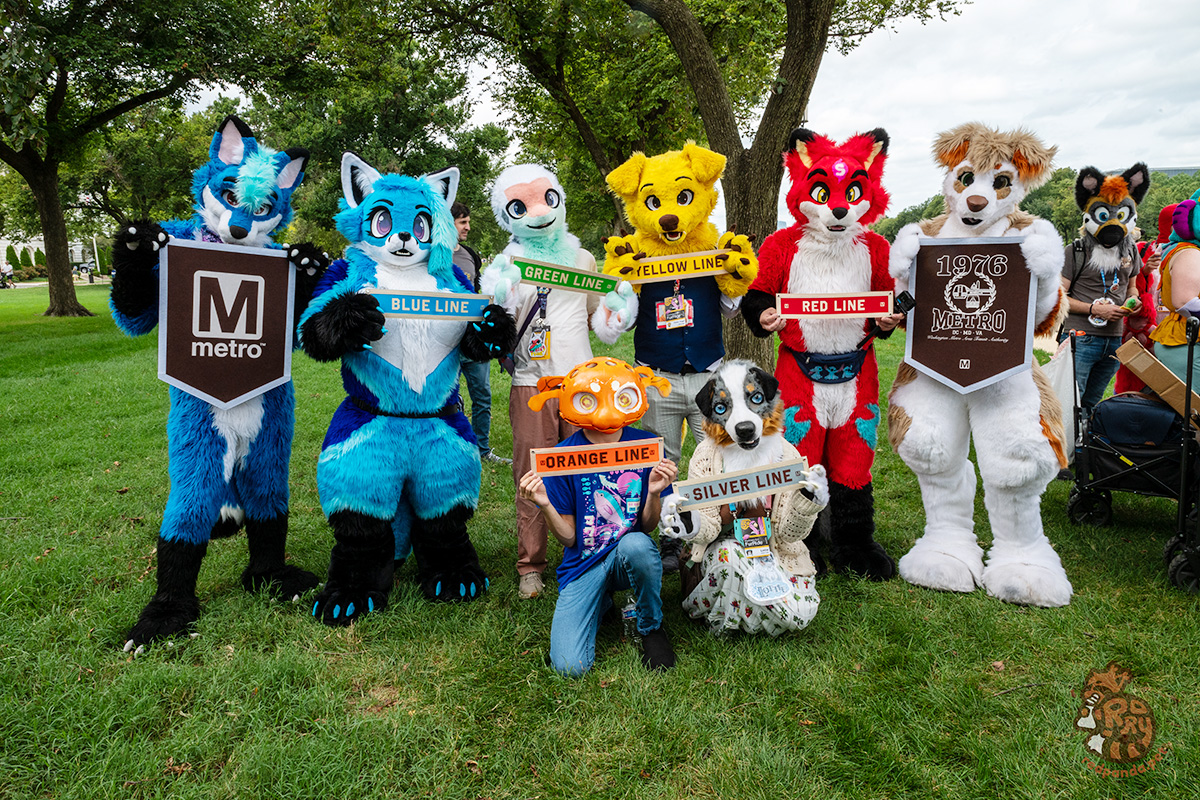
The DMV’s own furry group was on full display on the Metro on Sept. 12.
Shutterpaws is a volunteer-led 501(c)(3) non-profit organization located in Maryland.
The furry group has been doing the FurRide event since 2024 and has blown up in popularity for furries around DMV. They showcased themselves on the Silver and Blue Lines near the Smithsonian on Sept. 12.
“A lot of careful planning goes into running these events, with the goal being a seamless and enjoyable experience for everyone who attends,” says Zayre, a Shutterpaws staff member. “There’s a lot that you learn just by trial and error, and as Shutterpaws hosts more and more events, our team of event organizers continues to learn and refine our approach to keep things running smoothly and finding new ways to engage with our community.”
With a larger growth of participation in the community comes many challenges with the group, especially when it comes to the Metro rides and organizing.
“The biggest challenge that we face as organizers is keeping things fresh and finding new and engaging venues to host events,” says Zayre. “Recently we saw a lot of success hosting a meet at On Target Battlezone, an indoor NERF gun battle arena where our crew was welcome to show up and play both with and without a fur suit.”
Nevertheless, Shutterpaws receive overwhelming support from the community and partners.
“Across the DMV there are so many amazing places to host a Shutterpaws event so we can pursue our mission of helping connect fur suiters and photographers, and we’re blown away with the amount of support we’ve received from our community partners,” says Zayre.
Shutterpaws plans to do more events for anyone in the DMV who is interested.
Their next event in collaboration with DC Fur Meet will take place at Pitchers (2317 18th St., N.W.) on Saturday. Visit Shutterpaws’ website for more information.
Turkey
Activists protest outside Turkish Embassy in D.C.
Dozens detained during anti-LGBTQ ‘My Family Is Safe’ campaign raids
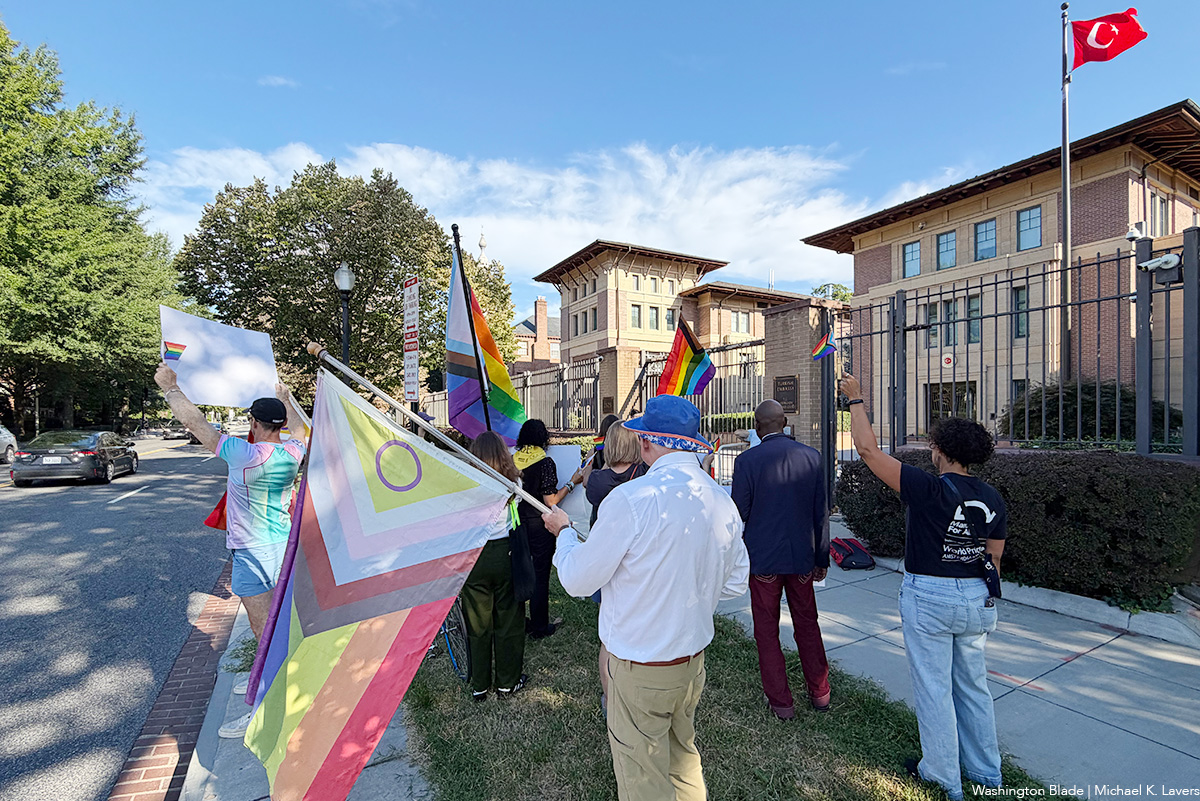
A group of activists on Friday gathered in front of the Turkish Embassy in D.C. to protest the country’s anti-LGBTQ crackdown.
The protest — which the Council for Global Equality, Amnesty International USA, Outright International, and Health GAP organized — took place less than a week after Turkish authorities detained dozens of people during raids that targeted the country’s LGBTQ community and advocacy groups and HIV/AIDS service organizations.
Authorities in Istanbul on Sept. 15 detained more than 150 people who gathered outside a courthouse to protest the raids that are part of the government’s “My Family Is Safe” campaign. Journalists are among those who were taken into custody.
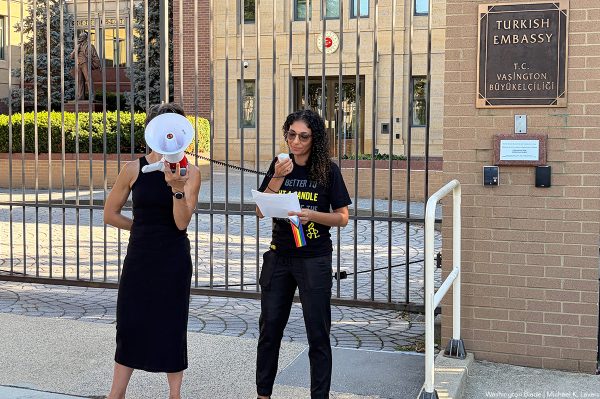
“This crackdown is not making families safer,” said Amnesty International USA Executive Director Nadia Daar, speaking in front of the Turkish Embassy.
Council for Global Equality Managing Director Keifer Buckingham stressed that “homosexuality is not a crime in Turkey.” Health GAP Executive Director Asia Russell and Outright International Senior Director of Law, Policy, and Research Neela Ghoshal also spoke.
View on Threads
Activists in Madrid and in other cities around the world held similar protests on Friday.

PHOTOS: Walk and 5K to End HIV

PHOTOS: Wanda Alston Foundation Fall Reception

Moving presents a chance to ‘clean house’

EV ecstacy: BMW iX3, Rivian R2

Curl up with a good book this fall

Trump’s Cabinet: Dumb, dumber, dumbest, and evil

More than 150 people detained outside Istanbul courthouse

Virginia Anti-Violence Project struggles to fill federal funding gaps

Gay man sues Delaware AG for not prosecuting partner in domestic violence case

D.C.’s fall theater season is already well underway
-

 Opinions5 days ago
Trump’s Cabinet: Dumb, dumber, dumbest, and evil
-
Turkey5 days ago
More than 150 people detained outside Istanbul courthouse
-
Virginia5 days ago
Virginia Anti-Violence Project struggles to fill federal funding gaps
-
Delaware5 days ago
Gay man sues Delaware AG for not prosecuting partner in domestic violence case