Celebrity News
Harry Belafonte, ‘King of Calypso’ and LGBTQ ally, dies at 96
Civil rights icon was grand marshal of 2013 NYC Pride parade
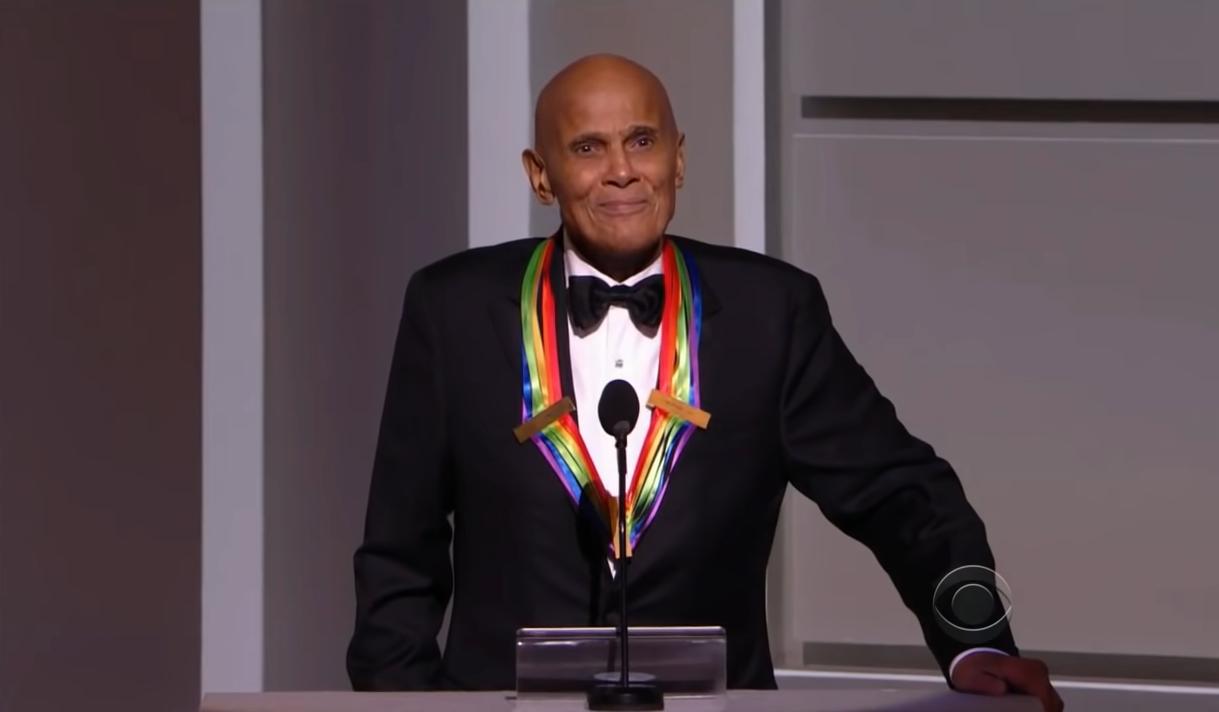
A rainbow banner slung over his right shoulder proudly proclaimed the spry octogenarian a “Grand Marshal 2013” of the New York City LGBT Pride March, joining another vibrant octogenarian, Edith “Edie” Windsor, who was also a “Grand Marshal 2013” that bright sunny June day.
Between the two of them, the honor was an acknowledgement of a long journey not only for LGBTQ rights, but for Harry Belafonte, the beloved African American actor, singer, humanitarian, and the acknowledged “King of Calypso” especially, an honored recognition of his decades of accomplishments and commitment to the civil rights movement and allyship to the LGBTQ community.
Thank you, Mr. B, for all of your years of mentorship, guidance, & lifetime of activism fighting for a better future for all of us. You will be missed by many, but your memory & impact live on. Rest in Power.
— Colin Kaepernick (@Kaepernick7) April 25, 2023
“Movements don’t die, because struggle doesn’t die.”
-Harry Belafonte pic.twitter.com/bCArTOtCC2
Born March 1, 1927, in New York, Belafonte was the son of Caribbean-born immigrants, and, growing up, he split his time between Harlem and Jamaica. Dropping out of high school in New York to enlist in the U.S. Navy, he went on to contribute to the war effort from 1944 to 1945.
At the time, the military services were segregated. Belafonte, a Jamaican American, was assigned to Port Chicago, Calif., 35 miles from San Francisco.
During World War II, Black service members were not normally assigned to frontline fighting units. Rather, they were assigned mostly to supporting specialties. His job was to load military ships bound for the Pacific theater.
Just before Belafonte arrived in Port Chicago, Calif., a massive explosion took place, involving military ships loaded with ammunition. About 320 people were killed — two-thirds of them Black sailors.
“It was the worst homefront disaster of World War II, but almost no one knows about it or what followed,” he said.
Discharged in 1945, Belafonte returned home to New York. He used his GI Bill benefits to pay for his acting classes at Erwin Piscator’s the New School Dramatic Workshop, alongside future actors Marlon Brando, Rod Steiger, Walter Matthau, and what was to develop into lifelong friendship, actor Sidney Poitier.
He performed with the American Negro Theater while studying at the Dramatic Workshop. It was a singing role that resulted in a series of cabaret engagements, and eventually, Belafonte even opened his own club. In 1949, he launched his recording career on the Jubilee label, and in 1953, he made his debut at the legendary jazz club, the Village Vanguard.
He also appeared on Broadway in the 1953 “John Murray Anderson’s Almanac,” a performance that won him a Tony Award.
Belafonte’s first widely released single, which became his signature audience participation song in virtually all of his live performances, was “Matilda,” recorded on April 27, 1953.
With a lead role in the film adaptation of Oscar Hammerstein’s Carmen Jones, Belafonte shot to stardom. After signing to the RCA label, he released Mark Twain and Other Folk Favorites, which reached the number three slot on the Billboard charts.
His breakthrough third studio album “Calypso” (RCA Victor-1956) became the first long-playing record in the world to sell over 1 million copies within a year. The album introduced American audiences to calypso music and Belafonte was dubbed the King of Calypso.
Besides calypso, he also recorded blues, folk, gospel, show tunes and American standards from “The Great American Songbook” as it is known that included works from George Gershwin, Irving Berlin and Cole Porter.
During the late 1950’s he performed during the so-called Rat Pack-era in Las Vegas. He and pianist Liberace, musician and singer Ray Vasquez, and singer Sammy Davis, Jr., were featured at the Sands Hotel and Casino and the Dunes Hotel.
Belafonte also became television’s first African-American producer, and his special “Tonight with Harry Belafonte” won an Emmy award in 1960. It was during this time period that he became proactively engaged in the civil rights movement in the 1950s and 1960s including the1963 Freedom March in D.C..
Belafonte befriended the leader of the movement, Dr. Martin Luther King, Jr., with whom he maintained close ties until King’s assassination in Memphis, Tenn., on April 4, 1968.
When I was a child, #HarryBelafonte showed up for my family in very compassionate ways.
— Be A King (@BerniceKing) April 25, 2023
In fact, he paid for the babysitter for me and my siblings.
Here he is mourning with my mother at the funeral service for my father at Morehouse College.
I won’t forget…Rest well, sir. pic.twitter.com/31OC1Ajc0V
He was also friends with New York Sen. Robert F. Kennedy, often spending time with Kennedy during the latter’s run for the U.S. Senate and also during the 1968 presidential campaign, which ended tragically after Kennedy was shot in the kitchen pantry area at the Los Angeles’ Ambassador Hotel on June 5, 1968. Kennedy died the next day on June 6, 1968, at Good Samaritan Hospital.
Prior to RFK’s assassination, on April 24, 1968, Belafonte interviewed Kennedy while guest hosting for Johnny Carson on the “Tonight Show.”
During the 1970s and 1980s, Belafonte refocused his efforts toward humanitarian causes, including joining with famed producer Quincy Jones and singer Michael Jackson on the USA for Africa’s “We Are the World,” project on March 7, 1985. Rolling Stone wryly noted in its article about the recording and humanitarian fundraiser, that the 46 star vocalists who showed up may have formed the ultimate musical supergroup of all time.
First lady Barbara Bush, standing in for her husband President George Herbert Walker Bush, presented the 12th Annual Kennedy Center Honors to Belafonte, along with his fellow honorees actress Mary Martin, dancer Alexandra Danilova, actress Claudette Colbert and composer William Schuman during a White House East Room ceremony on Dec. 3, 1989.
Two years previously, in 1987, he was appointed as a UNICEF Goodwill Ambassador, replacing Danny Kaye as UNICEF’s Goodwill Ambassador. His appointment as Goodwill Ambassador came 27 years after then President John F. Kennedy appointed Belafonte the first member of the entertainment industry to serve as cultural advisor to the Peace Corps.
In 1994, he received the National Medal of the Arts from President Bill Clinton. He has also been awarded the Ronald McDonald House Charities’ Award of Excellence in recognition of his humanitarian work and the Audrey Hepburn Humanitarian Award for 25 years of service to UNICEF.
In October 2017 he was awarded the Franklin D. Roosevelt Freedom Medal by the Roosevelt Institute in New York, the citation reading in part:
“In the decades since, you have been involved in campaigns to fight apartheid and bring relief to the world’s poorest. You founded We Are the World, which brought together some of the greatest talents in music to draw attention to and take on the scourge of famine in Africa. You have always used your platform to call out injustice and violence and make sure we never stopped believing that a more just, beautiful world was possible. Your voice — your life — has been a beacon of hope, comfort and inspiration to generations.”
Belafonte also served on the board of Americans for the Arts (formerly known as the American Council for the Arts) for many years. He has four children — Shari, Adrienne, Gina and David — and three grandchildren — Rachel, Brian and Maria. He lived with his wife photographer Pamela Frank who he had married in 2008.
(Photo Courtesy of AHF)
“The world is a little dimmer today in losing such a legendary entertainer as Harry Belafonte but so much richer for having had such a tireless, lifelong humanitarian and activist for so many years. Rest easy, kind sir, after a job well done,” said Michael Weinstein, president of AIDS Healthcare Foundation.
“Belafonte leveraged his considerable and deserved celebrity for a myriad of causes over his lifetime, including the fight against HIV and AIDS. It was both humbling and a privilege for AHF to thank and honor him in person for his lifetime of activism and compassion.”
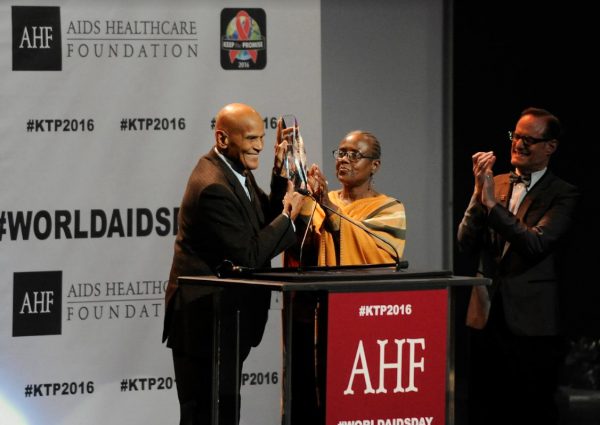
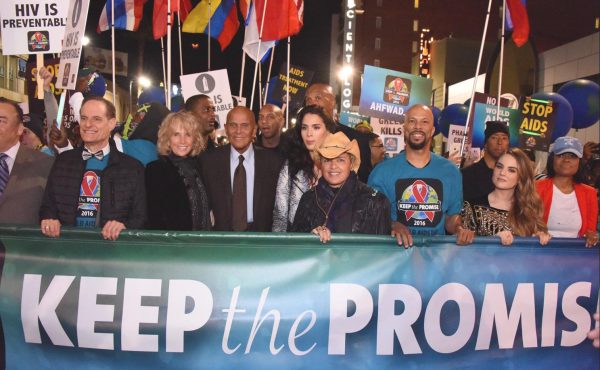
In 2016, AHF honored Belafonte with its Lifetime Achievement Award during its “Keep the Promise” World AIDS Day Concert and March in Hollywood, Calif.
Ever the activist, Belafonte, then 89, joined marchers for a brief but poignant portion of the march down Hollywood Boulevard.
The march commemorated the millions who have died of AIDS while also serving as a reminder to the world that of the then 36.7 million people living with AIDS worldwide, only 17 million had access to lifesaving antiretroviral treatment.
Belafonte received the AHF award during the concert that followed at the Dolby Theater featuring Patti LaBelle, Common and others who also paid tribute to the humanitarian icon.
Harry Belafonte was a barrier-breaking legend who used his platform to lift others up. He lived a good life – transforming the arts while also standing up for civil rights. And he did it all with his signature smile and style. Michelle and I send our love to his wife, kids, and… pic.twitter.com/g77XCr9U5b
— Barack Obama (@BarackObama) April 25, 2023
The White House issued a statement from President Joe Biden on Belafonte’s death:
“Jill and I are saddened by the passing of a groundbreaking American who used his talent, his fame, and his voice to help redeem the soul of our nation.
Harry Belafonte was born to Caribbean parents in Harlem, New York on March 1, 1927, when segregation was the order of American society. To our Nation’s benefit, Harry never accepted those false narratives and unjust boundaries. He dedicated his entire life to breaking barriers and bridging divides.
As a young man motivated to find his purpose, he became mesmerized by theater when he saw a performance of the American Negro Theater in Manhattan. As one of America’s original breakthrough singers and performers, he would go on to garner a storehouse of firsts — the first Black matinee idol, the first recording artist to sell over a million records, the first Black male Broadway actor to win a Tony award, the first Black producer to win an Emmy award, and one of the highest paid entertainers of his time, among other accolades.
But he used his fame and fortune for the public good throughout his extraordinary career. He became a powerful ally of Dr. Martin Luther King, Jr., and other giants of the Civil Rights Movement. He raised money and donated resources to post bail for activists jailed for acts of civil disobedience. He provided the critical funds to launch the Freedom Rides.
He lobbied against apartheid in South Africa, for the release of Nelson Mandela, and was one of the visionaries behind ‘We Are the World,’ an innovative record released to raise millions of dollars to support humanitarian aid in Sudan and Ethiopia. For these and other humanitarian and artistic efforts he was conferred with a Kennedy Center Honor, the National Medal of the Arts, and a Grammy lifetime achievement award.
Harry Belafonte’s accomplishments are legendary and his legacy of outspoken advocacy, compassion, and respect for human dignity will endure. He will be remembered as a great American.
We send our deepest condolences to his family and legions of admirers across the country and the world.”
Harry Belafonte was one of our favorite guest stars on The Muppet Show and a great friend to The Muppets. In his work on and off the stage, he helped us all to see one another clearly and truly turned the world around. We will never forget you, Harry! pic.twitter.com/euMQFDpvJj
— The Muppets (@TheMuppets) April 25, 2023
****************************************************************************************
Additional research and materials from the Defense Department, the Kennedy Center Honors, UNICEF, the John F. Kennedy Library, the George Bush Library, the William J. Clinton Library, the George W. Bush Library, the Barack Obama Library, RCA Records, AFI and the Recording Academy.



Celebrity News
Debbie Allen shares on loss, love, and the power of speaking out
Actress directed groundbreaking ‘A Different World’ episode about HIV
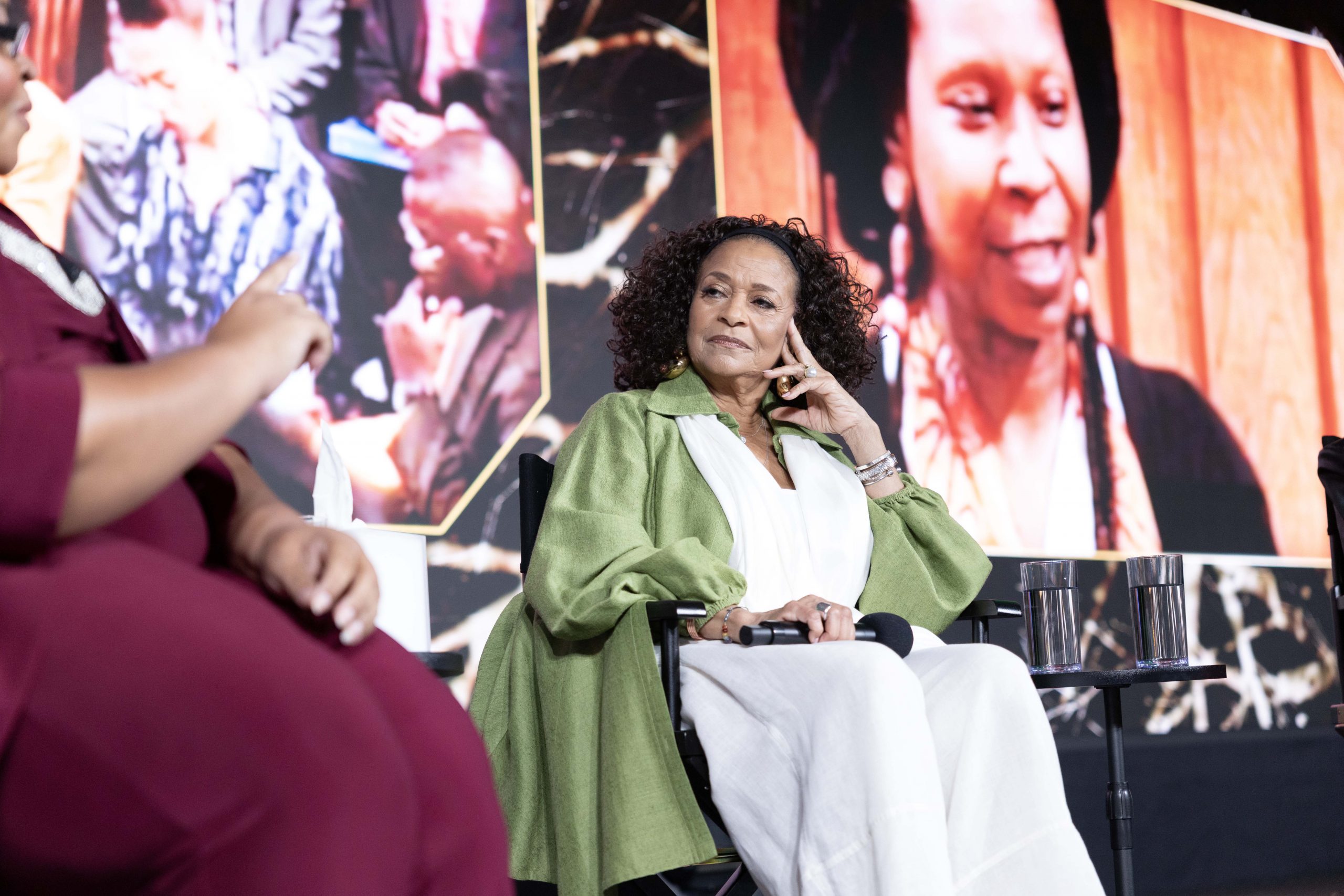
For somebody like Debbie Allen, HIV advocacy lies at the heart of their life and career. In the 1980s, at a time when HIV/AIDS devastated the performing arts community, Allen witnessed friends, performers, directors, and choreographers alike disappear. This experience turned her personal grief into a decades-long commitment to advocacy. From directing a landmark “A Different World” episode about HIV at a time when even just saying the word on television could make networks sweat, to continuing her work today, Allen has continuously utilized the biggest stage available to her to ensure that the conversation stays alive.
Now the conversation has changed from four decades ago, yet Allen believes it still needs to get louder. Medical advances have transformed HIV from the crisis it was into a manageable condition for many folks. Yet stigma, social challenges, and the significant need for mental, emotional, and community support still persist. In our conversation, Allen opens up about the losses that influenced her activism, the power of media and the arts to change public perceptions, and why “whole health” means looking beyond the virus to the full human person living with it. Her message is simple and solid — no one should have to navigate HIV alone.
You have stood alongside the HIV community for four decades, and counting. When you look back to the start of that journey, what first got you involved and what has kept you connected and dedicated for all of this time?
My fight against HIV began in the ‘80s, when the epidemic devastated the performing arts community, and I lost my entire world — my friends, dancers, directors, and choreographers. That profound grief fueled my mission to use my voice for advocacy — from directing the groundbreaking HIV episode on “A Different World” to fight stigma to standing on stages today to continue to raise awareness.
This is a mission that continues to stay near and dear to my heart so that all people impacted by HIV — whether they are living with HIV or supporting someone living with HIV — have the resources and support they deserve.
How have those experiences with your own personal losses due to HIV impacted the way you understand the virus?
If we look back to 40 years ago, HIV impacted an entire generation. We experienced incredible loss and heartache that I will never forget. This experience made me realize how vulnerable we are as humans and how much support we truly need in our healthcare journeys. And while incredible progress has been made, I also understand so much more needs to be done — from combating stigma, providing additional resources, and ensuring ongoing support for people who are living with HIV today.
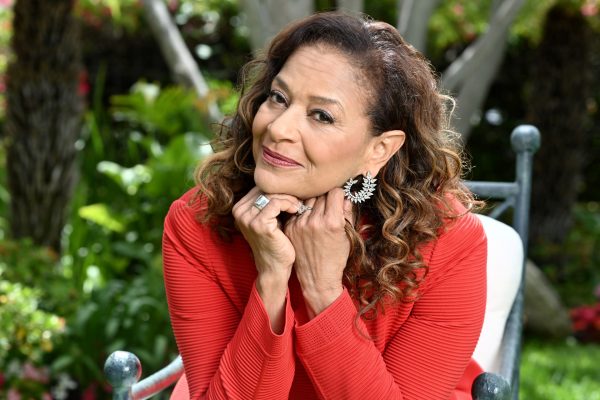
You’ve built an extraordinary career as a dancer, choreographer, director, producer, actor, educator, and advocate. How has each part of your career influenced the others? What have you learned about leadership from working with artists and performers?
Being a dancer, choreographer, director, producer, actor, and educator has helped shape the person I am today. Each experience has inspired another. What unifies each role is my ability to lead and learn from everyone I’m working with. It’s also these opportunities that have afforded me an incredible platform for my advocacy efforts. I strive to bring leadership approaches from my various stages — in a very literal sense — to a national stage as I support a variety of initiatives, such as HIV awareness.
The medical landscape around HIV has evolved dramatically since you first began your advocacy. What is one thing you wish younger folks understood about what the first years of the epidemic were really like?
Thanks to medical advancements, we can now look at so much more than HIV status and this is a tremendous step forward. As someone who has always believed in the power of mind, body, and spirit, I want today’s generation to understand that people living with HIV need integrated support for their mental, emotional, physical, and social well-being because all these elements are deeply connected.
We need to broaden the discussion around HIV management, and that’s why I’m proud to work with Merck on “Your Hive of Whole Health,” which addresses factors such as managing one’s mental wellness, co-occurring conditions, social drivers, and other life challenges.
Your Hive of Whole Health is built around the idea that health doesn’t happen in isolation. What does “whole health” mean to you in your own life?
Health doesn’t happen in isolation. People living with HIV need comprehensive support systems around them — whether that’s family, chosen family, neighbors, community or religious leaders, or care team members; they are a part of the whole health journey.
To me, whole health means looking beyond the virus to truly understand the unique challenges that people face so they have the full support they need. Having supported loved ones on their health journeys and managing my own well-being, I know that comprehensive support is key.
That’s the beauty of “Your Hive of Whole Health.” In fact, the idea behind the program is simple. Just as a hive depends on the strength of many bees working together, people living with HIV often rely on a network of support that includes healthcare providers, advocates, family, friends, and peers. “Your Hive of Whole Health” provides tools and resources to help individuals build and strengthen those connections.
For someone living with HIV, what kinds of support beyond medical treatment do you think can make the most significant difference in their lives?
As people are living longer with HIV and managing additional health conditions, like high blood pressure, high cholesterol, and diabetes, having the right support system in place can play an increasingly important role.
Understanding these other conditions, as well as navigating social challenges and other life challenges such as not having access to affordable or healthy food, not having support from family or friends, struggling with stable housing, or facing misconceptions about HIV is critical. It’s awareness, understanding, and a “Hive” of support that can make a difference.
People can go to HiveofWholeHealth.com to learn more, access resources, and build their own Hive.
Many folks tend to talk about the HIV epidemic as if it is something of the past. What do you think we risk losing when we stop talking about HIV and the people whose lives have been affected by it?
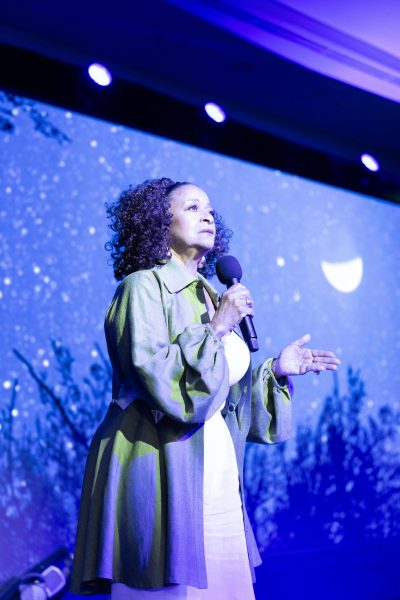
This journey began for all of us in a time of intense fear, isolation, and crisis. As I reflect back to the early ‘90s, it was an honor to create the first network television show on “A Different World” to address the epidemic at a time when people were afraid to even say the word. The network and advertisers were very hesitant about talking about HIV on TV in this way at that time. It really hadn’t been done before. But I stood my ground and pushed forward. As a result, we were able to bring the epidemic into living rooms, confronting fear, stigma, and misinformation. It changed the conversation, especially in Black communities, where the impact was deeply felt. It also spotlighted how HIV impacted women, which was not formally recognized by health agencies until years later.
Today, we can truly celebrate the united and unbreakable spirit of 45 years of the HIV movement and champion a new era of whole health. But there is still so much more to be done. We must continue shining a light on issues that matter most. We must spotlight these across all forms of entertainment, media, and digital storytelling to drive awareness, understanding, and support. That’s why programs like Merck’s “Your Hive of Whole Health” are so important — we keep the community and their needs at the center and provide much-needed support.
If nothing else, what is one message you’d like for our readers to take away from this interview?
I want people living with HIV and the community around them to know they are not alone. There’s a whole community of support — a Hive — that can help them on their journeys with HIV.
Go to HiveofWholeHealth.com to learn more about the emotional, physical, social, and mental aspects of living with HIV. Build that Hive around you because whole health is better together.
Celebrity News
Fashion icon Bob Mackie dead at 87
Designing legend to all the divas, gone but not forgotten
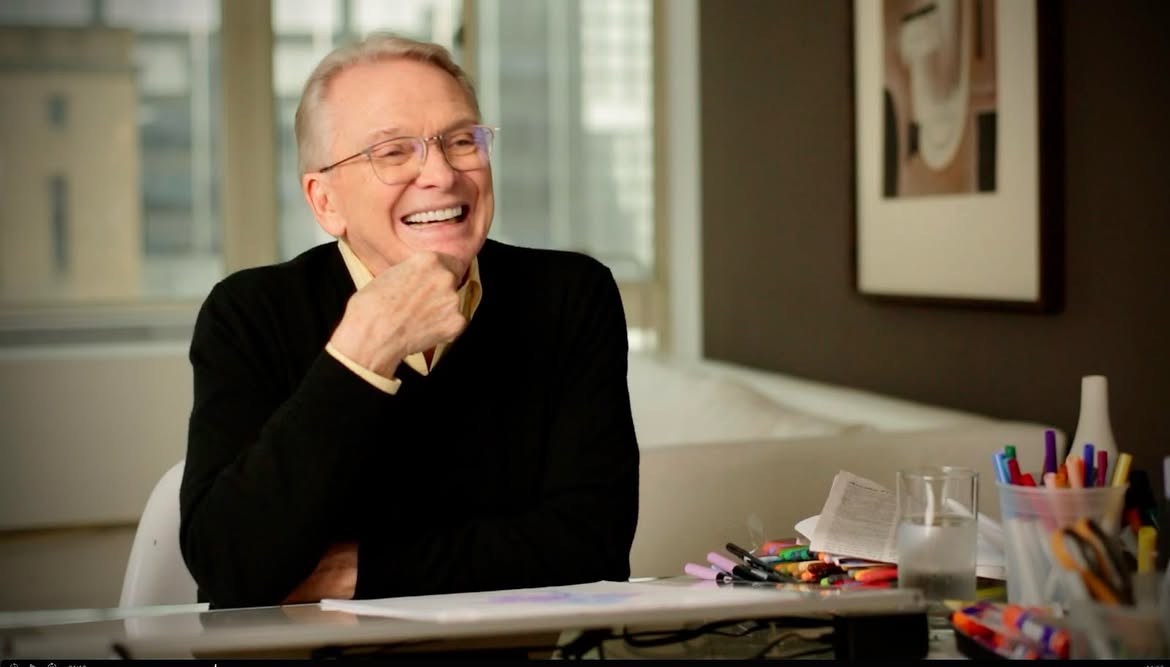
To those still reeling from the loss of Dolly Parton and Tim Curry, we have another queer icon to add to the In Memoriam of 2026: Bob Mackie. A designer known for being extra, before that was even a thing, has left us with a legacy of looks and an indelible mark on fashion.
The news broke on his Instagram account Monday, Sept. 14, with the message:
“It is with a heavy heart that we share the news that Mr. Bob Mackie passed away today. He lived his 87 years to the fullest, fulfilling his dream of being a fashion and costume designer, which is all he ever wanted to do. His genius and extraordinary designs will live on forever, continuing to bring beauty into this world.” According to People magazine, he passed away in Palm Springs, Calif., due to pneumonia.
At 87, Mackie was the definitive designer for divas. Mackie has literally dressed them all, including Diana Ross, Whitney Houston, Barbra Streisand, Dolly Parton, Tina Turner, Bette Midler, Bernadette Peters, and even RuPaul. He’s dressed film and television icons like Raquel Welch, Lynda Carter, Goldie Hawn, and Jennifer Lopez. It’s not just female divas; he’s also done many of Elton John’s famous costumes as well as David Bowie’s.
His first major mark was drawing the first design of Marilyn Monroe’s famous “Happy Birthday, Mr. President” dress. Next, he was an assistant to costume designer Ray Aghayan on “The Judy Garland Show.” The two would carry on a professional and romantic partnership for 50 years until Aghayan’s passing in 2011.
Mackie then went on to do all of the costumes for “The Carol Burnett Show,” creating an estimated 17,000 costumes for her show’s 11-year run. This gave him much critical acclaim and notoriety, making him a permanent fixture in the variety show market.
He became a frequent collaborator of Cher, having made her famous midriff-revealing Oscar gown, her “If I Could Turn Back Time” costume, and being her designer for her various television shows, including “The Sonny and Cher Show.” He even designed costumes for her Farewell Tour. The two are synonymous with him having lent his artistic sensibilities to give her a distinct look. Cher even said in 2024, “He helped me create a different me.”
Mackie has left his mark on fashion with a distinct style of glamorous, over-the-top looks. He received the monikers the “Sultan of Sequins,” the “Rajah of Rhinestones,” and the “Guru of Glitter” for challenging the line between costume and fashion with lots of fringe, flash, and over-the-top eye-catching elements. He’s managed to retain a presence not just in entertainment but in the fashion industry for decades. Most recently, one of his outfits was a major plot point for the final season of “Hacks.”
Mackie has received his share of awards and acknowledgments. In addition to dressing many people for the Oscars, he received three nominations, including dressing Diana Ross for “Lady Sings the Blues.” He won a Tony Award for “The Cher Show.” He won nine Emmy Awards and received 30 nominations for his prolific television work.
Luckily, Mackie’s life was celebrated before his passing, receiving various Lifetime achievement awards including the Geoffrey Beene CFDA Lifetime Achievement Award, being honored by the Television Hall of Fame, and receiving “RuPaul’s Drag Race”‘s Giving Us Life-time Achievement Award. He was the first guest judge on the popular series.
It’s clear that not only was Mackie talented, he was magical. He gave a bit of stardust to countless celebrities, luminaries, and public figures with looks that not only defied expectations but managed to be truly spectacular. He’s part of the glitz we think of when we think of Hollywood, and while often elaborate costumes, the shrewd fashion sense and elegance cannot be denied. Mackie will be missed, but his work lives on in the countless pieces still in circulation and forever captured on film and in media.
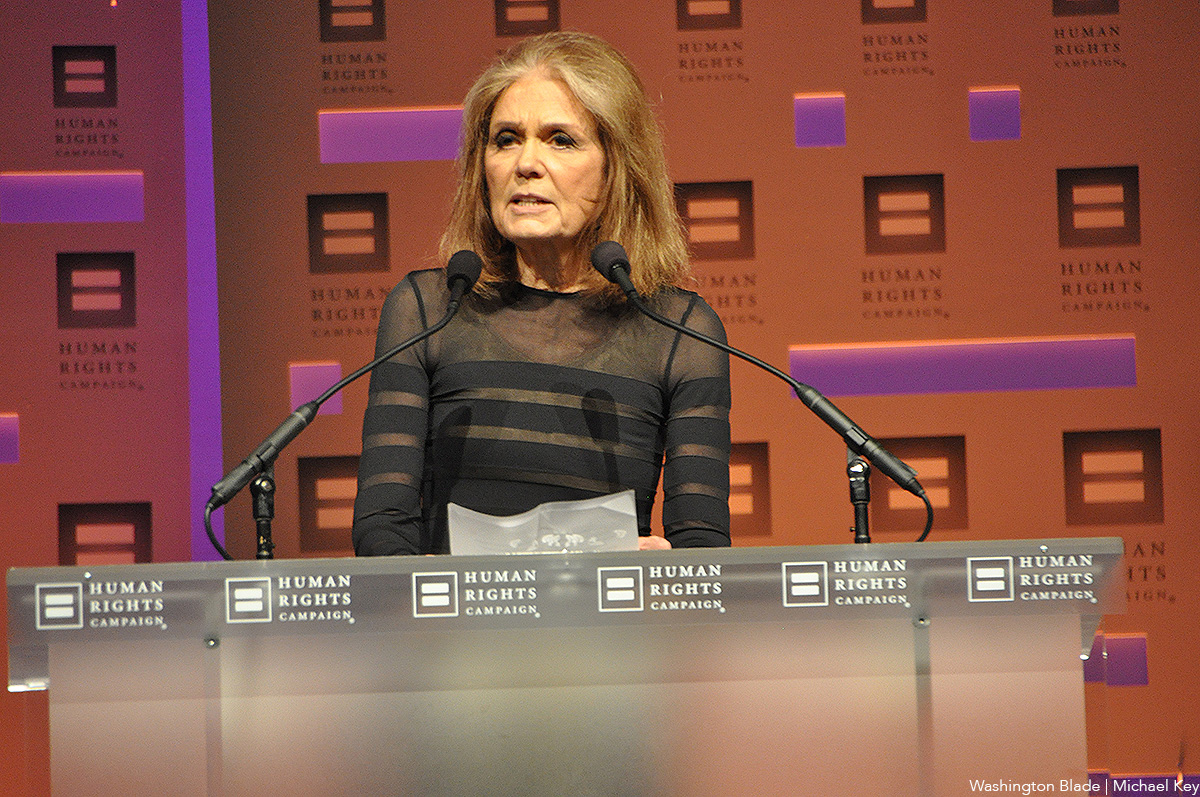
Gloria Steinem, writer, activist, and a leading voice of the feminist movement in the 1970s, died on Wednesday in Manhattan. Her death was announced on Instagram by her official foundation, Gloria’s Foundation, which shared that Steinem “passed away peacefully at her home, surrounded by some of the many who loved her.” She was 92.
A leading figure and spokesperson for the second-wave feminist movement, running from the 1960s through the ’80s — the earlier women’s rights suffrage movement being considered the first — Gloria Steinem campaigned for workplace equality, equality in the home and reproductive freedom, seeing those struggles as inseparable from the wider causes of social and racial equality.
She also championed LGBTQ rights, supporting lesbian visibility within the larger women’s liberation movement, and standing in opposition to the idea that lesbians posed a “lavender menace” to the cause of feminism.
In her vision of the future, marriage equality was a given: “Lesbians or homosexuals will no longer be denied legally binding marriages, complete with mutual-support agreements and inheritance rights.”
GLAAD President Sarah Kate Ellis said in a statement following Steinem’s death: “Gloria Steinem was a trailblazing titan of civil rights whose vision for liberation bridged the movements for gender equality, bodily autonomy, and LGBTQ rights. She recognized that feminist progress is incomplete without full inclusion and stood as an ally to transgender people’s fight for equality. Gloria rejected rigid binaries, choosing instead to build bridges of empathy and coalition across all marginalized identities. Gloria’s life was a masterclass in coalition-building, courage, and unconditional empathy.”
Among her many trailblazing milestones, Steinem was widely known for co-founding the National Women’s Political Caucus in 1971 alongside foundational feminist figures Bella Abzug, Shirley Chisholm, Betty Friedan, Fannie Lou Hamer, LaDonna Harris, Mildred Jeffrey, and Jill Ruckelshaus.
The mandate: get women into political office and positions of power — “women who are committed to the causes of other women — not women who are going to just imitate the male politics as it has been practiced all these years complete with elitism, racism and prejudice against women,” she said, “but women who really care about their sisters and will work for social reform.”
“This is no simple reform. It really is a revolution.”
Liz Abzug, daughter of Bella Abzug, remembers Steinem as “a lifelong activist and a humanist with lots of love to give,” as well as “a very, very close and dear friend of my mother’s,” as the two “worked side by side to change the American landscape for women.”
“It’s hard for me and all of her other supporters and admirers to imagine a world without Gloria leading the charge and fighting for women’s rights and full gender equality,” Abzug shared.
Indeed, there was much about that American landscape in need of change. Steinem came up during a time when discrimination against women was the legal and societal norm.
A married woman, for instance, often required her husband’s signature to obtain a credit card, a form of gender discrimination remedied in 1974 with the Equal Credit Opportunity Act. Women were often unable to get jobs. Life turned Steinem down, saying “We don’t want a pretty girl, we want a writer. Get out of here.” If women did land a job, in 1973, they would have likely made 56.6 cents to every dollar that men earned.
The law’s failure to support women’s autonomy was especially visible on the matter of reproductive rights.
For many women in America, legal abortion remained unavailable until 1973, when Roe v. Wade established a constitutional right to abortion nationwide. Steinem spent years speaking out for women’s safety, and promoted the idea that “decision-making power over our own physical selves” was intertwined with equal regard for women as citizens.
“The vast majority of women support safe and legal abortion. My response is if those legislators were half women, this wouldn’t happen,” she said in a 2022 interview with Katie Couric. “If we actually had a democracy, if those legislators looked like the country from a gender, racial, and class perspective, this probably would not be happening…”
Gloria Marie Steinem was born on March 25, 1934, in Toledo, Ohio, the daughter of Leo and Ruth (Nuneviller) Steinem. Her father was an antiques salesman; her mother had worked for a newspaper before she got married, but suffered what was called at the time a “nervous breakdown” and spent time in an institution. Following a divorce, her mother was left largely in the care of 11-year-old Gloria Steinem in a house that has been described as infested by vermin.
“I didn’t go to school a full year until I was 11 or 12, so I lived in books. I really was an observer of life,” Steinem said in a 2011 interview.
After moving to D.C. to live with her older sister, Susanne, Steinem graduated from Western High School in 1952. She followed Susanne to Smith College where she studied government and wrote for the student newspaper, graduating in 1956.
Upon moving to New York in 1960, she worked for Help! magazine and wrote freelance for publications that included Life, Esquire, and Glamour. According to Smith College Libraries, she co-founded New York magazine in 1968 and served as political columnist until 1972. In the 1960s and ’70s, Steinem was active in causes that included United Farmworkers, Vietnam War Tax Protest, and Committee for the Legal Defense of Angela Davis. She also participated in the political campaigns of Adlai Stevenson, Robert Kennedy, Shirley Chisholm, and others.
Steinem is said to have found her way to the Women’s Movement in 1969, following an abortion “speak-out” meeting of the Redstockings. She was inspired to begin speaking to audiences across the country, alongside activist Dorothy Pitman Hughes, and later Florynce Kennedy and Margaret Sloan.
Among Steinem’s most enduring legacies, and still in publication today, is Ms. magazine, which she co-founded. Widely considered the first national American feminist magazine (and owned, operated, and written by women!), it first appeared as a preview insert in New York Magazine in December 1971 with a tagline, “The New Magazine for Women.” Ms. earned status as a full-on publication in July 1972 with a cover image depicting a modern pregnant Hindu goddess Kali holding a clock, skillet, typewriter, rake, mirror, telephone, steering wheel, and an iron.
Ms. is credited with raising cultural awareness on policy issues, like the Equal Rights Amendment, taking on taboo topics and putting women’s issues front and center.
Steinem’s long list of published work includes the 1983 bestselling book Outrageous Acts and Everyday Rebellions, a collection of her Ms. articles and other pieces. The book includes the feminist’s essay on her undercover exposé of the Playboy Club, for which she donned bunny ears, collar, and bow to covertly report on working conditions for women.
In 1986, she published “Marilyn: Norma Jeane,” which explored the life of Marilyn Monroe and the idea of women as vulnerable and at the disposal of society — men in particular.
Steinem also wrote “Revolution from Within” (1992); “Moving Beyond Words” (1994); and “Doing Sixty & Seventy” (2006). She was awarded the Presidential Medal of Freedom in 2013 by President Barack Obama.
Steinem’s relationships over the years included Ted Sorensen, counselor to President John F. Kennedy; Stanley Pottinger, a Justice Department official; and publisher and real-estate businessman Mort Zuckerman. In 2000, she married South African businessman David Bale, who died in 2003.
Steinem was predeceased by her mother and her sister, Susanne Steinem Patch, who died in 2007. On multiple occasions, she spoke of a community that extended beyond birth family — people whom she chose, and who chose her.
“[Feminism is] about friends and sisters and community,” Steinem said in an interview with bell hooks. “The good part and the great part is that it’s about chosen family. We have each other’s backs and that is so precious.
In announcing Steinem’s passing, her foundation offered this reflection: “Gloria’s greatest gift was her ability to listen to others, to make others feel seen and heard. Her words, actions, and example gave people permission to be their truest selves. Gloria lived true to her independent spirit, always with curiosity and a great sense of humor.
“She spent her recent years doing the two things she loved most: being in community with others and writing … Gloria loved the tradition of lighting signal fires on hills to light the way to the other side of the mountain.”

Vote now! Best Of LGBTQ DC readers’ choice awards

Meet the LGBTQ candidates running for U.S. House, Senate

Ana Brnabić becomes world’s first openly lesbian head of state

529 openly LGBTQ candidates running in Brazilian election