U.S. Military/Pentagon
HRC holds retirement ceremony for ousted transgender servicemembers
White House executive order bans openly trans military personnel
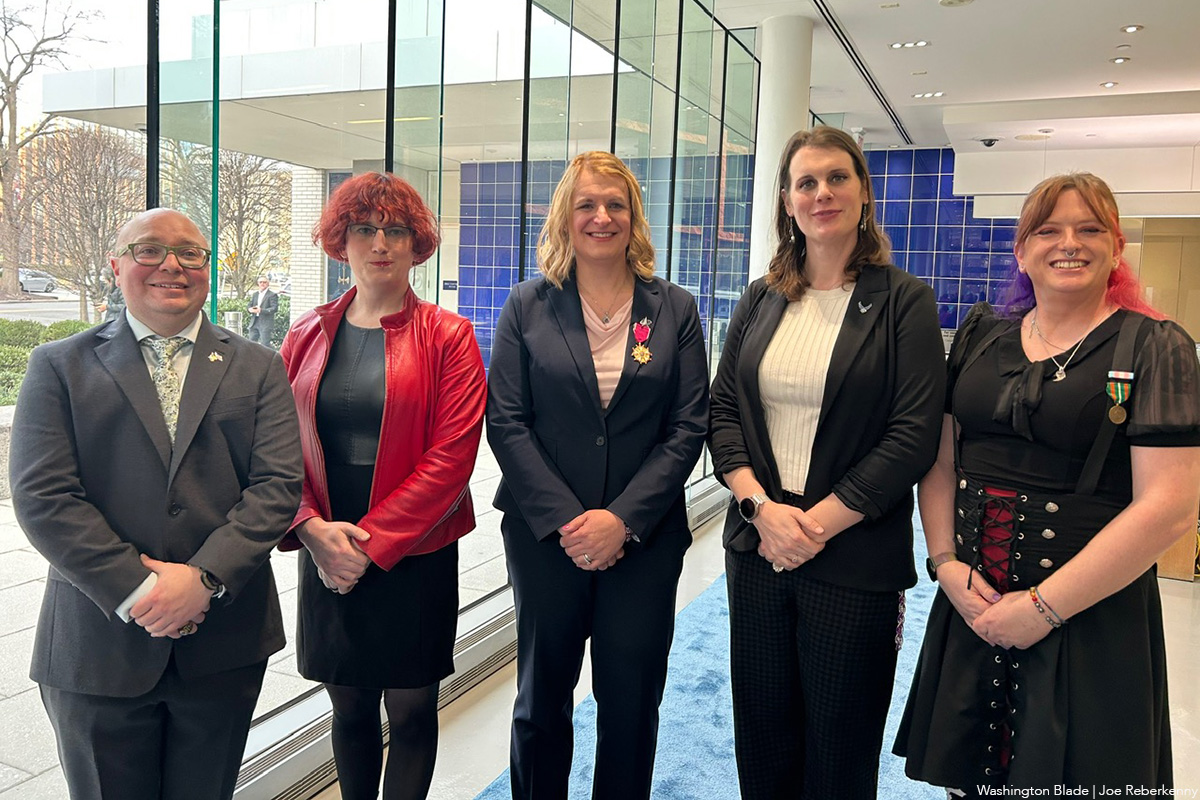
When retirement celebrations are planned — especially military ones — crowded rooms are usually filled with joyous energy: smiling people celebrating over glasses of champagne and stories of “the good old days,” marking the moment when service members decide it is the right time to step back from work. This retirement event, however, felt more like a funeral than a major life milestone.
The Human Rights Campaign Foundation hosted an event on Jan. 8 in D.C. to commemorate the forced retirement of transgender servicemembers. The event was a direct result of President Donald Trump’s 2025 Executive Order 14183, titled “Prioritizing Military Excellence and Readiness,” which directed the Pentagon to adopt policies prohibiting trans, nonbinary, and gender-nonconforming people from serving in the military.
In the heart of the nation’s capital, mere blocks from where the president signed that executive order, five military members followed the traditional pomp and circumstance that military retirement celebrations demand — the U.S. Army’s passing of the NCO sword, the U.S. Navy’s reading of “The Watch,” speeches from colleagues and bells ringing, flags folded tightly while family members, and bosses talk about the peaks of their careers and sacrifices made to protect the Constitution. But the tears that could be heard and seen were not bittersweet, as they often are for the millions of Americans who came before them. They were tears of sadness, fear, and ultimately of acceptance — not agreement — that they were removed from their posts because of their gender identity.
Thousands of trans servicemembers were forced out of all six branches of the military after Executive Order 14183, joined by a February memo from Defense Secretary Pete Hegseth stating that trans and nonbinary individuals would no longer be eligible to join the military. The memo also directed that all trans people currently serving be separated from service because their gender identity supposedly goes against the military’s accession requirements and that, as a collective group, they “lack the selflessness and humility” required for military service.
For many trans servicemembers, their careers had suddenly come to an end. Unlike the five on stage on Jan. 8, they would not have a ceremony, the ability to say goodbye to a job they didn’t want to leave, or a packed room of supporters clapping and crying alongside them.
Colonel Bree B. Fram from the U.S. Space Force, Commander Blake Dremann from the U.S. Navy, Lt. Col. (Ret.) Erin Krizek from the U.S. Air Force, Chief Petty Officer (Ret.) Jaida McGuire U.S. from the Coast Guard, and Sgt. First Class (Ret.) Catherine Schmid from the Army were granted the chance to say goodbye to more than 100 years of combined service to the country.
“This ceremony is unprecedented — not because their careers fell short in any way, but because they shined so brightly in a military that cast them aside as unworthy,” said Maj. Gen. Tammy Smith (Ret.), who was the master of ceremonies for the roughly 5-hour event. “For every one of them, there are thousands of other transgender service members who were denied the opportunity to even reach this moment of retirement, despite records that mark them as among the best of the best.”
Shawn Skelly, former assistant secretary of defense for readiness under President Joe Biden and member of HRC’s board of directors, also spoke at the event. She emphasized that this is not a result of anything a trans servicemember did — or didn’t do — but rather a country trying to villainize them.
“Trans service members … are on the front lines, canaries in the coal mine of our democracy as to who can be seen as not just American, but among the best that America has to offer,” Skelly said.
Two members of Congress who have been at the heart of the fight for ensuring LGBTQ rights for Americans also addressed the crowd and the retiring officers: the first openly gay non-white member of the U.S. House of Representatives, U.S. Rep. Mark Takano (D-Calif.), and the first openly trans member of Congress, U.S. Rep. Sarah McBride (D-Del.).
“I want to begin by apologizing to our [trans] servicemembers and reiterating that your service and commitment to our nation does not go unnoticed,” Takano said. “I am sorry this administration has chosen to target you for no reason other than cruelty.”
“Each of you answered the call to serve. Each of you met the standards. And each of you served and led with integrity, professionalism, and courage,” said McBride. “Each of you are brave, honorable, and committed patriots who also dared to have the courage to say out loud that you’re transgender.”
Former Air Force Secretary Frank Kendall also gave a speech, noting that there was no reason for thousands of trans military members to lose their jobs and for the country to lose invaluable personnel that make the Armed Forces the best in the world.
“As I read the biographies of each of our retirees today, one thing came across to me,” former Kendall said. “It was how similar these read to those of all other retirees, and to others still serving. … It is a huge injustice, and an enormous loss to our nation that [they] … are not being allowed to continue to serve their country in uniform.”
Each service member had an introducer highlight their accomplishments before they gave their own heartfelt and pointed speeches, all of which can be watched in full on HRC’s YouTube page.
“I joined the military to be part of the solution … I learned that living authentically proved far more truthful and beneficial to not only myself but also my units than pretending to be someone else,” McGuire told the audience of family members, friends, LGBTQ rights activists, and former military personnel. “Being transgender never kept me from deploying, and I never failed to fulfill my duties.”
Despite the circumstances, McGuire said she would use this moment as an opportunity to continue serving.
“Even when it was forced upon you with no choice or discussion, [retirement] is still a new chapter … I’ll keep advocating for the rights and freedoms we all cherish,” McGuire said.
Schmid from the Army spoke about accepting the feeling of institutional betrayal after giving so much of herself to the service.
“The Army taught me what honor and integrity meant, and that integrity cost me the only thing I’ve ever really known how to do — it cost me being a soldier,” Schmid said. “Institutions fail people, but institutions are made of people, and that’s what I keep going back to … the soldiers, the people — that’s the Army that matters.”
Presik from the Air Force went next.
“Over my career, I’ve been called a hero and thanked for my service … I did all those things for the hope that I was making this country a better place for my three children and for your children and your families and your hopes as well,” Presik said, emphasizing that this was a fundamental policy failure, not a personal failure. “Now I have been separated from the Air Force, not because my performance, commitment, or ideals were found lacking, but because the policy changed on who could serve — and that reality is difficult to say out loud.”
“You matter. Your service matters, and you are not alone … transgender airmen are surrounded daily by so many fellow Americans who serve quietly and professionally,” Presik added, acknowledging that some trans people will continue to serve their country, even if it means hiding a piece of themselves until this policy is remedied.
Draiman from the Navy was fourth, emphasizing that his work serving the American people would continue despite retirement.
“I have spent my entire career pushing back against systems that too often treated my sex, my sexuality, or my gender as a measure of my capability under the guise of readiness,” Draiman told the crowd. “The work of dismantling hate and building better systems is far from over, and I still have more to give as I step out of uniform.”
Fram from the Space Force went last.
“My service was real. My dedication was real, and the years I gave to this country were given fully, honorably, and especially at the end with great pride,” she said with tears welling in her eyes — as did most of those in the audience. “Transgender service members are persons of character, not caricatures, and a society that justifies exclusion by denying our humanity needs to learn its lesson better from the Civil Rights Movement.”
“The uniform may come off, but the values it represents never will.”
Across the five branches of the military represented, each retiree carried countless honors and awards, evidence of their strength and dedication to protecting a country that elected a president who has now attempted to strip them of their service in both of his terms in office.
After the ceremony, the Washington Blade sat down with HRC Senior Vice President of Campaigns and Communications Jonathan Lovitz, to discuss why HRC decided to honor these five servicemembers.
“Why do this? Because they deserve nothing less. These are our heroes. These are our fellow Americans who have done more to serve this country than anyone who has been attacking them for that service,” Lovitz said. “These five are stand-ins for the thousands more, many of whose stories we’re never going to know, but it’s our obligation to find and uplift every single one of them.”
Multiple times during the ceremony, it was noted that military members vow to protect the Constitution rather than any individual in the White House. For Lovitz, that is the crux of why HRC felt the need to act.
“Civil rights protect all of us — or at least they’re supposed to. That’s at the heart of the Constitution … and that includes, and especially includes, our heroes who fight, sometimes die, to protect even those who would try to erase them.”
He ended the conversation by sharing a private moment with one of the retirees.
“I just hugged one of the honorees, and she said to me, ‘We never should have had to do this, but if we had to do it, this was the way.’ So I feel great that they feel loved and honored and seen and celebrated, and that so many leaders in the community were able to be here to lift them up.”



U.S. Military/Pentagon
Court to weigh class action status in trans military ban challenge
Thousands of transgender servicemembers await pivotal decision
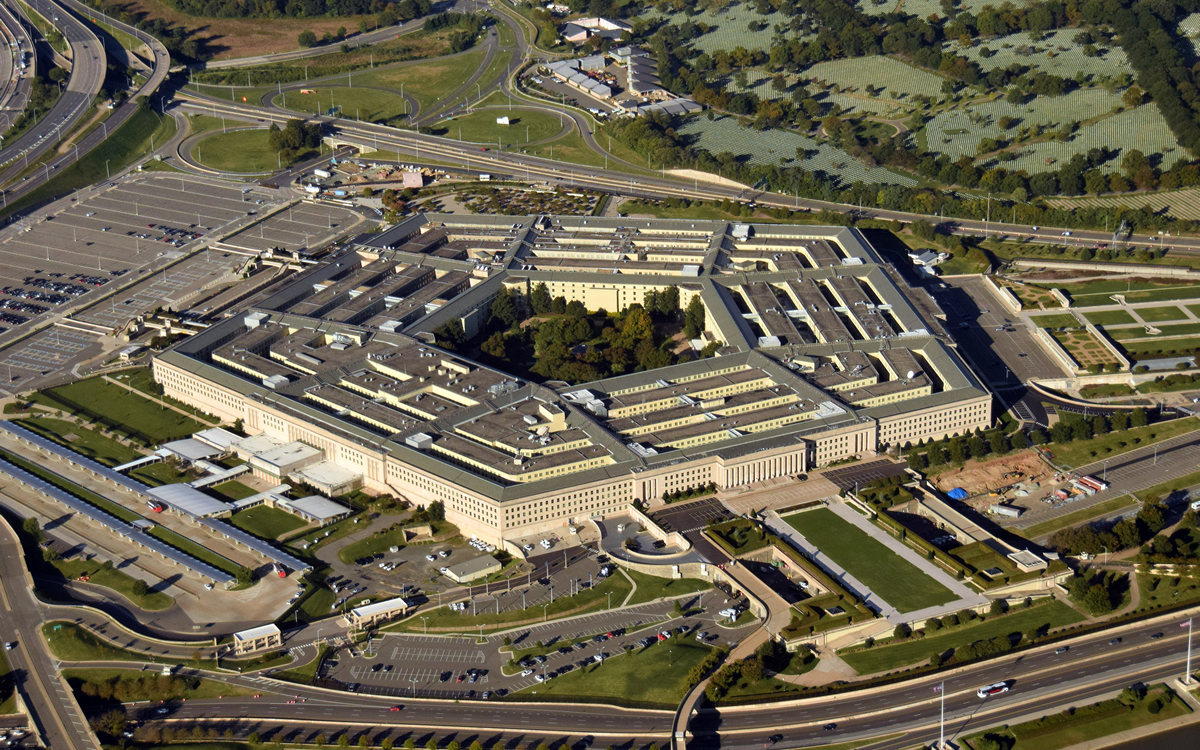
While many eyes are on the U.S. Supreme Court awaiting the verdicts in West Virginia v. B.P.J. and Little v. Hecox, another court case involving transgender rights is unfolding less than a mile away at the U.S. District Court for the District of Columbia — one that could have lasting implications for transgender military personnel.
In January 2025, President Donald Trump signed Executive Order 14183, titled “Prioritizing Military Excellence and Readiness,” directing the Pentagon to prohibit transgender, nonbinary, and gender-nonconforming people from serving in the military.
The Trump-Vance administration and Defense Department argued that trans people are inherently incapable of meeting the military’s “high standards of readiness, lethality, cohesion, honesty, humility, uniformity, and integrity,” citing a history or signs of gender dysphoria. According to the Pentagon this creates “medical, surgical, and mental health constraints on [an] individual.” Regardless of their physical or intellectual capabilities, transgender applicants are now considered less qualified than their cisgender peers.
Almost immediately after the executive order was signed, LGBTQ Legal Advocates & Defenders (GLAD Law) and the National Center for LGBTQ Rights filed a federal lawsuit in the U.S. District Court for the District of Columbia challenging the order. The plaintiffs argue the Trump administration acted with discriminatory animus and violated the Equal Protection guarantee of the Fifth Amendment.
The case — originally filed as Talbott v. Trump and now restyled as Talbott v. USA — includes six active-duty service members and two individuals seeking to enlist. Currently, there are 28 plaintiffs in total, including the two still attempting to enlist.
On June 1 the U.S. Court of Appeals for the D.C. Circuit blocked the military ban for active-duty trans service members. The three-judge panel ruled 2-1 that Trump’s executive order was illegal — created with the intent to exclude people from military service based on their gender identity.
The Washington Blade spoke with Michael Haley, a staff attorney at GLAD Law who is part of the legal team challenging the ban and seeking to protect the constitutional rights of transgender service members. Haley previously served as an assistant attorney general in the New Hampshire Department of Justice and as a law clerk for the U.S. District Court for the District of New Hampshire.
Asked why the D.C. Circuit’s ruling blocking the ban — issued on the first day of Pride month — was so significant, Haley said the decision is about protecting the constitutional rights of trans people that have been under attack since the beginning of the Trump-Vance administration.
“I think it’s hard to understate the importance of that order, because what is really significant is that the ban is based entirely on the administration’s dislike of transgender people, and not based on any real concerns about lethality and unit cohesion,” Haley said. “The circuit court went through in pretty good detail, identifying all the ways in which it’s clear that the administration is doing this to harm transgender people, and not for any kind of real military benefit. It’s a really striking and important decision that shows all of our plaintiffs have been serving with distinction, earning medals and commendations, and the fact that they are transgender does not factor into the equation.”
On Tuesday, the plaintiffs will ask the court to certify the lawsuit as a class action on behalf of all trans service members affected by the military ban. Asked what class certification would accomplish, Haley said it would allow future rulings in Talbott to apply not only to the named plaintiffs but to all trans service members covered by the case.
“The class certification, if the court approves it — and we’re hopeful that it will — will mean that any final judgment that comes out of this case will apply not just to our named plaintiffs, but to all transgender service members serving. Simply certifying a class does not necessarily change things on the ground for folks now, but it will ensure that our final judgment, or future judgments within this proceeding, apply to everybody and not just the named plaintiffs.”
Haley said the current legal landscape has created significant uncertainty for trans troops, leaving many unsure of their futures — both those serving stateside and those stationed overseas.
“Unfortunately, there’s just really not a lot of transparency around how the government is implementing the ban,” he said. “We are hearing from service members, including our own plaintiffs, who are receiving notices that they are going to be put before separation boards, but we have no insight into their timing, their decisions for who they notify, when and why, or how they are viewing the D.C. Circuit’s order. We’re going to have to wait for a little bit more of the court process to happen before we can speak with any certainty.”
Asked whether the case could eventually reach the Supreme Court — as Defense Secretary Pete Hegseth suggested in a post on X — Haley said the central constitutional question is whether the policy is rooted in discriminatory animus.
“It will be extremely hard for any court to deny that a policy that identifies a group of people and calls them dishonest, lacking integrity, and lacking a warrior spirit — in spite of all the evidence — is motivated by animus. That’s an argument under the Equal Protection Clause of the Constitution, which says everybody is entitled to equal protection of the laws and forbids singling out a group of people and treating them disfavorably just because you don’t like them rather than because of some legitimate purpose … I think that’s going to be the central question.”
Haley also explained how the current policy differs from the trans military ban Trump announced in 2017.
“The first thing goes back to that same question of animus. The D.C. Circuit recognized that this time around, the policy on its face calls transgender people dishonorable and lacking integrity and things like that. We did not have as clear evidence as we do this time around that this is not actually about military readiness — it is about trying to harm transgender people.”
Haley echoed that view, arguing the administration’s “updated” policy is aimed at excluding trans people rather than improving military readiness.
“The fact that they are trying to push out people who are serving simply because they’re transgender goes to show that this is about harming that group rather than making sure the military can function,” Haley said.
He said the current policy is significantly broader, affecting active-duty trans service members rather than primarily those seeking to enlist.
“The other major difference is how this ban is treating folks who are serving. The last time around, those who were already serving were allowed to continue serving and the ban only applied to people seeking to join the military. This time around, the ban is going further and trying to push out people who are serving with distinction and performing to standards, which is just more evidence that this is not about any actual military benefit.”
Haley also outlined the two categories of evidence GLAD Law has presented to the court to challenge the administration’s claims that trans service members undermine military readiness.
“One [type of] evidence about these individual service members — they have served on nuclear submarines, flown Navy planes, reached ranks requiring Senate confirmation, served as field medics, and continue to excel in extremely demanding roles,” he said. “The other category is testimony from high-ranking military personnel who oversaw the inclusion policy and saw transgender people serving without any of the concerns the government now claims.”
“These are people who have to meet the standards just like anybody else, and if they meet the standards, they should be able to continue to serve. We had four years under the previous administration implementing that policy without any of the issues the government now claims, and that’s pretty strong evidence that it was working.”
Asked about the human toll of the policy — and the thousands of trans service members who have been forced out of the military or are uncertain about their futures — Haley said those personal stories have become a driving force behind the legal challenge.
“I have really heard stories of lives torn apart. These are people who, in some cases since they were children, dreamed of serving, achieved extremely high levels within the military, built their lives around it, built their families around it, and have now been sitting in limbo for more than a year not really knowing what’s coming next.”
He said the disruption extends far beyond losing a job, affecting long-term careers, financial security, and retirement plans.
“For those who have left, they have left a life where they had known no other type of career. In many cases they had served for long periods and were planning on availing themselves of the military benefits they had earned through long-term service, and because they were pushed out too soon, they are now having to reorder both their short-term and long-term lives.”
Haley also described service members stranded overseas, unable to return home or continue serving while they wait for the legal process to play out.
“We know of people who are effectively stranded on bases overseas, unable to come home but also unable to serve, and are just waiting for this to move forward so they can see their families again, whatever the outcome. It’s been really devastating, especially for a group of people who raised their hand to serve and protect.”
Asked what trans service members should take away from the upcoming class certification hearing, Haley encouraged them to stay informed through organizations such as SPARTA Pride, a nonprofit organization representing trans service members, veterans, their families, and allies.
“Until we get an order from a court saying, ‘This is what’s next,’ it’s hard for us to guess, and we certainly don’t want to send folks in the wrong direction. Folks should follow organizations like GLAD Law, NCLR, and SPARTA because they’re providing day-to-day updates as these developments happen.”
Second Lt. Nicolas “Nic” Talbott, U.S. Army, one of the plaintiffs in the case, spoke with the Blade last year about what it has been like to be a capable and willing service member stripped of his career because of the policy.
“It’s very empowering to be able to stand up, not only for myself, but for the other transgender service members out there who have done nothing but serve with honor and dignity and bravery,” Talbott told the Blade. “There are no documented cases that I’m aware of of a transgender person having a negative impact on unit cohesion simply by being transgender … Being transgender is just another one of those walks of life.”
Talbott added that a more diverse military is ultimately a stronger military because it brings together people with different backgrounds and perspectives to solve complex problems.
“I think the more diverse our military is, the stronger our military is … We need people from all different experiences and all different perspectives, because somebody is going to see that challenge or that problem in a way that I would never even think of … and that is what we need more of in the U.S. military.”
SPARTA Executive Director Kara Corcoran, an Army infantry officer with 18 years of service who is currently being separated under the trans military ban, said the upcoming class certification hearing could determine whether relief extends beyond the named plaintiffs.
“When the D.C. Circuit Court recently ruled to affirm Talbott v. USA’s preliminary injunction, SPARTA Pride was relieved to see their powerful conclusion: that this policy was not based on any evidence, but in unconstitutional animus toward transgender people,” Corcoran said in a statement to the Blade. “However, the post-CASA climate meant what was originally a universal injunction now only benefited the small number of active duty plaintiffs. This limited scope left behind the thousands of other transgender service members whose rights were also violated. Certifying the case as a class action would ensure that an ultimately positive outcome in litigation would apply to all patriots impacted by the discriminatory policy — not just the few dozen who signed on to be plaintiffs last year.”
Corcoran said the hearing carries implications far beyond the trans military community, arguing that the case could shape how courts respond when constitutional protections are challenged.
“The entire transgender military community and their families are waiting with profound anticipation and hope for the court’s decision, knowing it could determine the future of their military careers, their livelihoods, and their families. But the gravity of tomorrow’s hearing reaches far beyond those directly affected. It will serve as a test of whether our government will uphold its constitutional duty when another branch openly discriminates against a marginalized group of Americans who answered the call to serve with self-sacrifice, honor, and integrity. This is not simply about transgender service members — it is about the precedent the judicial system sets for every American when equal treatment under the law is challenged.”
The Blade also reached out to the White House regarding this ongoing situation.
“President Trump and Secretary Hegseth are restoring a military that is focused on readiness and grounded in scientific reality—not gender ideology,” said Anna Kelly, Principal Deputy Press Secretary said in an email.
The U.S. District Court for the District of Columbia is scheduled to hold the class certification hearing on Tuesday at 2 p.m. ET.
U.S. Military/Pentagon
Federal appeals court rules White House illegally banned trans troops
Defense Secretary Pete Hegseth says Pentagon will appeal to SCOTUS
A panel of federal appeals court judges ruled that President Donald Trump’s policy banning transgender troops likely violates their constitutional rights.
The three-judge panel from the U.S. Court of Appeals for the District of Columbia Circuit ruled 2-1 that Trump’s Executive Order 14183, also known as “Prioritizing Military Excellence and Readiness,” was created with the intent to exclude people from the military based on their gender identity.
The policy argues that trans people are inherently incapable of meeting the military’s “high standards of readiness, lethality, cohesion, honesty, humility, uniformity, and integrity,” citing a history of or signs of gender dysphoria as the cause. According to the Defense Department, this creates “medical, surgical, and mental health constraints on [an] individual.”
The policy states that, regardless of the physical or intellectual capabilities of each applicant, it views trans military applicants as a monolith, considering them less qualified than their cisgender peers.
Despite the panel’s majority opinion issued on Monday, the first day of Pride Month, the ban remains in effect. The U.S. Supreme Court allowed the Pentagon to enforce the policy last year and will continue to allow it to remain in place as litigation proceeds.
The panel’s new ruling will prevent the military from discharging current service members named in the lawsuit, but it does not allow new transrecruits to join.
The policy “appears to be driven by the bare desire to harm a politically unpopular group: persons who identify as transgender,” Judge Robert Wilkins, a Democratic appointee of President Barack Obama wrote for the majority.
Judge Justin Walker, the author of the dissenting opinion and a Republican Trump appointee, argued that the authority to determine military policy does not rest with the courts. Instead, he wrote, the Constitution grants that power to Congress through legislation and to the president as commander in chief of the armed forces.
“We have neither the expertise nor the authority to decide whether the military can exclude the plaintiffs from its ranks. The Constitution assigns that authority to Congress and the commander-in-chief,” Walker wrote.
Defense Secretary Pete Hegseth indicated that an appeal is in the works, posting, “See you at SCOTUS” on X on Monday in response to the ruling.
Jennifer Levi, senior director of transgender and queer rights at GLAD Law, which has led the litigation since last November, applauded the decision.
“Today’s decision is a powerful vindication of the plaintiffs’ extraordinary courage and unwavering commitment to their country,” Levi said.
The Washington Blade spoke with Second Lt. Nicolas (Nic) Talbott of the U.S. Army, the lead plaintiff in the case, and Levi from GLAD Law back in November.
While discussing the case and his experiences as a trans service member, Talbott said his identity is an asset rather than a hindrance, particularly when it comes to identifying problems and finding solutions, regardless of what others may think or say.
“Being transgender is not some sad thing that people go through,” Talbott told the Blade. “This is something that has taken years and years and years of dedication and discipline and research and ups and downs to get to the point where I am today … my ability to transition was essential to getting me to that point where I am today.”
He also discussed the impact of removing qualified and dedicated service members from the military, arguing that the consequences will be felt long after Trump leaves office.
“When we’re losing thousands of those qualified, experienced individuals … those are seats that are not just going to be able to be filled by anybody,” he said. “[That’s] military training that’s not going to be able to be replaced for years and years to come.”
“Every person who puts on the uniform is expected to make a tremendous amount of sacrifice,” Talbott said. “Who I am under this uniform should have no bearing on that … We shouldn’t be picking and choosing which veterans are worthy of our thanks on that day.”
Levi characterized the policy as overtly cruel and legally indefensible to the Blade.
“This policy and its rollout is even more cruel than the first in a number of ways,” Levi explained. “For one, the policy itself says that transgender people are dishonest, untrustworthy and undisciplined, which is deeply offensive and degrading and demeaning.”
She also argued that the administration’s cost justification is flawed, saying that removing and replacing trans service members is more expensive than retaining them.
“There’s no legitimate justification relating to cost … it is far more expensive to both purge the military of people who are serving and also to replace people … than to provide the minuscule amount of costs for medications other service members routinely get.”
U.S. Military/Pentagon
4th Circuit rules against discharged service members with HIV
Judges overturned lower court ruling
A federal appeals court on Wednesday reversed a lower court ruling that struck down the Pentagon’s ban on people with HIV enlisting in the military.
The conservative three-judge panel on the 4th U.S. Circuit Court of Appeals overturned a 2024 ruling that had declared the Defense Department and Army policies barring all people living with HIV from military service unconstitutional.
The 4th Circuit, which covers Maryland, North Carolina, South Carolina, Virginia, and West Virginia, held that the military has a “rational basis” for maintaining medical standards that categorically exclude people living with HIV from enlisting, even those with undetectable viral loads — meaning their viral levels are so low that they cannot transmit the virus and can perform all duties without health limitations.
This decision could have implications for other federal circuits dealing with HIV discrimination cases, as well as for nationwide military policy.
The case, Wilkins v. Hegseth, was filed in November 2022 by Lambda Legal and other HIV advocacy groups on behalf of three individual plaintiffs who could not enlist or re-enlist based on their HIV status, as well as the organizational plaintiff Minority Veterans of America.
The plaintiffs include a transgender woman who was honorably discharged from the Army for being HIV-positive, a gay man who was in the Georgia National Guard but cannot join the Army, and a cisgender woman who cannot enlist in the Army because she has HIV, along with the advocacy organization Minority Veterans of America.
Isaiah Wilkins, the gay man, was separated from the Army Reserves and disenrolled from the U.S. Military Academy Preparatory School after testing positive for HIV. His legal counsel argued that the military’s policy violates his equal protection rights under the Fifth Amendment’s Due Process Clause.
In August 2024, a U.S. District Court sided with Wilkins, forcing the military to remove the policy barring all people living with HIV from joining the U.S. Armed Services. The court cited that this policy — and ones like it that discriminate based on HIV status — are “irrational, arbitrary, and capricious” and “contribute to the ongoing stigma surrounding HIV-positive individuals while actively hampering the military’s own recruitment goals.”
The Pentagon appealed the decision, seeking to reinstate the ban, and succeeded with Wednesday’s court ruling.
Judge Paul V. Niemeyer, one of the three-judge panel nominated to the 4th Circuit by President George H. W. Bush, wrote in his judicial opinion that the military is “a specialized society separate from civilian society,” and that the military’s “professional judgments in this case [are] reasonably related to its military mission,” and thus “we conclude that the plaintiffs’ claims fail as a matter of law.”
“We are deeply disappointed that the 4th Circuit has chosen to uphold discrimination over medical reality,” said Gregory Nevins, senior counsel and employment fairness project director for Lambda Legal. “Modern science has unequivocally shown that HIV is a chronic, treatable condition. People with undetectable viral loads can deploy anywhere, perform all duties without limitation, and pose no transmission risk to others. This ruling ignores decades of medical advancement and the proven ability of people living with HIV to serve with distinction.”
“As both the 4th Circuit and the district court previously held, deference to the military does not extend to irrational decision-making,” said Scott Schoettes, who argued the case on appeal. “Today, servicemembers living with HIV are performing all kinds of roles in the military and are fully deployable into combat. Denying others the opportunity to join their ranks is just as irrational as the military’s former policy.”

PHOTOS: Vitamin C at JR.’s

PHOTOS: Rehoboth Beach Pride Festival

Liza’s book a tale that’s better than most celebrity memoirs

Hot hatchbacks: Honda Civic, Subaru Impreza

When buying a home, it’s decisions, decisions, decisions

Celebrate Pride in Rehoboth Beach this weekend

Expected India Supreme Court ruling could shape future LGBTQ rights cases

Christa Tichy hopes to preserve LGBTQ representation in Md. House of Delegates

Advocacy groups join Venezuela earthquake relief efforts

Rehoboth’s Aqua to celebrate 20th anniversary Sunday
-

 Rehoboth Beach5 days ago
Celebrate Pride in Rehoboth Beach this weekend
-
India4 days ago
Expected India Supreme Court ruling could shape future LGBTQ rights cases
-
Maryland5 days ago
Christa Tichy hopes to preserve LGBTQ representation in Md. House of Delegates
-
Venezuela5 days ago
Advocacy groups join Venezuela earthquake relief efforts