Virginia
From the Pentagon to politics, Bree Fram fighting for LGBTQ rights
Transgender veteran running for Congress in Va.
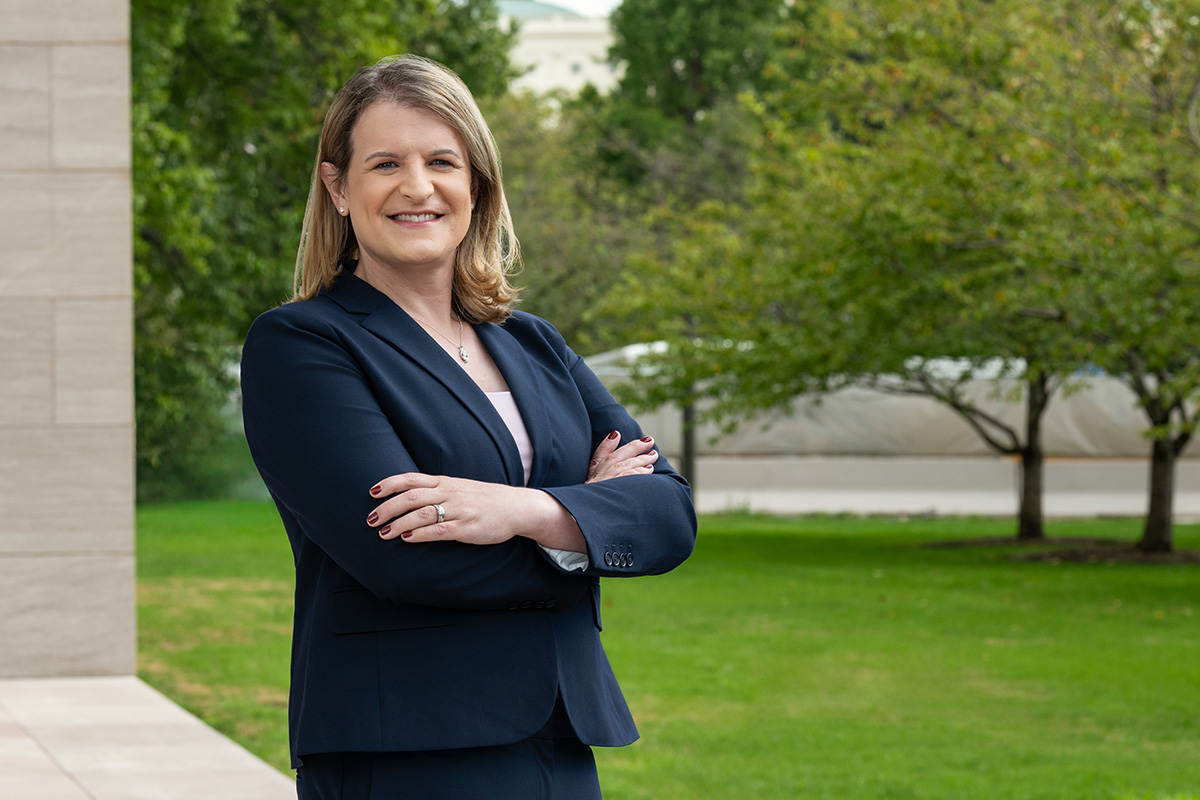
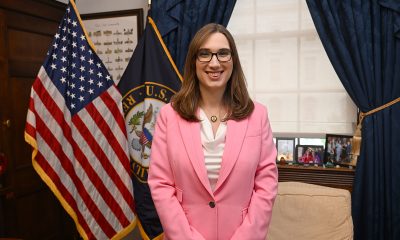
After being ousted from military service, Col. Bree Fram — once the highest-ranking openly transgender officer in the Pentagon — is now running for Congress.
Fram, who lives in Reston, Va., brings more than two decades of public service to her campaign. From the battlefield to the halls of the Pentagon, she spent more than 20 years working inside the federal government, often advocating for LGBTQ people and other marginalized communities from within the system.
Fram spoke with the Washington Blade about her decision to run amid sustained attacks against her — and against the LGBTQ community more broadly — from the Trump-Vance administration and far-right officials.
She said her commitment to public service began more than 22 years ago, shaped in large part by watching the Sept. 11, 2001, terrorist attacks.
“I had grown up expecting that there was this beautiful American peace stretching into the world for the foreseeable future, and that kind of image was shattered,” Fram told the Blade. “I realized that there was a continuous price to be paid to protect our democracy, to protect our freedoms. To be able to play a small part in defending those freedoms was incredibly important to me — to be part of something larger than myself.”
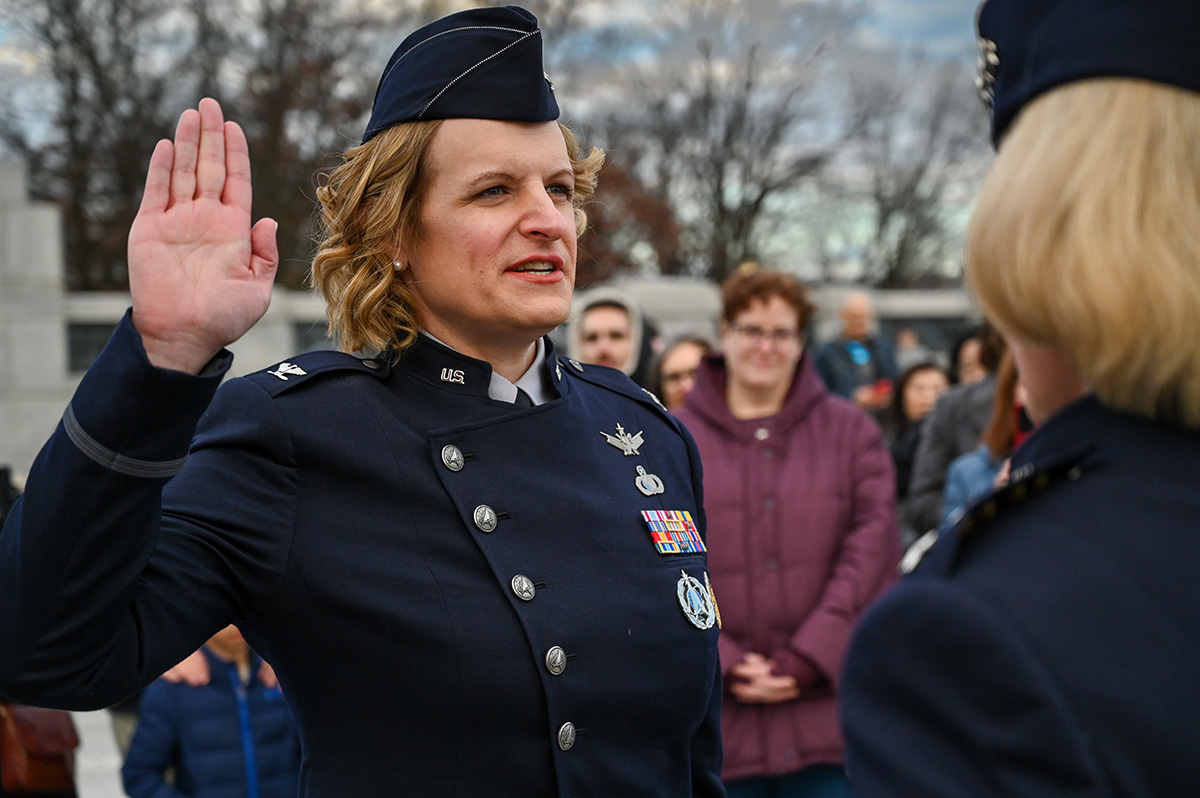
Commissioned through the U.S. Air Force Officer Training School in 2003, Fram served as an astronautical engineer and rose to the rank of colonel in the U.S. Air Force before later serving in the U.S. Space Force. She remained on active duty until 2025, when she was forced out following the Trump-Vance administration’s reinstated ban on trans military service.
Fram has been married for 20 years to her spouse, Peg Fram, and they have two children.
Beyond her military service, Fram has long been involved in advocacy and leadership. She has been a member of SPARTA, a trans military advocacy organization, since 2014, served on its board of directors beginning in 2018, and was president of the organization from 2021-2023.
Most recently, Fram served as chief of the Requirements Integration Division at Headquarters, Space Force, and as co-lead of the Joint Space Requirements Integration Cell in collaboration with the Joint Staff. Previously, she was chief of the Acquisition Policies and Processes Division for the assistant secretary of the Air Force for space acquisition and integration.
Earlier in her career, Fram served as a materiel leader at the Air Force Research Laboratory, overseeing the development of counter-small unmanned aerial systems and offensive cyberspace technologies in support of Pentagon and intelligence community priorities, managing an annual budget exceeding $100 million.
Her previous assignments also included oversight of Air Force security cooperation in four strategically significant Middle Eastern countries and 258 foreign military sales cases valued at $15.79 billion; serving as executive officer to the Air Force director of strategic plans, where she helped integrate the 30-year, $3.6 trillion Air Force Plan; a legislative fellowship on Capitol Hill with then-U.S. Del. Madeleine Bordallo (D-Guam), handling military, veterans, and foreign affairs issues; and a program management role at the National Reconnaissance Office, where she led a $700 million multi-agency engineering and IT contract overseeing more than 500 personnel and supporting $40 billion in assets.
Fram also directed 24/7 worldwide operations and maintenance of mission data processing for space-based and airborne national intelligence assets and co-led the Department of the Air Force’s LGBTQ+ Initiatives Team and Barrier Analysis Working Group from 2023-2025.
She holds a master’s degree from the Air Force Institute of Technology and is a distinguished graduate of the Naval War College. Fram deployed in support of Operation Iraqi Freedom, where she worked on airborne counter-improvised explosive device technologies.
In January, Fram, alongside four other trans military officers, was given a special retirement ceremony by the Human Rights Campaign — a direct result of President Donald Trump’s 2025 Executive Order 14183, titled “Prioritizing Military Excellence and Readiness.” The policy directed the Pentagon to adopt measures prohibiting trans, nonbinary, and gender-nonconforming people from serving in the military.
Under Virginia’s current congressional maps, Fram would challenge Congressman James Walkinshaw in a Democratic primary in the 11th Congressional District, which includes the city of Fairfax and most of Fairfax County. However, the district’s boundaries could change pending ongoing redistricting discussions in the state.
Fram emphasized that her decades working within the executive branch shaped her understanding of what it means to take — and uphold — an oath to the Constitution, even when those in power later forced her out of service solely because of her identity, not her performance.
“Through 23 years of service, I learned what it meant to fulfill that oath to the Constitution, and I wanted to continue serving,” she said. “But when this administration came in and labeled me and others like me ‘dishonorable’ and ‘disciplined liars who lack the humility required for military service,’ it hit hard. When the Supreme Court then agreed to let the administration fire all of us, I had to figure out what would allow me to continue my service in a way that was meaningful and lived up to that oath.”
After being told she would have to retire from a career she describes as her life’s calling, Fram said she began searching for another way to serve — a path that ultimately led her to run for Congress.
“I had done the work over the past couple of decades to understand the America that I believe in, that America I believe we all can be,” Fram said. “That’s where this decision came from. I believe I can fight back and fight forward for Virginians — with the knowledge I have and with a vision of the America we can be.”
That vision, she said, is one that has yet to be fully realized — despite decades of promises from Democratic leaders across all branches of government.
“This is about protecting our fundamental rights — freedom of speech, freedom to assemble, bodily autonomy, a woman’s right to choose, and the ability for queer people to live our best lives,” Fram said. “Right now, our government is throwing barriers up in front of many people. They’re strengthening them, building walls higher, and actively damaging lives.”
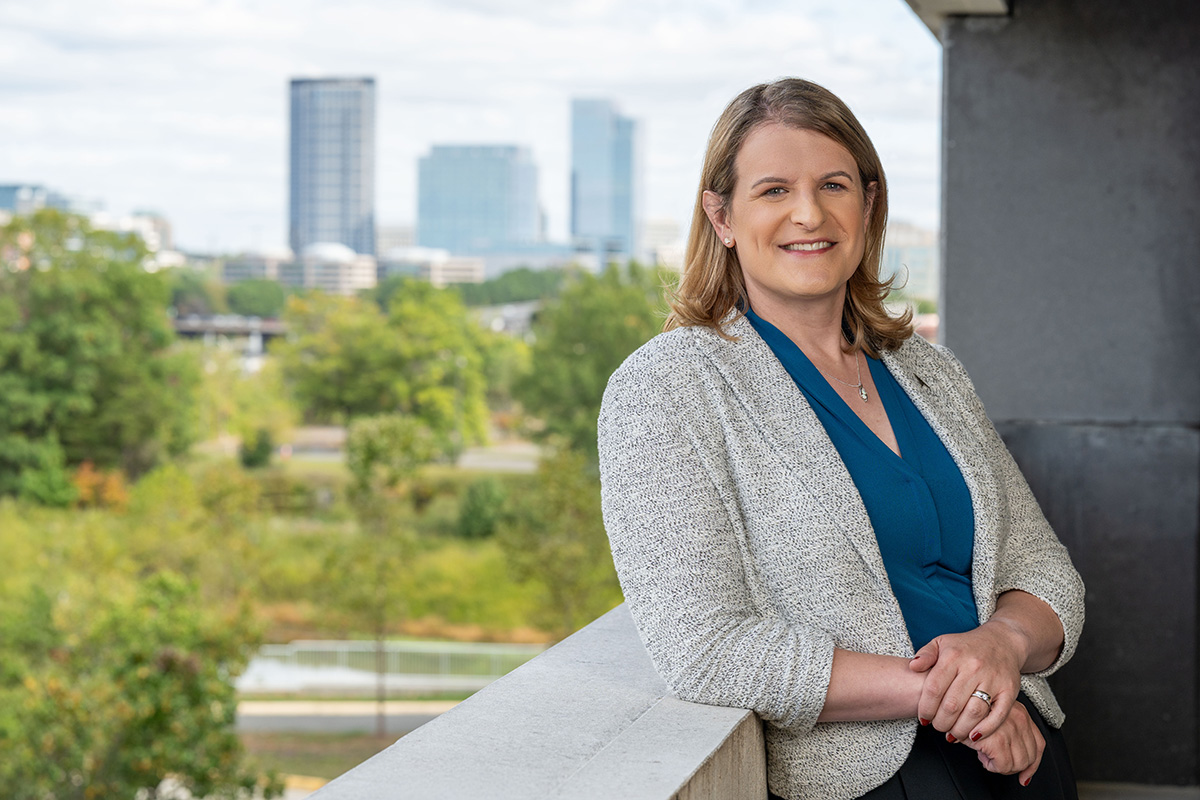
Fram said her leadership philosophy was shaped by watching strong, effective leaders during her time in the Air Force and Space Force — leaders who reinforced her belief that true leadership means expanding opportunity, not restricting it.
“Leadership is about tearing barriers down — not climbing over them and forcing others to suffer through the same things,” she said. “It’s about making sure the people coming up behind us have even more opportunity to go further, faster. How do we be better tomorrow than we are today? How do we fulfill our founding promise of life, liberty, and the pursuit of happiness?”
One way Fram said Congress could help dismantle those barriers is by passing the Equal Rights Amendment, enshrining constitutional protections for all people — particularly LGBTQ Americans.
“Getting the Equal Rights Amendment into the Constitution is absolutely critical to the future of queer rights,” she said. “Voting rights must also be clearly protected.”
Protecting democracy itself is also among her top priorities, Fram said.
“We need to take control of the House so we can put real checks on this administration,” she said. “That allows the American people to see how this administration is actively making their lives worse and less affordable — and it’s how we ultimately throw them out and get back to making life better.”
Fram said her experience working under four presidents — including during Trump’s first term — reinforced her belief that opposition to efforts curtailing civil liberties is essential.
“The primary thing we can do to protect democracy is to get rid of this administration,” she said. “Taking control of the House gives us true investigative power. Under every rock, there is likely an impeachable offense because they are failing to faithfully execute the laws of the United States.”
For her, the message Trump is sending is clear — he and others close-minded to the LGBTQ community are threatened by the possibility of what someone truly dedicated to service can become.
“One of the reasons this administration had to throw us out and silence us was because we were an example of what was possible. We shined so brightly by meeting or exceeding every standard that they couldn’t hide us away by any other means except kicking us out.”
Fram acknowledged that her identity has been a political target since 2016, but said those attacks have never been grounded in her ability to lead or accomplish complex missions over more than two decades of service.
“If others want to attack me on my identity, I welcome it,” she said. “I’m focused on whether people can afford groceries or feel safe in their communities.”
“I’m happy to be a lightning rod for those kinds of attacks,” she added. “If it allows Democrats to advance an agenda that makes life better for Americans, they can come after me all day long. They attacked me while I was in the military, before I was ever running for office.”
On policy, Fram said affordability, health care, and safety are at the center of her agenda.
“No one should be afraid to go to the doctor or fear surprise medical bills that put them into debt,” she said. “Every American deserves access to affordable, high-quality health care.”
She also emphasized a willingness to work across party lines — even with those who previously politicized her identity — if it means delivering results for constituents.
“If someone wants to work together to make people’s lives better, I’ll work with them,” she said. “If they want to come after me based on who I am, they can waste their energy on that.”
Asked how she defines hope in the current political moment, Fram rejected the idea of passive optimism.
“Hope isn’t naive optimism,” she said. “Hope is doing the work — engaging people and bending the moral arc of the universe toward justice.”
She added that representation itself can be transformative.
“Just being in Congress changes the narrative,” Fram said. “It lets a kid say, ‘Oh my God — I could do that too.’”



Virginia
Virginia Anti-Violence Project struggles to fill federal funding gaps
Group has lost 54 percent of funding since 2020
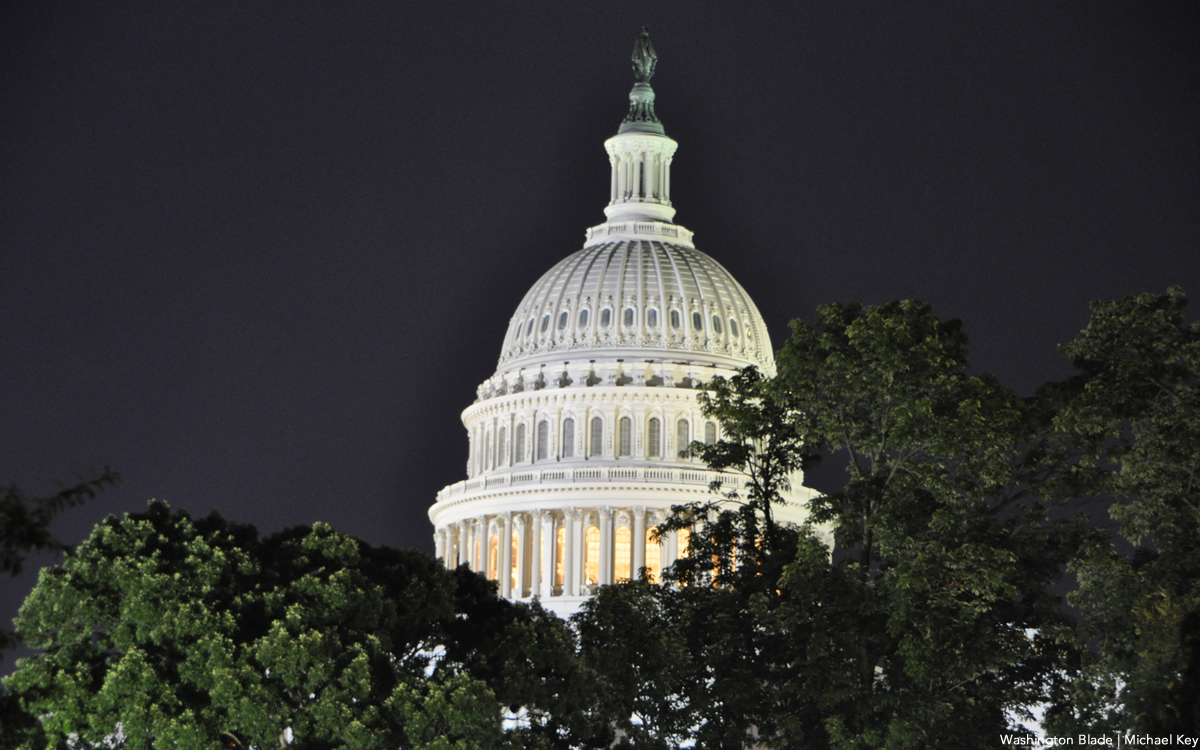
A loss of federal funding has threatened to adversely impact the Virginia Anti-Violence Project’s work in the state.
The group’s mission is to assist LGBTQ and BIPOC (Black, Indigenous and people of color) victims of domestic, sexual, interpersonal, and state violence with direct support, education, and advocacy. The VAVP seeks to build a future where LGBTQ and BIPOC individuals can live freely without a sense for worry about violence.
“Virginia Anti-Violence Project helps to close the distance between services existing and LGBTQIA+ survivors actually being able to reach safety, stable housing, and support that they can trust,” VAVP Executive Director Ebony Clark told the Washington Blade on Tuesday. “Our mission is to provide direct services and advocacy to LGBTQ+ survivors across Virginia.”
Clark said obtaining state and federal funds has become increasingly difficult.
“One of the reasons that we can talk about is politics and how you know queer diverse, queer communities are targets when it comes to politics, and so that may be a reason why the funding is decreasing in in very niche areas, but overall, state funding, federal funding has been lost or significantly reduced when it comes to culturally specific marginalized populations,” Clark said. “The bigger picture is that funding that was purposed for diversity, equity, inclusion, marginalized populations, or you know culturally competent programming, those funds have been strategically reduced or eliminated on state and federal levels overall.”
Even more so with the current Trump-Vance administration.
Data shows federal funding for one “major federal victim-services funding stream in” Virginia has dropped 54 percent over the last six years: from $25.1 million in fiscal year 2020 to $11.6 million in fiscal year 2026.
Clark noted some federal funding has been denied due to VAVP’s DEI policies — it has had to “water down” their language. These cuts have forced VAVP to limit housing and economic support, which has resulted in fewer resources for its clients.
The organization has set up a goal for receiving between $250,000-$300,000 a year that would allow it to operate — and focus on client housing.
“Housing is fundamental to safety,” Clark told the Blade. “If you know leaving violence puts someone on the street or forces them back to the person harming them, that means the crisis isn’t over. So there needs to be other prevention strategies and reactive strategies in place to be able to prevent further violence from folks.”
VAVP has set up a link for anyone who is interested in making a donation. It is here.
The VAVP website is also accepting donations.
Virginia
Winsome Earle-Sears ‘Life and Marriage Tour’ to include Northern Va. stops
Voters to consider marriage equality, reproductive rights referenda in November
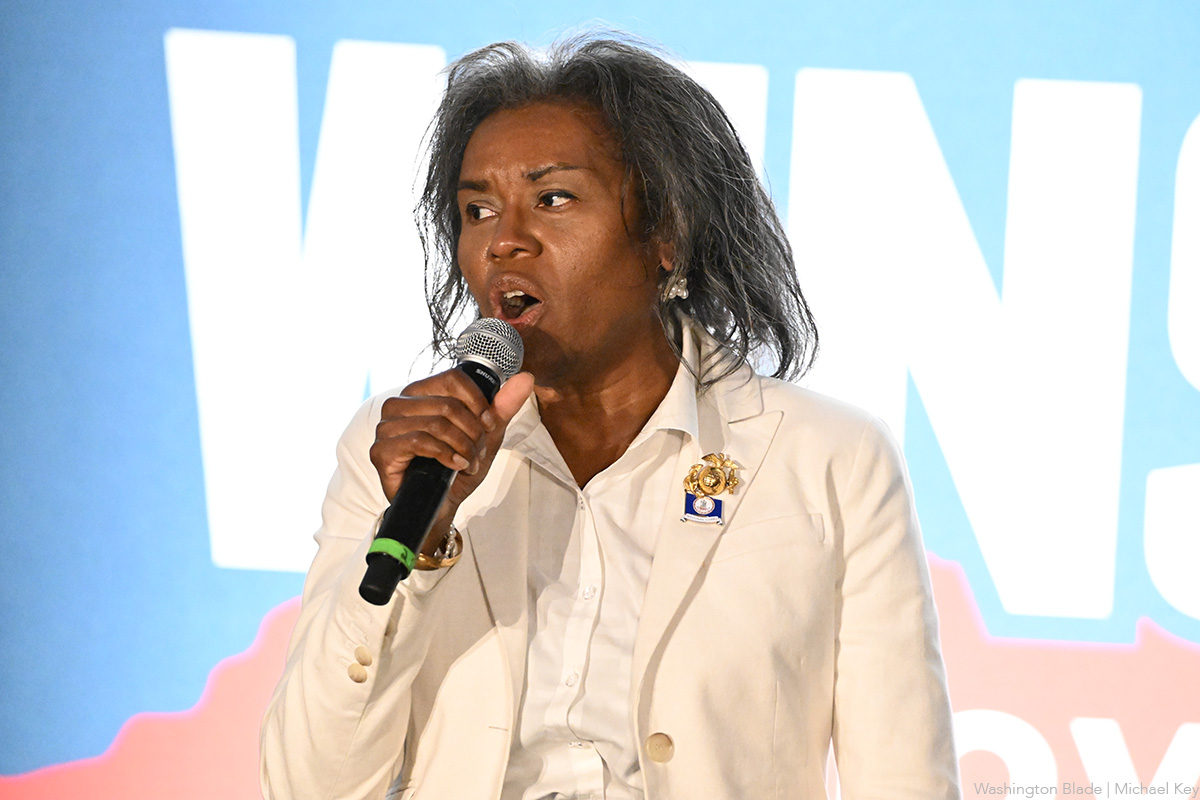
Former Virginia Lt. Gov. Winsome Earle-Sears has announced her campaign against efforts to enshrine marriage equality and reproductive rights in the state constitution will make several stops in Northern Virginia.
Her “Life and Marriage Tour” will include stops in Manassas, Winchester, and Harrisonburg. Earle-Sears said the “Life and Marriage Tour” will also travel to Virginia Beach, Lynchburg, Roanoke, Charlottesville, and other cities across Virginia “throughout September and October.”
The announcement did not include specific dates.
“Virginia, you’ve been asking where the Life and Marriage Tour is headed — here’s a look at our current tour locations,” she said on X on Tuesday. “We’ll be traveling across the commonwealth throughout September and October, and we’re still building the journey.”
Current Gov. Abigail Spanberger, a Democrat, last November defeated Earle-Sears, a Republican, in the race to succeed Republican Glenn Youngkin.
Voters in 2006 approved the Marshall-Newman Amendment, which defined marriage in Virginia as between a man and a woman.
Same-sex couples have been able to legally marry in Virginia since 2014. Youngkin a decade later signed a bill that codified marriage equality in state law.
Two successive legislatures must approve a proposed constitutional amendment before it can go to the ballot.
Spanberger signed bills that finalized the marriage equality and reproductive rights referenda’s language.
The referenda will take place on Nov. 3.
Virginia
Doug Ollivant to face Eugene Vindman in Va. 7th Congressional District
Republican defeated challengers in Tuesday’s primary
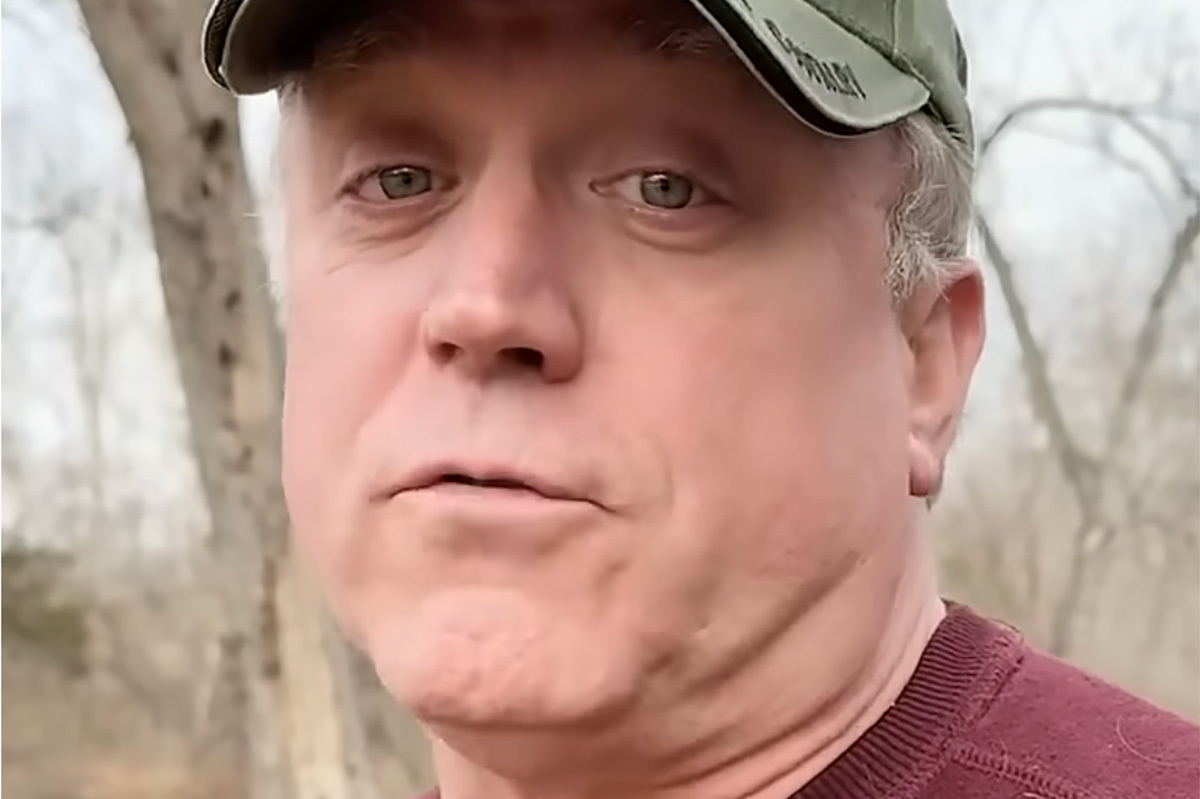
Republican Doug Ollivant will face off against incumbent U.S. Rep. Eugene Vindman (D-Va.) in Virginia’s 7th Congressional District.
Ollivant defeated his Republican opponents in Tuesday’s primary. Vindman ran unopposed.
Vindman in 2024 ran to succeed then-Congresswoman Abigail Spanberger in the U.S. House of Representatives after she ran for governor. Spanberger succeeded Republican Gov. Glenn Youngkin in 2025.
U.S. Sen. Mark Warner (D-Va.) on Tuesday easily won his primary. All other Democratic incumbent members of Congress from Northern Virginia also won their respective primaries.

What LGBTQ veterans are building after ‘Don’t Ask, Don’t Tell’

Over 2,000 turn out for Hands Around the Kennedy Center protest

Furries take over the Metro

A roundup of fall events not to be missed

Activists protest outside Turkish Embassy in D.C.

78th annual Emmy Awards recapped

Advocate, Out parent company adds Trump supporter to board, prompting outrage

Trump’s Cabinet: Dumb, dumber, dumbest, and evil

More than 150 people detained outside Istanbul courthouse