America 250
Protests and pioneers emerge in early 20th century
From 1900s secret parties to post-WWII organizing to a historic Supreme Court challenge

Editor’s note: This is part of the “Queering America 250” LGBTQ history magazine published by the Washington Blade. The glossy magazine is free and available across the D.C. region during Pride.
You can find it here: Annie’s, As You Are, Bunker, Crush, DIK Bar, District Eagle, Green Lantern, Her Diner, Jane Jane, JR.’s, Icon, Kiki, Larry’s Lounge, Little Gay Pub, Nellie’s, Number Nine, Pitchers, Red Bear Brewing, Shakers, Sinners and Saints, Spark Social House, Fireplace, Thurst, Trade, Uproar, Whitman-Walker Health, Destination DC, Mayor’s Office of LGBTQ Affairs, DC Center, SMYAL, HRC, Bite the Fruit, 350 Bakery, Logan 14 Aveda Salon Spa, Vida Fitness U Street and Logan Circle, Freddie’s Beach Bar, Destination Tomorrow. The magazine is also available at D.C. and Northern Virginia libraries.
Protest comes in many forms, and a path to social respect and legitimacy for the LGBTQ community was forged by the pen. Writing is power, words are power, community is power. Meeting people where they are, providing logical arguments, and being unapologetic are defining traits of the LGBTQ movement in the 1900s. Through honest community building, cultural expression, and relentless action, the modern LGBTQ movement was birthed.
Underground Roots (1900-1930)
Homosexuality was a crime in America. Before there was a political movement, the goal was really just to find each other without being arrested. Historian George Chauncey, in his book “Gay New York,” detailed this tense phase, noting that, “The gay world of the early twentieth century was not a world of isolated individuals … it was a highly sophisticated, interlocking network of cafeterias, speakeasies, and private apartments where a ‘look’ or a ‘word’ was a passport.” Coded language was more than a choice, it was a survival tactic.
Being “in the closet” was both a social and legal choice. Chauncey argued that this system of policing was not merely reactive but actively foundational. The state did not simply find a pre-existing gay world, but helped to create it by defining its boundaries through policing. Apartments called “buffet flats” were a perfect example of this. These clandestine venues provided an oasis for Black queer people, hidden from the oppressive white dominated police state. People would hold “rent parties” during Prohibition, where anyone could drink and express themselves freely, often with live entertainment. The buffet flats and rent parties were where famed blues singer Gladys Bentley got her start. Known for her tuxedo, top hat, and tails, Bentley proudly declared, “It seems I was born different. At least, I always thought I was.”
Even in this pocket of openness, there was always a double-think. The larger Black community often navigated a “double-consciousness” that applied similarly to queer people of color, a concept described by W.E.B. Du Bois in “The Souls of Black Folk:” “It is a peculiar sensation, this double-consciousness … two souls, two thoughts, two unreconciled strivings.”
This pervasive “double-consciousness,” born from the necessity of coded words and hidden communities, demanded a new vocabulary for self-respect. Part of changing people’s minds is speaking a different language, and in this case that language was science. Magnus Hirschfeld introduced the concept of medical defense for queer existence through the Scientific-Humanitarian Committee. Through a scientific approach, it allowed others to understand queerness without being clouded by religion or politics. In his work “The Homosexuality of Men and Women” (as referenced by Vern Bullough), Hirschfeld wrote: “Soon the day will dawn when the persecution of those whose only ‘guilt’ is that they were born as they are … will be a thing of the past.”
This medical model, while progressive for its time, also established a system of gatekeeping. Susan Stryker, writing in “Transgender History,” observed that under this paradigm, transitioning was not seen as a right but as a medical miracle that required the permission of doctors who acted as gatekeepers to one’s own identity.
It is strange to think, but before we had words to describe our gender or sexual identity, those feelings still existed. Words have incredible power. Stryker highlights figures like Lucy Hicks Anderson (1886-1954) as a primary example. When her identity was challenged in court, she issued a powerful declaration: “I defy any doctor in the world to prove that I am not a woman. I have lived, dressed, and acted as just what I am, a woman.”
Articulating existence beyond societal or medical decree was a problem being tackled by literature. The appearance of Radclyffe Hall’s novel, “The Well of Loneliness” (1928), marked a pivotal moment, forcing the discussion of lesbian identity into public view. Its protagonist, Stephen Gordon, provided a rallying cry that resonated: “Give us also the right to our existence!”
This theme of coded existence was also present in mainstream literature, such as in Virginia Woolf’s “Orlando,” where the protagonist experiences the world treating them differently depending on if they are wearing men’s or women’s clothing. She famously notes “Vain trifles as they seem, clothes have, they say, more important offices than to merely keep us warm. They change our view of the world and the world’s view of us.”
The public literary expression of this hidden, coded identity, helped to open the floodgates of community, and laid the groundwork for a network of communities across the country.
Post War: Lavender Scare (1945-1950)
The end of World War II marked the beginning of a new era. Veterans seeking opportunity in big cities created the first large, self-aware queer populations. As Lillian Faderman captured in “The Gay Revolution:” “The war had uprooted millions of young men and women … It allowed them to find each other in the anonymity of the port cities.”
Things were good, but the pendulum always swings back. Cold War anti-Communist rhetoric led to The Lavender Scare. The 1950 Senate report by the Hoey Committee, titled “Employment of Homosexuals and Other Sex Perverts in Government,” concluded that homosexuals were “unsuitable for employment in the Federal Government” and constituted “security risks in positions of public trust.” The report asserted that “one homosexual can pollute a Government office.”
By the mid-1950s, an estimated 5,000 to 10,000 federal employees were fired or forced to resign.
Rise of the Homophile Movement (1950s)
The Homophile Movement focused on education and legal reform, but the actual goal was to gain the status of “respectable citizens,” as noted in a 1953 editorial in the Mattachine Review.
The Mattachine Society, founded in 1950 by Harry Hay, advanced the idea that LGBTQ people constituted a “cultural minority.” Hay knew, “… in order to earn for ourselves any place in the sun, we must with perseverance and self-discipline work collectively for the full first-class citizenship participation of Minorities everywhere, including ourselves.”
Phyllis Lyon and Del Martin founded the Daughters of Bilitis (DOB) in 1955, and through their publication, “The Ladder,” they helped to build self-esteem and combat internal shame. Martin referred to the DOB as a “coming out place… where women could get their act together and find out who they were.”
Meanwhile, Alfred Kinsey’s Sexual Behavior in the Human Male (1948) provided groundbreaking research. Kinsey’s finding was a rejection of rigid classification: “The world is not to be divided into sheep and goats, and not all things are black nor all things white. It is a fundamental principle of taxonomy that nature rarely deals with discrete categories. Only the human mind invents categories and tries to force facts into separated pigeon-holes. The living world is a continuum in each and every one of its aspects.”
By providing statistical proof that non-heterosexual identities were not rare aberrations, Kinsey’s work dismantled the myth of abnormality and offered intellectual grounds for the Homophile Movement’s appeal to reason.
Frank Kameny (1957)
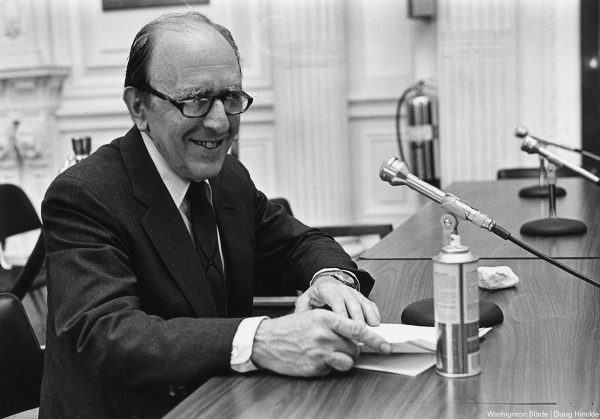
At a certain point, assimilation was not good enough, a notion asserted by astronomer Frank Kameny. Fired for being gay in 1957, Kameny sued the government all the way to the Supreme Court. In 1961, he petitioned the court, saying, “I do not seek your indulgence; I demand my rights as a citizen.” He lost the appeal, but started a national conversation in the process.
Kameny’s voice rose above the rest, saying, “Ask not what can your country do for you, but what can you do for your country. … I know what I can best do for my country, but my country’s government, for no sane reason, will not let me do it.”
He went on to coin the phrase “Gay is Good,” as cited in works by Eric Cervini and Lillian Faderman. Kameny asserted, “… flatly, unequivocally, and absolutely uncompromisingly, that homosexuality, whether by mere inclination or by overt act, is not only not immoral, but that for those choosing voluntarily to engage in homosexual acts, such acts are moral in a real and positive sense, and are good, right, and desirable, socially and personally.” Kameny’s uncompromising defiance signaled the end of the assimilationist approach, proving that the demand for rights must be absolute and unwavering.
Words have power. Communities have power. The journey from the coded “undercover agents” of the 1920s to the visible communities of today has been long and fraught. The historical precedent of the Lavender Scare reminds us that progress is not guaranteed, and it is not a straight line. The issue that was once “hiding under a rock for so long” demands eternal vigilance. Figures like George Chauncy, Phyllis Lyon, Frank Kameny, Susan Stryker, and others were only a few in an army of activists that never let up, despite the upward battle ahead.
Their words ignited a fire in people. Say it loud, say it proud. Words have power. Gay is Good.




America 250
Washington Blade publishes ‘Queering America 250’
New magazine chronicles LGBTQ history and contributions to U.S. culture
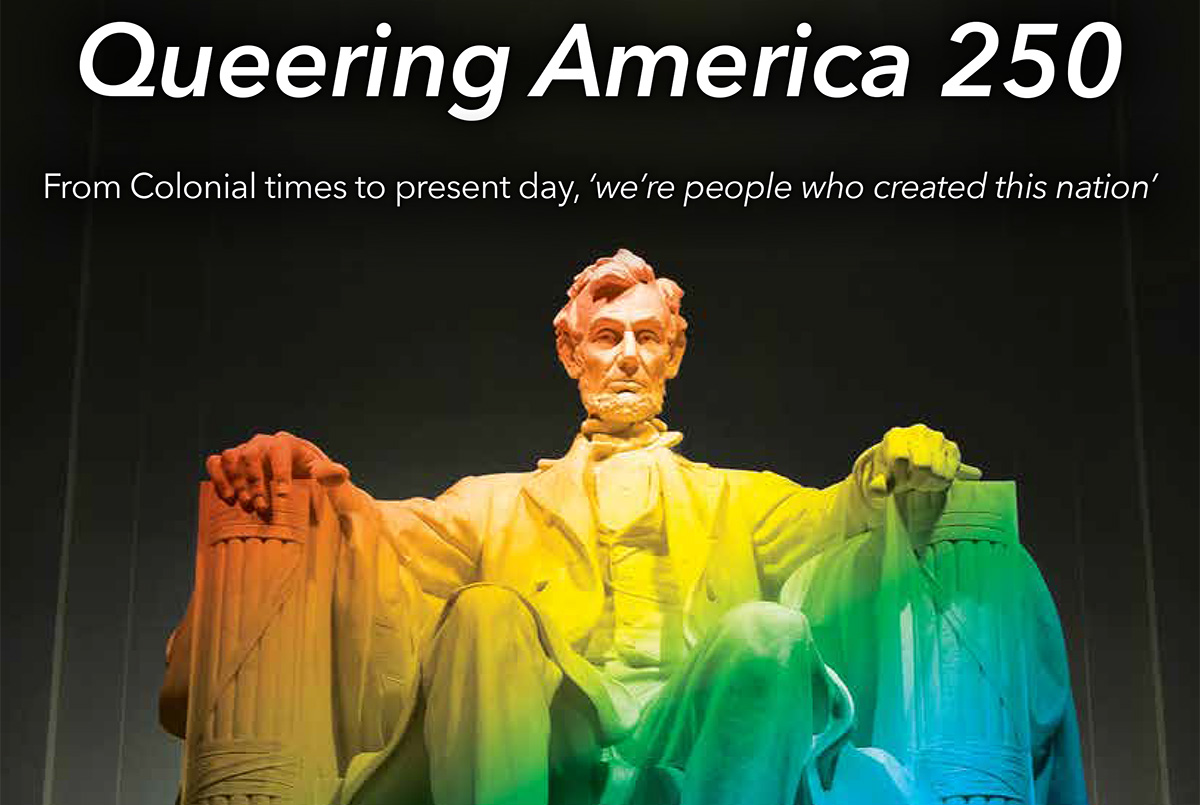
The Washington Blade this week published a new glossy magazine, titled “Queering America 250,” a look back at the many contributions that LGBTQ people have made to the founding of the country through the present day.
From Colonial times to modern pop culture, the magazine aims to remind readers of some of the many ways queer people have influenced American life.
“As the country commemorates 250 years, we wanted to do our part to ensure LGBTQ contributions to America were not ignored or forgotten,” said Blade Editor Kevin Naff. “As this administration seeks to erase queer identities, it’s more important than ever that we speak up and remind the world that we have always been here and always will be.”
The magazine is divided into chapters addressing queer life in Colonial times, the early 20th century, the late 20th century, and the 21st century. There’s a story about D.C.’s role in LGBTQ visibility; a top 40 moments in queer pop culture piece; and a series of opinion pieces and photo pages from the Blade’s historic archive.
The magazine is free and available across the D.C. region during Pride. It’s also available online.
You can find the magazine here: Annie’s, As You Are, Bunker, Crush, DIK Bar, District Eagle, Green Lantern, Her Diner, Jane Jane, JR.’s, Icon, Kiki, Larry’s Lounge, Little Gay Pub, Nellie’s, Number Nine, Pitchers, Red Bear Brewing, Shakers, Sinners and Saints, Spark Social House, Fireplace, Thurst, Trade, Uproar, Whitman-Walker Health, Destination DC, Mayor’s Office of LGBTQ Affairs, DC Center, SMYAL, HRC, Bite the Fruit, 350 Bakery, Logan 14 Aveda Salon Spa, Vida Fitness U Street and Logan Circle, Freddie’s Beach Bar, Destination Tomorrow. The magazine is also available at D.C. and Northern Virginia libraries.
America 250
As we celebrate 250 years of America, let’s remember our elders
It’s important to acknowledge history and honor pioneering community members
Editor’s note: This is part of the “Queering America 250” LGBTQ history magazine published by the Washington Blade. The glossy magazine is free and available across the D.C. region during Pride.
You can find it here: Annie’s, As You Are, Bunker, Crush, DIK Bar, District Eagle, Green Lantern, Her Diner, Jane Jane, JR.’s, Icon, Kiki, Larry’s Lounge, Little Gay Pub, Nellie’s, Number Nine, Pitchers, Red Bear Brewing, Shakers, Sinners and Saints, Spark Social House, Fireplace, Thurst, Trade, Uproar, Whitman-Walker Health, Destination DC, Mayor’s Office of LGBTQ Affairs, DC Center, SMYAL, HRC, Bite the Fruit, 350 Bakery, Logan 14 Aveda Salon Spa, Vida Fitness U Street and Logan Circle, Freddie’s Beach Bar, Destination Tomorrow. The magazine is also available at D.C. and Northern Virginia libraries.
The United States does not have a monarchy. I do not mean to comment on whether or not we live under tyranny or despotism, or if people live under modern serfdom; I mention that to explain, likely to the chagrin of our current president, U.S. citizens are not rewarded for their accomplishments by becoming a Knight or a Dame.
We do, however, like our awards, including trophies from academies and medals from the executive or legislature. The aforementioned current president likes awards so very much that the U.S. Congress and an international sports association created new awards just to appease him, and the recent winner of the Nobel Peace Prize gifted hers. These incidents will likely be rendered as footnotes in history because of the sheer volume of lunacy we are enduring under this regime of idiocracy.
In entertainment, a coveted status is that of EGOT: the winning combination of receiving an Emmy, Grammy, Oscar, and Tony. I assert that not all EGOTs are equal. Some Emmys and Tonys are received merely by financing productions. Oscars and Grammys have been won because of sympathy for personal tragedy, the nominated veteran performer is considered overdue for a win, or a deceased nominee posthumously wins, as a final sendoff.
Not all awards are created equal. Some are considered prestigious, while others are less notable. As far as awards bestowed upon local entertainers, the Nation’s Capital has very few of the former. Given what I know about their processes, many are decided upon by small groups of often unremarkable people or flawed online procedures. It is not a meritocracy. Ultimately, receiving awards is about who knows you and who likes you. Even more unfortunate is that bias and bigotry play at least as much a part as loyalty or nepotism.
Winners of the Nobel and Pulitzer Prizes receive money, which is something some advocacy groups have done, and I wish more would do. As an outside observer, I find that the local awards for D.C. theater, television, and restaurants seem to have the most cachet. Some other awards that have a precise focus or have only a select few annual honorees are commendable, but many of the rest seem haphazard and disorganized, if not corrupt or simply irrelevant.
While most local awards fail to impress me, be it the categories, the trophies, the ceremonies, or the recipients themselves, I still want people to be recognized, so I nominate them. I point out who is often left out, such as DJs, who not only help to curate nightlife and culture but also enable these organizations to have successful events, including their award ceremonies and receptions.
Over the years, in many an awards nomination process, I have done my best to advocate for people, especially elders, whom I consider unsung heroes or under appreciated trailblazers. My focus is primarily Black LGBTQ people who are local or who hail from the region.
Consistently unacknowledged by local awards are people who are from here and have since gone on to achieve national or international acclaim. Merely from the perspective of production and promotion, and especially prestige, this seems like a missed opportunity.
There are the Black LGBTQ performers who are commonly known to be from this area: Grammy-winning musician and former Duke Ellington student Meshell Ndegeocello, comedian and former NSA employee Wanda Sykes, blues legend and former Fredericksburg science teacher Gaye Adegbalola, and recording artist and former D.C. nightclub performer Kevin Aviance.
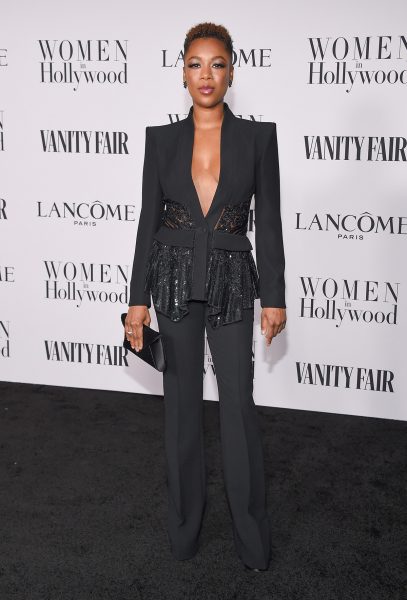
There are several accomplished Black LGBTQ actors from this area, including Emmy winner and Duke Ellington graduate Samira Wiley, Helen Hayes Award winner and Howard University graduate Roz White, Emmy winner and graduate of Greenbelt’s Roosevelt High Tramell Tillman, “Noah’s Arc” cast member and Hyattsville native Doug Spearman, “Angel” cast member and former Bladensburg resident J. August Richards, and former “America’s Next Top Model” contestant-turned-actor and Prince George’s County native Isis King. Pioneering transgender actor and singer Sandra Caldwell was born and raised in Washington, D.C.
I also think of people who deserve posthumous recognition, including DJ and music producer Vjuan Allure, poet and D.C. government employee Venus Thrash, and Tony Washington, lead singer of the Motown vocal quintet Dynamic Superiors.
There are others in the performing arts, as well as authors, playwrights, journalists, and content creators, whose notable achievements seem to be unacknowledged locally. It appears one can be revered in certain D.C. circles, but once success is achieved beyond that, that person likely never receives a homecoming. It is reminiscent of U.S.-born showgirl and singer (and later war hero) Josephine Baker, who found success in France, and elsewhere around the world, but is less revered in the nation of her birth.

As some people celebrate 250 years of the United States, I hope we will all think about how we acknowledge history and honor our community members, especially our elders. In my opinion, we can do better. I think there are many people whose accomplishments, big or small, in various arenas, are overlooked. Furthermore, just as I find the flag-waving jingoism that purports itself as patriotism distasteful, I also think that lackluster ceremonies and overpriced trinkets are not the best ways to acknowledge community advocates and activists who particularly need financial support.
At least the aforementioned performers have received national acclaim. While I have not yet been successful in getting any of them honored by local organizations, I was able to acknowledge them here. I give you all your proverbial flowers. Congratulations on your success, and know that some of us see you and are proud of your success.
Zar is the mononynous community advocate, speechwriter, songwriter, and event organizer who founded Team Rayceen Productions in 2014.
America 250
After years of progress, 21st century brings backlash, roll backs
Trump’s arrival demonstrates fragility of our equality wins
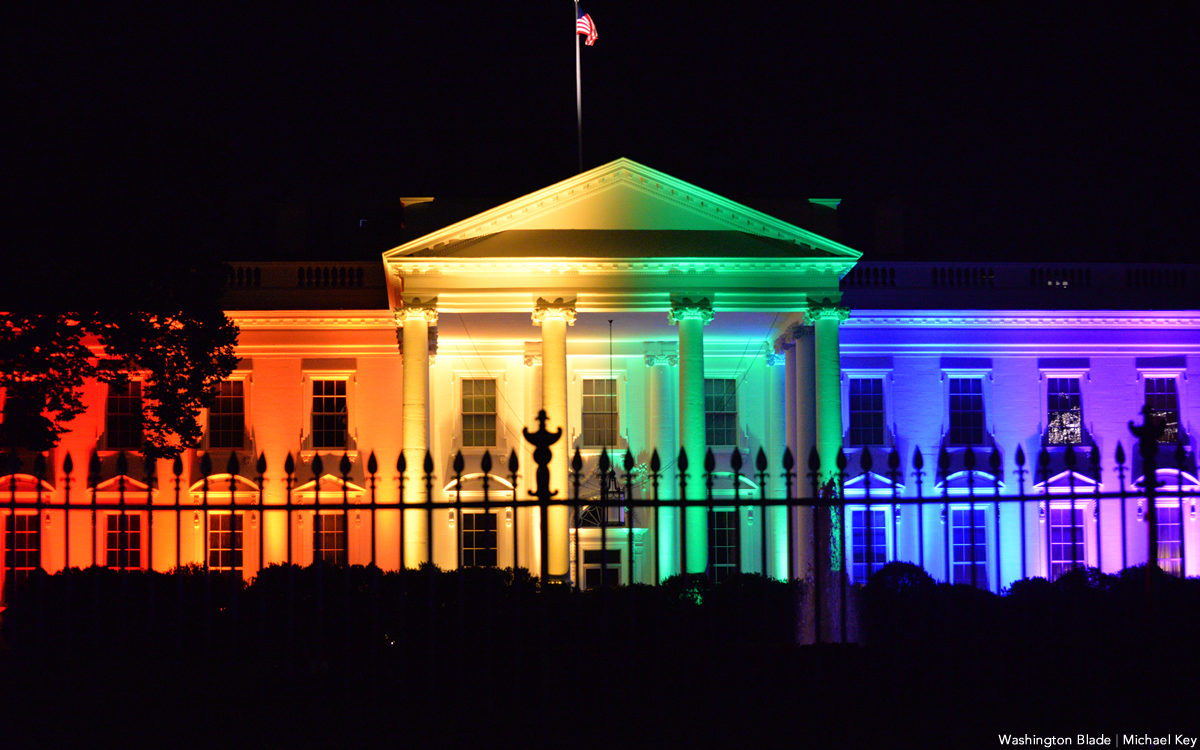
Editor’s note: This is part of the “Queering America 250” LGBTQ history magazine published by the Washington Blade. The glossy magazine is free and available across the D.C. region during Pride.
You can find it here: Annie’s, As You Are, Bunker, Crush, DIK Bar, District Eagle, Green Lantern, Her Diner, Jane Jane, JR.’s, Icon, Kiki, Larry’s Lounge, Little Gay Pub, Nellie’s, Number Nine, Pitchers, Red Bear Brewing, Shakers, Sinners and Saints, Spark Social House, Fireplace, Thurst, Trade, Uproar, Whitman-Walker Health, Destination DC, Mayor’s Office of LGBTQ Affairs, DC Center, SMYAL, HRC, Bite the Fruit, 350 Bakery, Logan 14 Aveda Salon Spa, Vida Fitness U Street and Logan Circle, Freddie’s Beach Bar, Destination Tomorrow. The magazine is also available at D.C. and Northern Virginia libraries.
Over the past 26 years, the fight for LGBTQ rights in the United States has unfolded in cycles of progress and backlash. Legal victories and cultural breakthroughs have expanded visibility and protections, building on momentum from decades of activism at the turn of the millennium. Despite the community’s best efforts, those gains have never been fully secure. Even landmark rulings like Obergefell v. Hodges have not ended the struggle. Today, as federal, state, and local leaders continue to introduce laws targeting LGBTQ people — particularly transgender Americans — the movement finds itself once again defending rights many once considered settled.
In 2000, Vermont became the first state in the country to recognize same-sex couples through civil unions following the Vermont Supreme Court decision in Baker v. State of Vermont. The ruling marked the first statewide legal recognition of LGBTQ relationships in the United States, even if it fell short of full marriage equality.
While progress toward protections for same-sex couples was being made in the “Green Mountain State,” rights for LGBTQ people in other parts of the country were being restricted the same year. In Mississippi, same-sex couples were banned from adopting children, underscoring how dramatically LGBTQ rights varied across the country — state by state, and often county by county.
Culturally, LGBTQ stories were becoming more visible. In late 2000, “Queer as Folk” premiered in the United States, featuring unapologetic gay storylines that explored addiction, relationships, sex, and life during the ongoing HIV/AIDS epidemic. While groundbreaking in its visibility, the series was also criticized for its lack of racial and gender diversity, reflecting the limitations of LGBTQ representation at the time.
The next major legal shift came in 2003, when the Supreme Court ruled in Lawrence v. Texas that sodomy laws were unconstitutional. The decision decriminalized same-sex intimacy between consenting adults nationwide and marked a turning point in the recognition of LGBTQ people under constitutional law, moving the country closer — at least legally — to treating private relationships with equal dignity.
Just a year later, in 2004, Massachusetts became the first state to legalize same-sex marriage, making it the first jurisdiction in the United States where marriage equality became law. That same year, however, the national political climate revealed deep resistance: more than a dozen states passed constitutional amendments banning same-sex marriage, embedding discrimination into state law through ballot initiatives.
The tension between cultural progress and political backlash intensified in 2006, when Arizona became the first state to reject a constitutional ban on same-sex marriage at the ballot box — an early sign that public opinion was beginning to shift, even as most states still moved in the opposite direction.
By 2008, California’s Proposition 8 overturned marriage equality in the nation’s most populous state, sparking widespread protests and legal challenges that would eventually reach the Supreme Court. That same year, the global financial crisis briefly overshadowed LGBTQ political momentum, but organizing continued at the state and local level.
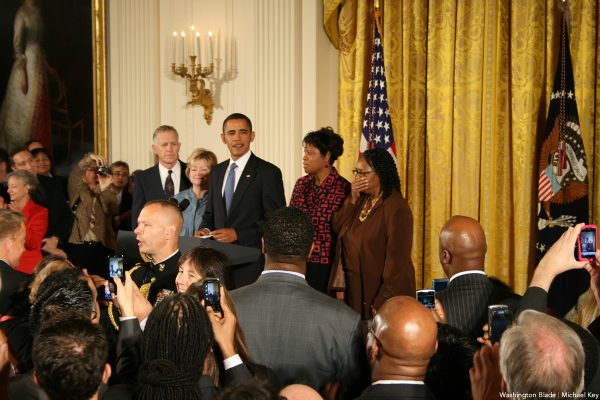
In 2009, Congress passed the Matthew Shepard and James Byrd Jr. Hate Crimes Prevention Act, expanding federal hate crime protections to include sexual orientation, gender identity, race, and religion. The law was named after Matthew Shepard, a gay man murdered in a 1998 hate crime, and James Byrd Jr., a Black man murdered in a racially motivated attack in Texas.
In 2010, President Barack Obama signed the Don’t Ask, Don’t Tell Repeal Act into law, ending the ban on openly gay and lesbian service members in the U.S. military. The repeal took effect in 2011, marking a major milestone in LGBTQ inclusion in federal institutions.
In 2012, the FDA approved Truvada as the first medication used for pre-exposure prophylaxis (PrEP), a breakthrough that transformed HIV prevention. For the first time, HIV transmission became medically preventable through daily medication. Over the following years, advances in antiretroviral therapy dramatically improved life expectancy for people living with HIV, turning what was once a fatal diagnosis into a manageable chronic condition when treated properly.

Also in 2012, voters in several states — including Maine, Maryland, and Washington —approved same-sex marriage at the ballot box for the first time, signaling growing public support for marriage equality.
In 2013, the Supreme Court ruled in United States v. Windsor that key parts of the Defense of Marriage Act (DOMA) were unconstitutional, requiring federal recognition of legally performed same-sex marriages. This decision accelerated the spread of marriage equality litigation across the country.
By 2014, federal courts had struck down same-sex marriage bans in multiple states, creating a legal patchwork that increasingly pointed toward nationwide recognition.
In 2015, the Supreme Court issued its landmark decision in Obergefell v. Hodges, legalizing same-sex marriage nationwide. The ruling marked the culmination of decades of activism and legal advocacy, establishing marriage equality as the law of the land.
Despite that victory, new challenges emerged almost immediately. In 2016, the Pulse nightclub shooting in Orlando became the deadliest mass shooting in U.S. history, killing 49 mostly LGBTQ people and injuring dozens more. That same year, North Carolina passed House Bill 2 (HB2), one of the earliest and most widely criticized “bathroom bills” targeting transgender individuals’ access to public facilities.
In 2017, President Donald Trump announced a ban on transgender individuals serving in the military, reversing Obama-era policy. The ban was implemented in 2019 after a series of legal challenges. At the same time, visibility for transgender people in politics and media continued to grow, with more openly trans candidates running and winning office.
In 2018, a record number of openly LGBTQ candidates were elected nationwide, reflecting a growing pipeline of political representation. That same year, increasing legal battles over transgender athletes and healthcare access began emerging in state legislatures.
In 2019, the FDA approved Descovy as another PrEP option, expanding HIV prevention tools and access for patients who could not take Truvada. That year also saw continued expansion of LGBTQ representation in media, with more trans and nonbinary characters appearing in mainstream television.
In 2020, the Supreme Court delivered another major civil rights ruling in Bostock v. Clayton County, holding that federal workplace discrimination protections under Title VII apply to LGBTQ employees. The decision marked a significant expansion of federal legal protections, as the Court declined to revisit marriage equality, leaving Obergefell intact.
The early 2020s brought rapid shifts in federal policy. In 2021, the Biden administration reversed the transgender military ban and expanded federal protections for LGBTQ Americans in housing, healthcare, and education. That same year, the FDA approved Apretude, the first long-acting injectable form of PrEP, marking another major advancement in HIV prevention.
In 2022, Congress passed the Respect for Marriage Act, which required federal recognition of same-sex and interracial marriages even if Obergefell were ever overturned. But that same year, Florida enacted its “Don’t Say Gay” law, restricting classroom instruction on sexual orientation and gender identity in early grades and sparking similar legislative efforts in other states.
By 2023, state legislatures across the country introduced a record number of bills targeting LGBTQ people, particularly transgender youth. These measures included bans on gender-affirming care, restrictions on school participation in sports, and regulations on drag performances. At the same time, several states passed “shield laws” protecting access to gender-affirming care and abortion-related healthcare, deepening a growing legal and cultural divide between states.
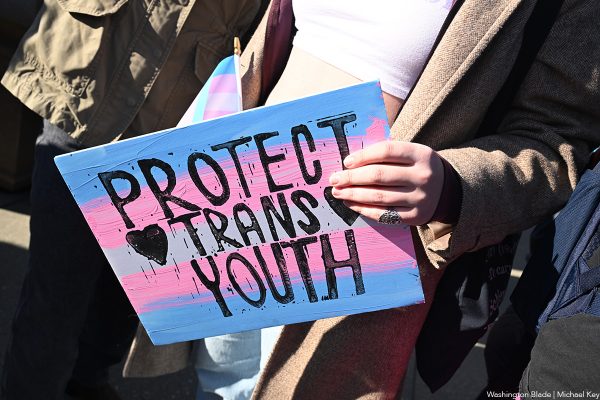
In 2024, LGBTQ rights once again became a defining issue in national politics. Debates over transgender healthcare, youth protections, and curriculum policies increasingly shaped state and federal elections. As the political landscape intensified, former President Donald Trump and allied lawmakers continued to campaign on rolling back LGBTQ protections, particularly those affecting transgender Americans.
As the country moves further into the 2020s, the central reality of the past 26 years remains unchanged: LGBTQ Americans have achieved historic legal and cultural victories, but those gains have never been permanent. Progress has consistently been met with resistance, reversal attempts, and renewed political conflict. The result is a civil rights movement that, even after landmark victories like Obergefell v. Hodges continues to fight for protections that remain vulnerable to the shifting tides of American politics.

Solidarity beyond the parade: the actual cost of Pride

Physician: addiction doesn’t always look the way you think it does

Calendar: October 9-15

ICC unseals arrest warrants for Taliban officials accused of persecuting LGBTQ people, women

Bet Mishpachah participates in D.C. Oct. 7 commemoration ceremony

Alianza para la Inclusión fortalece la defensa de derechos LGBTQ en Centroamérica

The facts about Victory Fund’s investigation and the path forward

In Ga., 2 trans candidates believe voters are ready for them

Bessent says Trump chose him for his qualifications, not his sexuality

‘Some Like It Hot’ a wild ride at renovated Bernard Family Theatre
-

 Central America4 days ago
Alianza para la Inclusión fortalece la defensa de derechos LGBTQ en Centroamérica
-
Opinions4 days ago
The facts about Victory Fund’s investigation and the path forward
-
Georgia4 days ago
In Ga., 2 trans candidates believe voters are ready for them
-
Federal Government4 days ago
Bessent says Trump chose him for his qualifications, not his sexuality