National
ACLU says trans athletes ruling is narrower than many believe
‘Narrow decision focused on the unique context of sports’
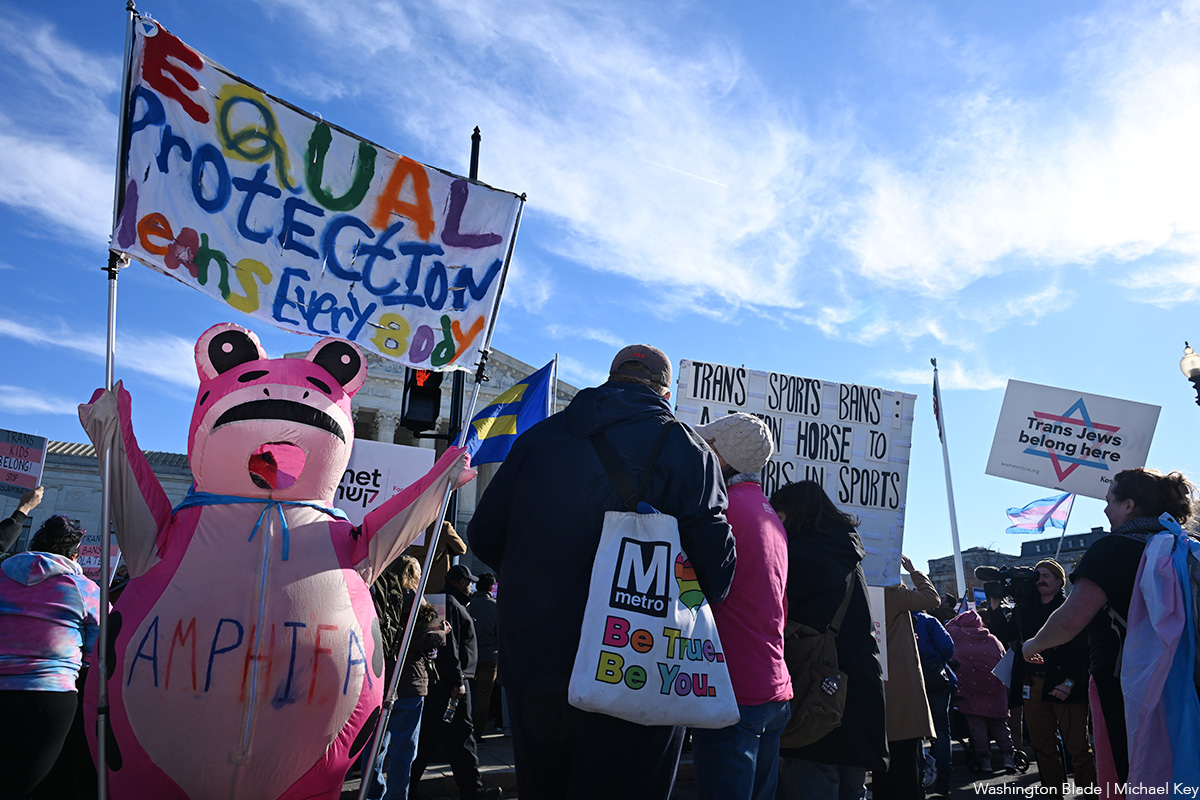
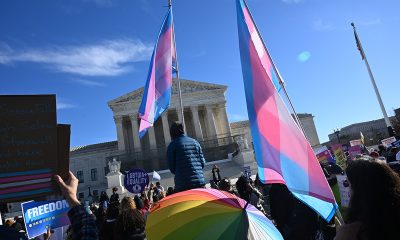
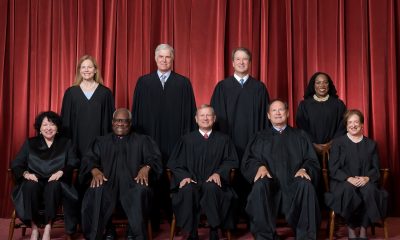
The Supreme Court’s decision Tuesday to uphold state laws barring transgender girls from competing on girls’ school sports teams represents a setback for transgender rights, but attorneys who argued the case say the ruling is considerably narrower than many initial reactions suggested.
Shortly after the decision was released, attorneys with the American Civil Liberties Union — which represented the plaintiffs in the case — held a press call to explain what they described as the limited scope of the Court’s opinion. While the ruling allows states to exclude transgender girls from girls’ school sports teams, they said it stops well short of creating a nationwide ban or dismantling broader legal protections for transgender people.
Joshua Block, senior counsel with the ACLU’s LGBTQ & HIV Project, said the majority intentionally confined its analysis to school athletics.
“[The majority] issued a narrow decision focused specifically on the unique context of sports. It didn’t issue a broader decision saying that Title IX in general didn’t protect transgender students. It didn’t say that other states couldn’t make a different policy choice and allow transgender girls to participate with cisgender girls, and it didn’t issue a sweeping ruling saying that under the Constitution it’s perfectly fine to discriminate based on transgender status.”
Block said one of the opinion’s most significant takeaways is that it leaves decisions about transgender participation in school sports largely in the hands of states.
“It leaves the rest of the legal rights of transgender people where the court found them.”
He stressed that the ruling authorizes states to adopt restrictions but does not require them to do so.
“It’s very important to emphasize that this isn’t a national mandate to ban trans athletes everywhere. It’s a fight that’s going to continue state by state, school by school … it really says that a state may discriminate, not that they must discriminate. States, schools, and athletic associations should be taking every step to ensure that athletic opportunities exist for transgender girls.”
Beyond athletics, Block said the opinion’s most important legal consequence may lie in its treatment of the Equal Protection Clause.
“What the court said is that even applying that heightened standard, we’re going to establish what’s effectively a new rule of the Equal Protection Clause, saying that you can’t bring this sort of as-applied challenge to a law that is valid for most people.”
Even so, he argued that the Court repeatedly framed transgender participation in sports as a policy issue for state governments rather than a constitutional mandate.
“Over and over and over again it talks about how states may exclude transgender girls, not that they must, and over and over and over again it says that this is a policy question that should be decided by the people in their different communities and their representatives.”
Block also rejected the idea that the ruling endorses the Trump administration’s broader efforts to restrict transgender rights.
“I have no doubt that the Trump administration will try to declare victory and say that this decision supports the lawless policies they’re pursuing, but I think anyone reading the decision can see otherwise.”
The White House nonetheless celebrated the decision, calling it a victory that would “protect women and girls.”
“The Court’s decision is a landmark victory for common sense, biological reality, and for the millions of women and girls who deserve a level playing field. By upholding laws protecting female athletic competition, the Court confirmed that states may preserve the fairness, safety, and equal opportunities that Title IX was enacted to guarantee.”
Medical researchers and LGBTQ advocates dispute the administration’s characterization of the evidence. A 2021 study published in the Journal of Sports Medicine found no scientific evidence for supporting these laws that categorically ban transgender women from participating in women’s sports.
Critics have also argued that enforcement of such laws could create new risks for athletes. Researchers have warned that sex-verification requirements may expose students to invasive examinations and discrimination.
A 2016 USA Today investigation found that at least 368 young gymnasts reported experiencing sexual abuse over a 20-year period. More than 100 coaches and gymnastics officials were accused of abuse, yet USA Gymnastics failed to track predatory coaches, allowing many to continue working with children. LGBTQ advocates argue that requiring athletes to undergo genital inspections or other forms of sex verification could place young athletes at even greater risk.
Advocacy organizations said the decision, while limited legally, will have significant real-world consequences for transgender youth.
Chris Mosier, a transgender athlete and board member of Point of Pride, said the ruling extends beyond sports.
“The Supreme Court’s decision today isn’t driven by fairness or dignity in sports. It’s an attack on our community’s right to live freely and authentically in every part of our lives. Young people, regardless of whether they’re cis or trans, deserve the joy of sports: to build friendships, to move their bodies and have fun on the field. To every trans athlete out there: you have a community standing behind you. No politician or law can take away your joy or power. We will get through this as our community has always done: together.”
Brian K. Bond, CEO of PFLAG National, emphasized that states remain free to adopt inclusive policies despite the Court’s decision.
“The Court rules best when it listens to the needs of marginalized people: trans people belong, on and off the field. While we celebrate the Court’s decision to uphold the Fourteenth Amendment and affirm that every person born in the United States is a citizen, the Court today added an asterisk to allow discrimination against transgender student athletes. Our country has been here before, and frankly, you would think this Court would have learned.”
“For PFLAG families, today’s decision in BPJ means that transgender athletes can continue to be affirmed for who they are in places where the law allows – and invigorates our LGBTQ+ and allied community to expand those protections. The parents, families, allies and LGBTQ+ people of PFLAG will continue to advocate for our trans loved ones to have the freedom to be themselves, everywhere. Trans people belong, and deserve to have access to the benefits of sport like everyone else.”
Allen Morris, policy director at the National LGBTQ Task Force, called the decision “devastating” but noted that it does not establish a nationwide sports ban.
“Today’s decision is devastating and the impact to clear. While this is not a nationwide ban on transgender participation in sports, the Court has given states a legal pathway to attempt to discriminate against trans individuals from full participation in school sports and all aspects of life.”
“This ruling is not just about sports: it’s about valuing and protecting the safety, security and constitutional rights of transgender people. By allowing states to draw a categorical line based on “biological sex,” the majority has chosen deference to exclusion and political beliefs over transgender students’ lived realities. There is already a dangerous rise in state-based violence growing across the country, and we’re overcoming this issue at each turn.”
Melanie Willingham-Jaggers, CEO of GLSEN, said the decision sends a broader message about transgender students’ place in schools.
“We are deeply disappointed by the outcome of this decision. This ruling represents another significant setback for transgender youth across the country, limiting their ability to fully engage in school life. Exclusion from these spaces shapes not only athletic access, but the broader message about who should be valued and included in our schools and societal ecosystem.”
“School sports are much more than competition. They are about belonging, forming a community, and the opportunity to grow and thrive alongside peers. Preventing youth from taking part in everyday activities undermines these fundamental values. We continue to see efforts to regulate discrimination under the guise of fairness, despite the lack of evidence that inclusive policies harm women’s sports. Access to these experiences is critical to students’ well-being and development.”

Florida
Former Fla. gubernatorial candidate Andrew Gillum arrested on drug charges
Democrat narrowly lost to DeSantis in 2018, later came out as bisexual
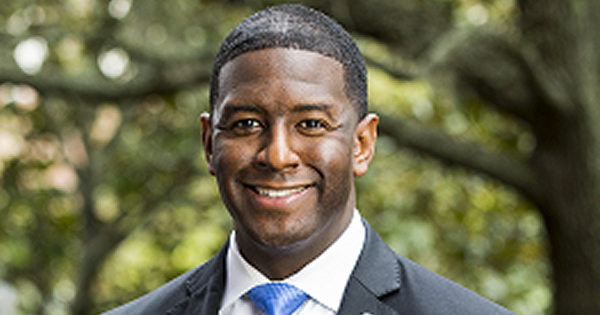
Andrew Gillum, the former Democratic nominee for governor of Florida and former mayor of Tallahassee, was arrested on drug possession charges in Alabama last week.
Police in Daphne, Ala., said they pulled Gillum over for erratic driving and found marijuana and methamphetamine in his vehicle. He was charged with possession of marijuana and unlawful possession of a controlled substance, according to the Daphne Police Department. Jail records show he was arrested on July 2 and released on July 3, the Associated Press reports.
Gillum, the first Black nominee of a major political party for governor in Florida, lost the 2018 election to current Republican Gov. Ron DeSantis in a highly contentious race.
Once considered a rising star in national politics, Gillum served in Tallahassee’s local government, first as a city commissioner and then as mayor of Florida’s capital from 2014- 2018.
The Daphne Police Department said officers stopped Gillum’s vehicle around 10:45 p.m. and initiated a probable cause search after one officer noticed a glass pipe on the center console.
During the search, officers found several rolled marijuana cigarettes and three packages containing a substance that tested positive for methamphetamine, police said.
The day after his arrest he was charged with possession of dangerous drugs, use or possession of drug paraphernalia, and possession of marijuana.
In 2020, Gillum was involved in a similar incident when he was found in a Miami Beach, Fla., hotel room with a man identified as an escort who had apparently overdosed on drugs. Police also found three bags of suspected crystal methamphetamine in the room. The man survived, and no one was ever charged with a crime.
Later that year, Gillum came out as bisexual during an appearance on “The Tamron Hall Show,” where he discussed his struggles with drug and alcohol addiction and his decision to seek treatment following the 2020 incident.
In the same interview he shed light onto this, saying his substance use was a byproduct of the emotional struggles he experienced after losing the 2018 gubernatorial race to DeSantis.
This is not the first time Gillum has faced legal scrutiny.
During his 2014 mayoral campaign, he faced allegations of misconduct after hiring private equity investor Adam Corey as his campaign treasurer, raising questions about a potential conflict of interest. However, the FBI ultimately concluded there was no conflict of interest.
Pennsylvania
Philadelphia murder suspect remains at large
Two killed, one injured in attacks motivated by victims’ sexual orientation
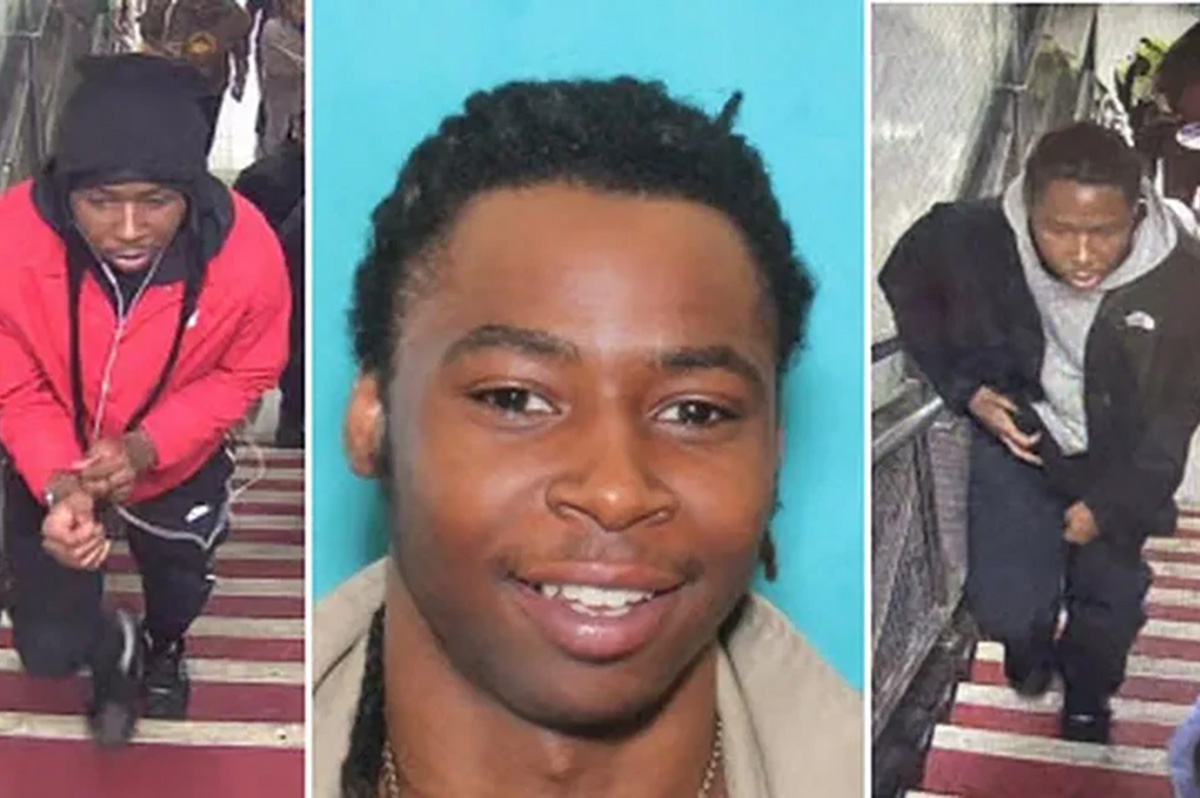
Police seek the public’s support in finding a suspect wanted in connection with three Philadelphia shootings, including two murders, who may have targeted his victims because they were gay. All three shootings took place near Hunting Park Recreation Center between May 29 and June 26.
The suspect is 21-year-old Jahylin Melchur, who has not been located by police and is not in police custody as of July 7. Police seek the public’s support in tracking down the suspect, whose image was captured on surveillance cameras. Previous reporting underlined that Melchur should be considered armed and dangerous.
Each of the victims was found partially clothed between 10 and 11 p.m.
On May 29, a 55-year-old in Juniata Park was found two miles from the rec center. The victim, who survived the encounter with critical injuries, said a man approached him and announced his intention to rob him, before shooting him in the elbow and torso.
Martin Higgins, 45, was pronounced dead on the bleachers of the rec center’s baseball field on June 20, suffering from a gunshot wound to the abdomen. Sharef Holman, 29, was found near the basketball courts on June 26, suffering from multiple gunshot wounds. He was transported to Temple University Hospital but died shortly thereafter.
Deputy Police Commissioner Frank Vanore declined to answer the Philadelphia Inquirer’s question regarding whether the victims may have met Melchur on a dating app, citing the ongoing investigation. Sources told the Philadelphia Inquirer that investigators are exploring this possibility
Although robbery may be at least part of the motive in the first shooting, other movies are unclear.
NBC10 reported that law enforcement sources told the station all three victims were targeted because they were gay, but the Philadelphia Police Department did not confirm this.
The Philadelphia Police Department replied to PGN’s questions with an email stating, “This remains a very active investigation, and investigators are looking at all aspects of the case, including underlying motivations for committing these crimes.
“At this point, we can confirm that Melchur is wanted for two homicides by shooting and one non-fatal shooting, all of which occurred in the Hunting Park area.
“The investigation has not established that the victims were specifically targeted because of their sexual orientation.”
The Philadelphia Police Department is urging anyone with information to contact the Homicide Unit at 215-686-3334 or submit an anonymous tip by calling the PPD Tip Line at 215-686-TIPS (8477).
(This story is republished with permission of the Philadelphia Gay News.)
National
Madonna roundup: Reviews, sales, and love for ‘Danceteria’
Pop legend’s new album ‘Confessions II’ earning raves
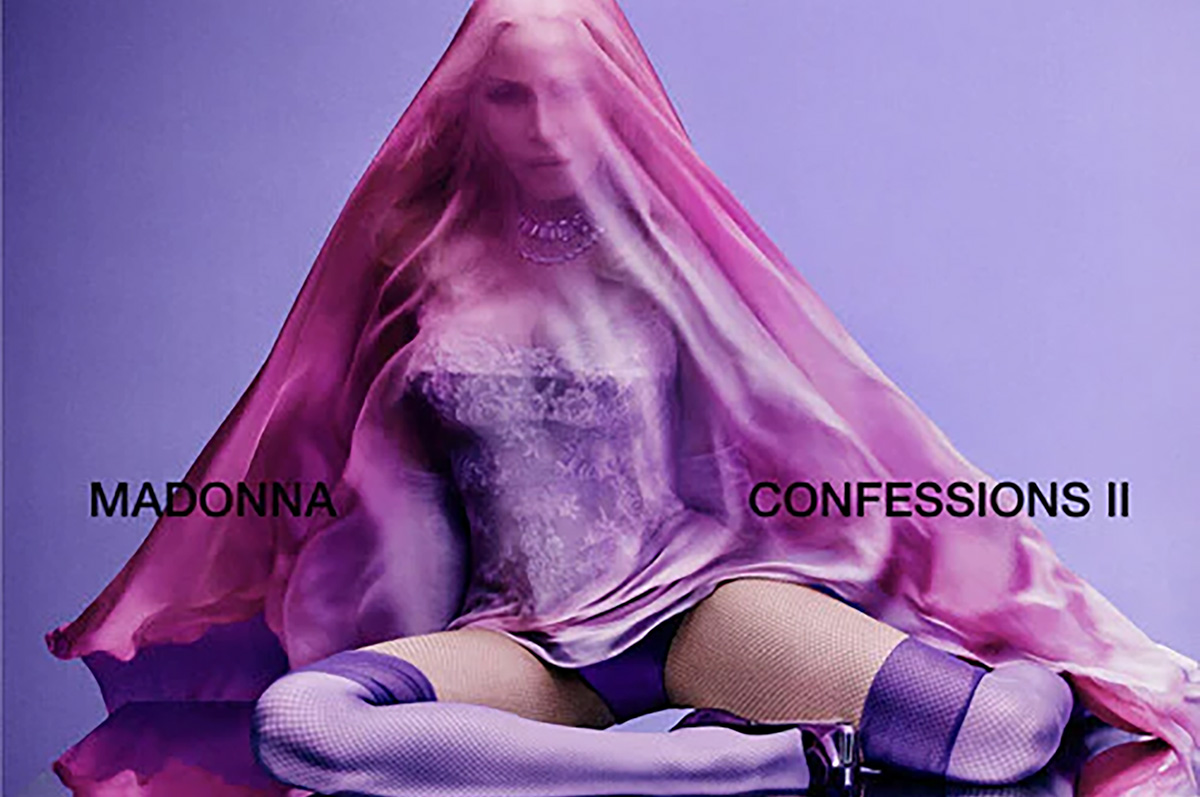
Madonna isn’t just back, she’s ubiquitous.
From a Times Square takeover to Graham Norton’s couch, the pop legend is busy promoting her new album, “Confessions II,” a sequel to 2005’s “Confessions on a Dance Floor,” that is earning rave reviews.
“Madonna’s back in peak form with a fresh and honest dance record that’s not only her best in 20 years, but a genuinely vital addition to her canon,” says Pitchfork.
“Facing grief and loss has made Madonna’s music deeper than it’s been in 20 years, but also more alive,” the Guardian proclaims.
“If everyone in the club is a work of art, as ‘Danceteria’ says, then to live loudly is to make an indelible mark,” according to Vulture.
The album features upbeat dance productions along with some melancholic views on death and loss. On the song “Betrayal,” she reflects on the recent death of her stepmother Joan, singing, “You’ll never take my mother’s place … you betrayed me, you enslaved me.”
On “L.E.S. Girl,” she revisits her early days living on the Lower East Side and struggling to pay the rent. “Bizarre” seems to reference her failed 1980s marriage to actor Sean Penn. “Test” is a duet with daughter Lola Leon, in which she sings, “I wish I knew / The pain I’ve caused / My butterfly / Was always being watched.”
But the emotional high point of the album comes on “Fragile,” which she wrote about the death of her brother Christopher. The two were close early in Madonna’s career and he designed sets for early tours, including “Blonde Ambition.” But they had a falling out after her marriage to Guy Ritchie and he wrote a scathing tell-all book about his sister that led to years of estrangement. The two reconciled after Christopher’s cancer diagnosis and shortly before he died in 2024 at age 63. She sings, “Late last night I was fast asleep/You came to me in a dream/You said, ‘Don’t forget about me/Don’t forget to be happy.’”
Death emerges again but in a much more upbeat context in “Danceteria,” an ode to the iconic New York nightclub that has emerged as a gay favorite single and seems destined to be the song of the summer in queer nightlife. She recounts her pre-fame days trying to convince a DJ to play her first single “Everybody” at the club and name checks Jean-Michel Basquiat, Keith Haring, best friend Debi Mazar, and DJ Mark Kamins on the track.
Streaming numbers and sales are strong for the new album with projected first week sales of 100,000 ensuring a No.1 debut in the U.S.

Egyptian authorities refuse to allow gay cruise to dock in country

‘She’s the He’ brings gender-bending twist to teen comedy genre

Supreme Court ruling on trans athletes is a public health story

Queer media dominates 2026 Emmy nominations

It’s good to see some justices standing up to Trump

‘My Favorite Sociopath’ debuts at Shepherdstown’s CATF

Under-the-radar Delaware beach towns smart buyers are targeting

In Trump’s divided America, Michael Weinstein’s AHF responds

Turkish authorities refuse to allow gay cruise to dock in country

When a church fears the rainbow
-

 Theater4 days ago
‘My Favorite Sociopath’ debuts at Shepherdstown’s CATF
-
Real Estate4 days ago
Under-the-radar Delaware beach towns smart buyers are targeting
-
Politics3 days ago
In Trump’s divided America, Michael Weinstein’s AHF responds
-
Turkey3 days ago
Turkish authorities refuse to allow gay cruise to dock in country