World
Countries relax restrictions on gay blood donors
HHS examining possibility of ending lifetime ban
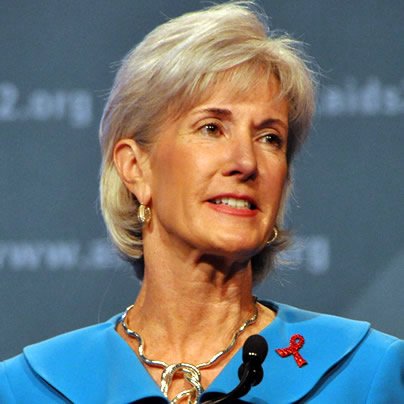
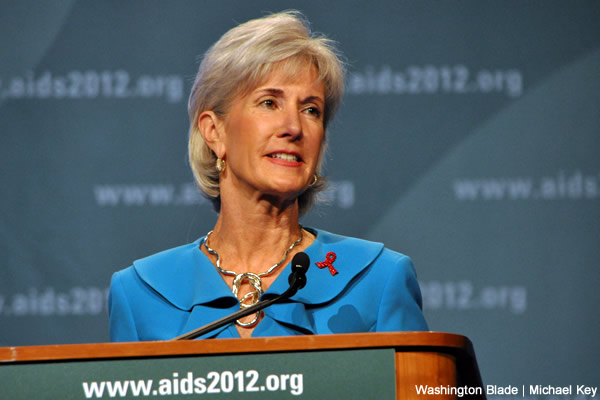
Secretary of Health and Human Services Kathleen Sebelius speaks at the International AIDS Conference. (Blade photo by Michael Key)
Is the United States any closer to repealing the lifetime ban on gay blood donors?
The Department of Health and Human Services’ Advisory Committee on Blood Safety and Availability in 2010 categorized the current policy that has been in place since 1985 as “suboptimal” because it allows some potentially high-risk donors to give blood while excluding other lower-risk groups. Although the committee did not recommend a specific policy change, it did call for additional research on efforts to better screen potential donors and gauge their potential risk to the blood supply if they were able to donate.
Massachusetts Sen. John Kerry and Illinois Congressman Mike Quigley in June applauded HHS Secretary Kathleen Sebelius’ support of a pilot study designed to help the agency with further assessments of the lifetime deferral. Their letter also outlined specific recommendations, including the collection of information from prospective donors on whether they are in a monogamous relationship or practice safer-sex.
“We’ve been working on this a long time and I applaud Secretary Sebelius for taking this important step toward ending the lifetime ban on gay men donating blood, and instead relying on the science of today not the myths of 20 years ago,” wrote Kerry in a letter onto which Colorado Sens. Michael Bennet and Mark Udall, Washington Sens. Maria Cantwell and Patty Murray and U.S. Sens. Frank Lautenberg (D-N.J.,) Carl Levin (D-Mich.,) Jeanne Shaheen (D-N.H.,) Kirsten Gillibrand (D-N.Y.,) Daniel Akaka (D-Hawaii,) Bernie Sanders (I-Vt.,) and Mark Begich (D-Alaska) signed. “We’ll at last have an informed evaluation of the final roadblocks to ending a ban against healthy, responsible Americans donating blood.”
Several countries in recent years have modified their existing bans on gay blood donors or eliminated them altogether.
The U.K. Department of Health announced last September that men who have not had sex with another man in 12 months are able to donate blood in England, Scotland and Wales. Australia has a similar policy, while South Africa allows MSM donors who have not had sexual contact with another man in six months. Gay and bisexual New Zealand men who have not had sex with another man in five years are able to donate blood.
Chilean health officials in May announced that a potential donor’s sexual orientation cannot specifically exclude them from donating blood. The new regulation is expected to take effect in the coming weeks; Colombia, Romania and Russia have already adopted similar rules.
Italy and Spain screen both heterosexual and gay potential blood donors based on specific behaviors that include the number of sexual partners they have had and whether they engage in sex work.
“We’re hopeful that is what HHS will consider with this pilot,” said Nathan Schaefer, director of public policy at Gay Men’s Health Crisis in New York City. “We really look to those examples as ideally what we’d like to see.”
The HHS study has an 18 to 36 month timeline. Schaefer, who gave a presentation on gay-specific blood donor bans and deferrals last week during the International AIDS Conference at the Walter E. Washington Convention Center, conceded it remains unclear when the Food and Drug Administration, which is within HHS, will ultimately announce its decision on the ban.
“The rest of the world is really looking to the U.S. in terms of what we’ll do,” he said.





The queer community in Kenya can breathe a sigh of relief after a Mombasa court on Monday ruled clerics, politicians, and anti-LGBTQ groups cannot hold homophobic protests or engage in incitement.
The Mombasa High Court’s ruling, however, is temporary until July 24 when the court in Kenya’s second-largest city determines a petition on the issue.
Two petitioners — Mr. JM and the Center for Minority Rights and Strategic Litigation — last October sued Police Inspector General Japhet Koome for allowing religious leaders and lobby groups to hold homophobic protests whenever a court rules in favor of the LGBTQ community.
The petitioners’ effort to demand a ban on anti-LGBTQ protests in Kenya was in response to a series of homophobic demonstrations, particularly in Mombasa, after the Supreme Court last September affirmed an earlier decision that allowed the National Gay and Lesbian Rights Commission to register as an NGO.
Mombasa High Court Judge Olga Sewe in her Monday ruling also directed the petitioners and the respondents, who include Koome, two anti-LGBTQ activists and a national lobby group dubbed the “Anti-LGBTQ Movement” that organized protests, to file their witness lists and counter statements within 14 days of the July hearing.
“Pending the hearing and determination of this petition, this Honorable Court (does) hereby issue a conservatory order restraining the 2nd and 5th Respondents from calling on or inciting members of the public to carry out extra-judicial killing, lynching, punishing, stoning, forcible conversion, or any other means of harming LGBTQ+ identifying persons and their homes,” Sewe stated.
She also stopped the “Anti-LGBTQ movement,” Koome and any state agency from any attempted “expulsion from Kenya or any party of Kenya of LGBTQ+ identifying persons or closure of organizations serving LGBTQ+ identifying persons.”
The court’s directives come after the Center for Minority Rights and Strategic Litigation led a protest on April 11 against the “anti-LGBTQ Movement”‘s invasion of Mvita Clinic in Mombasa that “hateful misinformation” reportedly sparked because the facility also serves queer people.
“Mvita Clinic, like all healthcare providers, serves the entire community,” CMRSL stated. “Targeting them for LGBTQ+ inclusion is discriminatory and an attack on the basic right to health. Everyone deserves access to healthcare, and we urge an end to the spread of lies. Let’s promote inclusivity and ensure Mvita Clinic remains a safe space for all.”
CMRSL in response to Osewe’s ruling said it was a “major win for safety and equality in Kenya” because it allows the LGBTQ people to live with “greater peace of mind.”
The Initiative for Equality and Non-Discrimination, an LGBTQ rights group, meanwhile lauded the court’s decision as a reprieve to homophobic attacks on the queer community.
“There is some reprieve given the security incidents we witnessed during the protests on Sept. 15 last year,” INEND Communications Officer Melody Njuki told the Washington Blade.
“We had rescued LGBTQ+ folks in Mombasa, Kilifi, and Lamu, due to security incidents caused by the hatred the anti-LGBTQ movement mongered and the calling of violence towards people associated with the queer group and those identifying as members,” she added.
PEMA Kenya, a Mombasa-based gender and sexual minority organization, also applauded the court’s temporary injunction, describing them as timely in protecting the LGBTQ community against all forms of homophobic attacks.
“We welcome the ruling and we believe it will impact our members who for some time felt robbed of the freedom to express themselves,” PEMA Kenya director Ishmael Baraka told the Blade.
The Nature Network, a rights organization for refugees living in Kenya, also welcomed the Monday ruling which it termed “a positive step showing the courts’ commitment to upholding human rights for all.”
“Anti-LGBTQ Movement” Chair Salim Karama, however, declined to respond to the Blade’s questions about the ruling until determination of the petition’s status. He noted the organization is waiting for their lawyer to speak with them about the decision and the filing of counter statements that Sewe ordered.
As LGBTQ rights groups seek the queer community’s protection in Kenyan courts, parliament, on the other hand in is set to consider a petition that notes what it describes as the proliferation of homosexuality in the country.
National Assembly Speaker Moses Wetang’ula on Feb. 27 referred the petition to the relevant parliamentary committee for inquiry after MP Ali Mohamed, a member of the ruling party and a vocal LGBTQ rights opponent, presented it in the National Assembly, the lower house of the Kenyan parliament, on behalf of a group of more than 70 Kenyans and religious organizations opposed to homosexuality.
World
New World Bank US executive director: LGBTQ rights are human rights
Felice Gorordo assumed role last year
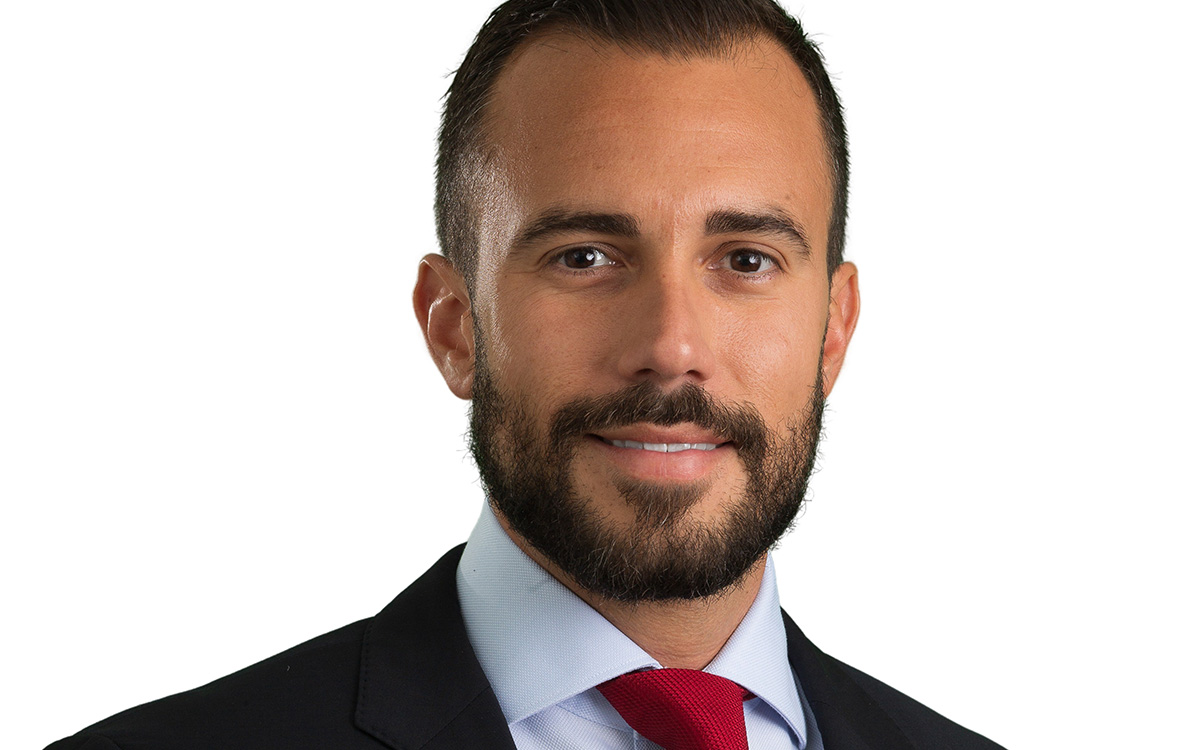
Acting U.S. World Bank Executive Director L. Felice Gorordo recently told the Washington Blade that he is committed to the advancement of LGBTQ and intersex rights within the multilateral organization.
“LGBTQI+ rights are human rights and human rights are LGBTQI+ rights. Period. Hard stop,” he said during an exclusive interview at his D.C. office on March 27. “I see it, personally, from a human rights promotion lens.”
Gorordo, a Cuban American who was born in Miami, graduated from Georgetown University in 2005.
He co-founded Roots of Hope, an organization that seeks to empower young Cubans on the island through entrepreneurship and increased access to technology.
Gorordo served in various roles in both the Obama and George W. Bush administrations, and served as advisor to then-Vice President Joe Biden’s cancer initiative after his mother died from pancreatic cancer.
He has also been the CEO of three-venture backed technology companies, an investor and advisor at two venture capital funds with focuses on global healthcare and infrastructure, and has sat on the boards of several for- and non-profit organizations. Gorordo was most recently the CEO of eMerge Americas and executive director of the Technology Foundation of the Americas before the U.S. Senate confirmed him in May 2023.
He has been the World Bank’s acting U.S. executive director since Adriana Kugler joined the Federal Reserve Board.
Gorordo, 41, throughout the interview referenced the Biden-Harris administration’s 2021 memo that committed the U.S. to promoting LGBTQ and intersex rights abroad as part of U.S. foreign policy.
“It starts off with us at the bank trying to build demand for the issues related to LGBTQI+ rights and people,” he said. “It’s about protecting LGBTQI+ rights in and outside of World Bank operations and projects and supporting LGBTQI+ people and rights inside and outside of our projects through inclusion. It’s using our voice and vote at every chance that we get to advance LGBTQI+ people.”
Gorordo pointed out his office reviews roughly 700 projects a year for the World Bank, and they have an average of $90-$100 billion in financial commitments. He said there is a “pretty extensive review process for due diligence” with criteria that include environmental and social frameworks and bank safeguards (that currently do not explicitly include sexual orientation or gender identity.)
“We take a critical lens at each one that it lives up to the values that we want to promote, and that includes looking at it through the lens of LGBTQI+ rights,” said Gorordo.
One LGBTQ-inclusive project is the World Bank International Finance Corporation’s $275 million loan to Banco Davivienda in Colombia, which provides funding for advisory services to LGBTQ and intersex people and for the design of LGBTQ and intersex banking products. The board in 2023 greenlighted $200 million for the Program for Universal Primary Healthcare Coverage and Resilience which, among other things, seeks to improve the quality of healthcare that LGBTQ and intersex people receive in Chile.
The World Bank’s EQOSOGI Project has already collected LGBTQ- and intersex-specific data on legal gaps as well as practices that impact LGBTQ and intersex people in 16 countries, and it plans to expand its work to other nations in 2024. The World Bank is also expanding its research on the economic costs of discrimination based on sexual orientation and gender identity.
The first studies focused on Serbia and North Macedonia, and found both countries’ annual gross domestic product would increase by .6 percent if LGBTQ and intersex people faced less discrimination in the workplace. A study that will focus on Brazil will be released later this year.
“There’s always more we can do,” Gorordo told the Blade. “What we believe we need to do, again, using our convening power and our voice and our vote is to help build because in the end we are still a demand-driven organization.”
“We need to use our research and the data, in my opinion, our opinion, to help generate the demand for LGBTQI rights to be enshrined in our safeguards, in our strategies and in every single one of our products and the data speaks for itself,” he added.
Gorordo also noted the bank in the coming months will release a new gender strategy that recognizes gender as nonbinary.
“That’s a big step,” he said.
Gorordo described World Bank President Ajay Banga as “a champion of the rights of all, including LGBTQI+ people.” Gorordo, however, acknowledged there has been “some pushback from certain constituencies that have different views and opinions than ours” on the new gender strategy and support for LGBTQ and intersex rights.
“I see it as my responsibility to not just advocate for it in the board room or with management, but also using my office and chair to meet with other chairs bilaterally, to make the case for it, to try and bring folks along with us,” he added.
Uganda’s Anti-Homosexuality Act ‘needs to be struck down and repealed’
The World Bank last August suspended new loans to Uganda in response to the country’s Anti-Homosexuality Act that President Yoweri Museveni signed.
Uganda’s Constitutional Court earlier this month refused to nullify the law. A group of Ugandan LGBTQ activists have appealed the ruling.
“The law needs to be struck down and repealed. Hard stop,” said Gorordo. “We continue to advocate for that.”
Then-World Bank President Jim Yong Kim in 2014 postponed a $90 million loan to the Ugandan government in response to Museveni’s decision to sign a nearly identical version of the Anti-Homosexuality Act, known as the “Kill the Gays” law that imposed a life sentence upon anyone found guilty of repeated same-sex sexual acts.
Uganda’s Constitutional Court later struck down the law on a technicality, but Kim’s decision to postpone the loan without first consulting the World Bank’s board sparked widespread criticism among board members. Advocacy groups had asked the World Bank not to fund future projects in Uganda, but they did not ask for the cancellation of existing loans.
The World Bank earlier this year organized a seminar with the Human Rights Promotion Forum of Uganda that upwards of 50 people attended virtually and in person.
“One of the things that I think is incredibly critical is hearing directly from those we seek to serve and who are being impacted by these discriminatory laws,” said Gorordo.
Gorordo said the World Bank in lieu of the law’s repeal has “been doing a review of mitigation efforts” that includes “a three-month trial period once there is an agreement of what those mitigation efforts would be, to see if they are fit for purpose.”
“At the crux of it includes the protection as well as the equal access of benefits for LGBTQ communities in Uganda. If it is not fit for purpose, then we have to go back to the drawing board., So we will continue to push for the strictest mitigation measures that can be put into place, a very critical review through that process … and ensuring that we are able to guarantee equal access and protection for the LGBTQ community.”
Ghanaian President Nana Akufo-Addo has delayed a decision on whether he will sign a bill that would further criminalize LGBTQ people in his country. Lawmakers in Kenya and Tanzania have proposed similar measures.
“One of the reasons why we’ve taken such a critical view of the Uganda case is this is potentially one of many of these types of cases that we’ll have to deal with,” said Gorordo. “What we do in Uganda could have a ripple effect in other countries and we need to ensure that we are setting the right precedents for how we react in these cases.”
Gorordo further noted consensual same-sex sexual relations remain criminalized in upwards of 60 countries around the world.
“The discrimination that’s against LGBTQI+ people is unacceptable across the board,” he said. “We will use all the tools in the U.S. government’s toolbox to be able to make it known our objection and to try and stop discrimination and protect the rights of LGBTQ+ people every chance we get.”
World
Out in the World: LGBTQ news from Europe and Asia
Iraqi MPs passed bill that criminalizes same-sex relationships, transgender people
IRAQ
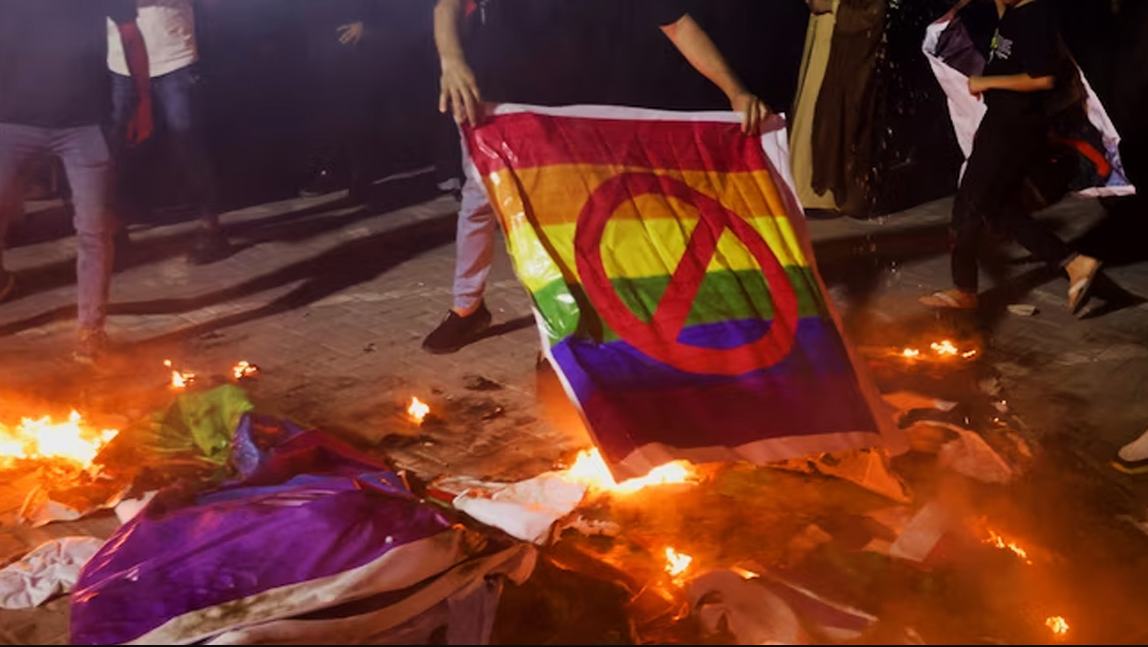
A law passed by the Iraqi parliament Saturday criminalizes same-sex relationships with a maximum 15-year prison sentence and also penalizes transgender Iraqis who face potential prison sentences ranging between one and three years under the new law.
MP Nouri al-Maliki told the AFP news agency that passage of the measure was delayed until after Prime Minister Mohamed Shia al-Sudani’s visit to Washington earlier this month. A second MP, Amir al-Maamouri, told Shafaq News that the new law was “a significant step in combating sexual deviancy given the infiltration of unique cases contradicting Islamic and societal values.”
In a statement released by State Department spokesperson Matthew Miller noted:
“The United States is deeply concerned by the Iraqi Council of Representatives’ passage of an amendment to existing legislation, officially called the Anti-Prostitution and Homosexuality Law, which threatens constitutionally protected human rights and fundamental freedoms. The law bans same-sex relations with steep fines and imprisonment and punishes those who ‘promote homosexuality.’ Limiting the rights of certain individuals in a society undermines the rights of all.
This amendment threatens those most at risk in Iraqi society. It can be used to hamper free-speech and expression and inhibit the operations of NGOs across Iraq. The legislation also weakens Iraq’s ability to diversify its economy and attract foreign investment. International business coalitions have already indicated that such discrimination in Iraq will harm business and economic growth in the country.
Respect for human rights and political and economic inclusion is essential for Iraq’s security, stability, and prosperity. This legislation is inconsistent with these values and undermines the government’s political and economic reform efforts.”
British Secretary of State David Cameron in a statement posted to X called the law “dangerous and worrying.” He added “no one should be targeted for who they are. We encourage the government of Iraq to uphold human rights and freedoms of all people without distinction.”
GERMANY

According to German media outlet Preussische Allgemeine Zeitung, a group of professional footballers from the German Football League (Deutsche Fußball Liga) will be announcing that they are gay on the International Day Against Homophobia, Biphobia and Transphobia on May 17.
PinkNewsUK reported the German outlet has quoted Marcus Urban as a source. Urban is a former footballer in Germany who came out after retiring. He was the second player worldwide to come out, only after British player Justin Fashanu in 1990. Fashanu was the only prominent player in pro English football to come out, until Jake Daniels in 2022.
Urban told Editorial Network Germany (Redaktions Netzwerk Deutschland) the move is part of an initiative in Germany in an attempt to encourage closet LGBTQ players and others working in football to come out. All clubs involved are said to have been made aware of the imminent announcement.
Urban is a co-founder of Diversero, a global community who celebrate and live diversity that he said contact with the players. Speaking about the closeted players he noted: “There is controversy there. Do I still want to wait until the world of football becomes the way I want it to be?”
COUNCIL OF EUROPE
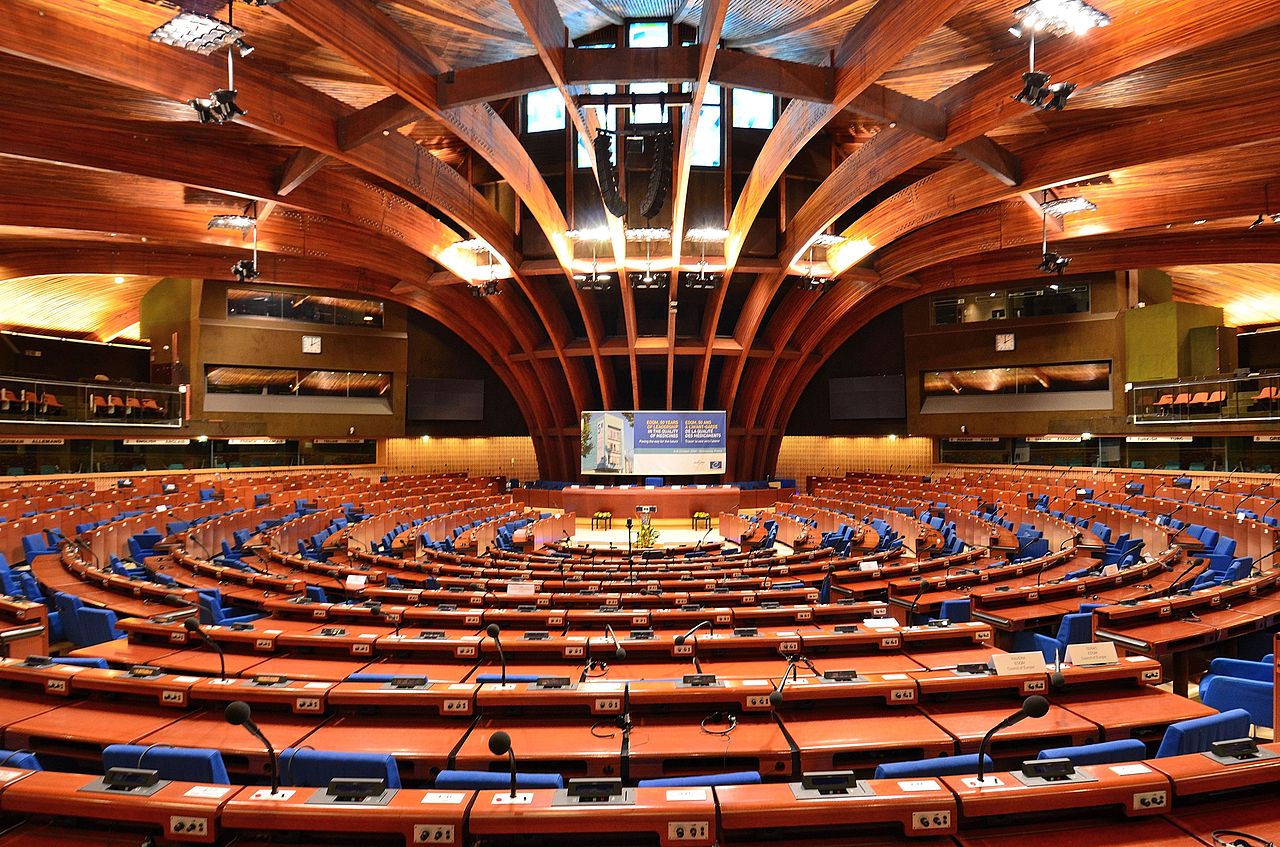
The Council of Europe’s Committee for the Prevention of Torture has issued a set of standards and recommendations to European prisons aimed at ensuring that trans prisoners, a highly vulnerable segment of the prison population, are treated with respect and protected from the risks of ill-treatment.
In its annual report for 2023, the CPT notes that it is increasingly meeting trans persons held in prisons during its visits to states to monitor the conditions of detention of persons deprived of liberty. The CPT aims to provide guidance to governments and prison administrations, considering that European countries are currently implementing divergent policies and that there is a current debate as to how to treat transgender persons in prison.
CPT President Alan Mitchell said: “Prisons are a microcosm of society, often with amplified issues given the smaller confined settings. Transgender persons held in detention can be in a situation of vulnerability and a heightened risk of intimidation and abuse. It is concerning that a few states still deny the existence of transgender persons and make no specific provision for their treatment in prison, which may expose them to ill-treatment. Governments should put in place safeguards to protect transgender persons in detention and ensure that they are treated with dignity and care.
“The report identifies as a challenge the widely divergent criteria of placement of transgender persons throughout Europe depending on individual states’ policies. Some are based on self-identification and declaration, others on legal recognition, and a few on gender-affirming surgery. Few states have specific policies and legislation to guide prison authorities on placement of transgender persons, often done on a case-by-case basis subject to an individual risk assessment.
In line with the European Court of Human Rights case law, the CPT highlights that national legislation should provide for the recognition of persons of a gender other than that assigned by birth and not establish any pre-condition to legal gender recognition such as gender-affirming surgery. Consequently, when a person self-identifies as transgender in the prison admission procedure, this should be sufficient for the prison administration to treat the person as such.
The CPT considers that transgender persons should be accommodated in the prison section corresponding to the gender with which they identify. Although there have been a few unfortunate cases of the placement in women’s prison sections of transgender persons accused or convicted of sexual offences against women, the committee highlights that, as for any other prisoners, they should only be placed elsewhere for exceptional security or other reasons after an individual risk assessment. In addition, transgender prisoners should be consulted about their placement preference during the entry procedure and be given the option to keep their gender identity confidential.
During its visits to several states, the CPT met transgender women prisoners held in male sections who stated they did not feel safe, and some alleged having been sexually abused and assaulted by other prisoners or verbally abused by staff. In some countries, the CPT also met transgender women who reported that they were often not allowed to shower at different times as male prisoners, were humiliated by being referred to by their male names or prohibited from wearing women´s clothes.
In the CPT’s view, transgender prisoners should be allowed to dress in the clothes associated with their self-identified gender and be addressed by their chosen names by prison staff. Prison administrations should also address them by their preferred names, titles and pronouns in verbal and written communication, irrespective of official documents. Further, national and prison authorities should ensure that all prison staff is trained to understand and address the specific needs of transgender persons and the risks they are exposed to in the prison environment.
The committee urges national authorities to address the risks of discrimination of transgender persons in prison and implement policies to prevent and combat ill-treatment by prison staff and inter-prison violence and intimidation targeting them. It also provides guidance to ensure that body searches of transgender persons are not perceived as degrading by the persons concerned.”
UNITED KINGDOM
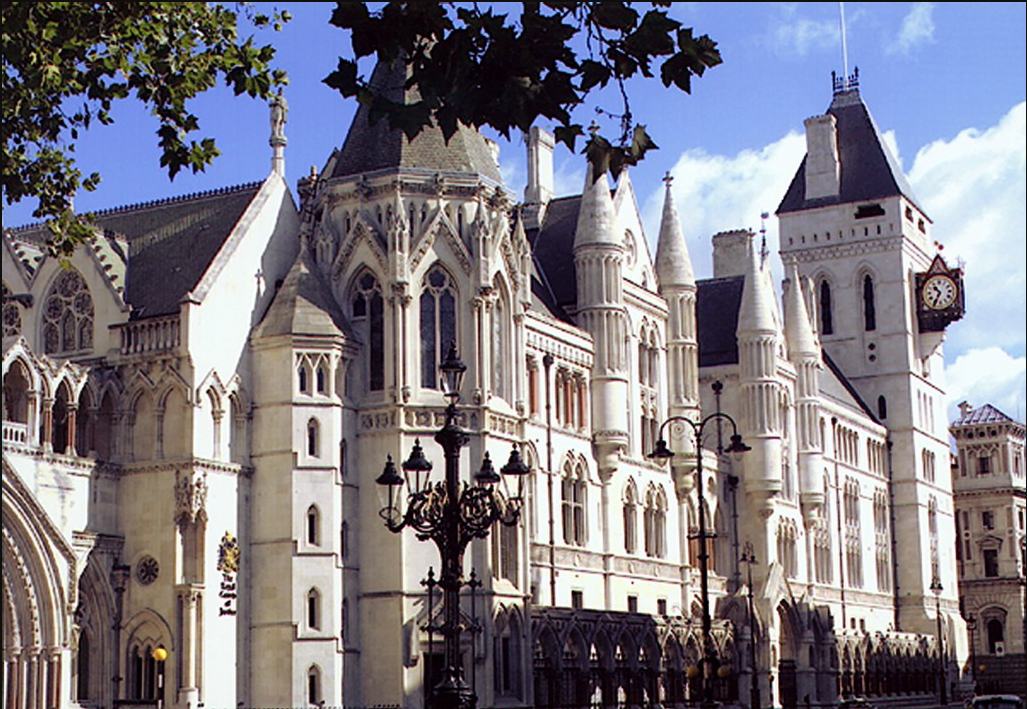
Royal Courts of Justice (Photo courtesy of the British government)
The Austen Hays Limited law firm this week launched a class action lawsuit in the High Court of Justice in London against West Hollywood, Calif.,- based Grindr, alleging that the world’s largest LGBTQ casual encounters app had violated British data protection laws.
Reuters reported that the suit claims British users’ highly sensitive information, including HIV status and the date of their latest HIV test, were provided to third parties for commercial purposes.
In a statement released to the media a spokesperson for Grindr said: “We are committed to protecting our users’ data and complying with all applicable data privacy regulations, including in the UK. We are proud of our global privacy programme and take privacy extremely seriously. We intend to respond vigorously to this claim, which appears to be based on a mischaracterisation of practices from more than four years ago, prior to early 2020.”
The Austen Hays Limited law firm’s managing director Chaya Hanoomanjee responded saying:
“Our clients have experienced significant distress over their highly sensitive and private information being shared without their consent. Many have suffered feelings of fear, embarrassment, and anxiety as a result,” Hanoomanjee said.
“Grindr owes it to the LGBTQ+ community it serves to compensate those whose data has been compromised and have suffered distress as a result, and to ensure all its users are safe while using the app, wherever they are, without fear that their data might be shared with third parties,” she added.
So far 670 people have signed up to the claim, and the firm said “thousands” more people had expressed interest in joining.
The Irish Examiner reported on Monday, April 22 that the claim against Grindr will be focused on the periods before April 3, 2018, and between May 25, 2018, and April 7, 2020, meaning newer users are unlikely to be able to join. Grindr changed its consent mechanisms in April 2020.
Grindr, based in Los Angeles, announced it would stop sharing users’ HIV status with third-party companies in April 2018 after a report by Norwegian researchers revealed data sharing with two companies.
HONG KONG
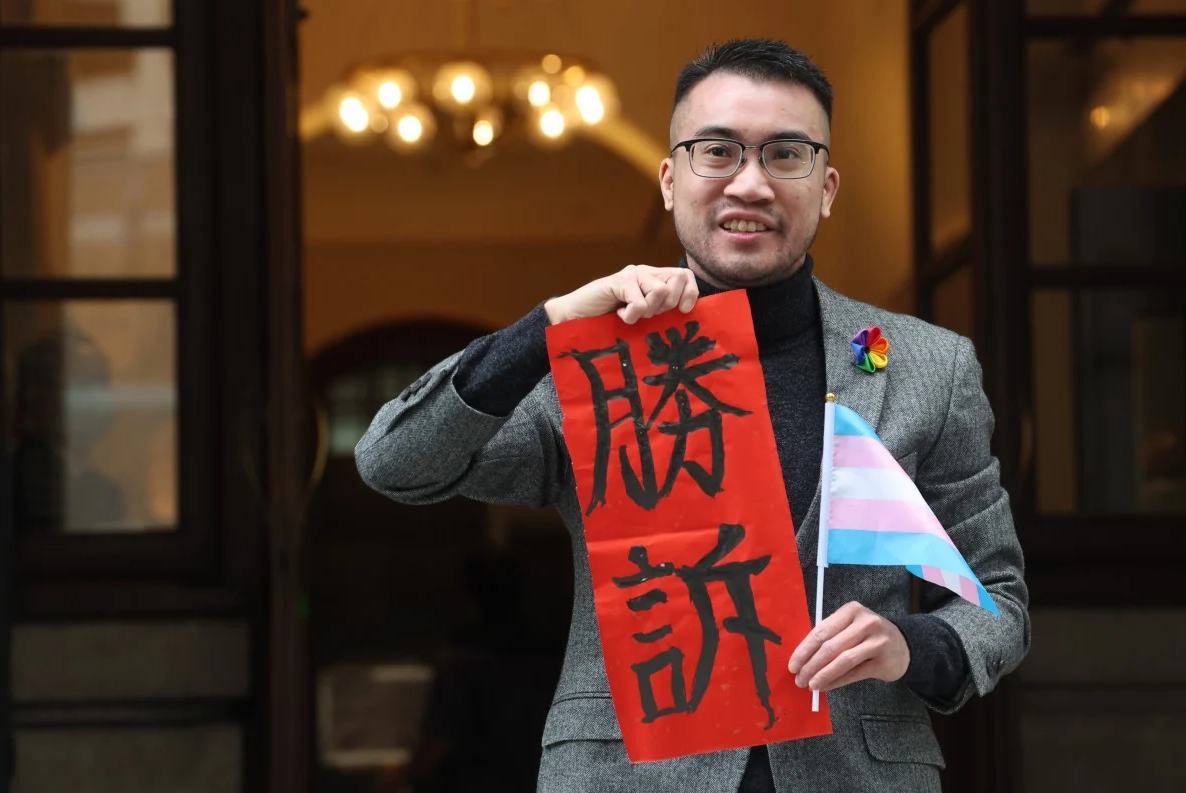
A 33-year-old trans man who has been battling authorities to change his gender from female to male on his Hong Kong ID card since he first launched legal action in 2017, and winning a verdict from the Court of Final Appeal in February 2023, has finally been able to get his new ID card this week.
In an interview with Hong Kong-based South China Morning Post journalist Lo Hoi-ying, Tse told her: “I thought to myself, I have won the lawsuit over a year ago, why do I still have to go through all of this?”
Tse, the chairman of the NGO Transgender Equality Hong Kong, also filed a separate lawsuit against the government in March for what he said was a discriminatory delay in issuing him his new ID card.
He said he would seek monetary compensation for the distress caused by the delay, which could not be forgotten even after changing his card. “Potentially in the future, if there are similar cases for the LGBTQ community, the government should not delay policy updates like this,” he said.
While Tse said that his new ID could make life easier for him and solve some surface issues, he conceded it was only a small step in the fight for trans rights, the South China Morning Post reported.
“The updated policy is not fully trans-inclusive, as measures such as submitting blood test reports for randomized checks still violate our privacy,” he said.
“There are still many hurdles for us, such as marriage. These are all issues we have to confront, which cannot be solved merely by an ID change.”
Additional reporting by Agence France-Presse, Shafaq News, Redaktions Netzwerk Deutschland, Office of Public Affairs for the Council of Europe, BBC News, PinkNewsUK, Irish Examiner, and the South China Morning Post.
United Methodist Church removes 40-year ban on gay clergy

Republican state AGs challenge Biden administration’s revised Title IX policies

University students have a right to protest

Former CAMP Rehoboth official sentenced to nine months in prison

Christian Siriano to serve as grand marshal of Annapolis Pride Parade

Md. governor signs Freedom to Read Act

HHS reverses Trump-era anti-LGBTQ rule

4th Circuit rules gender identity is a protected characteristic

PHOTOS: Capital Pride Pageant