Local
Who paid for Task Force mailer on gambling?
LGBT group wades into Md. gaming debate, triggering reports of links to casinos and GOP strategists
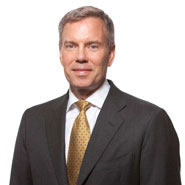
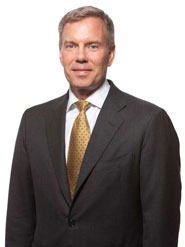
Sources linked DCI Group’s Tom Synhorst — a gay Republican strategist — to an expensive mailer from the Task Force Action Fund critical of a proposed gambling expansion in Maryland. (Photo courtesy DCI)
As the dust settles over the Maryland General Assembly’s approval on Aug. 15 of a controversial bill to increase the number of casinos operating in the state, some political insiders say the National Gay and Lesbian Task Force appears to have taken the unusual step of accepting money from gambling interests to campaign against the bill.
The Task Force last month announced it opposed taking up the bill this year, noting it would trigger a voter referendum on gambling that likely would motivate more conservative, religious voters to turn out to vote against both gambling and the state’s same-sex marriage law, which is also on the November ballot in a referendum.
Earlier this month, the National Gay & Lesbian Task Force Action Fund mailed an expensive tri-fold flier to thousands of Maryland households asking residents to urge their state representatives to vote “no” on the gambling bill. The mailer was likely part of the first round of an expected fierce campaign in which gambling and marriage equality may become entangled, sources familiar with the two issues told the Blade.
The sources, who spoke on condition that they not be identified, said the Task Force Action Fund mailer raised eyebrows among many political observers in Maryland, including officials in the administration of Gov. Martin O’Malley, who introduced the gambling bill. Sources estimated the mailer cost well over $100,000.
“I know for a fact that the Task Force didn’t pay for it — a single, anonymous contributor paid for it,” said one of the sources.
Others familiar with the situation say they believe one or more of the five casinos already authorized to operate in the state and that stand to lose business from a sixth casino that the bill authorizes most likely paid for the mailer.
These sources note that Monique Hall, a member of the Task Force Action Fund board of directors, is a vice president for the DCI Group, a Republican-leaning political consulting firm that the sources say has been retained by one of the Maryland casinos to campaign against the gambling bill.
The sources believe one of the casinos paid for the mailing directly or reimbursed the DCI Group, which in turn paid the Task Force Action Fund for the mailing.
One of the sources said the Cordish Company, a national conglomerate that operates casinos in Las Vegas and throughout the country, including a casino located just south of Baltimore, is a client of DCI Group and may have been the source of the money used to pay for the mailer. The Blade could not independently confirm that Cordish is a DCI client. There are other gaming companies operating in Maryland that oppose the expansion, including Penn National Gaming, which owns 20 casinos throughout the nation, including Hollywood Casino of Perryville, Md.
The Task Force has declined to disclose the source of the money used to prepare and pay for the mailer.
“We do not have a position on gambling, but rather on marriage equality,” said Task Force Deputy Executive Director Darlene Nipper in a statement.
“The purpose of the marriage equality mailer, funded by the Task Force Action Fund, which like other nonprofits includes many donors, some named and some who are not, is to get marriage equality over the finish line,” Nipper said. “It was sent to a portion of registered Democratic households in Maryland.”
The mailer states, “If the gaming bill is on the ballot, opponents are likely to spend millions identifying and turning out voters who don’t like gambling…and who also don’t like Marriage Equality! So all the ‘no’ votes on gaming could also be ‘no’ votes for us.”
The mailer added, “The best thing that can happen – to give us a fair shot at winning on the ballot in November – is for the legislature to put gaming aside till next year and let the marriage issue proceed without complications.” The Task Force Action Fund is a 501c(4) nonprofit and contributions made to it are not tax deductible.
The Task Force did not directly answer when asked if it has made financial contributions to the Maryland referendum fight, but two knowledgeable sources said the Task Force has not made cash donations to the effort.
“We have provided staff resources specifically to advance marriage equality in Maryland,” said Nipper in an emailed statement. She also noted that the Task Force held its annual Creating Change conference in Baltimore earlier this year and that O’Malley spoke to attendees. Task Force executive director Rea Carey is on sabbatical and unavailable for comment.
Speculation over who could have paid for the Task Force Action Fund mailer has centered on Tom Synhorst, a gay Republican strategist and founder and chair of the DCI Group, which bills itself on its website as a public affairs company that “helps corporations navigate their most challenging political, legislative and regulatory problems anywhere in the world.”
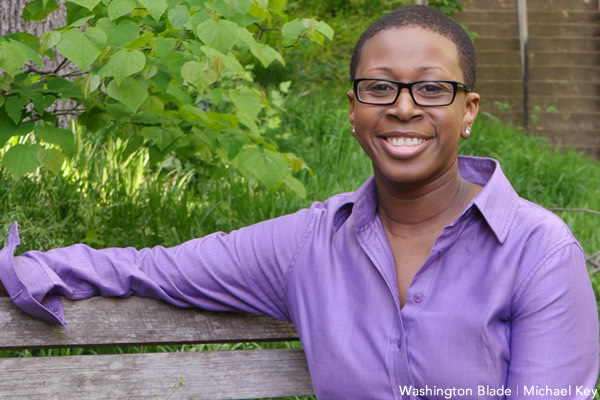
Monique Hall (Blade file photo by Michael Key)
Monique Hall, the DCI Group vice president and the Task Force Action Fund board member, did not respond to Blade inquires. A receptionist at DCI initially refused to take a message for Synhorst on Aug. 17 and declined to transfer a Blade reporter’s call into Synhorst’s voicemail. Another receptionist did take a message when the Blade called back on Monday, but Synhorst did not immediately respond.
DCI doesn’t disclose its client list on its website, but two sources with knowledge of the Task Force mailer said DCI has gaming clients, including possibly the Cordish Company.
Carmen Gonzales, a spokesperson for Maryland Live! Casino said Cordish has no immediate comment on any of the issues surrounding the approval of a sixth casino for Prince George’s County, including the Task Force mailer, except for this statement:
“Maryland Live! is, and will continue to be, the premier casino entertainment destination in the region. In the next few months, Live! will open new world-class dining and entertainment amenities, including the Prime Rib and Rams Head Center Stage.”
One political observer familiar with Maryland gambling rivalries, speaking on condition of anonymity, speculates that the existing casinos in the state that oppose the opening of a new casino “will create new or use existing faith-based organizations to front their campaign, arguing that gambling is morally wrong.”
Other observers familiar with Synhorst and the DCI Group say DCI has a history of creating front groups to wage battles in political campaigns.
Synhorst has a long record of working for Republican political candidates, including former Sen. Robert Dole (R-Kan.), former Gov. Mike Huckabee (R-Ark.), and former Presidents George Walker Bush and George W. Bush.
DCI has been involved with “the creation of several front groups for the Bush administration and telecommunications, pharmaceutical and computer industries,” according to SourceWatch, which is published by the Center for Media and Democracy.
SourceWatch noted that the Associated Press reported in June 2001 that Synhorst “has been linked to South Carolina ‘push polls’ in the 2000 Republic primary that attacked candidate John McCain as ‘a cheat, a liar and a fraud,’ according to the Democratic Senatorial Campaign Committee.”
The Center for Media and Democracy added, “DCI and its affiliates offer ‘direct contact’ that bypasses the media entirely. The client’s message is directly delivered via phone banks, regular mail and/or the internet. Direct contact provides the campaigns with complete control over the message. Freed from the filters created by news outlets, they can be as biased and inflammatory as the message shaper deems necessary.”
Will gaming push derail marriage?
On Aug. 15, the General Assembly passed the gambling bill, with the House of Delegates approving it by a vote of 71-58 and the State Senate approving by a margin of 32-14.
Six of the eight openly gay or lesbian members of the General Assembly voted for the bill, citing arguments by proponents, including O’Malley, that the measure would generate an additional $174 million a year in revenue for the state. O’Malley said most of the revenue would be used to fund state education programs.
The gambling measure was drafted to include a provision requiring that it must come up before voters in the November election if the General Assembly passes it.
Meanwhile, earlier in the year, opponents of same-sex marriage obtained the required number of petition signatures needed to place on the November ballot a same-sex marriage law that the General Assembly passed and O’Malley signed in February.
Same-sex marriage advocates have expressed conflicting views over whether a gambling referendum would hurt chances for upholding the same-sex marriage law if both referenda were on the ballot at the same time. The marriage law has been on hold pending the outcome of the November referendum.
The Task Force, among other LGBT advocates, says a gambling referendum is likely to encourage a greater number of conservative, religious-oriented voters to go to the polls who oppose both gambling and marriage equality.
Other advocates, including Josh Levin, campaign manager of Marylanders for Marriage Equality, the organization leading the campaign to uphold the same-sex marriage law, say a gambling referendum would have no impact on the marriage equality vote.
“We’ve been looking at this carefully for a long time and we have yet to see any data that suggests there are any voters who would come out in the election because of the gaming initiative who were not already going to be out for a presidential election or to vote on the question of marriage equality,” Levin told the Blade.
Levin said he bases his assertion on private polls and focus groups commissioned by Marylanders for Marriage Equality.
At least one pollster sympathetic to LGBT equality, who asked not to be identified, said Levin’s assessment may not be correct.
“I don’t think a gambling ballot measure by itself will generate a greater turnout,” the pollster said. “But the Cordish Company is likely to spend millions to bring out anti-gambling voters … You are injecting a huge unknown factor if you put gambling on the ballot.”
The bill authorizes the state to expand the number of casinos allowed to operate in Maryland from five to six, with the sixth site to be located in Prince George’s County, most likely in the county’s National Harbor complex located near D.C.
O’Malley says the expansion would result in an additional $174 million a year in revenue when all six casinos are fully operational in 2017.
The five existing casinos approved for other locations in the state raised strong objections to O’Malley’s proposal, saying another casino in P.G. County would draw away patrons from the other five casinos.
Among the strongest opponents of the O’Malley proposal is the Cordish Companies. Cordish just opened its Maryland Live! Casino and entertainment complex at Arundel Mills just south of Baltimore. Observers say the Maryland Live! Casino would be impacted the most by a P.G. County casino because it’s the closest among the five casinos approved to operate in Maryland to the P.G. site.
Lessons from Ohio fight
Gambling industry observers say a furious battle between rival casinos in a 2008 Ohio voter referendum on whether a new casino should be allowed in the state might be a predictor of things to come in Maryland this year.
Known as Ballot Issue 6, Ohio voters were asked to decide whether Lakes Entertainment, a large casino owner, should be allowed to open a new casino in Ohio located 30 miles from an existing casino in Indiana owned by rival Penn National Gaming. Penn National reportedly put up $38 million to fund the “No on 6” committee compared to at least $26 million spent by Lakes Entertainment for the campaign in support of the casino.
Ohio voters ultimately defeated the proposal to build the new casino, with large numbers of conservative voters believed to have turned out to vote no.
The Task Force mailer included quotes from three commentaries critical of O’Malley’s push to expand gambling in the state published by the Washington Post, the Washington Blade, and the blog Care2.com. The Post piece was written by gay commentator Jonathan Capehart; the Blade’s was written by editor Kevin Naff.
The gay and lesbian legislators voting for the gambling bill were Sen. Rich Madaleno (D-Montgomery County) and Delegates Luke Clippinger (D-Baltimore City), Bonnie Cullison (D-Montgomery County), Anne Kaiser (D-Montgomery County), Maggie McIntosh (D-Baltimore City) and Mary Washington (D-Baltimore City). The gay and lesbian delegates voting against the bill were Peter Murphy (D-Charles County) and Heather Mizeur (D-Montgomery County).




District of Columbia
Third LGBTQ candidate running for Ward 1 D.C. Council seat
Community organizer Aparna Raj a ‘proud daughter of immigrants’

In what appears to be an unprecedented development in local D.C. elections, three known LGBTQ candidates are now running for the open Ward 1 D.C. Council seat in the city’s June 16, 2026, Democratic primary.
Longtime Ward 1 community organizer Aparna Raj, a bisexual woman who identifies herself on her campaign website as a “queer woman of color,” announced her candidacy for the Ward 1 Council seat on Aug. 12 of this year.
The Washington Blade didn’t learn of her status as an out-LGBTQ candidate until late last month when one of her supporters contacted the Blade after publication of the Blade’s story about the second of two gay male candidates running for the Ward 1 Council seat – Ward 1 Advisory Neighborhood Commissioner Miguel Trindade Deramo.
Trindade Deramo’s candidacy announcement on Nov. 18 followed the announcement in July by fellow gay Ward 1 ANC commissioner Brian Footer that Footer is running for the Ward 1 Council seat in the upcoming Democratic primary.
If any of the three Ward 1 LGBTQ candidates were to win the primary and win in the November general election, they would likely become the second LGBTQ member of the D.C. Council. Then gay D.C. Board of Education member Zachary Parker, a Democrat, won election to the Ward 5 Council seat in 2022. Parker, who is up for re-election in 2026, is considered by political observers to have a strong chance of winning the upcoming election.
“Aparna Raj is a community organizer, union member and proud daughter of immigrants,” her campaign website states. “She is running for D.C. Council in Ward 1 because she believes everyone – from Adams Morgan to Park View, from Spring Road to U Street – can and should have what they need to survive and thrive,” the statement on her website continues.
It adds, “Aparna is a renter, a queer woman of color, and a democratic socialist fighting for a better world … She lives in Columbia Heights with her husband, Stuart, and their little dog, Frank.”
In a Dec. 5 interview with the Blade, Raj said she identifies as a bisexual woman and has been a longtime supporter of D.C.’s “queer and trans communities” on a wide range of issues that she says she will continue to address if elected to the Council.
She said she currently works as a communications manager for a nonprofit organization that supports local elected officials across the country on issues related to economic justice.
As the daughter of parents who immigrated to the U.S. from India, Raj said she will continue her work as an advocate for D.C.’s immigrant communities, especially those who live in Ward 1.
“And I feel very strongly that we need someone who will organize and fight for the working class, who will fight for renters and workers and immigrants and families, to not just be able to get by but to be able to live a full life here,” she told the Blade. “Making sure that we’re providing enough for renters and for workers means that is an LGBTQ+ issue,” she said. “That is an issue that benefits the LGBTQ+ community.”
Among the things she will also address as a Council member, Raj said, will be to push for the city to do all it can to counter the policies of the administration of President Donald Trump.
“When the LGBTQ community is so under attack right now and when queer and trans folks are facing homelessness, are making less money on the job than their cis counterparts – when folks are scared about whether they will be able to continue healthcare or be able to hold on to their job through this period, having someone that takes on their landlord, that will stand on picket lines with workers and will certainly fight the Trump administration – all that is an LGBTQ justice issue,” she told the Blade.
Raj, Trindade Deramo, and Footer are among a total of six known candidates so far who are competing in the June 16 Democratic primary for the Ward 1 Council seat.
The other three, who are not LGBTQ, are Ward 1 ANC member Rashida Brown, longtime Ward 1 community activist Terry Lynch, and Jackie Reyes-Yanes, the former director of the Mayor’s Office of Community Affairs.
Similar to Raj, Trindade Deramo and Footer have been involved as community activists in a wide range of local LGBTQ and non-LGBTQ issues as described on their respective campaign websites.
And like all candidates on the ballot for the city’s 2026 primary, the three LGBTQ Ward 1 candidates will be competing for voters under the city’s newly implemented rank choice voting system. Under that system, voters will have the option of designating one of the LGBTQ candidates as their first, second, or third choice for the Council seat,
“I’m really excited about ranked choice voting,” Raj said. “And I think it’s great that there’s so many incredible candidates who are dropping into the Ward 1 race,” she said. “We’ll also be including a lot of voter education into our campaign materials as well since this will be the first year that D.C. is doing ranked choice voting.”
The three LGBTQ Ward 1 candidates are running at a time when local political observers are predicting the largest change in local D.C. elected officials, including the office of mayor and D.C. Council, in decades following the 2026 election. Longtime D.C. Council member Anita Bonds (D-At-Large), announced on Dec. 5 that she will not run for re-election in 2026.
Her announcement came shortly after Mayor Muriel Bowser announced she too is not running for a fourth term in office as mayor and about a month after incumbent Ward 1 Council member Brienne Nadeau (D) announced she is not running for re-election.
Bowser’s announcement prompted speculation that more Council members will run for mayor, some of whom will give up their Council seats if they either win or lose the mayoral race because their respective Council seats are also up for election in 2026.
Thus the 2026 D.C. election shakeup, in addition to bringing about a new mayor, could result in five or six new Council members on the 13-member Council.
Maryland
FreeState Justice launches 501(c)(4) group
FreeState Equality will focus on policy and advocacy
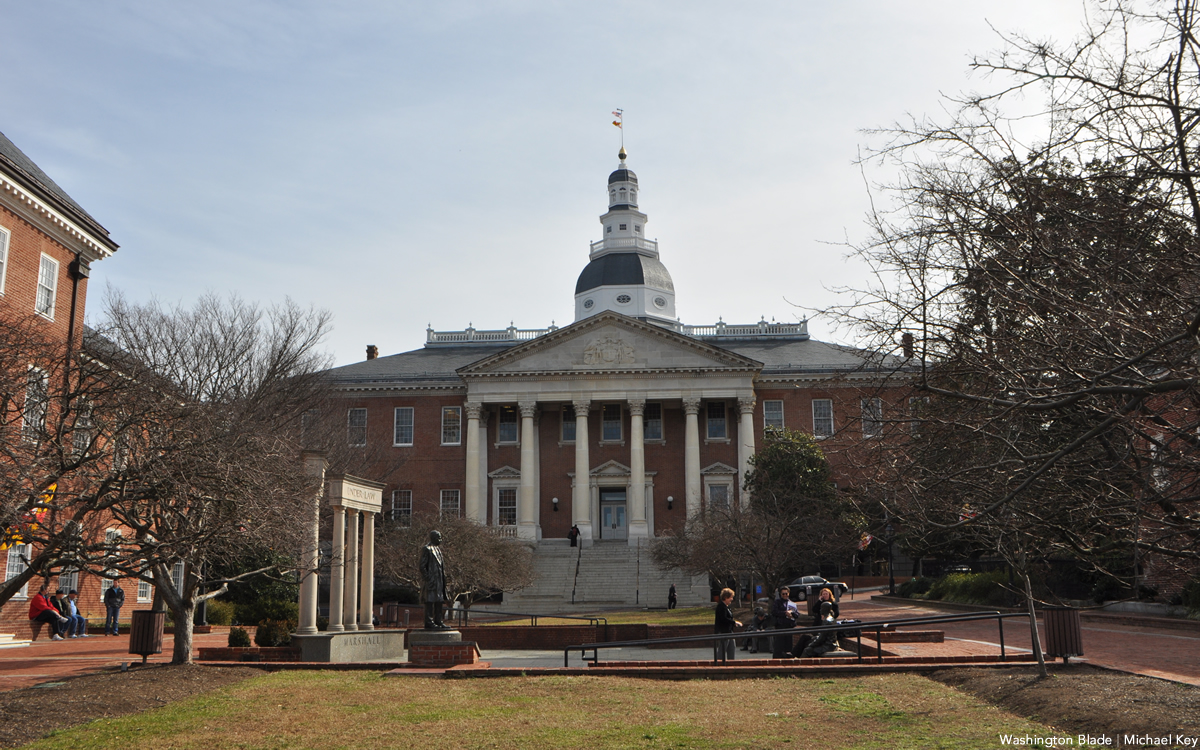
FreeState Justice, an LGBTQ organization that provides legal services, community programs, and public education in Maryland, announced the launch of FreeState Equality on Wednesday.
The new, independent organization intends to pursue advocacy and policy work beyond the legal capability of FreeState Justice, a 501(c)(3) non-profit. FreeState Equality functions as a 501(c)(4) organization, meaning it can partake in political activity.
“We are committed to transparency throughout this process and look forward to continuing our work together in service of LGBTQ+ Marylanders,” said FreeState Justice Executive Director Phillip Westry.
FreeState Equality will take on policy, advocacy, and civic engagement initiatives while FreeState Justice will pursue legal and direct-service work, according to Westry.
While both organizations adhere to similar values, they will feature separate leadership, operations and compliance.
FreeState Equality is hosting its first launch fundraiser on Dec. 10 at the Brass Tap in Baltimore. The event, held from 5-7 p.m., will feature insight from FreeState Equality staff about how Maryland policy can support the state’s LGBTQ community.
Attendees can purchase fundraiser tickets on Zeffy for $25 general admission, which includes a free first drink. The organization also welcomes additional donations.

By LEE O. SANDERLIN, PAMELA WOOD and BRENDA WINTRODE | Maryland House of Delegates Speaker Adrienne A. Jones, the first woman and first person of color to hold her position, stepped down from her leadership post Thursday, effective immediately.
Jones, 71, has been a member of the legislature since 1997 and ascended to the top role in 2019 following the death of longtime House Speaker Michael E. Busch.
Jones held a meeting with top House Democratic leaders Thursday afternoon, sources said, at which she informed them of her decision. In a statement, Jones described the changes of life’s seasons and said she was ready to focus on what lies ahead.
The rest of this article can be found on the Baltimore Banner’s website.
Trump’s shocking East Wing amputation—and the painful fallout Americans won’t ignore

Signs you’ve outgrown self-management of your D.C. rental

Third LGBTQ candidate running for Ward 1 D.C. Council seat

‘90s club kids will love Mark Ronson’s new book

Ultimate guide to queer gift giving

‘Lavender Scare 2.0’: inside the White House’s campaign against LGBTQ federal employees

Meet Mr. Christmas

Puerto Rico’s largest LGBTQ organization struggling amid federal funding cuts

Thank you, Mayor Bowser