National
White House still withholding ENDA executive order
Carney says administration will leave issue to Congress
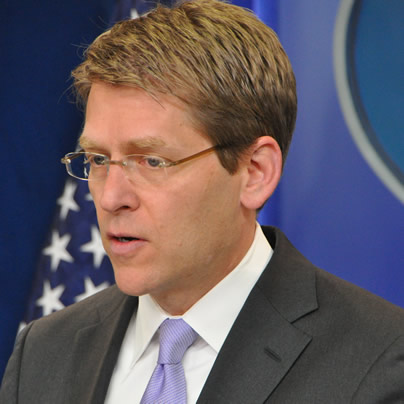
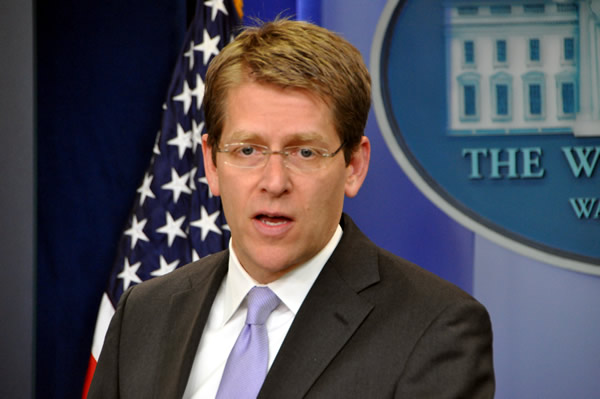
White House Press Secretary Jay Carney (Blade file photo by Michael Key)
White House Press Secretary Jay Carney said Wednesday that President Obama is not currently planning to revisit the idea of issuing an executive order barring federal contractors from discriminating against LGBT workers at the start of his second term.
Under questioning from the Washington Blade, Carney reiterated that the administration prefers a legislative solution to the problem — passage of the Employment Non-Discrimination Act — similar to the process that led to repeal of “Don’t Ask, Don’t Tell.”
“Our position on that hasn’t changed,” Carney said. “We point to, as you and I have discussed, the process that led to the effective repeal of “Don’t Ask, Don’t Tell” as a model for the way to approach these issues. I don’t have any updates for you on our approach.”
Carney reiterated Obama’s support for ENDA while noting that the proposed executive order does not provide expansive protections that would be afforded under the legislation.
“The president supports an inclusive ENDA that would provide lasting and comprehensive protections for LGBT people across the country regardless of whether they happen to work for a government contractor, and we look forward to continuing to support that process and that legislation,” Carney said.
In April, the White House announced it wouldn’t issue an executive order at this time requiring federal contractors to have non-discrimination policies inclusive of sexual orientation and gender identity. Amid the speculation President Obama was holding off on the order until after the election, LGBT advocacy groups such as the Human Rights Campaign and Freedom to Work renewed calls for the directive. Over the weekend, prominent gay Democratic lobbyist Steve Elemendorf was quoted by lesbian journalist Karen Ocamb as saying Obama “needs to do it in the first six months of the year.”
Asked whether his remarks rule out the possibility of the order within the first six months of next year, Carney said he isn’t “speculating on a hypothetical situation.”
“I would simply point to what our position has been and the avenue that we believe is the best to pursue broad-based protections for LGBT people,” Carney added.
Pressed on the difficulties of passing ENDA in a Republican-controlled House, Carney replied, “Many people said just that, even though it was in the prior Congress, about repeal of ‘Don’t Ask, Don’t Tell.’ We believe that the country has moved dramatically on issues like this, and that this president is committed to civil rights and to building on protections that are necessary for LGBT people as he is for all Americans.”
Under further questioning, Carney had no comment on whether Obama has met with victims of anti-LGBT workplace discrimination. Obama has met with Kylar Broadus, a transgender advocate who testified before the Senate about the workplace discrimination he faced at a major financial institution.
Tico Almeida, president of Freedom to Work, issued a statement to the Blade in response to the exchange with Carney and expressed continued optimism that Obama would issue the order.
“I share Steve Elmendorf’s optimism that the president will sign the executive order during the first part of 2013 because the Obama administration has built such a strong record of taking executive actions for LGBT fairness,” Almeida said. “Freedom to Work is among the organizations that believe the president should sign the order right away, and we’re optimistic he will sign it very soon.”
Almeida reiterated his call for a Senate vote on ENDA regardless of whether it’s short of the 60 votes needed to overcome a filibuster and made a new call for Obama to enumerate the need to pass the legislation as part of the upcoming State of the Union Address.
“The State of the Union Address would be a great opportunity for such a call to action, and it would give Majority Leader Reid the opportunity to demonstrate through his actions that he can provide stronger leadership than Speaker Boehner,” Almeida said.
A transcript of the exchange between the Washington Blade and Carney follows:
Washington Blade: Jay, I want to go back to something we haven’t talked about for a while. There’s been a renewed call for President Obama to issue that executive order barring federal contractors from discriminating against LGBT workers. Over the weekend, Steve Elemendorf, one of the president’s supporters during the election, said it needs to happen within the first six months of next year. Will President Obama revisit this idea as he begins his second term?
Jay Carney: Our position on that hasn’t changed. We point to, as you and I have discussed, the process that led to the effective repeal of “Don’t Ask, Don’t Tell” as a model for the way to approach these issues. I don’t have any updates for you on our approach. The president supports an inclusive-ENDA that would provide lasting and comprehensive protections for LGBT people across the country regardless of whether they happen to work for a government contractor, and we look forward to continuing to support that process and that legislation.
Blade: So that rules out the possibility of the order within the first six months of next year?
Carney: Again, I’m not speculating on a hypothetical situation. I would simply point to what our position has been and the avenue that we believe is the best to pursue broad-based protections for LGBT people.
Blade: Given that Republicans still control Congress after Election Day, isn’t leaving this up to the legislative process condemn LGBT people to lack of workplace non-discrimination protections for at least two years?
Carney: Many people said just that, even though it was in the prior Congress, about repeal of “Don’t Ask, Don’t Tell.” We believe that the country has moved dramatically on issues like this, and that this president is committed to civil rights and to building on protections that are necessary for LGBT people as he is for all Americans.
Blade: One last question.
Carney: I’ve given about all I can give.
Blade: President Obama said in May when he endorsed marriage equality that he spoken with service members who were discharged under “Don’t Ask, Don’t Tell” and with same-sex couples looking to be married. Has he ever spoken to a victim of LGBT workplace discrimination?
Carney: I don’t know that he has or hasn’t. I just don’t have a conversation to read out to you.
Blade: Can you get back to me on that?
Carney: I’m not going to ask him about every conversation he’s had.




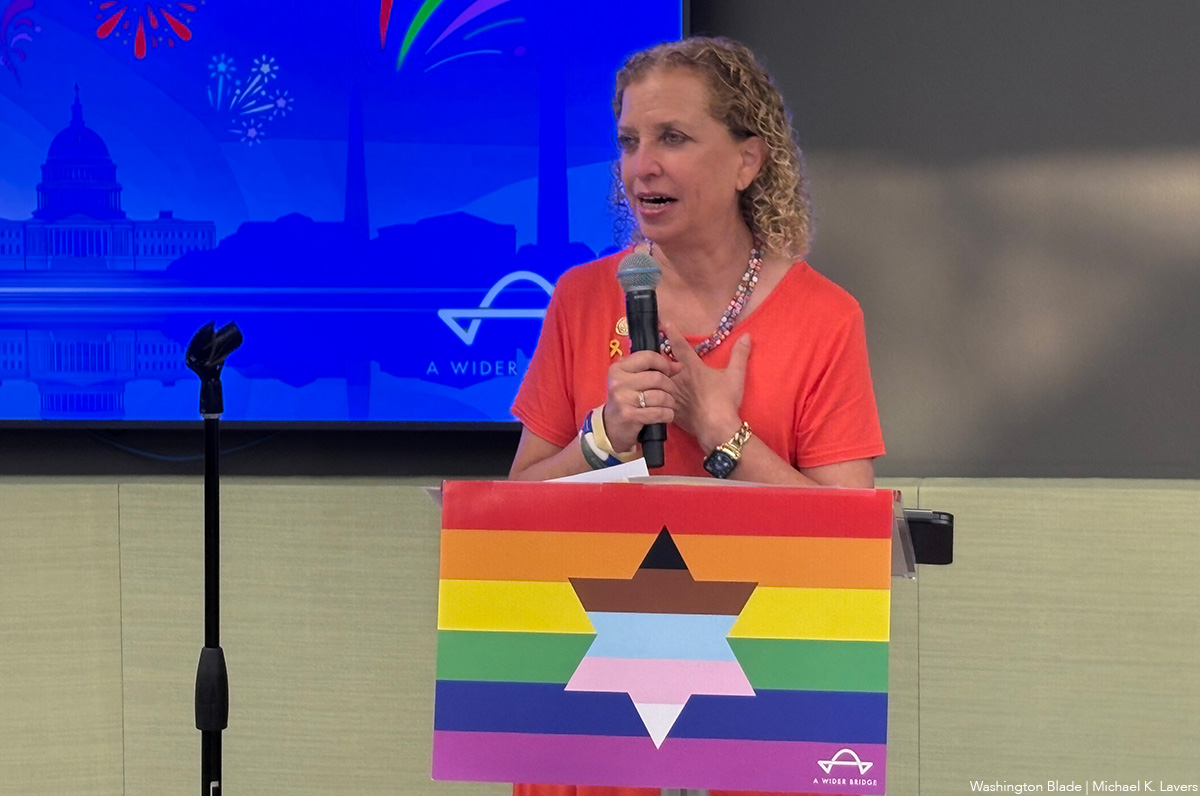
A Wider Bridge on Friday announced it will shut down at the end of the month.
The group that “mobilizes the LGBTQ community to fight antisemitism and support Israel and its LGBTQ community” in a letter to supporters said financial challenges prompted the decision.
“After 15 years of building bridges between LGBTQ communities in North America and Israel, A Wider Bridge has made the difficult decision to wind down operations as of Dec. 31, 2025,” it reads.
“This decision comes after challenging financial realities despite our best efforts to secure sustainable funding. We deeply appreciate our supporters and partners who made this work possible.”
Arthur Slepian founded A Wider Bridge in 2010.
The organization in 2016 organized a reception at the National LGBTQ Task Force’s Creating Change Conference in Chicago that was to have featured to Israeli activists. More than 200 people who protested against A Wider Bridge forced the event’s cancellation.
A Wider Bridge in 2024 urged the Capital Pride Alliance and other Pride organizers to ensure Jewish people can safely participate in their events in response to an increase in antisemitic attacks after Hamas militants attacked Israel on Oct. 7, 2023.
The Jewish Telegraphic Agency reported authorities in Vermont late last year charged Ethan Felson, who was A Wider Bridge’s then-executive director, with lewd and lascivious conduct after alleged sexual misconduct against a museum employee. Rabbi Denise Eger succeeded Felson as A Wider Bridge’s interim executive director.
A Wider Bridge in June honored U.S. Rep. Debbie Wasserman Schultz (D-Fla.) at its Pride event that took place at the Capital Jewish Museum in D.C. The event took place 15 days after a gunman killed two Israeli Embassy employees — Yaron Lischinsky and Sarah Milgrim — as they were leaving an event at the museum.
“Though we are winding down, this is not a time to back down. We recognize the deep importance of our mission and work amid attacks on Jewish people and LGBTQ people – and LGBTQ Jews at the intersection,” said A Wider Bridge in its letter. “Our board members remain committed to showing up in their individual capacities to represent queer Jews across diverse spaces — and we know our partners and supporters will continue to do the same.”
Editor’s note: Washington Blade International News Editor Michael K. Lavers traveled to Israel and Palestine with A Wider Bridge in 2016.
The White House
‘Trump Rx’ plan includes sharp cuts to HIV drug prices
President made announcement on Friday

President Donald Trump met with leaders from some of the world’s largest pharmaceutical companies at the White House on Friday to announce his new “Trump Rx” plan and outline efforts to reduce medication costs for Americans.
During the roughly 47-minute meeting in the Roosevelt Room, Trump detailed his administration’s efforts to cut prescription drug prices and make medications more affordable for U.S. patients.
“Starting next year, American drug prices will come down fast, furious, and will soon be among the lowest in the developed world,” Trump said during the meeting. “For decades, Americans have been forced to pay the highest prices in the world for prescription drugs by far … We will get the lowest price of anyone in the world.”
Trump signed an executive order in May directing his administration “to do everything in its power to slash prescription drug prices for Americans while getting other countries to pay more.”
“This represents the greatest victory for patient affordability in the history of American health care, by far, and every single American will benefit,” he added.
Several pharmaceutical executives stood behind the president during the announcement, including Sanofi CEO Paul Hudson, Novartis CEO Vas Narasimhan, Genentech CEO Ashley Magargee, Boehringer Ingelheim (USA) CEO Jean-Michel Boers, Gilead Sciences CEO Dan O’Day, Bristol Myers Squibb General Counsel Cari Gallman, GSK CEO Emma Walmsley, Merck CEO Robert Davis, and Amgen Executive Vice President Peter Griffith.
Also in attendance were Health and Human Services Secretary Robert F. Kennedy Jr., Commerce Secretary Howard Lutnick, Centers for Medicare and Medicaid Services Administrator Mehmet Oz, and Food and Drug Administration Commissioner Marty Makary.
Under the Trump Rx plan, the administration outlined a series of proposed drug price changes across multiple companies and therapeutic areas. Among them were reductions for Amgen’s cholesterol-lowering drug repatha from $573 to $239; Bristol Myers Squibb’s HIV medication reyataz from $1,449 to $217; Boehringer Ingelheim’s type 2 diabetes medication jentadueto from $525 to $55; Genentech’s flu medication xofluza from $168 to $50; and Gilead Sciences’ hepatitis C medication epclusa from $24,920 to $2,425.
Additional reductions included several GSK inhalers — such as the asthma inhaler advair diskus 500/50, from $265 to $89 — Merck’s diabetes medication januvia from $330 to $100, Novartis’ multiple sclerosis medication mayzent from $9,987 to $1,137, and Sanofi’s blood thinner plavix from $756 to $16. Sanofi insulin products would also be capped at $35 per month’s supply.
These prices, however, would only be available to patients who purchase medications directly through TrumpRx. According to the program’s website, TrumpRx “connects patients directly with the best prices, increasing transparency, and cutting out costly third-party markups.”
Kennedy spoke after Trump, thanking the president for efforts to lower pharmaceutical costs in the U.S., where evidence has shown that drug prices — including both brand-name and generic medications — are nearly 2.78 times higher than prices in comparable countries. According to the Pharmaceutical Research and Manufacturers of America, roughly half of every dollar spent on brand-name drugs goes to entities that play no role in their research, development, or manufacturing.
“This is affordability in action,” Kennedy said. “We are reversing that trend and making sure that Americans can afford to get the life-saving solutions.”
Gilead CEO Dan O’Day also spoke about how the restructuring of drug costs under TrumpRx, combined with emerging technologies, could help reduce HIV transmission — a virus that, if untreated, can progress to AIDS. The LGBTQ community remains disproportionately affected by HIV.
“Thank you, Mr. President — you and the administration,” O’Day said. “I think this objective of achieving the commitment to affordability and future innovation is extraordinary … We just recently launched a new medicine that’s only given twice a year to prevent HIV, and we’re working with Secretary Kennedy and his entire team, as well as the State Department, as a part of your strategy to support ending the epidemic during your term.
“I’ve never been more optimistic about the innovation that exists across these companies and the impact this could have on America’s health and economy,” he added.
Trump interjected, asking, “And that’s working well with HIV?”
“Yes,” O’Day replied.
“It’s a big event,” Trump said.
“It literally prevents HIV almost 100 percent given twice a year,” O’Day responded.
A similar anti-HIV medication is currently prescribed more than injectable form mentioned by O’Day. PrEP, is a medication regimen proven to significantly reduce HIV infection rates for people at high risk. Without insurance, brand-name Truvada can cost roughly $2,000 per month, while a generic version costs about $60 per month.
Even when medication prices are reduced, PrEP access carries additional costs, including clinic and laboratory fees, office visits, required HIV and sexually transmitted infection testing, adherence services and counseling, and outreach to potentially eligible patients and providers.
According to a 2022 study, the annual total cost per person for PrEP — including medication and required clinical and laboratory monitoring — is approximately $12,000 to $13,000 per year.
The TrumpRx federal platform website is now live at TrumpRx.gov, but the program is not slated to begin offering reduced drug prices until January.
The White House
EXCLUSIVE: Democracy Forward files FOIA lawsuit after HHS deadnames Rachel Levine
Trans former assistant health secretary’s name changed on official portrait
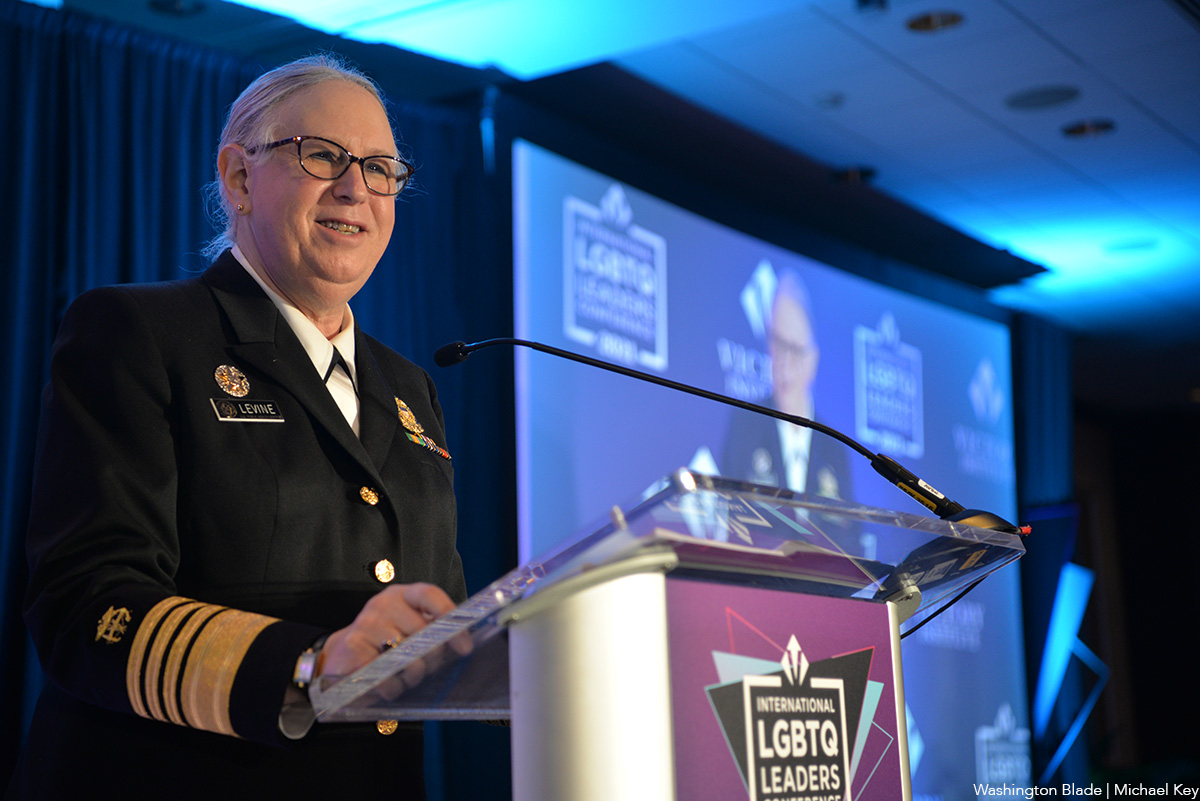
Democracy Forward, a national legal organization that works to advance democracy and social progress through litigation, policy and public education, and regulatory engagement, filed a lawsuit Friday in federal court seeking to compel the U.S. Department of Health and Human Services to release information related to the alteration of former Assistant Secretary for Health Adm. Rachel Levine’s official portrait caption.
The lawsuit comes in response to the slow pace of HHS’s handling of multiple Freedom of Information Act requests — requests that federal law requires agencies to respond to within 20 working days. While responses can take longer due to backlogs, high request volumes, or the need for extensive searches or consultations, Democracy Forward says HHS has failed to provide any substantive response.
Democracy Forward’s four unanswered FOIA requests, and the subsequent lawsuit against HHS, come days after someone in the Trump-Vance administration changed Levine’s official portrait in the Hubert H. Humphrey Building to display her deadname — the name she used before transitioning and has not used since 2011.
According to Democracy Forward, HHS “refused to release any records related to its morally wrong and offensive effort to alter former Assistant Secretary for Health Admiral Rachel Levine’s official portrait caption.” Levine was the highest-ranking openly transgender government official in U.S. history and served as assistant secretary for health and as an admiral in the U.S. Public Health Service Commissioned Corps from 2021 to 2025.
Democracy Forward President Skye Perryman spoke about the need to hold the Trump-Vance administration accountable for every official action, especially those that harm some of the most targeted Americans, including trans people.
“The question every American should be asking remains: what is the Trump-Vance administration hiding? For an administration that touts its anti-transgender animus and behavior so publicly, its stonewalling and silence when it comes to the people’s right to see public records about who was behind this decision is deafening,” Perryman said.
“The government’s obligation of transparency doesn’t disappear because the information sought relates to a trailblazing former federal official who is transgender. It’s not complicated — the public is entitled to know who is making decisions — especially decisions that seek to alter facts and reality, erase the identity of a person, and affect the nation’s commitment to civil rights and human dignity.”
“HHS’s refusal to respond to these lawful requests raises more serious concerns about transparency and accountability,” Perryman added. “The public has every right to demand answers — to know who is behind this hateful act — and we are going to court to get them.”
The lawsuit also raises questions about whether the alteration violated federal accuracy and privacy requirements governing Levine’s name, and whether the agency improperly classified the change as an “excepted activity” during a lapse in appropriations. By failing to make any determination or produce any records, Democracy Forward argues, HHS has violated its obligations under federal law.
The case, Democracy Forward Foundation v. U.S. Department of Health and Human Services, was filed in the U.S. District Court for the District of Columbia. The legal team includes Anisha Hindocha, Daniel McGrath, and Robin Thurston.
The Washington Blade reached out to HHS, but has not received any comment.
The lawsuit and four FOIA requests are below:

Long-awaited ‘Pillion’ surpasses the sexy buzz

Trump’s ‘American people derangement syndrome’

Reasons to be optimistic about 2026

Using movement to boost your mental health during holidays

Protecting the trans community is not optional for elected allies and candidates
Reasons to be optimistic about 2026

America is going in the wrong direction for intersex children

Rush reopens after renewing suspended liquor license
Long-awaited ‘Pillion’ surpasses the sexy buzz