Arts & Entertainment
Classical closet?
Van Cliburn’s death inspires questions about how elite music treats its gay icons

Van Cliburn (Photo by David Eldan via Wikimedia Commons)
It was publicly acknowledged in obituaries in the New York Times and the Los Angeles Times and at a funeral held last weekend that concert pianist Van Cliburn, one of the most famous classical musicians of the 20th century, was gay, but the references — the “g” word was not used — were as discreet and low key as the keyboard virtuoso was in his lifetime.
Cliburn, whose triumph at the 1958 International Tchaikovsky Competition in Moscow at age 23 was the crowning achievement of what had been a white-hot track record of competition winning and concertizing after a lauded three-year stint at the famous Juilliard School, died Feb. 27 at his home in Fort Worth, Texas, at age 78 following a battle with bone cancer. The story of his win in Moscow at the height of the Cold War when he was exalted as a symbol of overcoming the fear and paranoia of the era with great art, has been oft told, especially over the last week as his life has been remembered and celebrated. The long decades since it happened have cemented its mythic status and though Cliburn’s return to performing in the late ‘80s and ‘90s after nearly a decade-long hiatus drew mixed reviews, the fire and talent he brought to his early career is pretty much universally acknowledged by critics.
Cliburn plays Tchaikovsky Piano Concerto No.1 Mvt III
“With the iconic nature of his rise to fame so to speak, he really became this symbol because what really happened there in Moscow was about so much more than the music,” says Scott Beard, a gay concert pianist and professor at West Virginia’s Shepherd University. “It wasn’t like Glenn Gould with the ‘Goldberg Variations,’ it was a highly politicized thing and to [Nikita] Khruschev’s credit, he said, ‘He’s the best, he should win.’ I think with that came a lot of pressure.”
And while one wouldn’t expect Cliburn to have been out at the time — it was, after all, only a year after gay rights pioneer Frank Kameny was fired by the U.S. government for being gay and years before Stonewall — Cliburn’s low-key handling of his homosexuality has been so understated that, at times, the references to it in mainstream media outlets are almost, one might argue, comically opaque.
The Los Angeles Times mentioned “Thomas L. Smith, his friend and manager who survives him.” The New York Times said he was “survived by [Smith], with whom he shared his home for many years.” A 2008 New York Times article commemorating the 50th anniversary of his Tchaikovsky win, mentioned “his home in Fort Worth, which he shared with a longtime friend.” (Smith spoke briefly at Cliburn’s funeral saying, “Van’s death is a crater-sized void that is felt around the world but for me, it is the loss of my soul mate, the deepest friendship …”)
A sunny 1993 biography from Chicago Tribune arts critic Howard Reich is more than 400 pages long yet includes not one mention of Cliburn’s love life. (Reich wrote in an e-mail to the Blade this week regarding Cliburn that “my area of study is really the music itself.”)
There was one episode the papers did dutifully report — a former boyfriend, Thomas Zaremba, sued Cliburn in 1996 seeking millions in palimony. The suit was eventually dismissed. Cliburn did briefly comment on the matter at the time, telling the Fort Worth Star-Telegram it was “absolutely a shocking surprise.” Cliburn said there was no way he could have exposed Zaremba to HIV, as Zaremba had claimed, as Cliburn himself was negative.
If anything, though, the lawsuit did break the ice for acknowledgement of Cliburn’s being gay in the press. Although friends and associates who knew him early in his career say he was never particularly closeted, it was not a topic ever publicly discussed. Aside from the fact that more gays were in the closet in the ‘50s, ‘60s and ‘70s than today, the near-constant presence of Cliburn’s mother, the famous Rildia Bee O’Bryan Cliburn, who had been his first piano teacher, is generally acknowledged as a factor in his low-key lifestyle.
“When I first knew him, I knew he was gay from the very beginning, but I can’t remember quite how I knew,” says Robert Croan, a former classical music critic for the Pittsburgh Post-Gazette who’s gay. “His mother, whom I met many times, was sort of a grand dame type, but very down to earth. She had a great sense of humor but she watched over him very carefully. I think he had his excursions with various men but she traveled with him and was just there all the time. … She was very proprietary with him and the father was sort of invisible as far as the public really knew.” (Cliburn’s father died in 1974.)
Croan says although he and Cliburn were not close friends, they were friendly over many years and saw each other multiple times, including when Croan covered the Van Cliburn International Piano Competition, a highly regarded quadrennial contest Cliburn started in the late ’60s in Fort Worth, for the Post-Gazette. Croan helped facilitate an honorary doctorate for Cliburn from Pittsburgh’s Duquesne University, where Croan previously taught.
Fans inevitably wondered to what degree — if any — Cliburn was out to his mother. Cliburn never publicly commented on the matter.
“I would say she had to have known,” Croan says. “Whether they actually discussed it, I have no way of knowing but she couldn’t have been around him all that time and not known. This was not a stupid woman. … I would guess at the very least she closed her eyes to what was going on or maybe acknowledged it privately.”
But it’s unlikely Rildia Bee, who died in 1994 at age 97, was the only factor. Cliburn spent his later years living in his native Texas (in a swanky suburb of Fort Worth), was a lifelong Baptist, member and regular attendee at Fort Worth’s large Broadway Baptist Church and was also a Republican. Former President George W. Bush, also from Texas, spoke at Cliburn’s funeral. (In 2009, Cliburn’s church severed ties with the Southern Baptist Convention in a disagreement over the church’s welcoming of LGBT members.)
And for all his musical achievements, Cliburn — at least so far as is publicly known — was not involved in LGBT advocacy work of any kind.
Philip Johnson, an 87-year-old Fort Worth gay activist who worked with Kameny and was involved in LGBT work for decades, says, “I don’t think he ever associated with the gay movement at all.”
“I used to see him sometimes at the Highland Park Cafeteria, this place where wealthy people ate that had really excellent food,” Johnson says. “But we never crossed paths at any sort of gay rights rally or anything like that.”
Darren Woods, general director of the Fort Worth Opera, agrees.
“I did not know him well outside of his attending operas occasionally and the occasional hello at a restaurant,” Woods, who’s gay, wrote in an e-mail. “He and his long-time partner, Tommy, were deeply involved with many straight married couples who were big arts patrons.”
SIDEBAR: Mono recording of Cliburn’s Moscow triumph available
The degree to which Cliburn was out at various periods of his life, while interesting enough in and of itself, also raises a bounty of other questions. Were many classical pianists of Cliburn’s day — Liberace, for the record, was considered more of a pop entertainer and was never taken seriously by the classical establishment — gay? If so, how many were out? Are the numbers any different today? How does it compare to other classical professionals such as orchestra players, conductors and composers? And did the classical world warm to out gays more quickly than pop culture? Or the world at large? Or did the blue-blooded, elderly art patron types keep gays in the closet longer? And with so much emphasis in pop culture with who’s sleeping with whom and the personal lives of celebrities, why do such questions seldom get asked of classical artists?
Nobody has numbers, but the anecdotal assessments are entertaining.
“Generally it’s thought that a lot of concert pianists were gay,” says David Patrick Stearns, a classical music critic at the Philadelphia Inquirer, who’s gay. “Nobody really knows why, but it seems to be somewhere around 50 percent. Violinists? Almost never. Again, nobody really knows why. Cellists? That’s a little up for grabs. Organists? Almost all of them. Countertenors? Most of the American ones are gay, but the non-American ones are not. … Opera is kind of a separate thing. Opera, I mean talk about queer energy, though. I’ve heard people talk about there being straight opera queens but I don’t know.”
Croan says more American composers have traditionally tended to be gay than pianists.
“(Fellow Cliburn Juilliard pianist) John Browning was out,” Croan says. “Samuel Barber and Gian Carlo Menotti, certainly a large number of American composers of the mid-20th century were gay. Aaron Copland is another. They weren’t out in the sense that there was any public announcement about it and the media wouldn’t have touched on it unless there was some sort of a scandal, but it was kind of quietly acknowledged. I met a lot of gay performers of that generation. Some got married but most didn’t. Ned Rorem was gay and was very open about it in his memoirs.”
One wonders the degree to which this was acknowledged among the musicians themselves. Was anybody hosting pool parties on Sunday afternoons the way gay director George Cukor famously did in Hollywood?
“I don’t know about pool parties, but I think there was a large degree of socializing,” Croan says. “Classical music is a pretty small world to begin with so you have a smaller pool of people. … The difference from then and Van Cliburn is they didn’t all travel with their mothers, that’s a big difference. I think he stayed a bit more to himself in that way. … And I also think these groups could be very productive. It wasn’t all just drinking and carousing. Their interactions were very artistically productive. You had a lot of interaction and influence and a lot of good artistic results, ramifications.”
Stephen Hough, a highly regarded classical concert pianist who’s released many recordings, remembers a “wonderful evening” of dinner and a recital Cliburn gave at Tanglewood, an estate and music venue in Lenox and Stockbridge, Mass., in the ‘90s.
“I didn’t know him well but I found him to be a completely charming person at dinner,” Hough, who’s gay, says. “He was very humble and modest and always interested in what other people were saying. … He was a lovely person and I wish I’d been able to meet him more.”
Hough says many factors likely contributed to Cliburn’s discretion.
“He had a huge female audience,” Hough says. “Women always found him very attractive. He was sort of the perfect bachelor everyone wanted to marry. There were older women who simply fell at his feet. There’s a story I’m told where an older female fan greeted him once and told him with tears, ‘You’ve made my life worth living.’ He took her hands in his and held her to him and said, ‘This is such a special moment in my life, you’ve touched my heart deeply.’ Back in the earlier years, I don’t think his audience would have even known what homosexuality was much less accepted it. It was a much different era.”
Hough says he’s seen the matter handled in many different ways by classical performers over the years.
“Jorge Bolet was a pianist of the same generation as Cliburn,” he says. “He had a partner for decades who traveled with him always. He was just always there but it was never really laid out clearly who this was. You could think he was a boyfriend, you could think he was a secretary, a manager or whatever you chose, but there he was. We really shouldn’t demand too much heroism in the past because it was so different.”
As to how quickly the classical world warmed to the idea of its heroes being out, many say it pretty much mirrored the rates of society at large. It was never particularly unwelcoming, insiders say, but the seriousness with which its fans and artists approach their work made it perhaps an easier topic, historically, to avoid dealing with head on.
“Yes, you had all these staid, wealthy board members but they weren’t stupid people,” Croan says. “They put a blind eye to it in some ways, but they also liked socializing with the stars, just like they do in Hollywood. I’d say it was acknowledged on Broadway long before it was in Hollywood or in the classical music world. Broadway, I think, has always been pretty gay. I think Hollywood was probably the last. It was a medium for more people, more democratic and thus perhaps more conservative. You’d have children watching movies whereas classical music was pretty much an adult group.”
‘An old-fashioned institution’
Stearns says other arenas of performing lend themselves more easily to issues of sexuality.
“Movie stars and rock stars, too, they’re presented as these sexual objects so of course the public is interested in their sex lives,” he says. “But then you have people like [late gay pianist] Vladimir Horowitz and even gay people don’t want to know what he was doing in the bedroom. It’s a completely different playing field.”
The inherent formality in classical music is also a factor, it is widely thought.
“Classical music is a more old-fashioned institution,” Hough says. “You have Rufus [Wainwright] and he’s on stage singing songs he just wrote last year. I’m playing with a whole different flavor and a much longer time frame. It’s just generally a more formal art form. Some say they’d like us to come out in torn jeans and talking to the audience, but there’s also something about that formality that provides its own kind of theater in a way. When the lights go down and the conductor or soloist comes out, it’s a very theatrical moment and I think a certain amount of mystery can be a good thing.”
Hough says he experienced no backlash after coming out several years into his career. “A couple youngsters wrote to tell me I’d encouraged them,” he says. “Otherwise nothing good or bad really.”
Patricia Racette, currently on stage in the opera “Manon Lescaut” at the Kennedy Center, writes in an e-mail (she’s saving her voice, understandably, for the stage) that the demands placed on classical musicians are also a factor. Racette is in a lesbian relationship and has been out for years.
“We now live in a world inundated by reality TV,” she writes. “And the reality for a classical musician is the demand of a continually honed skill, never-ending study, preparation and execution of all of the above in order to sustain this unrelenting art form. While so many artists are indeed fascinating in their personal lives, the emphasis on the work (in classical music) is the most relevant.”
Racette, who earned her music degree from the University of North Texas, says she can relate to the conservative nature of the state being a factor in Cliburn’s quiet life.
“I was so buried in my music and working to pay for my school that I honestly did not tap into a specific LGBT community there,” she writes. “The campus itself was quite conservative making it a bit of a scary place to come into one’s own as it were.”
Others say too much personal information is sometimes seen as a distraction in classical music.
“I think it’s just the issue of let the music speak for itself,” Beard says. “Maybe on some level it helps to be out to help you build an audience … so I don’t know if it’s taboo per se, but … I think the focus is much more on the craft which I why maybe in a marketing sense you don’t see it more often. You want the music critics to take you seriously so you can imagine them thinking, ‘OK why are you telling me this, tell me how you play Beethoven,’ or whatever. It’s just kind of this unwritten thing of, ‘OK, you’re gay, you have your life, but the focus is not on your personal life.’”
Others are delighted to see how quickly the classical world and the world at large are changing in their acceptance.
Stearns says he and others at the Inquirer were debating how to address or broach the topic of the personal life of Yannick Nezet Seguin, who’s gay and last September became music director of the Philadelphia Orchestra.
“We were all thinking, ‘OK, how do we handle this?’” Stearns says. “People are always curious. They want to know who the wife is but we don’t out people at the Inquirer so, the mayor was there and said, ‘We welcome Yannick and his partner,’ and it was like, ‘OK, thank you.’” … Three or four years ago, I would have said yes, there might have been some squeamishness, but nobody batted an eye. Now he’s the first conductor of one of the five biggest orchestras in the country to be out. And, you know, Philly isn’t known to be the most progressive town on the planet. I think people were just really glad to just sort of snag this really wonderful up-and-coming talent. He’s very extroverted and a real people person and people are just really drawn to him and his boyfriend.”
Charles Miller, organist and music director at Washington’s National City Christian Church, says it’s up to each public figure to decide how to handle it depending on his or her comfort level.
“I think there are some good examples even in pop culture,” Miller, who’s gay, says. “You think of someone like David Hyde Pierce. We all know now and he’s never really shied away from it, but he’s not flaunting himself or his partner or activities in every magazine. In some cases, it’s the artist sort of preserving something of their lives under wraps so that it doesn’t detract from the art form. … [With Cliburn], you wouldn’t just have expected, now it’s the 2000s we’re gonna see him come flying out of the closet and jump up on a float. It’s really the individual’s preference of how they want to live their life.”
Cliburn did eventually tire of public life and for much of the ‘70s, lived quietly. He eventually returned to public life and performing and is widely acknowledged for starting the Cliburn Competition, but even so, there was an unexpected gay side to him in addition to his many eccentricities such as staying up all night, running late for recitals, hoarding antiques, opening recitals with “The Star-Spangled Banner” and saving dead flowers.
“If you really wanted to engage him and get him talking, you brought up Cher,” Stearns says with a hearty laugh. “He absolutely loved Cher.”




Movies
Essential queer horror classics for Halloween
‘Bride of Frankenstein,’ Bowie in ‘The Hunger,’ and more
Sure, this spooky season has blessed us with a lot of new horror on TV and at the movies, but when it comes to Halloween, you can never have too much horror to watch. With that in mind, we’ve put together a list of celebrated queer chillers that queer horror fans may know about but might not have seen, especially if you’re part of a younger generation of movie buffs looking to expand your experience with the genre beyond the contemporary crop that has turned the early 2000s into a renaissance of horror cinema.
Bride of Frankenstein (1935)
Yes, we know subtextualized queerness in horror feels like a cop-out in this day and age, but in the early days of Hollywood, it was the only way to sneak it past the censors – and that’s exactly what English expat director James Whale did as a defining force behind the success of Universal Studios’s classic horror “franchise” of the 1930s. More-or-less openly gay with a background in theater, he put those sensibilities to good use on film, and reached his queer pinnacle with “Bride of Frankenstein,” a sequel that expanded on the original with a wicked sense of humor and a “lavender” touch that was obvious to anyone who was in the know.
Skewering “monster movie” tropes and satirizing the conventional mentality of all those angry villagers, Whale also delivered a story of two men – Doctors Frankenstein and Pretorius (Colin Clive and Ernest Thesiger, respectively) – whose clandestine efforts to create a mate for Boris Karloff’s lonely monster read like a gay couple drawn together by “unnatural” obsessions. Thesiger’s unapologetically queer persona would likely dominate the entire film if not for Elsa Lanchester’s turn as the hissing, electrified title character, but the film’s true greatness lies in transforming Karloff’s “monster” into a full-fledged tragic hero, a primal avatar for “otherness” that emerges as the most sympathetic figure on the screen; and while it might not be that “scary” by modern standards, as one of the most boldly transgressive films of the Hollywood “golden era” it still packs a wickedly savage punch.
The Haunting (1963)
Based on Shirley Jackson’s novel of the same name and helmed by veteran director Robert Wise in the wake of his Oscar-winning screen adaptation of “West Side Story,” “The Haunting” is a film that looms large in the history of queer representation in American cinema, simply for the fact that it included an openly lesbian character during a time when anything beyond a subtle implication of non-heterosexual alignment was still very much considered taboo.
The character in question is a psychic named Theodora (Claire Bloom), one of a group of individuals invited by a paranormal researcher (Richard Johnson) to investigate an old New England house, which is reputed to be haunted in the wake of a long string of tragedies that have befallen the family that owns it. Although she’s something of a thorny personality, she’s framed as neither villain not victim, but her presence provides queer overtones that impact the rest of the story, particularly through the growing psychological agitation of its painfully repressed central character (Julie Harris) and the history of the house itself.
A classic “old, dark house” ghost story that deliberately avoids depicting anything definitively supernatural, it focuses instead on psychological tension and the power of suggestion to ramp up scares, which it does quite effectively, utilizing innovative camera and sound techniques to suggest, but never reveal, the dark forces that drive the story. Audiences of the time wanted more concrete thrills, so it was not a major hit; nevertheless, it has been consistently ranked as one of the best horror films of all time – and while it might not offer the blood-curdling terror modern viewers expect, its moody sense of dread and doom is enough to keep you on edge for the duration.
The Hunger (1983)
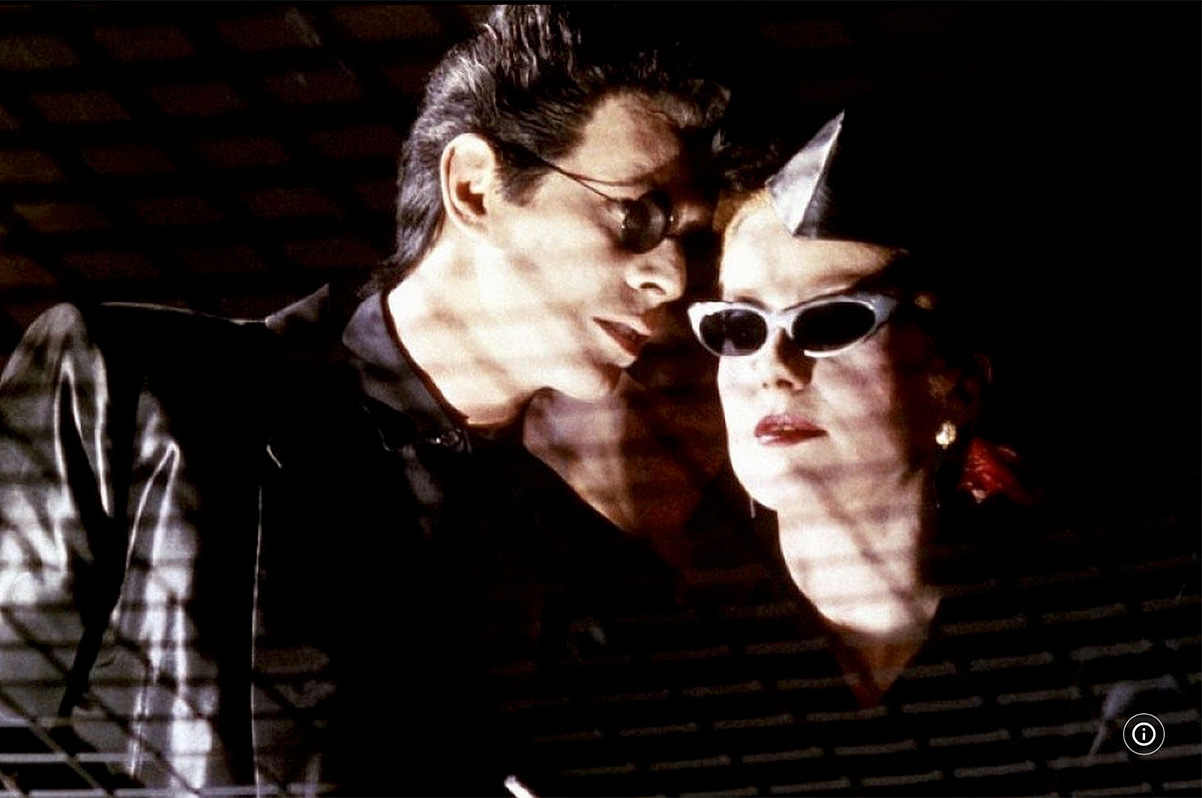
It’s hard to think of a horror film as openly sexy as this classic from director Tony Scott, which turns Whitley Streiber’s book about an ancient vampire (Catherine Deneuve) in modern New York, who grooms a scientist (Susan Sarandon) to be her new sexual companion for the ages as the old one (David Bowie) begins to rapidly age and decline. Dripping with 1980s cool (it opens with Bauhaus singing “Bela Lugosi’s Dead” in a nightclub) and leaning hard into the open eroticism of a more sexually permissive era, it doesn’t hide its sapphic supernatural love story in the subtext; instead, it gives us one of the steamiest love scenes between two women ever put on film. Critics of the time praised it for its style and its mood, but lamented what they perceived as an ultimately shallow story – but in retrospect, its pervading air of melancholy doom despite the glamorous elegance of its presentation serves as a fitting reminder that an eternal life of meaningless beauty and pleasure might not be as great an idea as we think it is.
Stranger by the Lake (2013)
French filmmaker Alan Giraudie delivers one of the sexiest – and scariest – gay thrillers – of all time – in this tale of a young man (Pierre Deladonchamps) who frequents a lakeside nude beach, which is a popular hook-up spot despite a recent series of unsolved killings in the area. He becomes infatuated with an attractive man (Christophe Paou) he meets there and they connect; later, he witnesses an incident that makes him suspect his new flame might be the murderer – but that doesn’t stop him from continuing to pursue their relationship, despite an increasing likelihood that he might end up as the next victim. It’s an obvious essay on the power of lust to pull us into danger, but it doesn’t moralize; instead it entices us deeper with scenes of graphic un-simulated sex and sparks nostalgic fantasies of a pre-Grindr era when the threat of encountering a serial killer was never enough to keep us away from our favorite cruising spot. Transgressive? Yes, and also terrifying.
We’re All Going to the World’s Fair (2021)
If you’re a horror fan in 2026, it’s likely you’ve already seen trans filmmaker Jane Schoenbrun’s critically lauded “I Saw the TV Glow,” as well as “Teenage Sex and Death and Camp Miasma,” which has emerged as one of the year’s most acclaimed movies so far. You might not, however, be familiar with their first feature film, in which a teenage girl (Anna Cobb), living an isolated life with an abusive single father, finds escape and connection on the internet; she participates in a “viral challenge” that requires her to post a video of herself performing a ritual chant, and then follow up with updates documenting the transformation she goes through as a result. Inspired by Schoenbrun’s own experience navigating the online world while struggling with gender dysphoria and other issues around their identity, it’s an unsettling and disorienting ride that keeps us wondering what will happen next – but the real horror comes from its observations about the way living our lives online can transform us all.

Friday, October 9
Go Gay DC will host “Out in DC LGBTQ+ Community Social” at 7 p.m. at Hotel Zena. This is a chance to relax, new friends, and enjoy happy hour specials at this classic retro venue. Attendance is free and more details are available on Eventbrite.
Saturday, October 10
Go Gay DC will host “LGBTQ+ Community Brunch” at 11 a.m. at Freddie’s Beach Bar & Restaurant. This fun weekly event brings the DMV area LGBTQ+ community, including allies, together for delicious food and conversation. Attendance is free and more details are available on Eventbrite.
“Nellie’s DC Drag Brunch” will be at 12 p.m. at Nellie’s Sports Bar. Come get served like a queen by a queen. Join Sapphire Blue, Deja Diamond and their team of amazing drag performers for the most fun you’ll have all weekend. Tickets cost $58.51 and are available on Eventbrite.
Sunday, October 11
Spark Coffee Club will be at 12 p.m. at Spark Social. This is a laid-back daytime hangout built entirely around making new connections. Whether you’re new to the city, new to the community, or just looking to expand your social circle, this is an easy, low-pressure way to spark up a conversation with the person next to you. Come solo or with a friend — you never know who you might meet. For more details, visit Eventbrite.
Tuesday, October 13
Trans Discussion Group will be at 7 p.m. on Zoom. This event is intended to provide an emotionally and physically safe space for trans people and those who may be questioning their gender identity/expression to join together in community and learn from one another. For more details, email [email protected].
Coming Out Discussion Group will be at 7 p.m. on Zoom. This is a safe space to share experiences about coming out and discuss topics as it relates to doing so — by sharing struggles and victories the group allows those newly coming out and who have been out for a while to learn from others. For more details, visit the group’s Facebook.
Wednesday, October 14
Job Club will be at 6 p.m. on Zoom upon request. This is a weekly job support program to help job entrants and seekers, including the long-term unemployed, improve self-confidence, motivation, resilience and productivity for effective job searches and networking — allowing participants to move away from being merely “applicants” toward being “candidates.” For more information, email [email protected] or visit www.thedccenter.org/careers.
The DC LGBTQ+ Community Center will host “Movement for Healing” at 3 p.m. This trauma- and yoga therapy–informed class is designed to help guests gently reconnect with their body and their breath. Through mindful movement, somatic awareness, and grounding practices, guests will explore how to release tension, increase mobility, and cultivate a deeper sense of safety and ease within. For more details, visit the DC Center’s website.
Thursday, October 15
The DC LGBTQ+ Community Center’s Fresh Produce Program will be held all day at the Center. People will be informed on Wednesday at 5 p.m. if they are picked to receive a produce box. No proof of residency or income is required. For more information, email [email protected] or call 202-682-2245.
a&e features
Bar Betsie, inviting and intimate, marks one-year anniversary
Not that a basic vodka-soda should ever dare to appear in print on the craft cocktail list at year-old Bar Betsie, but if it did, its name would be written in big black block letters, back-lit, on a marquee behind the 14-seat bar, with its ingredients – Tito’s, seltzer water – sitting visible on a shelf above.
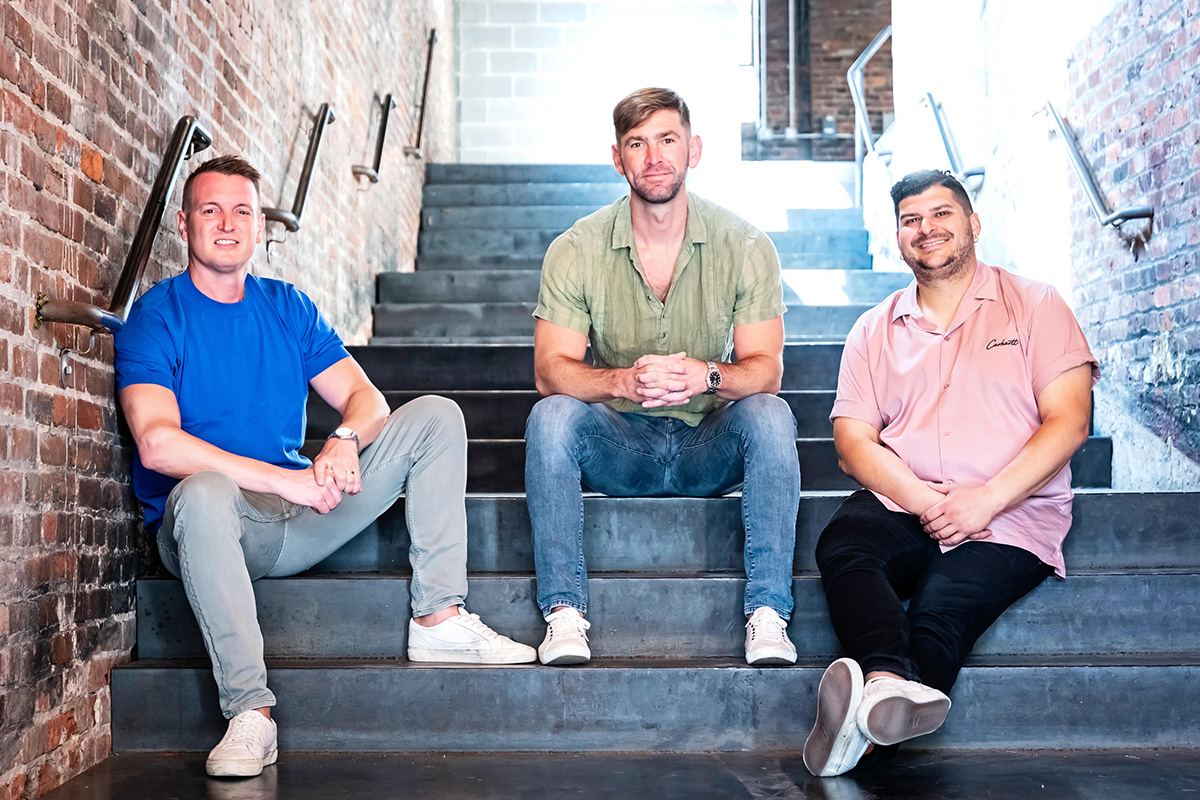
Inviting and intimate, and with that arresting visual representation of cocktail ingredients along the wall, Bar Betsie has brought its vibes-forward approach to a dynamic corner of bustling Union Market. The sophomore effort from owners JP Sabatier, Ralph Brabham, and Drew Porterfield, the trio took a different tack at Bar Betsie than at their other, older (though not by much) 14th Street bar, Jane Jane.
Bar Betsie allowed Sabatier, Brabham, and Porterfield to expand their creativity. The three first connected several years ago, when JP was manager of Maydan and Brabham and Porterfield owned Beau Thai and BKK Cookshop. Immediately hitting it off, they dreamed of opening a bar together and in 2021, it became a reality, in the form of Jane Jane.
Featuring a short list of craft, rotating cocktails and shareable bar snacks, Bar Betsie is Jane Jane’s “grittier, edgier” sister. While Jane is named after Porterfield’s mother, Bar Betsie gets its moniker from Sabatier’s mom.
“While Jane Jane is going on a field trip, Bar Betsie feels like you’re skipping school,” says Brabham. Bar Betsie brings more of a party vibe, he says. They landed in the Union Market neighborhood after thinking through what a second bar might feel like: not a carbon copy, but an atmosphere unique to its physical space and surroundings. Union Market and its transitional nature translates to the bar’s interiors: its mood lighting regardless of time of day, the crushed-velvet booths, the blood-red curved curtains to the bathrooms and kitchen, and the air of timeless mystique contrast to the elevated, buttoned-up cocktail bar that is Jane Jane. No one would bat an eye if a cabaret broke out on top of the bar. When in Bar Betsie, they say, it’s as if the warm lighting cuts through the vibe (and the stories) of 50-year-old cigarette smoke in the air.
They decided to make the cocktail menu more concise: 12 to 15 signature drinks at a time. Tequila and mezcal lead the program (again, a nod to mom Betsie, who prefers agave-based liquors). Drinks rotate seasonally (a cocktail flip is happening this month) and are developed committee-style to ensure that the whole team has input. The Clover Cult has been especially popular, with bluecoat gin, raspberry, vermouth, and lemon, but passed through a high-speed blender that whips the drink into a frenzy: it’s a “yummy, sweet cocktail with foam with a beautiful pink color,” says Brabham.
Beers feature locally brewed options, like from DC Brau and Atlas, alongside a wine program featuring skin-contact wines. And hewing to that party-forward vibe, there’s a host of shooters like the blackberry firing squad with tequila and lime.
As for the food, Bar Betsie has a true kitchen, allowing Sabatier to stretch his cheffy wings (he attended the Culinary Institute of America). Bar snacks are plentiful, including Buffalo chicken dip, a giant pretzel with beer cheese, and chicken tinga nachos that are “fucking delicious” says Raplh. “We’re aiming for food that’s snacky, salty, crunchy, and tasty to pair with the drinks.” Guest chefs show up on Sundays for kitchen cameos.
Since opening Bar Betsie, the trio has welcomed some additional acclaim. They’ve begun to set up activations with other bars; last month, they held a pop-up at new cocktail den Frank’s Wild Years, and there’s an upcoming collaboration with Death &Co, the famed bar in Blagden.
Bar Betsie occupies a unique place in the city’s pantheon of drinking destinations. All three owners are gay, and yet this (like Jane Jane) is not a gay bar.
“We never hide who we are,” say Brabham and Porterfield. “There’s always the recognition of the community we come from, and love, and want to celebrate.”
They want people to know who they are and what they stand for, showing that by being inclusive and open in their support of the community. They work to ensure that the staff is diverse and inclusive as well. They also dropped an exclusive Easter egg: behind the medicine-cabinet mirrors in the bathroom is a video screen playing footage of drag queens either getting ready, fixing, or removing makeup and wigs. “It’s a little IYKYK moment, something fun and true to who we are as a queer-celebrating and owned space,” they say.

Essential queer horror classics for Halloween

Solidarity beyond the parade: the actual cost of Pride

Physician: addiction doesn’t always look the way you think it does

Calendar: October 9-15

ICC unseals arrest warrants for Taliban officials accused of persecuting LGBTQ people, women

Alianza para la Inclusión fortalece la defensa de derechos LGBTQ en Centroamérica

The facts about Victory Fund’s investigation and the path forward

In Ga., 2 trans candidates believe voters are ready for them

Bessent says Trump chose him for his qualifications, not his sexuality

10 years later, we still can’t shake Barry Jenkins’s ‘Moonlight’
-

 Central America5 days ago
Alianza para la Inclusión fortalece la defensa de derechos LGBTQ en Centroamérica
-
Opinions5 days ago
The facts about Victory Fund’s investigation and the path forward
-
Georgia5 days ago
In Ga., 2 trans candidates believe voters are ready for them
-
Federal Government5 days ago
Bessent says Trump chose him for his qualifications, not his sexuality