News
Reid confident of ENDA’s prospects after Senate vote
GOP House ‘is going to have to capitulate’
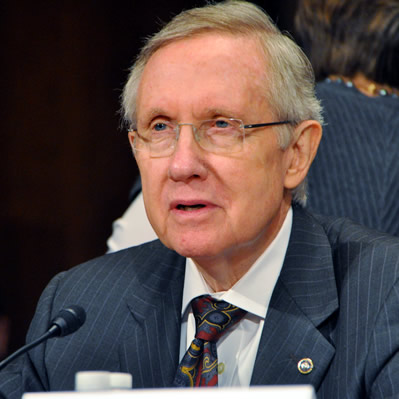
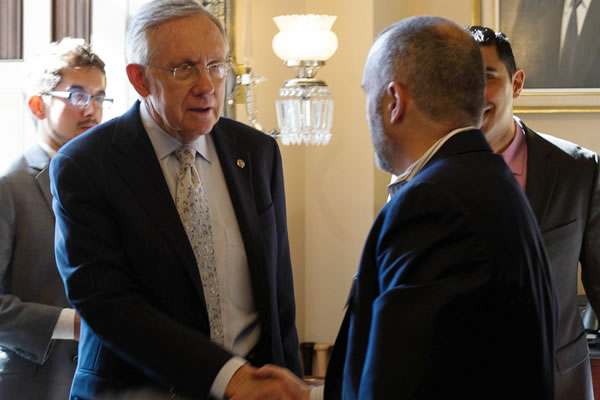
Senate Majority Leader Harry Reid spoke with LGBT reporters at a roundtable Wednesday (photo courtesy Senate Democrats)
Senate Majority Leader Harry Reid (D-Nev.) maintained on Wednesday that the Employment Non-Discrimination Act would pass Congress, predicting the House “is going to have to capitulate” on the bill to extend workplace discrimination protections to LGBT people.
The Democratic leader addressed ENDA strategy — including prospects for inserting it into the defense authorization bill or a House discharge petition — speaking with a handful of reporters in his office two days after the Senate invoked cloture on the measure, 61-30, saying he expects the chamber to wrap up the legislation by 5 p.m. on Thursday.
Amid concerns that moving the bill in the House would be a non-starter given the Republican leadership’s opposition, Reid said he “wouldn’t be too sure about that.”
“I think the House is going to have to capitulate,” Reid said. “If they have any hope of a president that can be a viable candidate, or they think they can elect some Republicans, and want to hang on to the House, they’ve got issues.”
After saying on the Senate floor Tuesday he thinks the bill would pass the House if it were allowed to come up for a vote, Reid reaffirmed that belief to reporters, saying passage would be “easy.”
“They have five co-sponsors out of like 232; they should be proud of that,” Reid said. “I think virtually all Democrats would vote for that, and you know as well as I do, it’s just a handful of people that they need from Republicans.”
When the Washington Blade noted that one idea for passing ENDA is inserting the language into larger legislation like the defense authorization bill, Reid was dismissive.
Even though the defense bill has passed 52 years in a row, Reid said he’s not sure it can happen this time around given the gridlock in Congress.
Instead, Reid said the better path is to make “one loud chant” to pass the bill along with legislation related to immigration, marketplace fairness, postal reform as well as the farm bill to make the House look like it’s “living in some other world.”
“I think that would be the better way to go, and one that’s realistic,” Reid said. “The other way won’t work.”
Reid said he agreed with comments from House Minority Leader Nancy Pelosi (D-Calif.) that a strategy similar to passing the Violence Against Women Act reauthorization in the Republican-controlled House, which she said made the bill “too hot to handle,” could be pursued with ENDA.
Also, Reid dismissed the idea that a discharge petition could be a way to move the bill in the House.
“Nope, I don’t think so,” Reid said. “When they get close to 218, the speaker backs them off, the Republicans.”
But asked by the Blade whether House intransigence might give President Obama room to issue an executive order prohibiting LGBT discrimination among federal contractors, Reid agreed, saying, “I think that that certainly would be the case.”
Reid recalled that President Obama took executive action to help young, undocumented immigrants who would be eligible for relief under the DREAM Act because Republicans have opposed the bill, saying the situation with ENDA could be similar.
Still, Reid said an executive order from Obama to address LGBT workplace discrimination isn’t his preference.
“I would rather try to get it done legislatively first,” Reid said. “I think that would be my first choice.”
Numerous questions came up during the roundtable about the amendments proposed by Republicans to ENDA.
When a reporter brought up the amendment filed by Senate Minority Leader Mitch McConnell (R-Ky.) and Sen. Rand Paul (R-Ky.) that would add a national right-to-work provision to ENDA, Reid said he knew what it was even before the measure was explained to him.
Reid said the measure amounted to a “press release” for supporters of right-to-work “right across the river here,” saying “it was just for them.”
But Reid was more understanding of the amendment proposed by Sens. Rob Portman (R-Ohio) and Kelly Ayotte (R-N.H.) to ensure that the government won’t retaliate against religious organizations that invoke the religious exemption in ENDA.
“I believe it was an effort by them to have a reason for joining the bill,” Reid said.
That measure passed by voice vote shortly after Reid spoke to reporters. LGBT advocates have said that language merely reinforces the status quo and makes no substantive change.
Reid also addressed concerns that the religious exemption in ENDA is too broad because it would give religious organizations greater leeway to discriminate against LGBT people than what is allowed under existing law for the protected categories of race, gender and national origin.
“There’s nothing we do that’s perfect,” Reid said. “The goal is to get something passed, move forward. And this allows us to move forward.”
Asked about the lack of Republican opposition on the floor to ENDA on the day of the cloture vote, Reid said it was “just funny.”
“We were told that it was Cruz who would be the one to give the speech,” Reid said. “I find it terribly interesting that Cruz didn’t know what he would say because we found he was willing to talk about anything. He wasn’t willing to do that.”
Sean Rushton, a Cruz spokesperson, said Reid’s assertion that Cruz was supposed to speak against ENDA is “factually inaccurate.” A source said the senator was in the car racing to make the vote and never had any plan to speak.
Faiz Shakir, a Reid spokesperson, insisted in a follow-up response that Democrats saw Rubio point to Cruz on the Senate floor.
“Maybe it was a joke, we don’t know,” Shakir said.
But Reid had more criticism for Cruz. The majority leader said if he didn’t care so much about the country, he’d want Cruz to become the 2016 Republican presidential nominee “because that would end the Republican Party.”
“They have offended everybody,” Reid said. “Over the years, what they have done to African Americans is really hard to comprehend. Now the new people they’re beating up on is Hispanics, women…and lesbian, gays and the other people we have included in this bill.”
Reid also talked about the significance of including transgender protections in ENDA this time around after they were stripped from the bill when the House voted on it in 2007.
“As I’ve grown on this issue, so have the American people,” Reid said. “One time it was a big deal to people who have tried to understand transgender. That held up this legislation for a while. I’m confident of that. To the credit of the HRC, and other groups, when we wanted to move forward without that, they said ‘no.'”
Reid said HRC has told Congress not to pass a gay-only bill, though the organization continued to support the legislation without the transgender protections in 2007. Since then, HRC has supported ENDA only with transgender protections.
Speaking personally about ENDA, Reid mentioned his three adult grandchildren.
“For me to feel any differently about this, they wouldn’t feel proud of their grandfather,” Reid said. “It’s just with my five children, it’s a non-issue, but for my three adult grandchildren, it’s a non-non-non-issue. They can’t imagine why anyone gives a damn.”
Reid disclosed in an earlier conversation with reporters that he had a lesbian niece. Asked whether he had spoken to her since Senate movement on ENDA, Reid said he hadn’t.
“She called me, left a message when we were able to open the government,” Reid said. “She’s, of course, proud of her uncle. But she and I don’t need to dwell on the issue, she’s just like everybody else.”
Reid, a Mormon, was asked by the Blade how he reconciles his faith, which says homosexuality violates God’s law, with his support for gay rights. Reid replied that he’s given a lot to his church and there are Mormons like him who share his views.
“When I attend church here in Washington, D.C., I bet more people agree with me than disagree with me, and so the church is changing, and that’s good,” Reid said.
In the aftermath of ENDA passage in the Senate, Reid said he’d have to hear from the LGBT community on what the next steps should be, but mentioned bullying as a problem over which he shares concern.
“As I was growing up, somebody who was ‘queer’ was really easy to pick on,” Reid said. “I was not in that category, but I saw it happen, and I didn’t do enough to speak out.”


District of Columbia
Gay-owned pizzeria in Dupont Circle burglarized
Protest Pizza owners say community has expressed support

Gay activist Randy Downs said he and his business and life partner Ricky Bennett are grateful for the support they have received from the Dupont Circle community after they released a video showing a suspect breaking into their recently opened pizza shop and taking money from a cash register shortly before 3 a.m. on Friday, Aug. 21.
The surveillance video shows a man wearing black clothing with his face covered, smashing the glass front door of Protest Pizza, located at 1633 ½ P St., N.W. The video, which Downs and Bennett provided to D.C. police, also shows the suspect climbing over the bar to get to a cash register, which he opened to take out cash.
A D.C. police report obtained by the Washington Blade lists the incident as a Burglary in the Second Degree and says the owners reported “approximately $78 in cash” was taken from the cash register. The report says the incident is not listed as a suspected hate crime.
Downs told the Washington Blade that after he and Bennett reported the break-in and theft on social media, they received an overwhelming showing of support from neighbors and others, including business owners, from across the nation.
“The break-in was upsetting, but it is not what will define Protest Pizza,” Downs said. “What defines us is how quickly people showed up,” he told the Blade. “One person came looking for a cash register; our community saw a gathering place worth protecting. The response reminded us that Protest’s real value was never in the register.”
Downs said he and Bennett, who live around the corner on the section of 17th Street, N.W., near several other bars and restaurants, including the gay bar JRs are located, opened Protest Pizza in November 2025.
“Ricky and I built Protest Pizza as a positive, welcoming, queer owned neighborhood restaurant and bar — a space for protest and joy,” he said.
A D.C. police spokesperson said police offer a reward of up to $1,000 for information leading to an arrest and conviction of a suspect responsible for the type of burglary and theft that occurred at Protest Pizza. Police say anyone with information to help solve this type of crime should call the police tipline at 202-727-9099.
District of Columbia
Advocates honored at Engendered Spirit Awards
Annual ceremony held at conclusion of Trans Pride DC
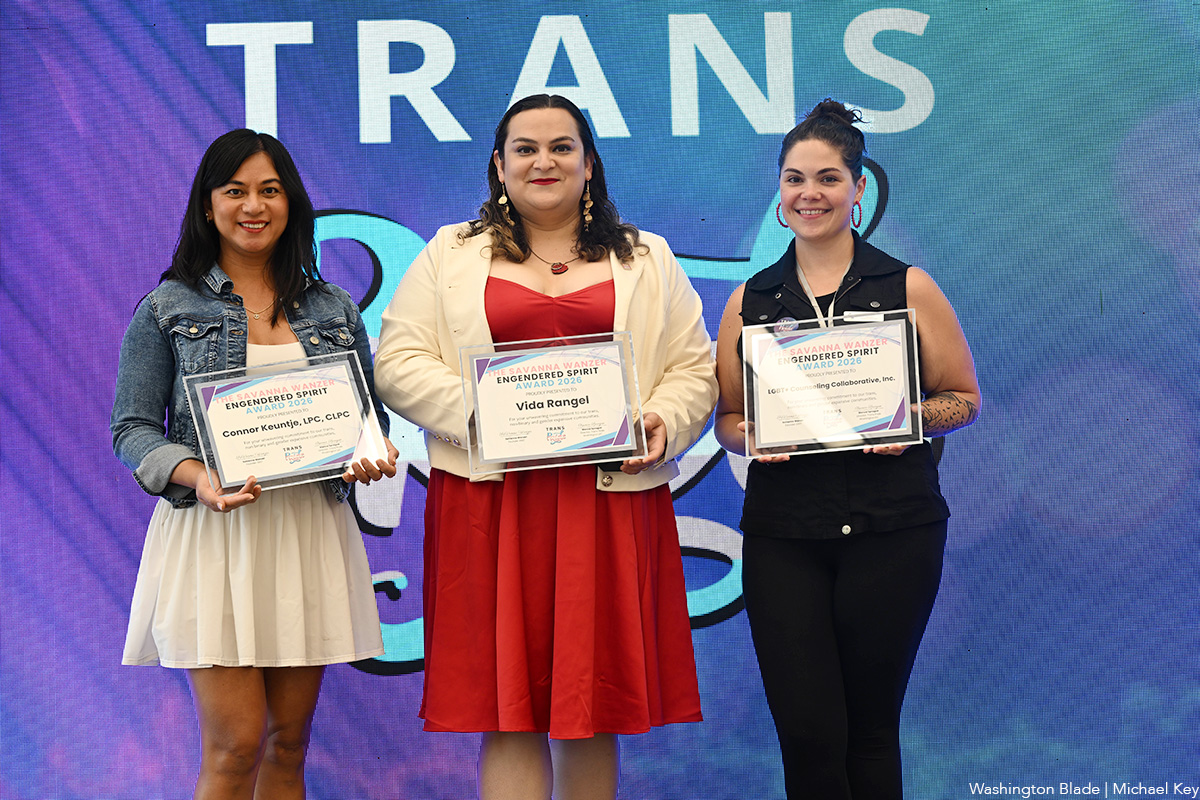
The 2026 SaVanna Wanzer Engendered Spirit Awards ceremony took place at the Martin Luther King, Jr. Memorial Library in D.C. on Saturday. The ceremony was held at the conclusion of the day-long Trans Pride DC: Encore.
Honorees included D.C. Mayor’s Office of Community Affairs Deputy Director Vida Rangel; the LGBT+ Counseling Collaborative, Inc.; and Connor Keuntje, CLP, CLPC.
Trans Pride DC: Encore was held throughout Saturday with several workshop sessions and a virtual conversation with actress and advocate Dominique Jackson.
The annual Engendered Spirit Awards were renamed the “SaVanna Wanzer Engendered Spirit Awards” in honor of SaVanna Wanzer, founder of D.C. Trans Pride. Wanzer died on April 24 of this year.
Speakers at the ceremony included Japer Bowles, director of the D.C. Mayor’s Office of LGBTQ Affairs and Bianca Sprague, executive director of D.C. Trans Pride.
“The intent behind this award and honoring members of our communities, organizations, and allies, is to really elevate all of the work that they’re doing to provide resources, tools, learning opportunities and connections: centering trans folks, gender non-conforming, and gender diverse individuals,” Sprague said.
India
Proposed Indian foreign funding law overhaul could further pressure LGBTQ groups
Measure introduced in Parliament earlier this year
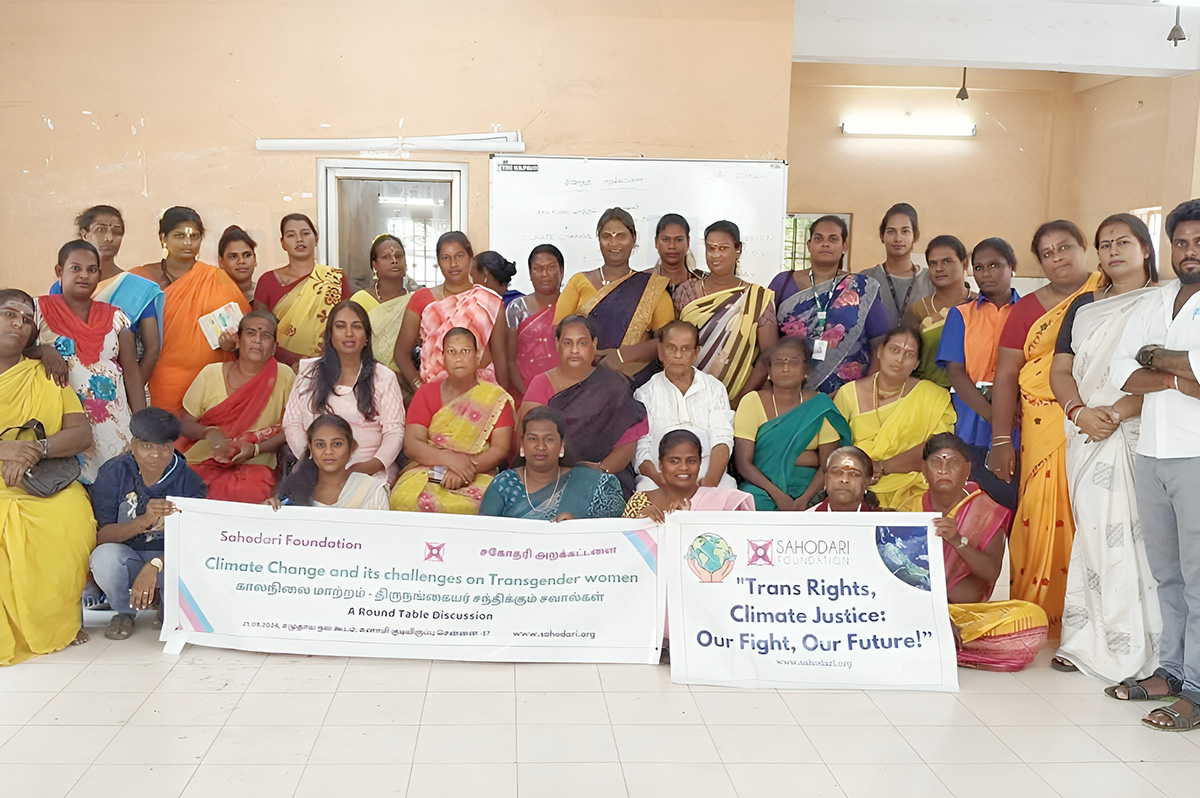
India’s proposed overhaul of its foreign funding law could put LGBTQ organizations that depend on overseas donations under new pressure.
Introduced in the Lok Sabha, the lower house of Parliament, on March 25, the Foreign Contribution (Regulation) Amendment Bill, 2026, or FCRA, would give a government-designated authority control over foreign funds, and assets when an organization loses or surrenders its registration.
The Foreign Contribution (Regulation) Amendment Bill returned to the spotlight this month as the Indian government prepared to seek its passage during Parliament’s Monsoon Session; drawing fierce opposition from political parties, civil society groups and religious organizations.
The government says the bill is intended to address gaps in the management of foreign funds and assets when an organization’s FCRA registration is cancelled, surrendered, or expires. The Foreign Contribution (Regulation) Amendment Bill, 2026, would create a Designated Authority to oversee the vesting, supervision, management, and disposal of foreign contributions and assets when an organization’s FCRA registration is cancelled, surrendered , or ceases. If a vested asset is a place of worship, the authority would be required to preserve its religious character. The FCRA would also reduce the maximum prison term for violating the law from five years to one year.
The changes could also make it difficult for organizations to leave the FCRA regime without surrendering assets created with foreign funds. Under the bill, an organization would have to keep renewing its FCRA certificate to retain those assets. FCRA rules also impose spending requirements on organizations seeking to maintain their certificates.
The bill may also create a distinction between assets created by organizations with FCRA registration and those created through the separate prior-permission route.
More significantly, neither the existing law nor the bill provides an appeal mechanism when the central government refuses to renew an FCRA certificate. They also do not expressly require the organization to be given an opportunity to be heard before renewal is denied. Under the proposed framework, such a denial could trigger the vesting of the organization’s foreign-funded assets in the Designated Authority.
The bill would also widen the circle of people who could face consequences for an organization’s FCRA violations.
Its definition of “key functionary” extends beyond directors and office bearers to trustees, governing-body members, managing-committee members and others responsible for an organization’s affairs. Those functionaries could be held liable for offenses committed by the organization, unless they can show that they were unaware of the violation or had exercised due diligence to prevent it. The FCRA bill would also impose restrictions on dealing with foreign-funded assets during a suspension and leave several important operational details — including timelines and procedures for managing and returning assets — to rules that have yet to be prescribed.
Parliament on Aug 12 moved to refer the FCRA bill to a parliamentary committee for further scrutiny and wider consultations.
Minister of State for Home Nityanand Rai moved the motion in the Lok Sabha, to refer the bill to a committee comprising 21 members of the lower house and 10 members of the Rajya Sabha, Parliament’s upper house.
The Rajya Sabha subsequently approved the nomination of its 10 members to the committee. The panel is expected to submit its report by the last day of the first week of Parliament’s Winter Session.
The proposed changes could have significant implications for LGBTQ organizations that rely on the FCRA framework to receive foreign contributions. (The global LGBTQ and intersex rights movement since the Trump-Vance administration took office in 2025 has lost nearly $50 million in U.S. funding because of foreign aid cuts. One source with whom the Washington Blade spoke described the funding loss as a “catastrophe” for the global movement.)
While the government does not appear to have published an easily accessible, consolidated list of LGBTQ organizations receiving such funding, FCRA registration records and organizations’ financial disclosures indicate that foreign contributions have supported LGBTQ rights, healthcare, and community services in India.
K.C. Venugopal, general secretary of the opposition Indian National Congress, told reporters his party and other opposition parties would strongly protest the legislation if it were introduced in Parliament. He said the bill was aimed at targeting minorities and NGOs and vowed that the opposition would oppose its passage.
Venugopal called the proposed legislation “unconstitutional and anti-people.”
“If the Central Government thinks they can cook up and introduce the Foreign Contribution (Regulation) Amendment Bill within these two or three days, they should keep that wish to themselves,” he told reporters in Alappuzha, Kerala, on Aug. 9.
“Three provisions worry LGBTQ+ organizations like ours most directly,” said Souvik Saha, founder of People for Change and Jamshedpur Queer Circle. “First, the 2026 bill would let a government-appointed ‘Designated Authority’ take control of an organization’s foreign-funded assets— bank balances, equipments, sometimes even property— the moment its FCRA registration is cancelled, surrendered, or simply not renewed, and this happens through an administrative process, without prior judicial adjudication. For a small community organization, that means losing everything we have built — case files, shelter infrastructure, helpline equipment — almost overnight, with no court hearing first.”
Saha told the Blade the revised FCRA Rules announced in June introduced a minimum spending threshold: organizations must spend at least $10,449 in foreign contributions over two financial years or risk cancellation and non-renewal of their registration.
“This specifically penalizes small and grassroots groups that deliberately keep their foreign funding modest — which describes most LGBTQ organizations in India, including ours,” said Saha. “We are not running core-scale budgets; we are running helplines, safe spaces, and district-level outreach on modest grants.”
Saha told the Blade that the ban on sub-granting, carried over from the 2020 amendment, means larger, well-established rights organizations cannot pass foreign funds to smaller, unregistered LGBTQ collectives that could not obtain FCRA registration themselves. He said rights groups have long described the restriction as a near “death knell” for hundreds of small nongovernmental organizations that work collaboratively with larger organizations, adding that LGBTQ groups outside major metropolitan areas depend heavily on such funding arrangements.
“Domestic funding for LGBTQ work in India is still thin, CSR (Corporate Social Responsibility) money avoids us because we are seen as ‘controversial,’ and most Indian foundations would not touch gender-identity programming,” Saha said. “So foreign funding is not a convenience for organizations working with the transgender and LGBTQ community, it is often always funding.”

Gay-owned pizzeria in Dupont Circle burglarized

Advocates honored at Engendered Spirit Awards

Two awesome, affordable rides

Proposed Indian foreign funding law overhaul could further pressure LGBTQ groups

Why we need to protect ‘sacrilegious’ art

I respect AOC, even though I often disagree with her

Black Educated Lesbians: A movement rooted in community

Chicago’s LGBTQ+ youth: Why their zip code still matters

Hegseth uses transphobic slur while campaigning for Iowa congressman

NYC lawmakers seek to repeal bathhouse ban
-

 Opinions5 days ago
I respect AOC, even though I often disagree with her
-
Opinions5 days ago
Black Educated Lesbians: A movement rooted in community
-
Illinois5 days ago
Chicago’s LGBTQ+ youth: Why their zip code still matters
-
U.S. Military/Pentagon5 days ago
Hegseth uses transphobic slur while campaigning for Iowa congressman