News
Court: Trans inmate must receive gender reassignment surgery
Panel says denying procedure to prisoner cruel and unusual punishment

The First Circuit Court of Appeals ruled a trans inmate must receive gender reassignment surgery. (Image via wikimedia)
A federal appeals court ruled on Friday that a transgender inmate incarcerated for murdering her spouse must receive taxpayer-funded gender reassignment surgery that was prescribed by her doctors.
In a 2-1 decision, a three-judge panel on the First Circuit Court of Appeals ruled that denying the procedure to Michelle Kosilek, who was sentenced to life in prison for murdering his spouse in 1990, amounts to cruel and unusual punishment under the Eight Amendment to the U.S. Constitution.
The 90-page ruling was written by U.S. Circuit Judge Ojetta Rogeriee Thompson, an Obama appointee, who asserted the Massachusetts Department of Corrections denied Kosilek essential medical care by withholding from her gender reassignment surgery.
“Those findings — that Kosilek has a serious medical need for the surgery, and that the DOC refuses to meet that need for pretextual reasons unsupported by legitimate penological considerations — mean that the DOC has violated Kosilek’s Eighth Amendment rights,” Thompson writes.
The ruling upholds a decision from U.S. District Judge Mark Wolf in 2012 asserting Kosilek has a right to gender reassignment surgery. The decision was controversial — even among progressive leaders. Then-U.S. Senate candidate Elizabeth Warren (D-Mass.) said she didn’t think the surgery was a good use of taxpayer dollars.
Transgender rights groups lauded the decision from the First Circuit on the basis that prisoners — even those who are transgender — have a right to medical care during their incarceration.
Mara Keisling, executive director of the National Center for Transgender Rights, said the ruling “affirms the increasing consensus among the courts” that transgender-related health care is a right protected under the Constitution.
“Prisoner or not, people should have access to the healthcare they need,” Keisling said. “For some of us, that means sex reassignment surgery. While we celebrate today’s ruling, we know there’s more advocacy needed to ensure that all transgender people have access to basic and necessary healthcare.”
Ilona Turner, legal director for the Transgender Law Center, said the First Circuit ruling upholds a constitutional right to essential medical treatment in prison.
“It is well established that the failure to provide essential medical care to people in prison is unconstitutional and amounts to torture,” Turner said. “This decision affirms that we as a society do not allow people to be tortured when they are in government custody.”
Afflicted with drug and alcohol problems at an early age, Kosilek in 1992 was sentenced to life in prison after strangling her spouse Cheryl McCaul, a volunteer counselor at a drug rehabilitation facility. The incident took place after McCaul caught Kosilek wearing her clothing.
Kosilek is serving her sentence in MCI-Norfolk, a medium security male prison, where she legally changed her name from Robert to Michelle. She must receive gender reassignment surgery through taxpayer-provided funds because, as an inmate in prison, she lacks access to her own finances for the procedure.
The estimated cost for male-to-female reassignment is $7,000 to $24,000. A footnote in the First Circuit decision notes that figure “pales in comparison to the amount of money it seems the state will be expending to defend this lawsuit.”
U.S. Circuit Judge Juan Torruella, a Reagan appointee who wrote the dissent in the decision, said he doesn’t find any reason to require Massachusetts to provide gender reassignment surgery to Kosilek when other treatments are available.
“[G]iving due consideration to countervailing security concerns and based on a review of the record that shows the DOC’s proposed care was not outside the realm of professionalism, I cannot say that the DOC has failed to adequately care for Kosilek’s GID or callously ignored her pain,” Torruella writes.
The decision could be appealed to the full First Circuit or the U.S. Supreme Court. The office of Massachusetts Attorney General Martha Coakley declined to comment on the next steps in the lawsuit.
Cara Savelli, a spokesperson for the Massachusetts Department of Correction, said the court ruling is under review.
“We are closely reviewing the lengthy decision issued today by the First Circuit Court of Appeals on this matter to determine next steps,” Savelli said.





District of Columbia
Gay ANC commissioner sues D.C. over police ‘failure’ to pay reward money
Lawsuit says information led to conviction in murder, armed robbery cases

Gay D.C. Advisory Neighborhood Commissioner Tom Donohue on Aug. 11 filed a lawsuit in D.C. Superior Court charging that D.C. police acted improperly and violated a local law by not paying him $30,000 in reward money for his role in helping police identify and arrest — and obtain the subsequent conviction — of one man charged with murder and another man charged with armed robbery in separate cases.
Although the lawsuit alleges improper action by D.C. police in carrying out the city’s Crime Solvers reward program, it names as defendants the District of Columbia and the Office of the Attorney General for D.C., which, among other things, defends the city against lawsuits.
Donohue, who is a member of the city’s ANC Rainbow Caucus consisting of LGBTQ elected ANC members, held a news conference outside the D.C. Superior Court building on Aug. 11 to talk about the lawsuit before entering the courthouse to officially file it.
The lawsuit states that Donohue “provided key video evidence that led to the arrest and conviction” of a man initially charged with first degree murder for allegedly running over a bicyclist with his car after the two got into an argument.
The lawsuit states that police had offered a $25,000 reward for information leading to the arrest and conviction of the defendant in that case, but police “arbitrarily slashed the payment to $5,000 without prior notice or policy justification.”
Court records show that D.C. resident Eric Beasley was charged with first degree murder for killing David Farewell, 45, by hitting him with his car on Sept. 4, 2020, on the 2100 block of Young Street, S.E. The records show the evidence for the case was based in large part on video camera footage of the incident obtained by police. Donohoe has said he provided that video camera evidence.
The records show that during Beasley’s October 2023 trial a jury was unable to reach the required unanimous verdict, and the judge declared a mistrial.
According to the records, Beasley later agreed to an offer by prosecutors to plead guilty to a lesser charge of involuntary manslaughter and was sentenced in September 2024 to eight years in prison, a development that angered the victim’s family members who called it a “slap on the wrist,” according to a Fox 5 News report.
Donohue’s lawsuit says the second case in which he provided police with pivotal information involved a series of armed robberies known as the Fairlawn Serial Armed Robbery Spree that occurred in the Fairlawn neighborhood in Southeast D.C. in 2023 near where Donohue lives.
The lawsuit says evidence consisting of video surveillance footage provided by Donohue to police enabled police to determine they initially wrongfully arrested an 18-year-old male for the robberies. “Using Plaintiff’s security video, MPD identified, arrested, and convicted the actual robber, David Crocker, who was sentenced to 18 years in federal prison,” the lawsuit states.
It says one of the detectives investigating the case recommended a $10,000 reward for Donohue’s help in the case based on the police Crime Solvers reward program. The detective’s recommendation was approved by then-Assistant D.C. Police Chief Kyle Ramey on Aug. 4, 2025, according to the lawsuit.
But it adds, “Nevertheless, MPD improperly withheld payment.”
When contacted by the Washington Blade for comment on Donohue’s lawsuit allegations, a D.C. police spokesperson said “MPD does not comment on pending or ongoing litigation.”
Gabriel Shoglow-Rubenstein, who serves as press secretary for the D.C. Office of the Attorney General, which will be defending the city against the Donohue lawsuit, said he would look into obtaining a possible comment but said the office has a similar longstanding policy of not commenting on pending litigation.
“This action arises from the District of Columbia Metropolitan Police Department’s arbitrary, bad-faith, and legally unsupportable failure to honor its public reward promises and administrative obligations to Plaintiff,” the lawsuit states.
It says the MPD violated the city’s Freedom of Information Act or FOIA law by not responding to Donohue’s request for information and documents related to the decision not to pay him the full reward money.
“MPD’s reduction of Plaintiff’s homicide reward from $25,000 to $5,000, and its withholding of his approved $10,00 robbery reward, were undertaken completely devoid of written standards, making such decisions inherently arbitrary, capricious, and an abuse of administrative discretion,” it says.
It calls for Donohue to be awarded $30,000 in compensatory damages consisting of the $20,000 “unpaid balance” for the homicide case reward and $10,000 for the robbery case reward. It also calls for reimbursement for “reasonable” litigation costs and attorney’s fees. Donohue told the Washington Blade that at this time he is representing himself without an attorney.
Donohue told the Blade that the refusal by D.C. police to pay him the full reward money also limited his plans to donate some of that money to the family of murder victim David Farewell to help pay for a burial stone. He said that due to the family’s limited resources Farewell is buried in an unmarked grave
Delaware
New LGBTQ visitor center slated for Wilmington, Del.
The Collective to feature gift shop, queer museum, more

During Pride month this year, the Delaware Sexuality and Gender Collective (DSGC) announced plans for The Collective, which will become Delaware’s first LGBTQIA+ visitor center and Wilmington’s first dedicated LGBTQIA+ space in nearly 40 years.
“We’ve been talking about the concept of a brick-and-mortar space for a long time,” said Noah Duckett, co-founder of DSGC.
A licensed clinical social worker, Duckett co-founded DSGC with his mother, Julissa Coriano, in 2018. DSGC is an independent nonprofit organization that provides vital clinical and educational support, social programming and direct-need support to the LGBTQIA+ community.
Some of the programs DSGC offers include a free clothing closet for the trans community, meal support for people recovering from gender-affirming surgery, connections to pro bono legal services, a biannual Pride Market featuring over 100 LGBTQIA+-owned small businesses, and more.
“Our vision for The Collective is a place where our community can come to learn, create, work and be inspired,” said Coriano.
The Collective will feature a visitor center and gift shop highlighting LGBTQIA+-owned businesses in Delaware.
“I think that this is something that’s going to benefit our community so much,” said Duckett.
Some of the LGBTQIA+-owned businesses that DSGC has already partnered with include Stress Induced Art Attack, Moonbeam Art Collaborative, Voce Coffee, Groovy Gemini Co., Scout Cafe, Macaron Social and Huxley and Hiro.
“Specifically in Wilmington, we haven’t had an LGBTQIA+-dedicated space in almost 40 years,” said Duckett.
The Griffin Community Center, which operated from 1986 to 1990, was Delaware’s first LGBTQ+ community center. The Griffin was founded by Ivo Dominguez Jr. and James C. Welch and provided a range of community services during the height of the HIV/AIDS crisis, including AIDS hotlines, organizational offices and meeting space. The center ultimately closed because of a lack of financial support.
Duckett said DSGC hopes The Collective will carry on The Griffin’s legacy while building a sustainable space for the LGBTQIA+ community.
“I think now more than ever, there’s more and more spaces closing their doors. More and more spaces are losing funding, seeing reduced funding and reduced access, especially LGBTQ+ organizations and communities,” said Duckett.
The Collective will also feature Delaware’s first LGBTQ+ history museum, curated by LGBTQ+ historian Carolanne Deal.
“We don’t have any permanent displays in the state about Delaware’s queer history, and we want people to be able to access that history any day of the year, not just during Pride Month,” said Deal.
With a master’s degree in art history for museum professionals, Deal has more than seven years of experience in curatorial work and hands-on collections care.
“It’s mainly going to be a graphic display with photographs, articles and accessible text that draws people in and creates a story for the community,” said Deal.
Although the museum will not initially have an object collection, Deal said she hopes to add physical archival pieces in the future.
“Delaware has been at the forefront of a lot of queer civil rights, and it’ll be really amazing to have that enshrined in a permanent display that’s not only up for Pride Month,” said Deal.
Duckett said DSGC is currently raising funds with the goal of beginning construction this summer and opening by the end of the year.
Duckett told the Blade that fundraising efforts have reached just under $29,000 and that the organization is awaiting several major donations from community partner organizations.
However, he said DSGC continues to be denied many grants tied to federal or state funding because of restrictions on those funds being used for LGBTQ+-serving organizations.
“Private and corporate donations are absolutely vital,” said Duckett.
Anyone interested in supporting the construction and renovation of The Collective can donate online or contact [email protected] for more information.ose funds being used for LGBTQ-serving organizations.
“Private and corporate donations are absolutely vital,” said Duckett.
Anyone interested in supporting the construction of The Collective can donate online or contact [email protected] for more information.
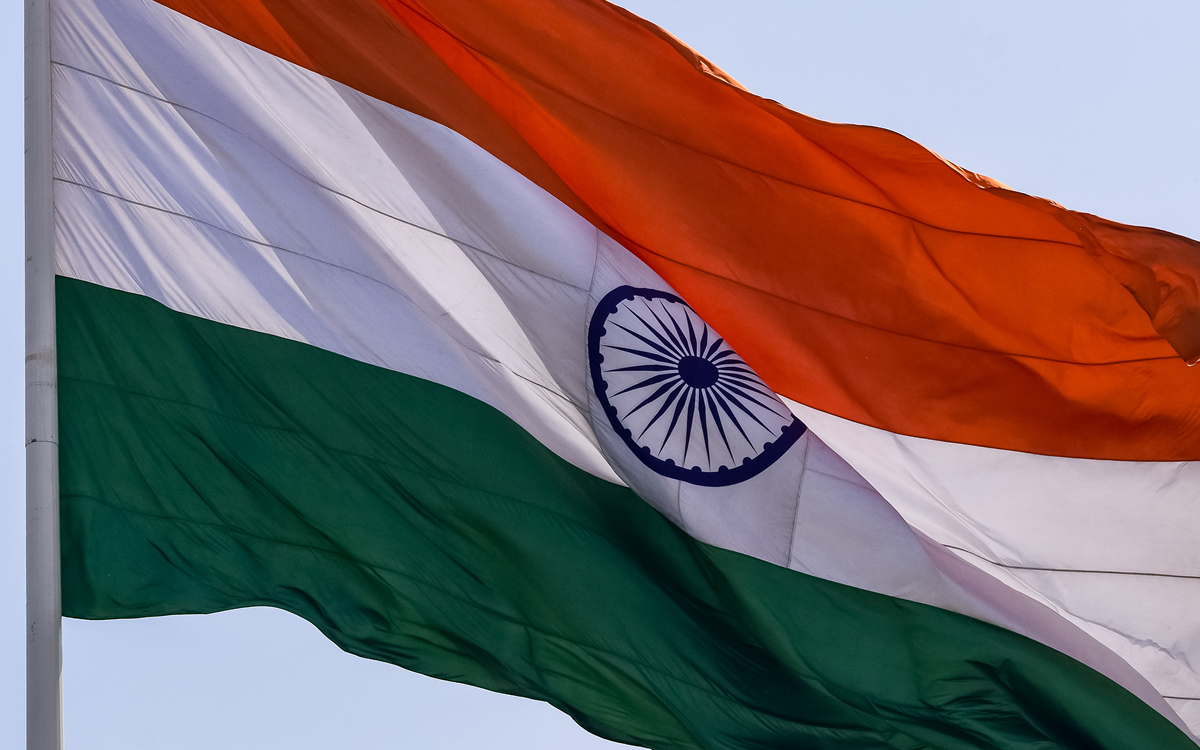
India’s Income Tax Department has opposed a same-sex couple’s petition that challenges Section 56(2)(x) of the Income Tax Act.
The provision exempts gifts between spouses from tax. The couple seeks the same benefit for their relationship.
At the center of the challenge is the explanation to the fifth provision of Section 56(2)(x). According to the petition, the provision excludes same-sex partners from the definition of “spouse.” The petition describes that exclusion as unconstitutional.
The provision defines “relative” to include an individual’s spouse, siblings, the spouse’s siblings, parents’ siblings, and other blood relatives.
Paiyo Ashiho and another petitioner, Vivek Divan, asked the Bombay High Court to recognize same-sex couples presumed to be in a marriage as “spouses” under the fifth provision to Section 56(2)(x).
A similar challenge is pending before the Karnataka High Court.
Bengaluru-based engineers Anurag Kalia and Akhilesh Godi have sought similar relief. Kalia said he wanted to give Godi a gold bracelet worth more than ₹115,500 ($1213.44.). The case remains pending.
The Prime Minister Narendra Modi-led government rejected the petition in an affidavit filed last year. It argued the plea was not legally tenable because it challenged no action or order of the Income Tax Department. Calling the petition an “abuse of process of law,” the government said the relief sought fell outside the scope of the Income Tax Act, 1961.
The government also argued the petitioners sought the benefits available to a “spouse” without legal recognition of their relationship. According to the affidavit, they had not placed on record any law recognizing their relationship as a marriage. It urged the court to dismiss the petition with costs.
The case returned to the spotlight on July 6, when the Bombay High Court heard the petition.
Justices B.P. Colabawalla and Firdosh P. Pooniwalla adjourned the matter after Solicitor General Tushar Mehta said he would appear on behalf of Modi’s government.
The petition comes nearly two years after the Indian Supreme Court’s marriage equality ruling.
In 2023, a five-judge Constitution Bench, in a 3-2 verdict, declined to recognize the constitutional validity of same-sex marriage in India. The country’s top court said MPs must decide whether to extend marriage rights to same-sex couples.
During the 2023 marriage equality hearings, lawyer Abhishek Manu Singhvi told the Supreme Court that marriage is a source of social validation, dignity, self-respect, fulfillment, and security. He argued that it also carries legal and civil benefits, including those related to taxation, inheritance, and adoption. Lawyer Anand Grover, who also appeared for the petitioners, told the court that marriage remains fundamental to the functioning of society and is necessary to access several state benefits, including joint tax benefits and surrogacy rights.
Chief Justice Dhananjaya Y. Chandrachud, in his minority opinion, said the Income Tax Act provides numerous tax benefits for payments made on behalf of a spouse, including deductions for life and health insurance premiums. He also noted that marriage confers several financial benefits on a spouse, including eligibility for gratuity, funeral expenses, medical benefits, and provident fund claims as the dependent of a deceased spouse.
In the marriage equality ruling, the Supreme Court recognized queer people cannot be discriminated against. The court said denying queer couples the material benefits and services available to heterosexual couples violates their fundamental rights.
While issuing directions to the federal, state, and territory governments; Chandrachud said the government should ensure there was no discrimination in access to goods and services. He also directed governments to sensitize the public about queer rights, establish a hotline for the queer community, create safe houses for queer couples, and ensure intersex children were not forced to undergo medical operations.
The petition is awaiting its next hearing before the Bombay High Court.
India’s tax system relies on both direct and indirect taxes, although its direct tax base remains relatively narrow. Individuals pay income tax at progressive rates of up to 30 percent, while consumers pay taxes on most goods and services through the Goods and Services Tax. The Income Tax Act also provides exemptions, deductions, and other tax benefits for eligible taxpayers, including those linked to family relationships and legal marital status.
India’s LGBTQ community is estimated to comprise between 135 million and 140 million people, or nearly 10 percent of the country’s population. Collectively, it is estimated to have a purchasing power exceeding $168 billion. The World Bank estimated that exclusion based on sexual orientation and gender identity cost India between $1.9 billion and $30.8 billion in lost economic output annually, or up to 1.7 percent of its gross domestic product.
India imposed a separate Gift Tax Act in 1958 to tax certain transfers of property made without consideration. Parliament repealed the law in 1998 to simplify the tax system and encourage genuine gifting. However, concerns over tax avoidance later prompted the government to bring gifts back within the Income Tax Act. Today, specified gifts exceeding prescribed limits may be taxed under Section 56(2)(x), subject to exemptions that include gifts received from relatives.
Under the Income Tax Act, gifts received from non-relatives exceeding ₹50,000 ($525.30) in a financial year are generally treated as taxable income, unless they qualify for a statutory exemption. Gifts received from specified relatives, including a spouse, are exempt from tax regardless of their value.
Tarun Khaitan — a research director and professor of public law at the London School of Economics Law School, honorary professorial fellow at Melbourne Law School, and associate fellow of the Bonavero Institute of Human Rights at the University of Oxford — told the Washington Blade the guarantee of equality and non-discrimination under India’s constitution was deliberately framed in broad terms because its framers envisaged that the understanding of those principles would evolve over time. They did not intend to freeze their meaning in 1950, he said. Instead, older and newer statutes alike must be interpreted in light of the constitution’s contemporary understanding.
“Constitutional values must inform the interpretation of all laws in India. It is well established in Indian jurisprudence that if a term can carry two meanings, the court will give it the meaning that complies with constitutional demands,” Khaitan said. “The term ‘spouse’ is not defined in the Income Tax Act, and unlike ‘husband’ or ‘wife’ is not a legal term of art in Indian family law. Its use by the Income Tax Act therefore is apt for judicial interpretation, which must be guided by the constitutional guarantees of equality and liberty.”
Asked how courts should balance respect for legislative choices with their constitutional responsibility to safeguard equality and dignity, Khaitan said he was not convinced that the legislature had made a clear choice in this case. He noted that the Income Tax Act uses the term “spouse” without defining it, adding that no other Indian law, to his knowledge, defines the term either. Its meaning has evolved over time, he said, pointing to the Oxford English Dictionary, which now defines a spouse as “a husband or wife, or a person joined to another in a comparable legally recognized union.”
Khaitan said the decision to restrict the meaning of “spouse” to different-sex married couples appeared to be the government’s interpretation rather than one expressly adopted by MPs. Even so, he said, courts have a duty to safeguard constitutional rights, although those rights are not absolute. The state, he said, must justify any restriction by demonstrating that it serves a sufficiently important public interest and that the limitation is proportionate to that objective.
“The extension of marriage would be a symbolic expression of equal acceptance of same-sex relations by law as well as a the extension of the bundle of material incidents that typically attach to it. Whether or not such extension happens, concerns such as inheritance, hospital visitation rights, decisions regarding end of life care, pensions etc affect the lives of same-sex couples as well as unmarried different-sex couples in a real, material sense,” Khaitan said. “There is no conceptual reason why the expressive salience of ‘marriage’ and the material incidents of a domestic partnership cannot be unbundled.”
Khaitan has had his scholarship cited by the Supreme Court in several constitutional cases, including Navtej Singh Johar v. Union of India, which decriminalized consensual same-sex relations, and Lt. Col. Nitisha v. Union of India, a landmark judgment on indirect discrimination.

Gay ANC commissioner sues D.C. over police ‘failure’ to pay reward money

New LGBTQ visitor center slated for Wilmington, Del.

Jason DePuy on coping with homophobia in ‘Big Brother’ house

2 former NBA players launch cheap anti-trans stunt to exploit WNBA rules

Same-sex couples challenges India income tax law

HRC files class action over federal ban on gender-affirming care coverage

HRC condemns DoE removal of LGBTQ bullying data from federal survey

Dutch PM: More needs to be done to defend trans rights

New book chronicles gay man’s life in hippie commune

PHOTOS: Daddy Issues at Kiki
-

 The White House5 days ago
HRC files class action over federal ban on gender-affirming care coverage
-
National5 days ago
HRC condemns DoE removal of LGBTQ bullying data from federal survey
-
Netherlands5 days ago
Dutch PM: More needs to be done to defend trans rights
-
Books4 days ago
New book chronicles gay man’s life in hippie commune