News
Court: Tenn. must recognize gay couples’ marriages
Judge predicts bans on gay nuptials will become ‘footnote’ in history


A federal court has ordered Tennessee to recognize the same-sex marriages of six gay couples (Image courtesy Wikimedia Commons).
A federal judge in Tennessee issued a preliminary injunction ordering the state to recognize same-sex marriages performed out-of-state — but only for the six plaintiff couples named in the lawsuit.
In a 20-page ruling, U.S. District Judge Aleta Trauger, a Clinton appointee, handed down the decision without making a final determination on whether the state’s anti-recognition laws are constitutional, but says they likely won’t stand up in court.
“The plaintiffs’ Motion for Preliminary Injunction will be granted, and the court will issue an injunction against the defendants, prohibiting them from enforcing the Anti-Recognition Laws against the six plaintiffs in this case,” Trauger writes.
Trauger suggests she’ll wait to issue a final determination after more courts in her circuit issue rulings on same-sex marriage, but adds the trajectory of recent decisions in other jurisdictions bodes well for same-sex couples.
“At some point in the future, likely with the benefit of additional precedent from circuit courts and, perhaps, the Supreme Court, the court will be asked to make a final ruling on the plaintiffs’ claims,” Trauger said. “At this point, all signs indicate that, in the eyes of the United States Constitution, the plaintiffs’ marriages will be placed on an equal footing with those of heterosexual couples and that proscriptions against same-sex marriage will soon become a footnote in the annals of American history.”
The lawsuit, known as Tanco v. Haslam, was filed in October by private attorneys and the National Center for Lesbian Rights. Three same-sex couples are named in the lawsuit; each lived and were legally married in another state before moving to Tennessee. The couples filed a motion for preliminary injunction in November 2013 seeking immediate protection while their case proceeds.
The three couples are Dr. Valeria Tanco and Dr. Sophy Jesty of Knoxville; Army Reserve Sergeant First Class Ijpe DeKoe and Thom Kostura of Memphis; and Matthew Mansell and Johno Espejo of Franklin. Although the case was originally filed on behalf of four couples, Erik Olvera, an NCLR spokesperson, said one couple dropped out for personal reasons.
Shannon Minter, legal director for the National Center for Lesbian Rights, said the decision “marks yet another recognition” in a string of decisions that determined laws barring same-sex couples from marriage have no reasonable justification.
“The courts’ decisions also reflect a broader societal movement toward respect for same-sex couples and their families,” Minter said. “As people have gotten to know the same-sex couples who are their neighbors, co-workers, relatives, and friends, they have come to see the unfairness of laws that deny protection to loving, stable relationships and stigmatize children being raised by same-sex parents.”
In her decision, Trauger reflects on the U.S. Supreme Court’s decision against the Defense of Marriage Act, saying the overwhelming case law following the ruling has led courts to determine state laws barring same-sex marriage are unconstitutional.
“In light of this rising tide of persuasive post-Windsor federal caselaw, it is no leap to conclude that the plaintiffs here are likely to succeed in their challenge to Tennessee’s Anti- Recognition Laws,” Trauger said.
Dave Smith, a spokesperson for Gov. Bill Haslem, said the opinion is “under review” when asked if the decision will be appealed, but conveyed the sense that his boss isn’t happy with the decision.
“The opinion is under review,” Smith said. “The governor is disappointed that the court has stepped in when Tennesseans have voted clearly on this issue. It’s inappropriate to comment further due to the continuing litigation.”
Sharon Curtis-Flair, a spokesperson for Tennessee Attorney General Robert Cooper, Jr., expressed a similar sentiment.
“We are reviewing the decision and intend to take all necessary steps to defend the law,” Curtis-Flair said.
Although courts in the Second Circuit and Ninth Circuit have issued rulings saying laws related to sexual orientation should be subject to heightened scrutiny, or a greater assumption they’re unconstitutional, Trauger doesn’t apply that standard because she suspects Tennessee’s marriage ban fails the lower standard of “rational basis” review.
“The court finds that the plaintiffs are likely to succeed on the merits of their equal protection challenge, even under a ‘rational basis’ standard of review,” Trauger writes. “For this reason, the court need not address at this stage whether sexual orientation discrimination merits a heightened standard of constitutional review or whether the plaintiffs are likely to prevail on their additional due process and right to travel challenges.”
Jesty, one of the plaintiffs in the case, said she and her spouse are “overjoyed with the ruling” because it will enable them to receive protections afforded to other opposite-sex couples in similar situations.
“As a result of this order, our daughter will never know a time when her bonds with her loving parents were not protected or the state saw her family as less worthy than other families,” Jesty said. “We look forward to the resolution of this case so that all married same-sex couples in Tennessee can have the protections that we were granted today.”





District of Columbia
HIV Vaccine Awareness Day set for May 18
Whitman-Walker joins nationwide recognition of efforts to develop vaccine
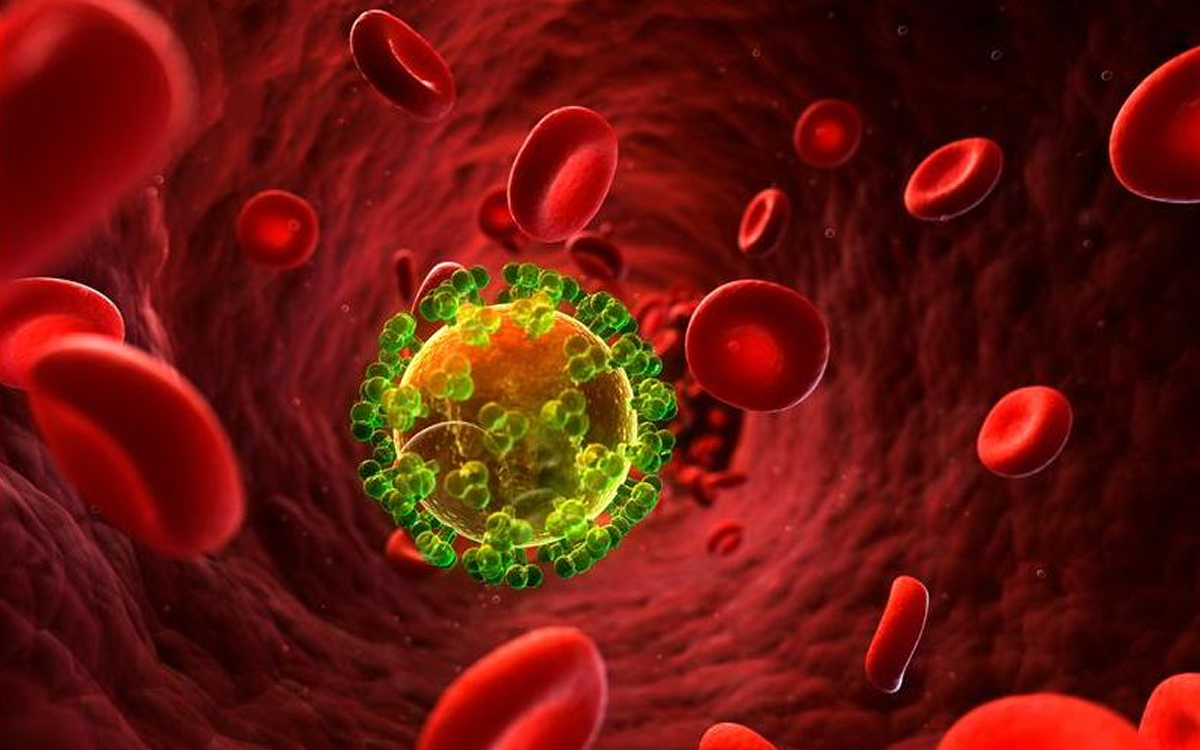
Whitman-Walker Health, the D.C.-based community healthcare center that specializes in HIV/AIDS and LGBTQ-related health services, will join health care advocates from across the country to support efforts to develop an HIV vaccine on HIV Vaccine Awareness Day on May 18.
“HIV Awareness Day, observed annually on May 18, was established to recognize and thank the volunteers, scientists, health professionals, and community members working toward a safe and effective prevention HIV vaccine,” Whitman-Walker said in a statement.
“Led by the National Institutes of Health’s National Institute of Allergy and Infectious Diseases (NIAID), the day is also an opportunity to educate communities about the critical importance of preventive HIV vaccine research,” the statement says.
It adds, “The reality is that any new vaccine discovery must be built community by community, institution by institution, and then it must reach everyone – especially the communities who have carried the heaviest burden of this epidemic.”
On its own website, the National Institutes of Health says HIV Vaccine Awareness Day also highlights its longstanding efforts, coordinated by its Office of AIDS Research, to support researchers’ efforts to develop an HIV vaccine.
“Researchers are making promising headway in efforts to develop a safe, effective HIV vaccine,” it says in a statement on its website.
A Whitman-Walker spokesperson said Whitman-Walker was not holding a specific event to observe HIV Vaccine Awareness Day, but it will recognize the day as a way of encouragement for its ongoing work to address the AIDS epidemic and support for vaccine research.
“Today, no one has to die from HIV,” said Whitman-Walker’s Health System division’s CEO, Dr. Heather Aaron in the Whitman-Walker statement. “We have the treatments, the technology, and the research to change outcomes, and yet people in our community are still dying from HIV//AIDS,” she said in the statement.
“That is unacceptable, and it is exactly why our work continues,” she added. “Here in D.C. with more focus on Southeast D.C., the Whitman-Walker Health System remains committed to making a difference through cutting-edge research, policy advocacy, and philanthropy, because fair access to life-saving treatment is not a privilege. It is a right.”
World
This year’s IDAHOBiT to highlight democracy
Criminalization laws, US funding cuts among global movement’s challenges
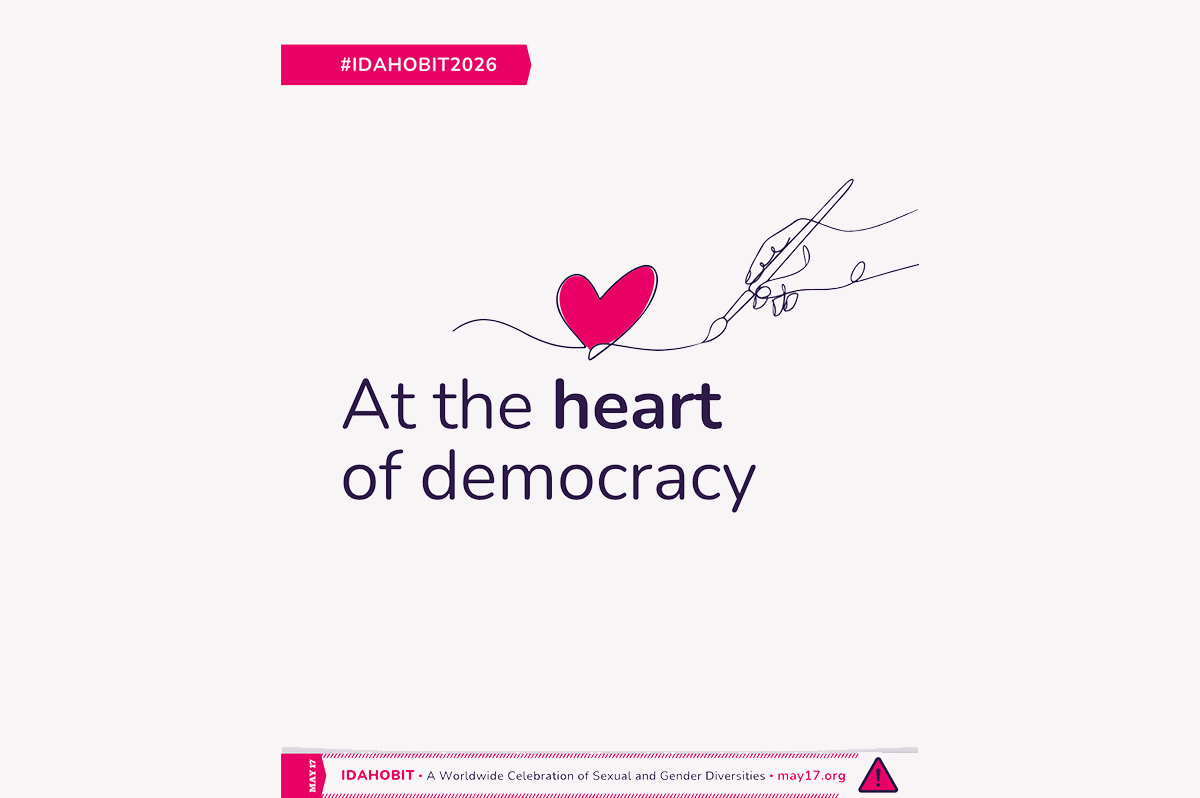
Activists around the world on Sunday will mark the International Day Against Homophobia, Transphobia, and Biphobia.
The IDAHOBiT Advisory Group — which includes 18 LGBTQ and intersex rights organizations around the world — in a press release notes IDAHOBiT events are expected to take place in more than 60 countries. Advocacy groups are also using IDAHOBiT to highlight discrimination and violence based on sexual orientation and gender identity and other LGBTQ-specific issues.
Caribe Afirmativo, a Colombian advocacy group, on May 8 released a report that notes one LGBTQ person was reported murdered in the country every 32 hours in 2025. Caribe Afirmativo also said the Colombian government has not done enough to address anti-LGBTQ violence.
“The evidence is clear: violence against LGBTIQ+ persons in Colombia does not begin with homicide, but with tolerated prejudice and ignored threats,” reads Caribe Afirmativo’s report. “In 2025, the State not only failed to protect — it also failed to count, investigate, and sanction. The crisis is not invisible. It is structural. And it requires an urgent, comprehensive, and sustained response.”
The Initiative for Equality and Discrimination, a Kenyan group known by the acronym INEND, issued a report that details how the country’s law enforcement treats LGBTQ and intersex people. “A widespread pattern of arbitrary arrests, extortion, and both physical and sexual violence” are among the abuses the INEND report notes.
“These abuses not only inflict severe physical and psychological trauma but also foster a widespread distrust of the law enforcement, further marginalizing the community and hindering its ability to seek justice, access essential services such as healthcare, and fully enjoy fundamental freedoms,” it reads.
IDAHOBiT commemorates the World Health Organization’s declassification of homosexuality as a mental disorder on May 17, 1990. This year’s IDAHOBiT theme is “At the Heart of Democracy.”
This year’s IDAHOBiT will take place against the continued impact that the lack of U.S. funding is having on the global LGBTQ and intersex rights movement.
The IDAHOBiT Advisory Group notes consensual same-sex sexual relations remain criminalized in 65 U.N. member states, and the number of countries with criminalization laws increased in 2025. The IDAHOBiT Advisory Group also indicates more than 60 countries have laws that restrict “freedom of expression related to sexual and gender diversity issues.”
“No matter where we live, who we are, or the faiths that drive us, most people want to nurture neighborhoods and communities where every life can bloom,” said the IDAHOBiT Advisory Group. “But today, reactionary governments worldwide are poisoning our gardens with the invasive weeds of their authoritarian policies and exclusionary legislations.”
‘Progress is still happening’
Activists around the world since last year’s IDAHOBiT have seen several legal and political victories.
New Hungarian Prime Minister Péter Magyar on April 12 defeated his predecessor, Viktor Orbán, whose government faced widespread criticism over its anti-LGBTQ crackdown.
The Eastern Caribbean Supreme Court last July struck down St. Lucia’s colonial-era laws. The Dominican Republic’s Constitutional Court a few months later ruled the country’s National Police and Armed Forces cannot criminalize consensual same-sex sexual relations among its members. Botswana late last month repealed a provision of its colonial-era penal code that criminalized homosexuality.
A Hong Kong judge last September ruled in favor of a lesbian couple who sought parental recognition for their son. The European Union Court of Justice over the last year issued two landmark decisions: one said EU countries must recognize same-sex marriages legally performed in other member states and another directed member states to allow transgender people to legally change their name and gender on ID documents.
“Time and again, LGBTQIA+ people have resisted, rolled up their sleeves together with all the good people caring about their communities, and sowed the seeds of change,” said the IDAHOBiT Advisory Group in its press release.
District of Columbia
Capital Stonewall Democrats endorses Janeese Lewis George for D.C. mayor
Group also backed D.C. Council, Congressional delegate, AG candidates

The Capital Stonewall Democrats, D.C.’s largest local LGBTQ political organization, announced on May 14 that it has endorsed D.C. Councilmember Janeese Lewis George (D-Ward 4) for mayor in the city’s June 16 Democratic primary.
Lewis George along with former D.C. Councilmember Kenyan McDuffie (D-At-Large) are considered by political observers to be the two leading candidates among the seven candidates competing in the Democratic primary election for mayor.
Both have strong, long-standing records of support on LGBTQ issues, indicating Capital Stonewall Democrats members, like LGBTQ voters across the city, are likely choosing a candidate based on non-LGBTQ related issues.
In a May 14 statement, the group announced its endorsements in seven other Democratic primary races, including D.C. Council Chair Phil Mendelson, who is running unopposed in the primary. Also endorsed is D.C. Councilmember Robert White (D-At-Large), who is one of five Democratic candidates competing for the position of D.C. delegate to the U.S. House of Representatives.
D.C. Councilmember Brooke Pinto (D-Ward 2) is among the four candidates competing with White for that post, and who like White has a strong record of support on LGBTQ issues.
In the At-Large D.C. Council race for which incumbent Anita Bonds is not running for re-election, Capital Stonewall Democrats has endorsed community activist and LGBTQ ally Oye Owolewa in a nine candidate race.
For the Ward 1 D.C. Council election, in which five LGBTQ supportive candidates are competing, the group did not make an endorsement because none of the candidate received a required 60 percent of the endorsement vote cast by Capital Stonewall Democrats members, according to the group’s former president, Howard Garrett.
The statement announcing its endorsements shows that it decided to list its “Preferred Ranking” of each of the Ward 1 Democratic candidates as part of the city’s newly implemented ranked choice voting system. It lists gay candidate Miguel Trindade Deramo as first, bisexual candidate Aparna Raj second, Jackie Reyes Yanes third, Rashida Brown fourth, and Terry Lynch fifth.
In the remaining ward Council races, Capital Stonewall Democrats endorsed Councilmember Matt Fruman (D-Ward 3), who is running unopposed for re-election; Councilmember Zachary Parker (D-Ward 5), the Council’s only gay member who is being challenged by two opponents; and Councilmember Charles Allen (D-Ward 6), who is running unopposed for re-election.
The group also chose not to make an endorsement in the special election for another At-Large D.C. Council seat that became vacant when then-Independent Councilmember McDuffie resigned to enable him to run for mayor as a Democrat. Under the city’s Home Rule Charter adopted by Congress, that at large sweat is restricted to a “non-majority party” candidate, meaning a non-Democrat.
The three candidates running for the seat, all Independents, include incumbent Doni Crawford, who was appointed to the seat earlier this year; former D.C. Councilmember Elissa Silverman; and Jacque Patterson. All three have expressed support on LGBTQ related issues.
“The organization’s endorsement process included candidate questionnaires, public forums, and direct voting by active CSD members,” the statement announcing its endorsements says. “Each endorsement reflects the collective voice of 173 LGBTQ+ Democrats who voted in the process and are committed to building lasting political power in the District,” according to the statement. “Candidates that reached 60 percent support received the endorsement.”
Garrett, the group’s former president, acknowledged that with nearly all candidates running in D.C. elections expressing strong support for the LGBTQ community, many if not most of the group’s members most likely chose a candidate based on issues other than LGBTQ related issues.
He said he believes Lewis George, who he is supporting and is viewed as a progressive candidate who self-identifies as a Democratic Socialist, compared to McDuffie, who is viewed as a moderate Democrat, captured the group’s endorsement based on the view that she is the best person to lead the city going forward.
“I believe that Capital Stonewall members voted for Janeese Lewis George because we’re tired of the status quo and we need a new, bold leader to not only move our city forward but also to stand up to Donald Trump and his administration,” Garrett told the Washington Blade.
McDuffie’s LGBTQ supporters, including former Capital Stonewall Democrats presidents David Meadows and Kurt Vorndran, have argued that McDuffie’s positions on a wide range of issues, including LGBTQ issues, show him to be the best candidates to lead the city at this time and In future years.
The group’s endorsement of Lewis George comes one week after GLAA DC, a nonpartisan LGBTQ advocacy group, awarded her its highest candidate rating of +10.

Disillusioned about democracy? Think of it as a community garden

‘The Inheritance’ is most-nominated at this year’s Helen Hayes Awards

HIV Vaccine Awareness Day set for May 18

DC Black Pride is around the corner

United Night Out set for Saturday

America’s broken pipeline of mental healthcare for trans youth

Blade finalist for D.C. Society of Professional Journalists awards

Jason Collins dies at 47

GLAA releases ratings for 18 candidates running for D.C. mayor, Council, AG

Polish government to recognize same-sex marriages from EU countries
-

 National5 days ago
America’s broken pipeline of mental healthcare for trans youth
-
News5 days ago
Blade finalist for D.C. Society of Professional Journalists awards
-
Sports5 days ago
Jason Collins dies at 47
-
District of Columbia5 days ago
GLAA releases ratings for 18 candidates running for D.C. mayor, Council, AG