Politics
Sen. Ensign to support ‘Don’t Ask’ repeal: source (UPDATED)
UPDATE: In a statement, Jennifer Cooper, an Ensign spokesperson, said the senator is awaiting the upcoming Pentagon working group report on “Don’t Ask, Don’t Tell” and testimony from military service chiefs before making a decision on the issue. Additionally, she said Ensign intends to examine “all the merits” of the defense authorization bill before committing to a vote one way or another and is hoping for a “fully open amendment process.”
The complete statement follows:
“Senator Ensign is waiting on the report from the Pentagon and the testimony of the military chiefs to see if any changes to this policy can or should be done in a way so as not to harm the readiness or war fighting capabilities of our troops. Also, he plans to review all of the merits of the Defense Authorization bill before voting one way or another; hopefully it will be a fully open amendment process.”
Additionally, the Blade obtained a copy of Ensign’s constituent letter on “Don’t Ask, Don’t Tell.” Notably, the letter states that the senator believes that Americans “regardless of the sexual orientation” should be able to “fight and risk their lives in defense of this great nation.”
Still, the letter states that “major changes to personnel structure” during a time of war “could be a major distraction” to the troops’ ability to complete their mission.
The complete letter follows:
Thank you for contacting me regarding the policy of “Don’t Ask, Don’t Tell.” I value the opinions of every Nevadan and am always grateful to those who take the time to inform me of their views.
As you may be aware, during the Clinton Administration, Congress enacted new laws and regulations regarding homosexuals and service in the U.S. military. This compromise, commonly known as “don’t ask, don’t tell,” holds that service members are not to be asked about nor allowed to discuss their sexual orientation. The law also states that any uniformed individual is subject to discharge for engaging in, attempting to engage in, or soliciting prohibited conduct.
It is my firm belief that Americans, regardless of their sexual orientation, should be able to fight and risk their lives in defense of this great nation. As a nation currently engaged in combat in Afghanistan and Iraq, the focus of all decisions affecting military readiness, recruiting and retention, and unit cohesion should be to maximize the success of ongoing operations. Major changes to personnel structure while forces are undergoing intense training and being deployed to combat operations could be a major distraction and could degrade our troops’ ability to successfully complete the mission.
On February 2, Secretary of Defense Robert Gates called for a Department of Defense review of the policy. That review is expected to be completed in December of this year. I believe completing that review is necessary before further action is taken so that the concerns of our service members can be fully understood and addressed. All four of the military service chiefs have requested that the results of the review be in hand before legislative action is taken. As you may know, a federal judge in California recently attempted to supersede this process and ruled in court that the military must stop enforcing “don’t ask, don’t tell.” The Department of Justice has stated that it will appeal this ruling. I strongly oppose over-reaching by activist judges and believe that, once the DoD review is complete, the future of the military policy must be carefully considered by the Congress.
The National Defense Authorization Act (NDAA) for 2011 contains a provision repealing the policy and was recently submitted for consideration by the Senate. The NDAA is traditionally a piece of legislation to which defense-related amendments can be offered, and each provision is extensively debated and considered. Had the NDAA come to the floor, the Senate then would have been able to debate the “don’t ask, don’t tell” policy. Unfortunately, Democrats attempted to use this year’s NDAA as a vehicle for non-defense-related provisions and refused to allow an open and fair bipartisan amendment process. As a result, I voted against consideration of the bill and it did not come to the Senate floor. The NDAA can still be brought to the floor during the lame duck session this year, but Democrats have announced their top three priorities for legislation after the elections and national defense did not make the list.
As a former member of the Senate Armed Service Committee and Ranking Member of its Readiness and Management Support Subcommittee, I assure you that I have the utmost respect for those men and women of our nation who choose to serve in the Armed Forces. I believe it is important to weigh competence, courage, and willingness to serve above all for those enlisting in the military. Please rest assured that I will keep your concerns, and the concerns of all Nevadans, in mind. Thank you, again, for sharing your thoughts with me. Please feel free to contact me in the future on matters of importance to you. Should you have any other questions or comments, please do not hesitate to either write or e-mail me via my website at http://ensign.senate.gov.
—————–
Sen. John Ensign (R-Nev.) wants to repeal “Don’t Ask, Don’t Tell” and intends to vote in favor of moving forward with defense budget legislation containing a provision that would end the law, according to the Stonewall Democratic Club of Southern Nevada.
Laura Martin, communications director for the club, said she and other activists on Thursday met with Margot Allen, Ensign’s regional representative on military issues, who informed the group of Ensign’s opposition to “Don’t Ask, Don’t Tell” and intention to vote for the fiscal year 2011 defense authorization bill, which contains repeal language.
“The first question was about ‘Don’t Ask, Don’t Tell’ and his staffer said he supports repeal,” Martin said. “We asked her to clarify three times and she said he will vote in the affirmative on the defense authorization with ‘Don’t Ask, Don’t Tell’ repeal in it.”
Martin said the question they asked was based on the condition that the vote would come up in December after the Pentagon working group completes its report on implementing repeal of “Don’t Ask, Don’t Tell.”
“We said after Dec. 1, when that report is out, and the defense authorization act is up for a vote with the repeal of ‘Don’t Ask, Don’t Tell,’ will the senator vote in the affirmative to pass it?” Martin said. “And she said, ‘He will.’ And we asked her to clarify that two more times and she said, ‘Yes, he wants it repealed.'”
Calls to Ensign’s office weren’t returned on short notice.
Ensign voted against the cloture vote on the motion to proceed to the defense authorization bill in September. During the summer, the Nevada senator told the Washington Blade in a brief exchange on Capitol Hill that he has “concern” about repealing “Don’t Ask, Don’t Tell.” However, Ensign said this concern was based on Congress acting before the Pentagon working group report was complete.
“The problem is you can’t go out and say to the military chiefs, ‘We’re going to survey you and see what you all think,’ and then you pass the bill to repeal it,” Ensign said at the time. “So the study should come first and then you can talk about the repeal or not of [‘Don’t Ask, Don’t Tell’]. So, yes, it is a concern simply because the study’s not done.”






2026 Midterm Elections
HRC endorses Va. ballot initiative to redraw congressional districts
Referendum to take place April 21
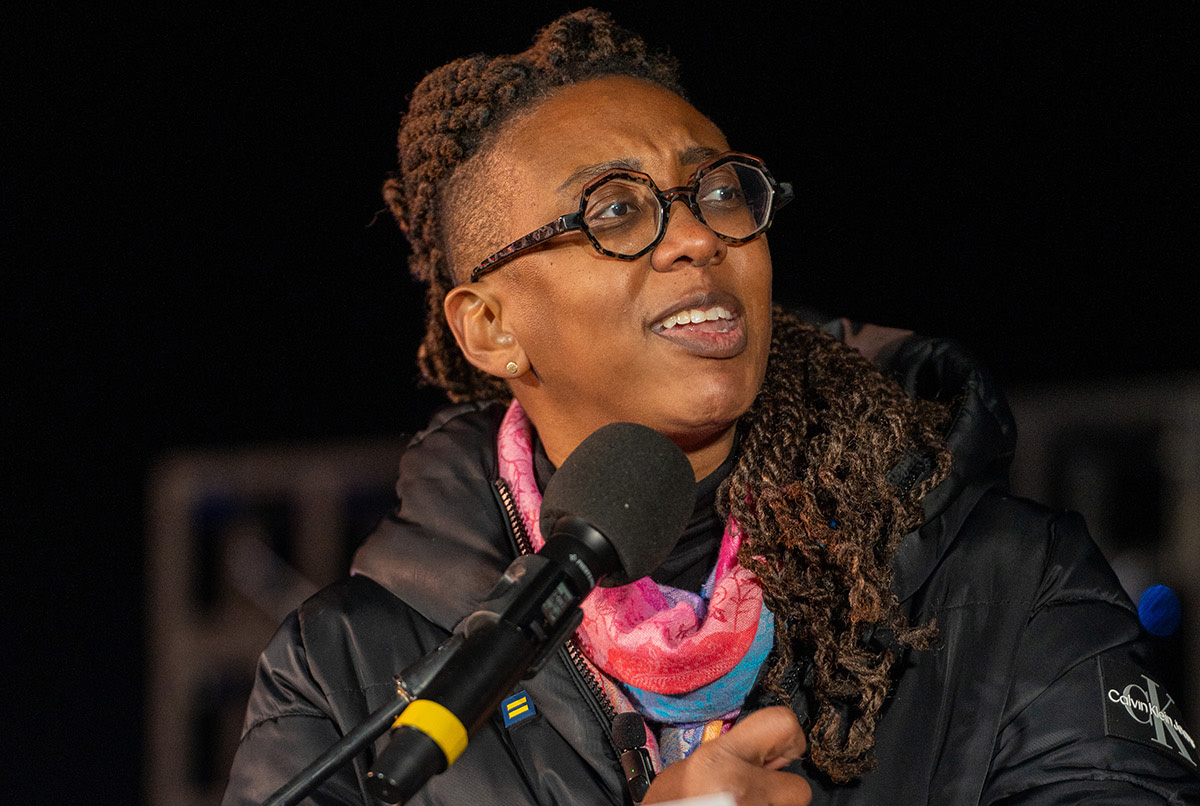
The Human Rights Campaign, the nation’s largest LGBTQ civil rights organization, has endorsed a Virginia ballot initiative that would allow the state to redraw its congressional districts this year, ahead of the 2030 Census.
Currently, Virginia’s Redistricting Commission — a legislative body made up of eight legislators and eight citizens, evenly split between Republicans and Democrats — is responsible for redrawing congressional districts every 10 years following the Census. The proposed amendment would temporarily shift that authority to the Virginia General Assembly through 2030, before returning it to the commission in 2031.
Supporters say the push for the amendment comes in response to anti-democratic moves by several Republican-led state legislatures following demands from President Donald Trump, which have resulted in newly gerrymandered congressional maps that advocates argue disenfranchise pro-equality voters.
Under the proposed map in Virginia, Democrats could gain as many as four of the five seats currently held by Republicans in this fall’s midterm elections, when control of the narrowly divided House is up for grabs.
Six states — including Texas, Missouri, and North Carolina on the GOP side — enacted new maps last year at Trump’s behest. The most significant Democratic counter-effort so far has come from California.
HRC President Kelley Robinson issued a statement backing the measure, encouraging Virginia voters who support democracy to vote “yes,” saying it would ensure “the will of the people is heard.”
“Voters should choose their leaders, not the other way around. But anti-equality lawmakers around the country, in service to Donald Trump’s assaults on democracy, are trying to undermine our elections and engineer their preferred outcome in the midterms,” Robinson said. “The American people are ready to take Congress back from the anti-equality, anti-freedom politicians that have been abusing their power to hurt all our communities and bend government to the will of a wannabe king.”
U.S. Rep. Don Beyer, who represents Virginia’s 8th Congressional District that encompasses much of Washington’s suburbs, including Alexandria, Arlington, Falls Church, and parts of eastern Fairfax County — has also voiced support for the measure. He has called Trump’s attempts to influence elections ahead of the November midterms a “betrayal of our democracy,” emphasizing that while the fight is ongoing, this effort is a step toward correcting the situation.
“It’s not a done deal by any means,” Beyer said in an op-ed for the Cardinal News. “We have to effectively make the case that even though this seems unfair in Virginia, it’s totally fair for America, for those of us who believe that taking back the House is the most significant thing we can do to stop Donald Trump.”
Virginia Gov. Abigail Spanberger is another staunch supporter of the amendment, arguing that it would, through bipartisan means, help counterbalance Trump’s efforts in what remains an uphill battle.
“As early voting begins tomorrow on Virginia’s redistricting amendment, voters should know that Virginia’s approach is different. It is temporary, directly responsive to what other states decide to do, and — most importantly — it preserves Virginia’s bipartisan redistricting process for the future,” the first female governor of the state said in a statement. “I supported the formation of Virginia’s bipartisan redistricting commission in 2020, and that support has not changed. What has changed is what we’re seeing in states across the country — and a president who says he is ‘entitled’ to more Republican seats before this year’s midterm elections.”
“Virginians have the opportunity to take action in response to this extraordinary moment in history,” she added. “That’s why, as a Virginia voter, I’m voting in favor of this amendment.”
Virginians for Fair Elections, the group responsible for marketing the initiative, has raised nearly $50 million dollars, according to the Virginia Public Access Project, a nonpartisan organization focusing on sharing public documents related to financial matters of the state. The ads notably feature former President Barack Obama, who supports the measure and has hailed it as a way to “level the playing field.”
In a recent Politico article, a person close to the White House, granted anonymity, suggested the outlook for Trump’s governing majority is weakening — particularly following the unraveling of the Iran war — underscoring why the administration is pushing Republican-led states to maximize their advantage ahead of the midterms.
“This war in Iran almost cements the fact that we lose the midterms in November — the Senate and House,” the person said.
According to The Economist, Trump holds a 37 percent approval rating, with 56 percent of respondents disapproving of his handling of the presidency.
This is not the first time Virginia has held a special election for a statewide ballot initiative. Most recently, in 1956, voters approved a measure that led to the use of public funds to provide tuition grants for students attending nonsectarian private schools.
Early voting is already underway in the Old Dominion, with Election Day set for April 21.
Politics
Trump’s war threats trigger rare 25th Amendment discussion
President threatened to destroy Iranian civilization in Truth Social post
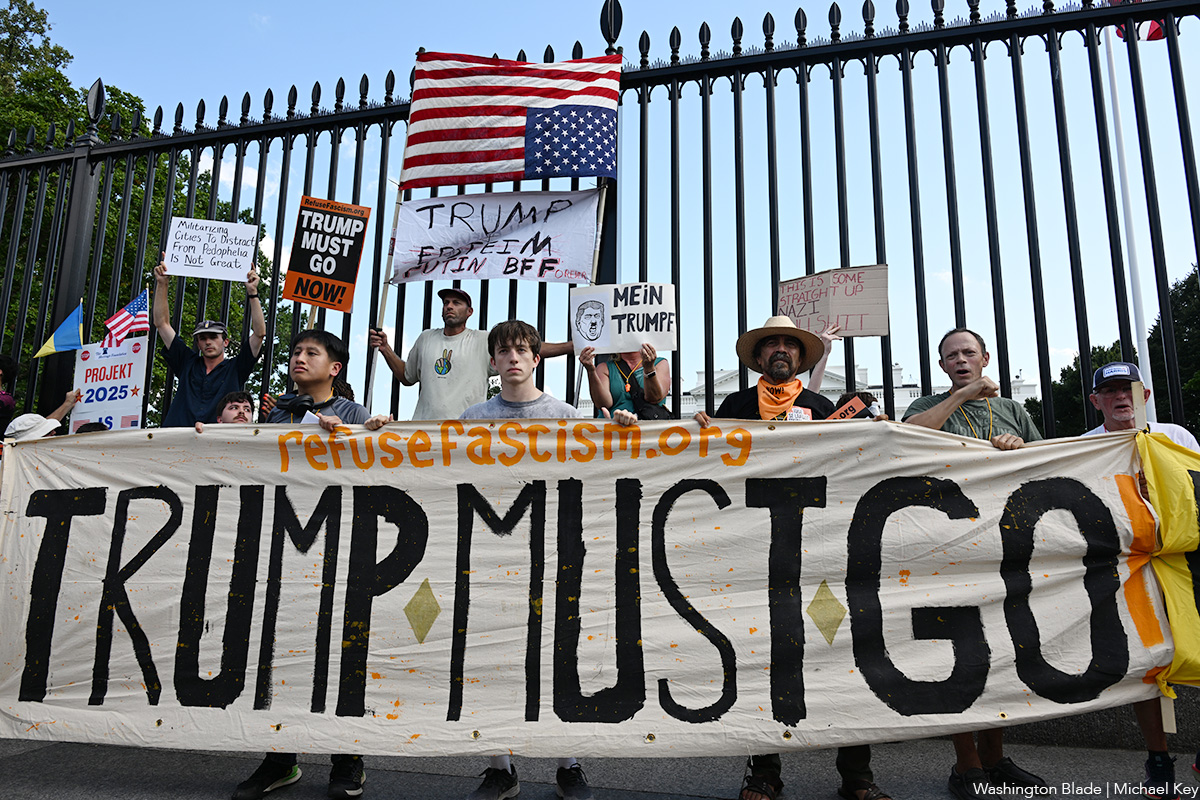
Following multiple brazen Truth Social posts this week related to the ongoing war with Iran — one which he said he could wipe out “a whole civilization,” — Democrats are seizing the opportunity to gain momentum in ousting President Donald Trump from office.
As the war with Iran continues to unfold, Trump appears increasingly frustrated — and willing — to use any means necessary to achieve his goals of ending the country’s nuclear capabilities, destroying its military, and ushering in regime change. So far, none of these goals have been met. As his frustration grows, so do calls to invoke a never-before-used safeguard for the nation—the 25th Amendment.
“A whole civilization will die tonight, never to be brought back again,” Trump posted on Truth Social on Tuesday morning. “I don’t want that to happen, but it probably will.”
This came only days after Trump posted a now-deleted, expletive-filled demand for the country to reopen the Strait of Hormuz on Easter Sunday, saying, “Open the Fuckin’ Strait, you crazy bastards, or you’ll be living in Hell.” On the same day, Trump told The Hill he would not rule out sending ground troops. And he told Fox News Sunday that he’s “considering blowing everything up and taking over the oil” if Iran doesn’t accept his deal.
The president then set a new deadline of 8 p.m. ET on Tuesday for Iran to reach a deal with the U.S., marking yet another extension, which did lead to a two-week ceasefire.
Since the president’s tirade, Democratic legislators in federal office have condemned his words, while Republicans are quietly standing behind him. Former Trump allies are among the loudest voices advocating for invoking the 25th Amendment, as some in international government organizations have sharply called Trump’s threats illegal.
“If there’s an attack on clearly civilian infrastructure, that is not allowed under international humanitarian law,” Stéphane Dujarric, spokesman for the United Nations secretary-general, said last week.
That concern is heightened by the broader human rights landscape in Iran, where violations of international legal standards are already well documented — particularly when it comes to LGBTQ people.
Iran has some of the harshest laws in the world regarding LGBTQ rights, policies that human rights advocates say are themselves in violation of international law.
Under the country’s legal system, all sexual activity outside a traditional Islamic marriage is illegal, including same-sex relations. Sexual activity between members of the same sex is criminalized and, in some cases, punishable by death under Iran’s Islamic Penal Code.
With international officials raising concerns about the legality of Trump’s threats, the conversation in Washington has increasingly shifted from condemnation to potential consequences, namely, whether the 25th Amendment could be used to hold him accountable.
“Section 4 of the 25th Amendment, which has never been invoked, allows for the vice president and a majority of Cabinet secretaries (or another body as Congress may provide) to declare the president unable to discharge the powers and duties of the office,” according to the Bipartisan Policy Center. “The vice president would then immediately assume the role of acting president.”
Although there seems to be momentum from Trump adversaries, this is unlikely, according to PolitiFact.
“For all of the partisan chatter, it is highly unlikely this legal procedure to remove a president will happen,” Louis Jacobson and Amy Sherman wrote for the nonprofit political fact-checking website that is operated by the Poynter Institute.”Trump has the support of Vice President JD Vance, his Cabinet and the majority of Republicans in Congress.”
Delaware Congresswoman — and the first transgender legislator on Capitol Hill — Sarah McBride issued a statement in response to Trump’s words.
“In a political career defined by grotesque statements, this president’s horrifying, illegal, and genocidal threat this morning is among the most dangerous and appalling,” McBride said. “You can’t shout ‘fire’ in a crowded theater, and a president cannot be allowed to threaten genocide with the United States military. Threats of war crimes and disregard for human life must be met with accountability under the law.”
She then, like many others, called for removing the president from office to protect the American people.
“Trump must go — and Republicans, whether in the Cabinet or Congress, must join Democrats in using any and all constitutional powers at our collective disposal to end this illegal war and take the gun out of this madman’s hands,” said McBride, the Congressional Democratic Women’s Caucus whip.
Mark Takano, the first openly gay person of color elected to Congress, pointed out that Trump’s ceasefire is only temporary, and does not ensure that Americans won’t be called to fight in a war they didn’t ask for.
“We heard no plan to end this war and no commitment to keep American boots out of Iran,” Takano said on X.
U.S. Sen. Tammy Baldwin (D-Wis.), the first openly gay member elected to the U.S. Senate, used her platform to remind Trump — and the world — that diplomacy remains critical.
“Diplomacy has always been the answer, which is why the president shouldn’t have gotten us into this war of choice,” a statement read on X. “It’s been reckless, cost U.S. soldiers their lives, and is raising prices on families. A ceasefire is a start, but Congress needs to do our jobs and end this war.”
“The House must pass articles of impeachment, and then the Senate must vote to convict and remove the President,” U.S. Sen. Ed Markey (D-Mass.), vocal supporter of LGBTQ rights wrote in a statement on X. “Or, the Cabinet and vice president, with congressional concurrence, must invoke the 25th Amendment and remove Trump.”
“Donald Trump’s instability is more clear and dangerous than ever,” said former House Speaker Nancy Pelosi (D-Calif.).
Multiple other Democrats also called for removing the president for violating international and constitutional law. U.S. Rep. Ilhan Omar (D-Minn.) called for “this unhinged lunatic” to “be removed from office.” U.S. Rep. Ro Khanna (D-Calif.), said, “Threatening war crimes is a blatant violation of our Constitution and the Geneva Conventions.” U.S. Rep. Yassamin Ansari (D-Ariz.), told Midas Touch Journalist Scott MacFarlane “In the last 48 hours alone, the rhetoric has crossed every line.”
In addition to Democrats, some staunch Trump supporters have also been loudly criticizing the president’s handling of the Iran war.
Conspiracy theorist, former Trump confidant, and $1.3 billion defamation case loser for spreading far-right lies, Alex Jones, asked “How do we 25th Amendment his ass?” on Monday’s InfoWars show.
Georgia Republican, former member of the House of Representatives, and former high-profile MAGA ally Marjorie Taylor Greene called Trump’s post about destroying civilizations “evil and madness” and posted a simple “25TH AMENDMENT!!!”
The White House
Report: Grenell wants Russian ambassadorship
Country’s anti-LGBTQ record a reported barrier

Richard Grenell, President Donald Trump’s special envoy for “special missions,” is making it known that he is interested in the Russian ambassadorship.
According to reporting by the Daily Mail, Grenell has “floated” his interest in the role to coworkers, but issues surrounding the former German ambassador’s sexuality have made securing the position more difficult.
“He had an interest in the job — or at least he floated the idea to select colleagues. But Putin’s regime is extremely anti–LGBTQ, so I’m sure they didn’t take that thought too seriously,” one source close to Grenell told the Daily Mail. “That would never happen anyway.”
Grenell has long been one of Trump’s closest allies and was the first openly gay person to hold a Cabinet-level position. He was ousted last month as acting director of the Kennedy Center, a position he had held since Trump reestablished the board to be composed of his political supporters in 2025.
In addition to leading the nation’s cultural arts center, Grenell previously served as the U.S. ambassador to Germany from 2018 to 2020, and as the special presidential envoy for Serbia and Kosovo peace negotiations from 2019 to 2021. He was also a State Department spokesperson to the U.N. under the George W. Bush administration and a Fox News contributor.
Russia has a longstanding history of being anti-LGBTQ.
In 2013, the country passed a law banning any public endorsement of “nontraditional sexual relations” among minors. In December 2022, Putin signed legislation expanding the ban, making it illegal to promote same-sex relationships or suggest that non-heterosexual orientations are “normal” for people of any age, widening censorship across media and public life.
The Russian courts have also supported the restriction of LGBTQ identity in the country. In November 2023, Russia’s Supreme Court granted a request from the Justice Ministry to outlaw the “international LGBT movement” as “extremist,” allowing authorities to criminalize advocacy and potentially prosecute individuals for expressions of LGBTQ+ identity or support.
In addition to LGBTQ rights issues, the war between Russia and Ukraine has become a global concern. Ukraine, which was part of the former Soviet Union, includes the territory known as Crimea, which Russia annexed in 2014. The annexation remains a major point of international dispute over sovereignty. Since 2022, Russia’s large-scale invasion of Ukraine has escalated the conflict, drawing global attention and sanctions while straining U.S.-Russia relations.
The U.S. has spent $188 billion in total related to the war in Ukraine since the Russian invasion in February 2022, according to the Council on Foreign Relations.
The Russian ambassadorship seems to be a difficult role to fill, according to additional information presented by the Daily Mail. With Trump already being seen as relatively positive by Russian President Vladimir Putin, and with close ties to members of his Cabinet and family — like son-in-law Jared Kushner — the ambassadorship is complicated and viewed as less critical than in previous administrations.
“There is no rush to fill that role because it has now been deemed unnecessary,” another source told the U.K.-based publication.
Bob Foresman, a seasoned businessman with decades-long ties to the Kremlin, was reportedly once the frontrunner, according to the Daily Mail. Foresman served as vice chair of UBS Investment Bank and Deputy Chairman of Renaissance Capital between 2006 and 2009, and earlier led investment banking for Russia at Dresdner Kleinwort Wasserstein from 1997 to 2000.
“This is a pattern, especially in the Trump administration — special envoys big–footing the ambassadors,” a source told the Daily Mail. “It is shocking that we are already in April and we don’t have an ambassador to one of the most important countries in the world.”

Minimal version of ‘Streetcar Named Desire’ heading to Dupont Underground

Comings & Goings

An effort to increase the number of psychiatrists of color

Calendar: April 10-16

BLUF leather social set for April 10 in Rehoboth

Tenn. lawmakers pass transgender “watch list” bill

Vance speaks at Orbán rally in Hungary

White House ends protections for trans students in multiple school districts

LGBTQ groups condemn Trump’s threat to destroy Iranian civilization

Report: Grenell wants Russian ambassadorship
-

 Tennessee4 days ago
Tenn. lawmakers pass transgender “watch list” bill
-

 Hungary5 days ago
Vance speaks at Orbán rally in Hungary
-
The White House5 days ago
White House ends protections for trans students in multiple school districts
-
Iran4 days ago
LGBTQ groups condemn Trump’s threat to destroy Iranian civilization