Arts & Entertainment
On the move
Local LGBT sports teams host a flurry of fall activities
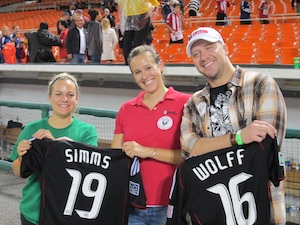
From left, Brooke Darlington, Eliza Yoder and Brian Jones at the second annual United Night Out. (Photo by Kevin Majoros)
About 500 people from the LGBT community attended the second annual United Night Out event on Sept. 21 at RFK Stadium as the D.C. United ended up in a 2-2 tie with Chivas USA.
The event was hosted by the Federal Triangles Soccer Club and was part of the Night Out series presented by Team D.C. The D.C. Different Drummers performed before the game and the national anthem was sung by Justin Richey of the Gay Men’s Chorus of Washington.
Members of SMYAL and other groups were also included in the pre-game flag unveiling. After the game, D.C. United players Clyde Simms and Josh Wolff, donated their game jerseys to two United Night Out raffle winners. Simms and Wolff are featured in the “It Gets Better” video put out by D.C. United. They are the first Major League Soccer team to support the anti-bullying campaign. The video was recently broadcast on the cable sports channel, Comcast SportsNet. For more information on the event and to view the video, go to unitednightout.com.
All the fall LGBT sports leagues have kicked off their season play, but there’s always an opportunity to submit your name to a substitute player list. Among the teams offering a sub list are the Capital Area Rainbowlers Association, League of Women Bowlers and the Capital Tennis Association.
There are plenty of LGBT sports groups offering individual participation for the coming months. The D.C. IceBreakers will be hosting a skate and social at the Kettler Capitals Iceplex on Oct. 16 at 8:15 p.m. The cost to skate is $8 and skate rental is $3. All skill levels are welcome. After skating, the group heads to a local pub for a social hour. Details are at dcicebreakers.com.
Ski-Bums have announced their 2012 event offerings for skiing and snowboarding. Upcoming trips include Salt Lake City, Beaver Creek, Sun Valley, Killington and more. Information on membership is at ski-bums.org.
Charm City Volleyball is hosting Wednesday social play at the Mt. Royal Recreation Center in Baltimore every week from 6:30-9:30 p.m. Teams are formed by 7 p.m. and all skill levels are welcome. Cost is $3 per session. They also host Sunday competitive and scrimmage play/clinics at the Volleyball House in Elkridge, Md., every week from 10 a.m. to 1 p.m. Cost is $7 per session and North American Gay Volleyball Association teams are welcome to play. More information is at volleybaltimore.org.
The Adventuring Outdoors Group will be hiking Sunday at Difficult Run in Great Falls, Va. The hike will start from the parking lot on Old Georgetown Pike and head along the cascades of Difficult Run as it flows toward the Potomac. Then they’ll head upstream past the old George Washington canal ruins to lunch at one of the overlooks at Great Falls near the Visitors Center. After lunch they will continue back through the abandoned Potomac River channels via Old Carriage road and Swamp Trail. Total length of the hike is about 5 miles with an elevation gain of 250 feet. Bring lunch, beverages, bug spray around $5 for trip and transportation fees. The group will meet by the station attendant’s kiosk inside the Rosslyn Metro Station. The group can be found online at adventuring.org.
Rainbow Climbing D.C. can usually be found at the local rock climbing venues on Tuesday and Thursday nights and sometimes on weekends. Check out their Facebook page under Rainbow Climbing to see if they will be at Earth Treks in Rockville or Sportrock in Alexandria.
The D.C. Front Runners, celebrating their 30th anniversary this year, continue with their Tuesday and Thursday evening runs along with their Saturday and Sunday morning runs. The group meets at 23rd and P Streets except for Tuesdays when they meet at Union Station. The runners also host walks at the same locations on Tuesday evenings and Saturday mornings. Times are listed at dcfrontrunners.org.


The Capital Pride Alliance presented the 2026 Capital Pride Honors at “The Audacity Brunch: In Full Fuchsia” at the Four Seasons Hotel Washington, D.C. on Sunday, June 7.
(Washington Blade photos by Landon Shackelford)


Out & About
Congressional Cemetery hosts Gays & Graves
Daylong Pride celebration blends history, remembrance, art and community

Historic Congressional Cemetery will host the second annual “Gays & Graves: A Big Gay Festival” on Sunday, June 14 at 11 a.m.
The event will feature pioneering activist Randy Wicker, the Gay Men’s Chorus of Washington, and new public art installations and programs celebrating LGBTQ+ history. Gays & Graves is an official partner event of Capital Pride 2026.
This event is a daylong Pride celebration blending history, remembrance, art and community. Visitors can shop from LGBTQ+ and allied artists and makers, experience performances and interactive installations, and engage with programs exploring LGBTQ+ history and lived experience.
For more details, visit the cemetery’s website.
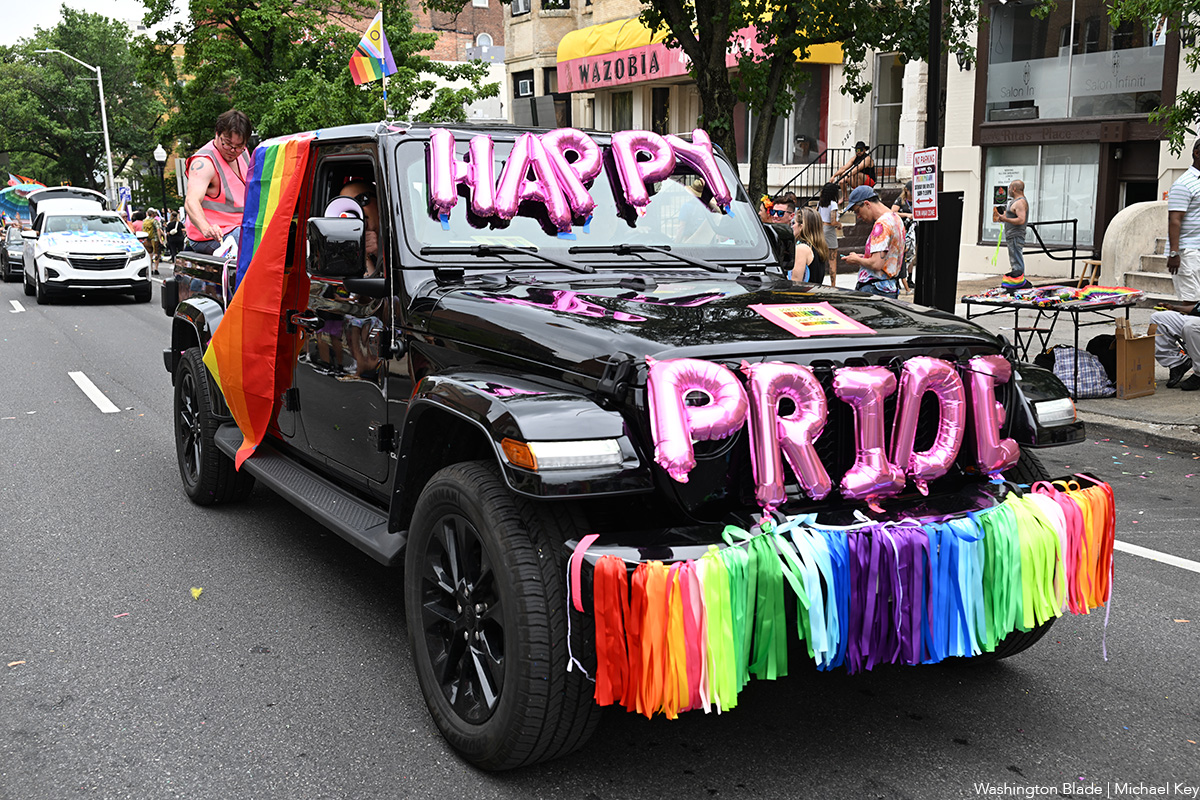
Baltimore Pride is underway, taking place from June 8-14.
The Pride Parade will be on Saturday, June 13 at 12 p.m. at Charles Street & North Avenue, followed by the Pride Block Party at 1 p.m. at Druid Hill Park. And then the Pride Festival will be held on Sunday, June 14 at 12 p.m. at Druid Hill Park.
There will be an array of additional events including: a fashion show, a “Suits and Sneakers” reception and a 5k race, among many other events.
For more details, visit Baltimore Pride’s website.

PHOTOS: The Audacity Brunch

D.C. Council approves expanded grant funding for Mayor’s Office of LGBTQ Affairs

Congressional Cemetery hosts Gays & Graves

Baltimore Pride is here

Calendar: June 12-18

Hundreds of thousands expected to attend D.C. Pride events

PHOTOS: Pride Run

Queen Jean is Tony’s first transgender winner

EXCLUSIVE: Pelosi reflects on four decades of LGBTQ advocacy