National
Will Senate address bullying in education reform?
Franken, Casey may offer pro-LGBT amendments
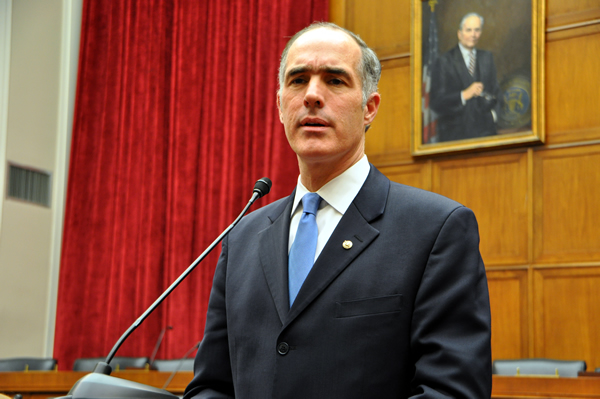
Sen. Bob Casey (D-Pa.) (Blade photo by Michael Key)
A Senate committee markup this week could present an opportunity to include LGBT anti-bullying measures as part of larger education reform legislation — although whether the panel will act remains unclear.
Starting Wednesday, the Senate Health, Education, Labor & Pensions Committee will consider amendments and vote on legislation to reauthorize the Elementary & Secondary Education Act, an extensive law that helps fund primary and secondary schools throughout the country.
President Obama has identified reauthorization of the law, which was last updated in 2001 during the Bush administration with the No Child Left Behind Act, as among his priorities for this year. At the onset of the 112th Congress, passage of education reform — and possibly LGBT-inclusive legislation — was seen as an area where where a Republican-controlled House and a Democratic-controlled Senate could come to an agreement to take action.
LGBT advocates had been pushing for the inclusion of two-LGBT bills as part of education reform — the Student Non-Discriminination Act and the Safe Schools Improvement Act.
The Student Non-Discrimination Act, or SNDA, is sponsored by Sen. Al Franken (D-Minn.) in the Senate. It establishes sexual orientation and gender identity in schools as protected classes. The bill prohibits school activities receiving federal financial assistance from discriminating against LGBT students. Discrimination also includes harassment of a student.
The Safe Schools Improvement Act, or SSIA, is sponsored by Sen. Bob Casey (D-Pa.) in the Senate. It would require schools receiving federal funds to adopt codes of conduct that prohibit bullying and harassment, including on the basis of sexual orientation and gender identity. The legislation would also require states to report data on bullying and harassment to the Department of Education.
Whether Franken or Casey will offer amendments based on these bills during the Senate HELP committee’s markup remains to be seen. The offices of both senators were non-committal on plans to offer them during the markup process.
Alexandra Fetissoff, a Franken spokesperson, said the senator is committed to SNDA but has yet to make a decision on the best opportunity to introduce the legislation before the Senate.
“He’s currently weighing his options — offering the bill to the committee or as an amendment when ESEA comes to the floor,” Fetissoff said. “He’s hopeful that SNDA will pass as he firmly believes it’s the right thing to do and he believes his colleagues will come to realize that.”
Should Franken offer the amendment during the committee markup process, he should have no problem getting the measure through the committee. All 12 Democrats on the panel are co-sponsors of the bill, which should give it majority support for passage. The legislation has no Republican co-sponsors.
April Mellody, a Casey spokesperson, similarly said plans aren’t yet settled on whether or not her boss will introduce SSIA as an amendment during the markup. She said Casey is “currently working with the other members regarding the amendment process.”
But Mellody said language in the chairman’s mark for the base bill already addresses bullying. Under a provision called Successful, Safe and Healthy Schools, schools receiving grants under the program must have student conduct policies that prohibit bullying and harassment, a key principle of SSIA.
Mellody said Casey is “pleased” with the provision, but would like to see language with enumerated categories that is explicitly LGBT-inclusive.
“Sen. Casey believes those policies should also include specific characteristics, including sexual orientation and gender identity, among others, as protected categories,” Mellody said.
Should Casey decide to offer SSIA as an amendment during committee, he could have more difficulty than Franken would if he offered up SNDA. Of the 12 Democrats on the panel, 10 are co-sponsors. Sens. Michael Bennett (D-Colo.) and Jeff Bingaman (D-N.M.) aren’t co-sponsors of the bill.
On the Republican side, Sen. Mark Kirk (R-Ill.) is an original co-sponsor of the bill, bringing the total number of co-sponsors to 11. That could be short of the 12 votes needed for passage if the bill comes up during committee.
However, given that Bingaman and Bennett are co-sponsors for SNDA and voted in favor of “Don’t Ask, Don’t Tell” repeal last year, their support for SSIA is likely should the measure come up in committee.
Michael Cole-Schwartz, spokesperson for the Human Rights Campaign, said plans remain “up in the air” over whether SNDA or SSIA will come up during the committee markup.
“We don’t know how this is going to turn out,” Cole-Schwartz said. “Certainly, we’ve been advocating on the Hill very strenuously for both of these provisions into the reauthorization, working with our allies in Sen. Casey’s office and Sen. Franken’s office.”
Cole-Schwartz said “it’s poignant” the markup would take place at the same time that the bullying of gay students who committed suicide has been in the news and around the same time as Spirit Day. On Thursday, millions of Americans are expected to wear purple as a sign of support for LGBT youth and to speak out against bullying.
“I think the Senate has a great opportunity to take advantage of this moment that we’re in and really do something to improve the lives of these young people,” Cole-Schwartz said.
If Franken and Casey were to move forward with these amendments, they would be doing so without explicit backing from the Obama administration. President Obama has yet to endorse either SNDA or SSIA.
Shin Inouye, a White House spokesperson, said the administration continues to support the goals of the bills, but stopped short of offering explicit support for them.
“We support the goals of both of these efforts,” Inouye said. “As the Elementary and Secondary Education Act is being considered, we look forward to working with Congress to ensure that all students are safe and healthy and can learn in environments free from discrimination, bullying and harassment.”
UPDATE: An LGBT rights advocate, who spoke on condition of anonymity, said Senate HELP Committee Chair Tom Harkin (D-Iowa) is the “obstacle” in including SNDA and SSIA in the education reform markup.
The advocate said Harkin isn’t opposed to the bills, but wants “a clean markup process” so education reform “can sail through” without opposition. Harkin co-sponsors both SSIA and SNDA.
“They want clean markup processes so that their bills can go through without opposition,” the advocate said. “So there’s kind of a dance and negotiation going on.”
The anonymous advocate said Franken and Casey are “really trying to negotiate their way” to include their bills in the committee markup, but no decision has yet made on whether they’ll offer those amendments.
ADDITIONAL UPDATE: The committee markup process has been halted after objections from Republican senators. In committee, Harkin said he expects the panel to reconvene either in the evening on Wednesday or early Thursday.
A Harkin spokesperson, also speaking anonymously, responded to the assertion that the senator is an “obstacle” in including SSIA and SNDA in the committee markup by saying Harkin has “long supported efforts to ensure that all children feel safe and secure in our schools.”
“He believes that no student should be forced to endure harassment, discrimination, violence, bullying or intimidation for any reason, including their sexual orientation or gender identity,” the spokesperson said. “Chairman Harkin is an original co-sponsor of the Student Non-Discrimination Act and is committed to working with Sen. Franken, author of SNDA, and Sen. Casey, author of the Safe Schools Improvement Act, to ensure all students are given the opportunity to succeed free from harassment or discrimination.”



Puerto Rico
The ‘X’ returns to court
1st Circuit hears case over legal recognition of nonbinary Puerto Ricans

Eight months ago, I wrote about this issue at a time when it had not yet reached the judicial level it faces today. Back then, the conversation moved through administrative decisions, public debate, and political resistance. It was unresolved, but it had not yet reached this point.
That has now changed.
Lambda Legal appeared before the 1st U.S. Court of Appeals in Boston, urging the court to uphold a lower court ruling that requires the government of Puerto Rico to issue birth certificates that accurately reflect the identities of nonbinary individuals. The appeal follows a district court decision that found the denial of such recognition to be a violation of the U.S. Constitution.
This marks a turning point. The issue is no longer theoretical. A court has already determined that unequal treatment exists.
The argument presented by the plaintiffs is grounded in Puerto Rico’s own legal framework. Identity birth certificates are not static historical records. They are functional documents used in everyday life. They are required to access employment, education, and essential services. Their purpose is practical, not symbolic.
Within that framework, the exclusion of nonbinary individuals does not stem from a legal limitation. Puerto Rico already allows gender marker corrections on birth certificates for transgender individuals under the precedent established in Arroyo Gonzalez v. Rosselló Nevares. In addition, the current Civil Code recognizes the existence of identity documents that reflect a person’s lived identity beyond the original birth record.
The issue lies in how the law is applied.
Recognition is granted within specific categories, while those who do not identify within that binary structure remain excluded. That exclusion is now at the center of this case.
Lambda Legal’s position is straightforward. Requiring individuals to carry documents that do not reflect who they are forces them into misrepresentation in essential aspects of daily life. This creates practical barriers, exposes them to scrutiny, and places them in a constant state of vulnerability.
The plaintiffs, who were born in Puerto Rico, have made clear that access to accurate identification is not symbolic. It is a basic condition for moving through the world without contradiction imposed by the state.
The fact that this case is now being addressed in the federal court system adds another layer of significance. This is not a pending policy discussion or a legislative proposal. It is a constitutional question. The analysis is not about political preference, but about rights and equal protection under the law.
This case does not exist in isolation.
It unfolds within a broader context in which debates over identity and rights have increasingly been shaped by the growing influence of conservative perspectives in public policy, both in the United States and in Puerto Rico. At the local level, this influence has been reflected in legislative discussions where religious arguments have begun to intersect with decisions that should be grounded in constitutional principles. That intersection creates tension around the separation of church and state and has direct consequences for access to rights.
Recognizing this context is not an attack on faith or religious practice. It is an acknowledgment that when certain perspectives move into the realm of public authority, they can shape outcomes that affect specific communities.
From within Puerto Rico, this is not a distant debate. It is a lived reality. It is present in the difficulty of presenting identification that does not match one’s identity, and in the consequences that follow in workplaces, schools, and government spaces.
The progression of this case introduces the possibility of change within the applicable legal framework. Not because it resolves every tension surrounding the issue, but because it establishes a legal examination of a practice that has long operated under exclusion.
Eight months ago, the conversation centered on ongoing developments. Today, there is already a judicial finding that identifies a violation of rights. What remains is whether that finding will be upheld on appeal.
That process does not guarantee an immediate outcome, but it shifts the ground.
The debate is no longer theoretical.
It is now before the courts.
National
LGBTQ community explores arming up during heated political times
Interest in gun ownership has increased since Donald Trump returned to office

By JOHN-JOHN WILLIAMS IV | As the child of a father who hunted, Vera Snively shied away from firearms, influenced by her mother’s aversion to guns.
Now, the 18-year-old Westminster electrician goes to the shooting range at least once a month. She owns a rifle and a shotgun, and plans to get a handgun when she turns 21.
“I want to be able to defend my community, especially being in political spaces and queer spaces,” said Snively, a trans woman. “It’s just having that extra line of safety, having that extra peace of mind would be important to me.”
Snively is among what some say is a growing number of LGBTQ gun owners across the United States. Gun rights organizations and advocates say interest in gun ownership appears to have increased in that community since President Donald Trump returned to the White House last year.
The rest of this article can be read on the Baltimore Banner’s website.
Tennessee
Tenn. lawmakers pass transgender “watch list” bill
State Senate to consider measure on Wednesday
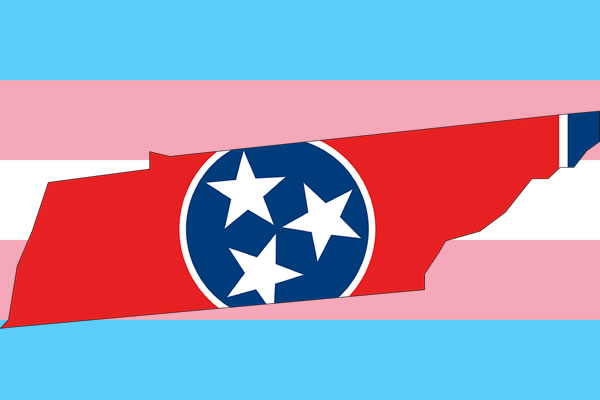
The Tennessee House of Representatives passed a bill last week to create a transgender “watch list” that also pushes detransition medical treatment. The state Senate will consider it on Wednesday.
House Bill 754/State Bill 676 has been deemed “ugly” by LGBTQ advocates and criticized by healthcare information litigators as a major privacy concern.
The bill would require “gender clinics accepting funds from this state to perform gender transition procedures to also perform detransition procedures; requires insurance entities providing coverage of gender transition procedures to also cover detransition procedures; requires certain gender clinics and insurance entities to report information regarding detransition procedures to the department of health.”
It would require that any gender-affirming care-providing clinics share the date, age, and sex of patients; any drugs prescribed (dosage, frequency, duration, and method administered); the state and county; the name, contact information, and medical specialty of the healthcare professional who prescribed the treatment; and any past medical history related to “neurological, behavioral, or mental health conditions.” It would also mandate additional information if surgical intervention is prescribed, including details on which healthcare professional made a referral and when.
HB 0754 would also require the state to produce a “comprehensive annual statistical report,” with all collected data shared with the heads of the legislature and the legislative librarian, and eventually published online for public access.
The bill also reframes detransitioning as a major focus of gender-affirming healthcare — despite studies showing that the number of trans people who detransition is statistically quite low, around 13 percent, and is often the result of external pressures (such as discrimination or family) rather than an issue with their gender identity.
This legislation stands in sharp contrast to federal protections restricting what healthcare information can be shared. In 1996, Congress passed the Health Insurance Portability and Accountability Act, or HIPAA, requiring protections for all “individually identifiable health information,” including medical records, conversations, billing information, and other patient data.
Margaret Riley, professor of law, public health sciences, and public policy at the University of Virginia, has written about similar efforts at the federal level, noting the Trump-Vance administration’s push to subpoena multiple hospitals’ records of gender-affirming care for trans patients despite no claims — or proof — that a crime was committed.
It has “sown fear and concern, both among people whose information is sought and among the doctors and other providers who offer such care. Some health providers have reportedly decided to no longer provide gender-affirming care to minors as a result of the inquiries, even in states where that care is legal.” She wrote in an article on the Conversation, where she goes further, pointing out that the push, mostly from conservative members of the government, are pushing extracting this private information “while giving no inkling of any alleged crimes that may have been committed.”
State Rep. Jeremy Faison (R-Cosby), the bill’s sponsor, said in a press conference two weeks ago that he has met dozens of individuals who sought to transition genders and ultimately detransitioned. In committee, an individual testified in support of the bill, claiming that while insurance paid for gender-affirming care, detransition care was not covered.
“I believe that we as a society are going to look back on this time that really burst out in 2014 and think, ‘Dear God, What were we thinking? This was as dumb as frontal lobotomies,’” Faison said of gender-affirming care. “I think we’re going to look back on society one day and think that.”
Jennifer Levi, GLAD Law’s senior director of Transgender and Queer Rights, shared with PBS last year that legislation like this changes the entire concept of HIPAA rights for trans Americans in ways that are invasive and unnecessary.
“It turns doctor-patient confidentiality into government surveillance,” Levi said, later emphasizing this will cause fewer people to seek out the care that they need. “It’s chilling.”
The Washington Blade reached out to the American Civil Liberties Union of Tennessee, which shared this statement from Executive Director Miriam Nemeth:
“HB 754/SB 676 continues the ugly legacy of Tennessee legislators’ attacks on the lives of transgender Tennesseans. Most Tennesseans, regardless of political views, oppose government databases tracking medical decisions made between patients and their doctors. The same should be true here. The state does not threaten to end the livelihood of doctors and fine them $150,000 for safeguarding the sensitive information of people with diabetes, depression, cancer, or other conditions. Trans people and intersex people deserve the same safety, privacy, and equal treatment under the law as everyone else.”

Calendar: April 10-16

BLUF leather social set for April 10 in Rehoboth

Celebrations of life planned for Sean Bartel

The ‘X’ returns to court

LGBTQ community explores arming up during heated political times

D.C. is the place for the Democratic Socialists of America

Trump budget would codify expanded global gag rule

Police mental health struggles gain growing attention

Man faces first S.C. ‘hate intimidation’ charge

Cuba under pressure and without answers
-

 Opinions5 days ago
D.C. is the place for the Democratic Socialists of America
-
The White House5 days ago
Trump budget would codify expanded global gag rule
-
South Carolina5 days ago
Man faces first S.C. ‘hate intimidation’ charge
-
District of Columbia5 days ago
Police mental health struggles gain growing attention