Opinions
Booze tax hike bombs, food truck tax finalized
Graham’s budget idea unpopular, returning focus to later bar hours

D.C. Council member Jim Graham’s renegade proposal for a near-quadrupling or more of the District excise tax on alcohol seems to have enjoyed a shelf life roughly equivalent to that of a bottle of vodka during happy hour at a gay bar.
Graham had schemed the tax increase idea as a replacement revenue source to justify his ill-advised opposition to Mayor Vincent Gray’s FY 2013 budget proposal to generate additional sales tax revenue resulting from a modest one-hour extension in the maximum allowable alcohol service time at the city’s restaurants, bars and hotels. The additional funds are needed to eliminate a projected $172 million deficit in government spending and balance the city’s budget.
Washington Post city hall reporter Tim Craig shot out a Twitter message last week declaring that Graham’s proposal was all but dead. “It appears it took less than a day for hospitality industry to severely undermine, if not already kill, proposed booze tax,” Craig tweeted.
The news followed release of a media advisory by D.C. Council member Michael A. Brown, a member of the Council committee overseeing alcoholic beverage issues chaired by Graham, clarifying that his vote approving the committee report deferring to the full Council consideration of Graham’s alcohol tax recommendation did not represent an endorsement of the tax hike. Brown indicated that he only intended to allow it to proceed for further review and discussion.
Seats on the bandwagon of opposition to Graham’s proposed alcohol tax increase were growing scarce as both Council Chair Kwame Brown and Council member Jack Evans, who chairs the Finance and Revenue Committee that reviews tax proposals, restated their reluctance to further raise taxes – a sentiment shared by colleagues.
Mayor Gray took to the airwaves affirming his proposal to extend alcohol service and pledging to push for its passage. The mayor recently told Blade reporter Lou Chibbaro Jr., “there are those who say let’s make this a kind of city that has a global and international feel.”
Support for the proposal among gay bar owners is nearly universal, mirroring similar endorsement by all hospitality establishments – including those not planning to remain open later. Hospitality and tourism organizations, and the D.C. Chamber of Commerce, have urged the Council to approve the service extension option.
With the focus now shifting to the looming dilemma of how to balance the District budget without additional sales tax revenues generated by extended alcohol service, Council member David Catania publicly suggested that the mayor’s proposal could be implemented “on a temporary basis and see what the ramifications are,” adding that if the negative consequences feared by opponents “come to fruition, we could revisit” the policy.
Street food tax parity
Last week the D.C. Council approved legislation to require mobile food vendors to collect and pay the standard 10 percent sales tax assessed on restaurants. Beginning Oct. 1, food trucks and other mobile food vendors with sales greater than $3,750 per quarter will pay the regular sales tax. Any vendors with sales less than the quarterly threshold will pay the current baseline flat fee of $375 for the period.
The new sales tax policy, supported by restaurants as a matter of fairness in creating a “level playing field” between mobile and inline businesses, was initially opposed by the food truck industry. The D.C. Food Truck Association (DCFTA) later supported the tax proposal when unsuccessful in leveraging its imposition for expedited action on pending operating regulations and once minor administrative issues were resolved.
The effect on street food pricing will likely vary, with some vendors expected to simply add the tax to sales while others increase prices to maintain “rounded dollar” amounts for change-making convenience.
Unresolved are pending new regulations governing food truck operation, use of public space and allowable street concentration. The city is currently reviewing the substantive comments filed in response to proposed regulations during a recent and second round of public input.
It is anticipated that the draft regulations will require further revision in order to comply with a 2009 D.C. law stipulating that all mobile vendors, when selling on public streets, operate from designated spots assigned for their use. The likely challenge will be determining how specified locations are assigned and shared among truck vendors.
Mark Lee is a local small business manager and long-time community business advocate. Reach him at [email protected].

Opinions
Solidarity beyond the parade: the actual cost of Pride
Chandreyi Guharay spoke with activists at World Pride in Amsterdam

Editor’s note: Chandreyi Guharay is the global advocacy officer for Walking the Talk. She spoke with queer activists from around the world at World Pride 2026 in Amsterdam about the impact of shrinking aid.
Queer activists and Dutch NGOs gathered at Amsterdam City Hall as part of “Building Bridges,” a World Pride 2026 visitor program for LGBTIQ+ community leaders run by the Dutch Ministry of Foreign Affairs and COC Nederland.
Pride is every day, everywhere
Although we were in Amsterdam, the work back home never stops for activists. Enkhmaa Enkhbold, executive director of the LGBT Center in Mongolia, excused themself a couple of times to check their phone.
“We’re organizing Pride in Mongolia, and it’s happening in two weeks,” they explained.
Among many other things, their organization drives policy advocacy and movement building for LGBTIQ+ rights, and helps queer people facing persecution find a safe way out.
John Mathenge Mukaburu is also doing the daily work of resistance. His organization HOYMAS in Kenya runs clinics across three counties, serving almost 20,000 patients from key populations, including gay and bisexual men and sex workers. In Nigeria, Cosmas Osinachi Ihenacho-Herbert, program director at Obodo, shared how they are changing the narrative by elevating the leading role queer people play in shaping art and culture across the country and the African continent.
And in Vietnam, Nguyễn Diệu Anh co-founded Yêu-nữ (Women Living Wicked), a sapphic collective that hosts regular gatherings where women have a place to find joy and each other. Whether it’s healthcare, protection, culture or belonging, these efforts keep communities alive. Still, they have never been properly funded.
Less funding, more backlash
As an advocate for gender equality and a queer activist myself, I know how much LGBTIQ+ movements do with so little. Even before the dismantling of the U.S. Agency for International Development and the funding cuts across other major donor countries, just $.04 cents of every $100 in Official Development Assistance (ODA) went to queer communities. Now even that is rapidly disappearing. And what little there is doesn’t land evenly. As trans activist Marcela Morales from Asociación Lambda in Guatemala emphasized: “Most of the funding goes to gay men’s and trans women’s organizations. Very little reaches organizations of trans men and LBQ women.”
But this isn’t just about money. The same politics driving these cuts are shrinking civic space everywhere. Anti-rights actors are growing richer and bolder, finding new ways to target LGBTIQ+ people, as my colleague Jordan Dittmar has written. Queer and feminist activists defend the right to protest, to speak and love freely, to put care for people and the planet at the center and to decide over our own bodies and lives. And yet our rights are always the easiest target, and our funding the first to be cut. We are the canary in the coal mine, and everyone else’s freedoms are never far behind. That should worry all of us.
A lifeline built on solidarity
Bessy Ferrera was a trans activist from Honduras who fought for the rights of trans people, sex workers and people living with HIV, and whose life was violently cut short in 2019. A year later, Hivos established the Bessy Ferrera Emergency Fund in her name. It offers fast, practical help to LGBTIQ+ activists facing threats because of their work, from medical and legal costs to security and relocation. Since 2022, it has helped nearly 100 people and organizations around the world.
When I mentioned the fund to Ribal Maatouk, national chairperson of the LGBTIQ+ Task Force in Lebanon, he told me he already knew it well. Through Israel’s devastating invasion and war, the Task Force, alongside its member organizations, notably specialized local LGBTIQ+ CSOs, have continued to provide humanitarian support to queer people.
“From all the funding initiatives, the Bessy Ferrera Fund was the most easily accessible for our community, allowing for a faster deployment of emergency support than other organizations,” he said. “I need to give credit where it’s due.”
Hope for the long haul
Emergency funds provide a vital lifeline during a crisis, but activists and their movements also need lasting support. For Cosmas, the lesson is hopeful: governments change with elections, and funding changes with them, but movements can outlast both. For activists in the Global South, that has often been the reality.
“Maybe the question is not how we survive this crisis,” he said, “But how we build a movement infrastructure that’s strong enough for us to thrive through whatever comes next.”
He also sees an opening: with the U.S. stepping back, the Netherlands could once again be the champion of gender equality and LGBTIQ+ rights it used to be. With a new Dutch government in place, there are signs of greater political will, and now is the moment to turn it into funding.
What comes after the parade
The activists I met have been holding their communities together, standing alongside feminist and queer movements everywhere to defend rights and freedoms for all. As we often say in the gender equality movement, imagine what they could do with the right support. Solidarity beyond the parade means that governments, funders and allies invest in queer aspirations.
Chandreyi Guharay is a Nicaraguan-Indian gender justice specialist by training, and — in Sara Ahmed’s words — a feminist killjoy by political choice. She’s the Global Advocacy Officer at Walking the Talk/Hivos, weaving together strategic advocacy, policy analysis and coalition-building for gender equality financing. She’s previously worked with Oxfam, Plan International, She Decides, CIVICUS, and Share-Net on research, organizational development and political education. Outside of work, you’ll find her co-conspiring with Feministas en Holanda, a decolonial grassroots collective of Latin American people in the Netherlands, where she is a community organizer around anti-racist and migrant justice struggles.
Opinions
Trump, Netanyahu, and Putin are all war criminals
We are living in a world of chaos as a result
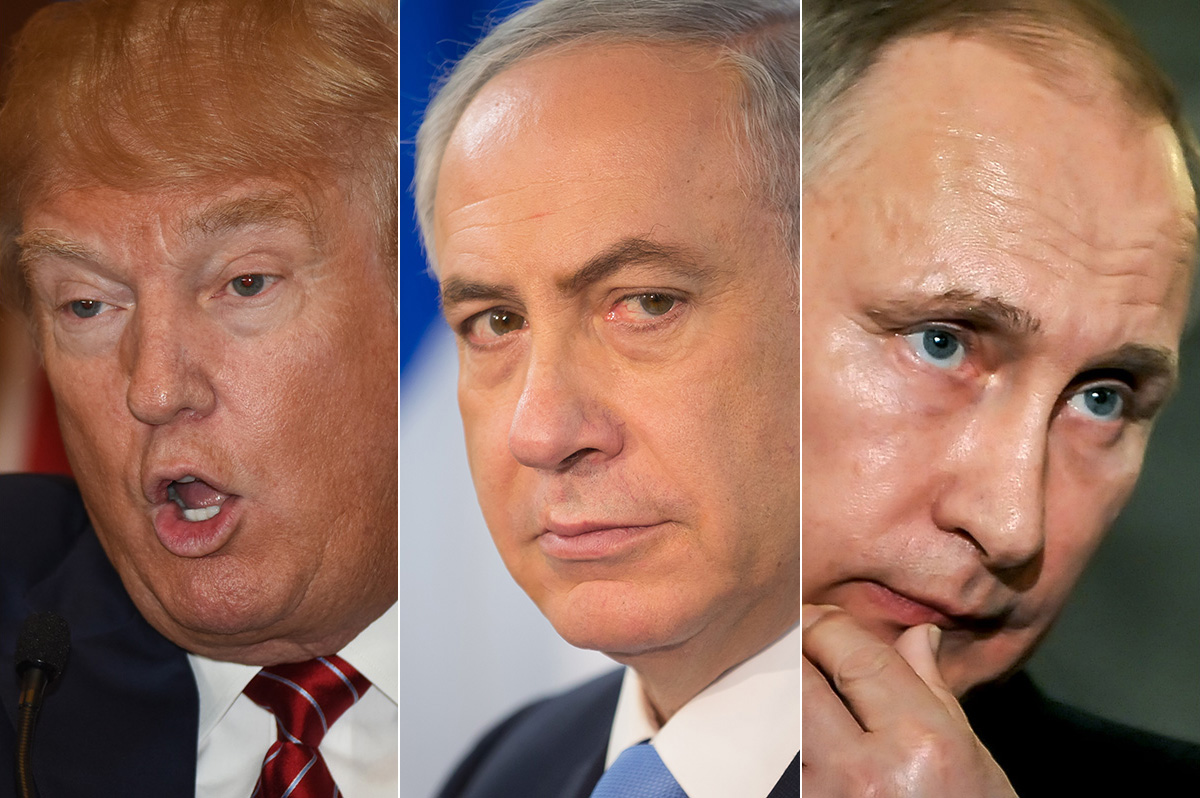
Today there are war criminals leading three major governments. President Trump here in the United States, Benjamin Netanyahu in Israel, and Vladimir Putin in Russia. The world would be a better place if they were thrown into a jail cell together, and the key tossed away.
We are living in a world of chaos. Although these three are not responsible for all of it, they have a major role. All three are carrying out wars that they can’t win. Wars that should have never been started. In the process they are not only killing their stated enemies, but they’re also causing the deaths of their own people.
Here in the United States, we have a felon in the White House, who has done nothing but create chaos in the world since he took office. He has broken every promise he made to get elected, and while many of us knew they were all lies, he won anyway. He promised lower rents, lower mortgage rates, lower inflation, lower gas prices, lower grocery prices, and importantly, no new wars. He has accomplished the exact opposite in each of those areas. He began a war with Iran and started by bombing a school, mistake or not, killing innocent children. This after declaring war on immigrants here at home using his ICE Gestapo. He apparently thinks if he creates chaos, and then gets things back to close to where they were before he acted, he can claim victory. But even that seems out of his reach.
Then there is Prime Minister Netanyahu in Israel. His actions have made things worse not only for his enemies, but for Israelis at home, and Jews around the world. He began a war against Iran that he can’t win. He has committed war crimes against the Palestinian people in Gaza, and the West Bank, and by his actions brought out more anti-Semitism around the world. For me personally, he has made it more difficult to explain to people when I say I am a Zionist, it means I support the existence of the State of Israel, not its war criminal leader, and his government. He should have heeded what President Biden said to him after the Oct. 7 attack on Israel by Hamas. While retribution and getting back the hostages Hamas took was crucial, Biden counseled not to go overboard in response, like the United States did after 9/11. Instead, Netanyahu has killed thousands of Palestinian women and children, and has not made Israel much safer. He then began the war with Iran, and sent troops to fight in Lebanon. Yes, the Iranian government funds Hezbollah and Hamas, but one must ask if anything is better after Netanyahu’s actions. Israelis continue living in a state of active war.
Then there is Putin in Russia. He believed he could attack Ukraine and walk away with pieces of their country, maybe even all of it. Instead, he has Russia embroiled in a four-year war, killing thousands of Ukrainians, including many women and children, destroying parts of their country, and losing thousands of his own troops in a war he can’t win. His own people are suffering, and now, four years later, Ukraine has shown it still has the ability to attack Moscow. All three of these men have managed to show the weaknesses of their own countries.
In his effort to bluster through his many failures, Trump has destroyed relationships with our allies. It will take years, if ever, for them to trust the United States again. He invaded Venezuela and stole their oil, is starving Cuba, and created unease with Canada and Mexico on our own borders. He thinks this makes him look like a strongman, when it really shows all of his weaknesses. People should remember the treaty he abrogated with Canada and Mexico, was one he negotiated in his first term. Now he invites Chinese President, Xi, to the United States, and gives him the same red-carpet welcome he previously gave to Putin in Alaska, and in both cases, received nothing in return. He tries to keep the press he doesn’t like from having access to him.
All three are facing crucial elections that could severely impact their futures. Only Putin, a true dictator, is assured of winning because he controls the process. Trump is trying to emulate him, to keep from losing the Nov. 3, mid-term elections. Thankfully the courts are trying to stop him. Netanyahu could face being thrown out on Oct. 27, if Israelis do the right thing.
Again, I truly believe putting the three of them in a jail cell together would make our troubled world a little safer, and a much better place.
Peter Rosenstein is a longtime LGBTQ rights and Democratic Party activist.
Commentary
Center Arts Gallery celebrates 10 years with reception, auction
Oct. 17 fundraiser to feature jazz combo, artwork created on site

Ten years ago, I had a vision: to create a dedicated space within The DC LGBTQ+ Community Center for local LGBTQ+ artists to share their creativity in a community space conceived specifically for them. That vision became the Center Arts Gallery. Over the past decade, the Center Arts Gallery has grown into a true home for our LGBTQ+ siblings, a place illuminating our joy, resistance, and resilience through the power of art.
Art is so much more than decoration. It can be a powerful protest, a keeper of memories, a testament to survival, and a vivid reminder that our lived experiences deserve to be seen, heard, and deeply valued. When we created the Center Arts Gallery, our goal was to remove barriers so that queer artists could feel welcomed, supported, and completely free to express themselves. Now, as we mark the incredible 10th anniversary of Center Arts, love truly comes full circle as many of those same amazing artists and creatives are giving back by donating their artwork for a special benefit auction.
On Saturday, Oct. 17, 2026, The DC LGBTQ+ Community Center will host our annual Fall Reception and Art Auction, celebrating 10 years of Center Arts Gallery at 1827 Wiltberger St., N.W., with an ambitious fundraising target of $25,000.
Appropriately themed “The Art of Belonging,” this milestone celebration will bring our community together with intention, uniting multiple forms of local queer creativity under one roof. The evening promises to be an unforgettable experience.
We are thrilled to have the celebration hosted by award-winning spoken word artist, poet, and educator Charity Blackwell. Attendees will enjoy smooth jazz selections performed by 2nd Independence — a jazz combo from the DC Different Drummers — alongside delicious heavy hors d’oeuvres provided by Shaw Tavern and exquisite dessert offerings by celebrity chef Patrick Vanas.
Throughout the night artwork will be created live on site, joining the online pieces generously donated by local artists.
Most importantly, every dollar raised during the reception and auction goes directly toward sustaining The DC Center’s life-affirming programs and supportive services. From food assistance providing nourishing meals, the free food pantry, and behavioral health counseling, to trauma-informed case management, resource navigation, HIV/STI testing, and essential hygiene services like showers, laundry, and a clothing boutique, our doors remain open because
of community support. These funds also support our cyber lounge, mail and locker services, harm reduction supplies, and critical wellness programs.
To ensure that everyone in our community can fully participate, ASL interpretation will be provided during the event program. We offer flexible ways to join us: General Admission is free (currently at capacity), with custom signature cocktails, wine, and beer available for purchase.
For those looking for an elevated evening, our $75 VIP Experience includes early admission at 6 p.m., early online auction access, complimentary Champagne (6-7 p.m.), an intimate opportunity to mingle with participating artists, a special swag bag, plus an open beer and wine bar throughout the entire evening.
For 10 years, Center Arts Gallery has shown us that belonging is an art form we create together. As we look back on a decade of community and look forward to the future, I invite you to join us, support local queer artists, and invest in the essential programs that keep our community thriving. Let’s come together to ensure that The DC Center can continue to educate, empower, uplift, and connect us all for generations to come.
Kimberley Bush is executive director of The DC LGBTQ+ Community Center.

Solidarity beyond the parade: the actual cost of Pride

Physician: addiction doesn’t always look the way you think it does

Calendar: October 9-15

ICC unseals arrest warrants for Taliban officials accused of persecuting LGBTQ people, women

Bet Mishpachah participates in D.C. Oct. 7 commemoration ceremony

Alianza para la Inclusión fortalece la defensa de derechos LGBTQ en Centroamérica

The facts about Victory Fund’s investigation and the path forward

In Ga., 2 trans candidates believe voters are ready for them

Bessent says Trump chose him for his qualifications, not his sexuality

10 years later, we still can’t shake Barry Jenkins’s ‘Moonlight’
-

 Central America4 days ago
Alianza para la Inclusión fortalece la defensa de derechos LGBTQ en Centroamérica
-
Opinions4 days ago
The facts about Victory Fund’s investigation and the path forward
-
Georgia4 days ago
In Ga., 2 trans candidates believe voters are ready for them
-
Federal Government4 days ago
Bessent says Trump chose him for his qualifications, not his sexuality