a&e features
Holy spandex tights! It’s Batgirl!
Nearly 50 years later, Yvonne Craig reflects on ‘Batman,’ ‘Star Trek,’ Elvis and more
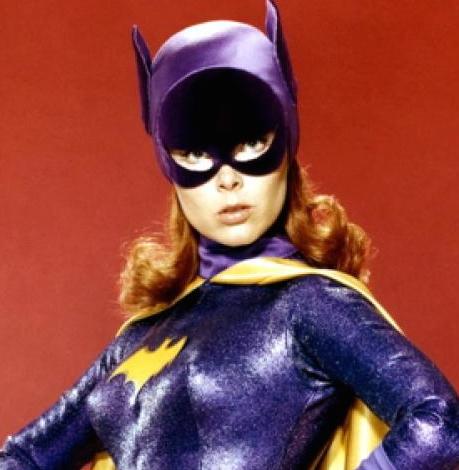
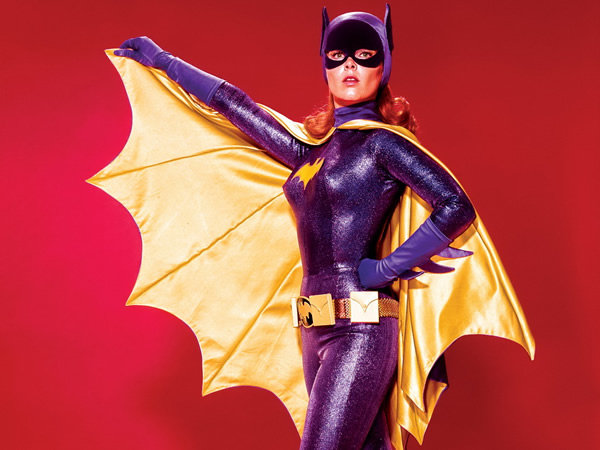
Yvonne Craig was brought on to play Batgirl in the show’s third season. (Photo courtesy Craig)
Sometimes indelible pop culture impressions are made in a very short time. Yvonne Craig played Batgirl for just one season — the third and final — of the 1966-’68 TV series “Batman,” yet it’s the role she’s best known for nearly 50 years later.
And although the character appeared once on the big screen (in the oft-derided 1997 movie “Batman & Robin” in which she was portrayed by Alicia Silverstone), it is Craig, by far, who is most identified with the role.
Craig, 77, was a steadily working actress throughout the 1960s and beyond racking up appearances on “Perry Mason,” “The Barbara Stanwyck Show,” “My Three Sons,” “The Many Loves of Dobie Gillis” and — donning head-to-toe green body paint — as Marta, an Orion slave girl, in the classic “Star Trek” episode “Whom Gods Destroy.” She also played opposite Elvis Presley in two feature films — “It Happened at the World’s Fair” (1963) and “Kissin’ Cousins” (1964). She was brought on “Batman” for the 1967-’68 season to play Commissioner Gordon’s librarian daughter Barbara whose alter ego Batgirl could be counted on to ward off villains with Batman (Adam West) and Robin (Burt Ward).
After years of legal wrangling, the series was finally released on DVD and Blu-ray last November. That was our initial peg for reaching out to Craig, but several delays including gall bladder surgery for the otherwise-healthy actress, pushed things back. We spoke to her by phone from her Los Angeles home two weeks ago. Quick to laugh and always ready to launch into a funny anecdote, Craig — who’s straight and happily married — was willing to indulge any inquiry. Her comments have been edited for length.
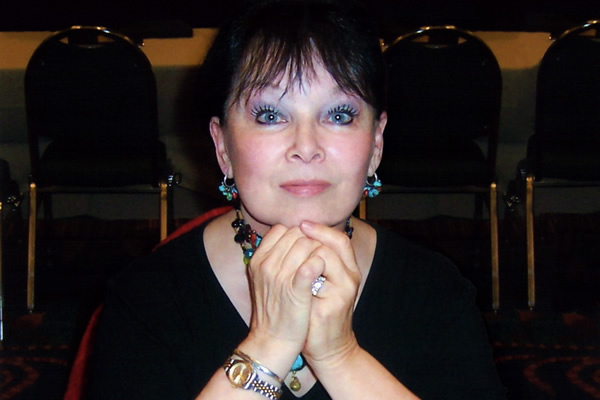
Yvonne Craig says she enjoys meeting fans though she has rarely watched ‘Batman’ or ‘Star Trek’ since their original broadcasts. (Photo courtesy Craig)
WASHINGTON BLADE: Have you lived most of your adult life in Los Angeles?
YVONNE CRAIG: Yes. We moved up to Nevada, to south Lake Tahoe, about three years ago and we moved back last year and I’m so grateful to be back. You can only look at so many trees and eventually you say, “Where’s the classical music? Where’s the ballet company? Where’s the art museum?” Well, they’re not there.
BLADE: Let’s start with “Star Trek.” Sci-fi fans in general are often so ardent and you had such a major role on one of the most famous episodes of the iconic original series yet I’m sure for you at the time, it was just another job. What’s it like when you meet fans and they assume you’re going to be a walking encyclopedia of “Star Trek” ephemera?
CRAIG: Well, it’s been lovely for me and I loved the part. I did a convention where a young woman came up to my room to walk me down to where I was supposed to do a Q&A and I said to her, “There are so many weird people here,” and she said, “We’re all weird, we’re all misfits and the reason we like this is because we can all get together and understand one another and it’s the only place we’re really accepted by our peers.” And I thought, “Wow, that’s really insightful.” … I’ve always liked the fans and they’ve been charming to me. It’s just when they come up and say to me, “Do you remember the third rock on the left in the such and such,” and I say to them, “You know what? I’ve only seen two ‘Star Treks.’ One was mine and the other was ‘The Trouble with Tribbles,’” you know, the furry little things. (I’m told) “Whom Gods Destroy” is the second most popular episode after “Trouble with Tribbles.”
BLADE: Was it hard to relax between takes with the green body paint?
CRAIG: No, but getting it off at night was a disaster. I started with a shower at the studio, then I had to go home and take an oil bath, then take another shower. I think if I were doing it today, I would have just slept very carefully somewhere at the studio.
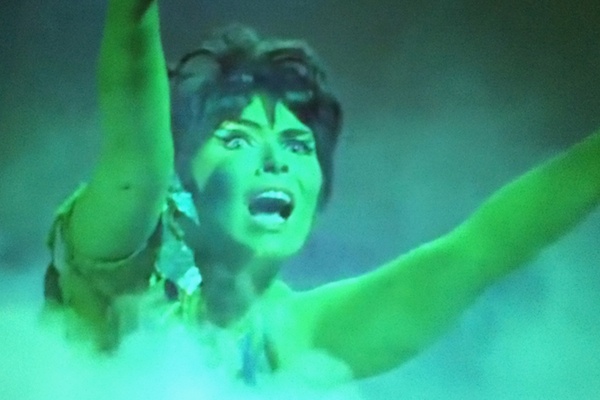
Yvonne Craig as Marta on ‘Star Trek.’ (Photo courtesy Craig)
BLADE: Aren’t you glad you didn’t have to play her for several seasons?
CRAIG: Oh, wouldn’t that be horrible? We also had trouble making it stick during the day. We were at our wits’ end and it’s like the fourth day and finally … we found a makeup guy who could make it stick. He wasn’t really supposed to do it because at the time male makeup artists were not allowed to put body makeup on women, but I didn’t care. We brought him in and sure enough, he did the last two days and it never moved. It was great but we never told because he could have been fired. It’s so sexist I can’t believe it.
BLADE: Have you followed the various “Batman” film adaptations over the years? Do you have much interest in that?
CRAIG: Yes, I do. I liked Michael Keaton. I just loved him but in the second one, he got stuck with the Penguin and it had, like, six endings. You think it’s over and the Penguin is gone and he would come back spitting ink again. So I just knew immediately why when Michael Keaton said he’s not doing anymore, I knew immediately why. Who wants to be second banana to a penguin? … I thought George Clooney was just going to be terrific … and I thought Chris O’Donnell … would be a good match … then you get to the movie and it’s just awful. I don’t know what was going on, if George Clooney was just doing too many things at the same time so he didn’t think this out or something. Every time they mentioned that Alfred was ill, no Alfred isn’t just sick, Alfred is going to die, he just had this smirk. I’m like, “What’s funny about that? This is the man who brought you up, what is going on?” And then Chris O’Donnell just kept whining about a car and I thought, “God, I hate this movie.” I actually thought Alicia Silverstone would just be darling as Batgirl and I wrote her a note and said, “You’ll just knock ‘em dead.” … First of all, they made her whole relationship she was Alfred’s niece or something instead of Commissioner’s daughter, which was screwy, then they put them all in these Robocop outfits so they couldn’t even move, it was horrible. I didn’t like Val Kilmer but once they got Christian Bale, I loved it. I mean I really like him. He’s an excellent actor. So yeah, I keep up with them.
BLADE: They’ve gotten so dark. Why?
CRAIG: Well, when we first started there were people who remembered the (serial) films from the 1940s or whenever they did them and that was dark. So I think they are kind of of their time. We were busy being hippies and throwing flowers and love and peace and all of that and people were offended. They said, “This isn’t what Batman should be.” Those were the diehard ones. Now they’re all dead because it was a long time ago. The one with Michael Keaton, I thought was pretty dark and a couple of times you couldn’t see who was fighting whom, so you weren’t invested. If you can’t see who the villains are and who the good guys are, you lost interest. Then they got lighter for a while but our times have changed. I think we’re going back to dark because these are darker times. We have drive-by shootings and terrorists with no conscience. So I don’t know what the next thing might look like but I bet it will be scary.
BLADE: I guess “Batman v. Superman” (slated for 2016 release) is next.
CRAIG: Oh is it? Well, I may have to see that one.
BLADE: Should Batgirl be in it too? Do you feel any investment in these things as you hear of them?
CRAIG: No. I loved doing the role. I liked the way the writers wrote her. When people come up and say she was a role model, I always think, “Wow, I wish I had one of the writers next to me to hear this” because they’re really the ones who wrote this. Everybody forgets that the actor can only do anything with what they’re given. Writers never get the esteem they should have.
BLADE: Yes, but so many of the actors on the ‘60s show really became synonymous with the parts. When we think of the Riddler, we think of Frank Gorshin, we think of Cesar Romero (the Joker), we think of you as Batgirl and of Julie Newmar and Eartha Kitt as Catwoman. Why did that series have such impact?
CRAIG: Well it was a top-rated show and nothing had ever been seen before that looked quite like that. It was really a comic book that was live action so you saw “bam” and “pop” and all of those things you saw in a comic book. The colors were brilliant and they had this crazy thing where when the villain entered the camera was tilted. So it was innovative and unique for its time. There were a lot of things only the adults would have understood, double entendres, … yet it was safe to watch with kids because it wasn’t violent. You’re not seeing body parts and blood and guts and people shoot one another. … As far as being attached, I was only in the third season and I had a body of work before and I didn’t have a problem at all doing other things. I think Adam (West) was a whole other story because he has a very distinctive speech cadence. (Imitates West) “That’s just the way he talked — (pauses) — citizens.” When he’d go read for other parts, they just thought he was doing Batman so he had a hard time getting hired. … Now he’s doing voiceovers and it’s working for him again and I like that. He’s a nice man.
BLADE: Was the costume stretchy?
CRAIG: It was. I was used to being in leotards, so it was perfect for me. … It was easy to work in, easy to get in and out of and I did stunts, so it was easy to dance in, kick in and all those things. I had no problem with it. Lee Meriwether (Catwoman briefly in 1966) and I were on a panel together once and she said that was the most uncomfortable costume she has ever worn and it was kind of the same as mine, that same stretch fabric. I think it just has to do with whether you were used to wearing leotards or not and I was.
BLADE: Did you keep anything, the costume or any props or anything?
CRAIG: No, because it didn’t belong to me.
BLADE: That was your own hair as Barbara?
CRAIG: Yes. I told them I didn’t mind being a redhead as long as it was a wig, which it was and you saw it very prominently displayed in her secret room. A friend of mine at the time wanted to set me up with this guy. I was single then. She told him, “She plays Batgirl.” And he said, “Oh, well I like the little brunette better.” And I thought, “Oh he’s too dumb to go out with.”
BLADE: Was it a fairly chummy set?
CRAIG: Oh yes, the happiest set I’d been on since “Mod Squad.” … It was terrific. The cast liked one another, the crew liked one another and we all loved having all of these people on we’d never have worked with otherwise. I never would have worked with Milton Berle or Ethel Merman (otherwise). And they all loved it too because it was so different from anything else they’d ever done. It was a happy place to go to work every day.
BLADE: Burt’s (Robin) memoir was quite interesting.
CRAIG: Yes. I think he had a very vivid fantasy life.
BLADE: His (“Boy Wonder: My Life in Tights”) was quite different from yours (“From Ballet to the Batcave and Beyond”).
CRAIG: It was. He had asked me to write the foreword for his. I said sure, send it to me. He never did. He’d call and read me funny things and finally we were getting tight on time. I was leaving the country and he said he needed it so I sent him something that said, “I have not read this book.” (“Batman” writer) Stanley Ralph Ross said, “You can’t write a foreword to a book you haven’t read,” so I read the book and it was just relentlessly sexual. Even if it were true and it wasn’t, nobody wants to think of their little Robin as this voracious satyr. … I know there are different takes on things, but I can tell you truly in the third season, nothing happened on that set, nothing. And I can almost guarantee you nothing happened the first two seasons either. Now what they did when they were out on the road, I have no idea but as far as it happening on the set — he claimed he was behind scenery — but we were there working, they had somebody building on the next set we were going to use and we had stunt people, including me, off in a corner trying to figure out the fight scene. We shot those in three days. I mean it was just gangbusters, go! So I don’t know where he found the space or the time and I never saw any of it. … Plus we had children visiting the set almost every day.
BLADE: Would you have continued on another three or four seasons had it been renewed?
CRAIG: I would have. I loved doing it.
BLADE: How far into the season were you when you heard it wasn’t being renewed?
CRAIG: We had a wrap party for the third season and we all went home thinking we would be picked up and only when it was time to start shooting again did I hear we weren’t. So we never really had an over party. We just went home for Thanksgiving or Christmas or one of those and we didn’t know. And of course, we didn’t know 50 years later people were still going to be talking about it. We just said, “OK, on to the next job. What else do you have lined up for me?” because that’s the way the business runs.
BLADE: Alan Napier (Alfred) said once that Eartha Kitt (Catwoman on the third season) was “kind of marvelous” but complained a lot on the set. Agree?
CRAIG: I don’t know. In the scenes I had with her, she wasn’t complaining at all. She was a woman, oh boy, who was I would say rather conflicted and very insecure so who knows, she might have complained and he might have heard her or he might have had more down time sitting with her than I did because usually when I wasn’t shooting, I was off with the stunt people. But no. One time we did some kind of reunion-type thing and my husband was excited to meet her and she was just so nervous about doing this, I don’t know, it was like a talk show or something. And she said, “I’m sorry, I can’t meet him, I can’t meet anyone, I have to get myself together for this.” And I thought, “How strange — this is just a talk show.” But you know, her background was not wonderful. I can see it. You’re black, you’re in America, you purportedly said something not very nice to the first lady (Lady Bird Johnson). I didn’t see anything wrong with what she said, she was just asking a question. But you know, it probably adds up.
BLADE: I know you didn’t work with Julie Newmar (Catwoman, first two seasons) on the show but you’ve made appearances with her at various events since then. Have you gotten to know her at all?
CRAIG: Not really. At the conventions she’s done, she always arrives late but she has a great work ethic. Somebody said to her one day, “OK, Julie, so when you get up, what do you do?” And she said (slipping into Newmar’s purry voice) “Well — pauses — I put on a little makeup — pauses — and then I have some coffee …” And I figured, “OK, well, that’s why she’s always late,” but I’ll tell you what, she’s wonderful with the fans and she will stay until the last person sees her. There are a lot I could mention who don’t do that, so I think she and I have the best work ethic of the group.
BLADE: It was obviously such intentional camp. You seemed to play it very earnestly. Was it hard to find the right tone with the material?
CRAIG: No. I played it completely straight and that’s the clue. I think if the material is completely over the top, you play it straight and that makes it funny for the audience. If you play it with a wink, then it isn’t funny. This tends to happen a lot with child actors.
BLADE: Were you happy to see it finally released?
CRAIG: Yes. We don’t get any residuals or anything because, of course, there was no such thing as DVDs back then. I probably won’t watch it, but I’m glad to see it out. I live in the present and I don’t look back other than to say, “Well, that was a wonderful experience,” and if it weren’t a wonderful experience, as in the case of, say, Bill Shatner (Kirk on “Star Trek”), who I don’t think ever allowed anyone to have a wonderful experience with his acting, I just feel we only have a certain amount of time and I don’t want to spend it looking back.
BLADE: I saw a photo not long ago of you with Bill Bixby (“The Incredible Hulk”) and you were in a bathing suit. What was that from?
CRAIG: We were on “Courtship of Eddie’s Father” and “My Favorite Martian” together but I was never in a bathing suit. In those days, God, I sound like such a codger, they had Photoplay and these fan magazines, so they would set up these photo shoots. One time Adam took me out on his boat and we took pictures but it was just for photos, I had never been on his boat before or after.
BLADE: But you and Bill were friendly?
CRAIG: We dated! … We remained friends, but it just wasn’t a good match.
BLADE: They kept casting you as different girlfriends of Dobie Gillis. Did that seem odd to you at the time?
CRAIG: I don’t remember thinking that. I think I just thought, “Oh, I get to play somebody new.” Dwayne Hickman (Dobie) still cracks me up. My husband doesn’t understand it. He looks at me and says, “He’s not that funny,” and I just say, “To me, he is.” It’s like George Burns or Jack Benny. All I have to do is look at Dwayne and I laugh. I did four “Dobies,” I think. It’s really weird when I tell people who all I worked with. Once I even worked with (silent screen legend) Francis X. Bushman on (“Dobie” episode) “The Flying Millicans.” He played my father. He had this long gray hair and we were trapeze artists. To think that I actually worked with somebody who was in silent films!
BLADE: Lynda Carter said once that DC Comics reached out to her when they were going to change the Wonder Woman costume. Have they ever lent you any sort of Batgirl emeritus status or consulted you on anything over the years?
CRAIG: No, not at all.
BLADE: Both “Star Trek” and “Batman” were modest hits during their original runs but went crazy in syndication and ran forever. Any theories on why?
CRAIG: I honestly couldn’t tell you. I haven’t the foggiest idea. We only went three seasons and we were a mid-season replacement so it wasn’t even like they were long seasons. Some of those Westerns went on for like 22 years or something crazy.
BLADE: Like “Gunsmoke.”
CRAIG: Yes. And I hated doing Westerns.
BLADE: Did you do many?
CRAIG: Oh yeah, a whole slew of ‘em. “Wagon Train,” “Bronco.” As long as the horse hits his mark, they don’t care what you say. They figure, “OK, the horse is in place, she’s up there, we can always loop it.” It’s all predicated on a horse.
BLADE: Do you see any homoerotic subtext in Batman and Robin, either on the show or in any other incarnation?
CRAIG: I never really felt there was. I think a lot of people who were reading into that were not gay. It’s the homophobes who would say, “You know, an older man, I bet he’s diddling that kid.” People who do not understand homosexuality at all.
BLADE: Did you have a favorite villain?
CRAIG: Oh yes, Vincent Price (Egghead). Not because of the villainy, but any time you had down time with Vince Price, he was just wonderful. He was bright, he was curious, he had a great sense of humor, he knew a lot about art, he knew a lot about ballet. He was just very well informed and you knew he kept up.
BLADE: Did you know he was gay at the time?
CRAIG: Yes.
BLADE: How did you feel when you heard Elvis had died?
CRAIG: Oh dear. Well first, he was just the sweetest man. He was so polite and he took all this unsolicited advice from me, what he should do with his hair, crazy stuff like that. … When he died, the Dallas Morning News called me up, I was seeing my future husband at the time, and this reporter said (slipping into exaggerated Southern accent), “How did you feel when Elvis died, were you just devastated?” I said, “Well, no, because I think dead is really a thing just like alive except you have less choices to make.” And there was this dead silence. Finally she said, (returning to accent), “OK, well thank you very much.” He said to me, “Nobody understands what you mean when you say that,” and I just said, “Well, that’s her problem.” I was sorry he died so young. There’s a group up in San Francisco that are just huge Elvis fans. They have his leading ladies up to talk and I’ve been there and then they have an impersonator come out. When I was there, it was Elvis Herselvis, this rather fat, gay woman. She does a wonderful job.
BLADE: Have you kept much career memorabilia?
CRAIG: No, nothing. When I did the book, all the photos were from fans who’d sent them to me at one time or another. When Capital Cities bought ABC, they sent me a whole stack of pictures they were just going to otherwise throw away and said, “Do you want them?” But that was it. I don’t keep stuff. I probably don’t have much of a sentimental bone in my body.




a&e features
‘RuPaul’s Drag Race: All Stars’ cast visits D.C.
8 queens vie for $200,000 prize for charity in new season, premiering May 17
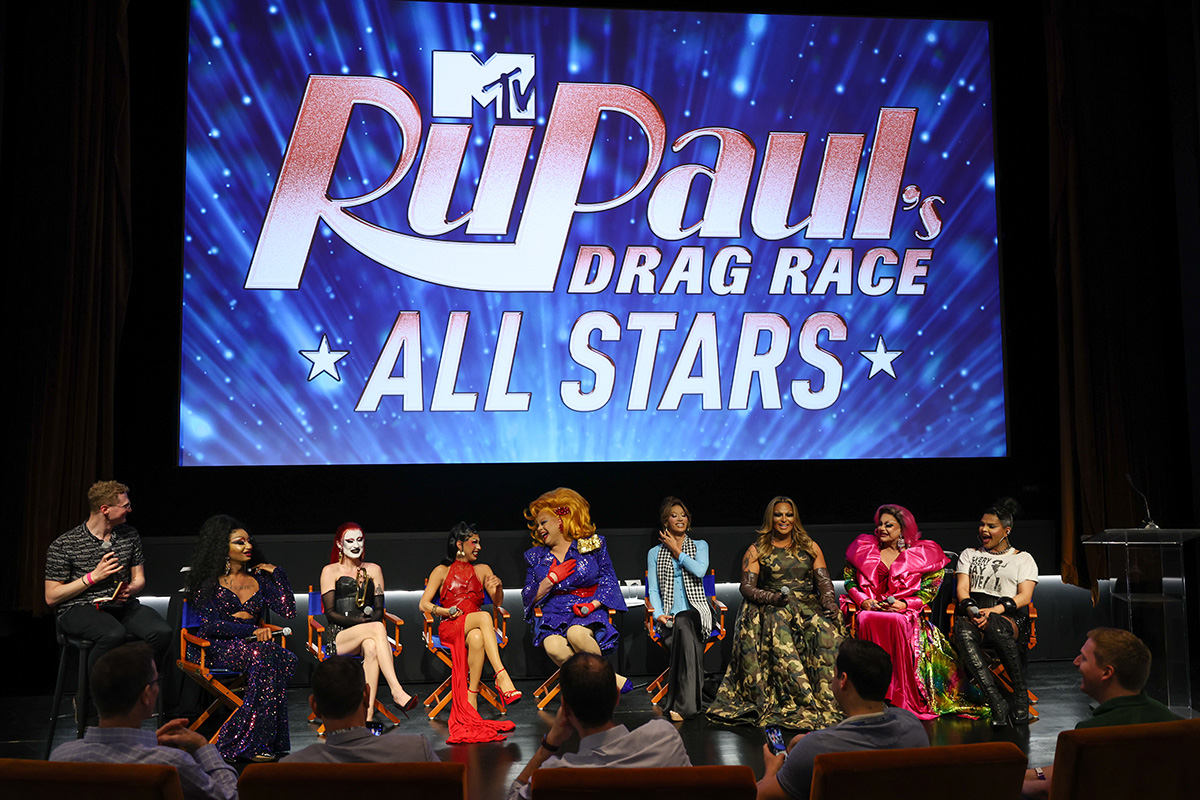
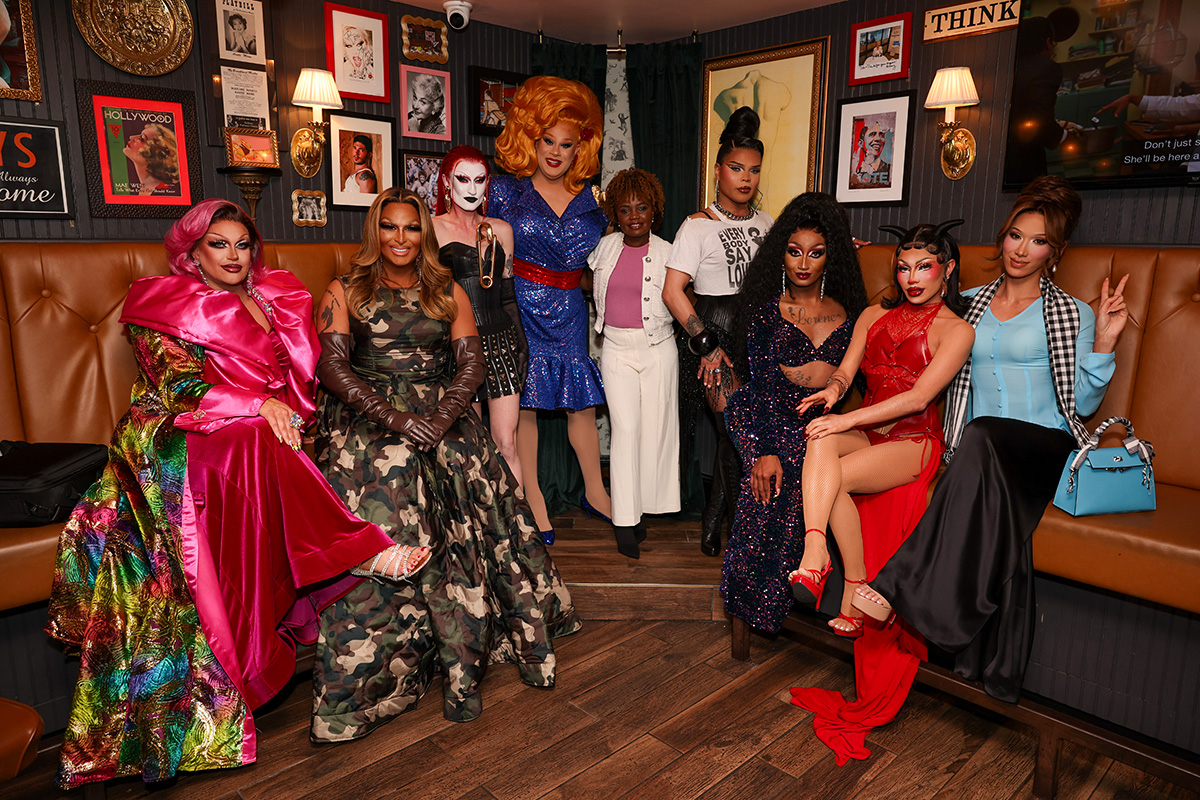
Donning sparkling and star-studded red, white, and blue attire on a gloomy, humid D.C. Monday, the cast of the latest “RuPaul’s Drag Race All Stars” season sashayed on the National Mall to promote the reality show’s ninth season.
This upcoming season is different than those in the past — eight queens are competing for a donation of $200,000 for the charity of their choosing, rather than a personal cash prize.
Several cast members noted how it felt important to visit the nation’s capital, being authentically themselves and wearing drag. Nina West, who competed in season 11, likened drag to armor.
“We’re here during a really specific time in history, that’s, I would say, markedly dark,” she told the Blade at the steps of the Lincoln Memorial. “And there’s an opportunity, as drag has always done, which is for our community as specifically LGBTQI+ people, to stand in our truth and be wonderful — like guardians and fighters for our community.”
She’s competing for the Trevor Project, which is focused on suicide prevention and crisis intervention for young LGBTQ people. This season’s pivot to compete for charity made Nina West want to come back on the show for the All Stars season. She’s been offered the spot two times before this, she said, and this twist aligned with what she wanted to do.
Several of the other queens mentioned that it’s an honor to be featured in this season, including season 5’s Roxxxy Andrews. She also competed in two subsequent All-Stars seasons.
She chose the organization Miracle of Love, which provides HIV/AIDS prevention programming and assistance in central Florida. It’s a smaller, more local organization, which is why Roxxxy Andrews chose it. She wants to make its work more nationally known. Also, vying to win during a charity season makes the competition feel more rewarding, she said.
Plastique Tiara of season 11 also noted it’s different competing for charity. She’s competing for the Asian American Foundation, which launched in 2021 in response to the rise in anti-Asian hate and aims to curb discrimination and violence through education and investments in nonprofits.
“It’s more competitive because then you’re fighting not just only for yourself, but your ideas and the things that you love,” she said.
Vanessa Vanjie of seasons 10 and 11 agreed that competing for charity adds a bit more pressure — she chose the ASPCA. And as onlookers near the Lincoln Memorial took pictures of and with the queens, she said she was relieved.
“I was a little bit worried somebody would yell some slurs at us,” Vanessa Vanjie said. “Nothing happened. Everybody came to take pictures like Santa Claus in the middle of the mall.”
There’s a range of contestants from different seasons for this round of All Stars. Some queens hail from recent seasons, but Shannel competed on the show’s first season. To be a part of this new season is surreal, she said.
She’s competing for the Anxiety and Depression Association of America, which she has a close tie to. She’s dealt with anxiety her entire life. The association is focused on increasing awareness and improving diagnosis and treatment.
“I always felt like I just wasn’t normal, sadly,” she said. “And so now being able to be able to do this season and to get back to that organization is like amazing to me.”
Gottmik, from season 13, is competing for Trans Lifeline — a nonprofit providing advocacy, a hotline and grants created by trans people, for trans people. Being able to do drag and give back is the “perfect scenario,” Gottmik said.
Gottmik was the first openly trans man on Drag Race, which was overwhelming when first on the show. Gottmik felt pressure to be the “perfect example,” but later realized that they didn’t have to worry so much.
“I just want to show people that trans people are real people. We can express ourselves however we want to express ourselves, through drag, through whatever it may be,” Gottmik said.
The new season will be available to stream on Paramount+ on May 17.
a&e features
Pride season has begun
LGBTQ parades, festivals to be held throughout region in coming months
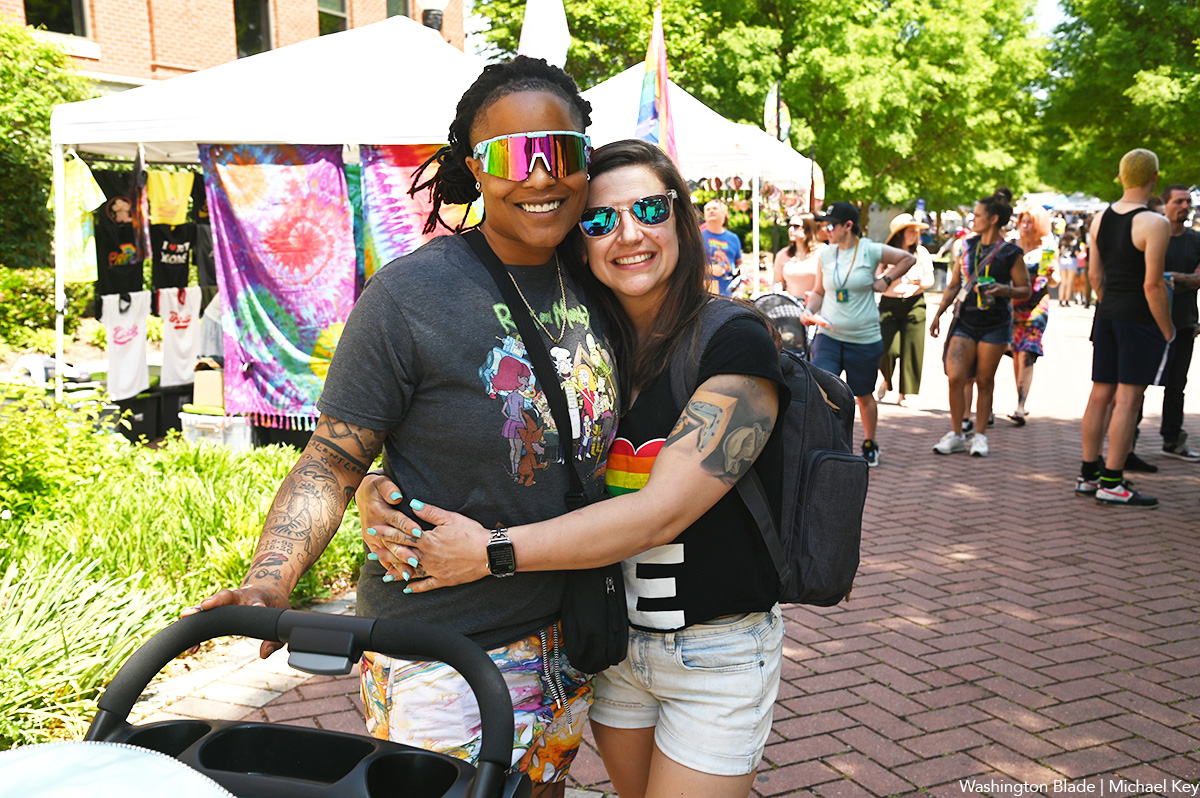
LGBTQ Pride festivals, parades and other events have been scheduled in large cities and small towns throughout the region. Pride events around the world culminate in June, but organizers in some municipalities have elected to hold celebrations in other months.
Pride in the region has already begun with last weekend’s Mr., Miss, and Mx. Capital Pride Pageant held at Penn Social as well as Roanoke Pride Festival held in Elmwood Park in Roanoke, Va.
Below is a list of Pride events coming to the region.
MAY
Capital Trans Pride is scheduled for 9:30 a.m.-5 p.m. on Saturday, May 18 at the Martin Luther King, Jr. Memorial Library (901 G St., N.W.). The website for the event advertises workshops, panel discussions, a keynote address, a resource fair and more. transpridewashingtondc.org
Equality Prince William Pride is scheduled for 12-4 p.m. on May 18 at the Harris Pavilion (9201 Center St.) in historic downtown Manassas, Va. equalityprincewilliam.org
D.C. Black Pride holds events throughout the city May 24-27. Highlights include an opening reception, dance parties and a community festival at Fort Dupont Park. The Westin Washington, DC Downtown (999 9th St., N.W.) is the host hotel, with several events scheduled there. dcblackpride.org
NOVA Pride and Safe Space NOVA will hold NOVA Pride Prom from 7-11 p.m. on May 31 at Torpedo Factory Art Center in Alexandria, Va. The event is open to all high school students throughout the region, regardless of identity, from rising ninth grade students to graduating seniors. novapride.org
Capital Pride Honors will be held on May 31. The Capital Pride Alliance has announced on its website that nominations are open for awardees. The Honors celebrates excellence in the LGBTQ community and its allies. capitalpride.org
JUNE
Downtown Sykesville Connection is sponsoring Sykesville Pride Day in downtown Sykesville, Md. on June 1 from 12-4 p.m. downtownsykesville.com
Reston Pride will be held at Lake Anne Plaza in Reston, Va. on June 1 from 12-6 p.m. restonpride.org
Fairfax Pride, hosted by the City of Fairfax and George Mason University, will be held at Old Town Hall (3999 University Drive, Fairfax, Va.) on June 1 from 5-7 p.m. The event will include children’s activities and more. fairfaxva.gov
OEC Pride celebrates Pride with “art, dance, education, and fun” in Old Ellicott City. The OEC Pride Festival is held along Main Street in Ellicott City, Md. on June 1 from 10 a.m.-10 p.m. visitoldellicottcity.com
Annapolis Pride has consistently drawn a giant crowd for a parade and festival in the quaint downtown of the Maryland capital. “The Voice” star L. Rodgers has been announced to headline the 2024 festival. The parade and festival will be held on June 1. annapolispride.org
The Alexandria LGBTQ+ Task Force Alexandria Pride is scheduled to be held at Alexandria City Hall from 3 – 6 p.m. on June 1 in Alexandria, Va. alexandriava.gov
The Portsmouth Pride Fest will be held at Festival Park adjacent to the Atlantic-Union Bank Pavilion in Portsmouth, Va. on June 1 from 11 a.m.-5 p.m. portsmouthprideva.com
The Delaware Pride Festival is a free event scheduled for June 1 at Legislative Hall in Dover, Del. from 10 a.m.-5 p.m.The event is billed as family friendly and open to people of all ages and sexual orientations. delawarepride.org
The City of Rockville is hosting Rockville Pride at Rockville Town Square (131 Gibbs St., Rockville, Md.) from 2-5 p.m. on June 2. The free event features live performances, information booths, and children’s activities. rockvillemd.gov
Equality Loudoun is hosting the ticketed Loudoun Pride Festival from 1-7 p.m. on June 2 at Claude Moore Park in Sterling, Va. The event features three stages, a “#Dragstravaganza,” a kid’s zone, an alcohol pavilion, a food hall and more. Tickets $5. eqloco.com
Culpepper Pride is slated to be held at Mountain Run Winery in Culpepper, Va. from 12-6 p.m. on June 2. The theme this year is “True Colors.” culpeperpride.org
The Southwest Virginia Pride Cookout Community Social is planned for 2 p.m. at the Charles R. Hill Senior Center in Vinton, Va. on June 2. For more information, visit the Facebook event page.
Capital Pride kicks off with the RIOT! Opening Party at Echostage starting at 9 p.m. on June 7. Tickets run from $27-$50 and can be purchased on the Capital Pride website. The event is set to feature Sapphire Cristál. capitalpride.org
Pride events continue over the weekend of June 8-9 in the nation’s capital with the Capital Pride Block Party featuring performers and a beverage garden, the massive Capital Pride Parade, Flashback: A totally Radical Tea Dance to be held at the end of the parade route, and the Capital Pride Festival and Concert. Visit capitalpride.org for more information. Other Pride events planned for the weekend in D.C. include a number of parties and the unforgettable (and free) Pride on the Pier & Fireworks Show at the Wharf sponsored by the Washington Blade from 2-10 p.m. prideonthepierdc.com
Pride in the ‘Peake will be held at Summit Pointe (580 Belaire Ave.) in Chesapeake, Va. on June 9 from 12-5 p.m. The family-focused Pride event does not serve alcohol, but will feature community organizations, food trucks and more in a street festival. For more information, visit the Facebook event page.
Celebrate with a drag show, dancing and a lot of wine at Two Twisted Posts Winery in Purcellville, Va. for a Pride Party from 2-5 p.m. on June 15. twotwistedposts.com
Baltimore Pride holds one of the largest Pride parades in the region on June 15 in Baltimore. (2418 Saint Paul St.). The parade concludes with a block party and festival. Pride events are scheduled from June 14-16. baltimorepride.org
The fourth annual Catonsville Pride Fest will be held at the Catonsville Presbyterian Church (1400 Frederick Rd.) in Catonsville, Md. on June 15 from 3-6 p.m. The event features a High Heel Race, pony rides, face painting, local cuisine and more. For more information, visit the Facebook event page.
The Ghent Business District Palace Shops have announced a Ghent Pride event from 5:30-9:30 p.m. on June 17 at the Palace Shops and Station (301 W 21st Street) in Norfolk, Va. ghentnorfolk.org
An event dedicated to celebrating the elders in the LGBTQ community, Silver Pride is scheduled for June 20 at 5:30-8:30 p.m. Location and more information to be announced soon. capitalpride.org
Visit the Hampton Roads PrideFest and Boat Parade for a truly unique Pride experience along the Elizabeth River. The full day of entertainment, education and celebration will be held on June 22 from 12-7 p.m. at Town Point Park (113 Waterside Dr.) in Norfolk, Va. hamptonroadspride.org
Frederick, Md. will hold its annual Frederick Pride Festival at Carroll Creek Linear Park on June 22 from 11 a.m.-6 p.m. Entertainers include CoCo Montrese of “RuPaul’s Drag Race.” frederickpride.org
The fourth annual Pride at the Beach is scheduled for 2-10 p.m. on June 23 at Neptune’s Park (3001 Atlantic Ave.) in Virginia Beach, Va. The event features entertainment, community vendors, beachside DJ sets, food trucks and offers a “perfect conclusion to an unforgettable Pride weekend.” hamptonroadspride.org
Winchester Pride will hold its Mx. Winchester Pride Pageant at 15 N. Loudoun St. in Winchester, Va. on June 23 at 6 p.m. Tickets are $20 in advance/$25 at the door. winchesterpride.com
The organizers of last year’s inaugural Ocean City Pride with a “parade” along the boardwalk in Ocean City, Md. have announced that they will be organizing a return this year with events from June 28-30. instagram.com
The third annual Arlington Pride Festival will be held at Long Bridge Park at National Landing (475 Long Bridge Dr.) in Arlington, Va. on June 29 from 11 a.m.-3 p.m. arlvapride.com
FXBG Pride is holding its annual community Fredericksburg Pride March on June 29 from 10-11 a.m. at Riverfront Park (705 Sophia St.) in Fredericksburg, Va. Speeches begin at 10 a.m. and the procession starts at 10:30 a.m. For more information, visit the Facebook event page.
Salisbury Pride “90’s Edition” is scheduled for 3 – 7 p.m. on June 29 in Downtown Salisbury, Md. Magnolia Applebottom is listed as the headliner and grand marshal. salisburyprideparade.com
The 2024 Suffolk Pride Festival is scheduled for Bennett’s Creek Park in Suffolk, Va. on June 30 from 12-7 p.m. Visit the Facebook event page for more information.
Expect music, entertainment and drag performances in the picturesque mountain town of Cumberland, Md. at the Cumberland Pride Festival on June 30 from 12-4 p.m. at Canal Place. cumberlandpride.org
Montgomery County’s annual Pride in the Plaza will be held on June 30 from 12-8 p.m. at Veterans Plaza (1 Veterans Place, Silver Spring, Md. liveinyourtruth.org
JULY
The sixth annual Westminster Pride Festival is scheduled for downtown Westminster, Md. on July 13 from 12-6 p.m. westminsterpride.org
Hagerstown Hopes is holding its annual Hagerstown Pride Festival in Doubs Woods Park (1307 Maryland Ave.) in Hagerstown, Md. on July 13 at 11 a.m. Visit the Facebook event page for more information.
The Rehoboth Beach Pride Festival will be held on July 20 from 10 a.m.-2 p.m., with other Sussex Pride events scheduled throughout the weekend of July 18-21. sussexpride.org
Us Giving Us Richmond hosts Black Pride RVA in Richmond, Va. with events on July 19-21. ugrcrva.org
a&e features
Eastern Shore chef named James Beard Finalist
Harley Peet creates inventive food in an inclusive space
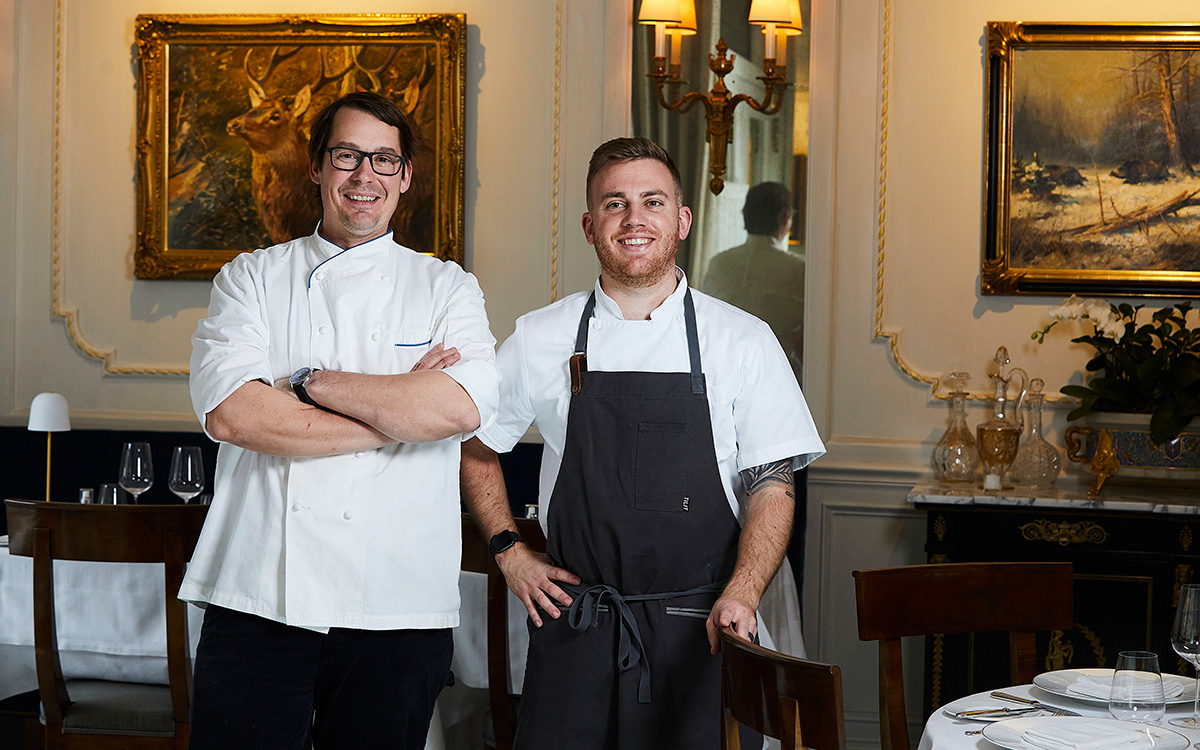
In a small Eastern Shore town filled with boutiques, galleries, and the occasional cry of waterfowl from the Chesapeake, Chef Harley Peet is most at home. In his Viennese-inflected, Maryland-sourced fine-dining destination Bas Rouge, Peet draws from his Northern Michigan upbringing, Culinary Institute of America education, and identity as a gay man, for inspiration.
And recently, Peet was named a James Beard Finalist for Best Chef: Mid-Atlantic – the first “Best Chef: Mid-Atlantic” finalist representing the Eastern Shore.
Peet, after graduation from the Culinary Institute of America, took a position as sous chef at Tilghman Island Inn, not far from Bas Rouge. Falling in love with the Eastern Shore, he continued his passion for racing sailboats, boating, gardening, and fishing, and living his somewhat pastoral life as he opened Bas Rouge in 2016 as head chef, a restaurant part of the Bluepoint Hospitality group, which runs more than a dozen concepts in and around Easton, Md.
Coming from a rural area and being gay, Peet knew he had his work cut out for him. He was always aware that the service and hospitality industry “can be down and dirty and rough.”
Now as a leader in the kitchen, he aims to “set a good example, and treat people how I want to be treated. I also want to make sure if you’re at our establishment, I’m the first to stand up and say something.”
The Bas Rouge cuisine, he says, is Contemporary European. “I’m inspired by old-world techniques of countries like Austria, Germany, and France, but I love putting a new spin on classic dishes and finding innovative ways to incorporate the bounty of local Chesapeake ingredients.”
His proudest dish: the humble-yet-elevated Wiener Schnitzel. “It is authentic to what one would expect to find in Vienna, down to the Lingonberries.” From his in-house bakery, Peet dries and grinds the housemade Kaiser-Semmel bread to use as the breadcrumbs.
Peet works to support the LGBTQ community inside and outside of the kitchen. “I love that our Bluepoint Hospitality team has created welcoming spaces where our patrons feel comfortable dining at each of our establishments. Our staff have a genuine respect for one another and work together free of judgment.”
Representing Bluepoint, Peet has participated in events like Chefs for Equality with the Human Rights Campaign, advocating for LGBTQ rights.
At Bas Rouge, Peet brings together his passion for inclusion steeped in a sustainability ethic. He sees environmental stewardship as a way of life. Peet and his husband have lived and worked on their own organic farm for several years. Through research in Europe, he learned about international marine sourcing. Witnessing the impacts of overfishing, Peet considers his own role in promoting eco-friendly practices at Bas Rouge. To that end, he ensures responsible sourcing commitments through his purveyors, relationships that have helped create significant change in how people dine in Easton.
“I have built great relationships in the community and there’s nothing better than one of our long-standing purveyors stopping in with a cooler of fresh fish from the Chesapeake Bay. This goes especially for catching and plating the invasive blue catfish species, which helps control the species’ threat to the local ecosystem.
Through his kitchen exploits, Peet expressed a unique connection to another gay icon in a rural fine-dining restaurant: Patrick O’Connell, of three Michelin starred Inn at Little Washington. In fact, Peet’s husband helped design some of O’Connell’s kitchen spaces. They’ve both been able to navigate treacherous restaurant-industry waters, and have come out triumphant and celebrated. Of O’Connell, Peet says that he “sees [his restaurants] as canvas, all artistry, he sees this as every night is a show.” But at the same time, his “judgment-free space makes him a role model.”
Being in Easton itself is not without challenges. Sourcing is a challenge, having to either fly or ship in ingredients, whereas urban restaurants have the benefit of trucking, he says. The small town “is romantic and charming,” but logistics are difficult – one of the reasons that Peet ensures his team is diverse, building in different viewpoints, and also “making things a hell of a lot more fun.”
Reflecting on challenges and finding (and creating) space on the Eastern Shore, Peet confirmed how important it was to surround himself with people who set a good example, and “if you don’t like the way something is going … move on.”

Tel Aviv authorities cancel Pride parade

EXCLUSIVE: White House Press Secretary Karine Jean-Pierre on speaking out and showing up

Vladimir Putin takes office for fifth term as Russia’s president

Billy Porter, Keke Palmer, Ava Max to perform at Capital Pride