Opinions
Welcoming the ‘commercialization’ of Pride
City Paper critique demeans those who fought for visibility
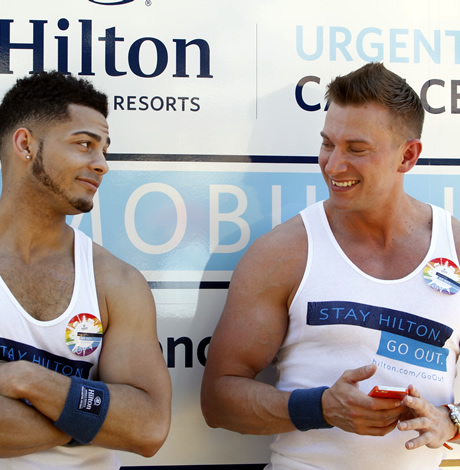
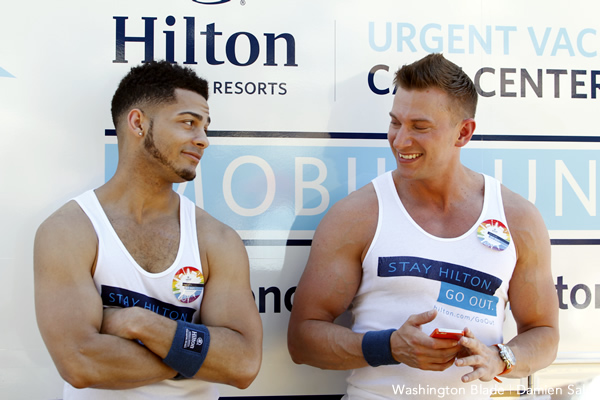
2013 Capital Pride Parade (Washington Blade photo by Damien Salas)
Washington City Paper’s arts editor, Christina Cauterucci, wrote a 4,000-word history of Pride that turned into a diatribe against Pride titled, “Swallow Your Pride: How a homegrown show of solidarity became a commercialized, one-size-fits-all party weekend.”
Yes, Pride has become more commercialized but that was established in the title of the article. One sentence in particular sums up the writer’s view of being gay in D.C. and of Pride: “But in a city that has some of the most comprehensive queer and trans rights and protections in the country, where white gay men are a hypervisible demographic and you’re nearly as likely to find queers hanging out at Dacha or Red Derby as you are at Town or Phase 1, it can seem that while we’re here and queer, everyone’s already used to it.”
There are many reasons for the change in Pride in the District of Columbia. Surely one of the biggest is being out is acceptable in most communities. Clearly there are still areas of the city and parts of the population that don’t accept us, but those are becoming fewer and fewer. So while Pride was once an activist statement, today in D.C. it’s more of a celebration.
Because the LGBT community is so integrated into the community, the parade and festival have become bigger and more expensive to stage and, yes, we go to corporate America to help defray the costs. In turn, they get to display their commitment to the community with a float in the parade, a logo on materials or a booth at the festival. We should be celebrating that so many in corporate America want to participate. Just recently, corporate America helped to beat back discriminatory legislation in Indiana. Twenty years ago few companies would have willingly shown solidarity with the LGBT community.
The article talks about the lack of diversity represented in the parade and leadership of the LGBT community. As a community, we must work to change that. Yes, many of our civil rights organizations were/are funded by wealthy white men. That is slowly changing but not fast enough. We don’t want wealthy white men to stop giving their money but need them to recognize that wealth shouldn’t be the only criteria when it comes to the leadership of the groups. For years the Human Rights Campaign was called the Human Rights Champagne Fund. In its latest internal review, which they commissioned, there is still a long way to go to ensure diversity and equal opportunity in the organization.
Today, Black Pride, Latino Pride, Youth Pride and Transgender Pride celebrate groups within the LGBT community and there are many reasons to continue these celebrations. Earl Fowlkes says in the City Paper, “If I had a dollar for everyone who came to D.C. Black Pride and told me they weren’t out when they went back home, I’d be a rich man. You’ve got to have baby steps. D.C. Black Pride is a good entryway to being around other people who are openly gay.” So our community needs to focus on the diversity within it and recognize gay and lesbian people of color and transgender individuals often still face more discrimination than others in the community.
As we continue the fight, we shouldn’t demean and attack those who have worked hard to accomplish the successes we’re celebrating. Instead, we need to educate everyone on what remains to be done. We must recognize a real effort must be made to diversify the participation and leadership in our community if we are to win the battles that remain to be fought.
Peter Rosenstein is a longtime LGBT and Democratic Party activist. He writes regularly for the Blade.




Cuba
When impunity meets history
Raúl Castro indicted for alleged role in shooting down Brothers to the Rescue aircraft
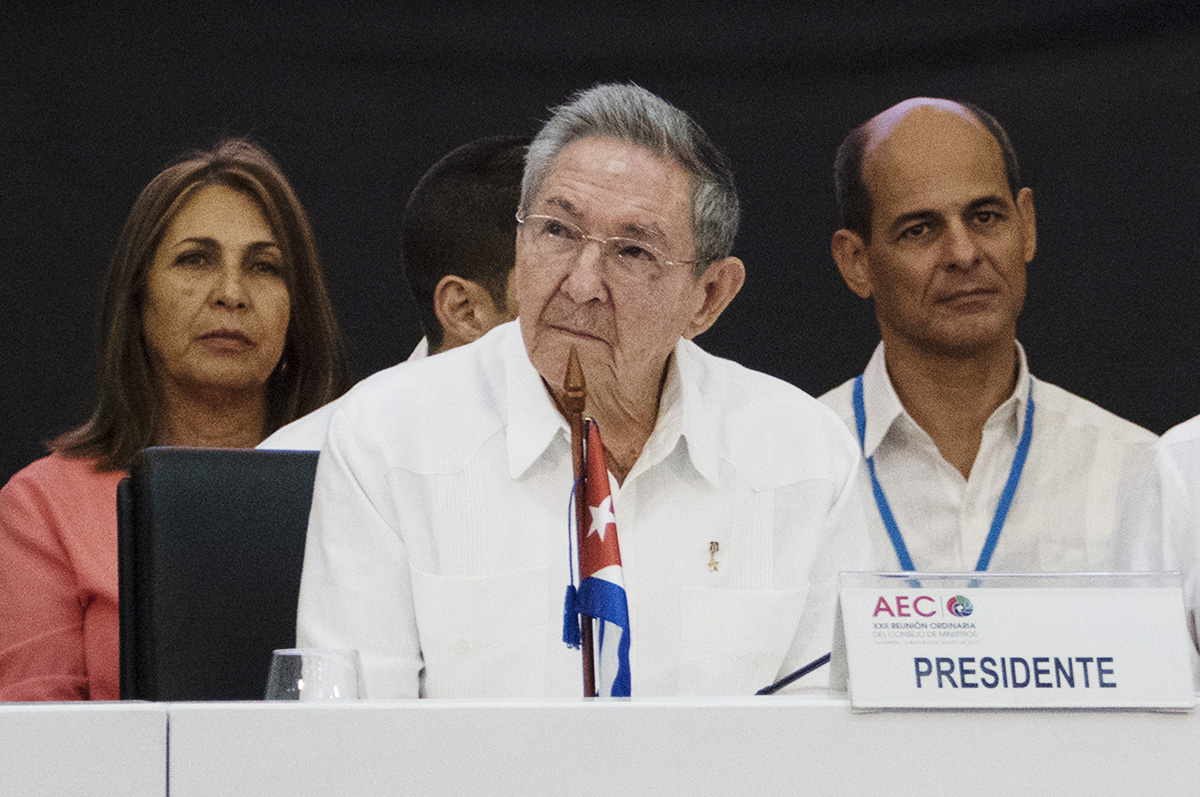
The scene would have seemed impossible only a few years ago.
The name of Raúl Castro Ruz appearing formally inside a United States federal criminal indictment. Cuba’s former general of the Army, for decades one of the most powerful figures inside the Havana regime, accused in connection with the shootdown of the Brothers to the Rescue aircraft and the deaths of American citizens in 1996. And all of it unfolding in Miami, inside the Freedom Tower, on May 20.
That detail matters.
Because this indictment arrives at one of the most fragile and politically tense moments in recent relations between Washington and Havana. It comes as Cuba faces deep economic collapse, growing political exhaustion, mass migration, blackouts, and increasing public frustration both inside and outside the island. It also arrives on a date carrying enormous symbolic weight for Cuban exiles — the anniversary of the founding of the Cuban Republic in 1902.
But the true significance of this moment goes far beyond symbolism.
What happened in Miami represents something much larger: the collapse of the idea that certain men would never face accountability.
For decades, Raúl Castro embodied the permanence of revolutionary power in Cuba. Defense minister. Military strategist. The man who oversaw the armed forces for generations. One of the central architects of the Cuban political and security apparatus built alongside Fidel Castro. A figure many believed would leave this world untouched by any court, shielded forever by power, time, and history itself.
Today the image is very different.
Today his name appears inside the language of American criminal prosecution.
And that changes the historical dimension of this case completely.
Because this is no longer simply a political accusation voiced by the Cuban exile community. It is now a formal federal criminal indictment publicly announced by the United States government against one of the highest-ranking figures in the history of the Cuban regime.
The setting itself carried enormous meaning.
The Freedom Tower is not just another building in Miami. For generations of Cuban exiles it represents memory, displacement, survival, and the beginning of a new life after fleeing Cuba. Thousands of Cubans passed through those doors after escaping the revolution. Families arrived carrying fear, uncertainty, grief, and hope all at once. Announcing these charges from that location transformed the moment into something far deeper than a legal proceeding.
And the people witnessing it were not only members of the exile community.
Among those present were relatives of the young men killed nearly 30 years ago. Families who spent decades waiting to hear words they feared might never come. Families who carried the weight of loss while believing the men responsible would never be formally accused by any court.
That emotional weight still surrounds this case.
On Feb. 24, 1996, two civilian aircraft operated by Brothers to the Rescue were shot down over the Florida Straits by Cuban military jets. Armando Alejandre Jr., Carlos Costa, Mario de la Peña, and Pablo Morales were killed. The flights were connected to humanitarian rescue efforts searching for Cubans attempting to flee the island during the migration crisis of the 1990s.
Those aircraft were not military bombers.
They were not attacking Cuba.
They were civilian planes associated with rescue operations involving Cubans risking their lives at sea.
That reality has always shaped how this tragedy lives inside the memory of the Cuban exile community.
For many, this was never viewed simply as a geopolitical conflict between hostile governments. It was seen as the use of military force against civilians connected to humanitarian missions during one of the darkest chapters in modern Cuban migration history.
But for many Cubans, the indictment reaches far beyond the Brothers to the Rescue case itself.
It touches decades of unresolved pain tied to one of the central figures behind Cuba’s military and political system.
It reaches mothers who buried sons lost in compulsory military service or in distant wars they never chose to fight. Families who spent years believing promises that were never fulfilled. Political prisoners who disappeared into silence. Relatives who watched loved ones die trying to flee the island.
And for many LGBTQ Cubans, the moment carries another layer of historical weight.
Long before official campaigns promoting tolerance and inclusion emerged from within the Cuban government, there were years of persecution, fear, forced silence, and humiliation carried out under the revolutionary system itself.
The UMAP labor camps remain one of the deepest scars in modern Cuban history. Gay men, pastors, religious believers, artists, and others considered incompatible with the revolutionary ideal were sent away under the language of “re-education” and forced labor.
In recent decades, public gestures toward LGBTQ inclusion promoted by figures close to the Cuban leadership attempted to project an image of progress and openness to the international community. But for many survivors, and for many Cuban LGBTQ people, those gestures never erased the trauma or the historical responsibility tied to the same structures of power that once persecuted them.
For many, acknowledgment without accountability still feels painfully incomplete.
That is why this indictment resonates so deeply today.
Because it arrives while Cuba once again faces profound national crisis. The island is losing entire generations through migration. Public frustration continues to grow. Economic collapse shapes daily life. And the revolutionary narrative that once projected permanence and control appears increasingly eroded by reality itself.
Against that backdrop, the image emerging from Miami becomes even more striking.
A man once viewed as untouchable by history now formally accused by the United States government and legally transformed into a fugitive wanted by American justice.
History moves slowly until suddenly it does not.
And for many Cubans, both on the island and throughout the diaspora, what happened today inside the Freedom Tower felt like witnessing something they once believed they would never live long enough to see.
As a Cuban, as an immigrant, and as someone who has lived close to that pain, one thought keeps returning tonight:
Justice takes time.
But when it finally arrives, it arrives with history behind it.
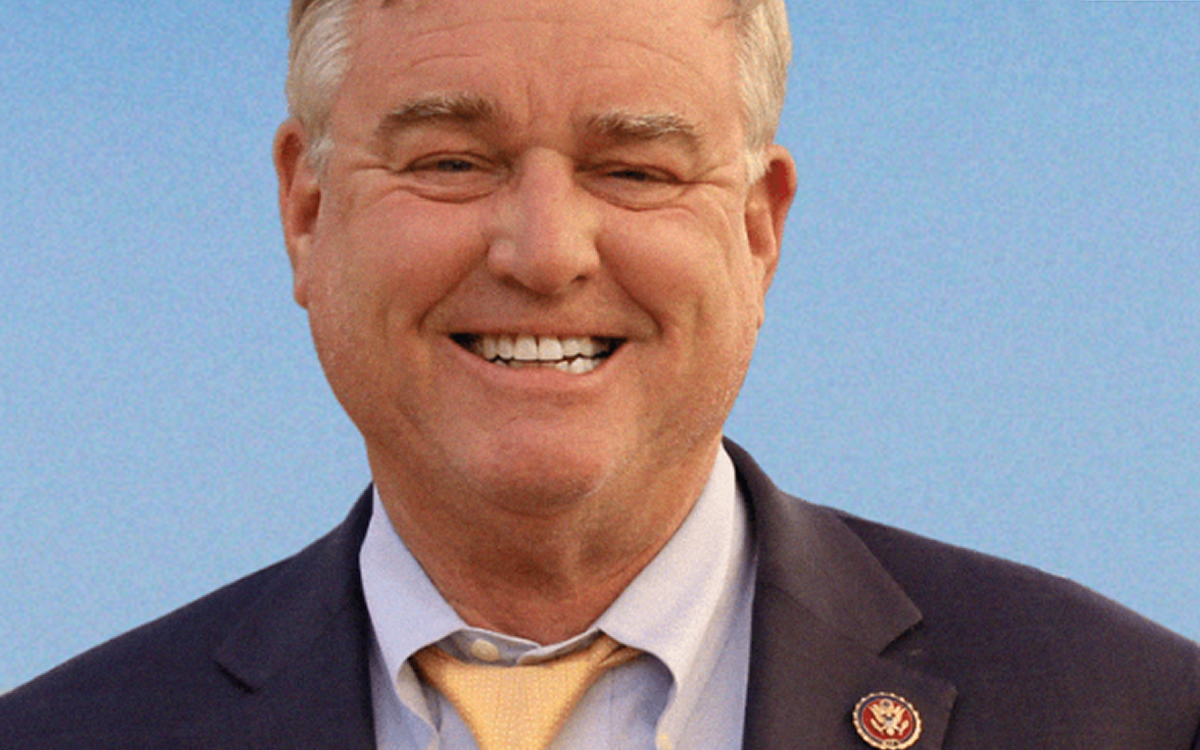
David Trone’s commercials keep telling us what he has done for women. But apparently, he doesn’t trust them to fight for themselves, or he wouldn’t keep spending countless millions to defeat them.
Trone is trying to buy back his seat in Congress, this time running in a primary in Maryland’s 6th District against incumbent Democrat April McClain Delaney. Once again, Maryland voters should say a loud NO to David Trone. He is doing this after spending nearly $60 million trying to buy a United States Senate seat, which he thankfully lost to Angela Alsobrooks, now one of only two Black women in the United States Senate. Clearly, that was a blow to his ego, and now he is trying again to defeat another very competent woman. He has already spent close to $7 million on commercials attacking Delaney, telling us how much money he has spent on what he calls ‘good deeds.’ Delaney is accurately calling him out for working with Florida Gov. Ron DeSantis, and donating through his business, nearly $800,000 to Republicans, including MAGA ones. When he was buying his first seat in Congress, the Washington Post reported, “Wine retailer David Trone… has contributed more than $150,000 to Republicans in states across the country since 2000, according to a nonpartisan site that tracks money in politics. Most went to candidates and officeholders in states where he sought legislation or regulatory changes favorable to his company, Total Wine & More. Among the Republicans who received funds were Gov. Greg Abbott and Lt. Gov. Dan Patrick of Texas and North Carolina Gov. Pat McCrory.” The same Pat McCrory who signed anti-LGBTQ legislation and Abbott who wants to close all Planned Parenthood sites in Texas.
I urge voters in Maryland’s 6th, to speak out for, and vote for, April McClain Delaney. Join with me, and a host of others, who have endorsed her as of March 31. They include Sen. Angela Alsobrooks (D-Md.), Sen. Chris Van Hollen (D-Md.), Maryland Gov. Wes Moore (D), Rep. Nancy Pelosi (D-Calif.), Rep. Sarah McBride (D-Del.), and every Democrat in the Maryland U.S. House delegation.
McClain Delaney says, “Now, David Trone says I should step aside, so he can have his old office back after he ran for the Senate, lost, and has been sitting on the sidelines. He’s a distraction. This race isn’t about one man’s ego. … And as a member of team Maryland, I forged strong relationships with Governor Moore and the entire federal delegation, as well as with local leaders across the district.” She adds, “On behalf of my district, I stand up to bullies. That’s why I’ll continue to take on Trump’s assault on our government workers, defend our diverse community, protect choice and women’s reproductive rights, and work against inflation-creating tariffs.”
Again, this isn’t the first time Trone spent a fortune trying to get into Congress. It cost him about $25 million, and two tries, to win the first time. Then his ego had him give up the seat he bought to run for the U.S. Senate. Apparently he has unlimited amounts of money to spend and at nearly 72 thinks he needs to get back in by defeating a strong woman nearly 10 years younger, who is doing a great job. He is clearly not needed in Congress.
Trone always made the basis of his campaigns not taking any money from PACs, lobbyists, and big donors. Seems hypocritical considering he thought it was OK to influence others to build his own business. To give Trone credit he always runs on a very liberal platform, which is pro-LGBTQ, pro-women, and pro-equal and human rights for all. But then Democrats like April McClain Delaney, who he is now running against, has the same platform, and is doing a good job for her constituents.
Trone’s commercials are mostly about what he has done for women. But again, he clearly doesn’t trust women to do for themselves. He spent $60 million running against a great woman for U.S. Senate, and now is spending more millions running against another strong woman, trying to reclaim a House seat he gave up. Marylanders, make sure he loses again, by voting for April McClain Delaney for Congress.
Peter Rosenstein is a longtime LGBTQ rights and Democratic Party activist.
Opinions
Skipping Memorial Day crowds in Rehoboth Beach
After 30 years, I’ve become allergic to large gatherings

There are a lot of things about getting older that are great. I love retirement, love the cruises I take, time at my favorite coffee shops, both in D.C. and at the Coffee Mill in Rehoboth. Then there are some not so great things. I have had a few health issues, which luckily, I have fully overcome. Some issues you can do something about, others you can’t. One of the things I have come to realize is, I no longer enjoy big crowds, and this is something I can do something about. Just avoid them.
I have spent every holiday weekend since buying my place in Rehoboth, and that is going on 30 years, at the beach. I go for Christmas and New Year’s, Martin Luther King, Jr. weekend, President’s Day, Memorial Day, and Labor Day. Add a few extra holidays I may be missing like Veterans’ Day, if it falls on a weekend. This is the first year I won’t be there on Memorial Day, and it is by choice. Instead, will be staying in D.C. Some will ask why, and my simple answer is to avoid the crowds. I keep thinking of the crowds last Memorial Day and decided to see how it goes skipping it this year.
Don’t get me wrong, I am thrilled for all the businesses at the beach when they are swamped with people. And glad those people who want to be there are having a great time, and don’t mind when the lines to get into Aqua and Diego’s are around the block. Or when my favorite place for coffee, The Coffee Mill, has a line when I get there at 7 a.m. When you can’t get a reservation at the Pines or even Ava’s. But last year it finally occurred to me why I wasn’t having as much fun as I used to, and realized it was because I have become allergic to crowds. So, for the first time this year, I determined I was going to stay away and see how it feels. I may regret it after a few hours at home in D.C., or when seeing friends’ posts on Instagram and Facebook. But am going to take that chance. One thing I do regret missing is the incredible annual brunch thrown by my friend Robert, and his husband, but am determined to see what it feels like not being at the beach for the kick-off holiday weekend of the summer.
To wean myself away, I did go last weekend. Had a great time seeing friends. Had fun at Aqua each evening for happy hour; went to a great party at CAMP in honor of their new Executive Director Dr. Robin Brennan. I’ve had a chance to chat with her, and believe they made a great choice when hiring her. Then on Friday evening I went to the Washington Blade annual season kick-off party at Diego’s and met the new Steve Elkins Fellow, Thomas Weaverling, and am sure he will do a great job. It was wonderful to see Ashley Biden there accepting the award given posthumously to Beau Biden for all he did for the LGBTQ community. Then on Saturday I stopped in at Freddie’s Beach Bar for the Cloud Nine reunion. That brought back so many good memories. It was coordinated by the inimitable Fay Jacobs. It was back then when I did like crowds, the more the merrier, and remember dancing all evening on the small crowded dance floor. Some people at the reunion reminded me of all the years I hosted an annual Memorial Day party, actually the first 10 years I had my place at the beach. It was catered by the Blue Moon, when my friend Rob was there, and they brought the Champagne, hors d’oeuvres, and even a bartender. I just had to have fun, and I did. The thought of doing that today is a little overwhelming, and I think it is about age.
So, this year I will see how much I miss being at the beach for the holiday weekend. Then after my June trip to France, will decide whether I want to do the same for the Fourth of July. I kind of look forward to seeing what my thoughts on it are, and how it goes.
For those of you at the beach, I hope the place is a zoo, of the best kind, and you all have a fabulous time.
Peter Rosenstein is a longtime LGBTQ rights and Democratic Party activist.

PHOTOS: Black Pride Opening Reception

PHOTOS: Black Pride Pageant and Unity Ball

PHOTOS: Helen Hayes Awards

A magical Mercedes

When impunity meets history

Vt. lawmaker equates transgender identity with bestiality

U.S. attorney nominee confirmed despite anti-LGBTQ history, no trial experience

Skipping Memorial Day crowds in Rehoboth Beach

Iran war causes condom shortage in India