Local
Veteran LGBT rights activist Jerry Clark dies at 74
Attorney also backed D.C. statehood
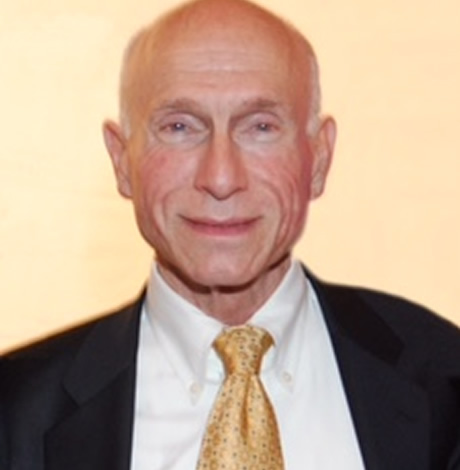
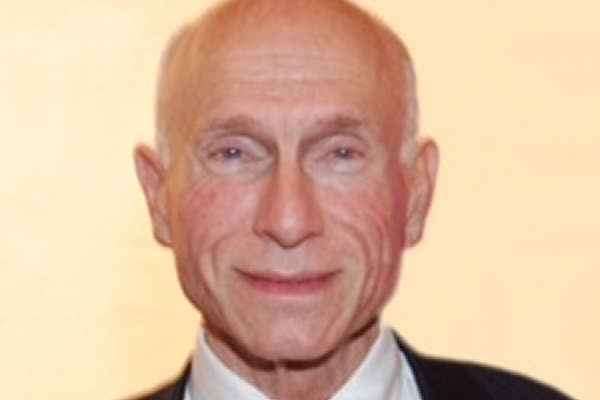
Jerry Clark, a long-time LGBT rights and D.C. statehood activist, died April 9. (Photo courtesy of the National LGBTQ Task Force)
Jerry N. Clark, an attorney, union health and pension fund director, and health care benefits consultant in Washington who for years served as an advocate for the cause of LGBT rights and D.C. statehood died April 9 at Virginia Hospital Center in Arlington. He was 74.
His sister, Melinda Rider, said the cause of death was complications associated with a severe head injury sustained from a fall in January at his home of 40 years in D.C.’s Adams Morgan neighborhood.
“Jerry was a progressive with an unwavering vision of equality for all people,” said Rea Carey, executive director of the National LGBTQ Task Force, for which Clark has served as a member and co-chair of its board of directors.
“He will be remembered for his leadership, but also for his kindness and compassion,” Carey said in a statement. “Surely the world is a better place having had his talents, and we are beholden to all that Jerry contributed to the movement.”
Among his numerous involvements in progressive political causes; Clark served as chair of the D.C. Statehood Coalition, political director of D.C. For Democracy and a board member of the local group Stop Gun Violence.
He has served as co-chair of D.C.’s Whitman-Walker Health’s spring gala, a trustee for the Law and Society Association and a member of the Democratic National Committee’s Gay and Lesbian Leadership Council.
Former D.C. Mayor Vincent Gray appointed Clark to the Mayor’s Committee on the 50th anniversary of the 1963 March on Washington. In recent years Clark was one of the lead organizers of an LGBT contingent in the city’s annual Martin Luther King Day parade.
In 2014 the D.C. Gay and Lesbian Activists Alliance presented Clark with its Distinguished Service Award for what it called his exemplary and dedicated work on behalf of LGBT equality.
“Time and again on issue after issue, Jerry can be found lending his expertise and offer a hand,” said then-GLAA Vice President for Administration Kevin Davis. “His energy and commitment are an example to others.”
Clark was born and raised in Muncie, Ind. He graduated in 1959 from Muncie’s Burris School, which he attended from kindergarten through 12th grade, according to Rider. Rider said he received his bachelor’s degree from Princeton University, a law degree from the University of Chicago and completed his doctoral studies in political science at the University of Minnesota.
He came to Washington in 1973 to work as a legal assistant at the Department of Justice under then-U.S. Attorney General Elliot Richardson. A short time later Clark began work at the Washington-based United Mine Workers Health and Retirement Funds, Rider said, where he spent the major part of his career as its executive director.
In recent years, Rider said, he did consulting work in the area of health care benefits and health care cost containment.
“He was so committed to making things better and never needed the spotlight,” said gay activist and former White House aide Dave Noble. “A real loss but…what a beautiful legacy.”
Clark is survived by his sisters Alma Marie Osborn of Boise, Idaho; Betty Hunt of Summerfield, Fla.; and Melinda Rider of Greensboro, Ga.; and his brother Parnell David Clark of Battle Creek, Mich. He was predeceased by his parents Parnell David Clark, Sr., and Alma Clark.
Earl Fowlkes, president of the Gertrude Stein Democratic Club, D.C.’s largest local LGBT political organization, said Clark was a longtime active member of the club.
“I have known Jerry for almost 20 years and in that time I’ve seen him work in all communities, especially Gertrude Stein, to push for D.C. statehood,” said Fowlkes. “He was a man for all seasons and will be missed by all who knew him.”
Rider said plans for a memorial celebration of Clark’s life will be announced shortly. She said contributions in remembrance of Clark can be made as a gift to Whitman-Walker Health.



Virginia
Campaign urges Virginia High School League to reverse stance on trans athletes
Equality Arlington and other advocacy groups behind ‘Right 2 Play’ VA’ initiative

Virginia advocacy groups have launched a campaign that urges the Virginia High School League to once again allow student athletes to compete on sports teams that correspond with their gender identity.
Equality Arlington on Sept. 16 published an article about the “Right 2 Play VA” campaign. Amy, a group representative, spoke about the initiative with the Washington Blade.
“The primary goal is to reverse the Virginia High School League’s discriminatory ban on allowing transgender girls to play on girls’ sports and replace it with a policy that is fair for all students.” they said.
The Virginia High School League in 2025 announced the policy, which reversed a previous position in support of transgender and nonbinary athletes. The 2025 policy coincided with President Donald Trump’s executive order — “Keeping Men Out of Women’s Sports” — that threatened to “rescind all funds from educational programs that deprive women and girls of fair athletic opportunities, which results in the endangerment, humiliation, and silencing of women and girls.”
The Arlington Gender Identity Alliance, Equality Virginia, and the American Civil Liberties Union of Virginia have also joined the “Right 2 Play VA” campaign.
“We had a policy in Virginia for 12 years that allowed transgender girls to play on girls’ sports teams, and we had not one instance — not one instance — that was brought forward demonstrating an unfair advantage or any type of safety concern,” said Amy.
Amy then discussed what they described are the benefits of trans youth playing sports.
“There are physical benefits. There are mental health benefits. There are community and social development benefits, and those are all well documented,” they said. “All kids should have the right to benefit from playing youth sports. We are talking about kids. We are talking about youth. We are not talking about Olympians. We are not talking about Division One college athletes. We are talking about kids in Virginia, and because the benefits of sports are so well documented, we think that every kid should have the ability to play sports.”
District of Columbia
D.C.’s LGBTQ homeless facilities face possible hit from Trump funding cuts
38 percent of homeless youth identify as LGBTQ, up from 2025
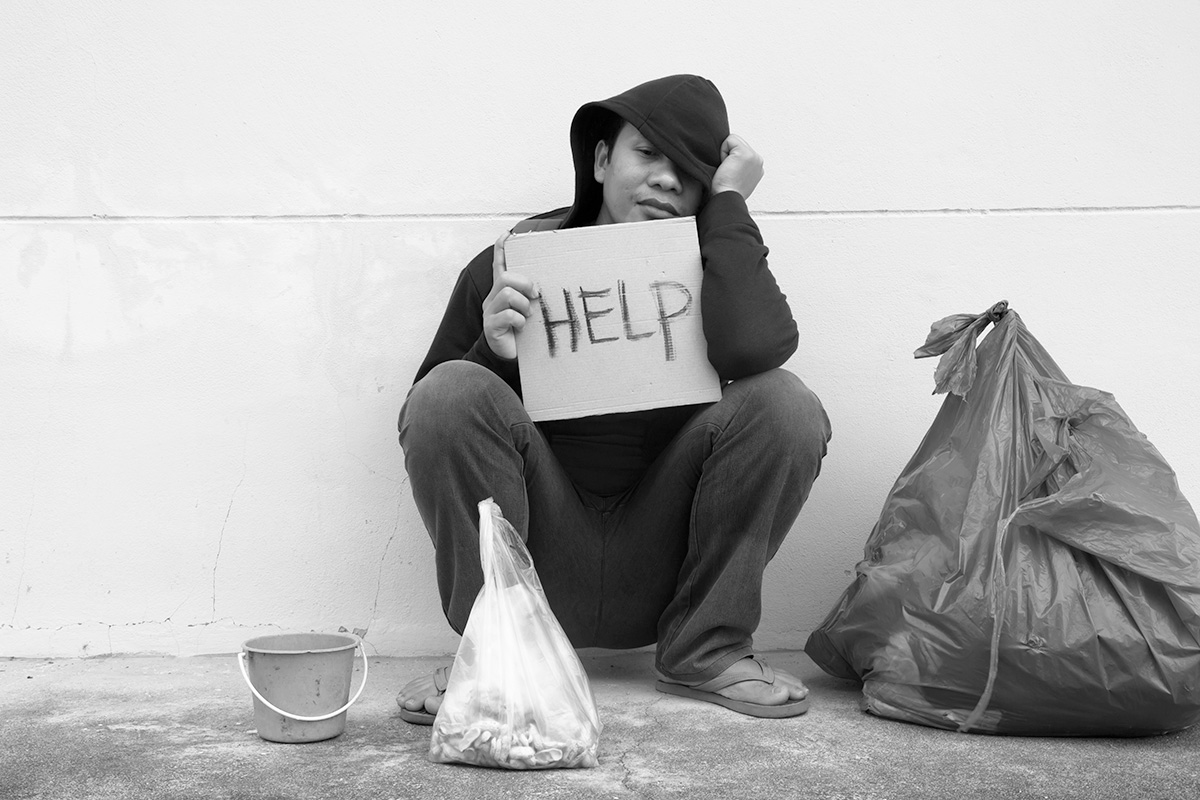
(Editor’s note: This article is part of our 2026 contribution to the D.C. Homeless Crisis Reporting Project in collaboration with other local newsrooms. The collective works will be published throughout the week at bit.ly/DCHCRP.)
A decision by President Trump’s administration to eliminate most federal funding for community-based programs to place homeless people in permanent subsidized housing could have a severe adverse impact on LGBTQ people facing homelessness in D.C., according to local advocates.
Officials with organizations that provide services for homeless people in the D.C. area and nationally have pointed to an executive order issued by Trump last year that calls for ending federal support for so-called “Housing First” programs that arrange for permanent subsidized housing for homeless people. The officials note that Trump’s proposed fiscal year 2027 budget calls for eliminating funding for the Housing First programs.
Advocates for programs providing support for homeless people note that ending federal funding for permanent housing for homeless people will — and in some cases already has — resulted in occupants of homeless shelters and short-term transitional housing facilities remaining in those facilities far longer than in the past, preventing openings for others who need housing.
A lawsuit filed by several states and homeless advocacy organizations, including the D.C.-based National Alliance To End Homelessness, to block the Trump efforts to cut off those funds has temporarily delayed some of the funding cuts. A decision in August by a federal judge in Rhode Island declared the Trump action a violation of a federal law for failing to open the proposal for the funding cuts to public comment before putting it in place.
Court records show the U.S. Department of Housing and Urban Development (HUD), which provides the federal funding for homeless related programs, appealed the lower court ruling and an appeals court reversed the ruling pending further appeal by the parties that filed the lawsuit.
At least two of the five D.C. organizations that provide housing for homeless LGBTQ youth have said their funding so far has not been cut due to the Trump actions.
Cesar Toledo, executive director of the Wanda Alston Foundation, which currently provides transitional housing for 20 LGBTQ homeless youth, said his organization receives local D.C. government funding but no federal funding so his group has so far not been impacted by the Trump action.
Debby Shore, executive director of the Sasha Bruce Youthwork organization that provides housing for young people ages 18-24, including some LGBTQ youth, said her organization also had not yet been impacted but it could be impacted soon.
“We have not had that funding cut,” she told the Washington Blade. “What we understand is if HUD is allowed to go through with those changes, then we will,” she said. “Because we have one of our programs that’s funded directly by HUD,” which she said could be considered the type of “long term” housing that HUD wants to cut.
A spokesperson for the local LGBTQ youth advocacy organization SMYAL, which currently provides housing for 55 homeless LGBTQ youth according to its website, didn’t immediately respond to a Blade inquiry into whether they have been impacted by the Trump actions. Toledo of the Alston Foundation said he understood that SMYAL has received federal funding for its homeless program.
At least two other D.C. organizations that provide housing for homeless youth, including some LGBTQ youth – Covenant House and the Latin American Youth Center – also couldn’t immediately be reached for comment on whether they have been impacted by the Trump funding cuts.
The city’s only shelter for homeless LGBTQ adults, which is operated by the D.C. Department of Human Services and is D.C. funded, has not been immediately impacted by the Trump funding cuts, according to a DHS statement sent to the Washington Blade in response to a Blade inquiry. Called Living Life Alternative, the low-barrier shelter accommodates 40 individuals, the statement says.
It says DHS receives federal funding for its homeless services programs, and it was awaiting HUD approval for its annual federal funding grant for the city’s Permanent Supportive Housing program for homeless residents. It says the current funding for that program expires Jan. 31, 2027.
According to the statement, a separate federal grant DHS receives from HUD for homeless assistance services was approved for next year but included “a slight reduction in funding of $22,808.”
The annual 2026 Point-In-Time (PIT) count of homeless people in D.C., conducted in January, recorded a total of 5,363 people who were homeless, a 4 percent increase over the previous year.
The PIT count report shows 424 adults, or 12 percent of the adults counted, identified as members of the LGBTQ community, a slight increase over the 11.7 percent of homeless LGBTQ people counted in 2025. It shows that 38 percent of “Transition Age Youth” ages 18-24 identified as LGBTQ, an increase of one percent over the 37 percent of LGBTQ youth counted in 2025.
The Trump administration through HUD has said it supports housing for homeless people that lasts no more than two years and participants should be required to get treatment for the mental illness and substance use disorders such as drug addiction and alcoholism that many homeless people suffer from.
The Washington Post has cited studies showing that up to two-thirds of homeless people have a mental illness and two in five have a substance use disorder.
“Housing First has failed our most vulnerable and enabled addiction,” the Post quoted HUD saying in an email message. “HUD’s proposed reforms seek to address the root cause of homelessness and advance recovery, self-sufficiency, and competition that drives accountability,” the Post quoted the HUD statement as saying.
Shore, director of Sasha Bruce Youthwork, disputes that assessment, saying treatment for disorders should not be a replacement for longer term housing programs, which she said improves the outcome of treatments for disorders.
“I think the idea of putting more services in place – I don’t have any problem with that,” she said. “But suggesting that you do that in exchange for longer term supports for people does not seem to be the right way to go.”
District of Columbia
Bowser, Office of LGBTQ Affairs announce LGBTQ+ History Month events
High Heel Race to take place Oct. 27
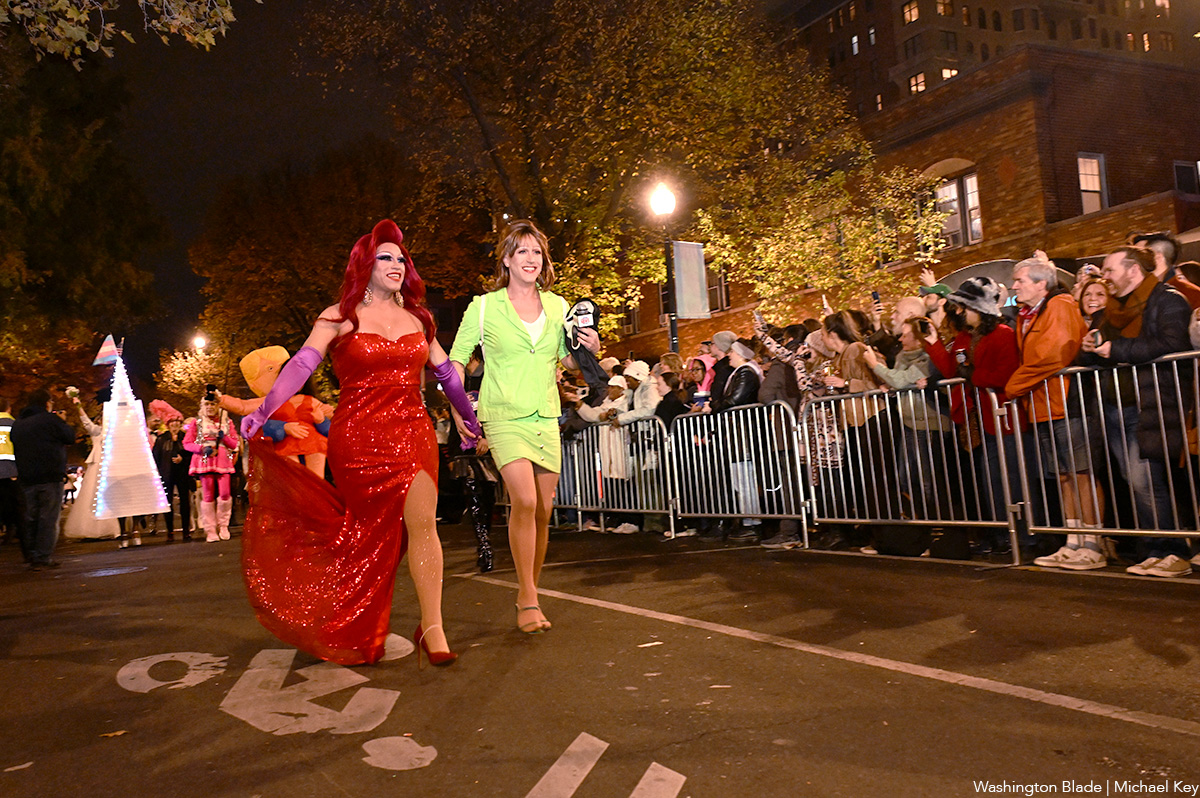
D.C. Mayor Muriel Bowser and the D.C. Mayor’s Office of LGBTQ Affairs have announced they will join the local LGBTQ community in celebrating LGBTQ+ History Month throughout October.
An Oct. 2 joint statement from Bowser and the Office of LGBTQ Affairs says the celebration will include several events in partnership with D.C. LGBTQ organizations and LGBTQ businesses. It says among the events will be a “Birthday Bash” celebrating the 20th anniversary of the Office of LGBTQ Affairs.
“Throughout October, Washingtonians are invited to honor the people, places, movements, and milestones that have shaped the District’s LGBTQIA+ community and the community’s ongoing contributions to Washington, D.C.,” the statement says.
“LGBTQIA+ History Month is a reminder that our history is not simply something we look back on — it is something we continue to make,” Japer Bowles, director of the Office of LGBTQ Affairs said in the statement.
Bowles added that in celebrating the 20th anniversary of the Office of LGBTQ Affairs “we honor the generations of advocates, artists, organizers, businesses, and residents who built our community and continue to shape its future. This milestone is an opportunity to celebrate how far we have come while continuing to build a more welcoming, inclusive and connected Washington, D.C.”
Equality Forum, the Philadelphia-based group that initiated the nationwide annual LGBTQ+ History Month in October, has said it recognizes the history, achievements, and contributions of LGBTQ people and the organizations they have led to advance the rights of LGBTQ people.
The statement released by Bowser and the D.C. Mayor’s Office of LGBTQ Affairs says these are among the upcoming events planned for October:
The Relationship Lab: A Healthy Relationships Series
Join us for an engaging series exploring what makes relationships healthy and how to recognize the signs when they’re not. Facilitated by DC SAFE in partnership with MOLGBTQA (The Mayor’s Office of LGBTQ Affairs.)
- When: Tuesday, Oct. 6, 13, and 20, 6-7:30 p.m.
- Where: 899 North Capitol St. N.E.
- RSVP: The Relationship Lab
MOLGBTQA Birthday Bash
Join us for the 20th Anniversary Celebration! We will be hosting an upbeat gathering, highlighting community leaders, advocates, artists, and institutions who have advanced LGBTQIA+ progress in Washington, D.C. over the last two decades. This event will highlight key milestones and the contributions of LGBTQIA local community partners with live entertainment and free refreshments.
- When: Thursday, Oct. 15, 6-9 p.m.
- Where: Penn Social (801 E St. N.W.)
- RSVP: s.dc.gov/MOLGBTQABday
Mayor’s LGBTQ+ Advisory Committee
Come get to know the newest members of the Mayor’s LGBTQ+ Advisory Committee. This diverse group of leaders, business owners, and advocates advise the mayor and Director Bowles on issues relating to DC’s LGBTQIA+ community and the Office of LGBTQ Affairs.
- When: Monday, Oct. 19, 6-7 p.m.
- Where: DC LGBTQ+ Community Center (1827 Wiltberger St., N.W.)
- RSVP: s.dc.gov/LGBTQMACoct
39th Annual 17th Street High Heel Race
Join us for the High Heel Race, cheering the queens, kings, and our community members as they sprint down 17th Street in heels, creativity, and pure D.C. spirit. From lively drag performances to thousands of neighbors filling the street, don’t miss this D.C. night!
- When: Tuesday, Oct. 27, 6-10 p.m.
- Where: 17th Street between R and P Streets, N.W.
- RSVP: s.dc.gov/2026HHR
What appeared to be the first LGBTQ+ History Month-related event to take place in D.C., called PRIDEtoberfest, was held Saturday, Oct. 3 from noon to 11:30 p.m. at the city’s Wunder Garten outdoor beer garden and event facility at 1101 First St., N.E. A flyer announcing the event says the Capital Pride Alliance and the Mayor’s Office of LGBTQ Affairs were among the event’s participants.
“We proudly attended, tabled, and I gave remarks at the Pridetoberfest this weekend,” Japer Bowles, director of the LGBTQ Affairs Office told the Blade.”

Center Arts Gallery celebrates 10 years with reception, auction

U.S. int’l trade negotiator, consultant James Bedore dies at 82

Campaign urges Virginia High School League to reverse stance on trans athletes

Calif. GOP gubernatorial candidate ad ‘disgusting attempt to exploit lesbian intimacy’

Trump uses anti-trans slur against Democratic Senate candidate

Eliot Glazer’s new book an engaging collection of essays

Equality Chamber hosts Pride in Business Expo and Profits & Pours

Learn more about Virginia’s queer history

‘Merrily’ is for Sondheim super fans, the uninitiated, and anyone in between

Lula, Flávio Bolsonaro to face off in second round of Brazilian presidential election
-

 Books4 days ago
Eliot Glazer’s new book an engaging collection of essays
-
Out & About4 days ago
Equality Chamber hosts Pride in Business Expo and Profits & Pours
-
Out & About4 days ago
Learn more about Virginia’s queer history
-
Theater4 days ago
‘Merrily’ is for Sondheim super fans, the uninitiated, and anyone in between