News
Disneyland Paris bans three-year-old boy from ‘Princess for a Day’
the theme park has issued an apology to the family
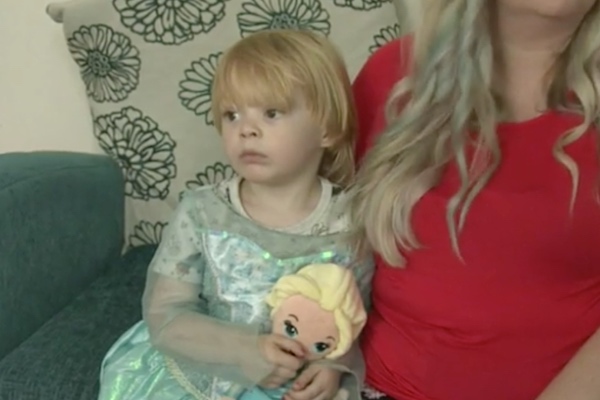
(Screenshot via NBC News.)
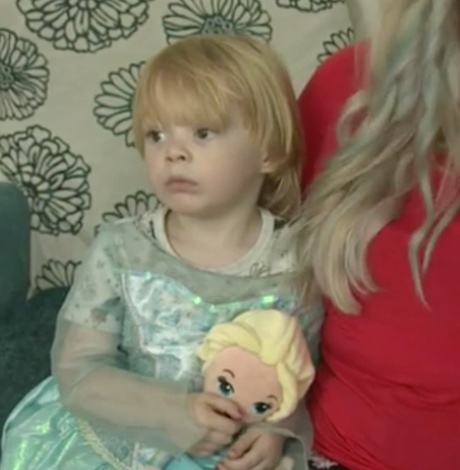
Disneyland Paris has apologized for banning three-year-old Noah McLean-Glass from participating in its “Princess for a Day” experience.
His mother Hayley, from Devon, England, says Noah’s favorite Disney character is Elsa from “Frozen.” For an early Christmas present, she decided to take him to Disneyland Paris for a princess makeover as part of the theme park’s “Princess for a Day” program.
“I knew that there would be NOTHING he’d love more than to get to wear a pretty dress, put makeup on like mummy does, and have his photo taken being one of his beloved Disney Princesses,” Hayley writes on her mommy blog, Sparkles & Stretchmarks.
She emailed her request to the theme park and was told, “At this time it is not possible to book Princess for a Day for a boy.”
“I was so angry, I literally couldn’t stop shaking for half an hour afterwards,” Hayley told ITV. “I was just so shocked. I mean, I’m his mother and if I’m okay with him doing it, who are Disney to tell me that he can’t do that?”
Disneyland Paris issued an apology and says that it was “an isolated incident.”
“The cast member’s response is not reflective of any policy or belief held here at Disneyland Paris. Of course, both boys and girls are welcome to enjoy the ‘Princess For a Day’ experience, in addition to all our other special activities,” the statement reads.



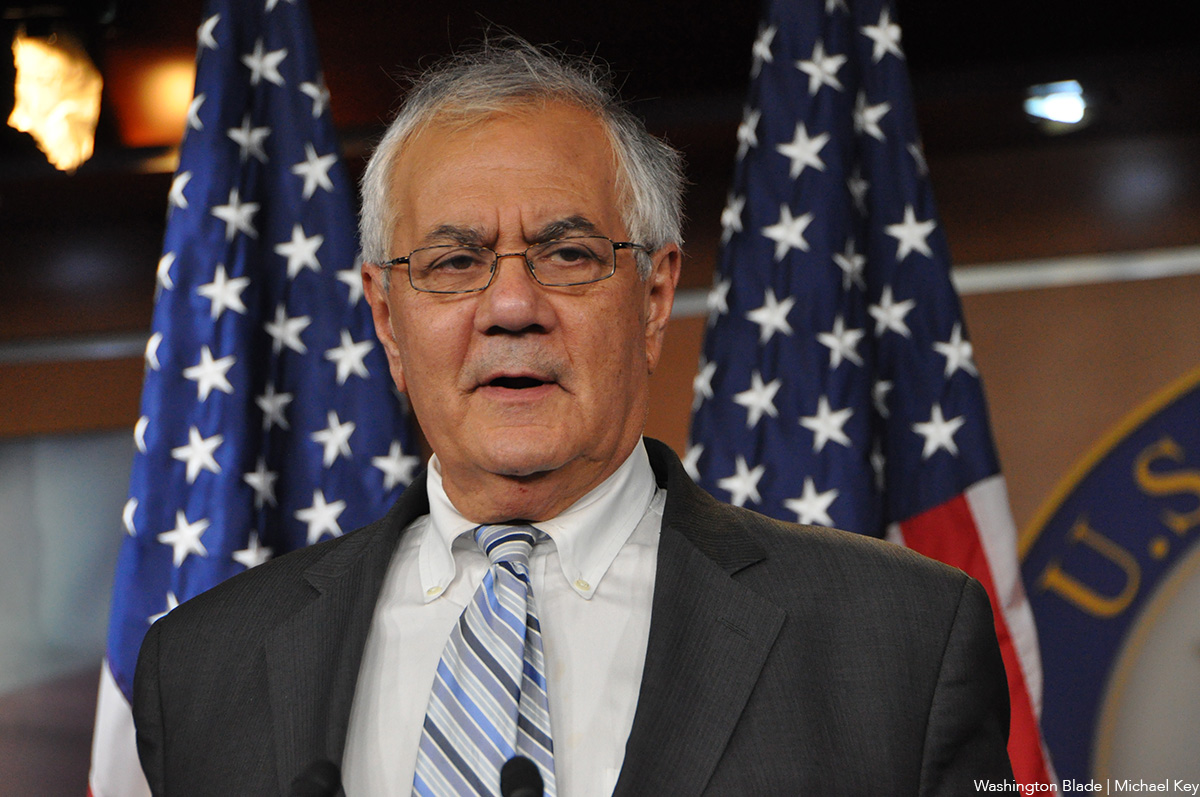
Former U.S. Rep. Barney Frank (D-Mass.) died on Tuesday. He was 86.
The Massachusetts Democrat served in the U.S. House of Representatives from 1981-2013. Frank in 1987 became the first member of Congress to voluntarily come out as gay.
The Washington Blade earlier this month interviewed Frank after he entered hospice care at his Ogunquit, Maine, home where he lived with his husband, Jim Ready, since 2013. The former congressman, among other things, talked about his new book, “The Hard Path to Unity: Why We Must Reform the Left to Rescue Democracy.”
The book is scheduled for release on Sept. 15.
NBC Boston reported Frank’s sister, Ann Lewis, and a close family friend confirmed his death.
The Blade will update this article.
Ghana
Intersex lives, constitutional freedom, and the dangerous future of Ghana’s Human Sexual Rights and Family Values Bill
Lawmakers continue to consider draconian measure

There is a dangerous silence surrounding intersex lives in Ghana — a silence shaped by fear, misinformation, cultural misunderstanding, and institutional neglect. Today, amid discussions around the possible passage of the Human Sexual Rights and Family Values Bill, 2025, that silence risks becoming law, reinforcing exclusion and deepening the marginalization of already invisible lives.
Much of the national debate surrounding the bill has focused on LGBTQ+ identities. Yet buried within it are implications for intersex persons that many Ghanaians do not fully understand because intersex realities remain largely invisible.
Intersex persons are born with natural variations in chromosomes, hormones, reproductive anatomy, and/or genital characteristics that do not fit typical definitions of male or female bodies. Intersex is not a sexual orientation or gender identity. It is a biological reality. Ghana’s Commission on Human Rights and Administrative Justice (CHRAJ) has clearly acknowledged this distinction.
Despite this distinction, the bill mistakenly collapses intersex realities into a legal framework linked to LGBTQ+ criminalization.
Although the bill contains only limited references to intersex persons, under certain medical exceptions, these references do not amount to recognition or protection. Instead, they frame intersex bodies as abnormalities requiring regulation, correction, and institutional management. This approach is inconsistent not only with Ghana’s constitutional guarantees of dignity, equality, privacy, and liberty, but also with emerging African and international human rights standards. The African Commission on Human and Peoples’ Rights Resolution on the Promotion and Protection of the Rights of Intersex Persons in Africa – ACHPR/Res.552 (LXXIV) 2023 affirms protections relating to bodily integrity, dignity, freedom from discrimination, and against harmful medical practices. Additionally, the United Nations has repeatedly condemned medically unnecessary and non-consensual interventions on intersex children. Rather than affirming the humanity and autonomy of intersex persons, the bill risks legitimizing systems of surveillance, coercion, violence, and institutional erasure.
This is not protection.
It is managed erasure.
A child born intersex in Ghana already enters a society shaped by secrecy and stigma. Families are often pressured to hide intersex children or seek “correction” to make their bodies conform to social expectations.
The bill risks intensifying this pressure.
Clause 17 creates space for “approved service providers” to support interventions relating to intersex persons, yet offers little protection around informed consent, bodily autonomy, confidentiality, or coercive treatment. Under the language of “correction” or “support,” harmful interventions may become normalized.
The intersex community has documented painful lived experiences of intersex Ghanaians that reveal the devastating consequences of stigma and invisibility.
One heartbreaking case involved intersex twins born in Ghana’s Eastern Region in 1993, who were repeatedly forced to move from village to village because of rejection and ridicule. After losing their father, their main source of protection and support, they became even more vulnerable and reportedly experienced severe emotional distress, including suicidal thoughts linked to years of stigma and exclusion. This is what invisibility looks like in practice.
Another painful example is the story of Ativor Holali, whose lived experience exposed the cruel realities intersex persons face in sports and public life. Ativor Holali endured invasive scrutiny, public humiliation, and social suspicion because her body did not conform to rigid expectations of femininity. Rather than being protected as a Ghanaian athlete deserving dignity and privacy, she became the subject of speculation, gossip, and institutional discomfort.
Her experience reflects a broader social crisis: when society insists that every body must fit a narrow binary definition, intersex people are forced to defend their humanity in spaces where dignity should already be guaranteed.
Intersex Persons Society Of Ghana (IPSOG)’s Ŋusẽdodo research further revealed that approximately 70 percent of intersex respondents reported depression, anxiety, trauma, or severe emotional distress linked to medical mistreatment, family rejection, bullying, and social exclusion.
The bill risks transforming these existing prejudices into institutional policy. Several provisions risk deepening surveillance, restricting advocacy, weakening confidentiality, and discouraging public education around intersex realities. Intersex-led organizations providing healthcare guidance, legal referrals, psychosocial support, and community services may face serious challenges.
This places IPSOG and other intersex-led organizations in Ghana at serious risk.
For many intersex Ghanaians, these spaces are not political luxuries.
They are survival mechanisms.
Governments derive legitimacy by protecting the natural rights of all persons, including dignity, liberty, bodily autonomy, and freedom from arbitrary interference. The bill raises concerns because it risks weakening these protections for intersex persons through surveillance, coercive interventions, and restrictions on advocacy.
Ghana’s Constitution declares that “the dignity of all persons shall be inviolable.” Articles 15, 17, 18, and 21 specifically protect dignity, equality, privacy, expression, and freedom of association. These protections should apply equally to intersex persons.
Intersex persons are not threats to Ghanaian culture.
Intersex children are not moral dangers.
Intersex bodies are not political weapons.
They are human beings deserving dignity, healthcare, safety, and constitutional protection.
The true measure of a democracy is how it protects those most vulnerable to exclusion. At this moment, Ghana faces a choice: deepen fear and silence, or uphold dignity, bodily autonomy, and constitutional freedom for intersex persons.
History will remember the choice we make.
Fafali Delight Akortsu is the founder and president of the Intersex Persons Society of Ghana (IPSOG).
District of Columbia
Doc on Blade reporter Chibbaro scores Emmy nomination
‘Lou’s Legacy’ chronicles 50-year career

“Lou’s Legacy: A Reporter’s Life at the Washington Blade” has been nominated for a Capital Emmy in the “Documentary – Historical” category by the National Capital Chesapeake Bay Chapter of the National Academy of Television Arts & Sciences.
“Our members include all of the video content producers who serve our local audiences in Washington, DC, Maryland and Virginia—from the Atlantic to the Appalachians, from Bristol to Baltimore,” said Capitol Emmys President Adam Longo in a press release.
Broadcast last June by WETA PBS in Washington, D.C. and MPT in Maryland, the documentary was directed and produced by Emmy-nominated filmmaker Patrick Sammon in association with the Mattachine Society of Washington, D.C. Additional nominees who worked on the film include producer Julianne Donofrio and editor Amir Jaffer.
“Lou’s Legacy” tells the story of two D.C. icons — legendary Washington Blade reporter Lou Chibbaro Jr. and beloved drag performer Donnell Robinson, known to generations of Washington audiences as “Ella Fitzgerald.” Through Chibbaro’s nearly five-decade career at the Blade and Ella’s return to the stage after a three-year hiatus following COVID, the 29-minute documentary explores the history of Washington’s LGBTQ community and today’s rising backlash against LGBTQ rights, including laws targeting drag performers.
“We’re honored that Lou’s Legacy has been recognized alongside such an impressive group of historical documentaries,” said Sammon. “This nomination is especially meaningful because the film preserves and celebrates the stories of people who helped shape queer history in Washington, DC — often without recognition from mainstream institutions. We’re deeply grateful to the Mattachine Society, Lou Chibbaro Jr., Donnell Robinson, WETA PBS, and everyone who helped bring this project to life.”
“Lou’s Legacy” premiered on WETA PBS in June 2025 during Pride month. The documentary also broadcast on Maryland Public Television and is streaming nationally on PBS.org. WETA will rebroadcast “Lou’s Legacy” several times during Pride month, including June 15 th at 9 p.m. Winners of the Capital Emmy Awards will be announced at the Capital Emmy Gala on June 20 at the Bethesda Marriott Hotel.

BREAKING NEWS: Barney Frank dies at 86

Intersex lives, constitutional freedom, and the dangerous future of Ghana’s Human Sexual Rights and Family Values Bill

Doc on Blade reporter Chibbaro scores Emmy nomination

Don’t let Rehoboth rain deter you, there’s lots to do for Memorial Day

A case of retaliation, not stalking

HIV Vaccine Awareness Day set for May 18

‘The Inheritance’ is most-nominated at this year’s Helen Hayes Awards

Calendar: May 15-21

United Night Out set for Saturday