Sports
Eastern Women’s Baseball Conference offers ageless field fun
‘Anyone who feels the camaraderie of a team will fit in here’
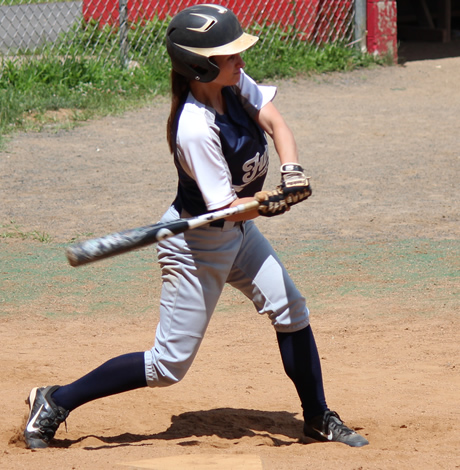
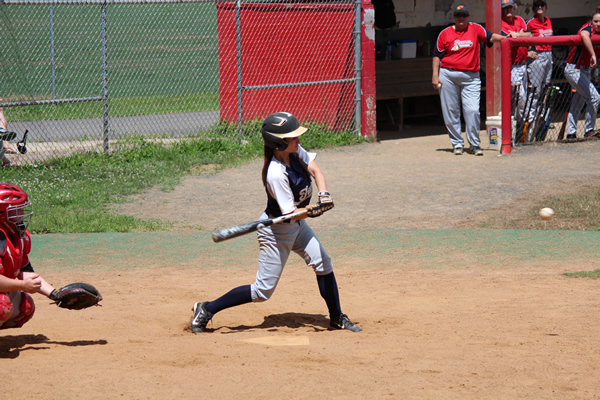
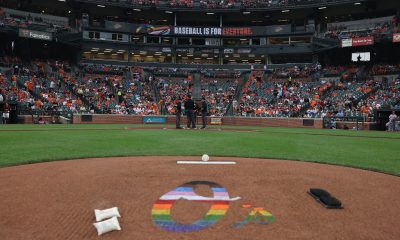
Players in the Eastern Women’s Baseball Conference represent an unusually diverse range of ages and backgrounds. (Photo courtesy EWBC)
Just two weeks ago, Major League Baseball sent out a tweet saying, “Baseball is for everyone,” in response to a young girl who worried the sport was only for boys.
According to the nonprofit, Baseball for All, roughly 100,000 girls play youth baseball each year, but only about 1,000 play high school baseball. Most girls end up switching over to slow pitch and fast pitch softball.
Locally, the Eastern Women’s Baseball Conference has been providing opportunities for women and girls to play baseball for about 20 years. The league features four teams — Montgomery County BarnCats, Baltimore Blues, Virginia Flames and Virginia Fury. Their season runs May to August and they also field a travel team, D.C. Thunder, for tournament play.
Most of the players range in age from 25-40 years-old. There are no age restrictions though, so the actual age span is 13-73.
“There is a lot of recruiting involved to maintain the four teams that will play 12 games,” says Jackie Greco, league president. “This league is a unique situation with such a wide array of ages coached by the same coaches. Anyone who wants to feel the camaraderie of a team will fit in here.”
Greco offers a sampling of the players who have found their place in the league.
One woman was a lifelong Baltimore Orioles fan, never played sports and joined at age 60. Two years later she has found her happy place out on the field and just attended her first Orioles Dream Week.
Another woman grew up playing softball and looked up to her brother who had a successful baseball career. She always wanted to play baseball and finally fulfilled that by joining Eastern Women’s Baseball Conference
“It’s true that our players come from anywhere and everywhere to start in the league,” Greco says. “We want everyone to give baseball a try.”
Greco is in her fourth season with the league. She had played slow pitch softball in St Louis four days a week before moving to the area. She began umpiring locally in high school softball and was recruited to the league.
“I went to a practice, threw one ball and was hooked from the start. I was missing that competitive flair,” Greco says. “Once I joined the tournament team and saw there were other lesbians, I knew it was totally OK for me to be myself.”
The league has its share of LGBT players, but they don’t market it that way in an effort to draw anyone in that might want to play the sport.
The players will begin their preseason training soon and can often be found at batting cages in the area until the weather lets up. On Memorial Day weekend, they will host six to 10 travel teams at the Diamond Classic in Purcellville, Va.
They also travel to other tournaments including a stop in Rockford, Ill., in the revamped Rockford Peaches stadium which is now home to the Rockford Starfires. One of their other stops is in historic Dodgertown in Vero Beach.
“A lot of people assume they aren’t athletic enough to play baseball, but it is a slower game,” Greco says. “By playing, you not only learn about the sport, but also about yourself.”



Sports
New IOC policy bans trans women from Olympics
New regulation to be in effect at 2028 summer games in Los Angeles
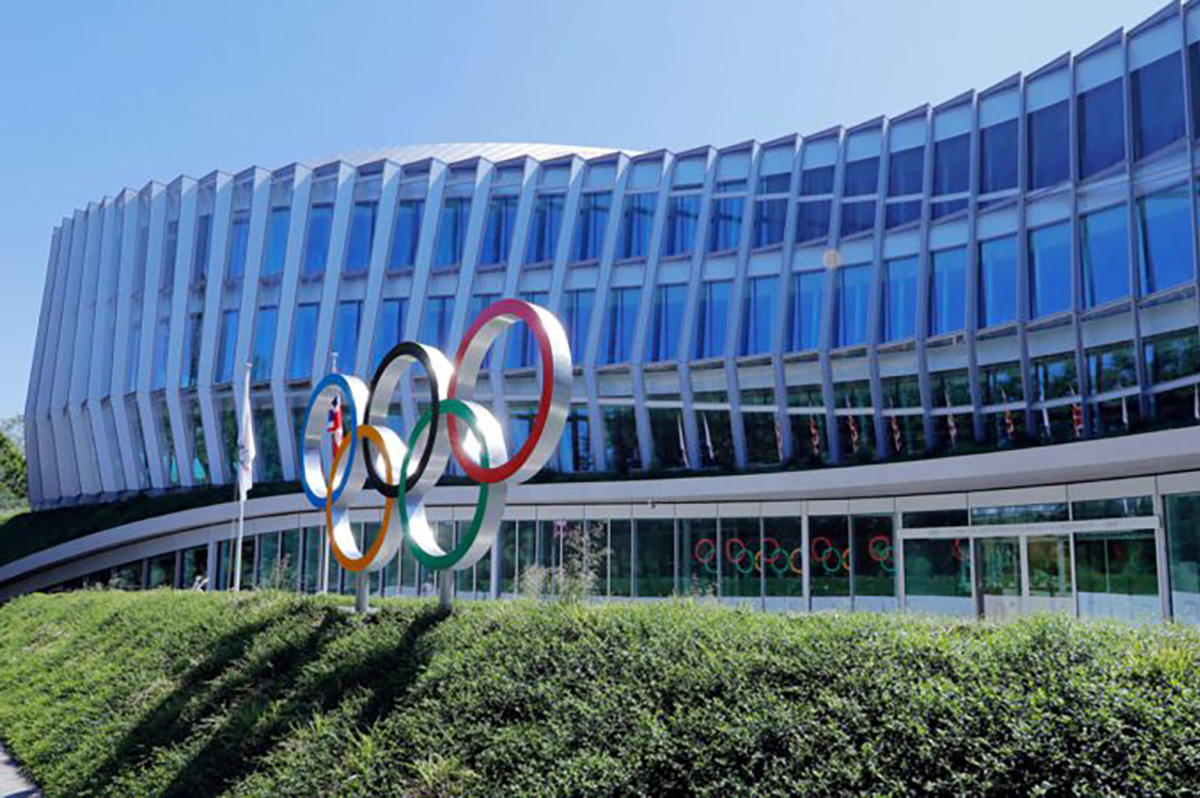
The International Olympic Committee on Thursday announced it will not allow transgender women from competing in female events at the Olympics.
“For all disciplines on the Sports Program of an IOC event, including individual and team sports, eligibility for any Female Category is limited to biological females,” reads the new policy.
The policy states “eligibility for the Female Category is to be determined in the first instance by SRY Gene screening to detect the absence or presence of the SRY Gene.”
“On the basis of the scientific evidence, the IOC considers that the SRY (sex-determining Region Y) Gene is fixed throughout life and represents highly accurate evidence that an athlete has experienced or will experience male sex development,” it reads. “Furthermore, the IOC considers that SRY Gene screening via saliva, cheek swab or blood sample is unintrusive compared to other possible methods. Athletes who screen negative for the SRY gene permanently satisfy this policy’s eligibility criteria for competition in the Female Category.”
The policy states the test “will be a once-in-a-lifetime test” unless “there is reason to believe a negative reading is in error.”
The new regulation will be in place for the 2028 Summer Olympics in Los Angeles.
“I understand that this a very sensitive topic,” said IOC President Kirsty Coventry on Thursday in a video. “As a former athlete, I passionately believe in the rights of all Olympians to take part in fair competition.”
“The policy that we have announced is based on science and it has been led by medical experts with the best interests of athletes at its heart. The scientific evidence is very clear: male chromosomes give performance advances in sport that rely on strength, power, or endurance,” she added. “At the Olympic Games, even the smallest margins can be the difference between victory and defeat. So, it is absolutely clear that it would not be fair for biological males to compete in the female category. In addition, in some sports it would simply not be safe.”
(Video courtesy of the IOC)
Laurel Hubbard, a weightlifter from New Zealand, in 2021 became the first trans woman to compete at the Olympics.
Imane Khelif, an Algerian boxer, won a gold medal at the 2024 Summer Olympics in Paris. Khelif later sued JK Rowling and Elon Musk for cyberstalking after they questioned her gender identity.
Ellis Lundholm, a mogul skier from Sweden, this year became the first openly trans athlete to compete in any Winter Olympics when he participated in Milan Cortina Winter Olympics in Italy.
President Donald Trump in February 2025 issued an executive order that bans trans women and girls from female sports teams in the U.S.
The U.S. Olympic and Paralympic Committee last July banned trans women from competing in female sporting events. Republican lawmakers have demanded the IOC ban trans athletes from women’s athletic competitions.
“I’m grateful the Olympics finally embraced the common sense policy that women’s sports are for women, not for men,” said U.S. Sen. Tom Cotton (R-Ark.) on X.
An IOC spokesperson on Thursday referred the Washington Blade to the press release that announced the new policy.
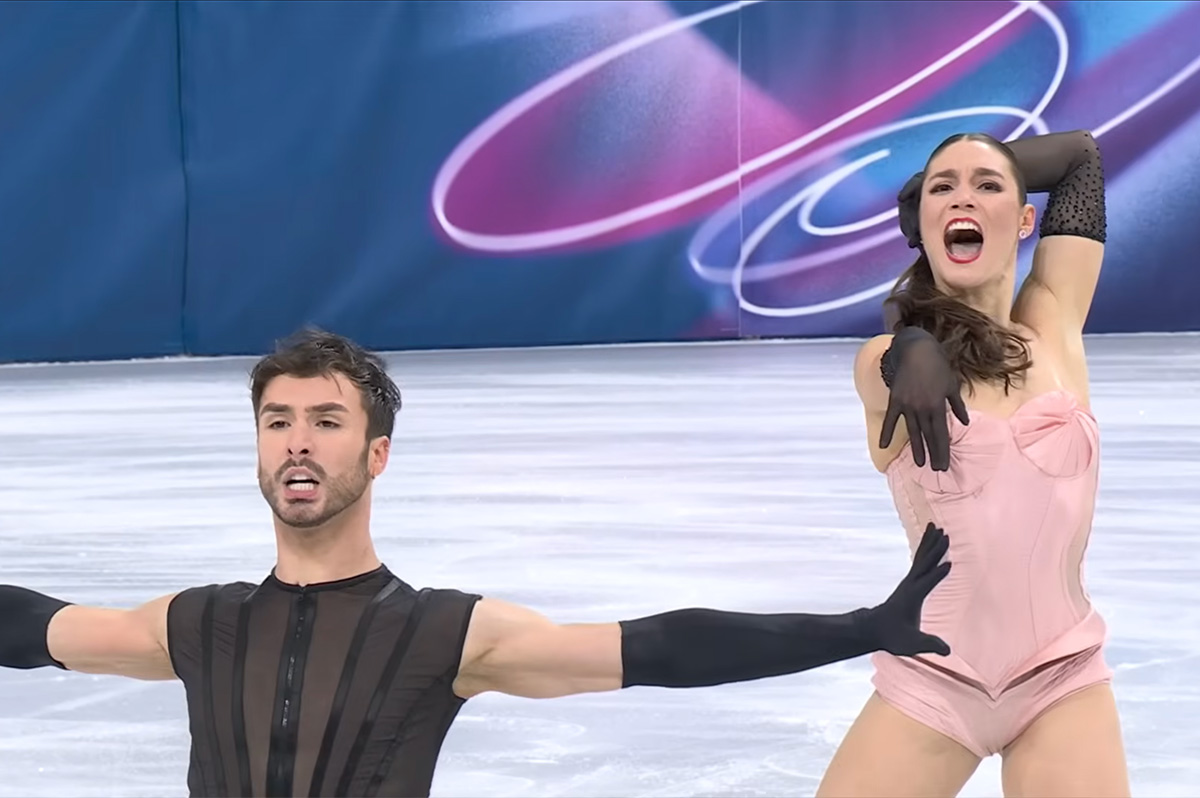
More than a dozen LGBTQ athletes won medals at the Milan Cortina Winter Olympics that ended on Sunday.
Cayla Barnes, Hilary Knight, and Alex Carpenter are LGBTQ members of the U.S. women’s hockey team that won a gold medal after they defeated Canada in overtime. Knight the day before the Feb. 19 match proposed to her girlfriend, Brittany Bowe, an Olympic speed skater.
French ice dancer Guillaume Cizeron, who is gay, and his partner Laurence Fournier Beaudry won gold. American alpine skier Breezy Johnson, who is bisexual, won gold in the women’s downhill. Amber Glenn, who identifies as bisexual and pansexual, was part of the American figure skating team that won gold in the team event.
Swiss freestyle skier Mathilde Gremaud, who is in a relationship with Vali Höll, an Austrian mountain biker, won gold in women’s freeski slopestyle.
Bruce Mouat, who is the captain of the British curling team that won a silver medal, is gay. Six members of the Canadian women’s hockey team — Emily Clark, Erin Ambrose, Emerance Maschmeyer, Brianne Jenner, Laura Stacey, and Marie-Philip Poulin — that won silver are LGBTQ.
Swedish freestyle skier Sandra Naeslund, who is a lesbian, won a bronze medal in ski cross.
Belgian speed skater Tineke den Dulk, who is bisexual, was part of her country’s mixed 2000-meter relay that won bronze. Canadian ice dancer Paul Poirier, who is gay, and his partner, Piper Gilles, won bronze.
Laura Zimmermann, who is queer, is a member of the Swiss women’s hockey team that won bronze when they defeated Sweden.
Outsports.com notes all of the LGBTQ Olympians who competed at the games and who medaled.
Sports
US wins Olympic gold medal in women’s hockey
Team captain Hilary Knight proposed to girlfriend on Wednesday
The U.S. women’s hockey team on Thursday won a gold medal at the Milan Cortina Winter Olympics.
Team USA defeated Canada 2-1 in overtime. The game took place a day after Team USA captain Hilary Knight proposed to her girlfriend, Brittany Bowe, an Olympic speed skater.
Cayla Barnes and Alex Carpenter — Knight’s teammates — are also LGBTQ. They are among the more than 40 openly LGBTQ athletes who are competing in the games.
The Olympics will end on Sunday.

GLAA releases ratings for 18 candidates running for D.C. mayor, Council, AG

Blade finalist for D.C. Society of Professional Journalists awards

He is 16 and sitting in a Cuban prison

From the Capitol to the coast: Rep. Sarah McBride shares Rehoboth favorites

PHOTOS: ‘Studio 69’

Protection should mean protection

Maren Morris to headline Capital Pride Concert

Va. Supreme Court invalidates Democrat-backed redistricting plan

Celebrate Pride in Lost River, a slice of rural heaven