Cannabis Culture
Cannabis Culture
Colo. governor signs bill permitting cannabis for autism
Colo. governor signs bill permitting cannabis for autism
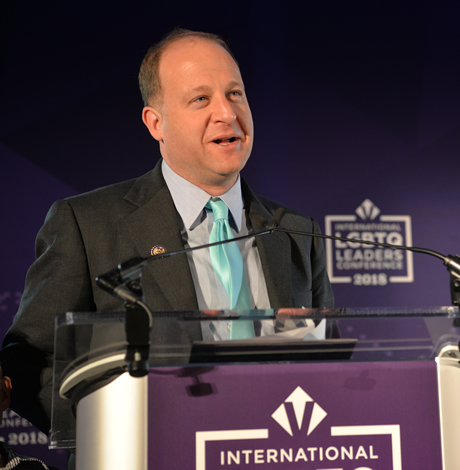
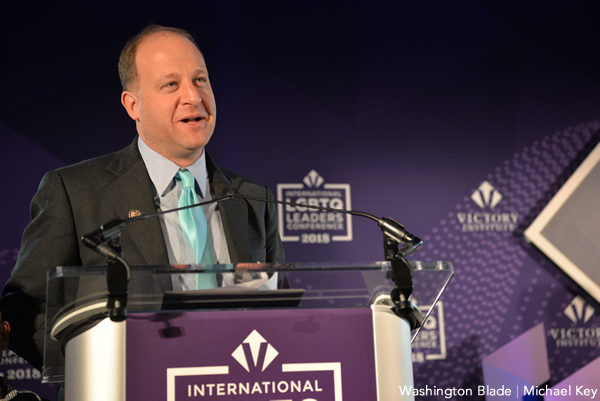
DENVER — Democratic Gov. Jared Polis signed legislation, House Bill 1028, expanding the pool of patients qualified to access medical cannabis to include those with autism spectrum disorder. The measure also mandates the state Board of Health to prioritize grant funding to study the use of cannabis for autism and other pediatric conditions.
Recent clinical trial data report that the adjunctive use of cannabidiol is associated with reduced ASD symptoms and is well tolerated among patients.
THC limits not correlated to driving impairment
LANSING, Mich. — The presence of THC in blood is not correlated with driving performance and is not a reliable indicator of psychomotor impairment, according to recommendations made by a state-appointed traffic safety task force.
A report issued by the Michigan Impaired Driving Safety Commission finds that peak THC blood levels are not associated with maximal behavioral impairment and further finds that the compound’s influence upon driving performance varies significantly among individual consumers. As a result, “The Commission recommends against the establishment of a threshold of delta-9-THC bodily content for determining driving impairment and instead recommends the use of roadside sobriety tests to determine whether a driver is impaired.”
The Commission’s recommendations are similar to those previously issued by the American Automobile Association, the National Highway Traffic Safety Administration, and other traffic safety experts who have similarly opined against the imposition of per se thresholds for the presence of THC. NORML similarly argues that the identification of THC in blood is a poor predictor of either recent cannabis exposure or impaired performance.
The Commission’s report further opines that subjects influenced by cannabis “typically drive slower, keep greater following distances, and take fewer risks than when sober.” They add, “While there is some uncertainty as to the crash risk associated with cannabis impairment alone, the research is clear that the risk is lower than that of alcohol impairment.”
Five states — Montana, Nevada, Ohio, Pennsylvania, and Washington — impose various per se limits for the detection of specific amounts of THC in blood while eleven states (Arizona, Delaware, Georgia, Illinois, Indiana, Iowa, Michigan, Oklahoma, Rhode Island, Utah, and Wisconsin) impose zero tolerant per se standards. In those states, it is a criminal violation of the traffic safety laws to operate a motor vehicle with detectable levels of THC in blood. Colorado law infers driver impairment in instances where THC is detected in blood at levels of 5ng/ml or higher.
FDA seeks public comments on CBD marketing rules
SILVER SPRING, Md. — The U.S. Food and Drug Administration has scheduled a public hearing to address issues surrounding the “safety, manufacturing, product quality, marketing, labeling, and sale” of products containing hemp-derived cannabinoids such as CBD.
Outgoing FDA Commissioner Scott Gottlieb announced that the public meeting will take place on May 31 at the agency’s White Oak Campus in Silver Spring, Md. The agency is also accepting public comments on the issue, which may be submitted through July 2, 2019.
Speaking before Congress on multiple occasions, Gottlieb has stated that it may take “years” for the agency to establish rules and regulations governing the marketing of hemp-derived cannabinoid products. He further expressed concerns about the prospect of chain retailers like CVS and Walgreens carrying certain CBD-infused products, such as topical lotions and sprays, on their shelves.
In December, Congress enacted legislation removing industrial hemp (defined as cannabis containing less than 0.3 percent THC) and products containing cannabinoids derived from hemp from the federal Controlled Substances Act. The following day, the FDA stated: “Congress explicitly preserved the agency’s current authority to regulate products containing cannabis or cannabis-derived compounds under the Federal Food, Drug, and Cosmetic Act (FD&C Act) and section 351 of the Public Health Service Act.” The agency further opined, “[I]t’s unlawful under the FD&C Act to introduce food containing added CBD or THC into interstate commerce, or to market CBD or THC products as, or in, dietary supplements, regardless of whether the substances are hemp-derived.”
The agency continues to selectively target manufacturers who it believes are marketing CBD-infused products in a manner that violates the agency’s interpretation of the law.
Public comments on this issue may be submitted electronically to the FDA. The FDA Questions and Answer page: ‘Regulation of Cannabis and Cannabinoid-Derived Products‘ is online.
Cannabis Culture news in the Blade is provided in partnership with NORML. For more information, visit norml.org.
Cannabis Culture
LGBTQ people, weed, and mental health: what you need to know
Community uses marijuana at much higher rates than general population
Uncloseted Media published this story on May 7.
By SPENCER MACNAUGHTON | In 2025, the global cannabis market size was valued at nearly $103 billion. By 2034, that number is expected to explode by roughly 1,400 percent to more than $1.43 trillion.
In short, as an increasing number of countries legalize marijuana use, everyone is starting to consume a lot more weed. And LGBTQ people tend to use cannabis at much higher rates than the general population. One study found that 55 percent of lesbian and 45 percent of gay young adults use marijuana, compared to about 33 percent and 37 percent, respectively, of their straight counterparts.
As LGBTQ people face a mental health crisis, the mainstream stereotypes that depict weed as an antidote for anxiety, panic and depression aren’t painting the full picture. And that could be exacerbating the mental health struggles so many queer people, and especially youth, face.
Here’s what the research demonstrates about marijuana and its effects on mental health:
- Multiple studies suggest a link between marijuana use and an increased risk of mental health disorders, including schizophrenia, depression and anxiety in individuals who are genetically predisposed.
- One study found that daily marijuana use, especially among younger people, makes some individuals seven times more likely to develop psychosis.
The increase in higher-potency strains of marijuana could pose unknown risks. In 1995, the average content of Tetrahydrocannabinol (THC) in confiscated marijuana was less than 4 percent. In 2022, it was more than 16 percent. Researchers don’t know the full extent of the impact that these higher concentrations can have on mental health and especially on younger people whose brains are still developing.
- A systematic review of studies published between 2013 and 2025 found damning results for the mental health of young cannabis users:
They were 51 percent more likely to experience depression, 58 percent more likely to experience anxiety, between 50 and 65 percent more likely to experience suicidal ideation and 80 to 87 percent more likely to have attempted suicide.
- While the above stats paint a grim picture, there is also some research that suggests benefits of cannabis use:
- A 2025 systematic review found that “medicinal” weed showed some efficacy in relieving withdrawal symptoms of opioid use disorder. THC use has been associated with improvement of post-traumatic stress disorder symptoms, bipolar symptoms and sleep quality.
- Other studies found that THC administered in a controlled setting was associated with a decrease of symptoms and adverse effects for a range of mental health disorders, including schizophrenia, psychotic symptoms, and anorexia nervosa.
Beyond what we pulled from academia, there is an astounding lack of information about the interplay between weed and mental health. As we dive deeper into Mental Health Awareness Month, I hope advocacy organizations, influencers and news outlets ramp up their coverage of this important topic that affects the countless LGBTQ weed smokers, many of whom are already struggling.
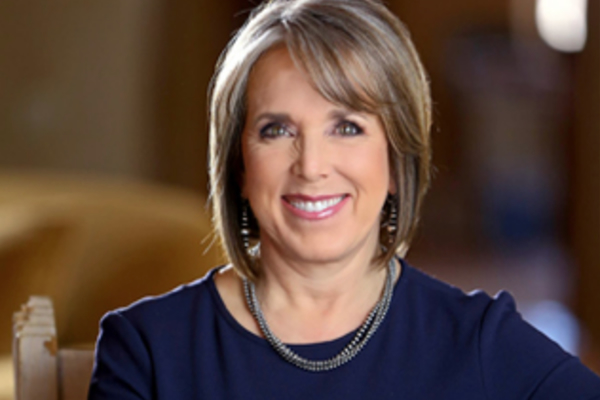
Democratic Gov. Michelle Lujan Grisham earlier this month signed two separate measures into law amending the state’s marijuana policies. The first measure (House Bill 2) legalizes and regulates marijuana possession, production, and sales for adults. The second measure (Senate Bill 2) facilitates the automatic review and expungement of the records of those convicted of low-level marijuana offenses.
Lawmakers approved both bills during a special legislative session demanded by Gov. Lujan Grisham, who had been a vocal proponent of the reforms.
NORML State Policies Manager Carly Wolf said: “This is a day to celebrate! New Mexico will greatly benefit from this new revenue stream and the creation of thousands of jobs. Most notably though, legalization will spare thousands of otherwise law-abiding residents from arrest and a criminal record, and the state’s new expungement law will help provide relief to many who are suffering from the stigma and other collateral consequences associated with a prior marijuana conviction.”
The adult-use measure (House Bill 2) permits those ages 21 and older to legally purchase up to two ounces of marijuana and/or up to 16 grams of cannabis extract from licensed retailers. It also permits adults to home-cultivate up to six mature plants for their own personal use. Retail sales would begin by April 2022.
The expungement measure (Senate Bill 2) stipulates that those with past convictions for offenses made legal under this act are eligible for automatic expungement of their records. Those currently incarcerated for such offenses are eligible for a dismissal of their sentence. It’s estimated that over 150,000 New Mexico residents are eligible for automatic expungement under this measure, according to the Department of Public Safety.
Cannabis Culture news in the Blade is provided in partnership with NORML. Visit norml.org for more information.
Cannabis Culture
Delaware cannabis activists take on corporate marijuana
Criticism from medical marijuana operators claimed that HB150 offers too many cultivation and retail licenses
As the country moves forward with sweeping changes in cannabis policy reform, locals in Delaware are tangling with corporate, multi-state medical marijuana permit holders to pass a bill for full legalization.
Adult-use activists and registered medical patients were stunned to hear opposing testimony from Delaware’s medical marijuana operators. Patients already deal with limited access and costly products. Now, many see the established industry voicing opposition as simply obstructing the progress of adult-use legislation. In response, some patients are now staging a boycott of the regulated dispensaries.
During the first committee hearing for HB150, Delaware’s adult-use bill, four of the state’s six currently licensed, multi-million dollar medical cannabis facilities offered negative testimony.
Zoë Patchell, executive director of Delaware CAN responded: “This market belongs to the long-time consumers, patients, and activists. We create the demand, we’ve been the ones driving the reform efforts, and we pay the prices at dispensaries. Cannabis is more than a market – cannabis is a community. These companies cannot reasonably fathom that we are going to purchase cannabis from any entity that has proven to put profits over patients. And now they seem willing to put consumers’ lives and freedom at risk just to hold out for an unfair advantage in the industry.”
These included publicly traded Columbia Care, “Fresh Delaware” aka CCRI, CannTech Research Inc., and the owner of EZY Venture aka “The Farm.”
They all went on record condemning HB150, and pushing a false narrative about oversupply. The core demand from the permit cartel was some protection for their private business interests with guaranteed adult-use licenses.
Criticism from the medical marijuana operators claimed that HB150 offers too many new cultivation and retail licenses, underlined by deep yet unfounded fears that the new competition would put their companies out of business.
Patchell noted, “We are not going to sit back while multi-state corporate entities, that already monopolize East Coast medical markets, work to undermine our social equity and micro-license provisions.”
Cannabis Culture news in the Blade is provided in partnership with NORML. Visit norml.org for more information.

Caso Karlina: Una sentencia histórica contra las terapias de «conversión»

Washington Blade responds to concerns over White House pool duties

Young people should know history of the fight for human rights

Dutch prime minister visits Stonewall Inn

Clavicular charged in alleged rape of teenage influencer

Over 2,000 turn out for Hands Around the Kennedy Center protest

PHOTOS: Wanda Alston Foundation Fall Reception

PHOTOS: Walk and 5K to End HIV

What LGBTQ veterans are building after ‘Don’t Ask, Don’t Tell’