Arts & Entertainment
FALL ARTS 2019 MISC. EVENTS: Things to do, places to go, people to see
Some events — galas, benefits, stand-up acts, etc. — don’t fit in our other fall arts categories. We gathered up all the miscellany here!
Get out your calendar!
The eighth annual Charlottesville Pride Festival is Saturday, Sept. 14 from 11 a.m.-7 p.m. Details at virginia.org.
Rainbow History Project presents walking tours called “Queering Capitol Hill” by Philip Clark Sept. 14 and 22. Sign up at culturaltourismdc.org. More info at rainbowhistory.org.
Rayceen has several events throughout fall including “Art All Night” (Saturday, Sept. 14), “Rayceen’s Reading Room” (Monday, Sept. 23), “Rayceen, Fix Me Up!” Autumn Mixer” (Thursday, Oct. 17), and regular “Ask Rayceen Show” dates Oct. 2 and Nov. 6 at the HRC Equality Center (1640 Rhode Island Ave., N.W.). Team Rayceen is also presenting “AfroQueer: Black LGBTQ Immigrants in America” on Thursday, Oct. 24 at the HRC Equality Center (1640 Rhode Island Ave., N.W.) at 7 p.m. It’s free. Details at askrayceen.com.
“LGBT! #ShowUp4DC!” is Thursday, Sept. 19 at 10 a.m. at the Rayburn House Office Building (45 Independence Ave., S.W.) for a hearing on H.R. 51, a D.C. Statehood Bill. Organizers say “statehood has always been an LGBTQ issue.” Look for the event on Facebook for details.
“A Tupperware Party with Dixie Longate,” a benefit drag performance for D.C. Different Drummers, is Thursday, Sept. 19 at Arena Stage (1101 6th St., S.W.). Tickets are $45 at dcdd.org/dixie.
The Washington Blade has its 18th annual Best of Gay D.C. readers’ poll awards on Thursday, Sept. 19 (earlier this year) at Dacha Navy Yard (79 Potomac Ave., S.E.). Tickets are $25 via Eventbrite or Facebook.
The Maryland Trans Resilience Conference is Saturday, Sept. 21 at 9 a.m. at the Lord Baltimore Hotel (20 W. Baltimore St.) in Baltimore.
AIDS Walk Delaware is Saturday, Sept. 21 at 9 a.m. in Rehoboth Beach, Del. Details at aidswalkdelaware.org.
Night Out for The Trevor Project is Wednesday, Sept. 25 at 6 p.m. at Pitchers (2317 18th St., N.W.). Details at thetrevorproject.org.
The 14th annual Hispanic LGBTQ Heritage Awards are Wednesday, Sept. 25 at 6 p.m. at HRC (1640 Rhode Island Ave., N.W.). Admission is free but donations will be accepted at the door. Details at latinoglbthistory.org.
Washington-Israel LGBTQ & Allies Reception is Wednesday, Sept. 25 at 7 p.m. at Sonoma (223 Pennsylvania Ave., S.E.). It’s a chance for locals to meet queer CEOs from Israel, here for AWB’s Reverse Mission project. Tickets are $18 at awiderbridge.org.
“Queer Eye’s” Jonathan Van Ness is at Sixth & I (600 I St., N.W.) on Thursday, Sept. 26 at 7:30 p.m. to talk about his new book “Over the Top.” It’s sold out but last-minute tickets may become available at sixthandi.org.
The National Trans Visibility March is Saturday, Sept. 28 at Freedom Plaza. Registration is suggested but not required. The Torch Awards are the night before.
The 23rd annual HRC National Dinner is Saturday, Sept. 28 at the Washington Convention Center (801 Mt. Vernon Pl., N.W.) at 5 p.m. Tickets are $400 at hrcnationaldinner.org.
Desiree Dik’s “Slay Them” drag competition is held the first Friday of each month at 9 p.m. at Red Bear Brewing (209 M St., N.E.). The next is Friday, Oct. 4.
The Bachelors Mill Reunion 2019 is Saturday, Oct. 5 at 6 p.m. at District Soul Food Restaurant & Lounge (500 8th St., S.E.), the original Bachelors Mill location.
The fifth annual VIDA Thrive 5k is Saturday, Oct. 12 at 8 a.m. in Rock Creek Park. Register and find info at vidathrive5k.com.
Rainbow Families Family Camp is Oct. 14–16 at Camp Tockwogh in Worton, Md. Details at rainbowfamilies.org.
Out figure skater Adam Rippon, who won a team bronze at the 2018 Olympics and later won “Dancing With the Stars,” will be at Sixth & I Synagogue (600 I St., N.W.) on Wednesday, Oct. 16 at 7 p.m. to speak about his new memoir “Beautiful on the Outside.” Tickets are $20-45 at eventbrite.com.
The Washington Blade has its 50th Birthday Gala on Friday, Oct. 18 starting at 6 p.m. with cocktails at the InterContinental (801 Wharf St., S.W.). Tickets are $300. Details at blade50th.com.
La Fantasy presents the Superhero Underwear Party with Eliad Cohen on Friday, Oct. 18 at 10 p.m. at Saint Yves (1220 Connecticut Ave., N.W.). Tickets are $25 at seetickets.us.
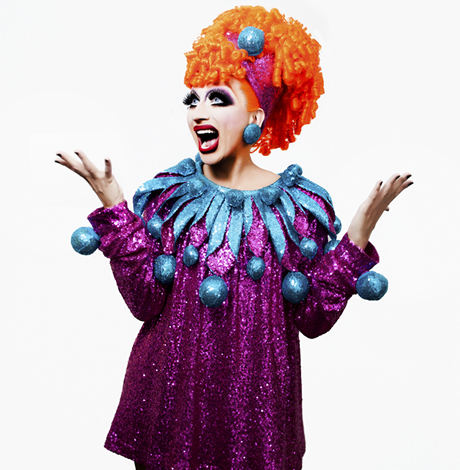
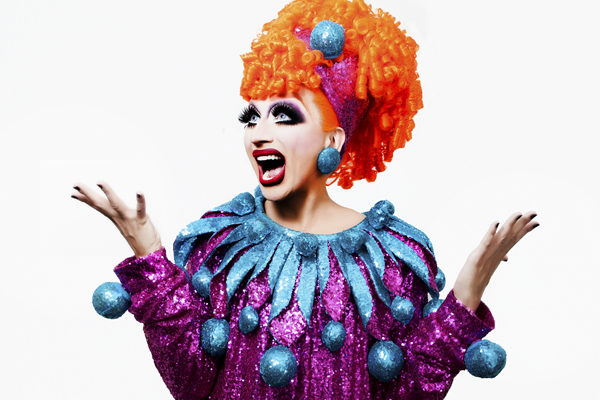
“Drag Race” champ Bianca Del Rio brings her “It’s Jester Joke” tour to The Lincoln Theatre (1215 U St., N.W.) on Friday, Oct. 18 at 6:30 p.m. Tickets are $39.50-199 at ticketfly.com.
The SMYAL Fall Brunch is Sunday, Oct. 20 at the Marriott Marquis (901 Massachusetts Ave., N.W.) at 10:30 a.m. Tickets are $250 at bidpal.net/smyal.
The fourth annual CAMP Rehoboth Block Party is Sunday, Oct. 20 from 11 a.m.-4 p.m. at the CAMP Rehoboth Community Center (37 Baltimore Ave., Rehoboth Beach, Del.). Details at camprehoboth.com.
The eighth annual Chefs for Equality event (an HRC benefit) is Tuesday, Oct. 22 at Washington National Cathedral at 5:30 p.m. Tickets went up this year — they’re $225. Details at chefsforequality.org.
Baltimore Black Pride 2018 is Oct. 25-27. This year’s theme is “Revival.” It opens with a networking event Oct. 25, a brunch with the theme “Healing Black LGBTQ Trauma” and Halloween masquerade party are Oct. 26. Oct. 27 is Sunday Family Fun Day. Details at cbebaltimore.org.
Swazz presents “Queer Halloween Party” on Friday, Oct. 25 at 9 p.m. at Smith Public Trust (3514 12th St., N.E.). Tickets are $10 at swazzevents.com.
Miss Adams Morgan is Saturday, Oct. 26 at 6 p.m. at the Washington Hilton (1919 Connecticut Ave., N.W.).
The Walk & 5K to End HIV 2019 is Saturday, Oct. 26 at 7 a.m. (check-in) kicking off and ending at Fredom Plaza (Pennsylvania Ave. and 13th streets, N.W.). The 5k begins at 9:15. The walk begins at 9:20. Post-race activities start at 10. Details at walktoendhiv.org.
“RuPaul’s Drag Race: Werq the World Tour” is Sunday, Oct. 27 at 8 p.m. at The Anthem (901 Wharf St., S.W.). Tickets start at $52 at ticketmaster.com.
The 32nd annual High Heel Race is Tuesday, Oct. 29 on 17th Street, N.W.
“Randy Rainbow Live!” is Saturday, Nov. 2 at 7 p.m. at the Hippodrome (12 N. Eutaw St.) in Baltimore. Tickets are $57-77 at ticketmaster.com.
Todrick Hall brings his “Haus Party Tour” to the Warner Theatre (513 13th St., N.W.) on Saturday, Nov. 9. He plays Baltimore Nov. 10. Tickets are $23-42 at livenation.com.
The Veterans Day wreath-laying ceremony for LGBT veterans is Monday, Nov. 11 at noon at Congressional Cemetery (1801 E St., S.E.).
Transgender Day of Remembrance is Wednesday, Nov. 20 at 6 p.m. at The D.C. Center (2000 14th St., N.W., suite 105). Details at thedccenter.org.




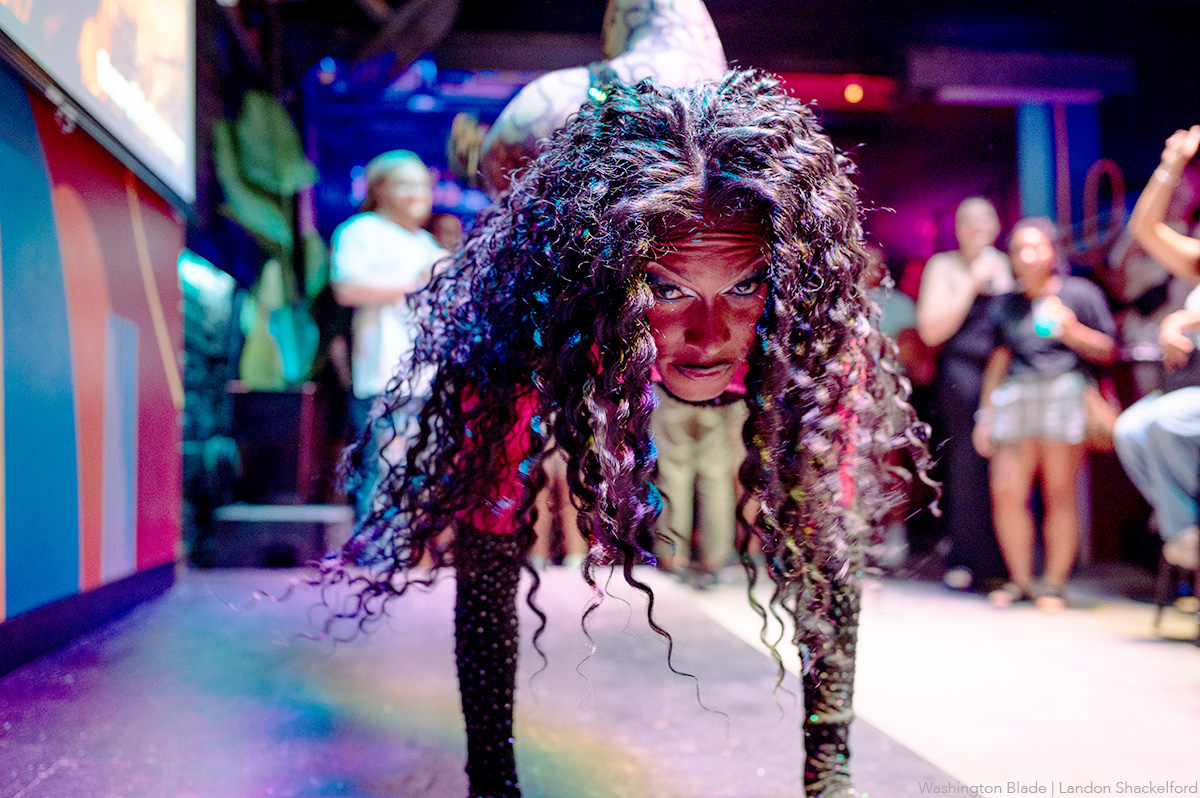
The Petal Release Party and Drag Show was held at Spark Social on Friday, July 31. Performers included Tiara-Missou, Labianna and Darcy de la Cuadra.
(Washington Blade photos by Landon Shackelford)




Celebrity News
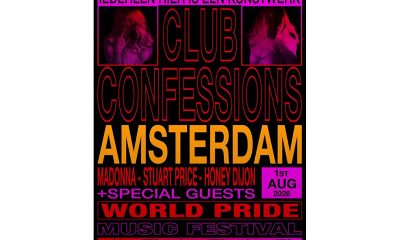
Madonna headlines World Pride Music Festival in Amsterdam
Kylie Minogue made surprise appearance alongside gay icon

AMSTERDAM — Madonna on Sunday headlined the final night of the World Pride Music Festival in Amsterdam.
The gay icon took the stage shortly before 2:30 a.m. local time (8:30 p.m. ET on Saturday) during Club Confessions, a set that MISTR, a telehealth platform that offers free access to PrEP, Doxy PEP, STI testing, and long-term HIV care, organized.
“Mother is here and this is gay heaven,” said Madonna when she took the stage inside Amsterdam’s AFAS Live concert hall that can hold up to 6,000 people.
Stuart Price, who produced Madonna’s 2005 “Confessions on a Dance Floor” album and “Confessions II,” which debuted on July 2, DJed the set.
Kylie Minogue made a surprise appearance. She and Madonna performed a new remix of “Love Sensation” from “Confessions II.”
(Washington Blade video by Michael K. Lavers)
“Throughout my career, I’ve always supported efforts to fight HIV and AIDS, and that fight begins with education and access,” said Madonna in a MISTR press release. “With MISTR, (CEO) Tristan (Schukraft) is expanding access to HIV prevention and sexual healthcare for everyone. Through this work, he’s helping preserve and strengthen LGBTQ+ spaces while investing in the communities and culture that have long sustained us.”
Minogue in an Instagram post thanked Madonna, Price, Schukraft, and MISTR.
Madonna appeared at The Abbey in West Hollywood, Calif., in April. Madonna in June celebrated Pride month with a pop-up performance in New York’s Times Square.
Jake Resnicow and Insomniac produced the World Pride Music Festival that also featured Bebe Rexha and Paris Hilton, among others.
“Pride has always been about bringing our community together,” said Resnicow. “At a moment when too many people are being told to hide or make themselves smaller, gathering openly, joyfully, and without apology matters more than ever. I couldn’t be prouder of what this festival brought to life in Amsterdam — one dance floor, completely free.”
Theater
Reggie White relishing first season as artistic director of Woolly Mammoth
First five shows a reminder that ‘pressure is a privilege’
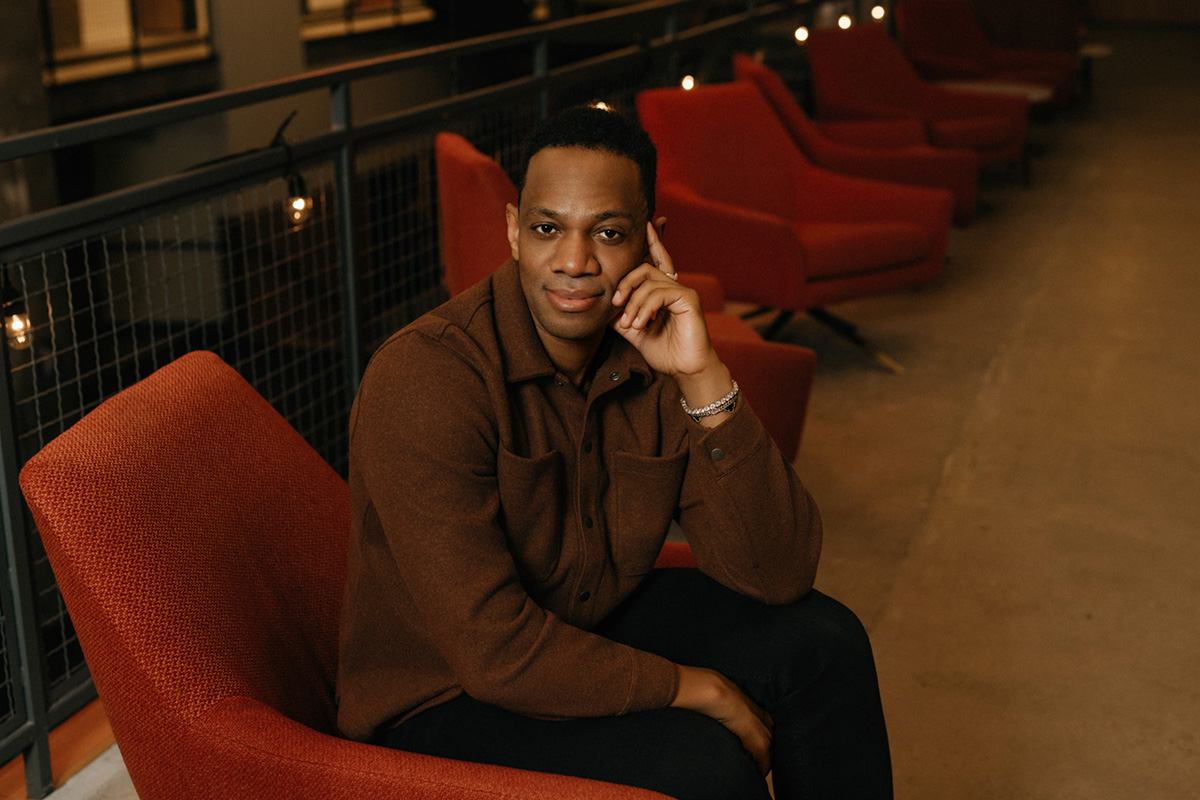
Madly talented and preternaturally energetic, Reggie D. White, 38, is about to launch his first season as artistic director of D.C.’s boundary-pushing Woolly Mammoth Theatre Company.
White brings a lot to the job. As actor, playwright, and director, his varied resume includes a 2019 Broadway acting debut in Matthew López’s Tony Award–winning play “The Inheritance,” his semi-autobiographic play “Fremont Ave.” that opened to acclaim last season at Arena Stage, and a number of exciting regional directing credits.
A longtime admirer of Woolly, the out theater-maker was selected from a pool of candidates before receiving the offer last November and starting work in January. His season of five world premieres kicks off with gay playwright Steve Yockey’s “Venus” (Sept. 9-Oct. 4), a darkly funny study of modern relationships told through two lesbians looking back on their first encounter.
White was introduced to Woolly Mammoth as a pre-law student at Cal State Hayward in the San Francisco Bay Area, long before he foresaw a life in the arts. “As part of a random theater history course, I was assigned to write a paper on a counterculture company called Woolly Mammoth,” he recalls “Strange name. I was like what the hell is that?”
Nineteen-year-old White was intrigued. Research acquainted him with Howard Shalwitz who co-founded Woolly in 1980, and the company’s commitment to living playwrights and new work. He also learned how theater could be used as a tool for difficult conversations and shape the way people thought about social issues by employing imagination and rigor.
“Never in a million years did young me envision that one day I’d be Woolly’s third artistic director in its 46-year history,” says White. “It’s kind of serendipitously insane.”
WASHINGTON BLADE: Was there a moment when the enormity of the job hit you?
REGGIE D. WHITE: After I’d signed my contract and finished all the paperwork, I got my keys and sat in the theater by myself in the dark and thought about what an incredible honor it is to be trusted with what happens in this beautiful space [in D.C.’s Penn Quarter]. I might have cried. Sometimes I have to pinch myself to remember it’s real.
BLADE: Are you curating the upcoming 2026–2027 season?
WHITE: Yes, I am. It’s very rare that an incoming artistic director gets to program their first season, but I was lucky in terms of time. After being hired late last year, I asked Woolly’s managing director Kimberly E. Douglas, if she thought it would be crazy if I programmed the season. She warned me it would be hard.
I invoked tennis legend Billie Jean King’s maxim “pressure is a privilege” and got to work.
These plays [dubbed White’s “first five”] represent both the kind of theater that Woolly can do really well and speak directly to my voice as curator and how I want to contribute to the larger theatrical conversation in the DMV.
Getting here has meant a lot of late nights. But I knew the juice would be worth the squeeze.
BLADE: As a queer artistic director, what makes you unique?
WHITE: When I was playing in “Inheritance” on Broadway, after a performance, U.S. Supreme Court Justice Sotomayer came backstage to meet the cast. She spoke about how her lens on the world as a Puerto Rican woman shapes her decisions. Similarly, because I’m a queer Black man I see through a lens that shapes my work.
I know I’m not the only queer artistic director in town. For me, it influences how I make editorial decisions. Out of this season’s five plays there are explicitly queer characters in four [“Venus,” “Chanukkah Spectacular,” “Ten Grand,” and “Love I Awethu Further”] and I’m directing two [“Venus,” “Ten Grand”].
BLADE: Will we see familiar faces?
WHITE: Every show this season will feature a Woolly Mammoth company member in its cast. Our company also includes designers and directors who we’ll include. I’m invested in continuing to provide a showcase for their work.
BLADE: How do you think queer audiences will receive the season?
WHITE: Very well, I think. For queer people who’ve had to navigate the world subversively and solve problems in unique ways, I think it will be especially interesting. I find theater a potent place for questions.
Like all artistic directors. I’ll show up for the job in my own way. I’m just excited that I’ve been invited to bring the fullness of myself to the role.

PHOTOS: Petal Release Party

Madonna headlines World Pride Music Festival in Amsterdam

Reggie White relishing first season as artistic director of Woolly Mammoth

PHOTOS: Amsterdam Pride Canal Parade

Amsterdam Pride Canal Parade draws hundreds of thousands

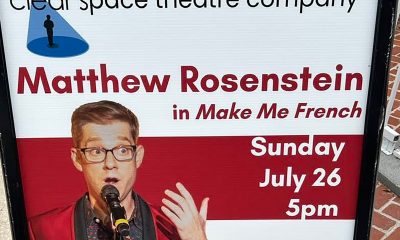
Matthew Rosenstein in ‘Make Me French’ a hit at Clear Space Theatre

‘Heartstopper Forever’ delivers satisfying conclusion

Madonna to perform at World Pride in Amsterdam

BLADE ENDORSEMENT: Susan Stewart for mayor of Rehoboth Beach

PHOTOS: Lambda Legal in the Pines
-

 Opinions5 days ago
Matthew Rosenstein in ‘Make Me French’ a hit at Clear Space Theatre
-
Movies5 days ago
‘Heartstopper Forever’ delivers satisfying conclusion
-
Celebrity News4 days ago
Madonna to perform at World Pride in Amsterdam
-
Opinions4 days ago
BLADE ENDORSEMENT: Susan Stewart for mayor of Rehoboth Beach