a&e features
Porter’s gown, DeGeneres’ speech among queer Golden Globe ’20 highlights
And looking ahead — will winners have better odds at nabbing the Oscars?
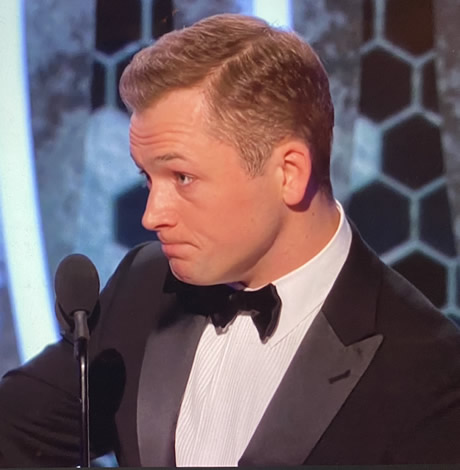
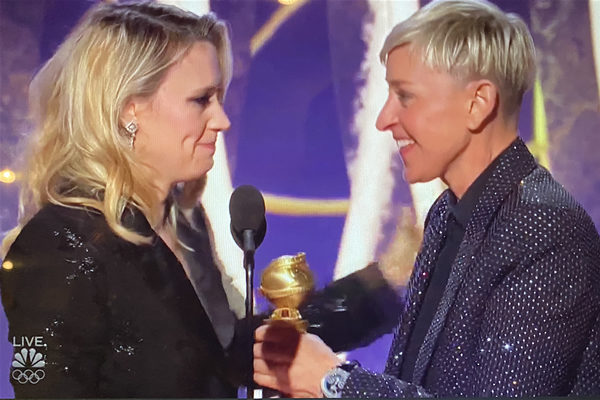
The Golden Globe Awards have become an uneasy inebriated blend of snark and sentiment. The sentiment comes from the winners and the special honorees who tearfully thank their colleagues and promote their latest cause (this year there were lots of shout-outs to the brave Australian firefighters). A few speeches did break through the haze; this year those speeches came from the likes of Kate McKinnon, Ellen DeGeneres, Charlize Theron, Tom Hanks and especially a dazzling Michelle Williams.
The snark was supposed to come from Ricky Gervais who returned to host the ceremony for the fifth time since 2010. Gervais and broadcaster NBC promised a gleeful naughty night of politically incorrect humor, but the British comedian delivered tired toothless material. There were lots of F-bombs (Gervais kept the bleeper on his toes), lame jokes about Harvey Weinstein and Jeffrey Epstein, and lunchroom whining about the vegan meal (serving vegetables to vegetables), but only one comment (about Apple and Chinese sweatshops) that had any real bite.
Instead, the best line of the evening came from Sacha Baron Cohen who compared Mark Zuckerberg to the hero of “JoJo Rabbit,” a misguided child who spreads Nazi propaganda and has imaginary friends.
For LGBT audiences, the highlight of the evening came when “Pose” star Billy Porter hit the runway in a magnificent white tuxedo with a splendid six-foot-long white feather train. In addition to the Alex Vinash tuxedo, Porter wore custom-made white satin shoes from Jimmy Choo, an Emm Kuo cigarette-box handbag and over $2.5 million in jewelry loaned by Tiffany & Company. On the runway, the Best Actor nominee announced that his gender-bending outfit was a form of activism and that he was wearing white to symbolize new hope and new beginnings.
Unfortunately, Porter did not take home the statue for Best Performance in a Television Series (drama). Overall, there were not a lot of out winners, but there weren’t a lot of queer nominees (either LGBT or “gay for pay”) to choose from this year. There was a similar lack of women and people of color among the nominees. Not a single female director was nominated in any of the directing categories, a lack so appalling that even Ricky Gervais commented on it.
Nonetheless, there were some amazing queer moments during the 77th annual Golden Globes ceremony. Ellen DeGeneres received the second Carol Burnett Award; in her thoughtful and heartfelt (if somewhat rambling) speech she discussed the power of television in LGBT representation and mocked convention by thanking her husband and kids. She was introduced by Kate McKinnon who tearfully praised DeGeneres for being a brave television pioneer while Laura Dern (Ellen’s co-star in the infamous “Puppy Episode where both the actress and her TV character bounded out of the closet) beamed from the audience.
The other honorary award of the evening, the Cecil B. DeMille Award, went to Tom Hanks for his outstanding contributions to the world of entertainment. In his delightfully goofy speech, he looked back over his long career, including a guest appearance on “The Love Boat” and starring in “Bosom Buddies” where he and Peter Scolari dressed in drag to find an affordable apartment.
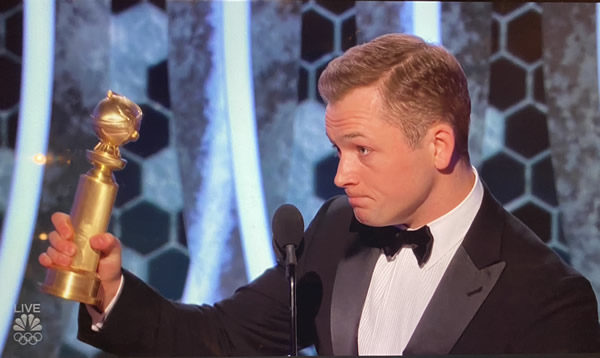
“Rocketman,” the fantasy biography of queer pop icon Elton John, soared high on Sunday night. Sir Elton beat out Beyoncé for Best Original Song (“I’m Gonna Love Me Again”) and Taron Egerton beat out Daniel Craig, Roman Griffin Davis, Leonardo DiCaprio and Eddie Murphy for Best Performance by an Actor in a Motion Picture (musical or comedy).
Two outspoken LGBT allies won for playing LGBT icons. On the television side, Michelle Williams won for playing Gwen Verdon in “Fosse/Verdon”and on the movie side, Renée Zellweger won for playing Judy Garland in “Judy.” Williams’ acceptance speech was a powerful testimony about reproductive freedom.
No single movie or TV show dominated the evening. As expected, “Once Upon a Time . . . in Hollywood,” “Chernobyl,” “Fleabag” and “Succession” each took home multiple awards.
In some interesting upsets, the World War I drama “1917” took home honors for Best Drama and Best Director (Sam Mendes). Actor Joaquin Phoenix and composer Hildur Gudnardottir won for “Joker” and “Missing Link” won Best Animated Motion Picture over several popular movies from Walt Disney’s collection of remakes and reboots.
The Golden Globes are awarded annually by the Hollywood Foreign Press Association (HFPA), a small and rather eccentric group of movie critics. There are roughly 95 members of the HFPA from over 55 countries; members must retain a primary residence in southern California and work for a media outlet that publishes primarily outside the United States. Every member must be currently accredited by the Motion Picture Association of America (MPAA) and must submit clippings to renew their membership every year.
While the Golden Globe ceremony is usually considered the start of the Hollywood awards season, it’s not clear if they are more than a convenient shorthand for critics and publicists to use as an indicator of quality. The small size of the voting pool, the limited number of awards categories (there are no design or technical awards) and the split between dramas and musicals/comedies limit the use of the Golden Globes as crystal balls.
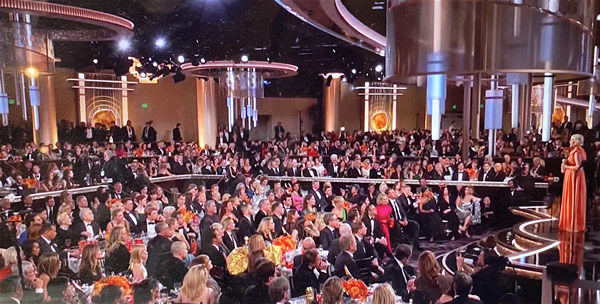
Instead, the awards presented by the various guilds over the coming weeks may be a better sign of who will bring home Oscar gold. Members of the various unions and associations (like the Screen Actors Guild, the Writers Guild of America, the Directors Guild of America and the Costumers Designers Guild) have closer ties to the Academy of Motion Picture Arts and Sciences. Look for the Oscar nominees to be announced Monday, Jan. 13.
This year, the Oscars will be presented earlier than usual (Feb. 9). The Spirit Awards for independent films will be presented Feb. 8 and winners of the Dorian Awards from GALECA (The Society of LGBTQ Entertainment Critics) will be celebrated on Feb. 2. The SAGS (Screen Actors Guild Awards) are Jan. 19 on TNT and TBS at 8 p.m.





a&e features
From Media Matters to massive queer ragers: the rise of Tara Dikhof
The Washington Blade sits down with the DJ and drag star on her summer tour, rise to prominence, and how Musk helped shape her path.
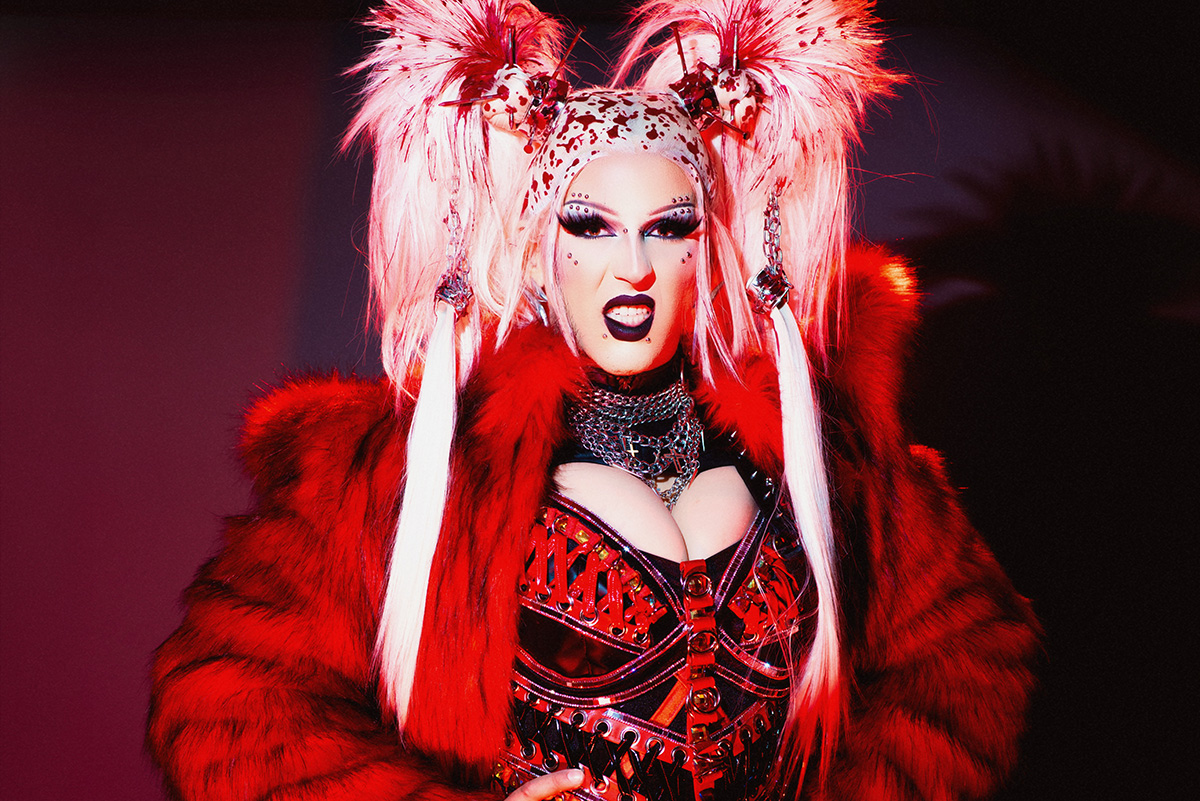
Before becoming the “full-time party girl” with the power to turn any room with Instagram Reels into a dingy dance floor packed with queer people — at least for a minute or two — Tara Dikhof was much like a lot of queer Washingtonians: upset at how the first Trump administration quickly began attacking marginalized communities’ rights, and in need of a creative, constructive outlet.
“I used to be a journalist at Media Matters, where I worked on our online extremism and LGBTQ program,” Tara Dikhof told the Blade when asked how she became the actualized drag performer she is today. “I did extensive work documenting how the right wing media ecosystem poisons the debate on queer issues — and spreads virulent lies about LGBTQ people online.”
Media Matters is a nonprofit that describes itself as a “progressive research and information center” with the goal of “monitoring, analyzing, and correcting conservative misinformation in the U.S. media.”
Tara, who, while working at Media Matters lived up to that goal. She wrote — or assisted the media watchdog with — more than 150 articles for the web-based organization. While she covered a wide variety of topics, she became a leading voice covering Joe Rogan during her tenure as a senior researcher for the LGBTQ Program at Media Matters.
“I think some of my most impactful work from my time at Media Matters was when I was the leading journalist reporting on Joe Rogan’s extremism and right wing misinformation. I broke the story that he was encouraging young people not to get the COVID vaccine,” Dikhof said. “I reported that the presidential debates hadn’t asked a question about LGBTQ issues since the 2000s. I also led a study looking at TV news reporting on anti-trans violence, showing that TV news stations, cable and broadcast combined, collectively reported on anti-trans violence for less than an hour almost every year.”
In addition to media coverage, Dikhof also worked on the inside as a Truman-Albright Fellow and policy analyst at the U.S. Department of Health and Human Services, working to improve the health and safety of Americans.
That effort was recognized from both sides of the political aisle. She and her detailed research appeared in a slew of outlets, includingDemocracy Now!, The Atlantic, and even the Blade’s West Coast sister publication, the LA Blade, among others. While her work began making headlines informing people about the dangers of under coverage of LGBTQ issues, it also garnered attention from staunch anti-LGBTQ voices.
One of those voices — and the one Dikhof ultimately credits as the reason she bowed out of the media watchdog world — was Elon Musk. Musk, the CEO of Tesla, founder and chief engineer of SpaceX, and owner of X, was not pleased with coverage of the platform’s questionable practices under his leadership. The app relaxed censorship policies, dissolved its Trust and Safety Council, and reinstated thousands of previously banned accounts — many of them far-right accounts found to be pushing harmful misinformation and disinformation.
“He was trying to silence fact-based journalism that revealed that his platform X was running advertisements next to Nazi content,” Dikhof said. “When you’re facing lawsuits against the richest man in the world, unfortunately, the facts don’t matter as much.”
She said it led to her being let go from the media watchdog organization — something she had worked so long to help grow awareness about the dangers of growing authoritarianism on platforms and across the airwaves.
“That was incredibly devastating. I dedicated my entire adult life to the progressive movement, to trying to stop right wing misinformation, and to have that drop out from under me was defeating, to say the least. But you can’t keep a powerful girl down.”
She didn’t stay down for long. She tapped into the drag and DJ world after leaving the nation’s capital. Since then, she has expanded on her drag journey and opened for some of the world’s biggest performers — from Aliyah’s Interlude, to Violet Chachki, to massive pop superstar Chappell Roan. It seems the Dikhof rocket has taken off and doesn’t look like it’s slowing down.
That switch, she explained, has her feeling like she is doing more for the LGBTQ community than she could at Media Matters.
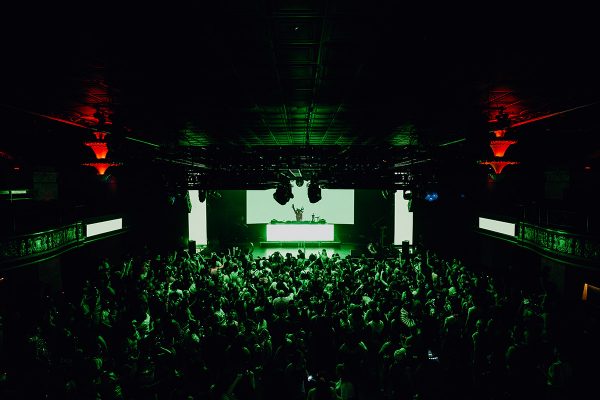
“I started throwing parties and community events for queer people in Boston, and I now throw parties for over 1,200 people a month,” she said. “I honestly don’t feel like I’ve ever had more of an impact on queer and trans people than I am now. I believe, from the bottom of my heart, that getting a group of LGBTQ people in a room together and letting them radically express themselves through dance and movement and to build new friendships and to find the love of their life — is a radical act.”
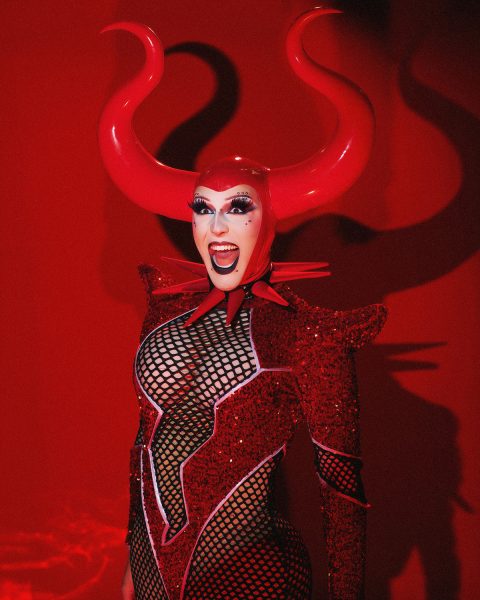
Her goal is simple — provide a place for LGBTQ people, specifically trans people, to let down their hair — or in her case, giant wigs and fantastical headpieces — and just dance.
“I’m just trying to give people a space to exist, which for a lot of queer and trans people right now is not something they can do. They don’t feel safe at work, they don’t feel safe at home, they don’t feel safe in public, and the one oasis that they can access is the gay club. It’s a place where they can dress however they want, they can love whoever they want.”
That radical act, she explained, should be as inclusive as America is diverse. She sees the waves of conservatism that have hit the federal government — and state offices around the country swinging to the right — reflected in the nightlife scene she encounters. LGBTQ clubs have long been a proxy for the social standards in mainstream America, which often focus heavily on young, white, cisgender men.
“It is one of the most connecting things we can do while we’re on this planet. My guiding light is, I am trying to build dance floors that are multigenerational and multiracial. I’m trying to start a new chapter in queer nightlife, where dance floors aren’t just dominated by white, buff gay men.”
While in-person nightlife has led to a diverse dance floor thumping with bops from Slayyyter’s new release “Wor$t Girl In America” to gay club classics like Ariana Grande’s “Into You” — with wild-haired Dikhof at the helm in looks that could make even Cher do a double take — her rise has also been immensely assisted by some of the very platforms she once called out while living in Washington.
She has amassed quite the following — 142,000 followers on Instagram, 2.6 million likes on TikTok, and thousands of streams on SoundCloud.
Despite this growing and visibly powerful media presence, she has hard limits on when and where she deems it appropriate. The dance floor is not always one of those places — not just due to the growing data on the harm social media causes to users’ health, but also to stay true to her goal of helping the LGBTQ community become a stronger, more accepting place.
“Social media promises connection and relationships, but it’s not true. What we actually need is a way for people to put their phones down and connect with others in real life,” she said. “I’m trying to build a coalition that represents the true power of the LGBTQ community, where we can all exist in harmony together. At a lot of my parties, I have a no-phones policy, because what I want people to do is disconnect from social media, disconnect from our system of mass surveillance, and just be present for a few hours.”
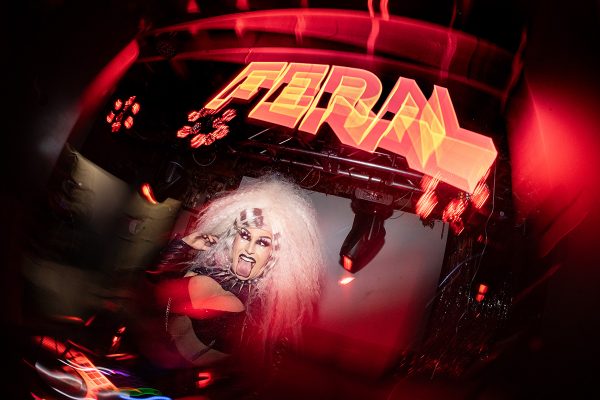
“For my party, Feral, which is [a] no-phones LGBTQ rager, at the door before anyone enters the party, we tell them our party’s policies, and we make sure they have a verbal yes agreeing to them,” she said. “Those policies are no phones, no photos, no videos on the dance floor, treat yourself and others with respect.”
She sees this intentional inclusivity as a major way to combat the hate trickling down from the Trump-Vance administration and regurgitated by mainstream media organizations that feed into that bias.
“I believe that we can create, and we can continue to build radical change in this country on the dance floor. So much mainstream media has consistently allowed conservative media to set the terms of debate for LGBTQ rights. Mainstream media outlets like the Washington Post, outlets like New York Times, put trans rights up for debate when we can all agree that human rights are not something that we can debate.”
She continued, explaining that the bias mainstream media imposes — like with The New York Times’ consistently criticized coverage of transgender people, which often has little or no actual transgender voices in its reporting — frames these issues as cultural debates rather than basic human rights.
“These mainstream outlets don’t debunk those claims. They don’t push back on them. We need to say that lesbians belong at the gay club. We need to say that we don’t tolerate anti-Black discrimination at the gay club. We need to say that trans people deserve to be loud and messy in the gay club, just like everyone else gets to.”
She explained that what she is trying to do is simple in theory — make the space truly a dance haven for everyone in the community.
“What I’m really trying to do is I’m trying to open a portal of transcendence. I’m trying to create magical moments where all of the problems in the world drop out of your mind.”
Dikhof attempts to do this, she explained, by tapping into that deeply human — and animalistic — need for connection.
“Humans are primates and primates are animals that need physical touch. We need community spaces, and increasingly, with social media, late stage capitalism, and a horrible economic outlook, people don’t have a public forum to connect with others. There have been nights where I have taken a $3,000 loss, but it’s part of it.”
To her, the value queer nightlife gives to the community can’t be measured by ticket sales or ad clicks — it’s measured by acts of queer joy and defiance that echo the community’s need for broader survival in an era of book bans and hostility for the sake of cruelty.
“All we need is a room for four hours, a DJ, a working sound system, and a community that cares about protecting each other. If you have that, you can create total bliss. I think the beauty and transcendence of queer nightlife is something that Republican lawmakers will probably never understand.”
She sees the dance floor as just as important for queer people as the Senate floor. Not separate from politics — it is politics.
“I do believe that having queer community spaces is an integral part of political organizing. We cannot let the bastards steal our joy. Getting out of the house and being loudly queer is a form of resistance.”
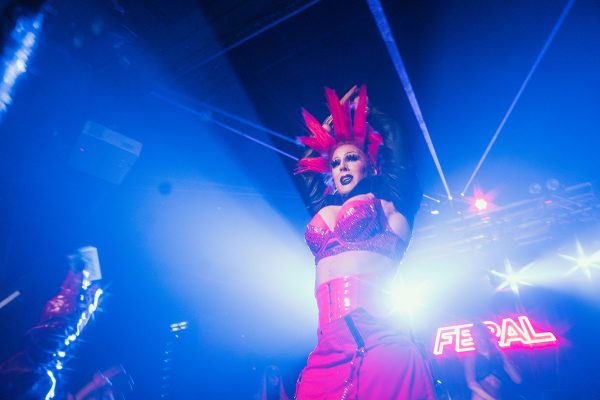
“Right now, I’m really living my wildest dreams and I’m hungry. This is just the beginning for Tara Dikhof. We’re living in a society where we have Paleolithic emotions, medieval institutions, and God like technology, and I am going to use that God like technology to the best of my ability.”
Tara Dikhof is currently on her summer tour, starting at Project GLOW for Queer Chaos in Washington. She will return — after crisscrossing the country — to perform at Bunker on June 20 during Capital Pride weekend.
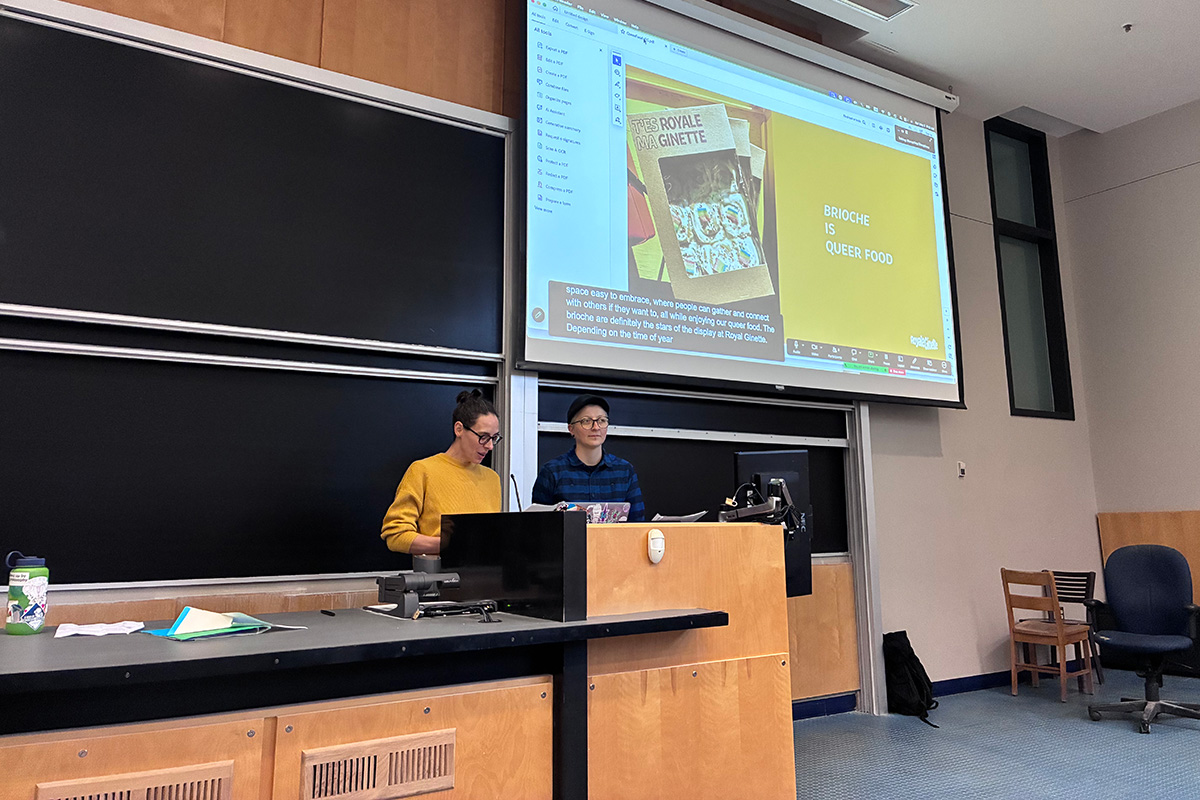
Just as humans have always had meals, queer humans, too, have enjoyed meals. Yet what is it that makes “queer food” distinct?
At the beginning of May in Montreal, the Queer Food Conference 2026 sought not to answer that question, but to further interrogate it. The conference united scholars, activists, artists, journalists, farmers, chefs, and other food industry professionals for three days of panels, workshops, discussions, and, yes, meals, in an inclusive, thoughtful, contemplative-yet-whimsical environment, taking a comprehensive view of the landscape of queer food.
The two organizers – Professor Alex Ketchum, at the Institute for Gender, Sexuality, and Feminist Studies of McGill University in Montreal, and Professor Megan Elias, Director of Food Studies & Gastronomy at Boston University – met in 2022 when Elias acted as a peer reviewer for Ketchum’s second book, “Ingredients for a Revolution,” a wide-ranging history of more than 230 feminist and lesbian-feminist restaurants, cafes, and coffeehouses from 1972 to the present in the US.
Elias, taken by the book and its exploration, invited Ketchum to speak at one of Elias’s courses, at which pastries were served and feminist bread making was baked into conversation. Elias floated the idea of co-organizing a queer food conference – and a hot 24 hours later, Ketchum said yes, with plans sketched out, from grants to topics to speakers. In parallel, the duo started to conceptualize “Queers at the Table,” a book based on their work (published last year).
The conference, the book, the research: their work is, in part, grounded in the question: What is queer food? True to queer theory, each has her own nuanced response as drivers of their research, challenging the traditional and looking beyond norms of food studies. Ketchum’s view is that it is grounded on food by and for the queer community, in specific histories, and especially in the labor behind the food. Elias posits that queer food is at the intersection of queerness and culinary studies, beyond gender norms and binaries, back to the societal basics of queer food as part of queer humans always having meals. “Queer food destabilizes assumptions about food, gender and sexuality, making space for a wider range of relationships to food,” she says.
The academics’ professed enthusiasm, however, rarely reached beyond small circles.
“I regularly attended big food studies conferences, but almost never saw presentations about gender identity beyond women’s roles,” says Elias about her prior work, and when her students would ask for additional literature about sexuality and food, results had been sparse. Ketchum echoed this gap: When she was in graduate studies, she received hesitation from leadership about her chosen field of study. By 2024, however, queer food as an area of study and practice had grown, whether in popular culture or well as in publishing, setting the stage for the first Queer Food Conference in 2024 in Boston. Their aim at that even was to launch the subfield of queer food studies into the mainstream, so that fellow academics, students, and those interested in the space could convene, “creating space for others to build,” says Ketchum. “People were enthusiastic.”
Once Ketchum and Elias published “Queers at the Table” in 2025 (notably, gay author John Birdsall also published a book examining queer identity through food last year, “What Is Queer Food?”), they laid the foundation for the 2026 conference in Montreal. This edition was an “embodied” conference, inclusive of various ontologies in queer food studies: theory, labor, art, taste, an interdisciplinary, expansive grounding.
Topics ranged from cookbooks and influencers to farming and land movements, bars and cafes, brewing and baking, history and sociology, writing and printmaking, healthcare and community, and centering marginalized – especially trans – voices.
Naturally, food was centered. The conference’s keynotes were not academics, but the chefs themselves who created the food with their own hands that attendees ate over the three days. “Not to disregard a pure academic space,” says Ketchum, “but to not have food in a room when we talk about food would be wild.”
Jackson Tucker, a Distinguished Graduate Fellow at the University of Delaware, said that “What I found [at the conference] was a genuinely diverse gathering: scholars who did grounded social research but also practitioners, organizers, and people who had never thought about an academic conference in their lives and didn’t need to. That mix is the soul of this whole project for me. Without the people who are out in the world doing queer food, the conference wouldn’t exist.”
Ketchum – her home being Montreal – also worked to fold in community-driven events so that attendees could get a taste of queer food in the city outside of classroom walls; for example, attendees participated in a collaborative evening pizza-making class at a queer-owned pizzeria.
The interdisciplinary nature of the conference led to sharing of research, thoughts, activities, and planning. There was a “value of bringing people together of different backgrounds, which leads to richer discussion,” she says.
Elias picked up on this theme: “I saw people bonding and connecting and believing in Queer Food Studies,” – one of the central goals that Ketchum noted, further legitimizing a nascent field. As both professors continue their research and leadership, they envision a continued layering of centering the queer experience and community through the shared value and study of food.
a&e features
Gay Men’s Chorus celebrates 45 years at annual gala
‘Sapphire & Sparkle’ Spring Affair held at the Ritz Carlton
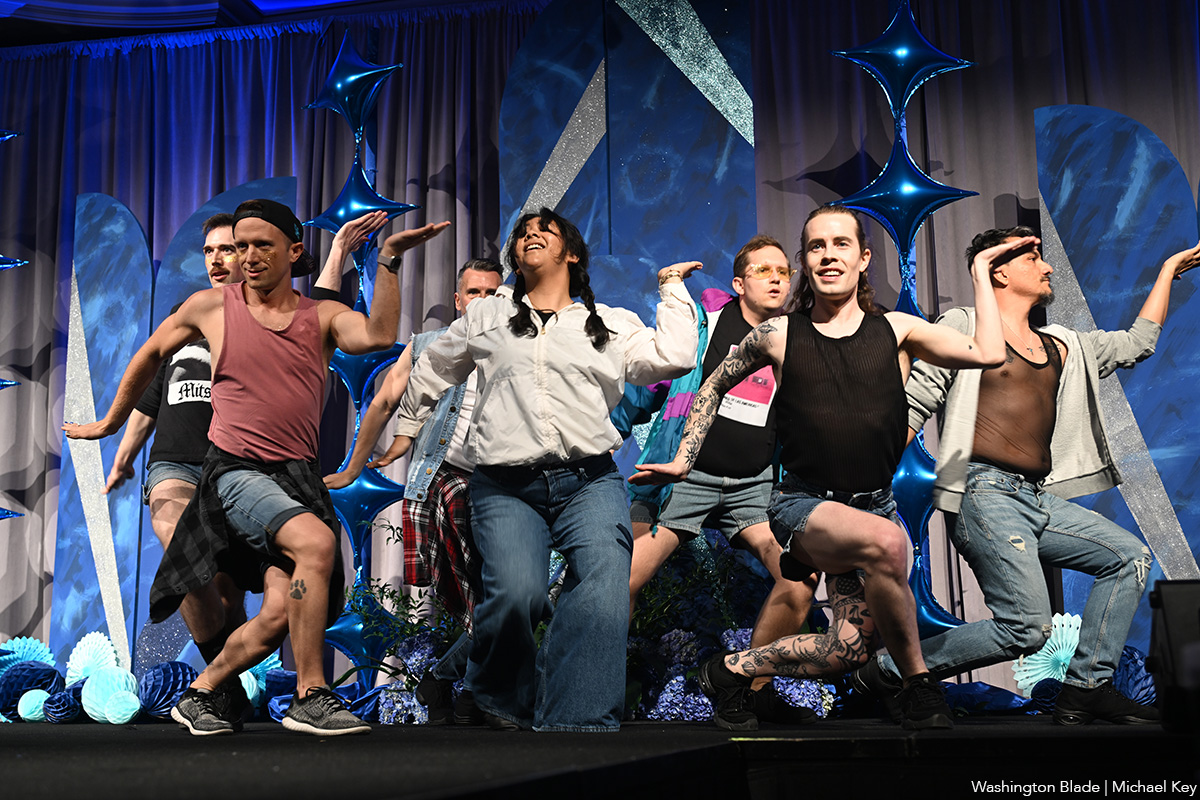
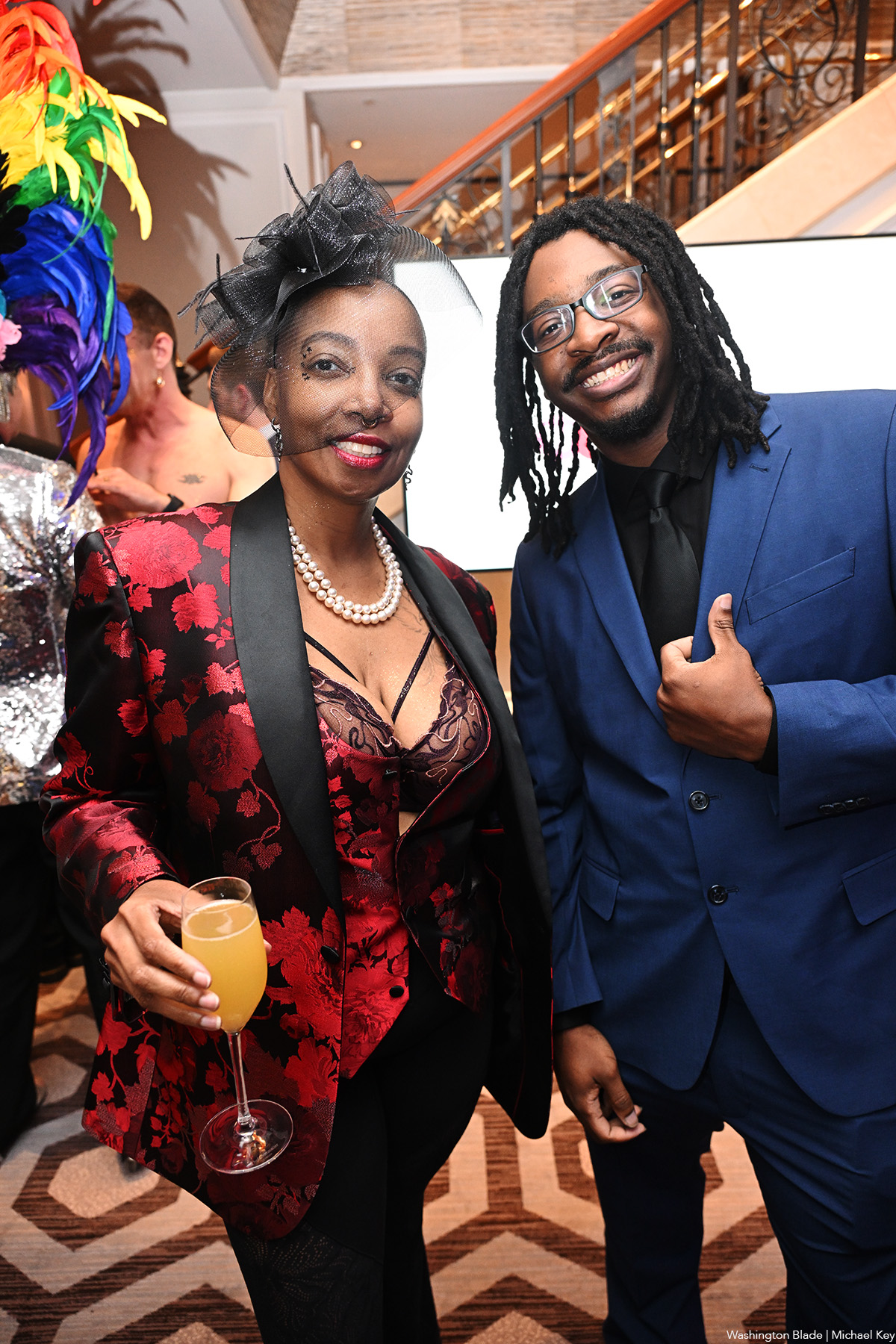
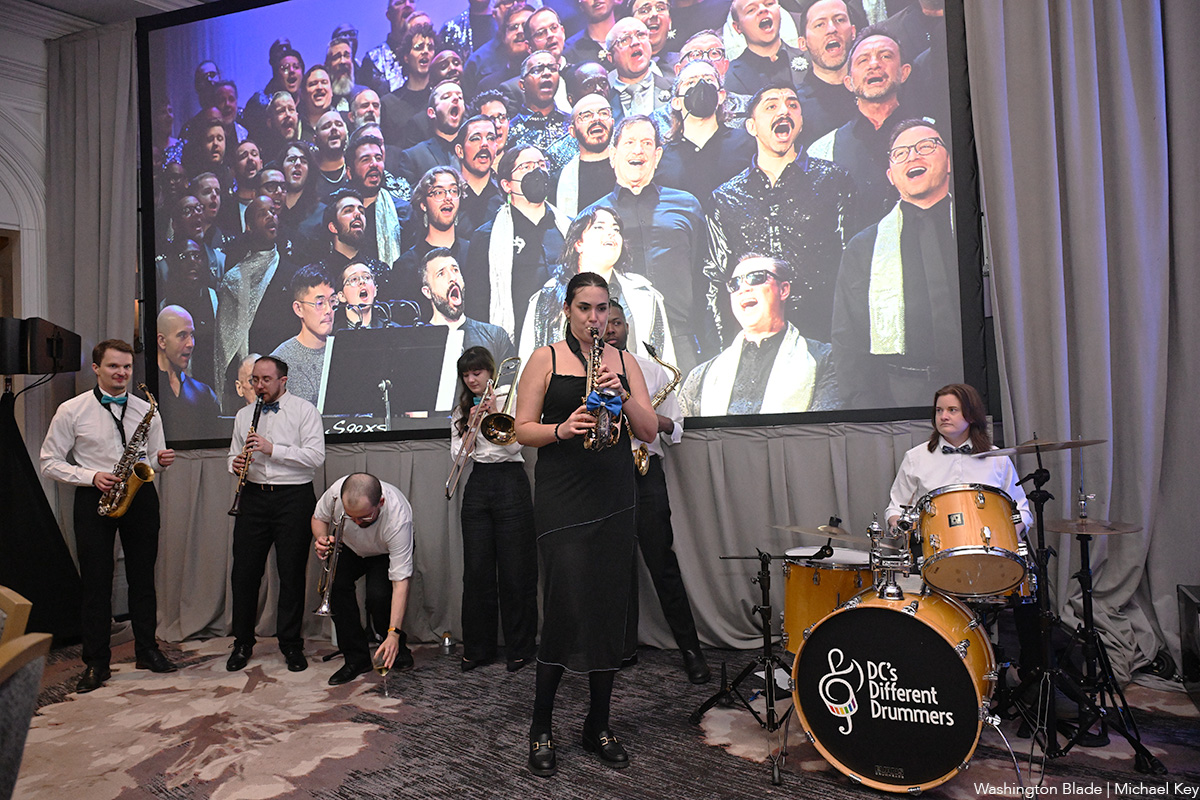
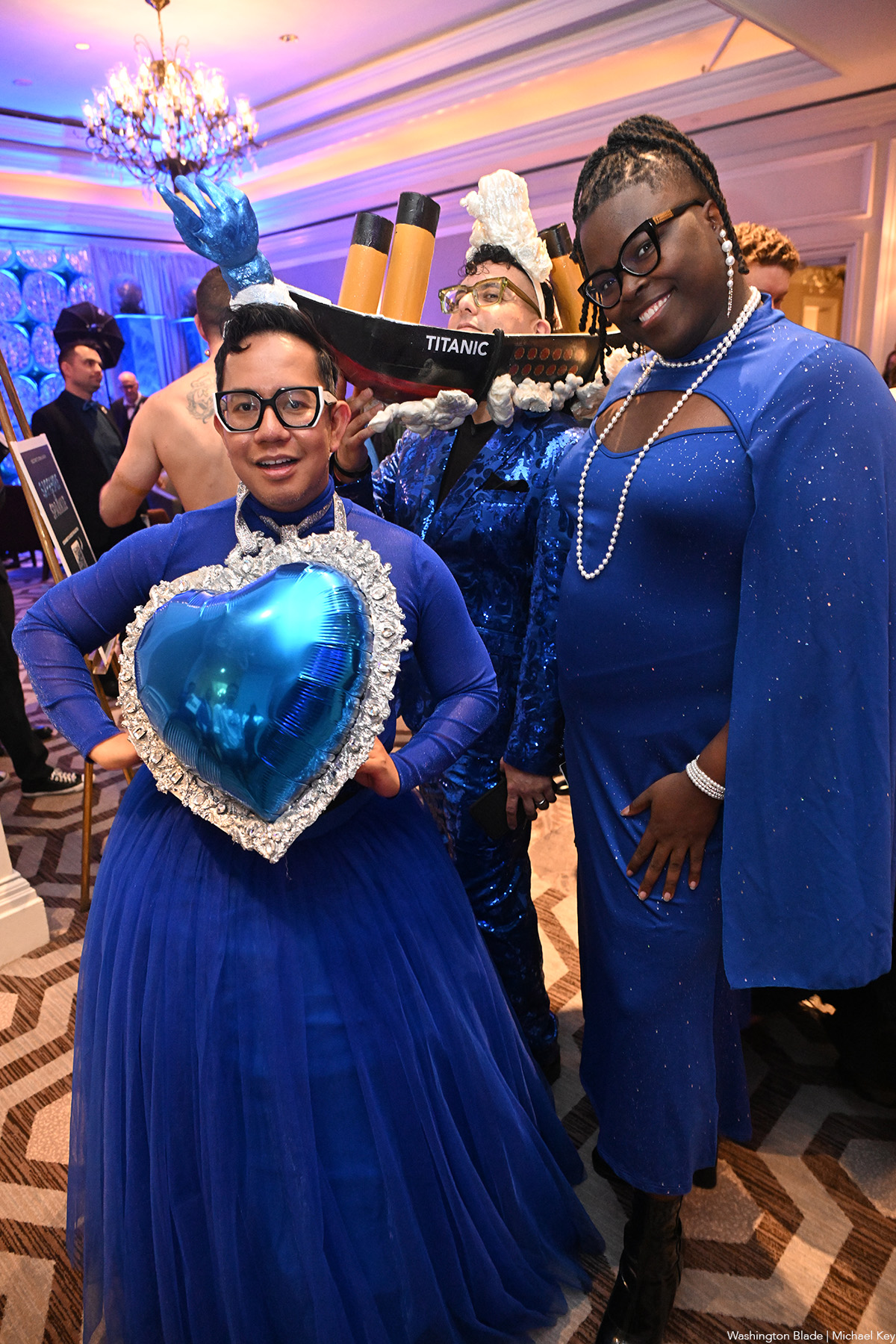
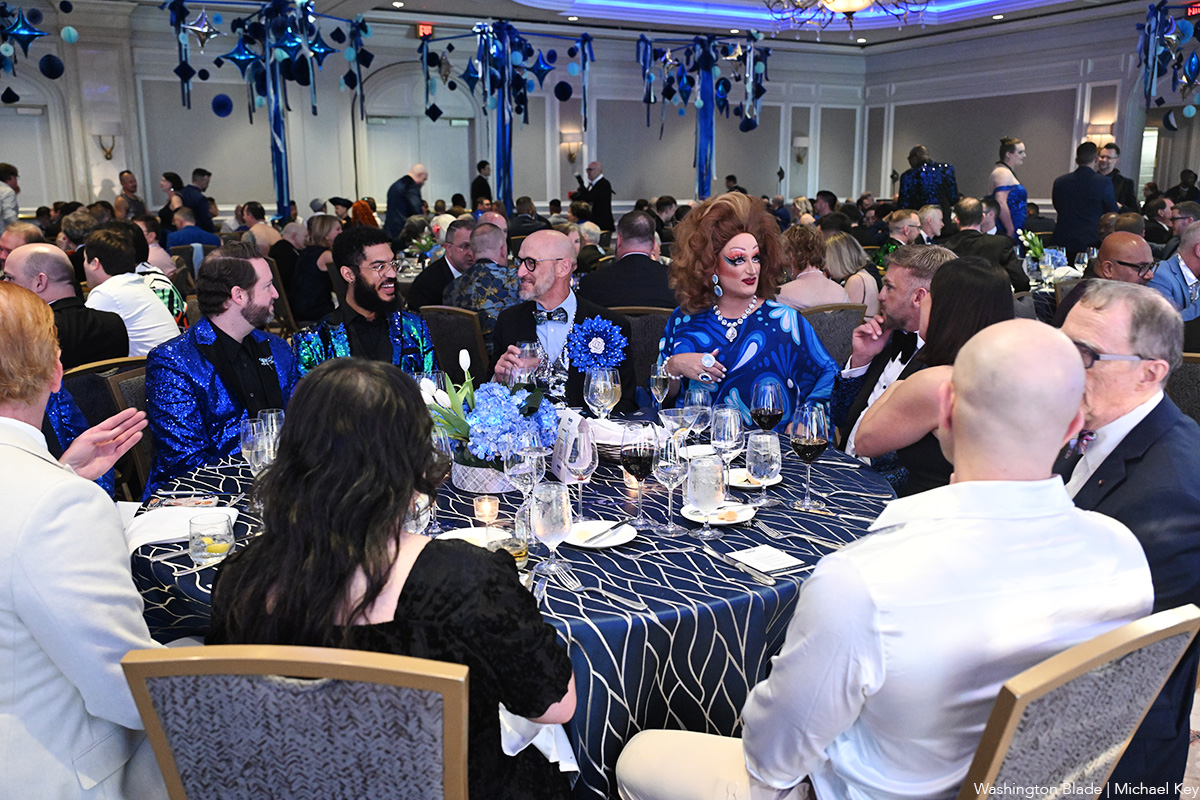
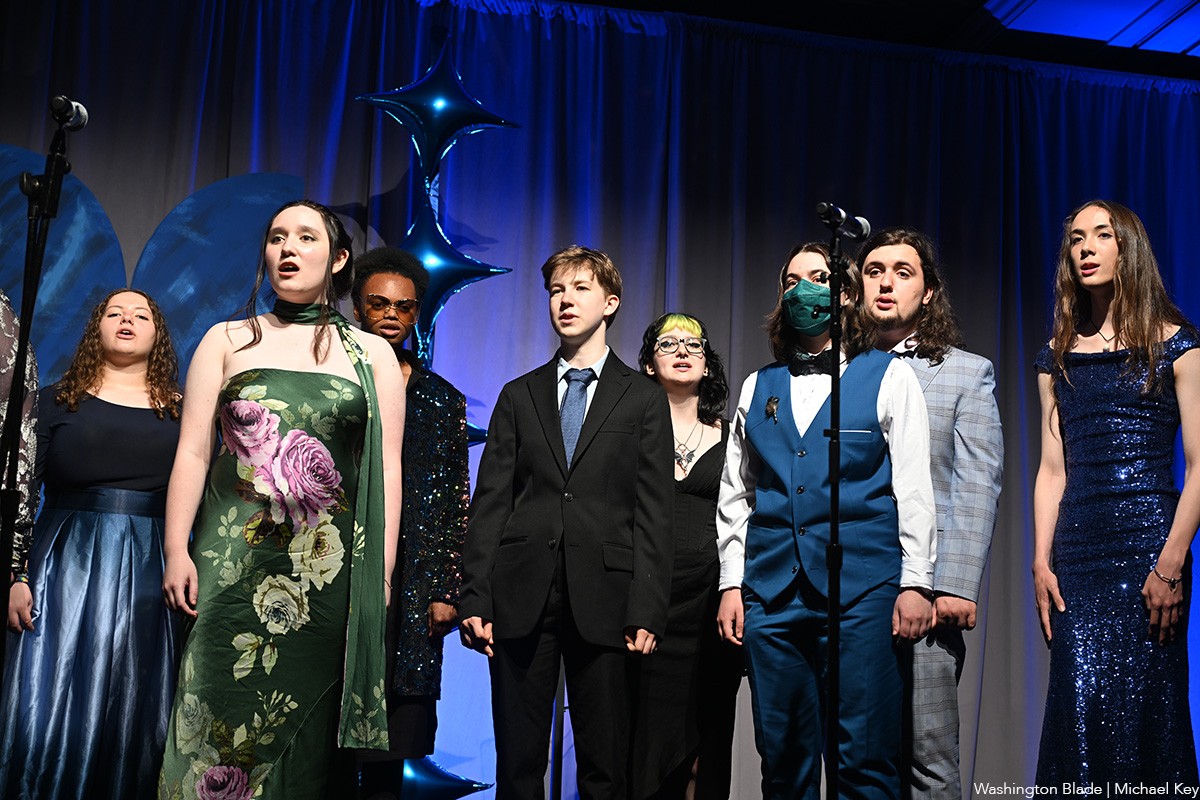
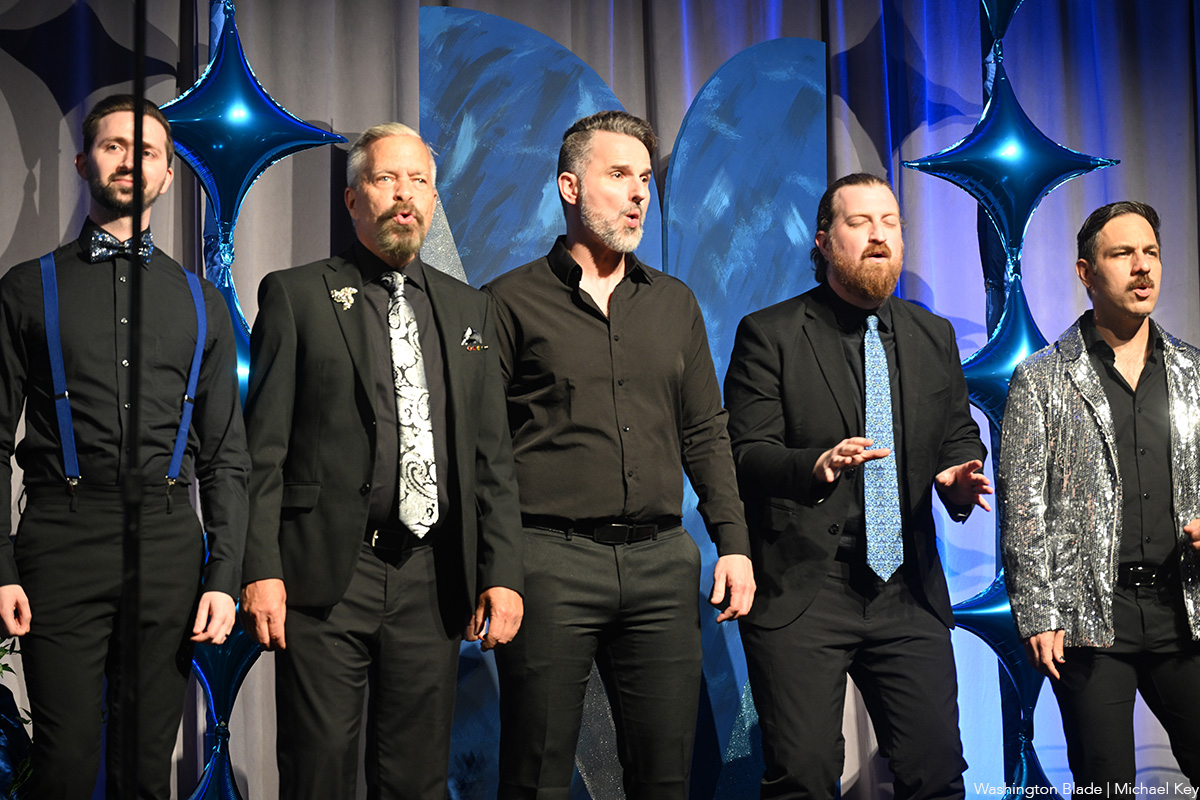
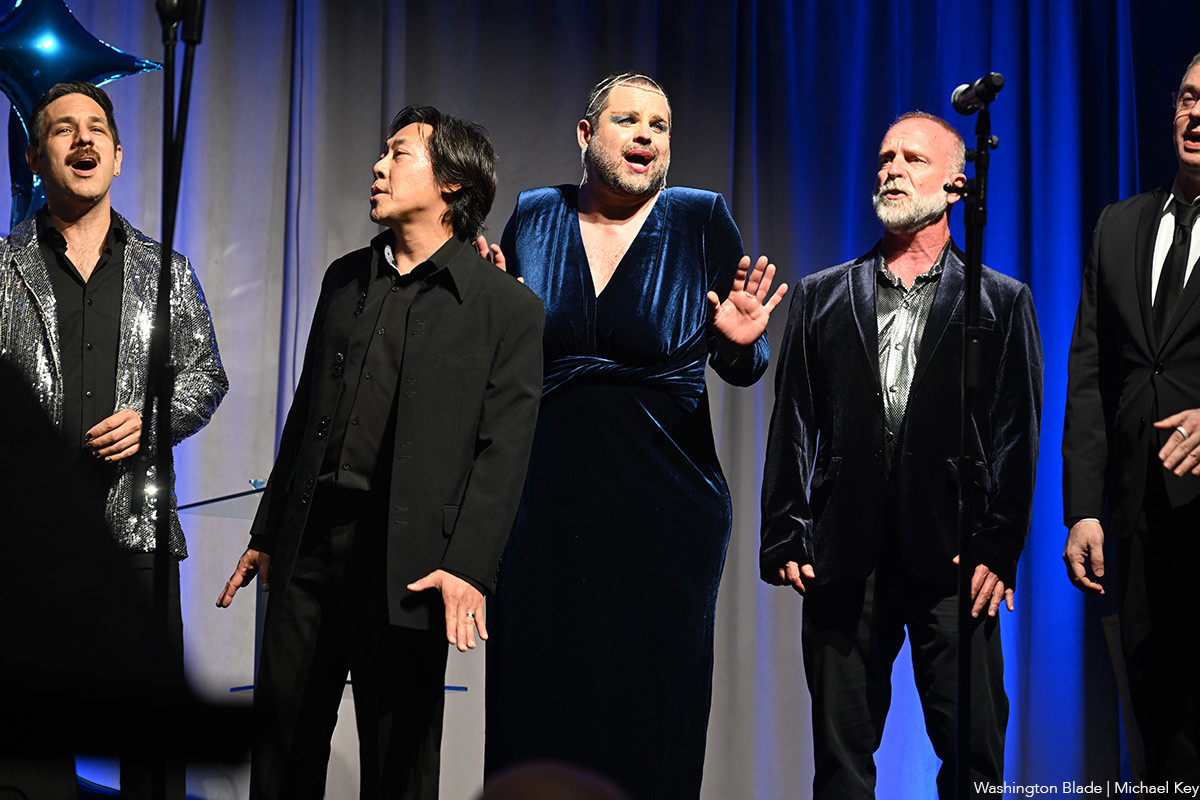
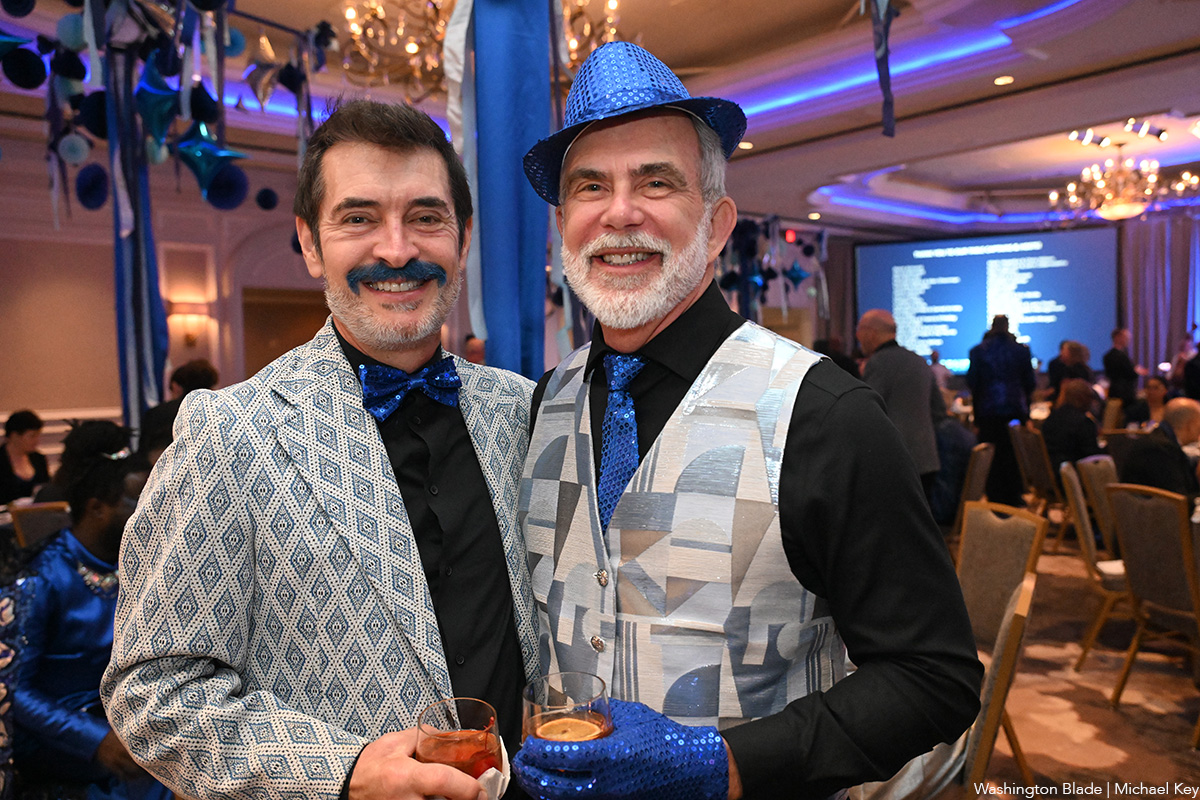
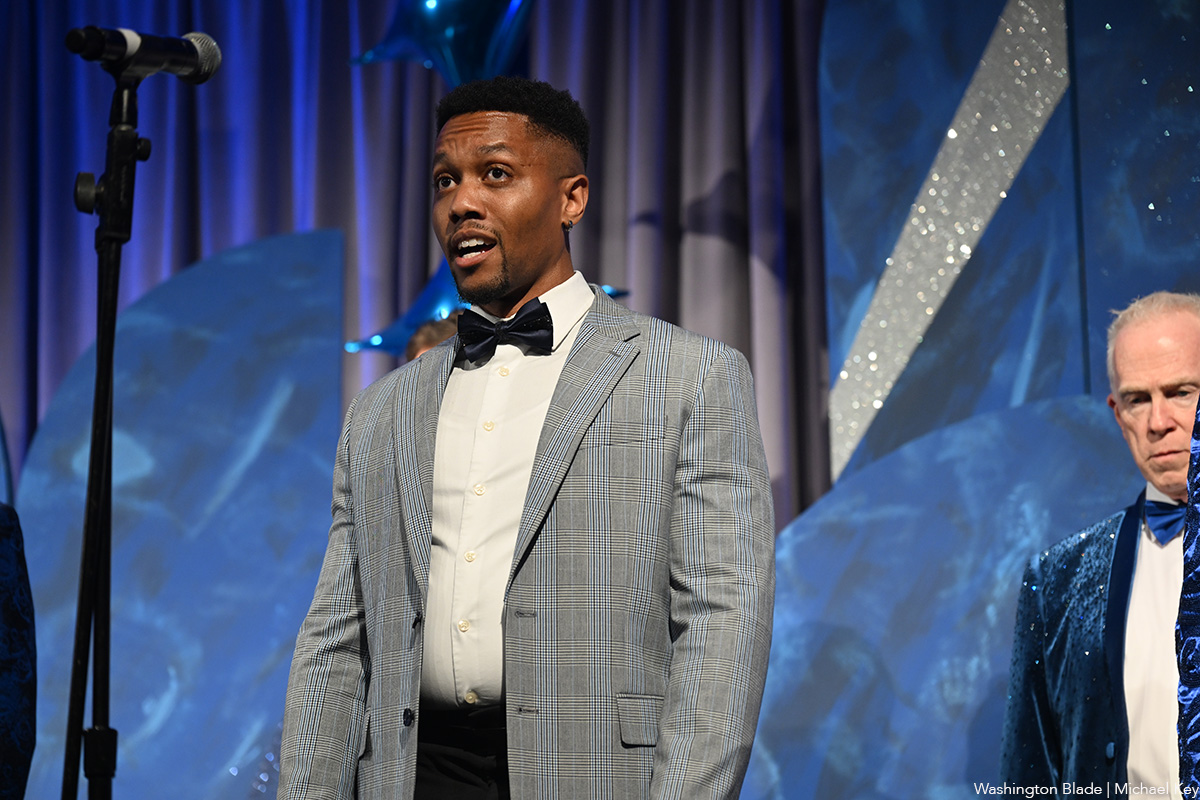
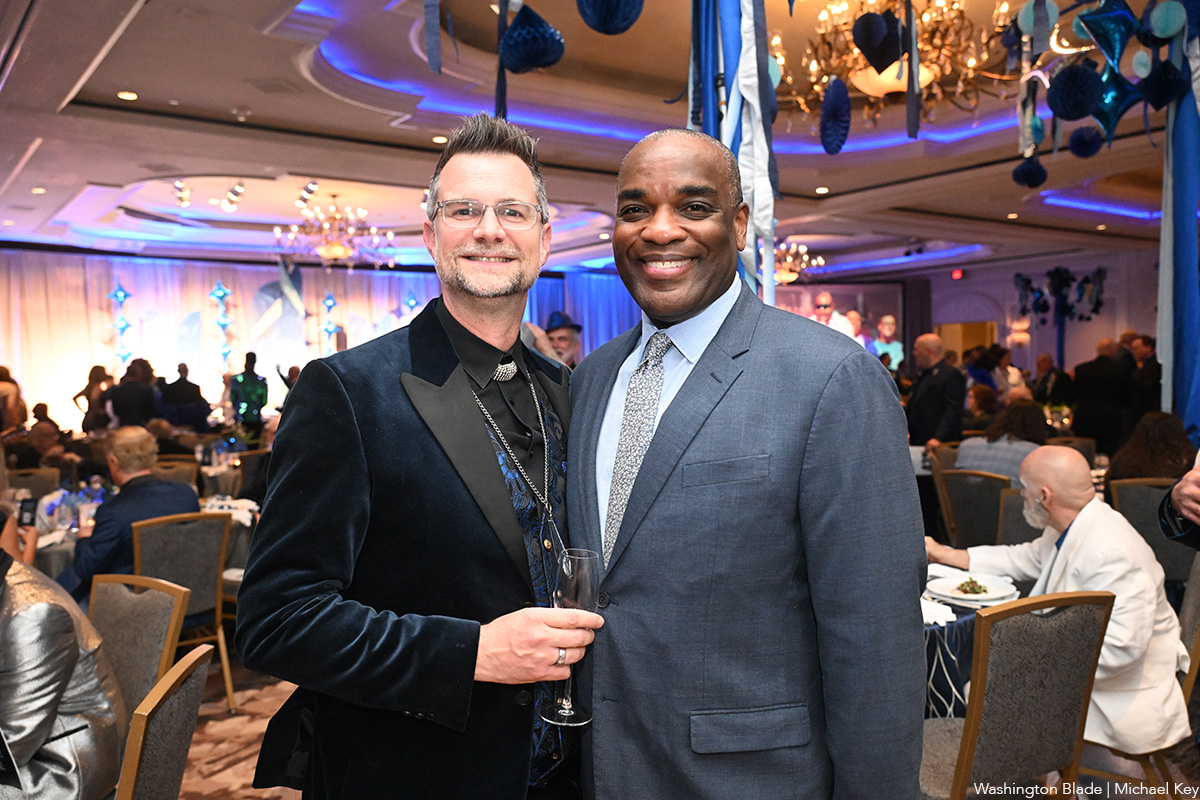
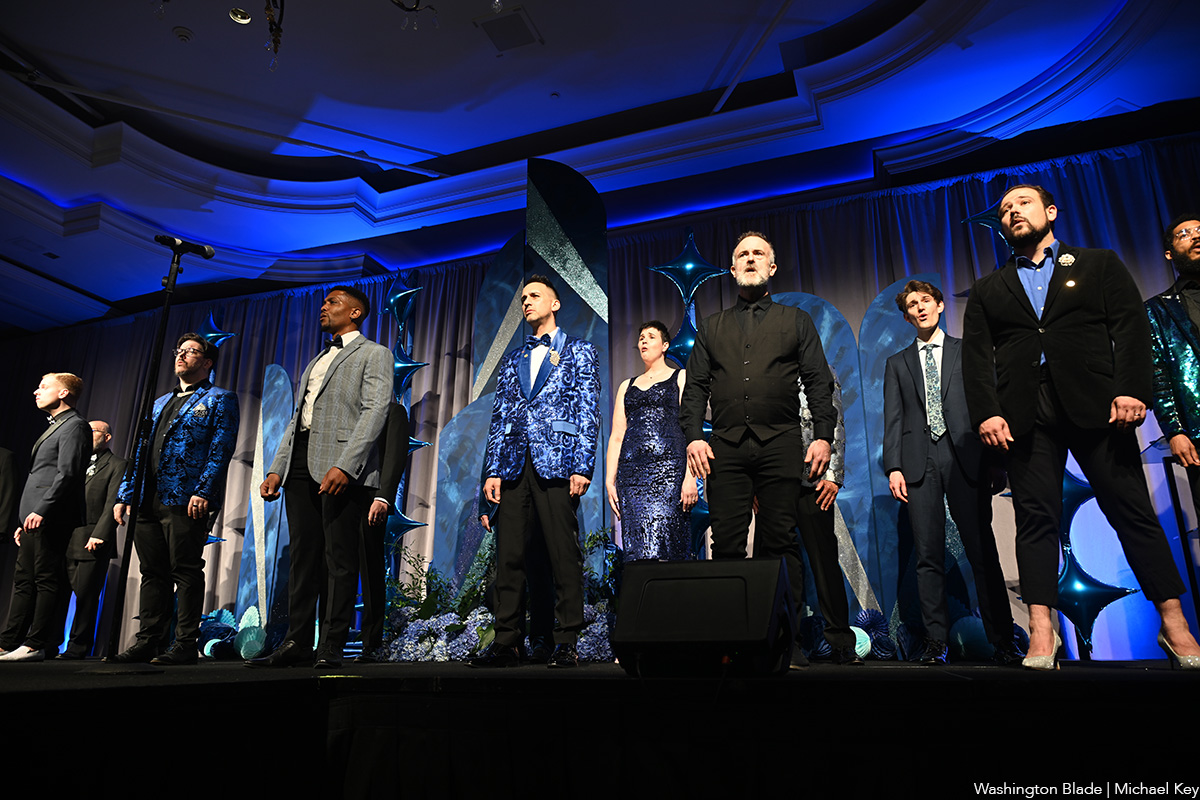
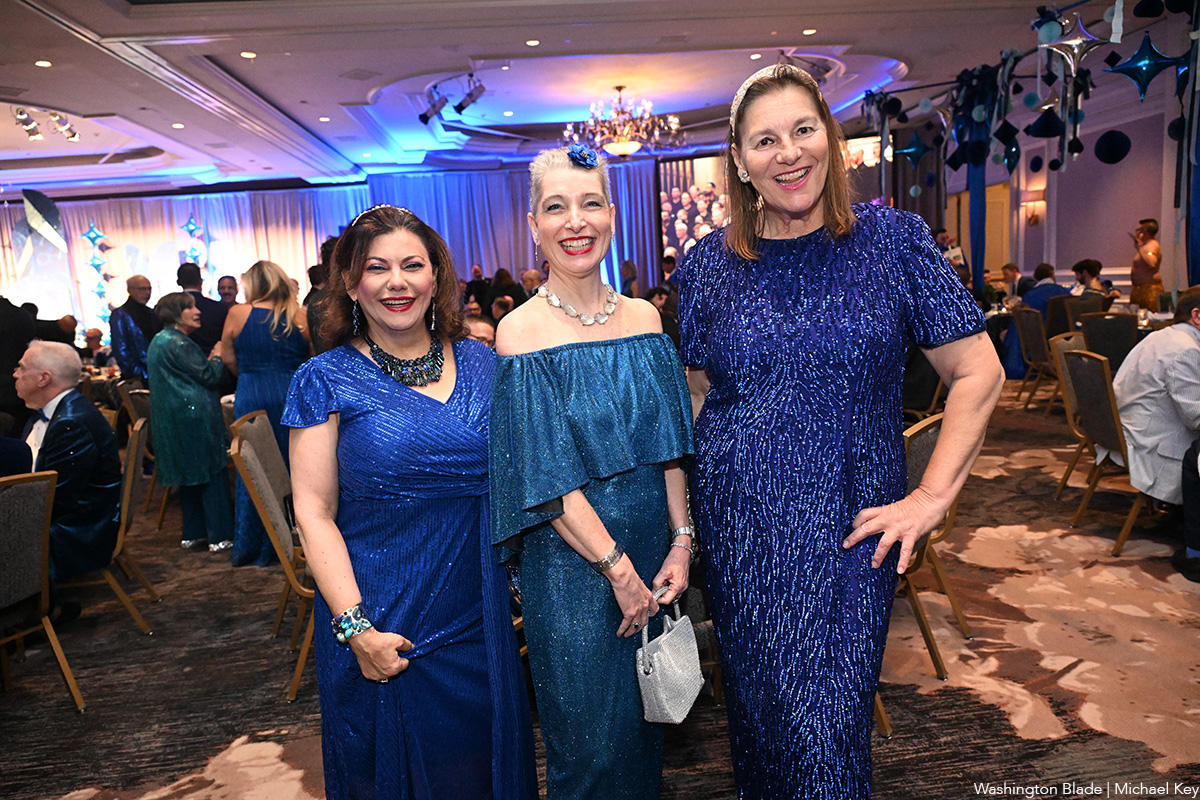
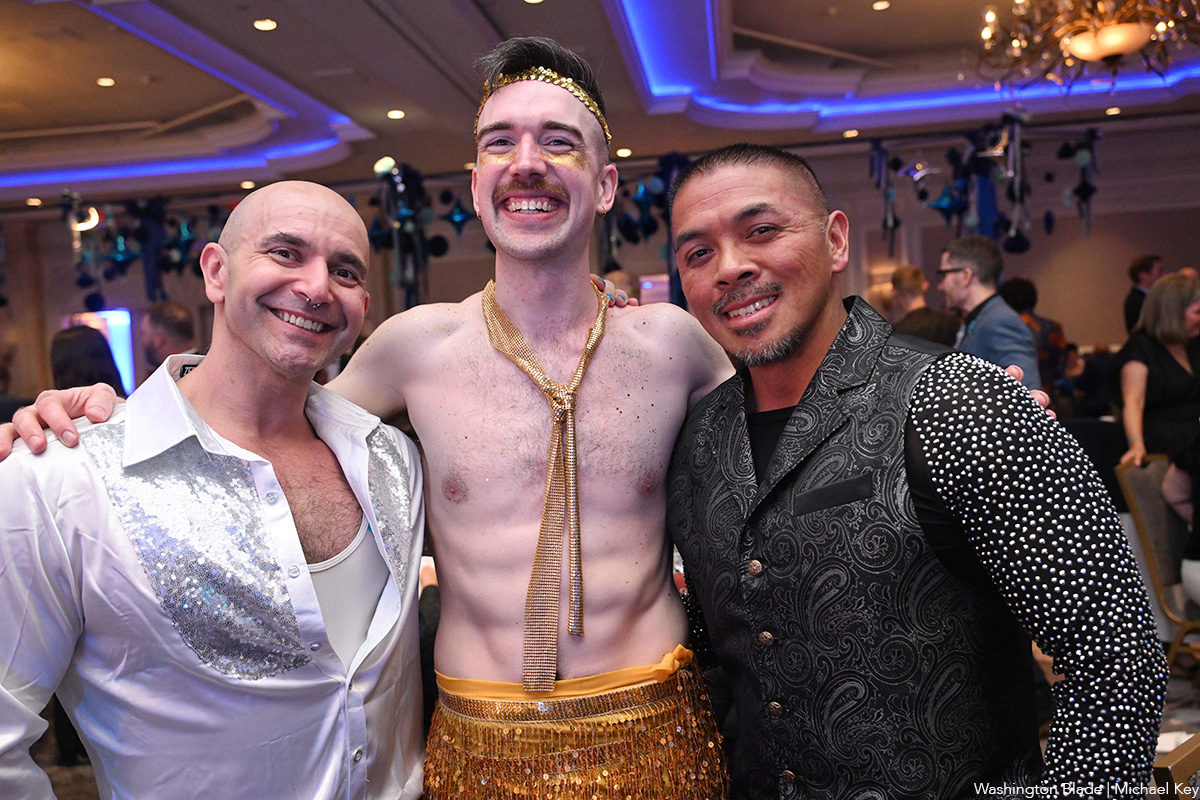
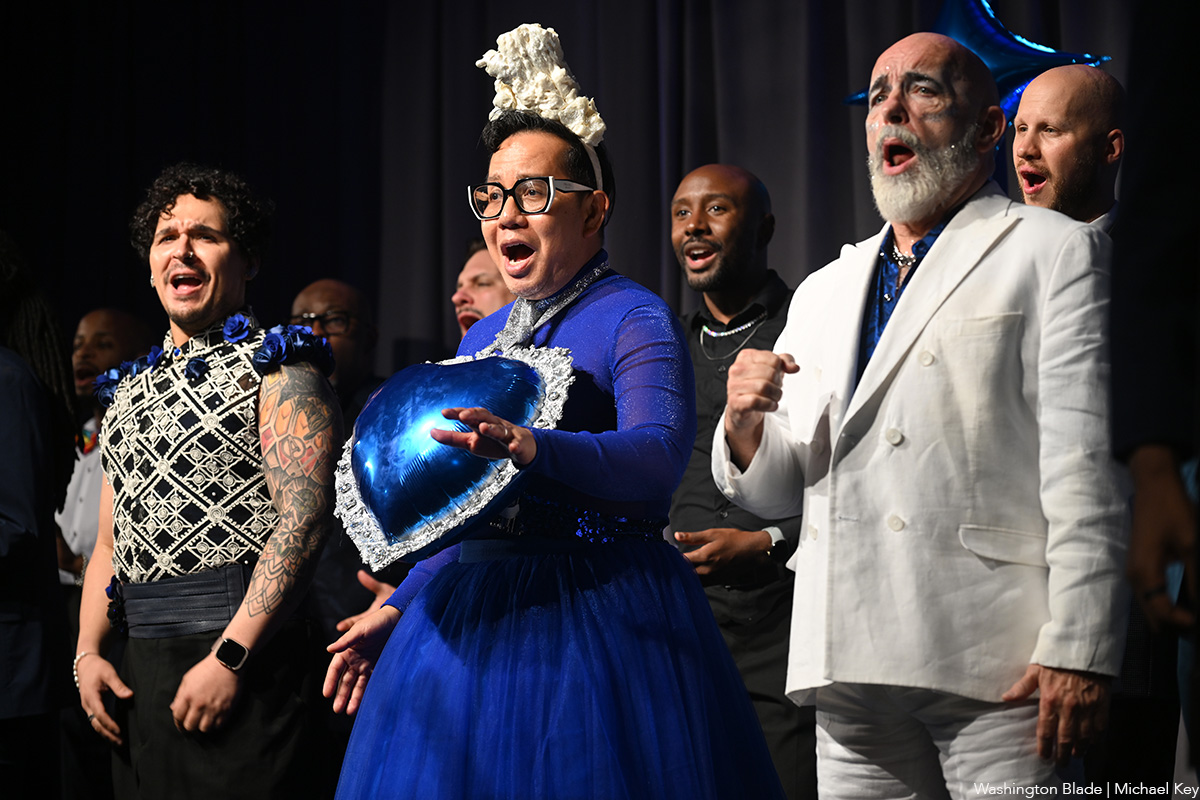
The Gay Men’s Chorus of Washington held the annual Spring Affair gala at the Ritz Carlton Washington, D.C. on Saturday. The theme for this year’s fete was “Sapphire & Sparkle.” The chorus celebrated 45 years in D.C. with musical performances, food, entertainment, and an awards ceremony.
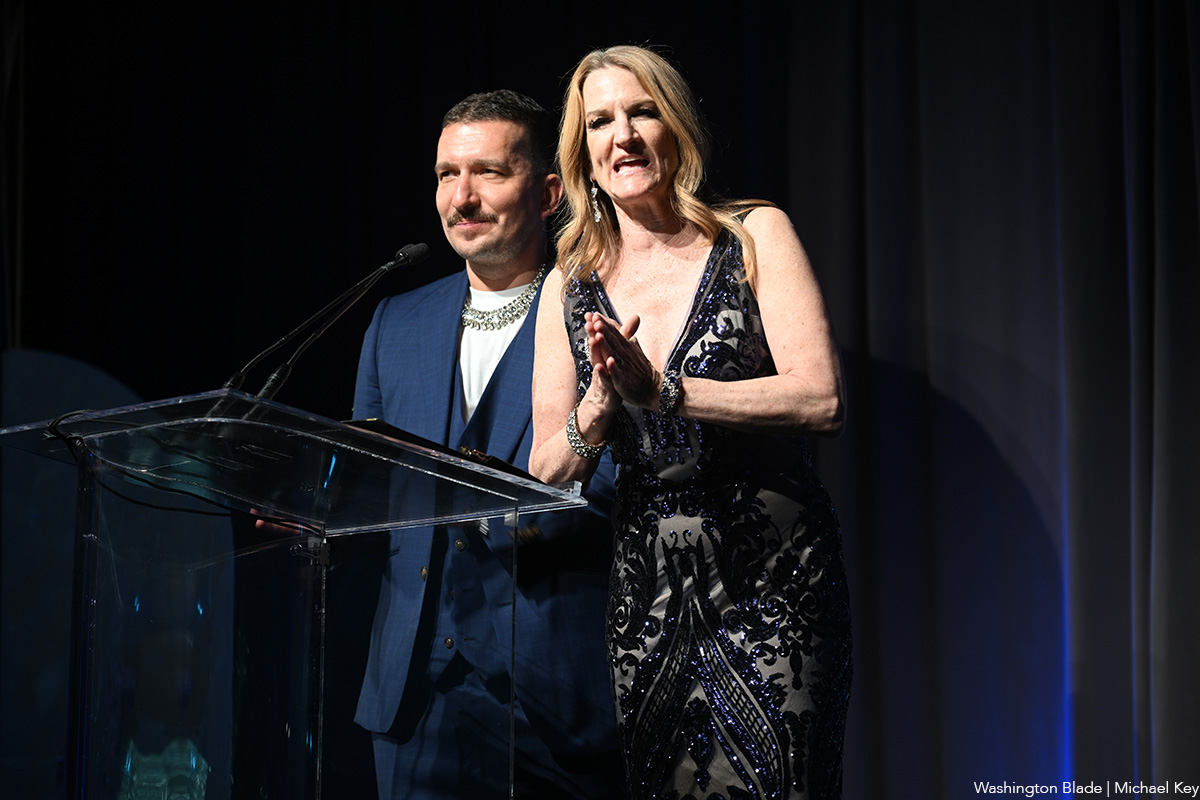
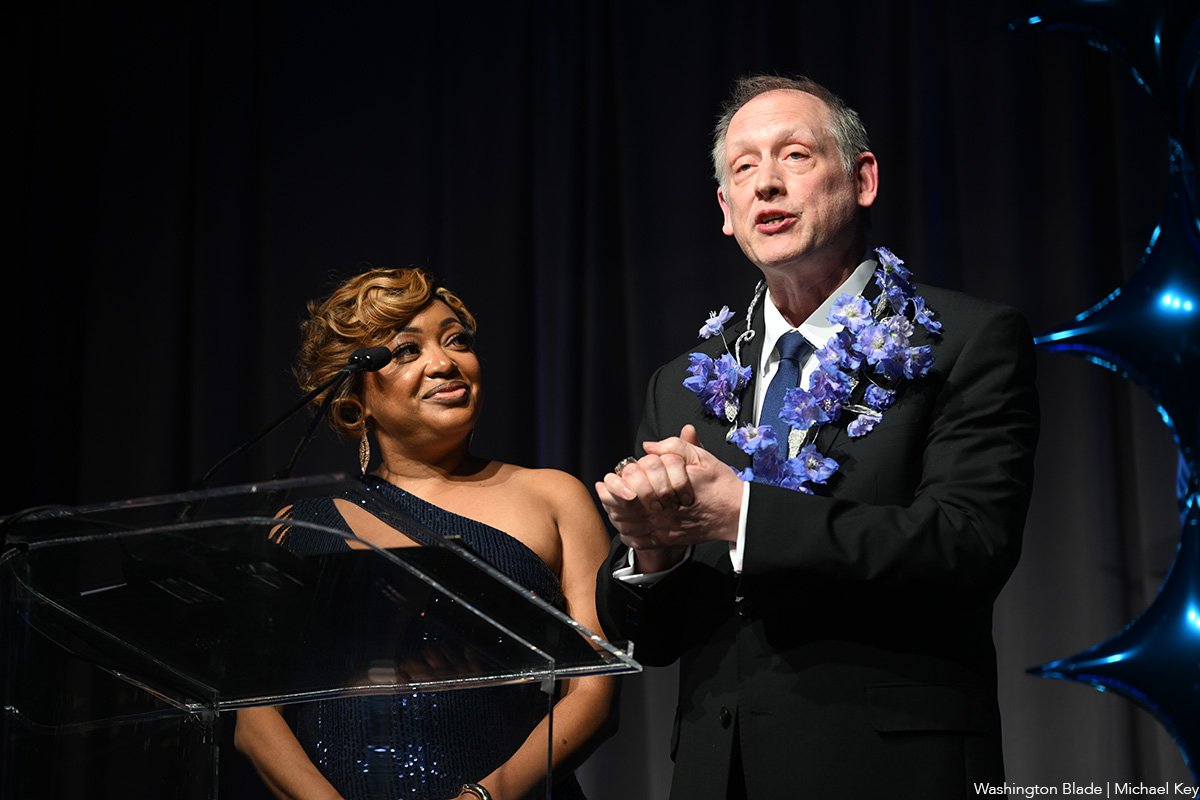
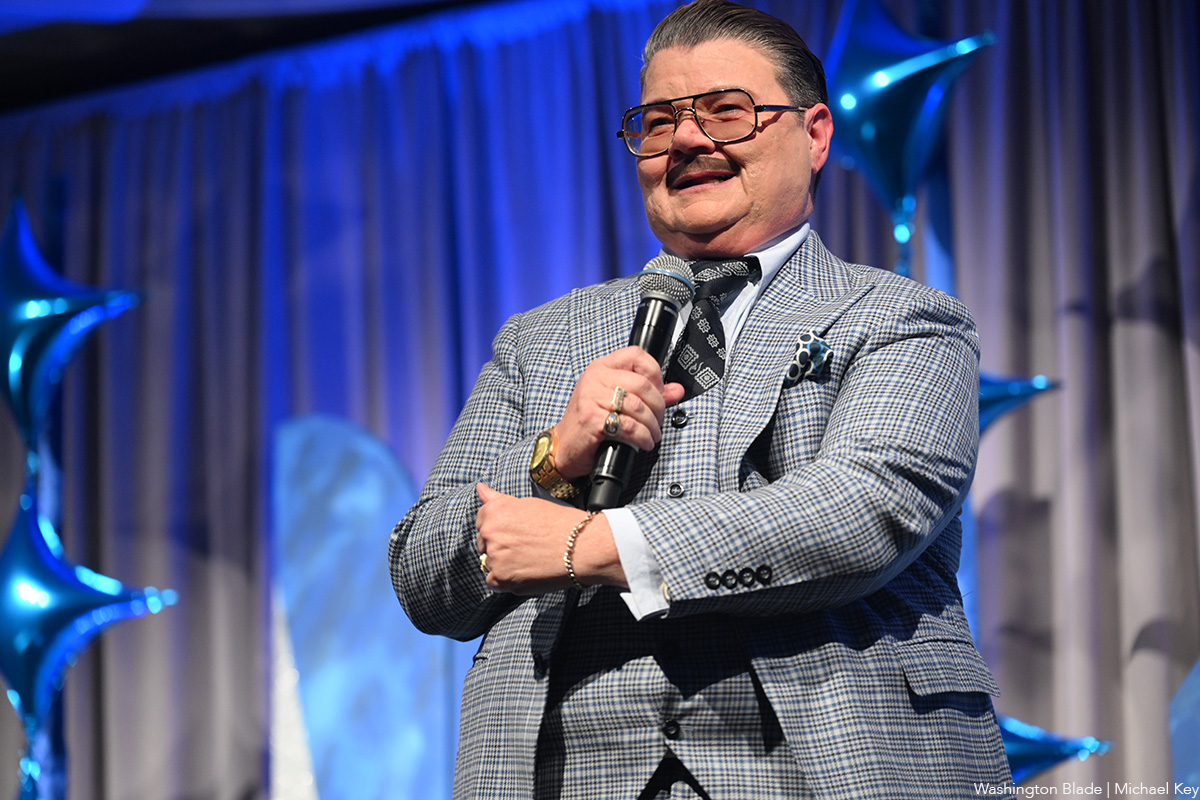
Gay Men’s Chorus of Washington Executive Director Justin Fyala and Artistic Director Thea Kano gave welcoming speeches. Opening remarks were delivered by Spring Affair co-chairs Tracy Barlow and Tomeika Bowden. Uproariously funny comedian Murray Hill performed a stand-up set and served as the emcee.
There were performances by Gay Men’s Chorus of Washington groups Potomac Fever, 17th Street Dance, the Rock Creek Singers, Seasons of Love, and the GenOUT Youth Chorus.
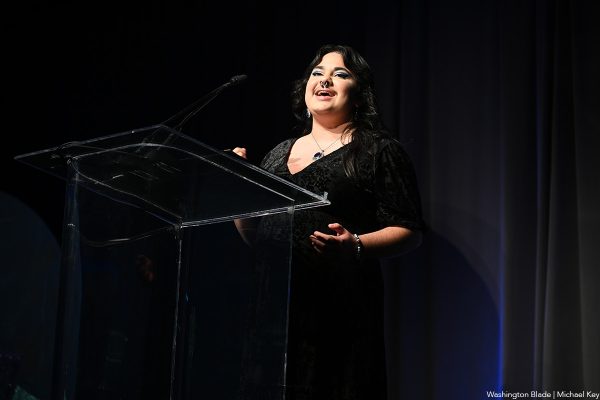
Anjali Murthy, a member of the chorus and a graduate of the GenOUT Youth Chorus, addressed the attendees of the gala.
“The LGBTQ+ community isn’t bound by blood ties: we are brought together by shared experience,” Murthy said. “Being Gen Z, I grew up with Ellen [DeGeneres] telling me through the TV screen that it gets better: that one day, it’ll all be okay. The sentiment isn’t wrong, but it’s passive. What I’ve learned from GMCW is that our future is something we practice together. It exists because people like you continue to show up for it, to believe in the possibilities of what we’re still becoming”
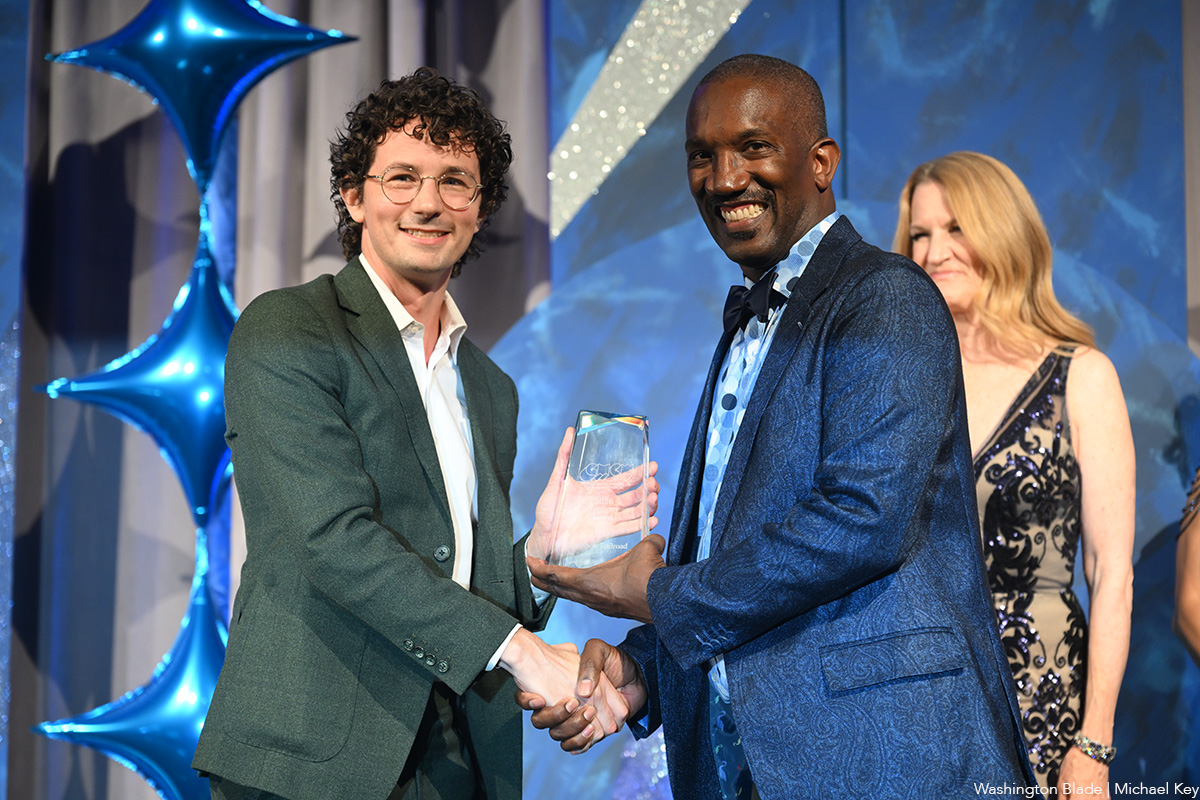
The event concluded with the presentation of the annual Harmony Awards. This year’s awardees included local drag artist and activist Tara Hoot, the human rights organization Rainbow Railroad as well as Rocky Mountain Arts Association Executive Director, Dr. Chipper Dean.
(Washington Blade photos and videos by Michael Key)











Federal appeals court rules White House illegally banned trans troops

Outright International honors Cyndi Lauper at annual NYC gala

Results from key Tuesday primary races

AIDS Healthcare Foundation announces 3 million people globally in its care

10 HIV/AIDS activists arrested on Capitol Hill

Time travelers from the AIDS era

Books for a pre-Pride celebration

Barney Frank’s powerful legacy for LGBTQ federal employees

Claudia López comes up short in Colombian presidential election