News
Una tarde con Yariel
Ha permanecido bajo custodia de ICE por casi un año
Nota del editor: Una versión de esa nota de opinión en inglés salió en el sitio web del Blade el 4 de febrero.
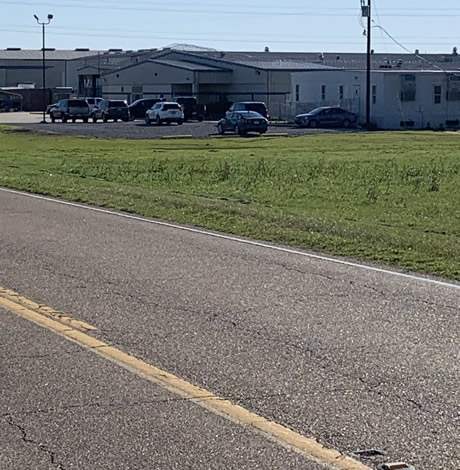
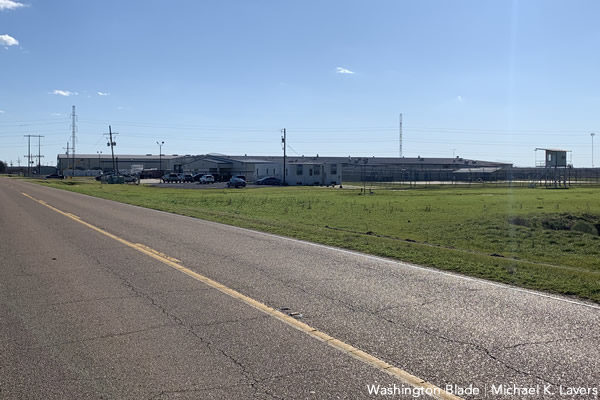
FERRIDAY, Luisiana — Un guardia masculino al River Correctional Center, un centro de detención privado en el Condado Concordia en Luisiana, me llevó a la sala de visitantes un poco después de la 1 p.m. el sábado. Me senté en una mesa grande —como las que se pueden encontrar en una cafetería de la escuela— y miré a las murallas con mensajes de empoderamiento que habían sido pintados en la pared. Unos minutos después, miré hacía la puerta con una pequeña ventana y vi a Yariel, que vestía un traje verde de rayas. Otro guardia masculino abrió la puerta y Yariel entró la sala. Nos abrazamos fuertemente unos segundos después. Estaba casi sollozando, pero Yariel me aseguró que estaba bien. Después de un par de minutos, nos sentimos en la mesa —uno frente al otro— y empezó nuestra visita. Usé una de las servilletas que tomé de una gasolinera cercana para limpiar las lágrimas de mis ojos. Después de un par de minutos, puse sus manos en las mías y comenzó a llorar. Le di una de las servilletas de la gasolinera para limpiar sus ojos y traté de consolarlo.
“Esta bien llorar”, lo aseguré.
No había visto a Yariel en persona desde el 27 de enero de 2019. Habíamos pasado el día reportando desde un albergue de migrantes dirigida por una lesbiana en Mexicali, una ciudad mexicana en la frontera con EEUU, y lo dejé al apartamento pequeño en Tijuana en que vivía con su padre. Estábamos casi mareados, en parte, porque habíamos cantado canciones de Lady Gaga como locos durante el viaje de dos horas entre Mexicali y Tijuana. Esos momentos despreocupados parecen de toda la vida.
Yariel el sábado me dio dos regalos: Una pulsera hecha de piezas de bolsas de basura negras y blancas y un zapatillo hecho de paquetes de Maruchan y envoltorios de crema de café que hará un buen ornamento navideño. Hablamos como amigos, como hermanos. Hablamos sobre Cuba y el juicio político del presidente Trump. Lo compré una botella de Sprite de una máquina expendedora en la sala. También compartimos una bolsa de Doritos. Una guardia femenina que habla español estaba en la sala con nosotros. Al principio estuve un poco incómodo de verla escribiendo en un cuaderno, pero después de unos minutos olvidé que estaba allí.
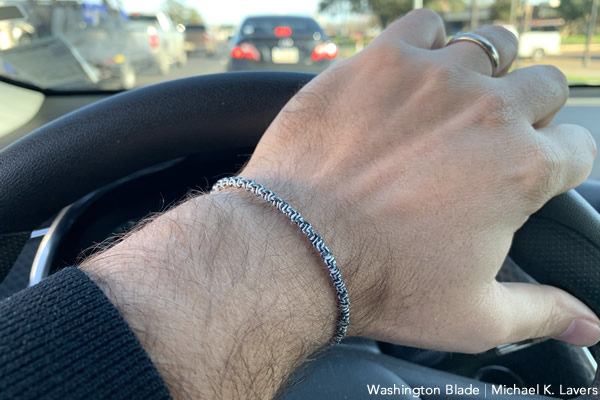
A las 2:50 p.m., nos dijo en español que nuestra visita iba a terminar en 10 minutos. Yariel quería darme dos carpetas con sus escritos sobre su tiempo bajo custodia del Servicio de Inmigración y Control de Aduanas (ICE), pero la guardia lo dijo que no podría tomarlas conmigo. Yariel había colocado la pulsera alrededor de mi muñeca y un supervisor dijo a la guardia que podría llevar el ornamento conmigo. Los puse, junto con su foto del tamaño de un pasaporte, en mi mano. Nos pusimos de pie y nos abrazamos fuertemente. Lo dije que lo quiero y luego salimos por puertas diferentes. Salí por la puerta principal de la instalación menos de cinco minutos después y regresé a mi hotel en Kenner, un suburbio de Nueva Orleans, a las 6:45 p.m.
Ha pasado casi un año desde que Yariel pidió asilo en EEUU y entró la custodia de ICE. Los lectores del Washington Blade saben que un juez el pasado septiembre concedió asilo a Yariel. También saben que su destino está en las manos de la Junta de Apelación de Inmigración en Virginia porque ICE apeló el fallo.
Hay cierta ironía en el hecho que Yariel comenzó escribir para el Blade en el otoño de 2018, en parte, porque necesitábamos un reportero en Tijuana que pudiera reportar sobre los migrantes LGBTQ que llegaban a la ciudad con las caravanas migratorias de Centroamérica. La cobertura del Blade de estos temas continua, con mi más reciente viaje a Honduras y El Salvador que terminó hace seis días antes de mi visita con Yariel. Esta cobertura sigue siendo tan importante como siempre con la política migratoria de línea dura de la administración Trump continúan poniendo en riesgo a los migrantes LGBTQ.
También se convierte en algo profundamente personal.
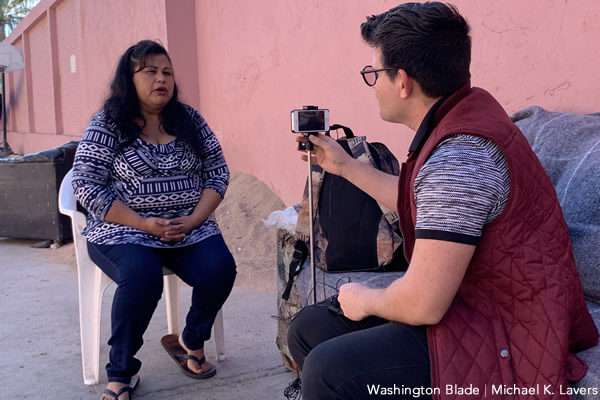
Mi esposo y yo el viernes, unas horas antes de volar a Luisiana, asistieron una ceremonia en Durham, Carolina del Norte, donde nuestro querido amigo Marcelo se convirtió en ciudadano estadounidense. Marcelo, un bailarín para el Carolina Ballet de origen paraguayo, trabajaba muy duro para llegar a ese momento y estamos muy orgullosos de él.
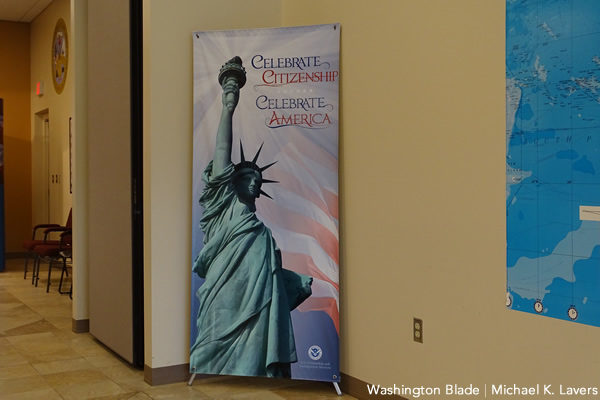
Uno de los momentos más memorables de la ceremonia fue el video en que Trump felicitó a Marcelo y los otras 56 personas que acababan de convertirse en ciudadanos estadounidenses. Ninguno de ellos aplaudió al final del video. Ellos, junto con el resto de nosotros, saben mierda cuando la escuchan, y todos respondimos en especie.
Estos ciudadanos estadounidenses, junto con Yariel, son exactamente el tipo de personas que harán una contribución positiva a este país y lo hará aún mejor. Merecen nuestro respeto y apoyo, no retorica barata basada en racismo, xenofobía y supremacía blanca para apaciguar una base política antes de una elección presidencial.
Una de las partes más desgarradoras de mi visita con Yariel fue cuando me dijo que más desea es su libertad que lo permitirá empezar una nueva vida en los EEUU sin miedo de persecución. La lucha para hacer realidad el sueño de Yariel sigue. Espero que mi próximo viaje a Luisiana sea recogerlo después de la Junta de Apelaciones de Inmigración confirme su decisión de asilo y ICE finalmente lo libere de su custodia.
Siempre estaré a tu lado, Yariel.



District of Columbia
D.C. Council approves expanded grant funding for Mayor’s Office of LGBTQ Affairs
Measure introduced by Zachary Parker faces second vote
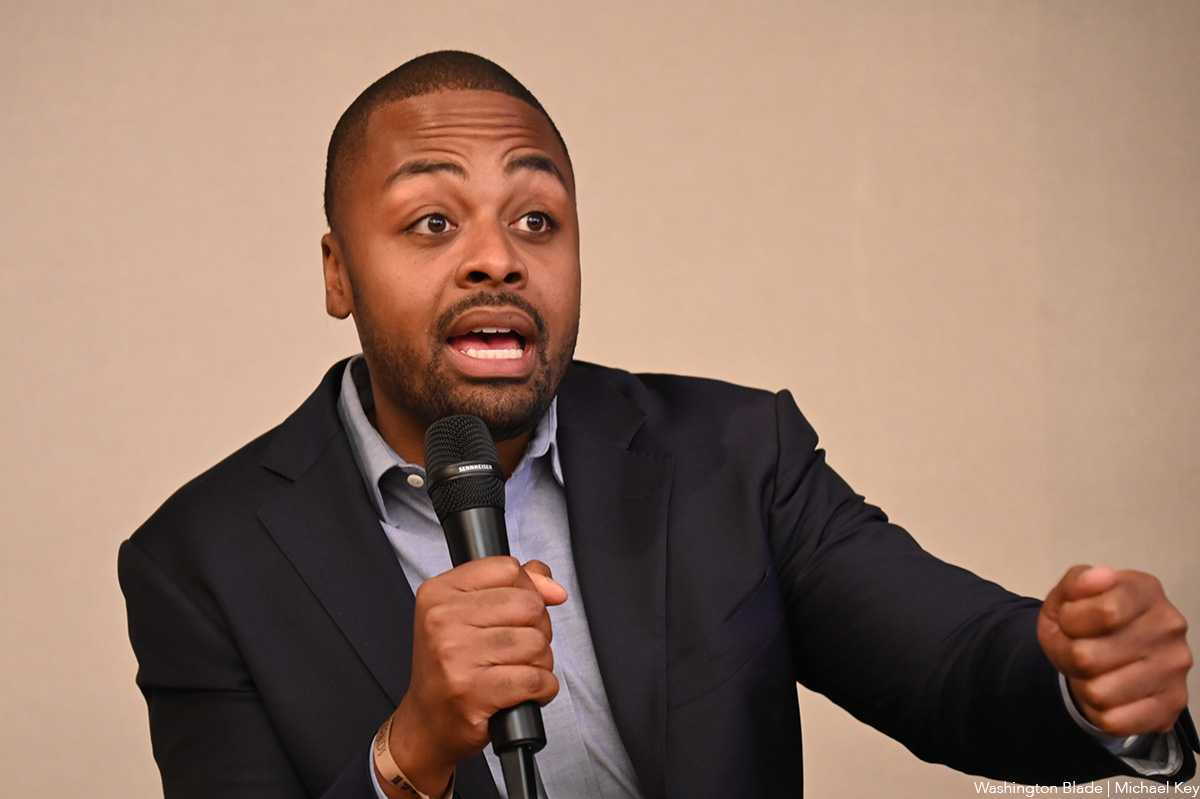
The D.C. Council on June 9 gave its first round of approval to an amendment to the city’s fiscal year 2027 budget that calls for increasing the number and size of funding grants that the Mayor’s Office of LGBTQ Affairs provides for local organizations providing services for the LGBTQ community.
The amendment, titled the “LGBTQ Community Grant Amendment Act of 2026,” was introduced by D.C. Council member Zachary Parker (D-Ward 5), the Council’s only gay member.
The amendment calls for the LGBTQ Affairs office to issue a $980,000 grant in fiscal year 2027 to a private, nonprofit organization in partnership with the office “for the purpose of supporting programs that promote the welfare of the lesbian, gay, bisexual, transgender, and questioning community.”
The organization would also initiate its own fundraising effort to expand the amount of funds beyond the amount the office would provide, enabling it to provide larger grants to a greater number of local LGBTQ organizations.
Among other things, the amendment says the organization chosen for this new role should have a “proven track record of success in grant making and fundraising” and agree to undergo an annual audit and submit quarterly reports to the office on its use of the funds it receives.
Under its rules for approving legislation, the Council must hold the second vote on the budget bill with the Parker amendment before it is sent to Mayor Muriel Bowser for her signature. It must then go to Congress for a congressional review that does not require approval, but could result in a vote to disapprove the measure, an action Congress usually does not take.
In a June 12 statement, the D.C. LGBTQ Budget Coalition called the D.C. Council’s initial approval of the Parker amendment, “a historic measure that establishes the District’s most sustainable model for a vehicle for investing in LGBTQ communities.”
The statement adds, “The legislation arrives at a critical moment, as LGBTQ-serving organizations face unprecedented uncertainty. Growing demand for services is colliding with shrinking resources, federal attacks on LGBTQ programs, and ongoing threats to local funding streams.”
It says the new program that the Parker amendment would create, if it reaches final approval, “creates a durable mechanism to protect and expand investments in the organizations that thousands of District residents rely upon every day.”
A spokesperson for the mayor’s office said he was looking into the mayor’s position on the Parker amendment but didn’t immediately get back with a response.
Germany
German group slams White House’s LGBTQ rights record ahead of World Cup
LSVD says trans, nonbinary soccer fans safety ‘not guaranteed’ in US

A German advocacy group on the eve of the 2026 World Cup sharply criticized the Trump-Vance administration over its anti-LGBTQ policies.
The World Cup will take place in the U.S., Canada, and Mexico through July 19. The tournament began on Thursday in Mexico City with Mexico beating South Africa 2-0.
“In the USA, democracy is being gradually dismantled,” said Julia Monro of Federation Queer Diversity, a German LGBTQ and intersex rights group known by the acronym LSVD, in a statement released on Wednesday. “In particular, the human rights of trans, intersex, and nonbinary individuals, as well as other queer people, are facing massive attacks and political instrumentalization by the Trump administration.”
The LSVD statement notes sports “has a special responsibility in this situation because it conveys values worldwide that extend beyond the playing field: fairness, respect, and inclusion.”
“This must apply to everyone, including trans* and nonbinary people,” says LSVD. “Those who love sport must also protect those who can only experience it under difficult circumstances.”
“The public visibility of queer people is being pushed back, companies and organizations with diversity strategies are being pressured, and laws for trans*, intersex, and nonbinary people are being tightened,” added the group. “This is not a fringe issue, but directly affects everyday life, mobility, and safety. The way minority rights are treated is a measure of the state of a democratic society. Inhumane measures must not be normalized. The international community must not remain silent as attention on the host country, the USA, increases. The Trump administration could exploit this media platform for further inhumane purposes, in order to transfer its homophobic agenda to other countries.”
LSVD also stressed the “safety of trans* and nonbinary soccer fans is currently not guaranteed in the USA.”
“We advise all queer fans to inform themselves carefully beforehand and to take precautions for their safety,” it said.
The Council for Global Equality is one of the more than 100 organizations that issued a travel advisory for the U.S. ahead of the World Cup.
LSVD in its statement pointed out the German government in 2025 issued a travel advisory for trans and nonbinary people who are planning to visit the U.S. The warning specifically noted President Donald Trump’s executive order that banned the State Department from issuing passports with “X” gender markers.
InterPride, the organization that coordinates WorldPride events, issued a travel advisory for trans and nonbinary people who planned to travel to the U.S. for WorldPride that took place last summer in D.C.
“Due to an executive order issued by the U.S. president on Jan. 20, all travelers must select either ‘male’ or ‘female’ when applying for entry or visas. The gender listed at birth will be considered valid,” read the InterPride advisory. “If your passport has ‘X’ as a gender marker or differs from your birth-assigned gender, we strongly recommend contacting the U.S. diplomatic mission before traveling to confirm entry requirements.”
LSVD notes the German government reiterated its 2025 travel advisory ahead of the World Cup.
“Anyone traveling with a different gender entry, with an ‘X’ marker in their passport, or who does not conform to the state’s expectations during checks, must expect problems in the USA,” said LSVD.
Virginia
Gay 1920s-era Hollywood star to be honored in Staunton, Va.
Billy Haines became acclaimed designer after anti-gay policies ended his acting career
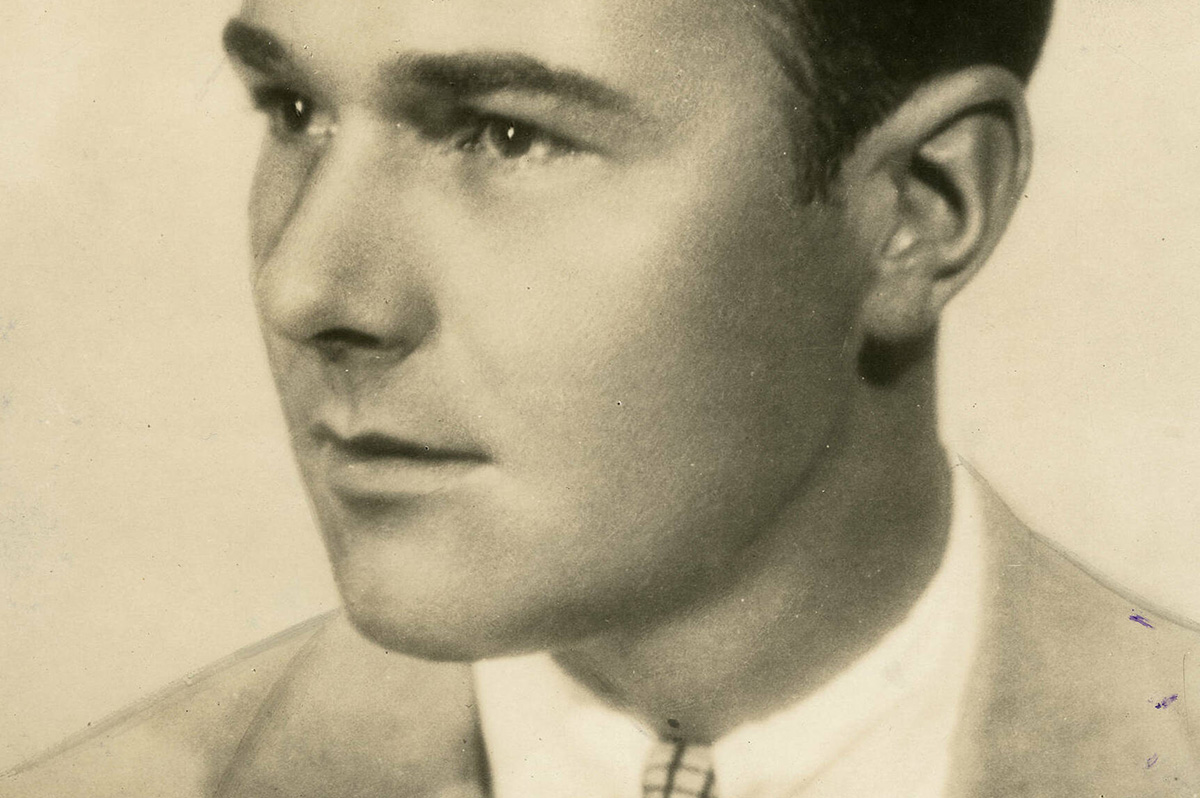
A project is underway in Staunton, Va., to honor William ‘Billy’ Haines, who was born and raised in Staunton before becoming an out gay 1920s and early 1930s-era Hollywood movie star whose acting career ended around 1934 when he refused demands that he conceal his sexual orientation and end his relationship with his male partner.
Haines left the movie business around that time to start what became a highly successful interior design and furniture business in Los Angeles that he led until his death in 1972 at age 72, and which remains in business today, according to the Arcadia Project, a Staunton-based nonprofit initiative.
In a statement released last month, Arcadia Project announced it is working to revitalize a long-vacant movie theater in downtown Staunton that it plans to rename after Haines. It says a fundraising campaign is under way to support efforts to reopen the theater and the larger building in which it is housed as a “dynamic mixed-use cultural center.”
The statement notes that Haines left Staunton at age 14 and resided in Hopewell, Va., and Greenwich Village in New York City until 1922, when he was “discovered” by a talent scout and sent to Hollywood.
“Between 1922 and 1934, Haines appeared in 54 movies during his meteoric and highly successful career,” the Arcadia Project statement continues, noting he transitioned from silent movies to talkies and was fully open about being gay. “But when Hollywood’s moral crackdown of the 1930s demanded that he end his relationship with his longtime partner Jimmie Shields, Haines refused,” it says.
“For LGBTQ people – then and now – Haines’s choice resonates deeply. Rather than deny who he was, he reinvented himself as an interior designer to the stars,” according to the statement.
It says he helped invent the so-called Hollywood Regency style home and designed homes for Hollywood legends such as Joan Crawford, Gloria Swanson, Carole Lombard, George Cukor, and Jack Warner as well as for political figures like Ronald Reagan when he was governor of California.
“As there is no monument, marker or public recognition for Haines in his hometown of Staunton, Va., Arcadia Project, in collaboration with the LGBTQ+ community in Staunton seeks to commemorate him inside a new cultural center,” the statement says.
It quotes Arcadia Project Executive Director Pamela Mason Wagner as saying, “Naming the movie theater in Haines’ honor is more than an act of historical recognition – it is a powerful statement about visibility, belonging, and whose stories are valued in our community.”
The statement says project leaders hope to open the cultural center in early 2027, with a fundraising campaign seeking to raise $250,000 to renovate the theater.
“If the full goal is not reached, a smaller space within the building will be named for Haines, scaled to the amount of funds raised,” it says. “We truly hope friends and admirers of Billy Haines everywhere will want to participate.”
Donations for the project can be made through this site: www.thearcadiaproject.org

PHOTOS: The Audacity Brunch

D.C. Council approves expanded grant funding for Mayor’s Office of LGBTQ Affairs

Congressional Cemetery hosts Gays & Graves

Baltimore Pride is here

Calendar: June 12-18

Hundreds of thousands expected to attend D.C. Pride events

Queen Jean is Tony’s first transgender winner

EXCLUSIVE: Pelosi reflects on four decades of LGBTQ advocacy

David Archuleta, Monroe Alise named D.C. Pride parade marshals

D.C. prepares to party as Pride celebrations kick off Saturday
-

 District of Columbia5 days ago
Hundreds of thousands expected to attend D.C. Pride events
-
National5 days ago
Queen Jean is Tony’s first transgender winner
-
Congress4 days ago
EXCLUSIVE: Pelosi reflects on four decades of LGBTQ advocacy
-
District of Columbia4 days ago
David Archuleta, Monroe Alise named D.C. Pride parade marshals