Books
More books for your COVID downtime
From history to LGBTQ studies, something for all tastes
This is part three of a three-part series spotlighting some of the best books to read while passing time during the COVID-19 quarantine.
HISTORY
If you’re looking for something empowering while you’re stuck at home, try “Mighty Justice: My Life in Civil Rights” by Dovey Johnson Roundtree and Katie McCabe. During the Civil Rights Movement, Roundtree was an attorney who not only helped her clients but also took on a racist system in North Carolina and nationally. Another book to find is “Race Against Time” by Jerry Mitchell. As a reporter, Mitchell opened Civil-Rights-era crimes, and this is his story.
You might not find “The Rise and Fall of Charles Lindbergh” by Candace Fleming in the adult biography section of your library or bookstore. You may find it in the Young Adult section, but that doesn’t mean this book is just for teens. Adults will thrill to the story of Lindburgh, his feats and accomplishments, his life and tragedy, and the beliefs he held that tarnish his legacy today.
Civil War buffs will want “Not Even Past: The Stories We Keep Telling About the Civil War” by Cody Marrs close by. Here, Marrs takes a look at that which has been written and told for generations, and why those tales still matter. Also look for “Hymns of the Republic: The Story of the Final Year of the American Civil War” by S.C. Gwynne. The title is appealing, all on its own.
World War II buffs will thoroughly enjoy reading “Inge’s War” by Svenja O’Donnell. It’s the story of a story that O’Donnell learned as an adult, when she reached out to her grandmother and discovered family secrets, triumphs, and villainy.
Speed demons in need of a little zoom will want to find “Faster” by Neal Bascomb, a book about a race car driver who was the victim of racism; an automaker who was the victim of financial mayhem, and an heiress who dreamed of her youth. Add in a bit of history, Nazi Germany, and a fast-paced story and really, how can you resist?
If you love reading slice-of-life historical tales, then look for “The Jamestown Brides: The Story of England’s ‘Maids for Virginia’” by Jennifer Potter. It’s the true story of the women who left their homes in Great Britain in 1620 to join settlers in Jamestown, Virginia, the hardships they endured, and what it was like to live in America at the country’s very infancy.
LGBTQ STUDIES
OK, so you’re up for something unique now, and you can’t go wrong with “Uncomfortable Labels” by Laura Kate Dale. What makes it different is that Dale is a gay trans woman who is also autistic and this book is about her self-discovery and her life.
Here’s a book for parents, and for transgender readers: “What We Will Become” by Mimi Lemay, a story of a little girl who knew she was a boy, and his mother, an ultra-Orthodox Jew who loved her child enough to give up her old life.
Maybe when this is all over, a bit of poetry is what you’ll need, and “Daddy” by Michael Montlack will be what to look for at the end of this virus’ run. Some of the poems are musings, some are heartfelt, others read a bit like individual paragraphs, all are compelling. You’ll find “Daddy” available in later April.
CHILDREN’S BOOKS
Books are great antidotes to being cooped up for weeks, and “Johnny’s Pheasant” by Cheryl Minnema, illustrated by Julie Flett is a good one to have. It’s the story of an injured bird, a grandma’s love, and a boy with dreams. Another goodie for little readers is “Bedtime for Sweet Creatures” by Nikki Grimes, pictures by Elizabeth Zunon. It’s a tale of goodnight, and it’s perfect for little sleepyheads.
For the middle-grader who worries about the earth, “Bugs in Danger” by Mark Kurlansky, illustrated by Jia Liu is a great find. This book looks at climate change, environmental issues, why the bug population has declined over the past few years, and what we can do to stop it. Another book to find is “Wildlife Adventure” by Coyote Peterson. It’s a book with facts and activities and it might make the time go a little faster.
Little biography lovers will be happy to sit home with Work It, Girl bios, like “Become a Leader Like Michelle Obama” or “Blast Off Into Space Like Mae Jemison,” both by Caroline Moss, illustrated by Sinem Erkas. These books offer a great story, plus learning, plus an update on the lives featured. For the 9-to-13-year-old, a bio couldn’t be better.
The child who loves to people-watch will enjoy reading “Hmong in Wisconsin” by Mai Zong Vue, even when there aren’t a lot of people around. This is a story of immigration, bravery, war, and learning in two different cultures.
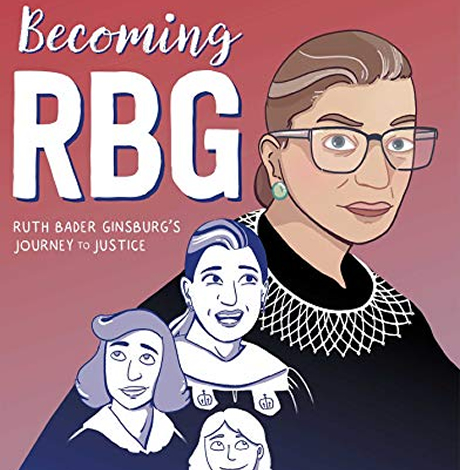
The young adult with a growing interest in politics will enjoy “Becoming RBG: Ruth Bader Ginsburg’s Journey to Justice” by Debbie Levy, illustrated by Whitney Gardner. It’s a graphic-novel-style biography on Justice Ginsburg, from her earliest years to her current battles.
A lottery ticket and all that comes with sudden wealth are at the root of “Jackpot” by Nic Stone. When Rico Danger finds a winning ticket and shares with “Zan” Macklin, it seems like every problem either friend has ever had might be over – but money changes things, especially relationships. Another book to look for: the coming-of-age “If Anyone Asks, Say I Died from the Heartbreaking Blues” by Philip Cioffari. It’s the story of an 18-year-old, first love, and doing what’s right.
If the quarantine lasts a while, there’ll be time to read “Kent State: Four Dead in Ohio” by Derf Backderf. It’s a graphic-novel sort of history book about what happened on that horrible day in 1970, but be patient: this book releases on April 7, so look for it.




Books
Eliot Glazer’s new book an engaging collection of essays
From growing up gay to turning down ‘Queer Eye’
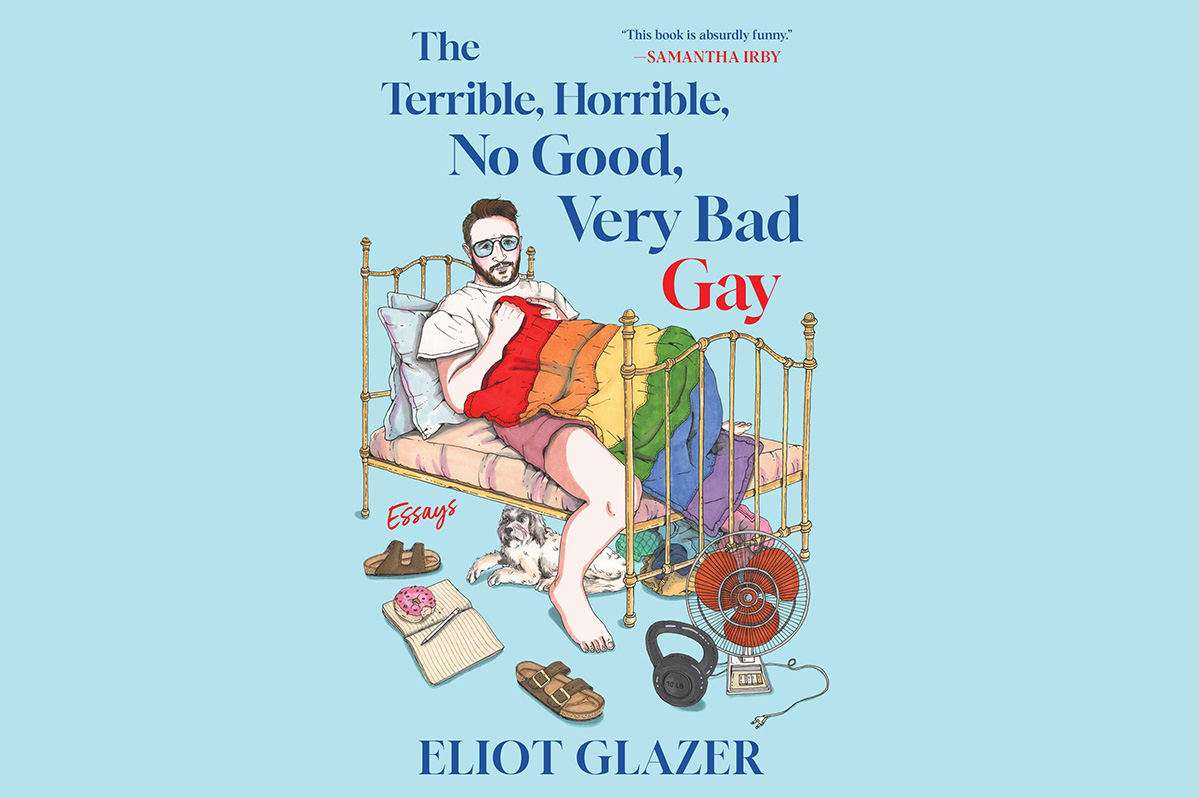
“The Terrible, Horrible, No Good, Very Bad Gay: Essays”
By Eliot Glazer
c.2026, Gallery Books
$28.99/240 pages
You try and you try.
Once, twice, you go back at that thorny issue, the dream you have, the punchline that’s not hitting quite right. Sometimes, time is all you need to make it better, or a new approach, or a second look. And then there are days when you actually get things right, as in “The Terrible, Horrible, No Good, Very Bad Gay” by Eliot Glazer, and it’s all good.

Throughout his life, Eliot Glazer has made mistakes. And it’s OK, everybody trips and falls now and then. In his case, though, he’s perfectly willing to document his failures, foibles, and whoopsies in this book.
He writes of his mother, Sandi, “a Queens-born balabosta” who wouldn’t tolerate laziness in herself or Glazer. He found work as soon as he was legally able to do so, and he had many jobs throughout high school. He was a gardener, ice cream scooper, camp counselor, golf caddy, chocolatier, telemarketer, and video store clerk. The one that fit him best, however, was working at Talbots, a department store for older women, where he found his people.
Even with all those jobs, he was a theater kid in his time off, little though it was. Back then, he was just a boy growing up on Long Island but swagger was important, so swagger he did. He still appreciates a good Broadway show, even the silliest ones.
Glazer says that he had just recently come out when gayness exploded on TV with “Will & Grace” and “Queer Eye for the Straight Guy,” with which he was obsessed. It helped him feel not othered, he says. Producers of the reboot asked him to be a second-generation Eye, but Glazer turned them down, though he thinks he’d have been good at it.
The show helped him with love of décor. His unexpected advisory skills came naturally, through age and wisdom and learning that wild partying isn’t really so much fun.
As for finding love, well, that’s a long, boy-meets-boy-meets-boy story…
So you’re looking for something to easily pick up and put down, something that speaks to your inner impatience? You’ll find that in “The Terrible, Horrible, No Good, Very Bad Gay,” a book that’s practically meant for you to skip around and you don’t have to read everything.
Essays can be like that, which is nice, even refreshing. Author Eliot Glazer is entertaining enough to make things work, engaging enough to keep it moving, and funny enough to make you want more of what he has to say. He’s open with his life and, despite his fame, his writing isn’t lofty; you can expect stories that’ll make you snort and ones with spice, but also some surprisingly tender moments that soften this book in a way that’s just right.
Readers who want a quick, mostly light book to finish will find something appealing in this collection of essays. If you don’t mind a bit of non-linearity and you need a laugh, “The Terrible, Horrible, No Good, Very Bad Gay.” is worth a try.
The Blade may receive commissions from qualifying purchases made via this post.
Books
Curl up with a good book this fall
New releases include mysteries, biographies, religion, and more
The fall books season offers lots of options so curl up and get ready to read.
FICTION
For the mystery fan who likes a sprinkle of thriller, look for “The Longest Death” by Kevin Jagernauth (Soho Crime, December). Richard Cobson hates his small town, he’s bored and desperate to get away. Stealing from his employer is the only thing that makes life bearable. That all changes when Marlon Montgomery comes to town and the two fall in love because if one guy can steal so easily, what can two do?
If you like graphic novels, try the “Tripping Over You” trilogy by Suzana Harcum and Owena White. Milo and Liam are finally able to be open about their relationship, no more hiding their love. They’re living together now, but can it last? “Tripping Over You Book 3” (First Second Books) is in stores in early November.
Also try “Diana: The Punk Singer Who Ripped Through Time” by Nate Powell (Abrams ComicArts, October). It’s about a young woman who’s trying desperately to escape her past, until a mysterious murder sidetracks her plans.
So you say you’re a romantic at heart? Then look for “Unspeakable Things: A Novel” by Elizabeth Hand (Little, Brown & Company, October). It’s a story set in the 1920s, when two young women arrive in the English Countryside to a dark and ancient manor. But, of course, nothing in a Gothic novel is easy, right? And you’ll love this tale.
NONFICTION
So this upcoming year is going to be one of exploration, right? Then look for “Free Love: Adventures in Marriage and Polyamory” by Michelle Tea (HarperOne, November). It’s a well-researched, personal, and interesting look at the lives of polyamorous couples and what it’s like to live what used to be called an “alternative” lifestyle.
If “fall” says “biography” to you, then look for “Showbiz! My Life as a Middle-Aged Man” by Murray Hill (Gallery Books, October). For decades, Hill has been making audiences laugh with his signature humor, but getting laughs hides his past all too well. He grew up in an abusive family and learning to hone his talents took some ingenuity. If you’re not a Hill fan yet, you will be, once you read this book.
For the reader who’s searching for a spiritual place, “Reading the Bible Through Queer Eyes: Good News for LGBTQ+ People from Genesis to Revelation” by podcasters Brian G. Murphy and Shannon T.L. Kearns (HarperOne, December) might help. Here, the authors look deeply at Scripture to find the queerness that’s there, proving to readers that the Word is not always what it seems.
Young readers may want to check out “Bitter Pill: Randy Shilts and the Dawn of the HIV/AIDS Epidemic” by Clement Xavier, illustrated by Heloise Cochois, foreword by Michael Lee (Abrams ComicArts, November). It’s a highly researched true story of activist Shilts, but also of Harvey Milk, and the earliest days of the AIDS crisis, when gay men needed a loud voice to advocate for them.
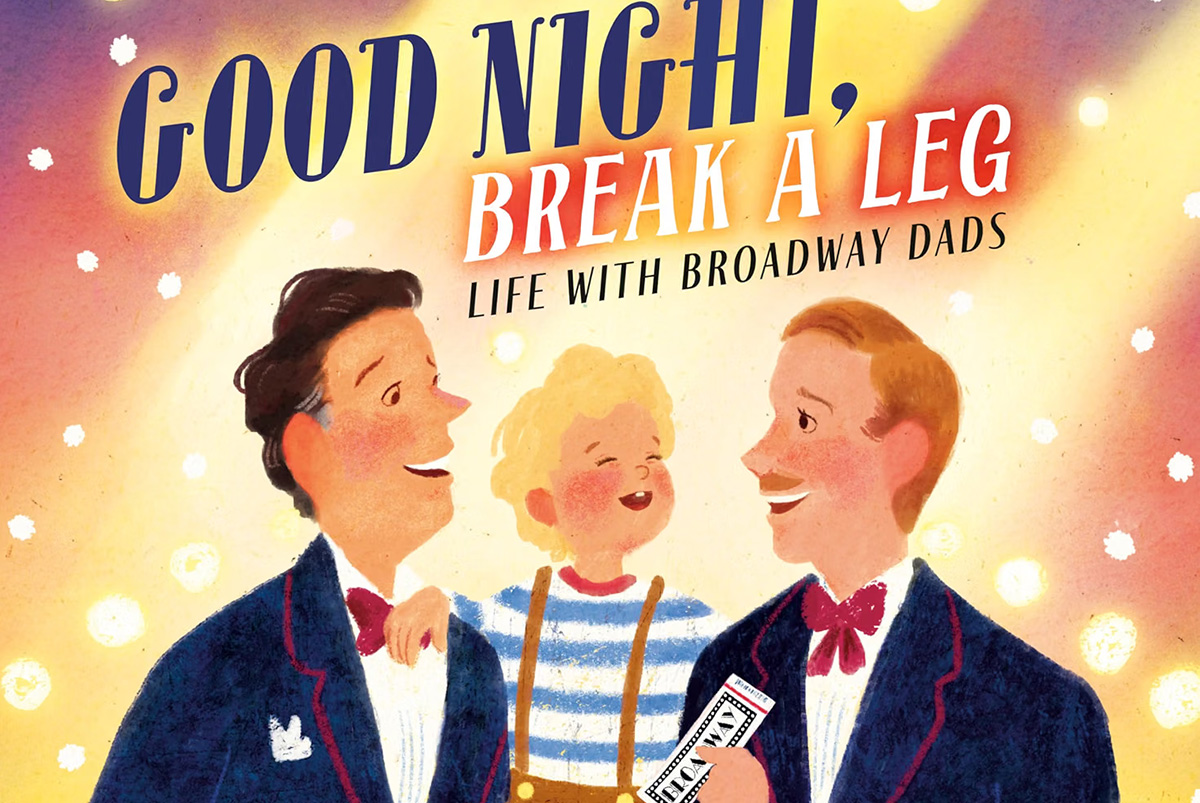
And finally, if you want a fun book for your kids or a child you love, look for “Good Night, Break a Leg: Life with Broadway Dads” by Bret Shuford, illustrated by Elena Hager (Penguin Workshop). What do parents do when they go to work? A little boy learns that his dads have very special jobs by day – and by night! It’s a cute book for kids, but a special tale for lovers of Broadway.
Be aware that publication dates change, titles change, books can be canceled, and your librarian or favorite bookseller can help you find what you need. Season’s readings!
Books
Dolly Parton biography puts her hardships into context
‘Ain’t Nobody’s Fool’ a highly researched tome not to be missed
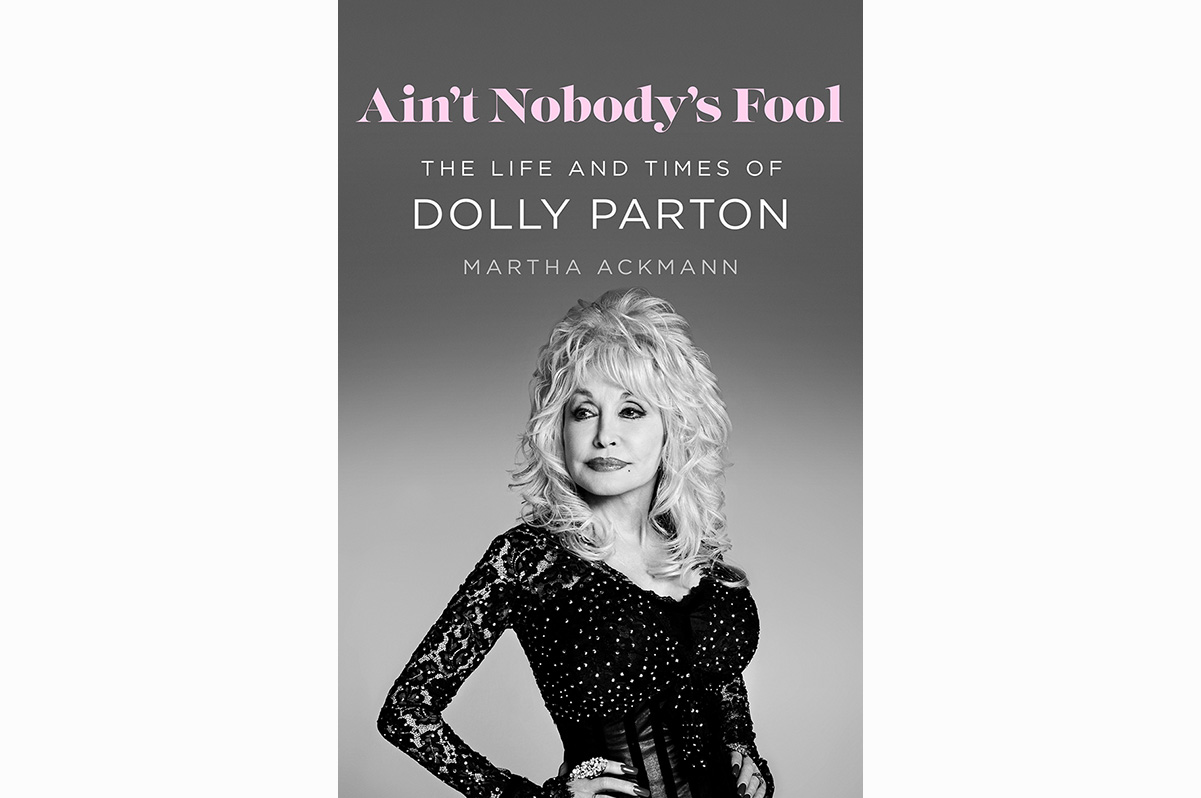
‘Ain’t Nobody’s Fool: The Life and Times of Dolly Parton’
By Martha Ackmann
c.2026, St. Martin’s Press
$30/304 pages
Not too bright.
That’s what people once thought about you. Your language didn’t conform, you had your own sense of style, and you were ignorant about modern things and places and foods. But you were no dummy. You were different, and you had a secret: as in the new biography, “Ain’t Nobody’s Fool: The Life and Times of Dolly Parton” by Martha Ackmann, you knew exactly where you were going.
When Avie Lee Owens and Lee Parton first married, they had the very basics: “two knives, two forks, two spoons, a skillet, a butcher knife, and an old iron kettle.” He was 17; she was 15. Babies came quick. The fourth one was named Dolly, after two great-aunts.
Almost from the time she could walk, Dolly sang. Before she was old enough to attend school, she wrote poetry, and she’d begun to notice rhythms and beats she could make with her fingers. As a schoolchild, she created her own musical instruments out of scraps, and she was eager to perform whenever anyone asked her – and they asked often, because Dolly Parton was a nice girl, and her sense of humor conveyed a warmth that drew people in.
Growing up in the Tennessee mountains, Parton was independent, shunning marriage and child-raising, instead focusing on a dream of being a star. By the time she was in high school, she’d had a regular gig on local television but she recognized that there were few opportunities for fame in the mountains, so she left for Nashville the day after high school graduation, with the snickers of naysayers ringing in her ears.
She stayed with an aunt and uncle there, and she beat the streets, dined on grocery store samples to get by, and missed her family and friends. And they worried about her, but they knew nothing would derail her plans. They knew Dolly would be fine.
As a friend said, “’She had her head on pretty good.’”
Chances are that if you’ve listened to music any time in the last 60 years, you’ve heard Dolly Parton through her words or her music or both. Now you need to learn more about her, and “Ain’t Nobody’s Fool” is where to do it.
Here’s a biography that grabs you on the first page with the tiniest bit of family tree, but not so much that you get bored with it. Author Martha Ackmann writes about Dolly Parton’s early life, putting hardships and experiences in context, both personally and historically. There are name-drops, but not overly so, as Ackmann takes you through Parton’s career, her heartbreaks, her marriage, and her years with Porter Wagoner, in detail but not dramatically embellished or outrageously told. It’s a biography that’s just right, sourced well and written with a fresh take that, like its subject, tells a good story.
Fans, of course, will want this highly researched book but music lovers of any age or type will eat it up. That means you, so use up that Christmas gift certificate. “Ain’t Nobody’s Fool” just shines.
The Blade may receive commissions from qualifying purchases made via this post.

Essential queer horror classics for Halloween

Solidarity beyond the parade: the actual cost of Pride

Physician: addiction doesn’t always look the way you think it does

Calendar: October 9-15

ICC unseals arrest warrants for Taliban officials accused of persecuting LGBTQ people, women

Alianza para la Inclusión fortalece la defensa de derechos LGBTQ en Centroamérica

The facts about Victory Fund’s investigation and the path forward

In Ga., 2 trans candidates believe voters are ready for them

Bessent says Trump chose him for his qualifications, not his sexuality

10 years later, we still can’t shake Barry Jenkins’s ‘Moonlight’
-

 Central America5 days ago
Alianza para la Inclusión fortalece la defensa de derechos LGBTQ en Centroamérica
-
Opinions5 days ago
The facts about Victory Fund’s investigation and the path forward
-
Georgia5 days ago
In Ga., 2 trans candidates believe voters are ready for them
-
Federal Government5 days ago
Bessent says Trump chose him for his qualifications, not his sexuality