Opinions
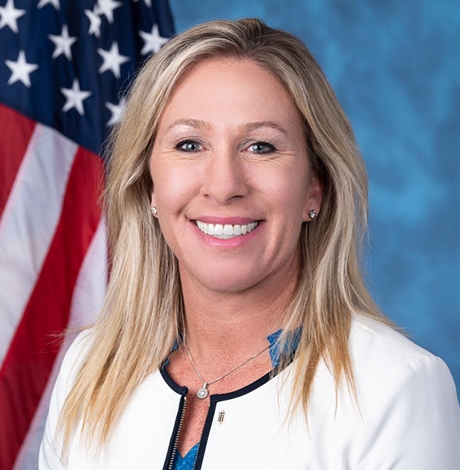
Marjorie Taylor Greene is delusional, dangerous
We must not let despotism take root in America
It is kind of exciting to see the Republican Party disintegrate into a civil war and try to figure out which side will win. Will it be the rational old-line party represented by those who founded the Lincoln Project or the Trump cult who at the moment look like they are ahead?
The reality with Trump on the ballot is that he pulled out voters but when the election was about him he lost — both the presidency and then the two Senate races in Georgia.
There will now be an impeachment trial and the Senate ethics panel will investigate Ted Cruz (R-Texas) and Josh Hawley (R-Missouri) in secret. In the House, there could be a vote to censure or throw out Marjorie Taylor Greene (R-Ga.). These impeachment and House votes will put Republicans who run in 2022 on the record. Democratic legislative successes will be what Democrats will use in 2022 but they have more.
In the same way Republicans used Alexandra Ocasio-Cortez (D-N.Y.) and socialism against every Democrat in vulnerable districts, Democrats must use Greene and her cohorts, including Lauren Boebert (R-Colo.) and Matthew Cawthorn (R-N.C.), against vulnerable Republicans. There is a lot wrong with Republicans in Congress including the aforementioned as well as Matt Goetz (R-S.C.), Kevin McCarthy (R-Calif.) and Jim Jordan (R-Ohio). But Greene, Boebert and Cawthorn or as I call them the ‘insurrection trio,’ are the scariest since they have publicly been hailed as the future of the Republican Party and the ideal example of a Republican candidate today.
Democrats can use Greene’s support of QAnon, the incitement of the Jan. 6 insurrection, and the trio’s delusional views in ads to let all voters connect them directly to Republican candidates who didn’t speak out against them. There may be 30 to 40 Republican seats where this can work because as one of my friends suggested, a former congressperson, what you say to voters about the incumbent Republican in those swing Districts is: “Aren’t you disappointed in (insert the name). We all thought he/she would have had more decency, common sense and cared more for us and our country.”
Greene is the easiest to hang around their necks. We just need to share videos of her stalking a student who had just survived the shooting at Marjory Stoneman Douglas High School in Florida; video of her claiming 911 was a hoax; video of her supporting those who attacked the Capitol and of her suggesting certain members of Congress should be executed. Then we have Cawthorn videos inciting rioters to attack the Capitol at Trump’s rallies; getting elected even when it was known he is a certified liar like Trump when he lied claiming to have been on his way to the Naval Academy before his accident when he had already been rejected and claiming business success when he had none. Some may just excuse him for being an idiot or could attribute other things to his visit to Hitler’s Eagles Nest home and referring to Hitler as the Fuhrer and then saying he didn’t know that would offend people.
Then there is Boebert, the gun-toting congresswoman from Colorado who Newsweek reported “On the day of the riot she tweeted “Today is 1776,” referring to the year of the American Revolution.
As Americans we must take a stand and defend our democracy from those who would see it destroyed. We must stand for the truth and fight the lies being fed to the American voter; those who are either less educated or simply susceptible to conspiracy theories. We must be willing to call out the bullies like Cruz and Hawley who are willing to promote these lies and conspiracies for their own personal gain and desire for power.
We have seen this before in Nazi Germany with the rise of Hitler. We have seen it in the rise of other despots around the world. We must never let it happen here.
Peter Rosenstein is a longtime LGBTQ rights and Democratic Party activist. He writes regularly for the Blade.



Opinions
Trump tries to scare Americans into not voting
Will he deploy military to the polls in November?
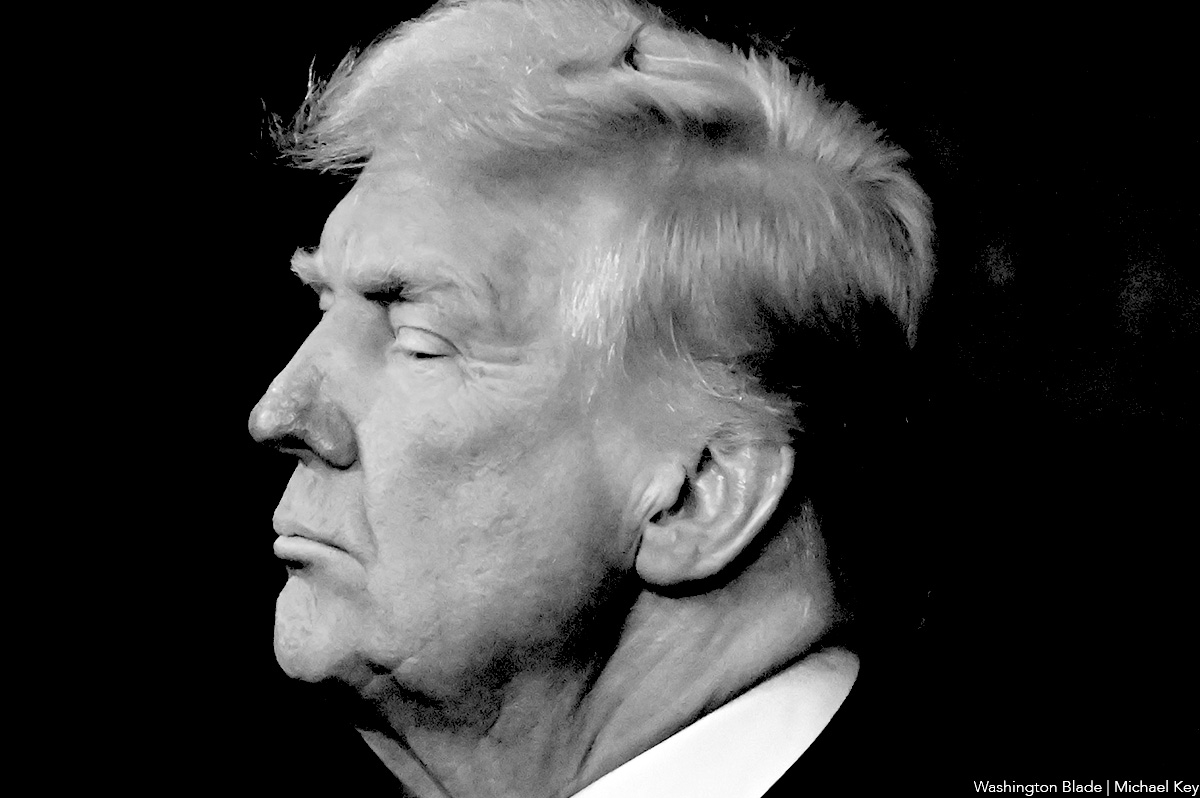
By saying we cannot trust our elections, the sick, old, demented, felon, in the White House is trying to scare Americans into not voting. He, and his faithful fascist appointees, dragged out old documents, already proven to be false, to scare people. He revisited claims that threats, and interference from China and Venezuela, impacted our elections in 2020, all of which have already been shown were not implemented effectively in any way.
Even a few Republicans are saying this is nonsense, reminding people the felon is making claims the only elections we can’t trust, are the ones that he lost. Those Republicans who dare to speak up, and are running for office, have said he is making it harder for them by focusing on this BS, and doing nothing about the future. We must remember the only election he lost, was when he was president during the election. He won when Democrats were in office in 2016 under Obama, and in 2024 when Biden was president.
We can only hope if he moves further with this, which some think he will, the courts will tell him no. There are some who believe he will try to call a ‘national emergency’ and deploy the military to the polls.
The only effective response to his lies is very clear. Democrats and independents must come out in huge numbers in November, and vote for Democrats, up and down the ballot. By doing this they say to the felon, we believe our elections are fair, we trust the process, and we will win big enough so there is no question about the results.
All anyone has to do to hear the felon lie, is to watch his mouth move. Every time he opens it, another lie comes out. He promised the nation, among other things, he would lower gas prices, lower grocery prices, lower rent prices, lower inflation, and even more important to the world, he promised the United States would not go to war. So, what we got instead, from him and his fascist cohorts, and sycophants in Congress, are higher gas prices, higher grocery prices, higher rents, higher inflation, and an expensive, in terms of both money, and human life and suffering, an illegal war with no end in sight. Even his own Secretary of State recently said, “the initial U.S. operation in Iran, Epic Fury, is over. The U.S. was now focused on Project Freedom. This is the name of the operation to get ships moving through the Strait of Hormuz again.” Something that was the case before Trump began this absurd and illegal war.
I applaud those media outlets that didn’t give Trump free air time to lie to the American people, despite the threats he made to have the FCC punish them for it. Kudos to those who had the guts to say we will not be a party to this, and went further, debunking the lies he told in the speech. The felon can continue to threaten those who call him out, but I believe they will win in the end, because the American people will not let him silence all the ‘free’ press. His fellow billionaires might take over some of it, like has been done with CBS, but the truth will come out.
In his continuing efforts to control elections, Trump has ousted members of a bipartisan federal election commission, the Election Assistance Commission, that resisted his efforts to require would-be voters to have extra documentation of their U.S. citizenship before registering. The commission distributes federal grants to states, oversees the testing of voting systems, and maintains the national voter registration form. He did this to get the Congress to pass his ‘Save Act’ which would make it harder for legal voters to vote. But congress once again voted against this after his speech, and there aren’t the votes to pass it. But the felon has shown fairness is not in his quiver when he plays any game. He cheats, and screws, as many people as possible in his business dealings, as long as he can make money. He is now doing the same to the American people.
Again, it is my belief in the end, the American people will win. Trump will be shown to be the loser he is, and our democracy will survive.
Peter Rosenstein is a longtime LGBTQ rights and Democratic Party activist.
Opinions
No Pride without Disability Pride
Anti-ableism must become part of the foundations of queer activism

On Saturday, June 20, Capital Pride hosted the Pride Parade through the heart of Washington, D.C. I broke my foot just a couple days before and couldn’t attend, but beyond my mobility, Pride celebrations have always been difficult as a multiply disabled, queer person. As someone who is autistic with heat and sensory sensitivities, and autoimmune conditions, I also want to be part of Pride celebrations, to feel part of and be in community with others, but it is rare that Pride celebrations — not just Pride marches — are accessible to me.
Back in 2022, I wrote a piece for The Unwritten issuing a call to action: “it’s time to make all queer spaces accessible” after a woman in a wheelchair was denied entry to my favorite — and one of the few remaining — lesbian bars A League Of Her Own. Back in 2022 when I had just moved to Washington, D.C. for graduate school, the bar became my queer safe space where I watched Willow Pill’s win on season 14 of “RuPaul’s Drag Race.” Pill, who openly discussed having cystinosis, a rare genetic disorder that causes the build-up of the amino acid cystine on the show, was the first person who openly discussed how being disabled affected the way she was able to share and experience her queerness. Because of her disability, she admitted that she would have to quit performing drag much sooner than her fellow queens.
Yet four years after I published the piece, little has changed. Many Pride celebrations remain inaccessible to people who use mobility aids, have sensory or heat sensitivities, or require ASL interpretation or audio description to participate. When queer, disabled people ask for these services, ask for events that include everyone, we are met with excuses about expense and convenience, about serving the majority of community members rather than all — and invitations to future events that never end up planned or taking place.
For many queer, disabled people like me, this sends a very clear message about whose presence is valued and prioritized at Pride celebrations and it is part of larger systems of racism, ableism, and transphobia that are solidified when people participating in Pride forget the event’s roots. While many people pointed out that corporations and cities cancelled their participation and events this year, it’s important to recognize that Pride was never about pinkwashing, was never about getting free rainbow fans in the street or catering events to a socio-political status quo. Pride began as a protest against police brutality.
When we remember that history, it becomes clearer than ever that events focused on our visibility must be accessible. In the United States today, Immigration and Customs Enforcement agents have hurt and even killed disabled people during the arrest and detention of immigrants and people of color. Autistic and individuals with cognitive disabilities, especially neurodivergent people of color, are at much higher risk of being hurt or even killed by the police, and disabled people are increasingly at risk for sexual violence in institutions and when living in their communities. Pride began as a fight against state-sanctioned violence.
If people want Pride to remain true to its roots and honor the people who paved the way like Marsha P. Johnson who herself was disabled, we need Pride to be accessible.
While I can recommend that people who are set to host Pride celebrations next year arrange shaded and cool space for people to sit, rest and recover, provide water and food for people to sip and snack on to keep their energy and blood sugar up, offer sensory support including earplugs and headphones, and access services like ASL interpretation, audio description, and captioning for events, this is not enough.
It can’t just be about tacking on accessible services to an already planned event, it has to involve electing disabled queer people to Pride leadership boards, thinking about accessibility from the very beginning when we envision events for the LGBTQ+ community, and incorporating anti-ableist action into queer protesting. Anti-ableism (and anti-racism and xenophobia) has to become part of the very foundations of our queer activism before we can make changes that push for our collective liberation. And queer people’s and disabled people’s liberations are inextricably linked—both are rooted in bodily autonomy, access to healthcare, and right to love and marry as we chose (today, many disabled people are denied access to marriage without losing lifesaving medical care).
And it’s not just disabled queer folxs who benefit from accessible events. Everyone can benefit from events that focus on preserving and protecting our bodies and energy.
How many people use captions when they watch a show, or could use a shaded, cool, sensory-friendly space at Pride amid all the sounds and smells of the parades and festivals? How many people could use access to food, water, and chairs to sit or mobility aids so that they are not hurting the following day? How many more people would show up, would lend their voices to the fight for gender-affirming care, for trans rights, if the protests we organized and participated in were accessible? And how would the visible inclusion of disabled queer and trans people change our collective perceptions and goals of intersectional activism–knowing that not everyone can access gender affirming care because of their disabilities?
Making events accessible isn’t just about including disabled folxs, it’s about crafting spaces that serve and uplift everybody and all bodies in our fight for liberation. For disabled people who have long been infantalized and desexualized (while at the same time being fetishized and facing increased sexual violence), making Pride accessible is about affirming that disabled people are whole people who also have rich, diverse sexualities and gender expressions.
And let’s be clear, it’s not up to disabled queer folx to do this work for the community. For too long, disabled people are asked to educate their peers and superiors on accommodations and accessibility services, on what anti-ableist action looks like. It’s the responsibility of a community that itself has long been marginalized to recognize the ways in which ableism is interwoven into the very power systems that disenfranchise and deny the rights of queer and trans people and educate themselves. Along with creating pathways to leadership uplifting queer disabled folxs and planning events that are accessible by design, this is about queer and trans people educating themselves in and committing to anti-abelist action.
If Pride is truly about protesting state-sanctioned violence against us, against all marginalized communities, it cannot involve events that are inaccessible, events that routinely exclude a part of the community. There’s a reason that Disability Pride Month is scheduled the month after Pride month in the U.S. — it should be a continuation of protests fighting for the liberation of all bodies, rather than some.
Emma Cieslik is a D.C.-based museum worker and public historian.
Opinions
Literature is my companion
I’ve lived in Russia, Pakistan, India, but books are always home
People often ask where I am from and I never know how to answer.
The factual answer is straightforward enough: I was born in D.C., spent parts of my childhood in Pakistan and India, lived in Moscow, and later in Jordan before eventually settling in the United States. The emotional answer is much more complicated. Home kept changing. Languages changed. Schools changed. Friends changed.
The only country I never had to leave was literature.
Some children grow up with a single hometown that anchors their memories. I grew up with departure lounges, embassy compounds, cardboard boxes, and the understanding that permanence was a temporary arrangement. Just when I learned the shape of one place, another place arrived. By the time I reached adulthood, I had become adept at beginning again.
Books offered a different bargain. They asked only that I return.
I was too young in Saudi Arabia to remember much beyond fragments and family stories. Pakistan arrived as mountains and long drives. We passed through Abbottabad on our way to ski slopes, the landscape unfolding in a way that felt both ancient and immediate. Even as a child, I found comfort in reading during those journeys. A book transformed transit into destination. The hours belonged to a story rather than to geography.
India deepened that relationship. I remember wandering through bookstores near Khan Market in New Delhi, clutching bags of Lay’s chips and searching for something new to carry home. There was a particular joy in rummaging through shelves without any plan, allowing a title or a sentence to find me first. Outside our house, cows grazed peacefully on the grass, untouchable and entirely unconcerned with human schedules. Street vendors sold samosas that remain among the best food I have ever eaten. The world outside was vibrant, crowded, and overwhelming in the best possible way. Reading provided a parallel world—equally rich, but one I could enter and leave on my own terms.
By the time we moved to Moscow, literature had become less of a pastime and more of a companion.
Winters in Russia bring their own emotional architecture. The days contract. Darkness arrives early. At diplomatic receptions in Spaso House, there were blinis, caviar, Christmas cookies, and annual performances of “The Nutcracker.” Yet beyond the formal rituals of diplomacy stood an extraordinary literary inheritance. To live in Moscow is to feel, even faintly, the presence of writers who treated human suffering and longing with unmatched seriousness.
I found myself drawn to Fyodor Dostoevsky and his insistence that contradiction lies at the center of being human. You can hold faith and doubt simultaneously. You can seek love while fearing intimacy. You can desire freedom and still long for belonging. For someone who already felt different from those around him, those lessons mattered. Literature granted permission to be complicated.
Jordan, perhaps more than anywhere else, taught me that books and places can become intertwined. I think of afternoons in Jabal Amman and evenings near Rainbow Street. I think of traveling through Wadi Rum, floating in the Dead Sea, hiking through Wadi Mujib, and standing in Petra with the humbling awareness that civilizations outlast individual lives. Reading in such places changed the texture of the act itself. The world felt larger, and so did the questions worth asking.
People sometimes imagine literature as an escape from reality. I have never understood it that way.
For me, books did not remove me from the world. They taught me how to inhabit it.
They taught me that loneliness is a universal experience rather than a personal defect. They taught me that identity can be layered and unfinished. They taught me that grief and beauty frequently occupy the same sentence. Most importantly, they taught me that human beings across centuries and continents ask remarkably similar questions: Who am I? What do I owe others? How should I live?
Those questions followed me to college, where literature ceased to be merely a private refuge and became an intellectual vocation. Yet even then, I recognized that my relationship to books differed from that of many peers. I did not simply love reading. I depended upon it. Literature had functioned as continuity in a life defined by movement.
Other people had hometown diners, childhood neighborhoods, and lifelong classmates. I had novels, essays, and poems that accompanied every relocation.
Perhaps that is why I remain skeptical of narrow definitions of belonging. Home is not always a fixed point on a map. Sometimes it is a practice. Sometimes it is a set of stories you carry from one country to another. Sometimes it is a shelf of books that survives every move.
The older I become, the more grateful I am for that inheritance.
Long before I understood my identity, my ambitions, or even the shape of the life I wanted to build, I understood that books offered something enduring. They expected nothing from me except attention. They never demanded reinvention. They remained patient through every transition.
I have left many places behind over the course of my life. Literature, thankfully, never left me.
Isaac Amend is a writer based in the D.C. area. He is a transgender man and was featured in National Geographic’s ‘Gender Revolution’ documentary. He serves on the board of the LGBT Democrats of Virginia. His portfolio is available at isaacamend.com and you can contact him on Instagram at @isaacamend.

2026 International AIDS Conference to take place in Rio

Summer in D.C. brings sports, Restaurant Week, festivals, and more

Trump tries to scare Americans into not voting

No Pride without Disability Pride

House blocks effort to codify transgender servicemember ban into law

DOJ seeks to dismiss some claims in gay FBI employee’s bias lawsuit

PHOTOS: Vitamin C at JR.’s

Hot hatchbacks: Honda Civic, Subaru Impreza

PHOTOS: Rehoboth Beach Pride Festival